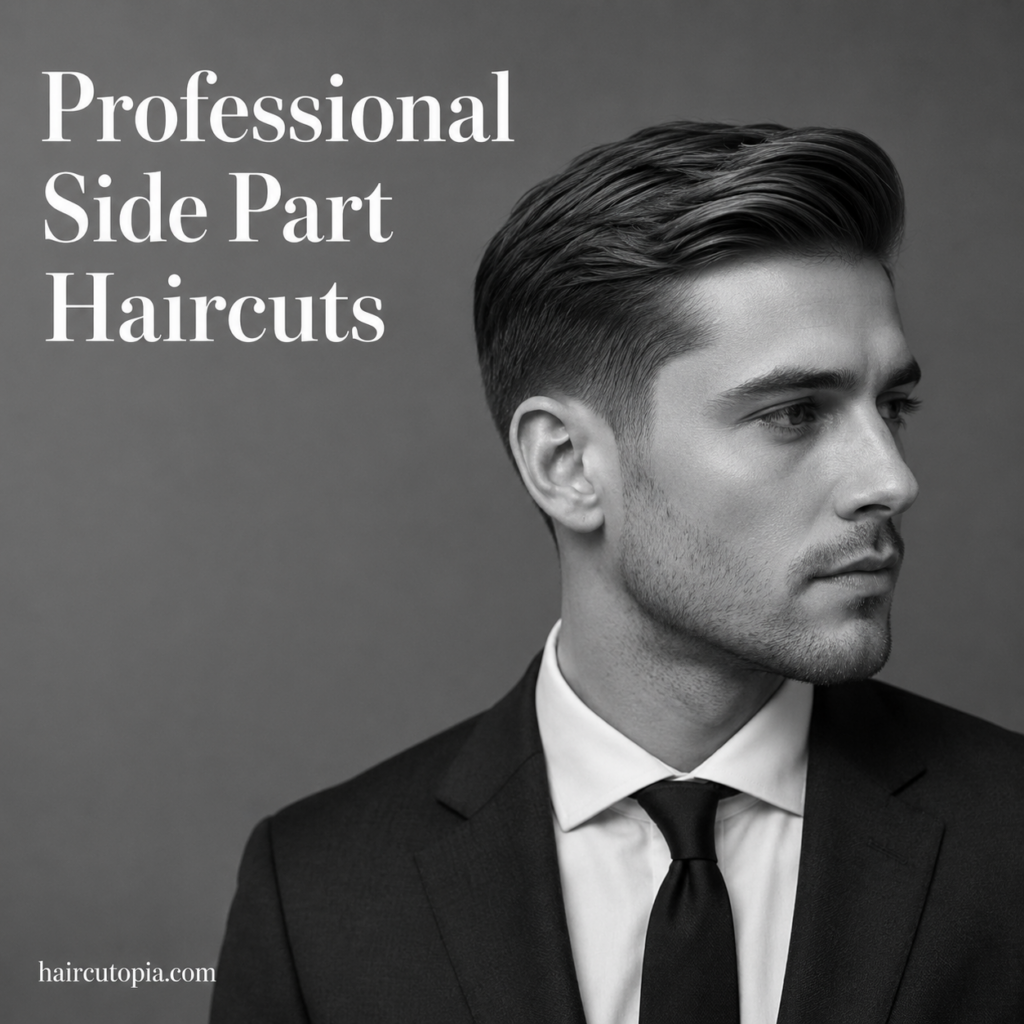
A professional side part haircut is one of the easiest ways to look sharp without making your hair feel overly styled. It has been a dependable choice for decades, but modern versions are far from old-fashioned. Today’s side part can be subtle, textured, tapered, faded, or slightly longer on top depending on your workplace, hair type, and personal style.
The appeal is simple: a side part creates structure. It gives the hair a clear direction, keeps the sides neat, and frames the face in a way that works for many men. Whether you work in a traditional office, meet clients regularly, or simply prefer a cleaner everyday look, a professional side part can fit naturally into your routine.
What Is a Professional Side Part Haircut?
A professional side part haircut features hair that is combed or styled away from a defined part line on one side of the head. The top is usually left longer than the sides, creating a balanced shape that looks neat from the front, profile, and back.
The “professional” version usually avoids extreme contrast. Instead of a dramatic skin fade or a sharply shaved hard part, it often uses a classic taper, low fade, or scissor-cut sides. The goal is polished rather than flashy.
Most professional side part styles include:
- A natural or lightly defined side part
- Controlled length on top
- Tapered, faded, or neatly scissor-cut sides
- A clean neckline and sideburn area
- Styling that looks intentional without appearing stiff
This haircut can be adjusted for conservative workplaces, business-casual offices, formal events, and everyday wear.
Why the Side Part Works So Well in Professional Settings
A side part haircut has staying power because it looks organized without feeling too rigid. It can make thicker hair easier to manage, add shape to fine hair, and create a more balanced appearance for many face shapes.
It also transitions well throughout the day. A good side part should look polished in the morning, but it should not fall apart after a commute, a meeting, or a long day at work.
Another advantage is versatility. You can style it with a matte finish for a more relaxed office look or use a light pomade for a cleaner, more formal result.
Best Professional Side Part Haircut Styles
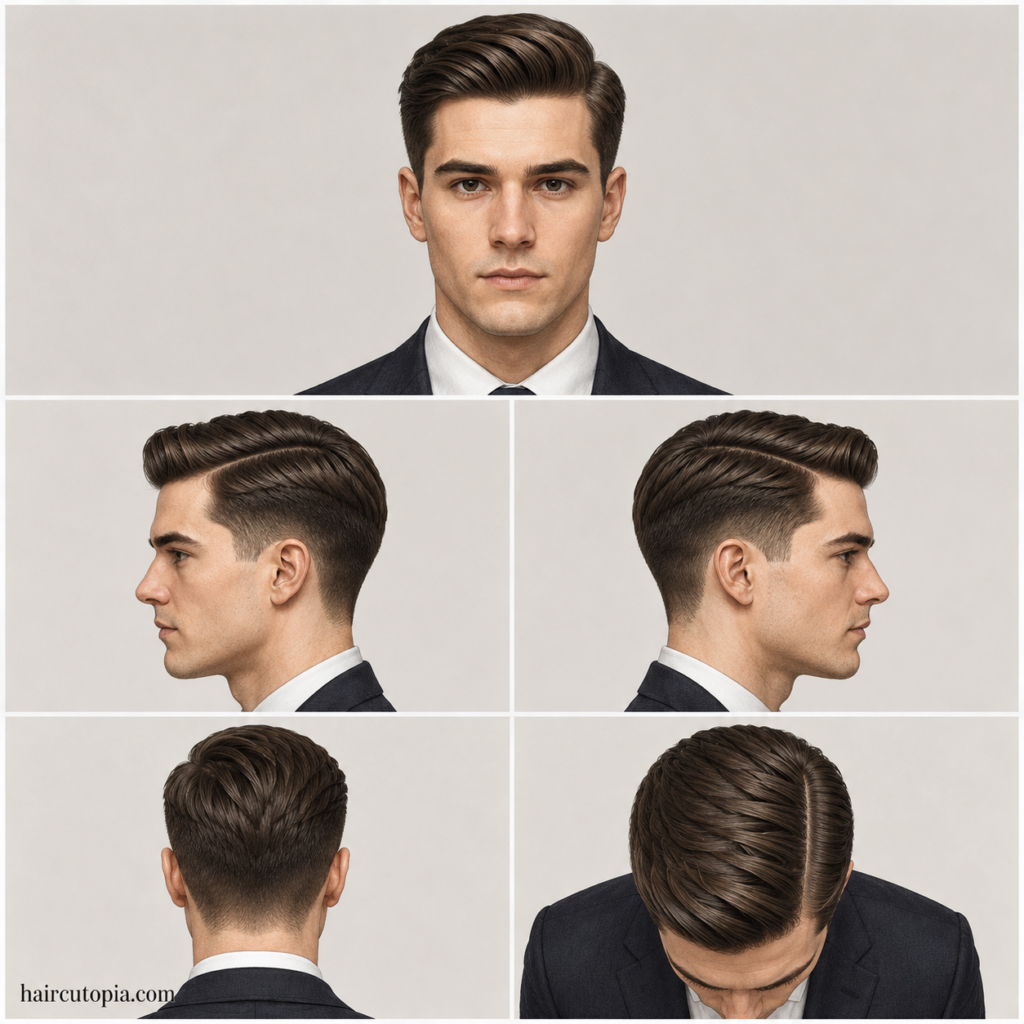
Classic Taper Side Part
The classic taper side part is one of the safest choices for a professional environment. The hair gradually shortens around the ears and neckline while keeping enough length on the sides for a natural, traditional finish.
The top is typically medium length and combed to one side with a soft part. This style works especially well for men who want a polished haircut without the stronger contrast of a fade.
A classic taper side part is a strong option for:
- Corporate offices
- Client-facing roles
- Formal business settings
- Men who prefer timeless haircuts
- Straight or slightly wavy hair
Low Fade Side Part
A low fade side part keeps the haircut modern while still looking workplace-appropriate. The fade begins low around the ears and gradually blends into longer hair above.
Because the fade stays low, it feels more refined than a high fade. It adds clean edges without taking attention away from the side part itself.
This style works well if you want a professional haircut with a slightly younger, more current feel.
Side Part With Scissor-Cut Sides
For a softer and more natural appearance, consider a side part with scissor-cut sides. Rather than fading the hair down tightly, the barber uses scissors to blend the sides into the top.
This creates movement and texture, which can be especially useful for thick, wavy, or slightly unruly hair. It also grows out more gently than a short fade, making it a practical option if you do not want frequent barber visits.
Ivy League Side Part
The Ivy League haircut is a shorter, cleaner version of the side part. The top has enough length to be brushed to one side, but it is usually shorter and easier to maintain than a traditional longer side part.
It has a crisp, confident look that works well in professional settings where a neat appearance matters. The style can be paired with a taper, low fade, or short scissor-cut sides.
The Ivy League side part is ideal for men who want:
- A low-maintenance haircut
- A polished but not overly styled look
- Shorter hair that still has shape
- A haircut that works with business attire
Textured Side Part
A textured side part gives the classic style a more relaxed finish. Instead of combing every strand into place, the top is styled with natural separation and light movement.
This version works well in creative offices, business-casual workplaces, and professional environments that are less formal. It still looks neat, but it avoids the overly slick appearance associated with more traditional side parts.
Use a matte clay, styling cream, or lightweight paste to keep the texture soft and natural.
Side Part With a Subtle Hard Part
A hard part is a shaved line that defines where the hair separates. For professional settings, a subtle hard part is usually the better choice. It can make styling easier and give the haircut more structure without looking too bold.
The key is restraint. A very wide or sharply shaved hard part can feel more fashion-focused than office-ready. A thin, understated line can still look clean and polished.
Choosing the Right Side Part for Your Hair Type
Straight Hair
Straight hair is one of the easiest hair types for a professional side part. It naturally follows the direction of the comb and can hold a clean shape with minimal product.
A classic taper, Ivy League, or low fade side part usually works well. If your hair is fine, avoid using too much heavy pomade, which can make it look flat or separated.
A lightweight cream or volumizing mousse can help create lift at the front.
Wavy Hair
Wavy hair gives a side part more texture and personality. The goal is not to force every wave into place. Instead, work with the natural movement while keeping the sides controlled.
A scissor-cut side part or low taper is often a good match. Ask your barber to leave enough length on top so the waves can sit naturally without puffing up.
A medium-hold cream or matte paste usually provides enough control without making the hair look stiff.
Thick Hair
Thick hair can look excellent with a side part, but it needs the right amount of weight removed. If the top is too bulky, the haircut can look wide or overly rounded.
A barber can add texture and remove excess density while keeping enough length for the part to hold. A low fade, taper, or scissor-cut blend can all work well depending on how conservative you want the final look to be.
Fine or Thin Hair
Fine hair can still work with a side part, especially if the haircut is not too long. Keeping the sides neat and adding a little lift at the front can make the hair appear fuller.
Avoid slick, high-shine products that expose too much scalp. Matte styling products are usually more forgiving because they create a thicker-looking finish.
A shorter Ivy League side part or textured side part is often a smart choice.
Curly Hair
Curly hair can wear a side part, but the part line may be softer and less obvious. Rather than trying to create a perfectly straight separation, focus on guiding the curls in one direction.
A low taper or scissor-cut sides can keep the shape clean while allowing the curls on top to remain natural. A curl cream or lightweight styling cream can help define the hair without making it crunchy.
Professional Side Part Haircuts for Different Face Shapes
Oval Face Shapes
Men with oval faces can wear almost any side part variation. A classic taper, low fade, textured side part, or Ivy League style can all work well.
The main goal is to keep the haircut proportional. Avoid adding too much height if your face is already long.
Round Face Shapes
A side part can help add structure to a round face. Keeping some volume at the front and tapering the sides can create a more defined appearance.
A low fade or classic taper with a little height on top is often a flattering choice. Avoid overly wide sides, which can make the face look broader.
Square Face Shapes
Square faces often pair well with side parts because the haircut complements strong jawlines and defined facial features.
A classic taper side part is a reliable option, while a textured version can soften the overall look slightly. Avoid making the sides too tight if you want a less severe appearance.
Long Face Shapes
For longer face shapes, keep the top controlled rather than overly tall. A side part with moderate length and fuller sides can help maintain balance.
A scissor-cut side part or classic taper is often more flattering than a high fade with a tall pompadour-style top.
How to Ask Your Barber for a Professional Side Part
The easiest way to get the haircut you want is to describe both the cut and the level of formality you need. Tell your barber whether your workplace is conservative, business-casual, or more relaxed.
You can say something like:
“I’d like a professional side part with medium length on top, a natural part, and a low taper on the sides. I want it neat enough for work but not too short or overly faded.”
If you prefer a more classic look, ask for scissor-cut sides or a traditional taper. If you want something more modern, ask for a low fade that blends softly into the top.
It also helps to mention:
- How often you want to get haircuts
- Whether you style your hair daily
- If you prefer a matte or polished finish
- Whether you want the part natural or more defined
- How short you are comfortable going around the ears and neckline
How to Style a Professional Side Part
Styling a side part does not need to take long. The right haircut should do much of the work for you.
Basic Styling Routine
- Start with clean, towel-dried hair.
- Find the natural direction your hair wants to part.
- Apply a small amount of styling product through the top.
- Use a comb for a cleaner finish or your fingers for a softer look.
- Blow-dry the hair into place if you need more volume or hold.
- Finish with a small amount of product only if needed.
For a more formal result, use a comb and a light pomade. For a modern office look, use a matte paste or styling cream and keep the part less defined.
Best Products for a Professional Side Part
The best product depends on the finish you want and your hair type.
Pomade
Pomade creates a polished finish and works well for classic side parts. Water-based pomades are usually easier to wash out and less likely to feel greasy.
Matte Clay
Matte clay is a good choice for textured side parts. It adds grip and volume while keeping shine low.
Styling Cream
Styling cream gives light control with a natural finish. It is useful for wavy, curly, or fine hair that does not need a strong hold.
Light-Hold Hairspray
A light-hold hairspray can help keep the style in place without making it look stiff. Use it sparingly, especially if you want the haircut to remain touchable.
How Often Should You Get a Professional Side Part Haircut?
Most men should schedule a haircut every three to five weeks to keep a professional side part looking fresh. Shorter fades may need cleanup closer to every two to three weeks, while scissor-cut styles can often go longer.
If you wear a classic taper or medium-length side part, regular neckline and sideburn cleanup can make a big difference between full haircuts.
Professional Side Part Haircut Maintenance Tips
A professional haircut looks better when the details are maintained between barber visits.
Keep these habits in mind:
- Wash your hair regularly, but avoid over-washing if it becomes dry.
- Use conditioner to keep the top manageable.
- Avoid applying too much product at once.
- Comb or brush your hair into place after showering.
- Trim stray hairs around the neckline and sideburns if needed.
- Use a barber who understands how your hair grows and how you style it.
Is a Side Part Haircut Still in Style?
Yes, the side part remains one of the most reliable men’s haircut choices. The modern version is more flexible than the overly slick styles of the past. It can be clean and traditional, textured and relaxed, or slightly faded for a contemporary edge.
What makes it especially useful is that it does not depend on a short-lived trend. A professional side part looks appropriate in most settings, photographs well, and can be adjusted as your hair changes.
Final Thoughts
A professional side part haircut is a strong choice for men who want a clean, dependable style that works in the office and outside of it. It can be classic or modern, short or medium length, polished or lightly textured.
The best version is the one that fits your hair type, face shape, daily routine, and workplace. A subtle taper, natural part, and balanced top length will usually give you a haircut that feels sharp without looking like you tried too hard.