Barber vs Stylist: Which Should You Choose

Barber using clippers and hairstylist using scissors to compare barber vs stylist services
Barber vs stylist: the right choice depends on your haircut, hair length, styling needs, and the services you want.

Choosing between a barber and a hairstylist sounds simple until you’re actually trying to decide where to book your next haircut.

If you want a fade, should you automatically go to a barber? What if you have long hair? Can a stylist give you a good men’s haircut? And what happens when you want something that falls somewhere in between—a medium-length style with tapered sides, for example?

The answer isn’t really about whether barbers or stylists are better. They often specialize in different techniques, tools, hair lengths, and finished looks.

Here’s how to decide which one makes the most sense for your hair and the haircut you want.

Continue reading “Barber vs Stylist: Which Should You Choose”
Haircut Terminology Guide

Professional barber cutting a client’s hair for a haircut terminology guide
Haircut Terminology Guide – Learn common barber terms, clipper numbers, fades, tapers, texture, and haircut styles.

Walking into a barbershop is a lot easier when you know the language. Terms like taper, fade, textured, and number two get thrown around every day, but they aren’t always obvious if you don’t get haircuts often.

Knowing a few basic haircut terms can also help you get closer to the haircut you actually want. Instead of saying, “Short on the sides, but not too short,” you can give your barber a clearer idea of the length, shape, and finish you’re after.

You don’t need to memorize an entire barbering dictionary. This guide covers the haircut terminology you’re most likely to hear in a barbershop, from clipper guard numbers and fades to necklines, texture, and styling.

Continue reading “Haircut Terminology Guide”

How to Talk to Your Barber

Barber discussing haircut options with a client using hairstyle reference photos
Clear communication and reference photos can help your barber understand the haircut, length, and style you want.

Knowing how to talk to your barber can make the difference between leaving the shop with exactly what you wanted and spending the next few weeks wondering where the conversation went wrong.

You don’t need to know professional barber terminology. You don’t need to memorize clipper guard numbers either. What matters is being able to explain the result you want clearly enough that your barber can translate it into a haircut.

That means talking about length, shape, styling, maintenance, and the things you definitely don’t want. A few good reference photos help too.

Here’s how to communicate with your barber before and during a haircut—even if you have no idea what your hairstyle is technically called.

Continue reading “How to Talk to Your Barber”

How Often Should You Get a Haircut

Barber cutting a client's hair for a guide on how often you should get a haircut
How often you need a haircut depends on your hairstyle, hair growth, and how sharp you prefer to keep your look.

How often should you get a haircut? For some people, two weeks feels overdue. Others can go two months and still be perfectly happy with their hair.

There isn’t one haircut schedule that works for everyone. How frequently you should visit the barber depends on your haircut, hair length, growth rate, texture, and how polished you like your style to look.

A skin fade, for example, changes noticeably as soon as the sides begin growing back. A medium-length scissor cut usually has much more room to grow before it loses its shape.

If you’re trying to figure out when to schedule your next appointment, here’s how to find a haircut routine that makes sense for your hair and lifestyle.

Continue reading “How Often Should You Get a Haircut”

How to Choose the Right Haircut

Barber cutting a client's hair for a guide on how to choose the right haircut
Choosing the right haircut starts with your hair type, face shape, lifestyle, and preferred level of maintenance.

Choosing a haircut sounds simple until you’re actually sitting in the barber’s chair and someone asks, “So, what are we doing today?”

There are plenty of great haircuts to choose from, but the cut that looks best on someone else isn’t automatically the best one for you. Your face shape, hair texture, density, growth pattern, lifestyle, and willingness to style your hair all play a part.

The good news is that you don’t need to know every haircut by name. You just need to understand what works with your hair and how to communicate what you want.

This guide walks through the most important things to consider when choosing a haircut, whether you’re looking for a small change or an entirely new style.

Continue reading “How to Choose the Right Haircut”

Side Part Maintenance Schedule

Barber maintaining a client's side part haircut
How often a side part needs a barber visit depends on whether it has classic sides, a taper, fade, or hard part.

A side part can be surprisingly forgiving as it grows out, but how often you need to maintain it depends on what’s happening around the part.

A classic side part with longer, scissor-cut sides may still look good several weeks after a haircut. Pair the same style with a skin fade or shaved hard part, and the fresh-from-the-barber look disappears much faster.

That doesn’t mean you need a complete haircut every time something starts looking untidy. Sometimes a neckline cleanup, fade refresh, or quick trim around the ears is enough.

A practical side part maintenance schedule should match your haircut, hair growth, styling routine, and how polished you like to keep it. Here’s how to figure out a schedule that works without making unnecessary trips to the barbershop.

Continue reading “Side Part Maintenance Schedule”

How to Style a Side Part

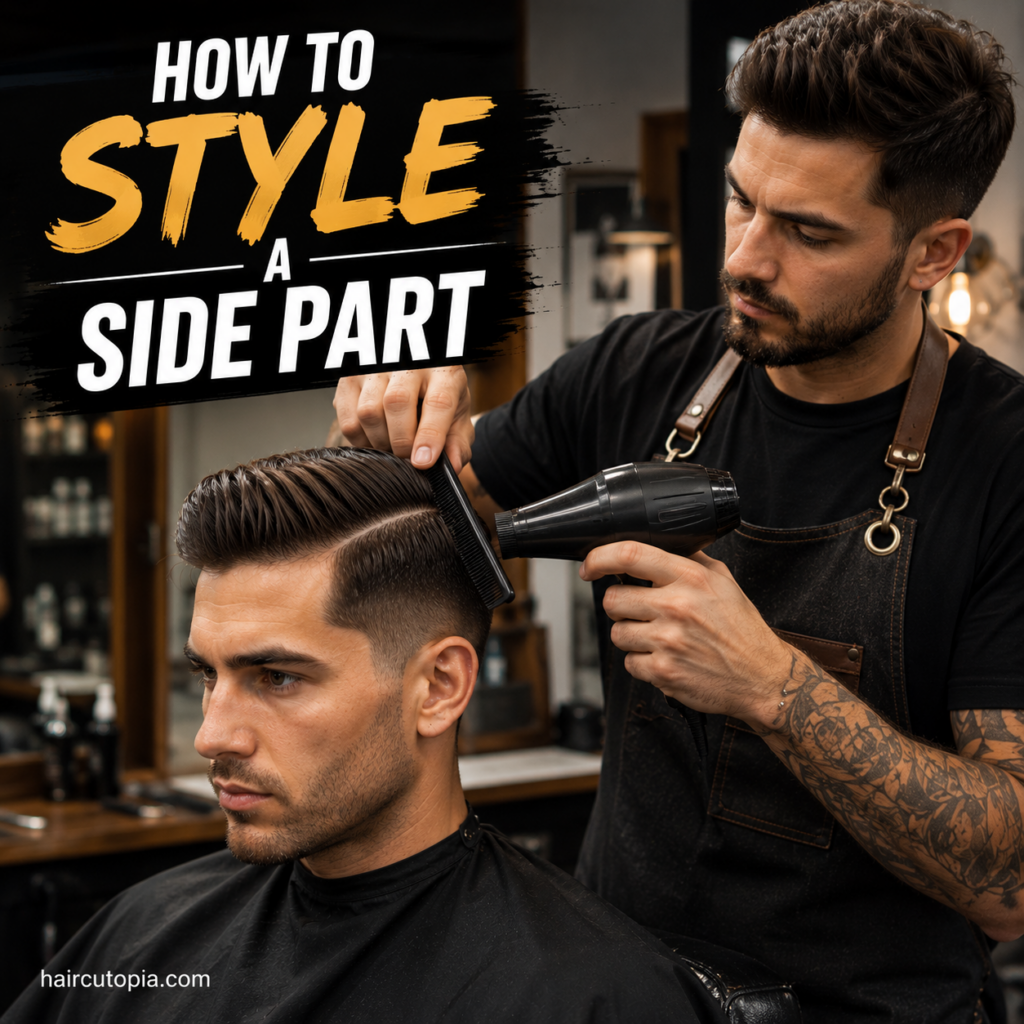
Barber using a comb and blow dryer to style a client's side part haircut
A barber uses a comb and blow dryer to shape a defined side part with volume.

A side part is one of those hairstyles that can look completely different depending on how you style it. Comb it neatly with pomade and you get a polished, classic look. Add volume and texture and the same basic haircut feels much more modern and relaxed.

It doesn’t have to take much time, either.

Once you know where your hair naturally parts and how to direct it while it’s damp, styling becomes considerably easier. The right product helps, but technique matters just as much.

Whether you want a traditional side part, a loose textured version, or something with more volume in the front, here’s how to style a side part and keep it looking good throughout the day.

Continue reading “How to Style a Side Part”

How to Maintain a Side Part

Barber styling and maintaining a client's side part haircut
Regular styling and occasional barber cleanups help keep a side part neat and well defined.

A side part can look sharp without requiring an elaborate grooming routine. The trick is keeping the shape of the haircut intact, styling the hair in the same general direction, and knowing when the sides or part need attention.

Maintenance also depends on the type of side part you have. A longer, classic cut can grow out gracefully for several weeks, while a side part paired with a skin fade or hard part starts losing its crisp appearance much sooner.

The good news is that most of the work can be handled at home. With the right washing routine, a few basic styling techniques, and regular barber visits, you can keep a side part looking intentional instead of simply grown out.

Here’s how to maintain a side part between haircuts.

Continue reading “How to Maintain a Side Part”

How to Ask for a Side Part

Barber styling a client's side part haircut
A side part can be customized with different lengths, tapers, fades, and styling finishes.

A side part is one of those haircuts that sounds simple until you’re sitting in the barber chair trying to explain exactly what you want. Ask for a “side part,” and your barber still has several decisions to make: How short should the sides be? Should the part look natural or sharply defined? Do you want a fade? How much length should stay on top?

The good news is that you don’t need to know professional barber terminology to get it right. A few clear details—and ideally a reference photo—can make the conversation much easier.

This guide explains how to ask for a side part, what to tell your barber, which variations to consider, and how to maintain the style once you leave the shop.

Continue reading “How to Ask for a Side Part”

Undercut Maintenance Schedule

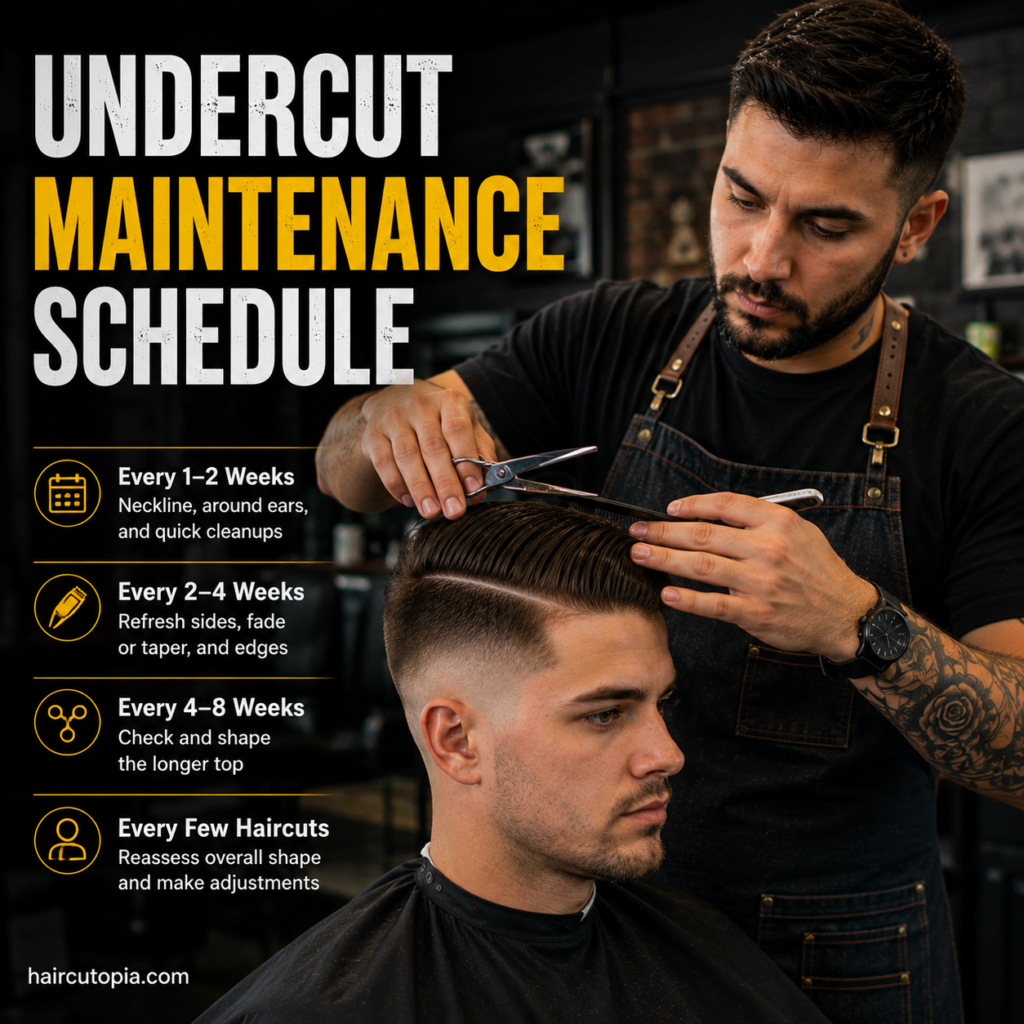
Barber trimming an undercut with an undercut maintenance schedule showing recommended haircut intervals
Most undercuts benefit from refreshing the sides every 2 to 4 weeks, while very short cuts may need more frequent cleanups.

An undercut can still look good several weeks after a haircut, but it won’t look exactly the same as it did when you left the barber’s chair. That’s simply the nature of a style built around contrast.

The short sides begin filling in, the neckline becomes less defined, and the longer hair on top gets heavier. If you have a fade incorporated into your undercut, that crisp transition can disappear even sooner.

So, how often should you actually get an undercut trimmed?

For most people, a good undercut maintenance schedule falls somewhere between every 2 and 4 weeks. Very short or skin-faded versions may need attention every 1 to 2 weeks, while softer, longer undercuts can often stretch to 4 to 6 weeks.

You don’t necessarily need a complete haircut every time, either. Strategic cleanups can keep an undercut looking sharp while allowing you to preserve or grow the length on top.

Here’s how to build a maintenance schedule that works for your haircut, hair type, and tolerance for a little grow-out.

Continue reading “Undercut Maintenance Schedule”