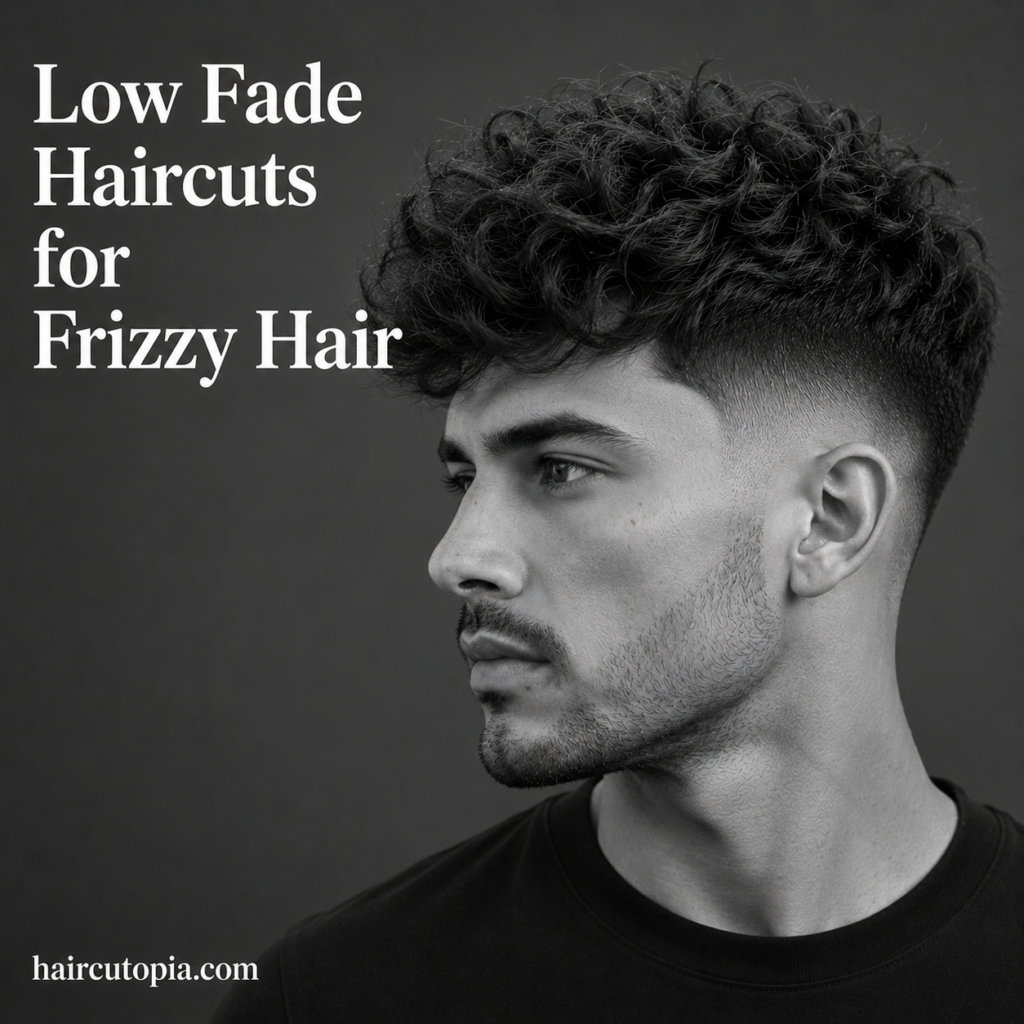
Frizzy hair gets a bad reputation, but the truth is that frizz is often just texture doing what texture naturally does. The challenge isn’t always the hair itself—it’s finding a haircut that works with it instead of fighting against it.
That’s one reason low fade haircuts for frizzy hair continue gaining attention. A low fade removes extra weight around the sides and back while leaving enough length on top to shape and manage texture naturally.
Instead of trying to make frizzy hair perfectly smooth, the goal becomes creating structure. And surprisingly, that often makes the hair easier to style.
Whether your frizz comes from thick hair, waves, curls, humidity, or natural texture, a low fade can help create a cleaner and more balanced look.
What Is a Low Fade Haircut?
A low fade gradually tapers hair near the ears and neckline while blending into longer hair above.
Compared to high fades, low fades create a softer transition. They maintain more fullness while still cleaning up the shape of the haircut.
For frizzy hair, that softer blend often works better because:
- It removes excess bulk
- Creates cleaner edges
- Helps control wide side volume
- Makes texture easier to manage
- Keeps the haircut looking balanced
Because frizz naturally adds movement and fullness, structure becomes important.
Why Low Fades Work Well for Frizzy Hair
Frizz often expands outward rather than downward.
That can create unwanted volume around the sides, especially as hair grows.
Low fades help by reducing some of that width.
Benefits include:
- Better shape overall
- Cleaner side profile
- Less puffiness around the ears
- Easier styling
- More controlled appearance
The haircut creates a framework while still allowing natural texture to show.
Popular Low Fade Haircuts for Frizzy Hair
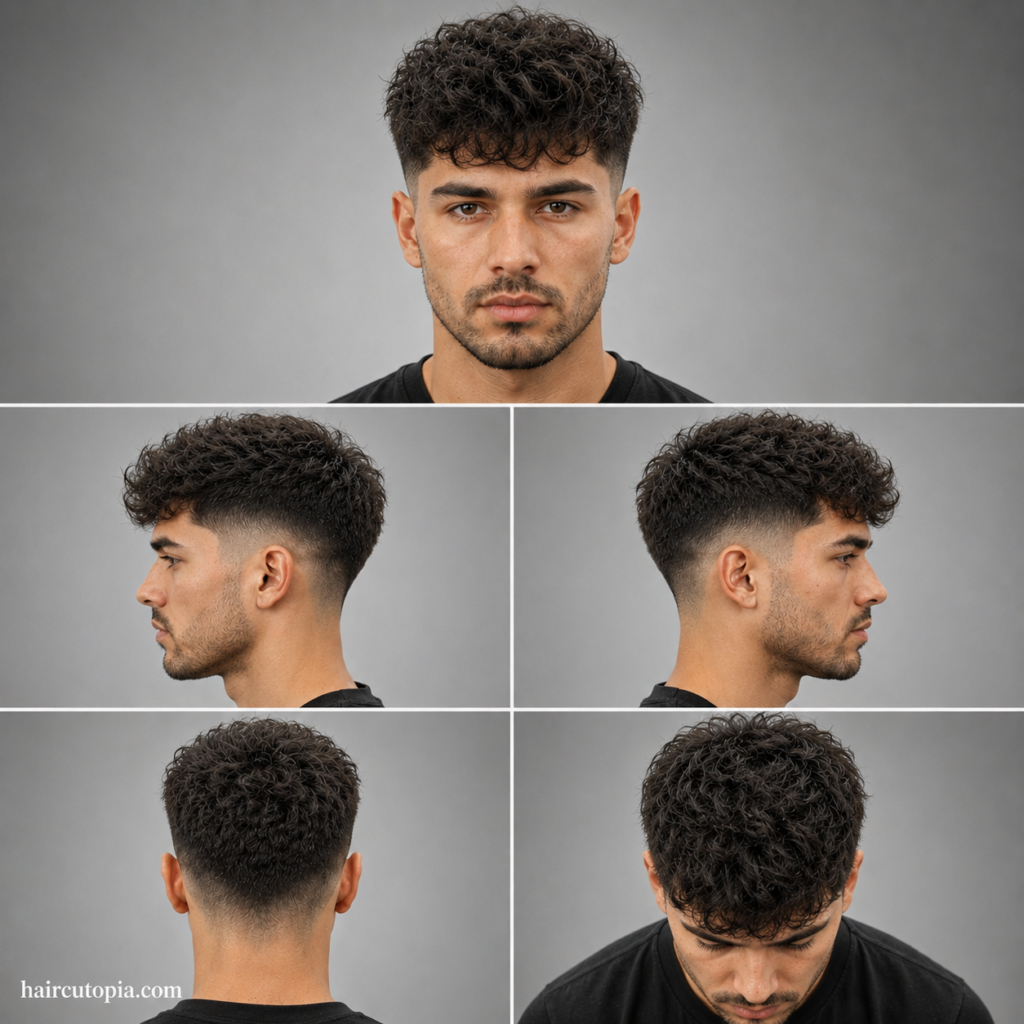
Textured Top With Low Fade
This style embraces natural texture instead of trying to eliminate it.
Layers create movement while the fade cleans up the edges.
Why it works:
- Easy daily styling
- Modern appearance
- Doesn’t require perfect control
- Works with multiple hair types
Sometimes texture looks better slightly imperfect.
Messy Crop With Low Fade
Messy crops and frizzy hair often pair surprisingly well.
Because the style already has a relaxed appearance, natural texture blends in naturally.
Great for:
- Thick hair
- Wavy hair
- Casual styles
- Lower maintenance routines
Curly or Wavy Fringe With Low Fade
If your frizz comes from curls or waves, longer fringe styles can create movement while helping distribute volume.
The fade keeps the haircut from becoming too heavy around the sides.
This often creates a softer, more balanced appearance.
Low Taper Fade With Frizzy Hair
Some men prefer a more subtle version.
A taper fade cleans around the neckline and sideburns without dramatically removing side volume.
This option keeps a more natural shape while still looking polished.
Low Skin Fade With Textured Top
For stronger contrast, a skin fade creates sharper separation.
The sides taper tightly while texture remains on top.
Keep in mind:
- Needs more maintenance
- Grows out faster
- Requires regular barber visits
Short Brush-Up With Low Fade
A brush-up style pushes hair upward rather than outward.
This sometimes helps control frizz by directing volume intentionally.
Works best with:
- Medium thickness
- Dense hair
- Slight texture
Hair Care Tips for Frizzy Hair
Haircuts help, but daily care matters too.
Moisture Is Important
Dryness often increases frizz.
Helpful products include:
- Leave-in conditioner
- Hydrating cream
- Curl cream
- Lightweight oils
Avoid Overwashing
Washing too frequently can remove natural oils.
For many people:
- 2–3 washes per week works well
- Conditioner becomes more important
- Gentle shampoos often help
Dry Hair Carefully
Rough towel drying can create more frizz.
Try:
- Patting hair dry
- Using microfiber towels
- Air drying when possible
- Using low heat settings
Best Hair Length for Frizzy Hair
Different lengths change how frizz behaves.
Short Hair
Shorter cuts create easier maintenance and stronger control.
Benefits:
- Less styling time
- Cleaner appearance
- Easier routine
Medium Length
Medium lengths often create flexibility and movement.
They also allow:
- More texture
- Layering options
- Volume control
Longer Hair
Longer styles can work, but layering usually becomes important.
Without structure, volume may become harder to manage.
What to Tell Your Barber
Frizzy hair behaves differently from person to person.
Communication helps.
Mention:
- Where hair expands most
- How much volume you want removed
- Desired top length
- Whether you prefer texture or cleaner styling
- Your daily styling routine
Small adjustments can change the entire haircut.
Common Mistakes to Avoid
Trying to Completely Remove Frizz
Natural texture doesn’t always need to disappear.
Working with it often produces better results.
Removing Too Much Length
Short hair sometimes stands outward even more.
Maintaining some length can improve shape.
Using Heavy Products
Overloading products may create stiffness and buildup.
Start small and adjust gradually.
Final Thoughts
Low fade haircuts for frizzy hair work because they create balance. Instead of forcing texture into styles that require constant control, the haircut removes excess bulk while allowing natural movement to remain.
Whether you prefer messy styles, textured crops, brush-ups, or subtle tapers, the right low fade can turn frizz from a problem into part of the style.
Often, the goal isn’t eliminating texture. It’s learning how to shape it.
Related Posts
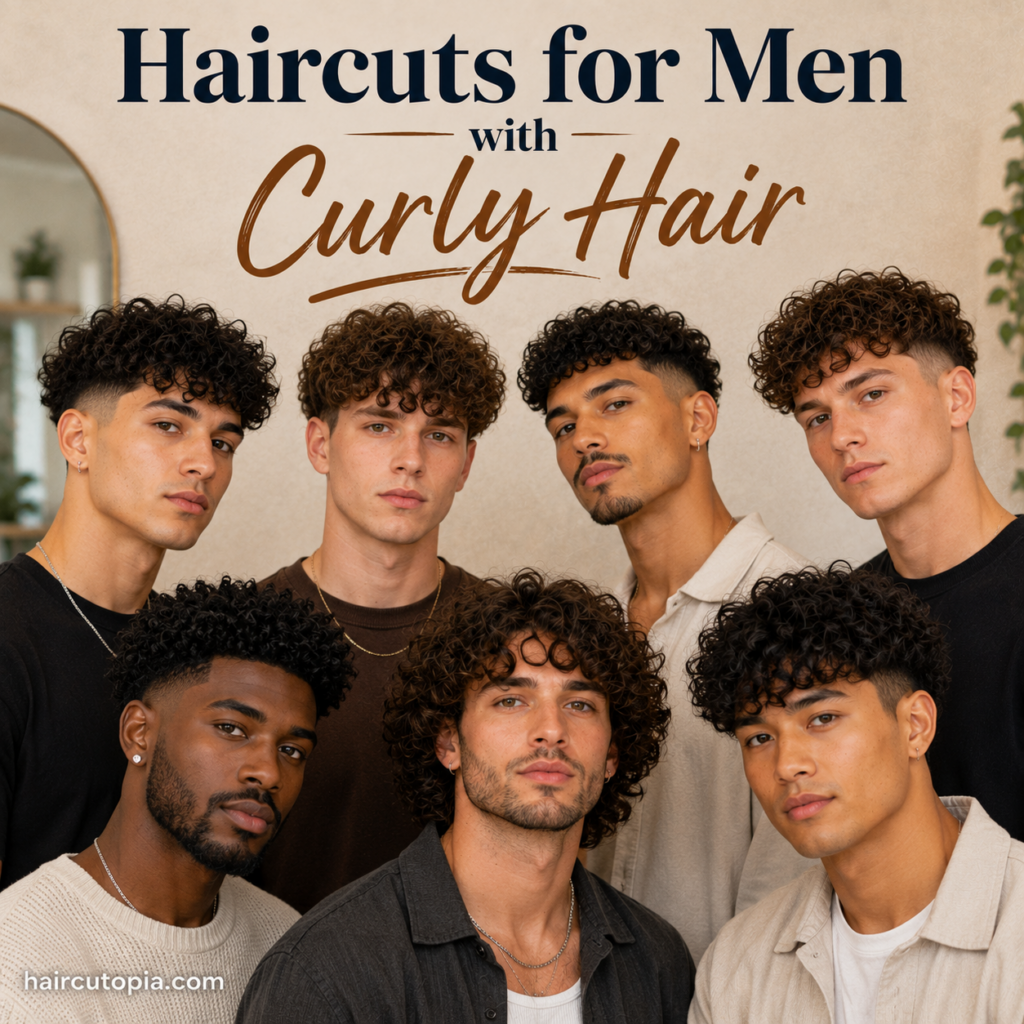 Haircuts for Men with Curly Hair: 20 Stylish Cuts for Every Curl Type
 Textured Crop Haircuts for Frizzy Hair: The Best Styles to Tame Frizz with Modern Texture
 Slick Back Haircuts for Frizzy Hair: Stylish Ways to Control Flyaways and Add Definition
 Slick Back Haircuts for Curly Hair: Modern Styles That Showcase Natural Texture