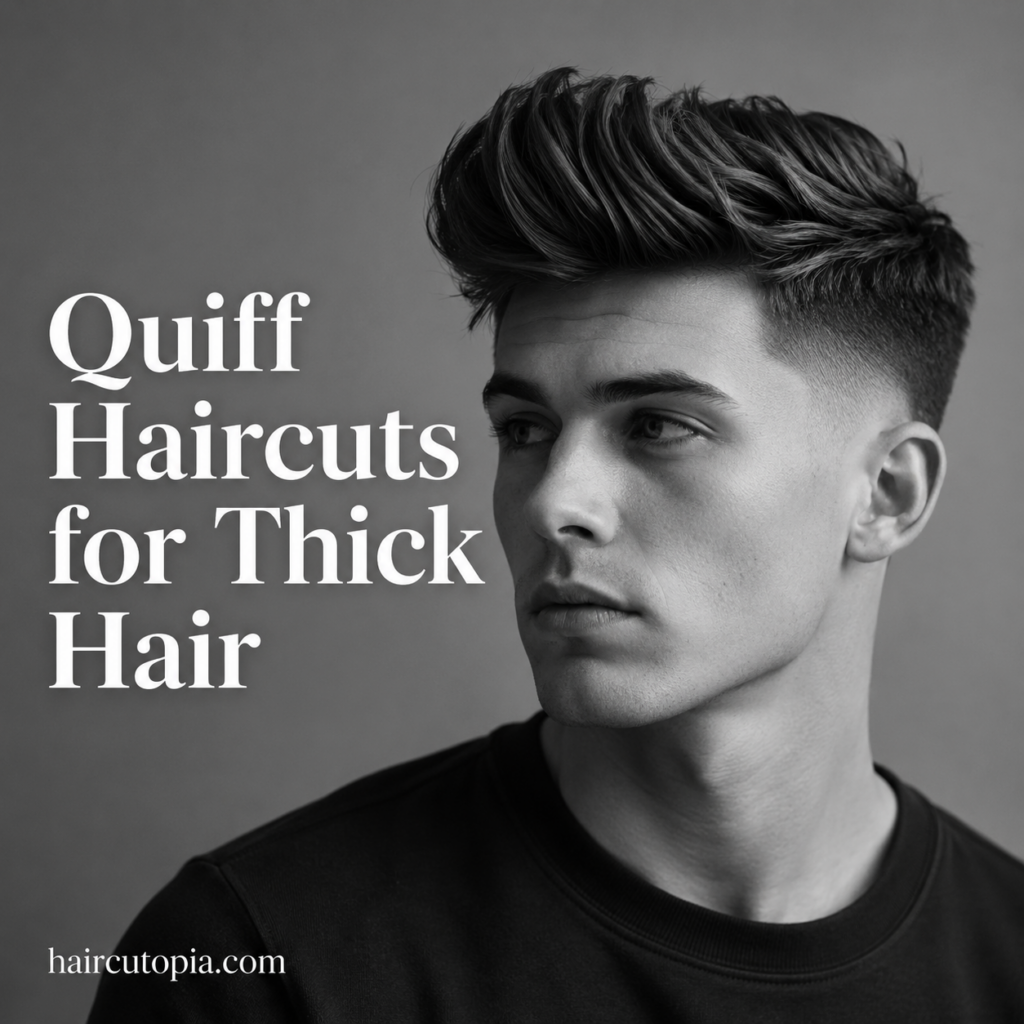
A quiff is one of the best haircuts for men with thick hair. It has enough length on top to show off natural volume, while the sides can be tailored to keep the overall shape clean and manageable.
Thick hair gives a quiff more structure than fine hair, which means it can hold height, texture, and movement with less effort. The tradeoff is that dense hair can become bulky, heavy, or difficult to direct if the cut is not shaped correctly.
The key is not simply growing the top longer. A great quiff haircut for thick hair needs strategic weight removal, the right taper or fade, and enough texture to keep the style from looking stiff.
Why a Quiff Works So Well for Thick Hair
Thick hair naturally has the density needed to create a full quiff. Instead of relying heavily on styling products to fake volume, you can use your natural hair texture to build lift at the front.
A quiff can also be adjusted to fit different face shapes, personal styles, and workplace settings. It can look polished and classic, relaxed and textured, or sharp and modern.
For men with thick hair, the biggest benefits include:
- Natural volume without excessive product
- Stronger hold and shape throughout the day
- Plenty of options for fades, tapers, and longer sides
- A style that can be dressed up or worn casually
- Easy customization based on hair texture and face shape
The main goal is controlling bulk. Thick hair should look full on purpose, not wide or puffy around the sides.
What to Ask Your Barber for a Quiff Haircut
Before choosing a specific quiff style, it helps to know the basic details that make the haircut work.
Ask your barber to keep enough length on top to style the front upward and back. Most quiffs need at least 3 to 5 inches on top, although longer versions can create a more dramatic look.
You may also want to ask for:
- Internal layering or texturizing to remove excess weight
- A taper, low fade, mid fade, or high fade on the sides
- A softer transition from the top into the sides
- Extra length at the front for height and movement
- A natural neckline or a clean tapered finish
If your hair is especially dense or coarse, mention that you want the haircut to feel lighter and easier to style. Your barber may use point cutting, thinning shears, or layering techniques to reduce bulk without making the hair look thin.
Best Quiff Haircuts for Thick Hair
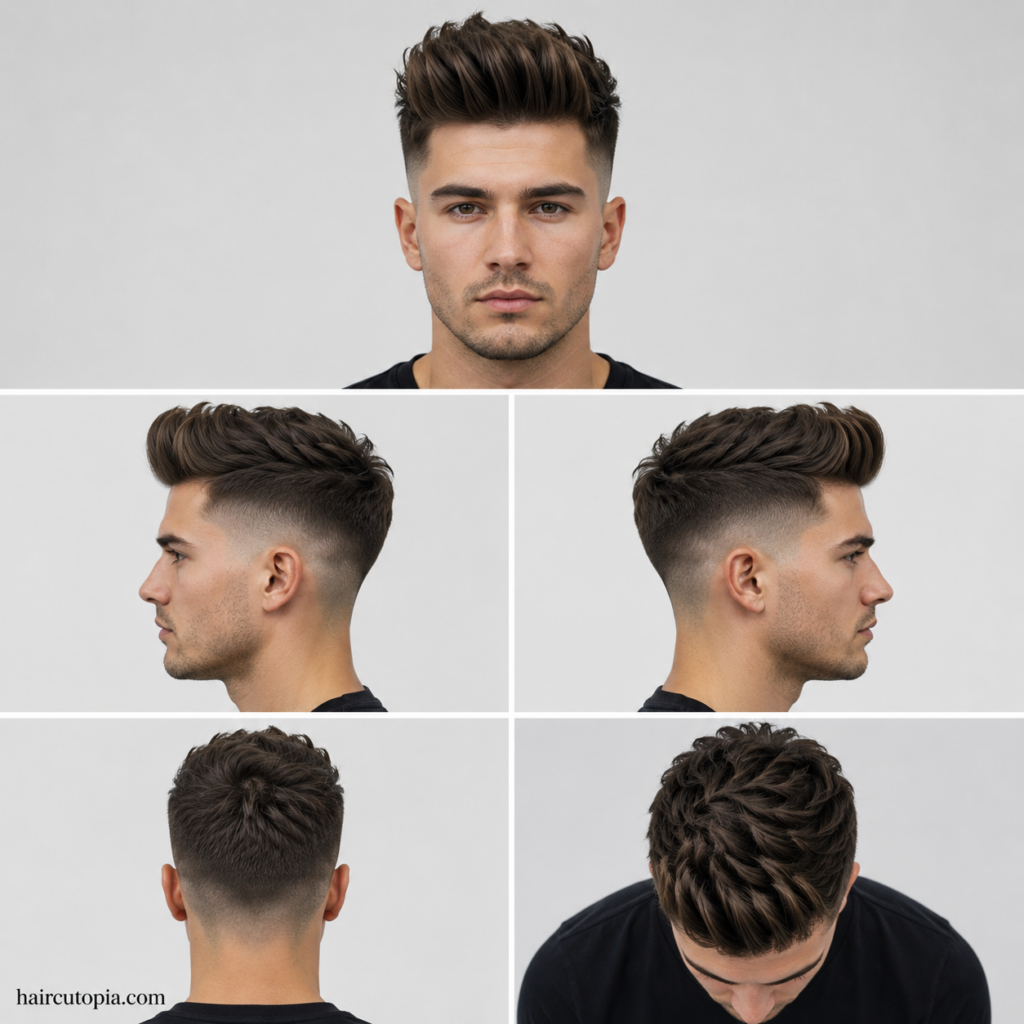
Classic Quiff with Tapered Sides
The classic quiff is clean, balanced, and easy to wear in almost any setting. The hair is longer on top, with the front brushed upward and slightly back. The sides are tapered rather than taken extremely short.
This is a strong choice if you want a professional haircut that still has personality. It works especially well for thick straight or slightly wavy hair.
Keep the top moderately long and avoid overdoing the height. Thick hair already creates volume, so a controlled quiff often looks better than an oversized one.
Textured Quiff with Low Fade
A textured quiff with a low fade is one of the most popular options for thick hair. The low fade keeps the haircut neat around the ears and neckline, while the top stays fuller and more relaxed.
The texture helps break up dense hair so it does not sit like one solid block. Instead of combing every strand into place, the top is styled with separation and natural movement.
This haircut works well for men who want a modern look without going too short on the sides.
Messy Quiff for Thick Wavy Hair
Thick wavy hair is ideal for a messy quiff because the natural bend in the hair adds texture before you even start styling.
The front can be pushed up and back loosely, while the rest of the top is worked with a matte clay or texture paste. The result is casual but still intentional.
Avoid using too much product with this style. Heavy pomades can weigh down thick waves and make them look greasy. A lightweight matte product usually gives better separation.
Short Quiff with Mid Fade
A short quiff is a practical choice for men who like the shape of a quiff but do not want a long styling routine every morning.
The top stays shorter, usually around 2 to 3 inches, while the front has just enough length to lift upward. A mid fade creates contrast and keeps the haircut sharp.
This is a good option for thick hair that grows outward quickly. Shorter length on top makes it easier to manage, while the quiff shape still gives the haircut a more styled appearance than a basic short back and sides.
Long Textured Quiff
A long textured quiff gives thick hair room to show off its natural volume. The top is left longer, often 4 to 6 inches, with layers added to prevent it from becoming too heavy.
This style can be brushed back for a cleaner look or worn slightly forward and messy for a more relaxed finish.
Because the top is longer, regular trims are important. Without maintenance, thick hair can start to lose shape and become difficult to control around the crown and sides.
Quiff with Skin Fade
A quiff with a skin fade creates a bold contrast between the fuller top and closely faded sides. It is a strong, modern look that works especially well if your thick hair is straight, dense, or slightly coarse.
The fade can start low, mid, or high depending on how dramatic you want the haircut to feel.
A low skin fade keeps the look more balanced. A high skin fade puts more attention on the quiff and can make the face appear longer, which may be helpful for rounder face shapes.
Disconnected Quiff
A disconnected quiff has a clear separation between the longer top and the short sides. There is little or no gradual blending where the two sections meet.
This haircut can look stylish on thick hair because the density on top creates a strong shape. However, it needs regular maintenance to stay sharp.
The disconnected quiff is best for men who like a more fashion-forward look. If you prefer something subtle and easy to grow out, a blended taper or fade may be the better choice.
Quiff with Drop Fade
A drop fade curves down behind the ear instead of following a straight line around the head. When paired with a quiff, it adds shape and makes the haircut feel more detailed from the side and back.
Thick hair benefits from the drop fade because it removes weight around the lower sides while keeping the top visually full.
This style works well with textured, wavy, or slightly messy quiffs. It is also a good option if you want a fade that feels more customized than a standard low or mid fade.
Brushed-Back Quiff
A brushed-back quiff is smoother and more polished than a messy or textured version. The front is lifted, then directed backward into the rest of the hair.
It can look great for work, formal events, or men who prefer a cleaner finish. Thick hair provides the density needed to keep the style in place, but it may need a blow dryer and a medium-hold styling cream or pomade.
Ask your barber to remove enough weight from the top so the hair can move backward without puffing up too much.
Side-Swept Quiff
A side-swept quiff combines the lift of a traditional quiff with the direction of a side part. The front is styled upward, then swept slightly to one side.
This is a useful option for thick hair because it gives the volume somewhere to go. Rather than pushing everything straight back, the hair is guided diagonally across the head.
A side-swept quiff can also soften a strong hairline or work well with a natural side part.
Curly Quiff for Thick Hair
Men with thick curly hair can wear a quiff without trying to force the curls into a smooth shape. The best version usually keeps the curls defined and lets the front rise naturally.
The sides can be tapered or faded, while the top stays longer with controlled volume. A curl cream, mousse, or lightweight styling product can help define the shape without making the curls crunchy.
Avoid cutting the top too short. Thick curls often shrink as they dry, so leave enough length to create visible height at the front.
Modern Quiff with Taper Fade
A taper fade is more gradual and understated than a skin fade. It keeps some length around the sides and back while still giving the haircut a clean finish.
This makes it a great choice for thick hair, especially if you do not want the sides to look too exposed. The top can be styled into a loose quiff, a textured quiff, or a cleaner brushed-back shape.
A modern quiff with a taper fade is versatile enough for everyday wear and grows out more naturally than a high-contrast fade.
How to Style a Quiff with Thick Hair
Styling thick hair is mostly about direction and control. If you apply product randomly, the hair can become heavy and difficult to shape.
Try this simple routine:
- Start with towel-damp hair, not soaking wet hair.
- Apply a small amount of pre-styling product, such as sea salt spray, mousse, or a lightweight styling cream.
- Blow-dry the front upward and back using your fingers or a vented brush.
- Dry the sides in the direction you want them to sit.
- Use a small amount of clay, paste, or pomade to add texture and hold.
- Finish by pinching and lifting the front until the quiff has the shape you want.
For thick hair, start with less product than you think you need. You can always add more, but too much product can flatten the quiff or make it look overly shiny.
Best Styling Products for Thick Hair Quiffs
The best product depends on whether you want a natural, matte, polished, or high-hold finish.
Matte Clay
Matte clay is one of the best choices for thick hair because it adds grip and separation without excessive shine. It works especially well for textured and messy quiffs.
Styling Paste
A styling paste usually provides flexible hold and a natural finish. It is a good everyday option if you want to restyle your hair during the day.
Pomade
Pomade works best for classic, smooth, or brushed-back quiffs. Water-based pomades are often easier to wash out than traditional oil-based formulas.
Sea Salt Spray
Sea salt spray is useful as a pre-styler. It can add texture and help thick hair feel less heavy before blow-drying.
Volumizing Mousse
Mousse can help create lift at the roots without making thick hair stiff. It is especially useful if your hair tends to fall flat after it dries.
How to Keep a Thick-Hair Quiff from Looking Too Bulky
The difference between a great quiff and an awkward one often comes down to bulk management.
Here are a few ways to keep the haircut balanced:
- Keep the sides short enough to prevent a mushroom-like shape.
- Ask for texture and weight removal through the top.
- Avoid growing the crown too long unless it is layered.
- Blow-dry the hair into shape instead of relying only on product.
- Use matte products if your hair already has a lot of density.
- Get a trim every 3 to 5 weeks to maintain the proportions.
If your hair is very thick, avoid a blunt, one-length cut on top. It can make the quiff look boxy and difficult to style.
Which Face Shapes Suit a Quiff?
A quiff can work with most face shapes, but the height and side length should be adjusted to create balance.
Round Faces
A quiff can help add height and make the face appear longer. Pair it with a mid or high fade for more definition.
Oval Faces
Oval faces can wear almost any quiff variation. A classic quiff, textured quiff, or side-swept quiff all tend to work well.
Square Faces
A textured quiff with a low or mid fade can soften the strong angles of a square face while keeping the haircut masculine and structured.
Long Faces
Avoid making the quiff too tall if your face is already long. Keep the top moderate and leave a little more length on the sides.
Heart-Shaped Faces
A softer quiff with texture and a low taper can help balance a wider forehead and narrower chin.
How Often Should You Trim a Quiff?
Most quiff haircuts for thick hair need a cleanup every 3 to 5 weeks. Fades may need more frequent visits if you want them to stay sharp.
The top can usually go a little longer between cuts, but thick hair grows outward quickly. Regular trims help prevent the style from becoming too wide, heavy, or uneven.
If you are growing out a longer quiff, ask for a shape-up rather than a major cut. Your barber can remove bulk from the sides and crown while keeping the length you are working toward.
Final Thoughts
Quiff haircuts are a natural match for thick hair. The volume is already there; the goal is simply shaping it in a way that looks intentional and easy to maintain.
Whether you prefer a clean classic quiff, a textured low-fade version, or a relaxed messy style, the right haircut can make thick hair feel like an advantage instead of a daily challenge.
Focus on keeping the sides controlled, removing excess weight from the top, and using a styling routine that gives the quiff lift without making it stiff. With the right cut and a little practice, a thick-hair quiff can become one of the most reliable hairstyles in your rotation.

Related Posts
 Haircuts for Men with Curly Hair: 20 Stylish Cuts for Every Curl Type
 Haircuts for Men with Fine Hair: 18 Stylish Cuts That Make Hair Look Thicker
 Haircuts for Men with Thick Hair: 20 Stylish Cuts That Make Thick Hair Easy to Manage
 Haircuts for Men with Oval Faces: 35 Stylish Cuts That Always Look Good