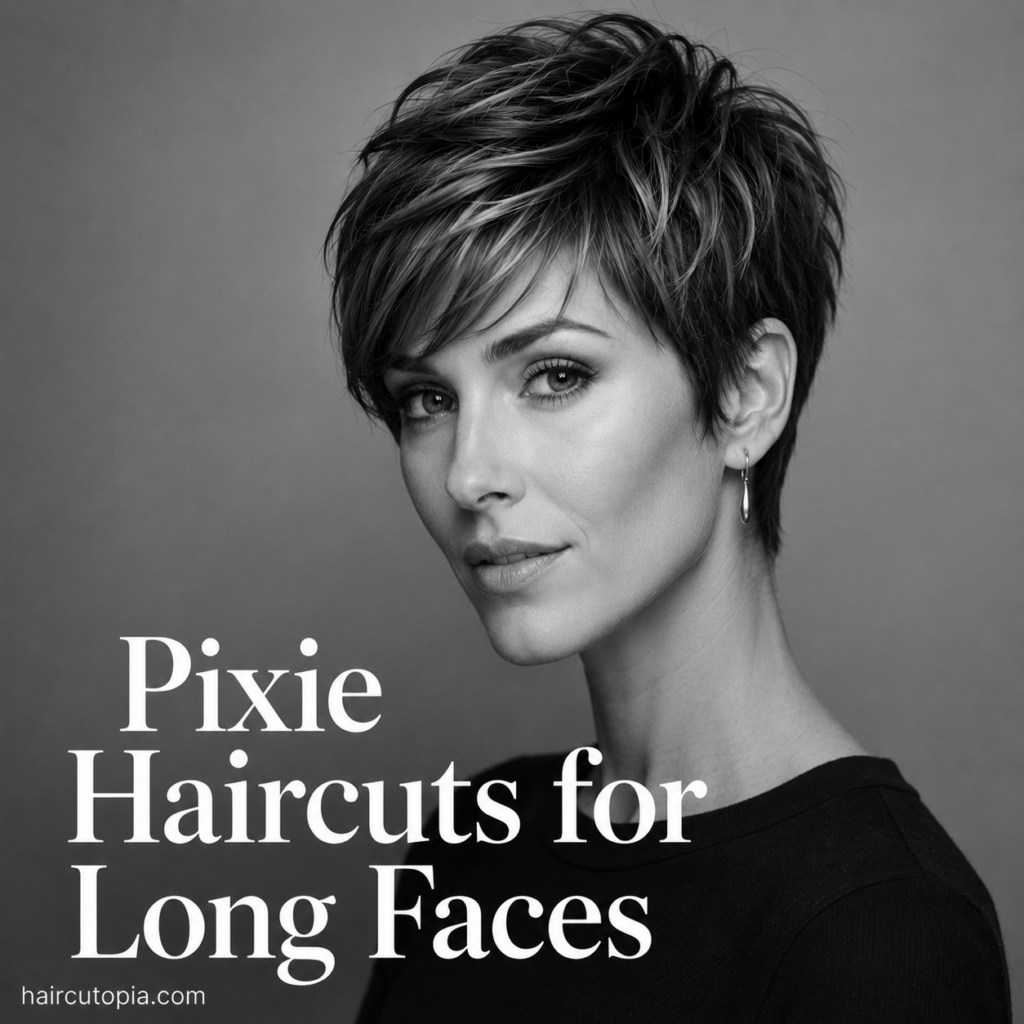
Pixie haircuts can look incredibly stylish on long faces, but the shape of the cut matters. When your face is naturally longer than it is wide, the goal is usually to create balance with softness, side volume, fringe, and texture rather than adding excessive height at the crown.
That doesn’t mean you have to follow strict haircut rules. A good pixie should still match your personality and natural hair texture. The right layers and styling choices simply help the haircut work with your facial proportions instead of visually stretching them.
From long pixies with side-swept bangs to textured crops, curly styles, and modern pixie bobs, there are plenty of flattering options to explore.
Below, you’ll find 25 of the best pixie haircuts for long faces, along with practical styling tips, hair type recommendations, and advice for choosing a cut you’ll actually enjoy maintaining.
What Is Considered a Long Face Shape?
A long face, sometimes called an oblong face shape, is noticeably longer than it is wide.
Common characteristics include:
- A longer forehead
- Similar width through the forehead and cheekbones
- A longer cheek area
- A softly rounded or slightly defined jawline
- An elongated overall appearance
Some long faces are narrow and angular, while others have softer curves. This is why the same pixie haircut won’t look identical on everyone.
Your hair texture, forehead height, jawline, and natural volume also affect how a short haircut frames your face.
Why Pixie Haircuts Work for Long Faces
A pixie exposes more of the face than a bob or longer hairstyle, which might make some people with long faces hesitant to go short.
However, the right pixie can actually create excellent balance.
The most flattering styles often add:
- Soft width around the sides
- Movement near the temples
- Fringe across part of the forehead
- Textured layers
- Horizontal visual interest
These details can make the face appear more proportionate without hiding your natural features.
The key is usually avoiding a haircut that is extremely short on the sides and dramatically tall on top. That combination can exaggerate facial length.
What Makes a Pixie Flattering for a Long Face?
The best pixie haircuts for long faces tend to have softness and movement.
Look for features such as:
- Side-swept bangs
- Wispy fringe
- Curtain-style fringe
- Textured side layers
- Moderate crown volume
- Longer front sections
- Soft, feathered edges
A slightly messy finish can also work beautifully because it introduces movement in multiple directions.
Perfectly vertical styling isn’t always the goal. A little width and texture often create a more flattering shape.
Best Pixie Haircuts for Long Faces
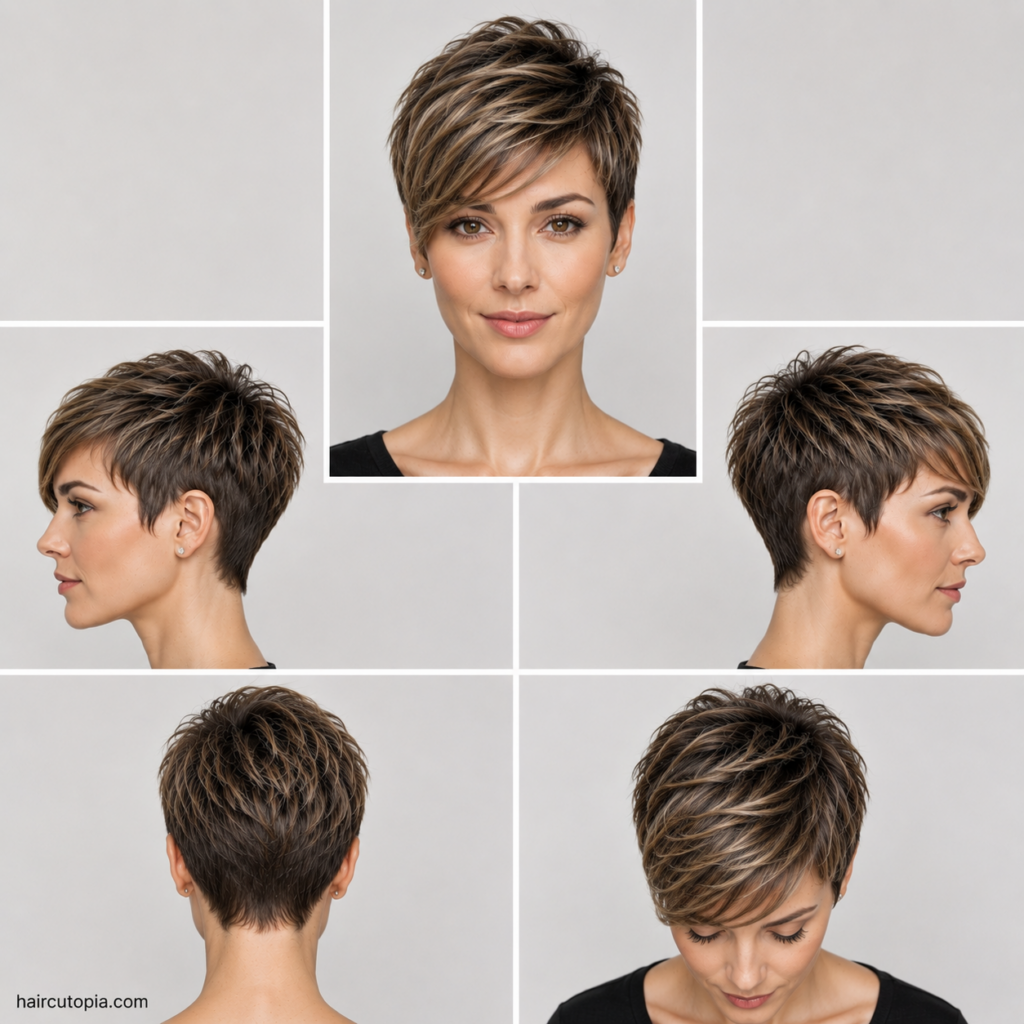
1. Long Pixie with Side-Swept Bangs
A long pixie with side-swept bangs is one of the most flattering choices for a long face.
The fringe visually breaks up the forehead while the diagonal shape creates movement across the face.
Longer layers also allow you to tuck the hair behind your ears or style it with soft waves.
This is an excellent option for anyone transitioning from a bob to a pixie.
2. Textured Pixie Cut
A textured pixie introduces movement throughout the haircut.
Piecey layers prevent the hair from sitting flat or creating a severe vertical silhouette.
Use a lightweight texture cream to define individual sections without making the hair stiff.
3. Pixie with Wispy Bangs
Wispy bangs softly cover part of the forehead.
Unlike heavy blunt bangs, they create a light, natural finish that blends into the rest of the haircut.
This style works especially well for fine and straight hair.
4. Pixie Bob
A pixie bob keeps more length around the sides of the head.
That extra fullness can visually balance a longer face while maintaining the convenience of short hair.
The front sections can be worn straight, waved, or tucked behind the ears.
5. Wavy Pixie
Soft waves create horizontal movement and gentle volume.
This can be especially flattering for narrow or elongated faces.
Natural waves often require very little styling beyond a lightweight curl cream or texture spray.
6. Curly Pixie
Curls naturally create softness and width.
A carefully shaped curly pixie can balance facial length while showcasing natural texture.
Ask your stylist to maintain some fullness around the sides rather than concentrating all the volume at the crown.
7. Feathered Pixie
Feathered layers create a soft, airy appearance.
The outward movement of the layers can add subtle width around the upper face.
This haircut works particularly well on fine to medium hair.
8. Pixie with Curtain Bangs
Curtain bangs divide softly through the center or slightly off-center.
The fringe visually shortens the forehead while framing the eyes.
A longer pixie generally provides enough length for the bangs to blend naturally into the sides.
9. Choppy Pixie
Choppy layers create irregular movement throughout the haircut.
The uneven texture prevents the hairstyle from appearing too vertical or structured.
It’s a playful option that works well with both fine and medium-density hair.
10. Shaggy Pixie
A shaggy pixie combines short hair with relaxed, uneven layering.
The intentionally undone finish creates movement around the sides and forehead.
This style is particularly flattering on naturally wavy hair.
11. Side-Parted Pixie
A deep side part changes the visual direction of the haircut.
Instead of emphasizing vertical length, the hair sweeps diagonally across the forehead.
This simple styling adjustment can make a noticeable difference.
12. Asymmetrical Pixie
An asymmetrical pixie keeps one side longer than the other.
The uneven shape creates strong horizontal and diagonal lines that balance an elongated face.
It also gives the haircut a modern, editorial appearance.
13. Layered Pixie
Layers add dimension and prevent the haircut from becoming one solid shape.
For long faces, the layers can be positioned to create softness around the temples and sides.
This style is easy to customize for different hair textures.
14. Messy Pixie
A tousled pixie feels casual and effortless.
The multidirectional texture breaks up the length of the face and keeps the haircut from looking overly polished.
Use your fingers instead of a brush when styling for a more natural finish.
15. Classic Pixie with Side Fringe
A traditional pixie becomes more flattering for a long face when paired with side fringe.
The bangs soften the forehead while the short length keeps the haircut clean and easy to maintain.
It’s a timeless option that works across many age groups.
16. Soft Feminine Pixie
A soft pixie avoids harsh lines and extreme contrasts.
Wispy layers, gentle fringe, and subtle side volume create a delicate silhouette.
This is a great option if you want short hair without an overly edgy appearance.
17. Pixie with Full Bangs
Full bangs can visually shorten a longer forehead.
The key is keeping the fringe slightly textured rather than cutting it into an extremely heavy, rigid line.
Soft ends make the overall style feel more natural.
18. Tousled Pixie Bob
A tousled pixie bob combines extra side length with relaxed texture.
The additional width around the cheeks can help balance facial length.
This style looks especially good with natural waves.
19. Short Curly Pixie
A short curly pixie keeps natural curls defined while creating softness around the face.
Balanced side volume is particularly important.
Avoid shaping every curl upward if your goal is to reduce the appearance of facial length.
20. Piecey Pixie
Piecey layers create visible separation throughout the haircut.
The texture draws attention to the shape of the hairstyle rather than the length of the face.
A small amount of styling paste can help define the layers.
21. Side-Swept Tapered Pixie
A tapered pixie keeps the neckline clean while maintaining longer hair through the front.
Sweeping those layers sideways creates movement across the forehead.
This provides the polish of a tapered haircut without emphasizing vertical height.
22. Rounded Pixie
A softly rounded pixie creates gentle fullness around the sides of the head.
Unlike a severe bowl cut, the layers remain textured and natural.
The curved silhouette can balance a narrow, long face.
23. Pixie with Face-Framing Layers
Slightly longer sections around the temples create subtle framing.
These layers introduce horizontal movement and soften the transition from the forehead to the cheekbones.
It’s a small detail that can noticeably change the haircut.
24. Sleek Side-Swept Pixie
A sleek pixie can work for long faces when the hair is directed sideways rather than straight backward.
A deep side part and smooth fringe create a polished appearance.
Use lightweight smoothing cream to maintain shine without flattening the hair completely.
25. Low-Maintenance Textured Pixie
A low-maintenance pixie follows the natural direction of your hair.
Soft layers create movement without requiring daily heat styling.
For many women, finger styling with a small amount of texture cream is enough.
Choosing a Pixie for Your Hair Type
Your natural hair texture plays a major role in how a pixie behaves.
Choosing a haircut that works with your hair usually means less styling and fewer frustrating mornings.
Fine Hair
Fine hair benefits from lightweight layering and strategic texture.
Consider:
- Choppy pixies
- Wispy bangs
- Feathered layers
- Pixie bobs
- Piecey styling
Avoid heavy products that flatten the roots.
Thick Hair
Thick hair may need weight removed to maintain a balanced shape.
Helpful techniques include:
- Internal layering
- Texturizing
- Feathered ends
- Tapered necklines
Be cautious with extremely short sides and excessive height on top, as this can create a longer visual silhouette.
Curly Hair
Curly hair naturally creates width and movement.
For a flattering curly pixie:
- Maintain balanced side volume
- Follow the natural curl pattern
- Use curl-specific layers
- Keep curls moisturized
A stylist experienced with curly hair can shape the haircut while the curls are in their natural state.
Wavy Hair
Wavy hair is ideal for relaxed pixie styles.
Long pixies, shaggy cuts, and textured pixie bobs allow the natural wave pattern to create movement.
A small amount of curl cream or sea salt spray may be all you need.
Styling Tips for Long Faces
The way you style your pixie can be just as important as the haircut itself.
Try these techniques:
- Sweep bangs across the forehead.
- Create texture around the sides.
- Keep crown volume moderate.
- Use your fingers to create multidirectional movement.
- Add soft waves when you want extra width.
- Avoid brushing every layer straight upward.
You don’t need to eliminate crown volume completely. The goal is simply to keep the hairstyle balanced.
Pixie Haircuts with Bangs for Long Faces
Bangs are especially useful when styling a pixie for a longer face shape.
Some of the most flattering options include:
- Side-swept bangs
- Wispy bangs
- Curtain bangs
- Textured full fringe
- Piecey fringe
Fringe visually divides the length of the forehead and introduces horizontal movement.
If you have a cowlick or strong natural growth pattern, talk with your stylist before committing to heavy bangs. A softer fringe may be easier to maintain.
Hair Colors That Enhance Pixie Haircuts
Hair color can make short layers and texture more visible.
Popular options include:
- Dimensional brunette
- Chocolate brown
- Caramel highlights
- Soft blonde
- Ash blonde
- Platinum
- Copper
- Auburn
- Silver
- Face-framing highlights
Highlights through the top and side layers can create depth without adding physical volume.
How Often Should You Trim a Pixie?
Short hair changes shape quickly as it grows.
A typical maintenance schedule is:
- Every 4–6 weeks for short pixies
- Every 6–8 weeks for long pixies
- Every 8 weeks for pixie bobs
If you prefer a softer, grown-in appearance, you may be able to wait slightly longer between appointments.
The important thing is maintaining the balance of the haircut rather than following an exact calendar.
Common Pixie Mistakes to Avoid
Long faces often benefit from softness and side movement.
If facial balance is your goal, be cautious with:
- Extreme crown height
- Very tight sides combined with tall styling
- Slicked-back hair with no fringe
- Excessive vertical texture
- Heavy products that remove natural movement
Again, these aren’t absolute rules. Personal style matters.
If you love a dramatic high-volume pixie, you can still wear one. Understanding how the shape affects your facial proportions simply helps you make an informed choice.
What to Ask Your Stylist For
You don’t need to memorize complicated salon terminology.
Try saying:
“I’d like a textured pixie that creates some softness around the sides. I want fringe across part of my forehead and moderate volume on top rather than a lot of height.”
You can also discuss:
- How much time you spend styling your hair
- Whether you use heat tools
- Your natural hair texture
- How often you’re willing to get trims
Reference photos from multiple angles are extremely helpful for pixie haircuts.
The front view shows the fringe, but the side and back views reveal the actual structure of the cut.
Frequently Asked Questions
Are pixie haircuts good for long faces?
Yes. Pixie haircuts can be very flattering on long faces when they include side movement, fringe, and balanced volume.
What pixie haircut makes a long face look shorter?
Pixies with side-swept bangs, wispy fringe, curtain bangs, or fuller side layers can visually reduce the appearance of facial length.
Should long faces avoid short hair?
No. Short hair can look excellent on long faces. The shape and styling direction of the haircut matter more than the overall length.
Are bangs good for long faces?
Yes. Bangs are one of the easiest ways to visually break up a longer forehead and create more balanced facial proportions.
Can women over 50 with long faces wear pixie cuts?
Absolutely. Feathered, layered, textured, and side-swept pixies are versatile choices for women of any age.
What is the easiest pixie to style?
A textured pixie designed around your natural hair pattern is usually the easiest. It often requires only a lightweight styling cream and a few minutes of finger styling.
Final Thoughts
Pixie haircuts can beautifully complement long faces when the haircut introduces softness, fringe, and movement around the sides. You don’t need to hide your facial length or follow rigid hairstyle rules. Small details such as side-swept bangs, textured layers, and moderate crown volume can simply create a more balanced overall silhouette.
Whether you prefer a relaxed pixie bob, a curly crop, a shaggy style, or a classic pixie with fringe, choose a haircut that works with your natural texture and everyday routine.
Bring multiple reference photos to your stylist and discuss how you want the haircut to look from the front, sides, and back. The best pixie isn’t just flattering in a photograph—it should also feel easy and comfortable to wear in real life.
Related Posts
 Short Haircuts for Coarse Hair: Flattering Styles, Ideas, and Tips
 Haircuts for Women with Curly Hair: 25 Flattering Styles for Every Curl Type
 Short Haircuts for Curly Hair: 25 Stylish Ideas, Tips, and Maintenance Guide
 Haircuts for Women with Thin Hair: 25 Flattering Styles That Add Volume and Confidence