Fine hair has its advantages. It can feel soft, dry quickly, and respond beautifully to the right haircut. The frustrating part is that it can also fall flat, lose volume by lunchtime, or look weighed down when there is too much length.
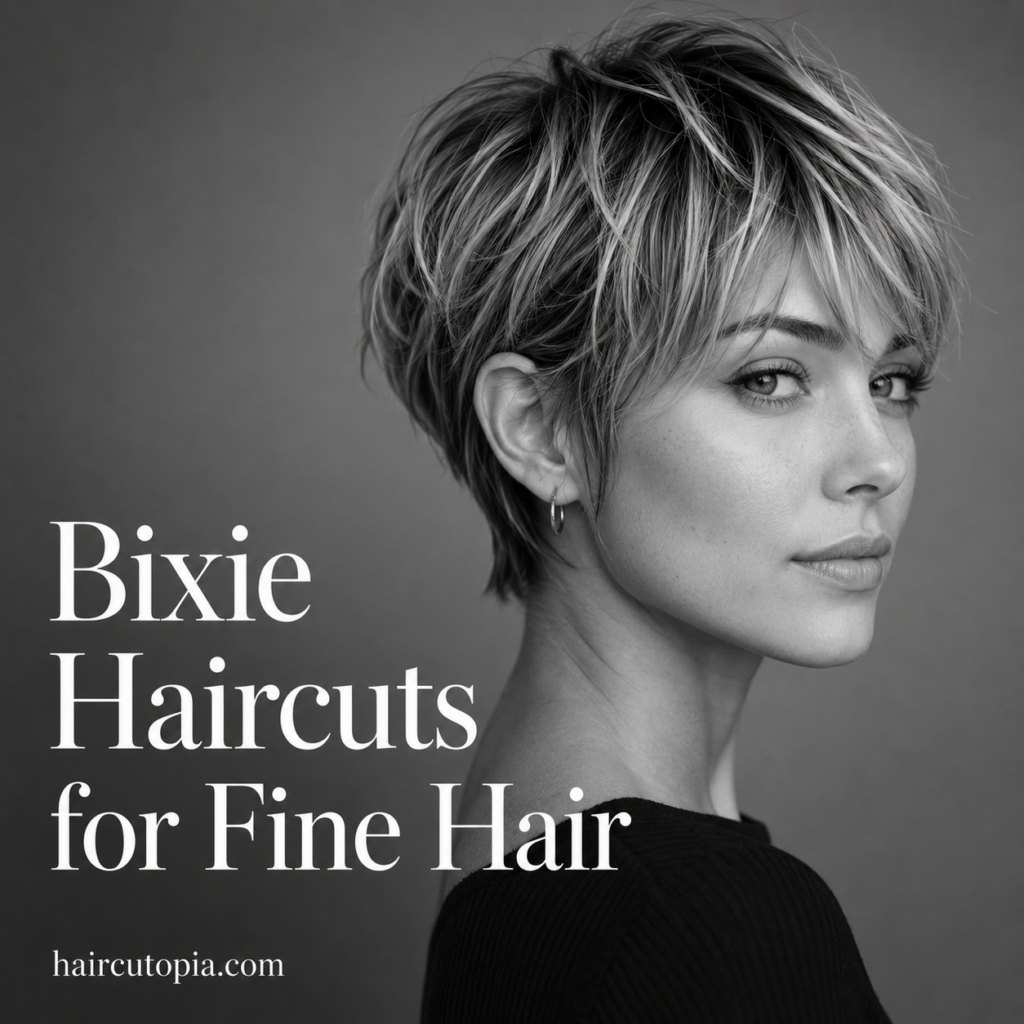
That’s one reason bixie haircuts for fine hair are so appealing.
A bixie sits somewhere between a pixie and a bob. It keeps the lightness and movement of a short cut while leaving enough length for softness, texture, and different styling options. When the shape is tailored to fine strands, a bixie can make the hair look fuller without relying on heavy products or complicated daily styling.
The trick is choosing the right layers. Fine hair does not always benefit from aggressive thinning or excessive texture. In many cases, keeping some density through the ends while adding strategic lift around the crown creates a much stronger shape.
If you’re thinking about going shorter, these 25 bixie haircut ideas offer plenty of inspiration.
Why Bixie Haircuts Work for Fine Hair
Long fine hair can sometimes become flat simply because of its own weight. Even if you have plenty of individual strands, a longer cut may lack visible body through the roots and mid-lengths.
A bixie removes much of that weight.
The shorter shape allows the roots to lift more easily, while carefully placed layers create movement. Because a bixie is longer than a traditional pixie, it can still have softness around the ears, forehead, and neckline.
Some of the biggest benefits include:
- More natural lift at the roots
- Less weight pulling the hair down
- A fuller-looking silhouette
- Faster drying and styling
- Plenty of fringe options
- Easy texture with lightweight products
- A modern shape that can be customized
Fine hair and thin hair are not exactly the same. Fine hair refers to the diameter of each individual strand, while thin hair generally refers to lower overall density.
You can have fine hair and still have a lot of it.
That distinction matters when choosing a bixie because the amount of layering and weight removal should be based on both strand texture and overall density.
25 Bixie Haircuts for Fine Hair
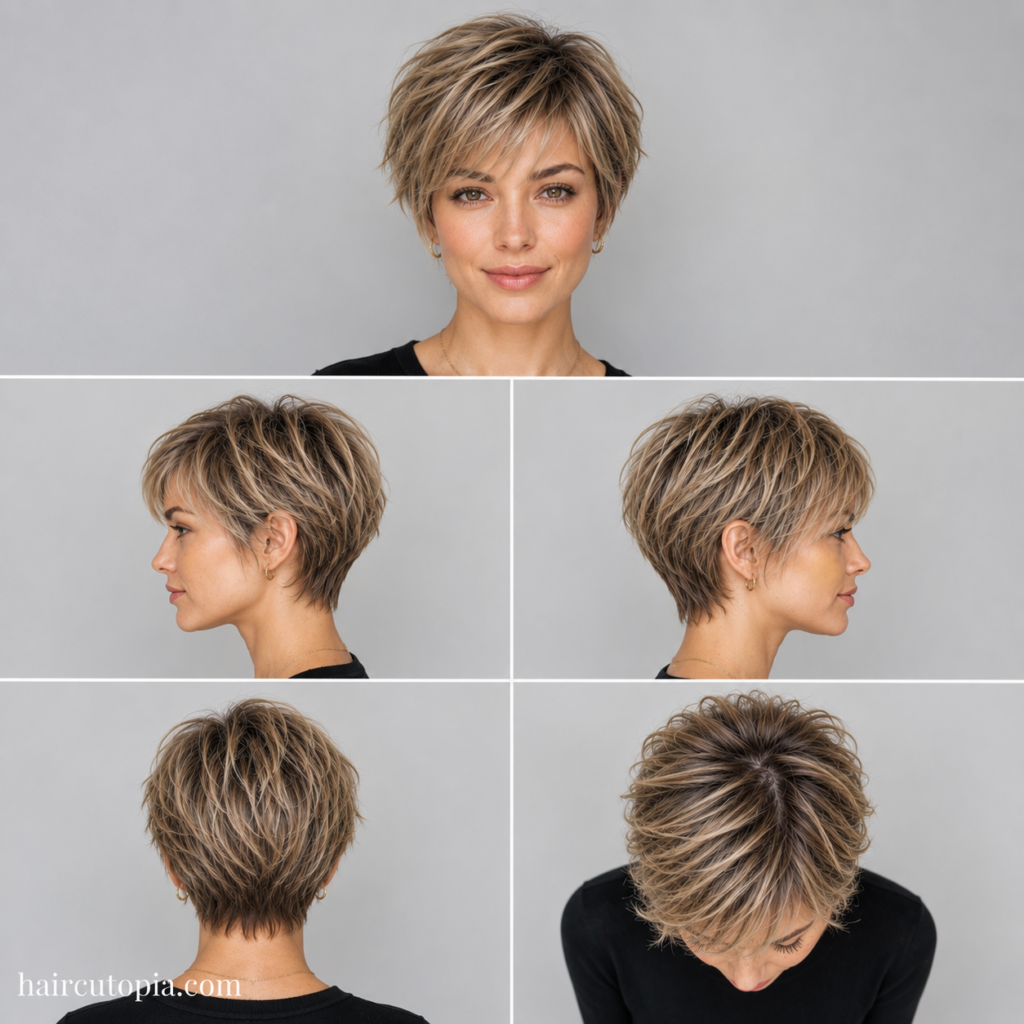
1. Soft Layered Bixie
A soft layered bixie is a great starting point if you want more movement without making fine hair look overly piecey.
The layers are blended rather than dramatically separated. This helps maintain visual density while giving the crown and sides a lighter shape.
A gentle blow-dry with your fingers may be all you need for everyday styling.
2. Textured Bixie for Fine Hair
Light texture can make fine strands appear more dimensional.
The key word is light. Too much texturizing may remove the density that gives fine hair a fuller appearance.
Ask for subtle separation through the ends and crown. A lightweight texture spray can enhance the finished shape.
3. Long Bixie Haircut
A long bixie is ideal if you are nervous about going dramatically short.
Extra length around the ears and front creates a softer transition from a bob. The haircut still feels light enough to encourage movement.
This version also gives you the option to tuck one or both sides behind your ears.
4. Bixie With Side-Swept Bangs
Side-swept bangs create instant direction through the front of the haircut.
Instead of allowing fine hair to fall straight down, the diagonal fringe creates visible movement. It can also help disguise flatness around the hairline.
Keep the bangs relatively light so they blend into the side layers.
5. Choppy Bixie
A choppy bixie has a more casual, modern finish.
Shorter and longer pieces are blended together to create texture. On fine hair, the ends should not be excessively thinned.
A small amount of styling paste can help define individual sections without making the hair stiff.
6. Crown-Boosting Bixie
If your main concern is flatness at the top, consider a bixie with shorter crown layers.
These layers reduce weight and encourage natural lift. The sides can remain slightly longer to keep the haircut balanced.
Blow-drying the crown against its natural growth direction can add even more volume.
7. Feathered Bixie
Feathered layers create soft, airy movement.
This style works particularly well on straight fine hair that tends to sit close to the head. The ends are gently directed away from the face or separated around the crown.
The result feels light without looking overly messy.
8. Bixie With Curtain Bangs
Curtain bangs add softness around the face while creating the illusion of additional movement.
Longer fringe sections can blend directly into the sides of the bixie. This prevents the bangs from looking disconnected from the rest of the haircut.
A center or slightly off-center part works beautifully with this style.
9. Shaggy Bixie for Fine Hair
A shaggy bixie combines the shape of a short haircut with the relaxed movement of a shag.
Layers are visible throughout the crown and fringe. The finished style should feel slightly undone.
Fine wavy hair often works especially well with this haircut because natural bends create additional dimension.
10. Sleek Bixie Haircut
Fine hair does not always need dramatic volume.
A sleek bixie can look polished and sophisticated when the haircut has a strong shape. Keeping some fullness through the perimeter helps the hair appear healthy and substantial.
Use a lightweight smoothing product rather than a heavy oil.
11. Wispy Bixie
A wispy bixie has soft, separated ends and delicate movement.
The fringe is usually light, while the crown maintains enough layering to create lift. This style can feel particularly flattering if you prefer an understated short haircut.
Avoid applying too much product to the ends.
12. Side-Parted Bixie
Sometimes a simple change in parting can completely transform fine hair.
A deep side part lifts the roots and creates asymmetrical fullness. One side can be styled with extra volume while the other is tucked behind the ear.
This is an easy way to make a bixie feel more dramatic without changing the actual cut.
13. Rounded Bixie
A rounded bixie creates a smooth, fuller silhouette.
The shape follows the head while maintaining subtle volume through the crown and sides. Fine hair can benefit from the visual density created by the curved outline.
Soft internal layering keeps the haircut from feeling heavy.
14. Bixie With a Tapered Nape
A tapered nape creates contrast between the shorter back and fuller crown.
Because the neckline sits closer to the head, the upper layers appear more voluminous. This can be especially effective on fine hair.
The clean back also gives the haircut a polished finish.
15. Tousled Bixie
Tousled texture makes a bixie feel relaxed and effortless.
Rather than styling every layer into place, use your fingers to create irregular movement. The separated pieces can make fine hair appear more dimensional.
A light texture mist is usually enough to maintain the style.
16. Face-Framing Bixie
Longer pieces around the face soften a short haircut.
These layers can sit near the cheekbones, jawline, or somewhere in between. They also create visual interest at the front, where fine hair may otherwise look flat.
Face-framing pieces work well with both center and side parts.
17. Blunt Bixie for Fine Hair
Blunt edges can be surprisingly flattering on fine hair.
Keeping selected sections more solid creates the appearance of density. The crown can still have subtle layering for lift.
This combination gives you movement without sacrificing fullness through the ends.
18. Asymmetrical Bixie
An asymmetrical bixie leaves one side noticeably longer than the other.
The uneven shape creates a strong focal point and adds visual dimension. Longer front sections can be swept across the forehead for additional movement.
This style can be worn polished or textured.
19. French-Inspired Bixie
A French-inspired bixie has a soft, slightly undone appearance.
Think natural texture, delicate fringe, and minimal styling. The haircut should look good without every strand sitting perfectly in place.
This is a great choice if you prefer understated hairstyles.
20. Bixie With Full Bangs
A fuller fringe can create the illusion of density around the front of the haircut.
The bangs should be customized based on your hairline and overall amount of hair. Taking too much hair from the crown to create bangs may reduce volume elsewhere.
A stylist can help determine the right fringe depth.
21. Pixie-Forward Bixie
This version leans closer to a traditional pixie.
The sides and back are shorter while the crown and front maintain additional length. Fine hair benefits from the reduced weight and added lift on top.
Use styling paste sparingly to create definition.
22. Bob-Forward Bixie
A bob-forward bixie keeps more length around the perimeter.
It is a comfortable option if you currently have a bob and want something shorter without making a dramatic jump to a pixie.
Subtle crown layers add movement while the longer outline maintains fullness.
23. Wavy Bixie for Fine Hair
Natural waves can make fine hair appear fuller because they create bends and separation.
A wavy bixie should be cut with your natural texture in mind. Removing too much weight can disrupt the wave pattern.
Use a lightweight mousse or curl foam to encourage definition.
24. Voluminous Bixie Blowout
A bixie can look surprisingly glamorous with a smooth, voluminous blowout.
Use a small round brush to lift the roots and gently curve the ends. Focus most of the volume around the crown.
Flexible hairspray can help maintain the shape without creating stiffness.
25. Low-Maintenance Bixie
A low-maintenance bixie relies on a strong haircut rather than daily heat styling.
The layers are placed to work with your natural growth pattern. Ideally, the hair should air-dry into a wearable shape with minimal adjustment.
This is a practical option if you prefer simple morning routines.
How to Ask Your Stylist for a Bixie for Fine Hair
Bringing a reference photo is helpful, but you should also explain how your hair behaves in everyday life.
Tell your stylist if your hair:
- Falls flat at the crown
- Becomes oily quickly
- Has natural waves or bends
- Separates around the hairline
- Is fine but very dense
- Has lower overall density
- Is usually air-dried
- Is regularly styled with heat
Be clear about how much styling you realistically want to do.
A haircut that looks incredible after a professional blowout may not be the right choice if you prefer to wash your hair and leave the house.
You can also ask your stylist to preserve density through the perimeter. Fine strands often look fuller when the ends are not excessively thinned.
Fine Hair vs. Thin Hair: Does It Change the Bixie Cut?
Yes, it can.
Fine hair describes the thickness of individual strands. Thin hair describes the number of strands or overall density.
Someone with fine, dense hair may have plenty of natural fullness but struggle with strands that lack structure. That person may benefit from additional layering.
Someone with fine and thin hair may need a more conservative approach. Too many short layers can expose the scalp or make the ends look sparse.
Before choosing a bixie, consider both factors.
Your stylist can evaluate density throughout the crown, sides, and hairline before deciding how much weight to remove.
How to Style a Bixie for Fine Hair
Fine hair usually responds best to lightweight styling.
You do not need a long routine.
For Everyday Volume
Apply a small amount of volumizing mousse or root-lifting spray to damp hair.
Blow-dry the roots with your fingers, directing the hair away from its natural growth pattern. Once the roots are dry, style the hair into place.
Finish with a light mist of flexible hairspray if needed.
For Piecey Texture
Start with dry hair.
Rub a very small amount of lightweight styling paste between your fingertips. Pinch selected sections around the crown, fringe, and ends.
Avoid coating the entire haircut.
For a Smooth Finish
Apply heat protectant before blow-drying.
Use a small round brush to create gentle root lift and smooth the surface. Finish with a lightweight serum applied only to the ends.
For Natural Waves
Apply a light mousse or curl foam to damp hair.
Scrunch gently and allow the hair to air-dry. A diffuser on low heat can add extra lift around the roots.
Best Styling Products for a Fine Hair Bixie
Fine strands can become weighed down quickly, so product selection matters.
Useful options include:
- Volumizing mousse
- Root-lifting spray
- Lightweight texture mist
- Dry shampoo
- Flexible hairspray
- Fine-hair styling foam
- Lightweight heat protectant
- Volumizing powder
Heavy oils, thick pomades, and rich styling creams may flatten the haircut.
Start with less product than you think you need. You can always add more.
How to Make a Bixie Look Fuller
A few small styling changes can make a noticeable difference.
Try these techniques:
- Change your part occasionally to lift flattened roots.
- Blow-dry the crown against the natural growth direction.
- Apply dry shampoo before the hair becomes visibly oily.
- Keep conditioner away from the roots.
- Use a small round brush for targeted crown volume.
- Avoid repeatedly touching your hair throughout the day.
- Maintain the haircut with regular trims.
Color placement can also create visual dimension.
Subtle highlights and lowlights may give the haircut more depth because the contrast makes individual layers easier to see.
How Often Should You Trim a Fine Hair Bixie?
Most bixie haircuts benefit from a trim every six to eight weeks.
Fine hair can quickly lose its shape as layers grow. The crown may begin falling flat, while longer sections around the ears and nape can change the overall silhouette.
You may need more frequent trims if you wear a short tapered neckline.
If you are growing the bixie into a bob, appointments can usually be spaced farther apart.
Best Bixie Styles for Different Face Shapes
A bixie can be adjusted to complement almost any face shape.
Round Faces
Longer front layers and a side-swept fringe can create vertical movement. Crown volume may also help visually lengthen the face.
Oval Faces
Oval faces can experiment with most bixie variations, including short fringes, rounded shapes, and asymmetrical cuts.
Square Faces
Soft layers and wispy face-framing pieces can add movement around a defined jawline.
Heart-Shaped Faces
Curtain bangs and controlled volume around the sides can balance a narrower chin.
Long Faces
Fuller sides and a fringe can add width. Avoid creating excessive height directly at the crown.
Your face shape can help guide the haircut, but it should not be the only deciding factor.
Hair texture, density, styling habits, and personal preference are just as important.
Common Bixie Mistakes to Avoid With Fine Hair
Fine hair requires a slightly thoughtful approach to short layers.
Common mistakes include:
- Over-layering the entire haircut
- Aggressively thinning the ends
- Using heavy styling products
- Creating too many extremely short crown layers
- Ignoring natural growth patterns
- Choosing a high-maintenance shape when you prefer air-drying
- Applying conditioner directly to the roots
The goal is to create movement while preserving enough density to make the hair appear full.
Is a Bixie Good for Fine Hair Over 50?
A bixie can be an excellent haircut for fine hair at any age, including women over 50.
Hair texture and density can change over time. A shorter shape may make fine strands feel lighter and easier to style.
Soft fringe, crown layers, and face-framing pieces can all be customized based on your preferences.
There is no single “mature” version of the bixie. You can choose something polished, edgy, textured, or completely relaxed.
The best haircut is the one that works with your hair and feels natural to wear.
Is a Bixie Haircut High Maintenance?
It depends on the shape.
A soft, layered bixie can be relatively easy to style. You may only need a quick blow-dry and a small amount of product.
More precise versions with tapered necklines or structured bangs usually require more frequent salon appointments.
Before choosing your haircut, consider both daily styling and salon maintenance.
If you want minimal effort, ask for a bixie that follows your natural texture and growth pattern.
Final Thoughts on Bixie Haircuts for Fine Hair
Bixie haircuts can be a fantastic option for fine hair because they remove excess weight while creating shape, movement, and natural-looking lift.
The most flattering versions do not rely on excessive thinning. Instead, they use thoughtful layers, a strong perimeter, and strategic crown volume to make fine strands look fuller.
From soft layered bixies and curtain bangs to shaggy texture and sleek silhouettes, there are plenty of ways to personalize the cut.
Talk with your stylist about your hair density, natural texture, and everyday styling routine before committing to a specific shape. With the right approach, a bixie can make fine hair feel lighter, look more dimensional, and become much easier to style.