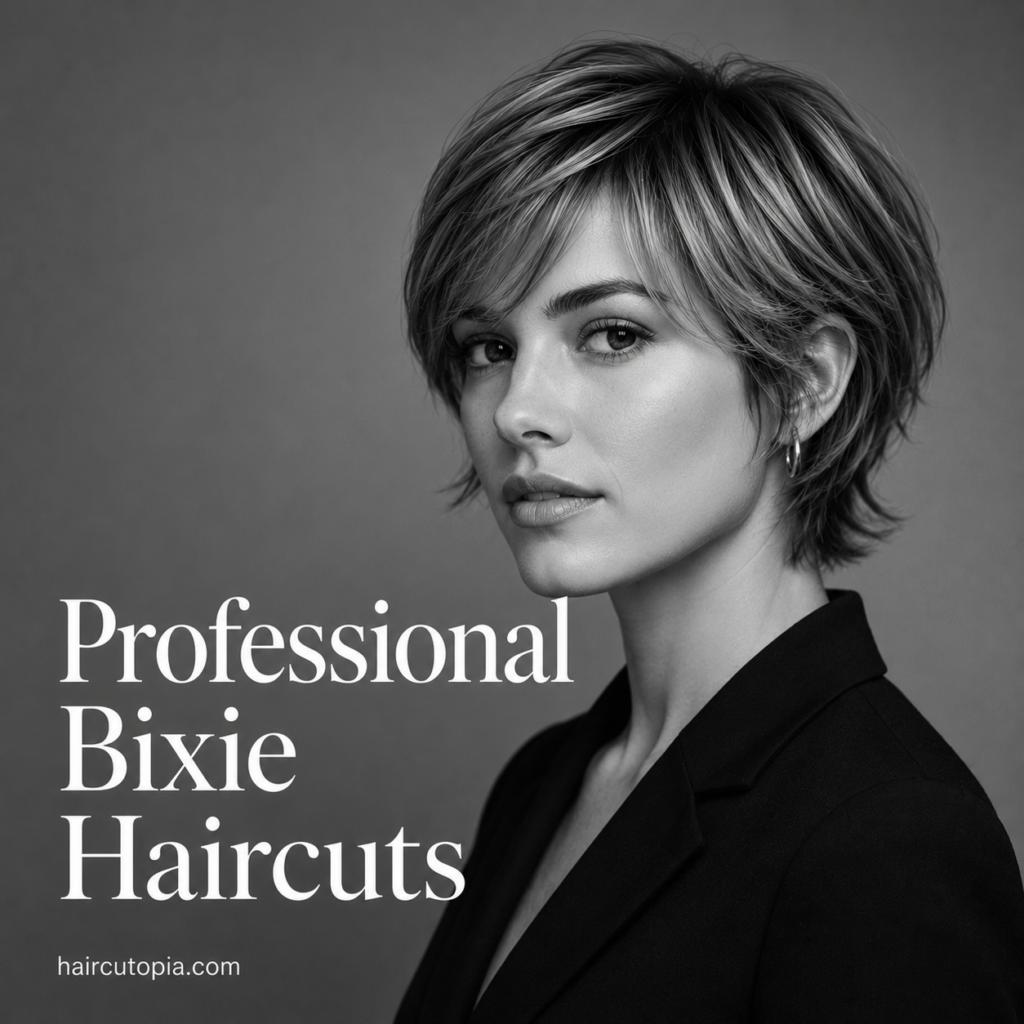
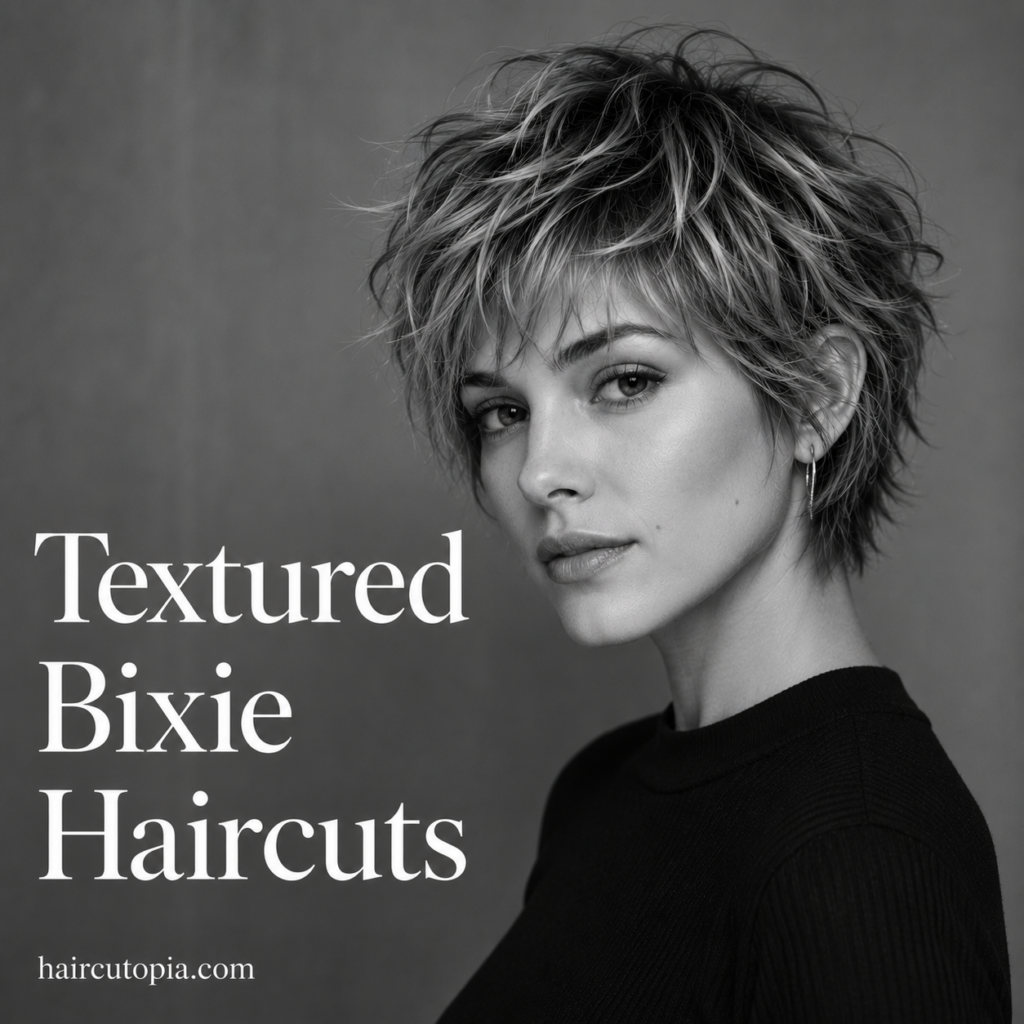
Textured bixie haircuts are perfect for anyone who likes short hair with a little personality. Instead of sitting perfectly smooth or falling into one solid shape, a textured bixie uses carefully placed layers to create movement, separation, and natural-looking volume.
The style blends the cropped ease of a pixie with the softer shape of a bob. That combination leaves enough length to play with while still feeling light and manageable. Some versions are tousled and edgy. Others are soft, airy, and surprisingly polished.
Better yet, texture can be adjusted to suit your actual hair. Fine hair may benefit from light, strategic layers that create the appearance of fullness, while thick hair can be shaped to remove excess weight. Waves and curls bring their own movement to the cut.
If you’re thinking about trying a bixie but don’t want a flat or overly precise finish, these textured bixie haircut ideas offer plenty of inspiration.
What Is a Textured Bixie Haircut?
A textured bixie is a short layered haircut that combines elements of a pixie and a bob while emphasizing movement and visible separation through the hair.
The exact length can vary. Some bixies sit close to the ears and nape, while longer versions extend toward the jaw or leave extra length through the back.
What makes the haircut textured is the way the layers are shaped and styled.
Common features include:
- Piecey ends
- Layered crown volume
- Soft or choppy fringe
- Separated sections
- Feathered movement
- A lightly tousled finish
Texture doesn’t automatically mean messy. A bixie can have plenty of movement and still look clean, intentional, and polished.
Why Textured Bixie Haircuts Are So Popular
The bixie already offers plenty of versatility, but added texture gives the haircut even more character.
Texture Creates Visible Movement
Strategic layering keeps the hair from falling into one heavy shape.
The result is a haircut that looks more dimensional from the front, sides, and back.
It Can Add the Appearance of Volume
Fine or flat hair often looks fuller when the layers are properly placed.
The key is avoiding excessive thinning. Too many short layers can sometimes have the opposite effect, especially on very fine hair.
Natural Texture Can Do More of the Work
If your hair already has a slight bend or wave, a textured bixie can make everyday styling easier.
Instead of straightening every section, you can enhance the movement that’s already there.
The Style Is Easy to Personalize
You can make a textured bixie:
- Soft and feminine
- Edgy and choppy
- Sleek with subtle separation
- Tousled and casual
- Feathered and airy
- Shaggy and relaxed
Small changes to the fringe, crown, and neckline can completely change the overall look.
27 Textured Bixie Haircut Ideas
1. Classic Textured Bixie
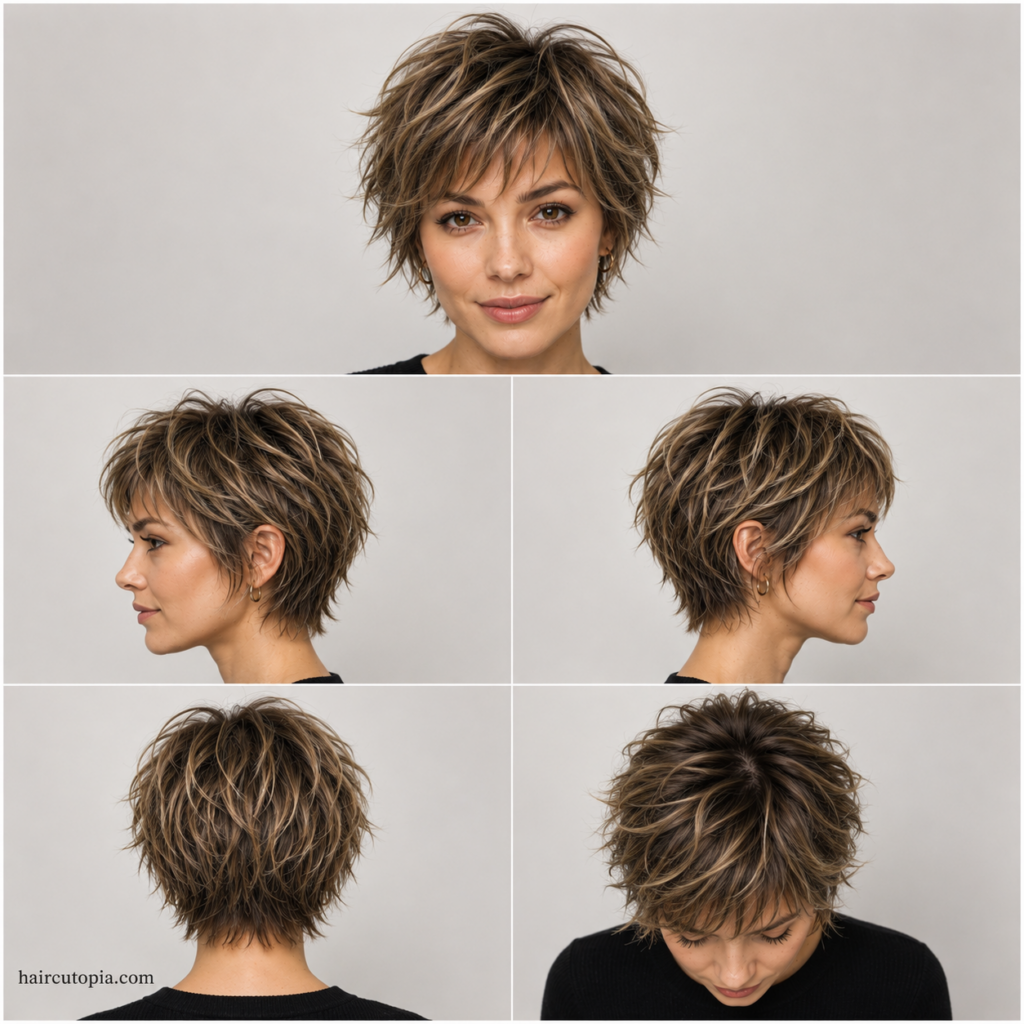
The classic textured bixie balances short, layered shaping with enough length to maintain softness.
Light separation through the crown gives the haircut movement without making it look overly choppy. It’s a great starting point if you want a modern bixie that’s easy to adapt.
2. Tousled Textured Bixie
A tousled bixie embraces slightly undone movement.
The layers are styled in different directions to create an effortless finish. A small amount of texture spray can help emphasize the separation without making the hair stiff.
3. Piecey Bixie Haircut
Piecey styling gives individual sections of the haircut more definition.
This look works especially well around the fringe and crown. Use a tiny amount of lightweight paste on your fingertips and gently separate the ends.
4. Choppy Textured Bixie
Short, visible layers give this bixie a stronger, more modern edge.
The choppy shape works particularly well for straight or slightly wavy hair. Keeping some softness around the face prevents the haircut from feeling too severe.
5. Soft Textured Bixie
Not every textured haircut needs dramatic layers.
This softer version uses gentle layering and subtle separation to create movement. It’s a flattering option if you prefer a more understated style.
6. Textured Bixie with Wispy Bangs
Wispy bangs blend naturally with the airy layers of a bixie.
The fringe can be worn straight down or gently swept to the side. Because the bangs are light, they don’t overpower the rest of the haircut.
7. Textured Bixie with Curtain Bangs
Longer curtain bangs add softness around the face while maintaining movement.
The front sections blend into the sides, creating a flattering frame around the cheekbones.
8. Side-Swept Textured Bixie
A longer side-swept fringe gives the bixie a polished shape while still leaving room for texture.
This variation can be styled smooth for work or separated with styling cream for a more casual finish.
9. Feathered Textured Bixie
Feathered layers create light, flowing movement throughout the haircut.
Rather than looking chunky, the layers blend softly into one another. This style works beautifully for anyone who likes an airy finish.
10. Shaggy Bixie Haircut
A shaggy bixie combines the short shape of a pixie-bob with relaxed, shag-inspired layers.
Expect extra movement around the crown, sides, and neckline. It’s especially flattering on hair with a natural wave.
11. Razor-Textured Bixie
Razor cutting can create soft, wispy ends and lightweight movement when it’s appropriate for the hair type.
This technique often produces an airy finish rather than a blunt edge. Your stylist can determine whether razor work suits your hair’s density and condition.
12. Textured Bixie for Fine Hair
Fine hair benefits from thoughtful layering rather than excessive thinning.
Keeping enough density through the perimeter while adding light crown texture can make the hair appear fuller and more dimensional.
13. Textured Bixie for Thick Hair
Thick hair can carry plenty of texture, but weight removal is often important.
Internal layering helps reduce bulk while allowing the outer shape to maintain movement. The result feels lighter and can be easier to style.
14. Wavy Textured Bixie
Natural waves and bixie layers are an easy match.
The haircut gives waves room to bend and move without the weight of longer hair pulling them down. A lightweight curl cream or texture spray may be all you need.
15. Curly Textured Bixie
A curly bixie uses natural curl patterns to create texture and volume.
The shape should be customized around curl shrinkage and density. Proper layering can help prevent the haircut from becoming overly triangular or bulky.
16. Straight Textured Bixie
Straight hair makes individual layers especially visible.
Piecey ends and crown separation add interest to the haircut without requiring curls or waves. A light styling paste can help define the texture.
17. Textured Bixie with Crown Volume
Extra lift through the crown creates a fuller silhouette.
This variation works well for hair that tends to sit flat near the roots. Strategic layers and root-lifting mousse can enhance the shape.
18. Textured Bixie with a Tapered Nape
A neat, tapered neckline creates contrast with the textured layers above.
The back looks polished while the crown maintains movement. It’s a good option if you like texture but still want a clean overall silhouette.
19. French-Inspired Textured Bixie
Soft fringe and understated styling give this bixie a relaxed, French-inspired feel.
The texture looks natural rather than heavily styled. A little air-dried movement often adds to the charm.
20. Textured Blonde Bixie
Blonde tones and highlights can make layered separation more noticeable.
Different shades catch the light across the textured sections, helping the haircut appear more dimensional.
21. Brunette Textured Bixie
Rich brunette hair can showcase texture beautifully, especially when the layers create natural shifts in light and shadow.
A subtle shine product can help define the shape without flattening it.
22. Copper Textured Bixie
Copper shades bring warmth and visual depth to a layered bixie.
The combination of color and movement can make individual sections stand out, particularly around the crown and fringe.
23. Highlighted Textured Bixie
Strategically placed highlights emphasize the direction of the layers.
Fine ribbons of brightness can help draw attention to movement without requiring a dramatic color change.
24. Textured Bixie with Longer Sides
Leaving extra length near the ears creates a softer, more versatile silhouette.
The sides can be tucked back, swept forward, or styled into separated pieces depending on the day.
25. Messy Everyday Bixie
This variation is designed to look better with a slightly imperfect finish.
Finger styling and a quick mist of texture spray are often enough. It’s an appealing choice if you don’t enjoy precision styling every morning.
26. Polished Textured Bixie
A polished bixie proves that texture can still look refined.
The layers remain visible, but the overall silhouette is controlled and balanced. This style transitions easily between professional and casual settings.
27. Modern Editorial Textured Bixie
Bold separation, dramatic crown movement, and intentionally styled layers give this version a fashion-forward finish.
It may require more product than a wash-and-go bixie, but the strong shape creates plenty of visual impact.
Best Hair Types for Textured Bixie Haircuts
The right layering approach depends heavily on your natural hair texture and density.
Fine Hair
Fine hair can look fuller with light, carefully placed layers.
Ask your stylist to preserve density where needed rather than aggressively thinning the hair. Crown movement and a soft fringe can add visual volume.
Thick Hair
Thick hair often needs internal weight removal to create an airy bixie shape.
Without enough layering, the haircut may become bulky around the sides or back.
Straight Hair
Straight hair showcases precision and separation.
Textured ends, feathering, and piecey styling can keep the haircut from appearing flat.
Wavy Hair
Waves naturally support the movement of a textured bixie.
A stylist can shape the cut around your wave pattern so the hair falls more naturally when air dried.
Curly Hair
Curly bixies require careful consideration of shrinkage.
The haircut should be shaped with your curl pattern in mind, particularly around the fringe and sides.
Which Face Shapes Suit a Textured Bixie?
A textured bixie can be adjusted to complement most face shapes.
Oval Faces
Oval faces can usually wear a wide range of bixie shapes.
Experiment with bangs, crown volume, or longer sides depending on the look you prefer.
Round Faces
A little height through the crown can help create vertical balance.
Side-swept fringe and longer front pieces may also create a more elongated appearance.
Square Faces
Soft, feathered texture can balance a stronger jawline.
Wispy bangs and movement around the sides keep the haircut from appearing too rigid.
Heart-Shaped Faces
Longer pieces near the jaw can help balance a narrower chin.
Curtain bangs also work beautifully with this face shape.
Long Faces
Avoid creating excessive height at the crown if you want a more balanced appearance.
Soft fringe and additional movement around the sides can add visual width.
How to Ask Your Stylist for a Textured Bixie
The word “textured” can mean different things to different people, so it’s helpful to be specific.
Consider discussing:
- How much length you want around the ears
- Whether you prefer a tapered or longer neckline
- How much crown volume you like
- Whether you want soft or choppy layers
- Your preferred fringe length
- How much daily styling you’re willing to do
You might say:
“I’d like a bixie shape with visible movement and piecey texture, but I still want enough density so it doesn’t look overly thinned.”
If you prefer a softer result, ask for blended layers and natural separation rather than a heavily choppy finish.
How to Style a Textured Bixie
You don’t need a complicated routine to bring out the layers.
Quick Everyday Styling
- Start with damp, towel-dried hair.
- Apply a lightweight mousse or styling cream.
- Blow dry with your fingers, directing the roots for volume.
- Allow the layers to fall naturally.
- Separate a few sections with texture paste.
- Finish with flexible hairspray if needed.
The goal is usually movement rather than perfection.
For a Tousled Finish
Use dry texture spray through the crown and gently work the hair with your fingertips.
Avoid brushing afterward. That can smooth away the separation you’ve just created.
For a Polished Finish
Blow dry the hair in the direction you want it to fall.
Smooth the fringe and side sections, then use a small amount of styling cream to define the ends.
Best Products for a Textured Bixie
You don’t need a shelf full of products.
A few useful options include:
- Lightweight volumizing mousse
- Dry texture spray
- Styling cream
- Matte paste
- Sea salt spray
- Root-lifting spray
- Flexible hairspray
Start with less product than you think you need.
Short layered hair can become heavy or greasy quickly if too much wax, cream, or oil is applied.
How to Maintain a Textured Bixie
Most textured bixie haircuts benefit from regular shaping.
Depending on the length and style, you may want a trim every six to nine weeks.
To maintain the haircut:
- Keep the neckline shaped if it’s tapered.
- Trim the fringe when it begins falling into your eyes.
- Use conditioner to keep textured ends soft.
- Limit excessive heat styling.
- Use heat protectant when using hot tools.
- Clarify occasionally if you regularly use texture products.
Longer, softer bixies may grow out more gracefully than very short or highly structured versions.
Common Textured Bixie Mistakes to Avoid
Texture should make the haircut easier and more flattering, not harder to manage.
Removing Too Much Hair
Excessive thinning can leave fine hair looking sparse or make textured ends appear weak.
Ignoring Natural Growth Patterns
Cowlicks and strong growth patterns can affect the fringe and crown.
A good haircut should account for how your hair naturally falls.
Using Too Much Product
Heavy wax can collapse volume and make the layers stick together.
Apply product gradually.
Asking for Texture Without Explaining What You Mean
Bring references and describe whether you want soft, feathered, choppy, shaggy, or piecey texture.
Clear communication can make a major difference.
Are Textured Bixie Haircuts Low Maintenance?
They can be.
A textured bixie that works with your natural hair pattern may require very little daily effort. Wavy hair, in particular, can often be air dried with a small amount of styling product.
However, a dramatic editorial bixie with precise piecey separation may need more styling.
If easy maintenance is your priority, ask for a shape that looks good with your natural texture rather than one that depends on daily heat styling.
Is a Textured Bixie Right for You?
A textured bixie may be worth considering if you want:
- More movement in short hair
- A modern layered shape
- Natural-looking volume
- A haircut that can be styled casually
- More personality than a traditional bob
- A flexible style that can look polished or tousled
The biggest advantage is customization. Texture can be subtle or dramatic, making the bixie adaptable to many different personal styles.
Frequently Asked Questions
What is a textured bixie haircut?
A textured bixie is a layered pixie-bob hybrid that uses soft, choppy, feathered, or piecey layers to create visible movement and separation.
Is a textured bixie good for fine hair?
Yes, when the layers are carefully placed. Light texture can create the appearance of volume, but excessive thinning should generally be avoided on very fine hair.
Does a textured bixie work for thick hair?
Yes. Internal layering can remove excess weight and help thick hair achieve a lighter, more defined bixie shape.
How do you make a bixie look piecey?
Apply a small amount of lightweight paste or styling cream to your fingertips and gently separate individual sections through the fringe and crown.
Can a textured bixie be low maintenance?
Absolutely. A bixie designed around your natural texture can often be air dried or styled in just a few minutes.
How often should a textured bixie be trimmed?
Most textured bixies benefit from a trim every six to nine weeks, although longer styles may be able to go slightly longer between appointments.
Final Thoughts
Textured bixie haircuts bring movement, dimension, and personality to the classic pixie-bob shape. They can be soft and feathered, bold and choppy, naturally wavy, or carefully styled into defined pieces.
The best version is one that works with your hair rather than forcing it into a shape that requires constant attention. Talk with your stylist about your natural texture, density, and daily routine before deciding how much layering you want.
With the right shape, a textured bixie can feel light, modern, and surprisingly versatile—whether you spend two minutes styling it or enjoy creating a more polished finish.