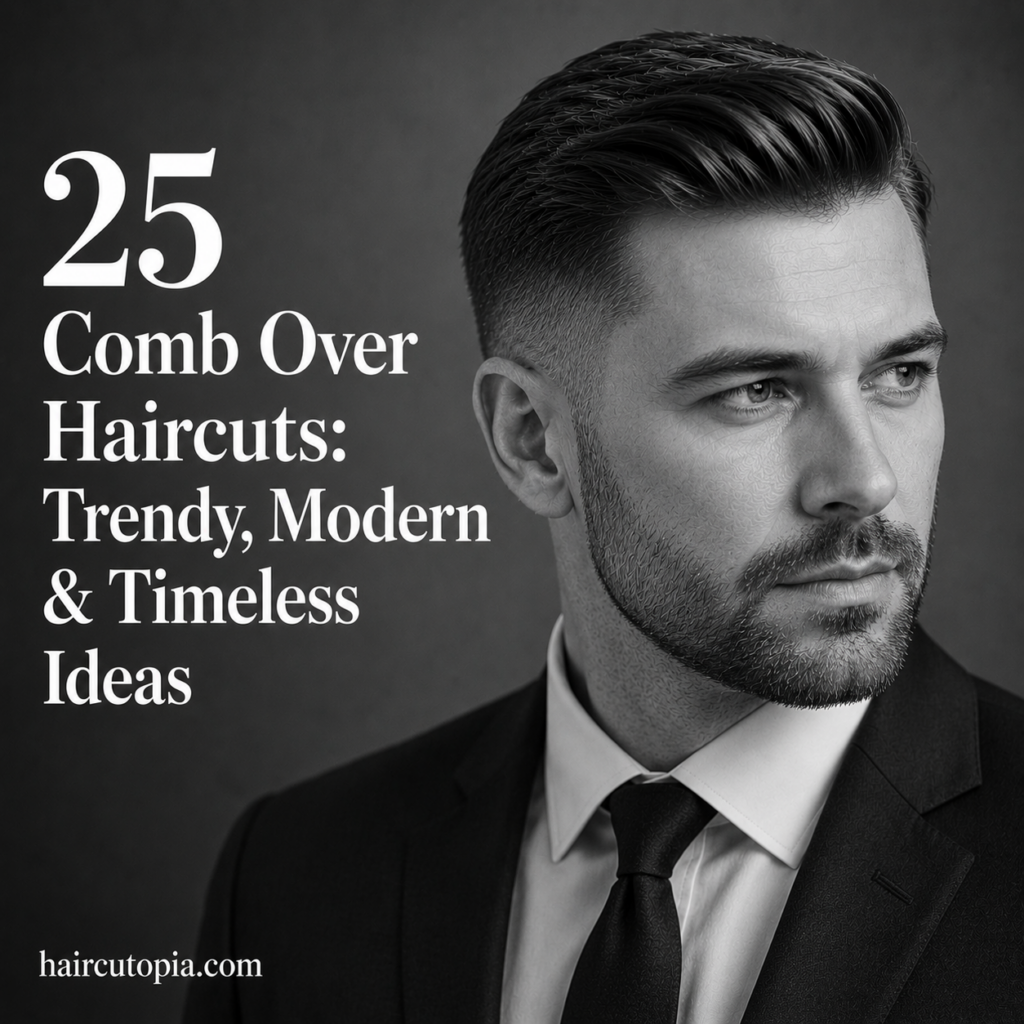
A comb over is one of the most adaptable men’s hairstyles around. It can be clean and professional, textured and relaxed, short and low-maintenance, or styled with more volume for a sharper look.
The basic idea is simple: hair on top is directed to one side while the sides and back are kept neat. From there, the haircut can change dramatically depending on the length, taper, fade, part, and texture.
That is what makes the comb over such a good option. You do not have to choose between classic and modern. You can find a version that fits your hair type, face shape, personal style, and daily routine.
What Is a Comb Over Haircut?
A comb over haircut has longer hair on top that is styled toward one side. The sides and back are usually shorter, but they can be tapered, faded, undercut, or scissor-cut depending on the look you want.
Modern comb overs are not meant to look like hair is being forced across the head. The best versions follow your natural part and use the hair’s natural direction.
Most comb overs work best with around two to five inches of length on top. Shorter versions are easier to manage, while medium and longer versions offer more volume and movement.
Why Comb Over Haircuts Are So Popular
Comb overs have stayed popular because they work in almost every setting. A short taper can look polished at work, while a textured fade can feel current and casual.
They are also easy to customize for different hair types.
A comb over can work well if you have:
- Thick hair that needs shape and weight removal
- Fine hair that benefits from light texture and volume
- Wavy hair that adds natural movement
- Curly hair that can be directed to one side
- A receding hairline that looks better with a natural part
- Gray or salt-and-pepper hair that benefits from a clean structure
The right version is less about following a trend and more about choosing proportions that work for you.
25 Comb Over Haircut Ideas
1. Classic Comb Over
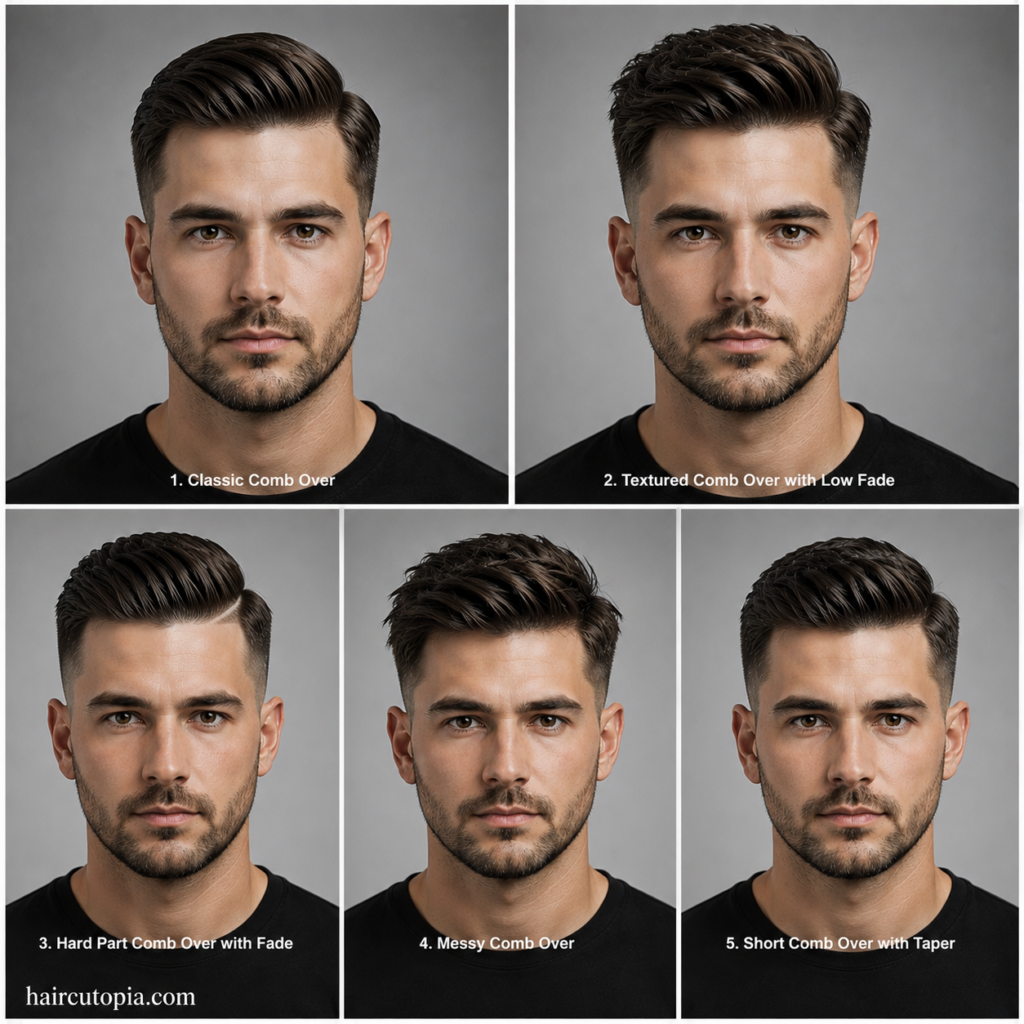
The classic comb over has a natural side part, moderate length on top, and softly blended sides. It is polished without looking overly formal.
This is a great choice for men who want a timeless haircut that works for the office, formal events, and everyday life.
2. Comb Over with Tapered Sides
A tapered comb over keeps the sides neat around the ears and neckline while leaving more natural length through the upper sides.
It is one of the easiest versions to grow out and works well if you want a clean look without the maintenance of a full fade.
3. Comb Over with a Low Taper
A low taper focuses the cleanup around the temples, sideburns, and neckline. The rest of the sides stay fuller and more natural.
This is a good option if you want a modern touch that still feels subtle and professional.
4. Comb Over with a Low Fade
A low fade starts just above the ears and blends down toward the neckline. It creates a cleaner outline while keeping the haircut balanced.
Pair it with a natural side part and controlled top for a style that looks sharp without being too bold.
5. Comb Over with a Mid Fade
A mid fade begins higher around the temple area, creating more contrast between the sides and top.
This version works well for men with thick hair or rounder face shapes because it can add definition and reduce bulk.
6. Comb Over with a High Fade
A high fade creates the strongest contrast. The sides are taken short higher up the head, making the side-swept top the main focus.
It is a good choice if you like a clean, modern haircut and do not mind more frequent barber visits.
7. Textured Comb Over
A textured comb over has light layers through the top, giving the hair natural movement and separation.
It is ideal if you do not want a perfectly smooth or slick finish. Use a matte paste or styling cream and style it with your fingers for a relaxed look.
8. Messy Comb Over
A messy comb over is casual and easygoing. The hair is still directed to one side, but it is not meant to look perfectly combed.
This works especially well for thick, wavy, or medium-length hair. A sea salt spray or matte cream can help create the right amount of texture.
9. Short Comb Over
A short comb over is simple, clean, and low-maintenance. The top is usually around one to three inches long, with enough length to sweep lightly to one side.
It is a strong choice for busy schedules, active lifestyles, and professional settings.
10. Medium-Length Comb Over
A medium comb over leaves more length on top, usually around three to five inches. That gives you room for volume, a fuller side sweep, and more styling flexibility.
Keep the sides tapered or faded so the haircut does not become too wide.
11. Long Comb Over
A long comb over has more flow and movement than shorter versions. The top can be swept back and to the side for a relaxed, slightly more dramatic finish.
This style works best when the hair is healthy and has enough density to hold its shape. A low taper or scissor-cut side can keep it from looking too heavy.
12. Comb Over with a Hard Part
A hard part uses a thin shaved line to clearly separate the top from the sides. It gives the haircut a sharp, precise look.
This version works well with fades and can make styling easier because the hair naturally falls in the same direction. It does need regular touch-ups to stay visible.
13. Comb Over with a Soft Side Part
A soft side part follows your natural growth pattern instead of creating a dramatic line. It looks more relaxed and grows out well.
This is a great choice if you want a professional haircut that does not feel too structured.
14. Comb Over with Scissor-Cut Sides
Scissor-cut sides create a softer, fuller profile. The hair is blended by hand instead of faded tightly with clippers.
This is one of the best options for men with fine hair or anyone who prefers a classic, understated look.
15. Comb Over with an Undercut
A comb over with an undercut creates strong contrast between the longer top and shorter sides. The sides are clipped short with less blending.
It is a bold style that works best for men who like a more noticeable haircut. Thick or straight hair often holds this shape well.
16. Comb Over with a Skin Fade
A skin fade takes the sides down very close to the skin near the neckline and ears. It creates a crisp, high-contrast finish.
Keep the top controlled if you want the haircut to stay balanced. This style needs regular maintenance to keep the fade looking fresh.
17. Comb Over with a Drop Fade
A drop fade curves down behind the ear, following the natural shape of the head. It adds detail and can make the haircut look more tailored.
This works well with textured or medium-length tops because the curved fade gives the style a more custom finish.
18. Comb Over with a Burst Fade
A burst fade curves around the ear and leaves more length through the back. It creates a more fashion-forward version of the comb over.
This is a good option if you want something modern and different from a standard taper or fade.
19. Comb Over for Thick Hair
Thick hair gives a comb over natural volume, but it may need some weight removed to keep the style manageable.
Ask your barber for light texturizing on top and a taper or fade on the sides. A medium-hold cream, clay, or paste can keep thick hair in place without making it stiff.
20. Comb Over for Fine Hair
A comb over can make fine hair look fuller when it is kept short to medium in length. A natural side part and light texture help create more lift.
Avoid heavy gels and overly shiny products, which can separate the hair and make thinning areas more visible.
21. Comb Over for Wavy Hair
Wavy hair gives a comb over natural movement. Instead of trying to flatten the wave, guide it gently to one side.
A low taper, low fade, or scissor-cut side usually works well. Use a styling cream or sea salt spray to keep the wave defined and reduce frizz.
22. Curly Comb Over
A curly comb over keeps curls or coils longer on top and shapes them toward one side. The sides are usually tapered or faded to keep the haircut balanced.
The goal is not to make curls lie perfectly flat. Let the natural texture show while using a curl cream or lightweight leave-in product for control.
23. Comb Over for a Receding Hairline
A comb over can work well with a receding hairline when it follows the natural part and does not pull hair tightly across the forehead.
A shorter top with light texture usually looks best. Keep the style relaxed and avoid overly slick products.
24. Comb Over for Older Men
A comb over is a dependable option for older men because it can work with gray hair, fine hair, or a changing hairline.
A classic taper, low taper, or scissor-cut side usually creates the most flattering result. Keep the top controlled and use a soft styling cream for a natural finish.
25. Business Professional Comb Over
A business professional comb over is polished, controlled, and easy to wear. It usually features a natural or defined side part, moderate length on top, and tapered or scissor-cut sides.
For a more conservative office, choose a classic taper. For a business-casual environment, a low taper or subtle low fade can add a modern edge.
How to Choose the Right Comb Over Haircut
The best comb over depends on your hair type, face shape, and how much time you want to spend styling.
For Round Face Shapes
Choose a style with some height at the front and a low or mid fade on the sides. This can add definition and help balance the face.
For Oval Face Shapes
Oval face shapes can wear almost any comb over. A taper, fade, soft part, or textured top can all work well.
For Square Face Shapes
A side-swept top can soften a strong jawline while keeping the haircut structured. A low taper or low fade is often a good match.
For Long Face Shapes
Avoid too much height on top. A classic comb over with scissor-cut sides or a low taper can keep the haircut proportional.
For Low-Maintenance Styling
Choose a short comb over with a low taper or scissor-cut sides. It will look clean with minimal product and grow out naturally.
For a More Modern Look
Try a textured comb over with a low or mid fade. It adds movement and contrast without being too difficult to style.
How to Ask Your Barber for a Comb Over
A clear request can make a big difference. Explain the top length, side finish, and overall look you want.
You can say:
“I want a comb over with a natural side part. Leave around three inches on top so I can style it to one side, and keep the sides clean with a low taper. Add a little texture so it does not look too flat.”
You can also adjust the request:
- Ask for scissor-cut sides for a softer, classic look
- Ask for a low taper for clean edges and easy grow-out
- Ask for a low or mid fade for more contrast
- Ask for a hard part if you want a more defined separation
- Ask for light texture if your hair is thick or tends to sit flat
- Ask to keep the top shorter if you want a low-maintenance style
A reference photo can help your barber understand exactly how much length and contrast you want.
How to Style a Comb Over
Most comb overs are easy to style once you know your natural part.
Everyday Styling Steps
- Start with clean, towel-dried hair.
- Apply a small amount of styling cream, matte paste, clay, or pomade.
- Find your natural part with a comb or fingers.
- Guide the top to one side.
- Smooth the sides lightly.
- Add a little hairspray if you need extra hold.
For more volume, blow-dry the front upward and to the side before applying your finishing product. Use low heat and avoid overworking the hair.
Best Products for a Comb Over
- Styling cream: Soft hold and natural movement
- Matte paste: Texture with a low-shine finish
- Clay: Stronger hold for thick hair
- Low-shine pomade: A polished, classic result
- Sea salt spray: Added texture and volume
- Volumizing mousse: Helpful for fine hair
- Curl cream: Best for curly or wavy hair
Start with less product than you think you need. You can always add more, but too much product can make the hair look greasy or stiff.
How Often Should You Trim a Comb Over?
Most comb overs look best with a trim every four to six weeks. Short fades, skin fades, and hard parts may need touch-ups every two to three weeks to stay sharp.
Classic tapers and scissor-cut versions can often go longer because they grow out more softly.
Frequently Asked Questions
What is the most popular comb over haircut?
The textured comb over with a low taper or low fade is one of the most popular versions because it looks modern while staying easy to wear.
Is a comb over still in style?
Yes. The comb over remains popular because it can be adapted to current trends with texture, fades, tapers, and natural styling while still keeping a classic shape.
How long should hair be for a comb over?
Most comb overs work well with around two to five inches of hair on top. Shorter lengths are easier to manage, while longer lengths offer more volume and movement.
Is a comb over good for thinning hair?
Yes. A short-to-medium comb over with a natural side part and light texture can make fine or thinning hair appear fuller. Avoid overly long or slick styles that separate and expose the scalp.
Do I need a fade for a comb over?
No. A taper or scissor-cut side can look just as good and often grows out more naturally. A fade is simply an option if you want more contrast.