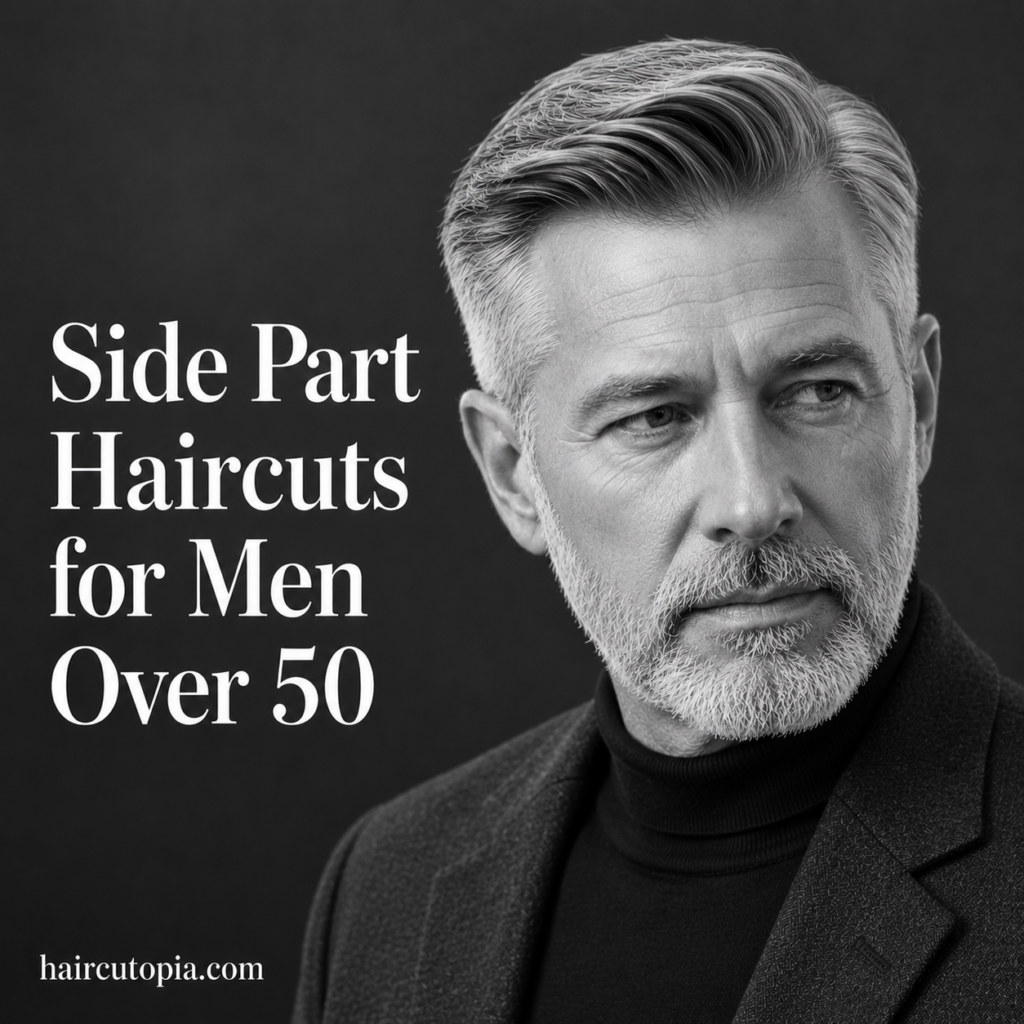
A side part haircut is one of the most dependable styles for men over 50. It has enough structure to look polished, but it does not need to be stiff, overly formal, or high-maintenance.
The best version is not about trying to recreate the haircut you had years ago. It is about working with the hair you have now. That may mean embracing gray or silver strands, choosing a shorter top for finer hair, adding texture for fullness, or using softer sides that grow out naturally.
A well-cut side part can make all of that feel intentional. It is classic for a reason, but it can still look current when the length, shape, and finish are tailored to you.
Why Side Part Haircuts Work Well for Men Over 50
Hair often changes after 50. It may become finer, coarser, drier, wavier, or thinner around the temples and crown. A side part is flexible enough to adapt without forcing the hair into a shape that no longer works.
The part gives the top direction, while a taper or scissor-cut blend keeps the sides tidy. Together, those details create a balanced silhouette that can make the hair look fuller and more deliberate.
Side part haircuts are especially practical because they can:
- Work with gray, silver, or salt-and-pepper hair
- Suit fine, thinning, thick, wavy, or curly hair
- Help create a more balanced look around a receding hairline
- Look professional without feeling too formal
- Grow out more smoothly than very short fades
- Be styled in just a few minutes
Best Side Part Haircuts for Men Over 50
Classic Taper Side Part
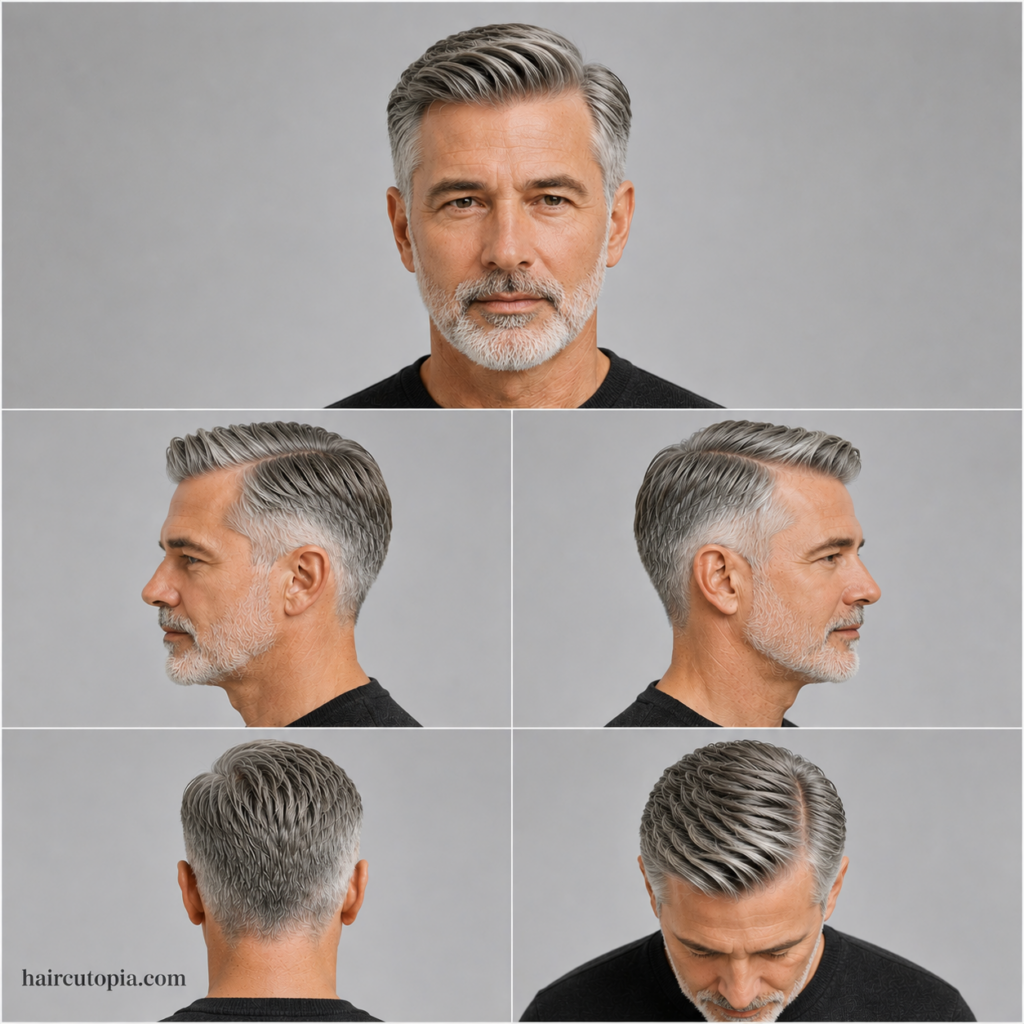
The classic taper side part is a timeless choice. The hair gradually shortens around the ears and neckline, but the sides keep enough length to look soft and natural.
The top is usually kept short to medium length and brushed to one side. A light styling cream can keep it neat without making it look shiny or stiff.
This is a good option if you want a haircut that works for work, dinners, travel, and everyday life without needing much adjustment.
Short Side Part
A short side part is clean, practical, and easy to manage. The top is kept short enough that it does not need much styling, but it still has enough length to create direction.
This can be especially flattering for fine or thinning hair. Very long hair can separate and expose more scalp, while a shorter top with light texture often looks fuller.
A soft taper or scissor-cut sides can keep the overall result balanced.
Ivy League Side Part
The Ivy League side part sits between a crew cut and a traditional side part. It keeps the hair close to the head while leaving enough length on top to brush neatly to one side.
It is a strong choice for men who prefer a low-maintenance haircut that still looks sharp. The sides can be tapered, scissor-cut, or kept short with a subtle fade.
The Ivy League side part works especially well for:
- Fine or thinning hair
- Busy routines
- Professional settings
- Men who prefer shorter hair
- A clean, traditional appearance
Textured Side Part
A textured side part can make the hair look more natural and full. Instead of combing every strand flat, the top is lightly layered and styled with separation.
This is useful for fine hair, wavy hair, or hair that has become less dense over time. Texture creates movement and can keep the haircut from looking flat.
Use a matte styling cream or lightweight paste rather than a heavy pomade.
Side Part With Scissor-Cut Sides
Scissor-cut sides create a softer, more relaxed version of the side part. Instead of taking the sides down tightly with clippers, the barber blends the hair gradually by hand.
This can be a great choice for men over 50 because it avoids harsh contrast and grows out naturally. It also works well for thick, wavy, or coarse hair that can look bulky when cut too short.
Side Part With a Low Taper
A low taper adds a clean outline around the ears and neckline without making the sides look too tight. It is a subtle update that keeps the haircut looking fresh.
Because the taper stays low, it is easier to maintain than a full fade. It also tends to grow out more smoothly, which is helpful if you do not want to schedule barber visits every few weeks.
Side Part for a Receding Hairline
A receding hairline does not mean you need to avoid a side part. A natural side part can work very well because it follows the direction your hair already wants to go.
The main thing is choosing a practical length. Too much length on top can separate, look stringy, and draw attention to thinner areas. A short to medium top with light texture usually looks more balanced.
Avoid a very sharp hard part if the hair is thin around the temples. A softer part is more forgiving and often looks more natural.
Side Part Haircuts for Different Hair Types
Fine or Thinning Hair
Fine hair often looks best with a shorter, lightly textured side part. Long hair can separate and make the scalp more visible, while a shorter cut can create a fuller-looking shape.
A short taper, Ivy League, or textured side part can all work well. Use lightweight products that add lift without weighing the hair down.
A volumizing spray or mousse can help before blow-drying.
Thick Hair
Thick hair can look great with a side part, but it may need some bulk removed so the haircut does not become too wide or heavy.
Ask your barber to add texture and reduce weight through the top and sides. Scissor-cut sides or a low taper are often a good fit.
Wavy Hair
Wavy hair gives a side part natural movement. The goal is to guide the waves rather than flatten them completely.
A textured side part with scissor-cut sides can create a relaxed, balanced look. Use a styling cream to control frizz while keeping the hair flexible.
Curly Hair
Curly hair can wear a side part, although the part will usually be softer and less defined. Instead of forcing a perfectly straight line, guide the curls toward one side and focus on keeping the sides neat.
A low taper or scissor-cut style can provide structure while still allowing the curls to look natural.
Gray, Silver, or Salt-and-Pepper Hair
Gray and silver hair can look especially sharp with a side part because the cut gives it shape and definition. A clean outline around the ears and neckline keeps the overall style looking intentional.
Choose lightweight products that do not leave the hair greasy or dull. A styling cream, matte paste, or light water-based pomade is usually enough.
Choosing a Side Part for Your Face Shape
Oval Face Shapes
Oval face shapes can usually wear most side part variations. A classic taper, Ivy League, short side part, or textured version can all work well.
Keep the top proportional and avoid adding too much height if your face is already long.
Round Face Shapes
A side part can help add definition to a round face. Slightly shorter sides and a little lift at the front can create a more structured appearance.
A low taper or short side part with moderate volume is often a flattering choice.
Square Face Shapes
Square face shapes pair naturally with side parts because the structure of the haircut complements stronger facial features.
A classic taper creates a timeless result, while scissor-cut sides can soften the look if you prefer something less sharp.
Long Face Shapes
If your face is longer, avoid creating too much height on top. A medium-short side part with some fullness through the sides can help keep everything balanced.
A traditional taper or scissor-cut side is often more flattering than a tight fade with a tall top.
How to Ask Your Barber for a Side Part Haircut
A good barber can tailor a side part to your hair, but it helps to explain what you want from the haircut.
You could say:
“I’d like a side part with a natural part, short to medium length on top, and a soft taper on the sides. I want it neat, easy to style, and something that grows out well.”
If your hair is thinning, mention that you want a cut that looks fuller and does not expose too much scalp. If your hair is thick or wavy, ask the barber to remove bulk and work with your natural texture.
You can also mention:
- How often you want to get haircuts
- Whether you prefer a combed or textured finish
- If you want a low taper, scissor-cut sides, or a traditional taper
- How much styling time you want to spend each morning
- Whether you want the haircut to look more classic or more modern
How to Style a Side Part After 50
The best styling routine is usually simple. You want enough control to keep the hair in place, but not so much product that it looks stiff.
Easy Styling Routine
- Start with clean, towel-dried hair.
- Find the natural direction your hair wants to part.
- Apply a small amount of lightweight styling cream, mousse, or matte paste.
- Use a comb for a cleaner finish or your fingers for a softer look.
- Add a little lift at the front if you want more volume.
- Let the hair air-dry or use a blow dryer on low heat for extra hold.
For fine hair, apply a volumizing product before drying. For thick or wavy hair, use a light cream to keep the shape controlled.
Best Styling Products for Men Over 50
Lightweight Styling Cream
A styling cream is a good everyday option because it gives light control without making the hair look hard or overly shiny. It works well for straight, wavy, gray, and fine hair.
Matte Paste
Matte paste can add texture and make fine hair look fuller. Use a small amount so the hair stays flexible and natural.
Volumizing Mousse or Spray
A volumizing product can help fine or thinning hair look fuller. Apply it to damp hair before blow-drying or air-drying.
Light Pomade
A water-based light pomade works well if you prefer a more traditional, polished finish. Avoid heavy products that can make the hair look flat or greasy.
How Often Should You Get a Side Part Haircut?
Most side part haircuts look their best with a trim every four to six weeks. Classic tapers and scissor-cut sides can often go longer because they grow out naturally.
If you keep the sides shorter or like a crisp neckline, a quick cleanup around week three or four can help maintain the shape.
Easy Maintenance Tips
A few simple habits can help your haircut stay sharp between appointments.
- Use conditioner to keep the hair soft and manageable.
- Avoid over-washing if your hair becomes dry or difficult to style.
- Comb the hair into its natural part after showering.
- Use less product than you think you need.
- Refresh the style with water instead of adding more product.
- Avoid overly tight fades if you want the haircut to grow out smoothly.
- Schedule trims before the sides become too bulky.
Is a Side Part a Good Choice for Men Over 50?
Yes. A side part is one of the most adaptable and flattering haircut choices for men over 50. It can be short and simple, softly textured, traditionally tapered, or slightly more modern with a low taper.
The key is choosing a version that works with your hair now. A natural part, practical top length, and softer sides usually create the most balanced result.
Final Thoughts
Side part haircuts for men over 50 are popular because they are clean, versatile, and easy to personalize. They can suit gray hair, fine hair, thicker hair, or natural waves without needing a dramatic change.
A classic taper, Ivy League cut, short textured side part, or scissor-cut style can all look sharp when the cut matches your hair type and routine.
The best haircut should make getting ready easier. When the shape works with your natural hair instead of against it, a side part can remain a strong choice for years.