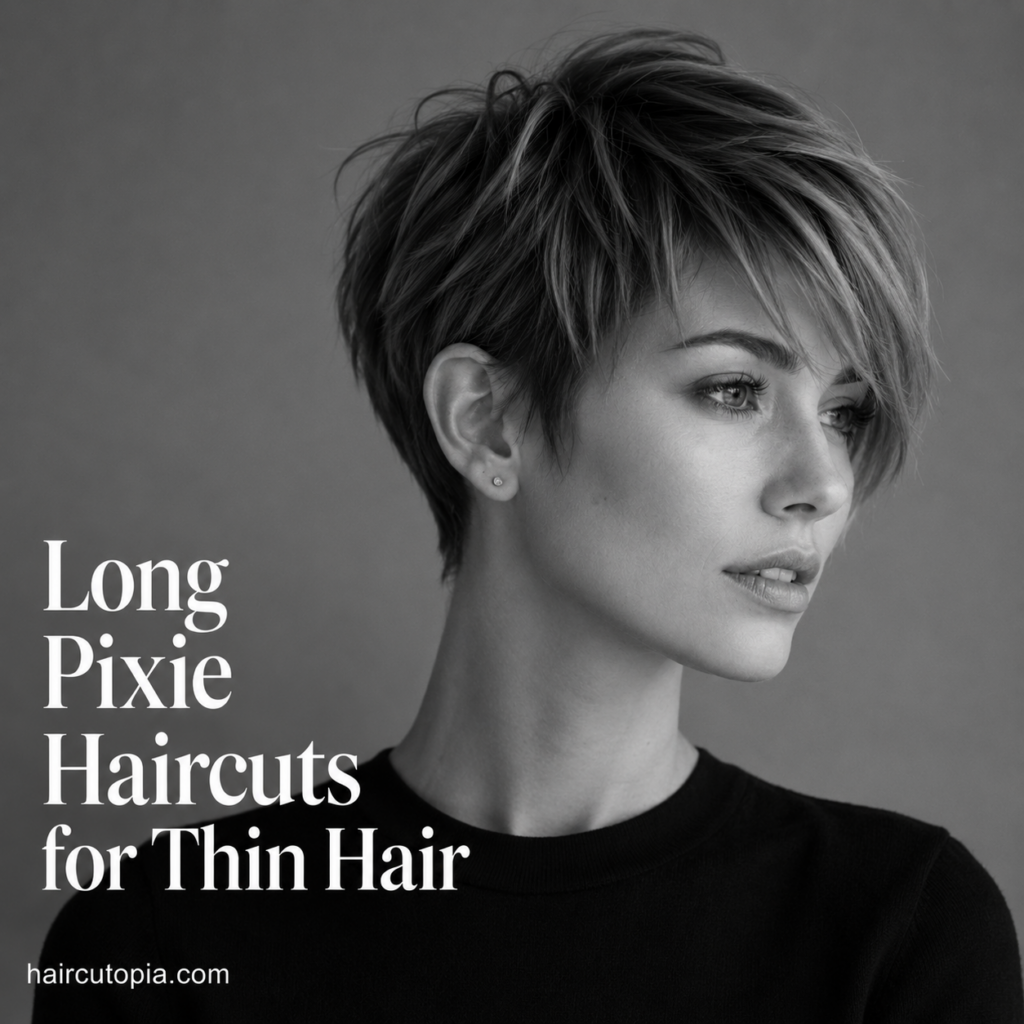
Thin hair can make choosing a short haircut feel surprisingly complicated. Go too blunt and the hair may sit flat. Add too many layers and the ends can start looking sparse. Even a small change in length can affect how full your hair appears.
That is exactly why a long pixie can be such a good option.
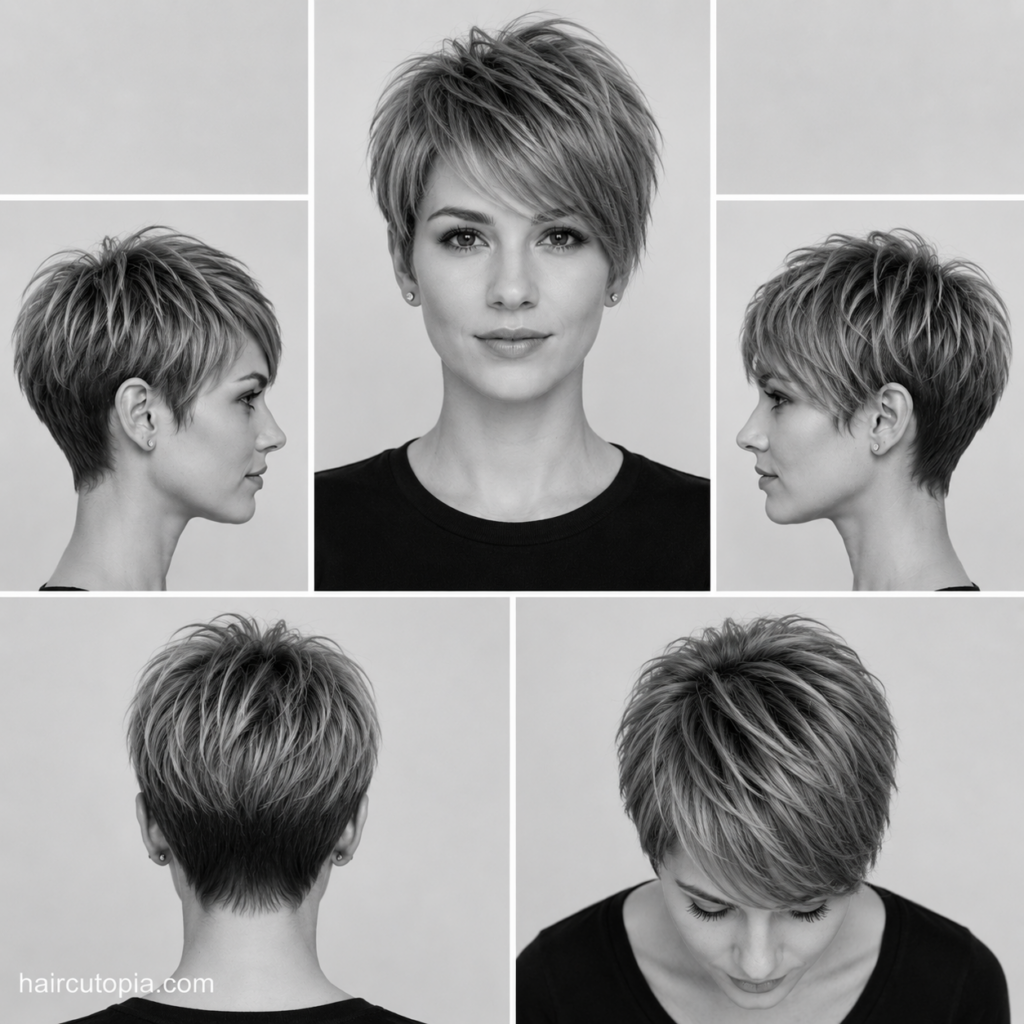
Long pixie haircuts for thin hair keep enough length through the top, crown, and fringe to create movement while removing the weight that can pull fine hair down. With the right shape, a pixie can make the hair look lighter, bouncier, and noticeably fuller.
You also have more styling options than you might expect. A long pixie can be swept to the side, tousled with texture, worn smooth, or styled with extra lift at the crown.
If you are considering going shorter, here are 25 long pixie haircut ideas for thin hair and practical tips for choosing a style that works with your natural texture.
Why Long Pixie Haircuts Work for Thin Hair
Long hair can sometimes emphasize thinness because the weight pulls the roots downward. The ends may also appear wispy, particularly when the hair has been heavily layered.
A long pixie changes the balance.
Removing excess length allows the roots to lift more easily. Keeping strategic length around the crown and top creates the appearance of density, while a shaped fringe can add fullness around the face.
The best pixie cuts for thin hair usually rely on thoughtful structure rather than aggressive layering.
You want movement, but you also want to protect the visual weight of the hair.
1. Layered Long Pixie for Thin Hair
Soft layers can give a long pixie natural movement without removing too much density.
The key word is soft.
Instead of heavily texturizing every section, longer layers are blended through the crown and top. This allows individual pieces to move while the overall haircut still looks full.
Use a lightweight mousse before blow-drying to encourage lift at the roots.
2. Long Pixie with Side-Swept Bangs
Side-swept bangs are one of the easiest ways to create the illusion of fuller hair.
The fringe moves diagonally across the forehead, creating visual depth and directing attention toward the eyes.
Keeping the bangs slightly longer gives you more styling flexibility.
You can wear them smooth for a polished finish or gently separate the ends for a softer, textured look.
3. Textured Long Pixie for Fine Hair
Texture can make thin hair appear more dimensional.
A textured long pixie uses subtle separation between sections rather than extreme choppy layers. The goal is to prevent the hair from lying completely flat against the scalp.
A small amount of dry texture spray can help.
Apply it near the roots and gently work the hair into place with your fingertips.
4. Long Pixie with Crown Volume
Volume at the crown can dramatically change the silhouette of thin hair.
The top layers are kept long enough to lift away from the scalp while the sides remain slightly more controlled.
When styling, direct the crown upward while blow-drying.
You can also briefly blow-dry the roots in the opposite direction from where they naturally fall before moving the hair back into place.
5. Long Pixie Bob for Thin Hair
A pixie bob offers more perimeter length than a traditional pixie.
The sides may reach toward the ears or cheekbones, while the back remains shorter and shaped.
This can be especially flattering for thin hair because the slightly fuller outline creates visual weight.
Avoid excessive thinning through the ends.
A stronger perimeter usually makes the hair look denser.
6. Long Pixie with Long Bangs
Long bangs add movement and fullness to the front of a pixie.
They can sweep across the forehead, fall slightly over one eye, or be pushed back for extra height.
This haircut also works well if you are nervous about going dramatically short.
Keeping length around the face makes the transition feel less extreme.
7. Feathered Long Pixie Cut
Feathered layers create soft movement through the ends.
On thin hair, the feathering should be subtle. Too much can make the perimeter look wispy.
A gentle feathered effect around the crown and fringe can create an airy, lifted appearance.
Use a small round brush while blow-drying to shape the ends.
8. Tousled Long Pixie for Thin Hair
A tousled finish helps disguise areas where the hair naturally sits flat.
Instead of creating a perfectly smooth surface, the hair is styled in slightly different directions.
This creates dimension.
Apply a lightweight styling foam to damp hair, then use your fingers while blow-drying.
Once dry, gently separate a few pieces around the crown.
9. Side-Parted Long Pixie
Changing your part can instantly create more root lift.
A deep side part pushes a larger section of hair in the opposite direction from its natural growth pattern. This often creates visible volume without complicated styling.
The fuller side can be swept across the forehead.
Keep the opposite side tucked behind the ear for contrast.
10. Long Pixie with Wispy Bangs
Wispy bangs can add softness around the face without requiring a heavy fringe.
Thin sections of hair are allowed to fall naturally across the forehead.
The result feels light and relaxed.
However, the bangs should not be excessively texturized. You still need enough hair in the fringe to create a visible shape.
11. Choppy Long Pixie for Thin Hair
A choppy pixie can create the appearance of thicker hair when the layers are placed carefully.
Shorter sections provide lift while longer pieces maintain visual density.
The haircut should not look shredded or overly thinned.
Ask for defined, piecey texture rather than aggressive thinning.
A matte styling paste can help emphasize the individual sections.
12. Long Pixie with a Tapered Back
A tapered back creates contrast between the shorter neckline and fuller crown.
That contrast can make the top of the hair appear more voluminous.
The back gradually becomes shorter toward the neck while maintaining length higher on the head.
This also gives the pixie a clean, intentional shape as it grows.
13. Asymmetrical Long Pixie
An asymmetrical pixie keeps one side noticeably longer.
The longer section creates movement across the face while the shorter side adds definition.
For thin hair, this uneven shape can be useful because the eye focuses on the haircut’s direction rather than overall density.
A side-swept fringe works particularly well with this style.
14. Shaggy Long Pixie for Thin Hair
A soft shaggy pixie creates movement throughout the haircut.
Layers around the crown encourage lift, while longer pieces around the fringe and sides keep the shape relaxed.
The modern version should feel airy rather than heavily layered.
A texture spray can enhance the natural separation between sections.
15. Sleek Long Pixie Haircut
Thin hair does not always need to be styled for maximum volume.
A sleek long pixie can look polished and sophisticated.
The key is maintaining a strong haircut shape.
Longer top sections are smoothed into place while the sides remain neat and controlled.
A lightweight smoothing serum can add shine without weighing down the roots.
16. Long Pixie with a Deep Side Part
A dramatic side part creates instant movement.
More hair is directed toward one side of the head, making that section appear fuller.
This technique works particularly well with longer bangs.
For additional lift, dry the hair with the part temporarily positioned on the opposite side. Once dry, flip it back into place.
17. Rounded Long Pixie for Thin Hair
A rounded pixie follows the natural curve of the head.
Soft fullness through the crown creates a balanced silhouette while the sides gently frame the face.
This haircut benefits from precision.
Too many layers can disrupt the rounded shape and make thin hair appear sparse.
Ask your stylist to maintain visual weight through the outline.
18. Long Pixie with Face-Framing Layers
Longer pieces around the face can create softness and movement.
The layers may sit near the cheekbones, temples, or jawline depending on the overall length of the pixie.
Face-framing sections are especially useful when transitioning from a bob.
You retain some familiar length while enjoying a much shorter back.
19. Messy Long Pixie for Fine Hair
A deliberately messy finish can make fine hair look more textured.
The secret is avoiding heavy styling products.
Use a lightweight texture spray or dry shampoo to add grip.
Then gently move the hair into place with your fingers.
You want controlled imperfection rather than extreme volume.
20. Long Pixie with Lifted Bangs
Styling the fringe upward creates height at the front of the haircut.
This can visually elongate the face while giving thin hair a fuller appearance.
Longer bangs work best because they provide enough length to shape.
Use a small brush while blow-drying and finish with a flexible hairspray.
21. Long Pixie for Thin Wavy Hair
Natural waves can create built-in texture.
A long pixie allows the wave pattern to remain visible through the crown and top.
Avoid cutting the layers too short.
Slightly longer sections give waves room to bend and create movement.
A lightweight wave cream can help define the texture without flattening the roots.
22. Long Pixie for Thin Straight Hair
Straight thin hair can benefit from a clean, structured pixie.
The haircut itself creates the shape rather than relying entirely on styling.
A longer top combined with a shaped back can add dimension.
Subtle layering prevents the hair from appearing like one flat section while maintaining enough density through the ends.
23. Long Pixie with Tucked Sides
Tucking the sides behind the ears creates an easy styling variation.
The top and fringe appear fuller because the sides are visually reduced.
This simple technique can make a long pixie feel more defined.
It also allows you to show off earrings or create a cleaner look around the face.
24. Grown-Out Pixie for Thin Hair
A grown-out pixie keeps additional length throughout the haircut.
The fringe, sides, and crown are allowed to develop naturally while occasional shaping appointments maintain the silhouette.
Thin hair often works well with this style because the overall haircut remains light.
The reduced length prevents the roots from being pulled down by heavy hair.
25. Soft Long Pixie with Natural Texture
Sometimes the most flattering pixie is the least complicated.
A soft long pixie follows the natural movement of your hair.
The stylist shapes the haircut around your growth patterns rather than forcing every section into a highly structured style.
This approach can significantly reduce daily styling time.
A small amount of lightweight cream may be all you need.
How to Choose the Best Long Pixie for Thin Hair
The right pixie depends on how your hair naturally behaves.
Two people can have similar hair density but completely different styling experiences.
Before choosing your haircut, consider:
- Whether your hair is fine, medium, or coarse in strand thickness
- How much overall density you have
- Where your hair appears thinnest
- Your natural part
- Whether your hair holds volume
- Your wave or curl pattern
- How much time you want to spend styling
Fine hair and thin hair are not exactly the same.
Fine hair describes the diameter of individual strands. Thin hair describes the overall number or density of strands.
You can have fine hair that is relatively dense or thicker individual strands with lower density.
Understanding the difference can help your stylist choose the right cutting technique.
Should Thin Hair Be Heavily Layered?
Usually, no.
Layers can add movement and lift, but excessive layering may remove too much visual density.
This is particularly noticeable around the ends.
For a long pixie, strategic layering is often more effective than layering every section.
Your stylist may focus on:
- Creating lift through the crown
- Shaping longer top sections
- Adding subtle movement around the fringe
- Maintaining density through the sides
- Keeping a stronger perimeter where needed
The goal is to create movement without making the haircut look sparse.
How to Make a Long Pixie Look Thicker
The right styling technique can make a noticeable difference.
You do not necessarily need a complicated routine.
Start with Lightweight Products
Heavy oils, waxes, and creams can pull thin hair toward the scalp.
Look for lightweight formulas designed for volume or texture.
Apply most products through the roots and mid-lengths only when the product is specifically designed for root volume.
Blow-Dry for Direction
Hair tends to settle into its natural growth pattern.
Temporarily drying the roots in the opposite direction can create lift.
Use your fingers to move the hair while blow-drying rather than immediately smoothing everything flat.
Add Texture Selectively
You do not need texture everywhere.
Focus on the crown and top sections where separation can create visible dimension.
A few defined pieces often look more natural than heavily textured hair.
Avoid Too Much Product
Start with a small amount.
Short hair requires less product than many people expect.
Excess styling cream or paste can quickly make thin hair appear greasy or flat.
Refresh the Roots
Dry shampoo or a lightweight texture spray can help refresh a pixie between washes.
Apply a small amount near the roots and gently massage it into the hair.
This can restore grip and lift.
Best Styling Products for Thin Pixie Hair
Product choice matters when your hair is easily weighed down.
Useful options include:
- Lightweight volumizing mousse
- Root-lifting spray
- Dry texture spray
- Flexible hairspray
- Lightweight styling foam
- Dry shampoo
- Soft matte paste used sparingly
You may want to avoid applying heavy oils directly near the scalp.
If your ends feel dry, use a very small amount of lightweight serum only where needed.
How Often Should You Trim a Long Pixie?
Most long pixie haircuts benefit from a trim every six to eight weeks.
The exact schedule depends on your haircut.
A tapered or highly structured pixie may begin losing its shape sooner. A shaggy or grown-out style can often go longer between salon visits.
Pay attention to the crown, neckline, and fringe.
If the hair suddenly becomes difficult to style, the problem may be the haircut’s shape rather than your styling technique.
What to Ask Your Stylist For
Reference photos are helpful, but explaining how your hair behaves is equally important.
Tell your stylist if:
- Your roots become flat quickly
- Your hair separates and shows the scalp in certain areas
- You have a strong cowlick
- Your bangs naturally split
- You avoid daily heat styling
- Heavy products flatten your hair
- You want the haircut to grow out softly
You can also ask your stylist to show you how to recreate the salon styling at home.
Pay attention to the direction they blow-dry each section and how much product they actually use.
It is often less than you think.
Are Long Pixie Haircuts Good for Thinning Hair?
A long pixie may help create the appearance of fuller hair, particularly when longer hair has started looking flat or sparse.
Shorter lengths can reduce weight and encourage root lift.
Strategic styling can also help disguise areas of lower density.
However, sudden or significant changes in hair density may have causes unrelated to your haircut. A stylist can help with the visual shape of the hair, but concerns about unexpected hair changes are worth discussing with an appropriate healthcare professional.
From a styling perspective, the best approach is usually to preserve density while creating controlled lift.
Long Pixie vs. Short Pixie for Thin Hair
Both haircuts can work well.
A short pixie offers maximum lightness and can create strong definition around the face.
A long pixie provides more styling flexibility.
With additional length, you can:
- Create side-swept bangs
- Add crown volume
- Change your part
- Tuck the sides behind your ears
- Style the hair smooth or textured
- Gradually grow into a pixie bob
If you are getting a pixie for the first time, the longer version may feel like an easier transition.
Final Thoughts on Long Pixie Haircuts for Thin Hair
Long pixie haircuts can give thin hair the movement and lift that longer styles sometimes struggle to maintain.
The most flattering cuts usually protect density while adding carefully placed layers through the crown, top, and fringe. You do not need extreme texture or complicated styling to make the hair look fuller.
A side part can create instant lift. Longer bangs can add visual weight around the face. A tapered back can make the crown appear more voluminous.
The best long pixie is ultimately the one designed around your natural hair.
Work with your texture, keep styling products light, and choose a shape that fits your everyday routine. With the right cut, thin hair can look soft, dimensional, and effortlessly stylish.