Fine hair has its own personality. It can feel silky and easy to smooth, but it may also lose volume quickly, separate at the roots, or fall flat only a few hours after styling.
Going shorter can help, but the right shape matters.
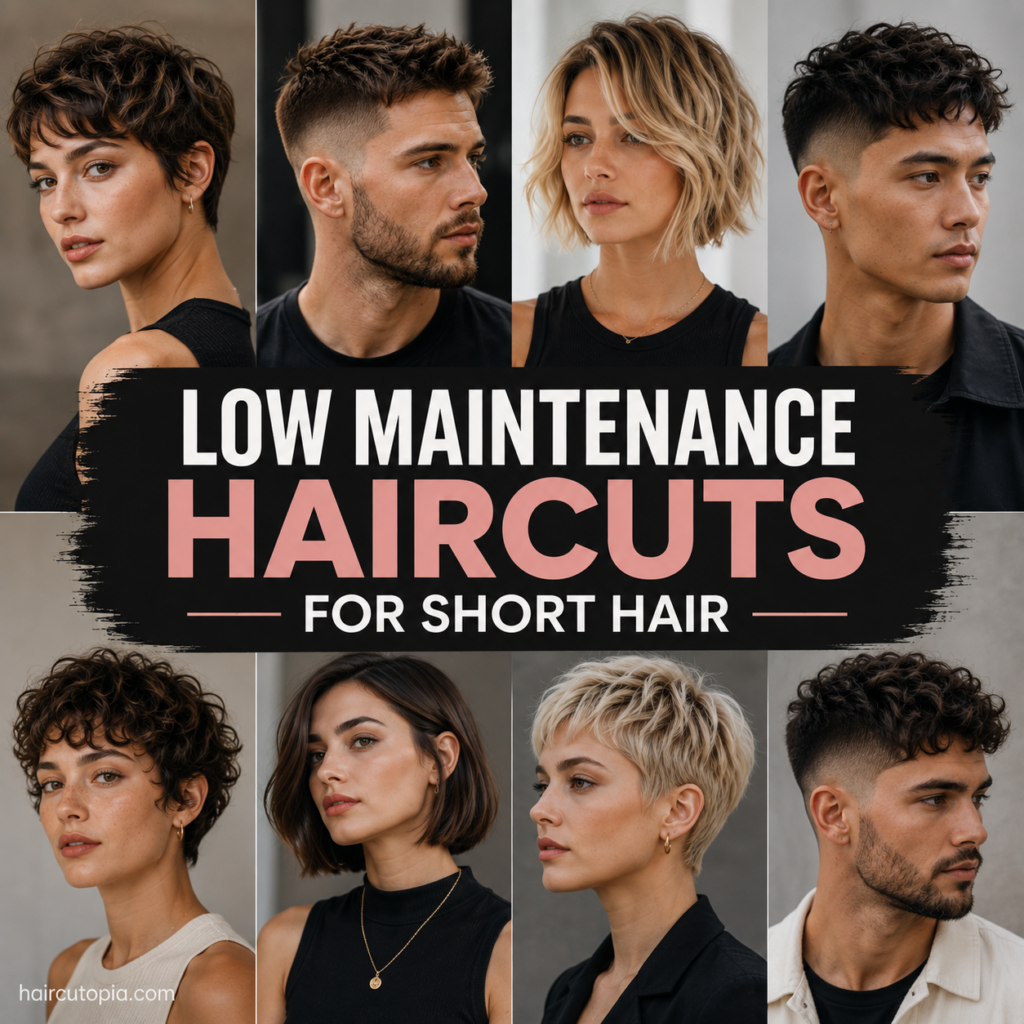
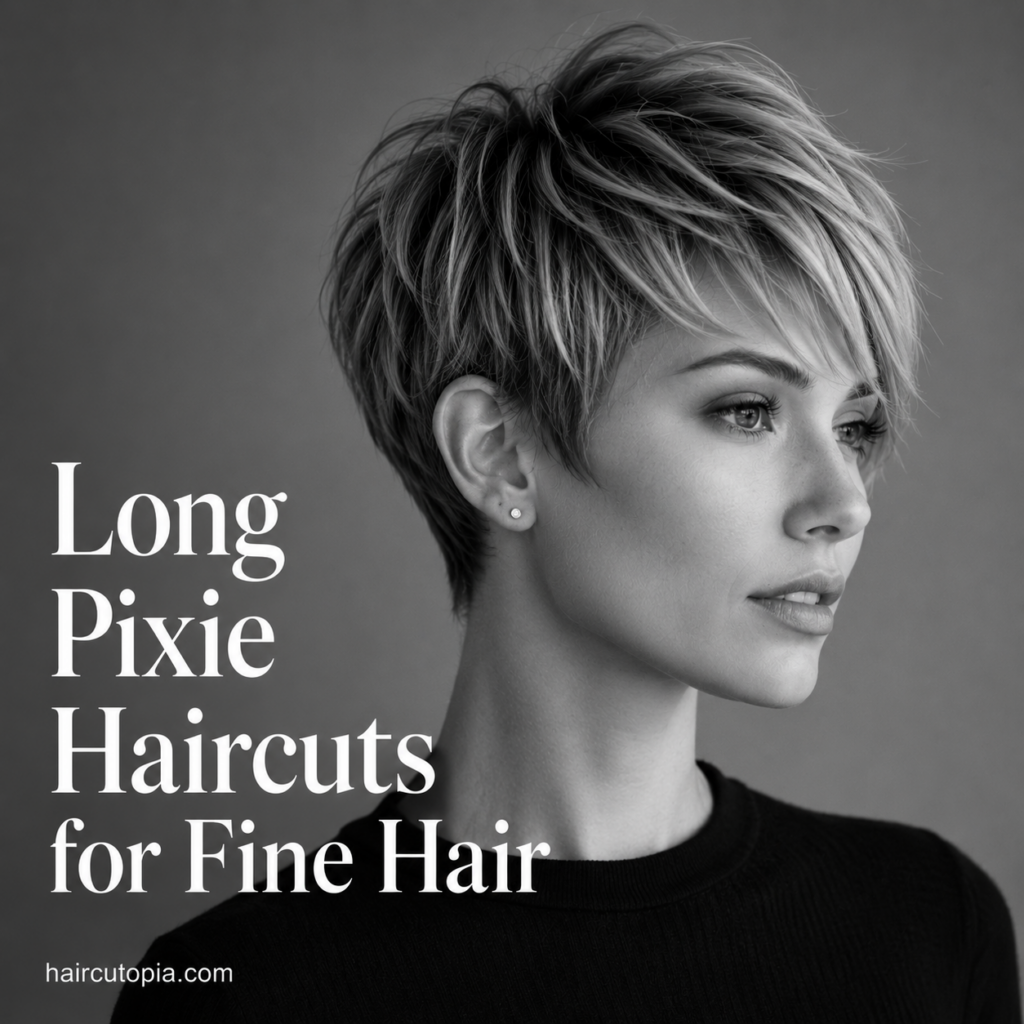
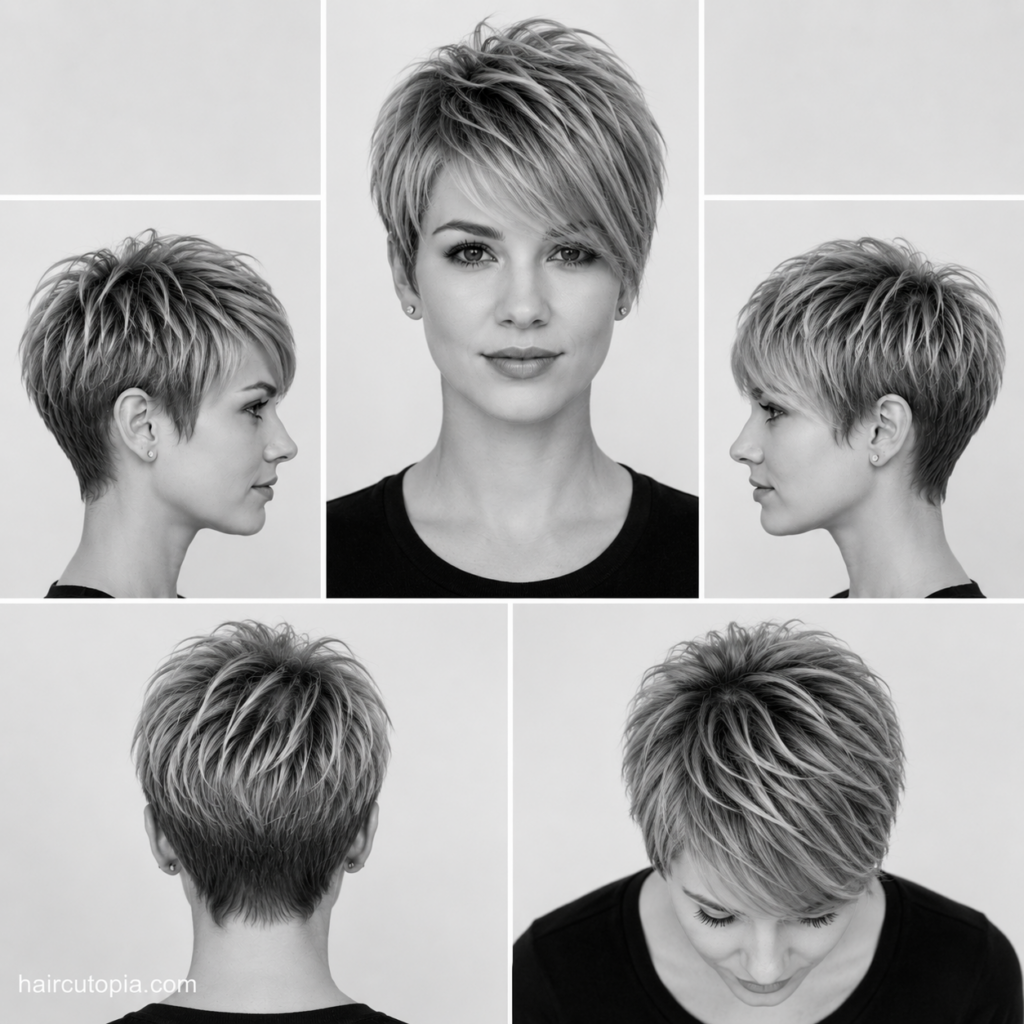
Long pixie haircuts for fine hair remove the weight of longer lengths while keeping enough hair through the top, crown, and fringe to play with movement. A well-cut long pixie can look airy and textured one day, then sleek and polished the next.
The goal is not to pile on layers or use half a can of hairspray. Fine hair usually looks its best when the haircut creates the structure and styling products simply support it.
From side-swept pixies to softly feathered cuts, here are 25 long pixie haircut ideas for fine hair, along with tips for adding volume and keeping your style fresh.
Why Long Pixie Haircuts Work Well for Fine Hair
Fine hair refers to the diameter of each individual strand. The strands themselves are smaller, even if you have a lot of hair overall.
Because fine strands are lightweight, they can respond beautifully to shorter haircuts.
A long pixie removes the length that may pull the roots downward. At the same time, keeping extra length through selected areas gives the haircut softness and styling flexibility.
The most successful long pixies for fine hair often feature:
- Strategic layers rather than excessive thinning
- Longer sections through the crown
- A defined fringe or side-swept bang
- Controlled texture
- A strong overall shape
The haircut should give your hair somewhere to go naturally.
1. Layered Long Pixie for Fine Hair
A softly layered pixie can give fine hair more movement.
Longer layers through the top help prevent the haircut from sitting flat against the head. Shorter supporting layers underneath can encourage gentle lift.
The key is maintaining enough weight through the ends.
Ask for blended layers that create shape without making the hair look overly wispy.
2. Long Pixie with Side-Swept Bangs
Side-swept bangs create instant movement at the front of the haircut.
The diagonal direction makes fine hair appear more dimensional while softly framing the eyes and cheekbones.
Keep the fringe long enough to move naturally.
A quick blow-dry with a small round brush is often enough to shape the bangs.
3. Textured Long Pixie for Fine Hair
Fine hair can look fuller when individual sections are gently separated.
A textured long pixie uses subtle layers and styling to create visible dimension.
You do not need extreme choppy pieces.
A lightweight texture spray applied through the crown can help create separation without making the hair stiff.
4. Long Pixie with Crown Volume
Keeping length at the crown gives you more hair to lift and shape.
The sides can remain slightly shorter, creating contrast with the fuller top.
When blow-drying, direct the crown upward with your fingers.
Once the hair is almost dry, allow it to fall naturally into place.
This creates softer volume than aggressively teasing the roots.
5. Long Pixie Bob for Fine Hair
A pixie bob combines the structure of a pixie with the slightly fuller outline of a short bob.
The sides are usually longer, while the back is shaped closer to the head.
Fine hair often works well with this haircut because the perimeter can remain relatively strong.
Avoid over-layering the bottom sections if you want the hair to look fuller.
6. Feathered Long Pixie Cut
Feathered layers create soft movement around the crown and fringe.
The ends gently move away from one another instead of forming a solid shape.
On fine hair, subtle feathering is usually best.
Too much texturizing can reduce density through the ends.
Use a small round brush to shape selected sections while blow-drying.
7. Tousled Long Pixie for Fine Hair
A tousled finish gives fine hair a relaxed, airy appearance.
The haircut is styled with gentle separation rather than perfect smoothness.
Apply a small amount of volumizing mousse to damp hair.
Use your fingers to move the hair in different directions while blow-drying.
Finish by arranging only a few sections.
The haircut should still feel natural.
8. Long Pixie with Long Bangs
Long bangs give a pixie more styling options.
You can sweep them across the forehead, tuck them to the side, or push them backward for additional height.
Fine hair benefits from the visible movement created by longer fringe sections.
Avoid applying heavy styling cream directly to the bangs.
Lightweight products help maintain softness.
9. Side-Parted Long Pixie
A side part can instantly create root lift.
Moving the hair away from its natural resting position encourages the roots to stand slightly higher.
A deeper part creates a more dramatic effect.
The fuller side can sweep across the forehead while the shorter side sits neatly behind the ear.
10. Choppy Long Pixie for Fine Hair
Choppy layers can give fine hair a more defined texture.
However, placement matters.
Instead of cutting short layers throughout the entire head, selected sections are shaped to create separation and movement.
A tiny amount of matte paste can emphasize the ends.
Rub the product thoroughly between your fingertips before touching the hair.
11. Long Pixie with Wispy Bangs
Wispy bangs create a light, delicate frame around the forehead.
They work particularly well with naturally fine strands because the texture already lends itself to a softer appearance.
The fringe should still have a clear shape.
If too much hair is removed, the bangs may separate into a few isolated strands.
Keep the texture intentional.
12. Sleek Long Pixie Haircut
Fine hair can look incredibly polished when worn smooth.
A sleek long pixie relies on a precise shape and clean styling.
Longer top sections follow the contour of the head while the sides remain controlled.
Use a lightweight smoothing product through the mid-lengths and ends.
Avoid applying oil directly to the roots.
13. Asymmetrical Long Pixie
An asymmetrical pixie creates visual interest through uneven length.
One side remains noticeably longer while the opposite side is shorter and more defined.
The longer section can sweep across the face.
This directional shape helps create the appearance of movement, which can make fine hair feel less flat.
14. Shaggy Long Pixie for Fine Hair
A shaggy pixie combines soft layers with a relaxed silhouette.
The crown has gentle texture, while longer pieces around the fringe and sides create movement.
Fine hair usually benefits from a softer version of the shag.
Avoid extremely short layers throughout the crown.
You want lift without creating see-through sections.
15. Long Pixie with a Tapered Nape
A tapered neckline creates a neat foundation for a longer pixie.
The hair gradually shortens toward the neck while maintaining additional length higher on the head.
This contrast can make the crown appear fuller.
It also keeps the back of the haircut from becoming heavy as the pixie grows.
16. Long Pixie with a Deep Side Part
A deep side part is one of the simplest styling tricks for fine hair.
It shifts more hair toward one side, creating visible fullness.
For additional lift, dry your hair with the part temporarily positioned on the opposite side.
Once the roots are dry, flip the hair back.
The change in direction can create surprisingly effective volume.
17. Rounded Long Pixie for Fine Hair
A rounded pixie creates a soft silhouette around the head.
The crown remains gently full while the sides follow the natural shape of the head.
Fine hair can work beautifully with this style when the perimeter is kept strong.
Minimal layering may be needed through certain areas to maintain the rounded appearance.
18. Long Pixie with Face-Framing Pieces
Longer sections around the face can soften a short haircut.
The pieces may fall near the temples, cheekbones, or jawline.
This is a good option if you want a pixie but are hesitant to expose the entire face.
The face-framing sections also create movement when tucked behind the ears or swept to the side.
19. Messy Long Pixie for Fine Hair
A messy pixie can make fine hair appear more textured.
The trick is using very little product.
Start with dry hair and apply a light texture spray.
Gently lift the crown and separate selected sections with your fingertips.
Do not try to make every piece look different.
Natural variation creates the best finish.
20. Long Pixie with Lifted Bangs
Longer bangs can be styled upward and slightly backward.
This creates height at the front of the haircut.
Use a small round brush to lift the roots while blow-drying.
Finish with flexible hairspray.
Avoid heavy wax near the fringe because it may cause fine strands to collapse.
21. Long Pixie for Fine Straight Hair
Straight fine hair can benefit from a structured haircut.
The clean texture makes the shape of the pixie highly visible.
Longer layers through the top create movement while a carefully shaped back maintains definition.
A side-swept fringe can prevent the haircut from looking too flat or uniform.
22. Long Pixie for Fine Wavy Hair
Natural waves add instant movement to fine hair.
A long pixie gives the wave pattern enough length to form without the weight of longer hair.
Keep layers relatively soft.
Apply a lightweight wave-enhancing product and gently scrunch the hair.
Air-drying can create a relaxed finish, while a diffuser may provide additional definition.
23. Long Pixie with Tucked Sides
Tucking one or both sides behind the ears changes the shape of a long pixie.
The top immediately appears more prominent.
This can be a useful styling technique when fine hair feels flat.
You can also leave a few soft pieces around the temples for a less structured appearance.
24. Grown-Out Long Pixie for Fine Hair
A grown-out pixie has a softer, slightly undone shape.
The fringe becomes longer, the sides gain movement, and the crown develops additional length.
Fine hair can transition smoothly through this stage.
Occasional reshaping appointments help prevent the back from becoming heavy while allowing the top and sides to grow.
25. Soft Natural Long Pixie
A natural long pixie works with the direction your hair already wants to move.
Instead of forcing dramatic volume or perfectly defined texture, the haircut follows your natural part and growth pattern.
This can make daily styling much easier.
Apply a lightweight styling foam, guide the hair into position while drying, and allow a little natural movement to remain.
Fine Hair vs. Thin Hair: What Is the Difference?
Fine hair and thin hair are often discussed as if they mean the same thing, but they describe different characteristics.
Fine hair refers to the thickness of individual strands.
Thin hair refers to overall hair density or the number of strands growing on the scalp.
You can have fine hair and plenty of it.
You can also have coarse individual strands but lower overall density.
Why does this matter for a pixie haircut?
Because cutting techniques affect these hair types differently.
Fine strands can be easily weighed down by heavy products. Lower-density hair may require careful weight preservation to prevent visible gaps.
Your stylist should consider both strand thickness and overall density before deciding how much layering or texturizing to use.
Should Fine Hair Be Layered in a Long Pixie?
Yes, but usually with restraint.
Layers can create lift and movement.
The problem begins when too much hair is removed.
Aggressive thinning or excessive short layers may leave fine hair looking wispy.
Strategic layering often focuses on:
- Creating lift at the crown
- Encouraging movement through the top
- Shaping the fringe
- Maintaining a stronger perimeter
- Supporting the overall silhouette
Think of layers as a tool for shaping the haircut rather than automatically creating volume.
How to Add Volume to a Long Pixie with Fine Hair
Fine hair often responds quickly to small styling changes.
You do not need an elaborate routine.
Blow-Dry the Roots in Different Directions
If your hair always dries in the same direction, the roots naturally settle flat.
Move the hair from side to side while blow-drying.
Once the roots are dry, arrange the hair into your preferred style.
Focus Product at the Roots
Use a lightweight root-lifting spray or volumizing mousse.
Apply a small amount.
More product does not automatically mean more volume.
Let the Hair Cool
Hair often holds its shape better after cooling.
After lifting a section with your brush, allow it to cool briefly before releasing it.
This can help maintain crown volume.
Change Your Part
Moving your part even slightly can create immediate lift.
A deep side part provides a more noticeable effect.
Add Dry Texture
Dry texture spray can create grip between fine strands.
Apply lightly through the crown and top.
Use your fingers to gently separate the hair.
Best Products for Long Pixie Haircuts with Fine Hair
Lightweight styling products are usually the safest choice.
Consider:
- Volumizing mousse
- Root-lifting spray
- Lightweight styling foam
- Dry texture spray
- Flexible hairspray
- Dry shampoo
- Lightweight smoothing serum
- Soft matte paste used sparingly
Heavy pomades and oils can be difficult to distribute through fine hair.
If you use them, start with an extremely small amount.
Styling Mistakes That Can Make Fine Hair Look Flat
Even a good pixie haircut can lose volume with the wrong styling routine.
Common mistakes include:
- Applying conditioner directly to the roots
- Using too much styling cream
- Applying heavy hair oils near the scalp
- Blow-drying every section downward
- Over-brushing the finished hairstyle
- Using too much hairspray
- Skipping regular reshaping trims
Fine hair often looks best when it retains some movement.
You do not need every strand perfectly controlled.
How Often Should You Trim a Long Pixie?
A long pixie typically needs a trim every six to eight weeks.
More structured styles may require appointments sooner.
If you prefer a shaggy or grown-out pixie, you may be able to wait longer.
Watch how the haircut behaves.
When the crown loses lift, the neckline becomes heavy, or the fringe stops sitting correctly, the overall shape may need adjustment.
What to Ask Your Stylist For
A photo can show your stylist the look you like, but describing your daily routine provides equally useful information.
Tell your stylist:
- How often you wash your hair
- Whether your roots become oily quickly
- If your hair struggles to hold volume
- Where your natural part sits
- Whether you have cowlicks
- How much time you spend styling
- Which products tend to weigh down your hair
You can also ask your stylist to explain how the haircut is layered.
Understanding where your volume comes from makes it easier to recreate the look at home.
Is a Long Pixie Good for Fine Hair Over 50?
A long pixie can work at any age.
For women over 50 with fine hair, the style can be especially appealing because shorter lengths may feel lighter and easier to manage.
Soft crown volume, side-swept bangs, and face-framing pieces can create movement without requiring complicated styling.
The most flattering haircut is not determined by age.
Face shape, natural texture, density, and personal style are much more useful considerations.
Long Pixie vs. Pixie Bob for Fine Hair
Choosing between a long pixie and a pixie bob often comes down to how much length you want around the sides.
A long pixie usually has:
- Shorter sides and back
- More visible texture
- Additional crown movement
- A clearly short-hair silhouette
A pixie bob typically has:
- More length around the ears
- A fuller perimeter
- A softer bob-like shape
- More weight through the sides
If you want maximum lightness and crown lift, a long pixie may be the better option.
If you prefer a fuller outline and additional side length, consider a pixie bob.
Final Thoughts on Long Pixie Haircuts for Fine Hair
Long pixie haircuts can bring out some of the best qualities of fine hair.
Fine strands are naturally lightweight, which means they can respond beautifully to movement, soft texture, and shorter shapes.
The right haircut should create structure without removing too much density.
Keep strategic length through the crown. Use layers thoughtfully. Choose lightweight styling products and allow the hair to move naturally.
Whether you prefer a sleek side-parted pixie, a tousled textured style, or a soft grown-out cut, a long pixie can give fine hair a fresh shape that feels modern, flexible, and surprisingly easy to style.