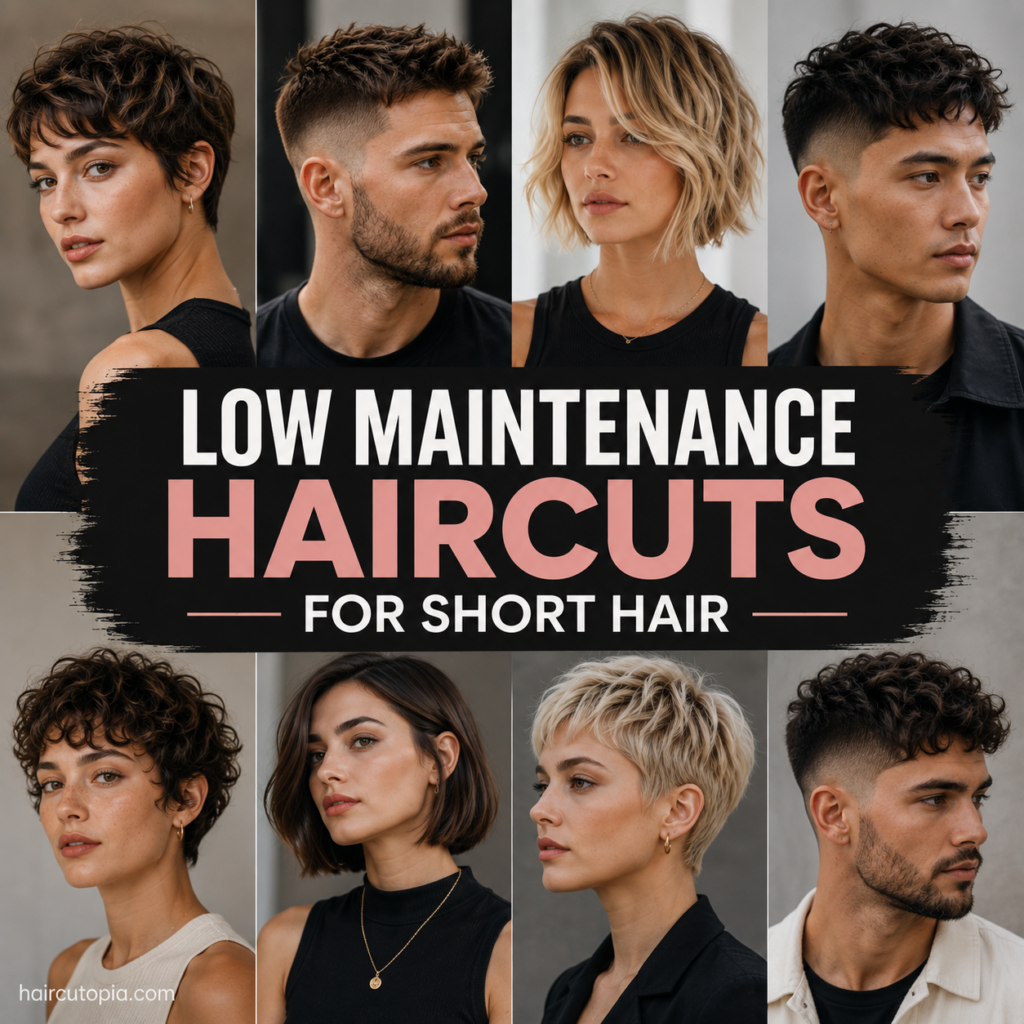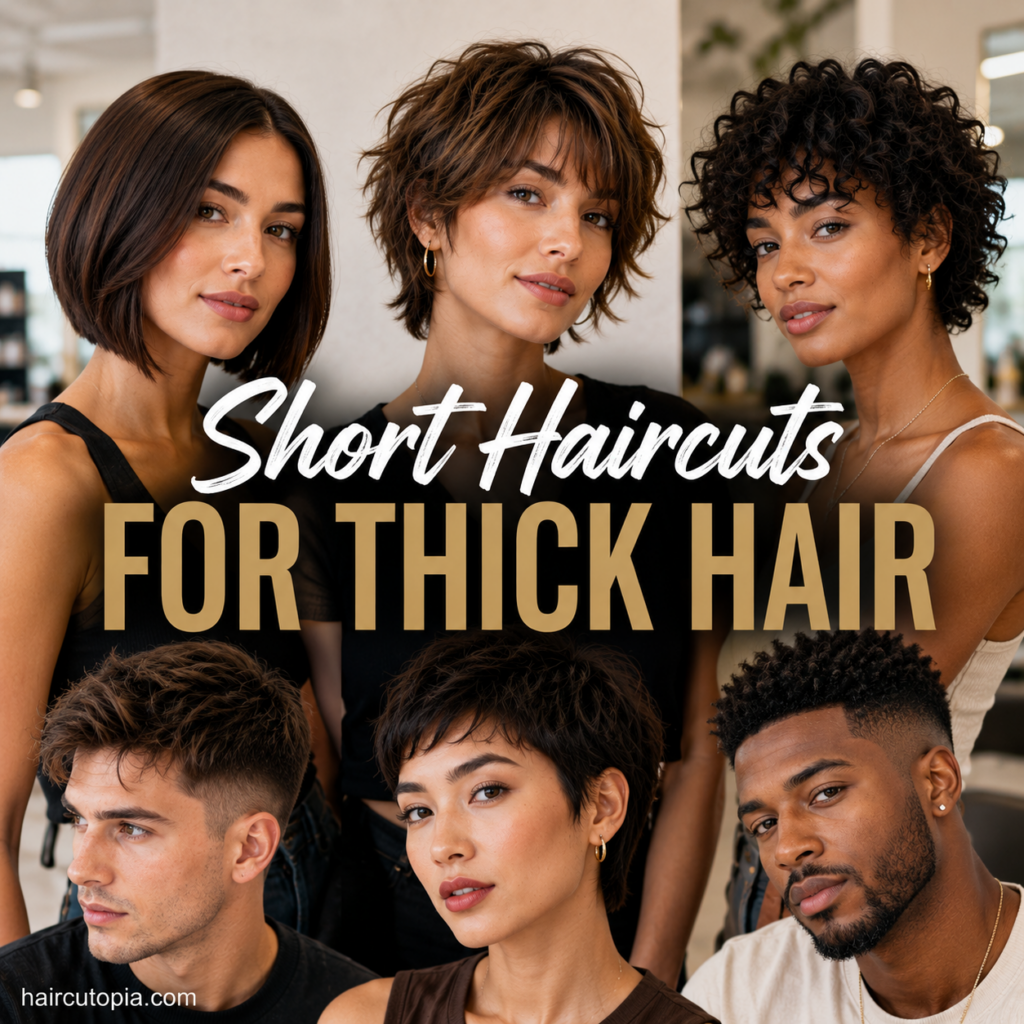
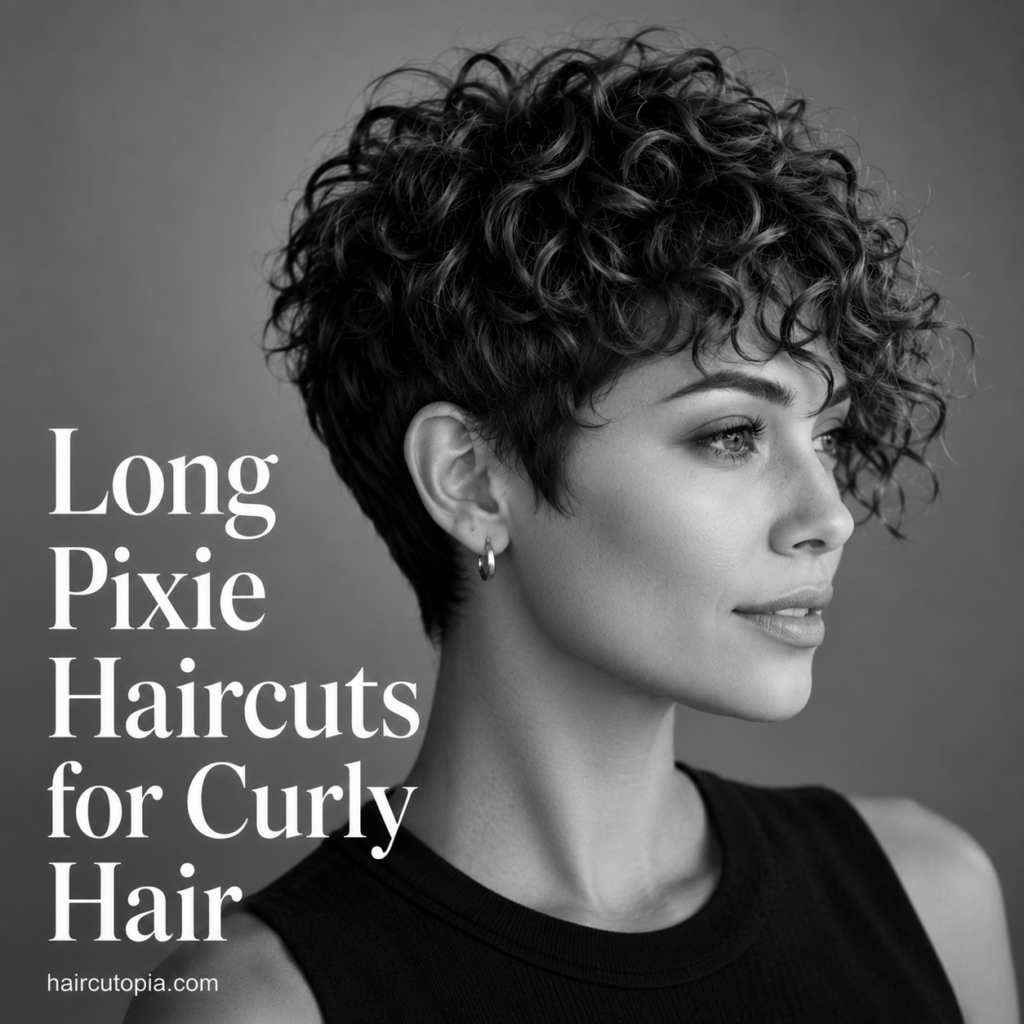
Curly hair and pixie cuts are a seriously good combination. Natural curls already bring movement, shape, and personality, while a shorter haircut removes some of the weight that can stretch curls and pull them downward.
The challenge is finding the right balance.
Cut curly hair too short in the wrong areas and the shape may feel unpredictable. Leave too much weight around the sides and a pixie can become wider than expected. A long pixie offers a comfortable middle ground.
Long pixie haircuts for curly hair keep enough length for curls, coils, and waves to form naturally while creating a shorter, more defined silhouette. You can leave volume at the crown, wear longer curls around the face, or taper the back for a cleaner shape.
The best part? A curly pixie does not need to look perfectly controlled.
A little movement is part of the appeal.
Here are 25 long pixie haircut ideas for curly hair, along with practical tips for choosing, styling, and maintaining your cut.
Why Long Pixie Haircuts Work So Well for Curly Hair
Curls need room to form.
When curly hair is cut extremely short, some curl patterns may not have enough length to create a complete bend or coil. A long pixie keeps additional length through important areas such as the crown, top, and fringe.
At the same time, the shorter overall shape reduces weight.
This can help curls appear:
- More defined
- Bouncier
- Less stretched
- Easier to shape
- More naturally voluminous
A good curly pixie is designed around your individual curl pattern.
The stylist should consider shrinkage, density, growth direction, and how your curls behave when dry.
1. Layered Long Pixie for Curly Hair
Layers can help curls sit naturally on top of one another.
A layered long pixie removes selected areas of weight while maintaining enough length for curl formation.
The crown may feature shorter supporting layers, while longer curls remain around the top and fringe.
This creates movement without making the haircut feel overly round.
2. Long Pixie with Curly Bangs
Curly bangs bring softness and personality to a pixie.
The fringe can fall naturally across the forehead or separate into individual curls.
Avoid trying to make every curl identical.
A slightly irregular fringe often looks more natural.
Ask your stylist to account for shrinkage before deciding on the final bang length.
3. Tousled Curly Long Pixie
A tousled pixie embraces natural movement.
The curls are allowed to sit in slightly different directions, creating an easy, relaxed finish.
Apply curl cream or a lightweight styling foam to damp hair.
Gently scrunch the curls and allow them to air-dry.
Once dry, avoid excessive touching.
4. Long Pixie with Crown Volume
Curly hair naturally creates volume, making it perfect for a crown-focused pixie.
The top remains longer while the sides are shaped slightly closer to the head.
This directs volume upward.
The haircut can create a beautifully elongated silhouette while still showcasing your natural texture.
5. Curly Pixie Bob
A curly pixie bob keeps additional length around the sides and back.
It has the softness of a short bob but the lighter structure of a pixie.
This style works especially well for loose curls and strong waves.
Layers can help prevent the haircut from forming a heavy triangular shape.
6. Long Pixie with a Tapered Nape
A tapered nape gives curly hair a clean foundation.
The neckline gradually becomes shorter while the curls remain longer through the crown.
This creates contrast between the textured top and structured back.
It is also a practical choice if your curls tend to become bulky around the neckline.
7. Side-Parted Curly Long Pixie
A side part gives curly hair natural direction.
More curls fall toward one side of the head, creating an asymmetrical feeling without requiring an asymmetrical haircut.
The fuller side can frame the face.
On the opposite side, curls can be tucked behind the ear or styled closer to the head.
8. Long Pixie with Loose Curls
Loose curls create soft movement through a long pixie.
Keeping the top slightly longer allows the curl pattern to remain visible.
The sides can be gently layered to maintain shape.
A lightweight curl lotion may be enough to define the texture without making the hair feel stiff.
9. Long Pixie for Tight Curls
Tighter curls can create beautiful volume in a pixie haircut.
The stylist should carefully consider shrinkage.
Hair that appears relatively long when wet may become significantly shorter once dry.
Leaving additional length through the crown and top gives tight curls room to form.
The sides can be shaped to control width.
10. Shaggy Curly Long Pixie
A curly shag pixie combines layered movement with an intentionally relaxed shape.
Shorter curls around the crown encourage volume.
Longer sections through the fringe and sides create softness.
This haircut works best when the layers are designed around the curl pattern rather than cut into a rigid formula.
11. Long Pixie with Side-Swept Curly Bangs
Long curly bangs can sweep naturally across the forehead.
The movement creates a soft frame around the eyes.
You do not need to straighten the fringe.
Allowing the natural curl pattern to remain visible keeps the style cohesive.
Use a small amount of curl cream and arrange the bangs while they are damp.
12. Asymmetrical Curly Long Pixie
An asymmetrical pixie leaves noticeably more length on one side.
Curly texture makes the difference in length appear even more dimensional.
The longer side can feature defined curls around the cheekbone or jawline.
The shorter side creates contrast and keeps the overall shape light.
13. Long Pixie with Defined Ringlets
Defined ringlets can become the main feature of a long pixie.
The haircut maintains enough length for individual curls to form completely.
Apply curl-defining product to wet hair.
Work in small sections if needed.
Once the curls are dry, gently separate only the areas that need additional volume.
14. Soft Rounded Curly Pixie
A rounded pixie creates an even, balanced silhouette.
The curls follow the natural shape of the head while maintaining softness through the crown.
Strategic layering prevents the haircut from becoming too heavy around the sides.
This style can look especially elegant with naturally consistent curl patterns.
15. Long Pixie with Shorter Sides
Shorter sides can make the curls on top appear more dramatic.
The contrast directs attention toward the crown and fringe.
The sides do not necessarily need to be clipped extremely short.
A softly tapered shape can provide enough contrast while maintaining a feminine, blended finish.
16. Messy Long Pixie for Curly Hair
Curly hair is naturally suited to a messy pixie.
The haircut embraces irregular texture rather than trying to control every strand.
Use a lightweight styling product and allow your curls to dry naturally.
Once dry, gently lift the roots with your fingertips.
Avoid breaking apart every curl.
The variation creates character.
17. Long Pixie with Face-Framing Curls
Longer curls around the face can soften a short haircut.
The pieces may fall near the temples, cheekbones, or jawline.
This is a good option if you are hesitant about cutting all of your hair short.
The back remains pixie length while the front retains additional movement.
18. Curly Long Pixie with an Undercut
An undercut can remove significant bulk from dense curly hair.
The underneath sections are clipped shorter while curls remain longer on top.
The undercut may be visible or hidden.
A hidden undercut is especially useful for reducing density without dramatically changing the appearance of the hairstyle.
19. Long Pixie for Fine Curly Hair
Fine curly hair can benefit from a shorter length.
Removing weight may help curls lift more easily from the roots.
Avoid excessive layering.
Too many short layers can reduce visual density.
A softly shaped crown with longer curls through the top can create a fuller appearance.
20. Long Pixie for Thick Curly Hair
Thick curly hair offers plenty of natural volume.
The challenge is controlling the overall shape.
Strategic weight removal can help curls sit more naturally.
Your stylist may remove bulk from underneath dense sections while preserving visible curls on the surface.
The goal is movement, not thinning the hair excessively.
21. Curly Long Pixie with Tucked Sides
Tucking one or both sides behind the ears creates a simple styling change.
The crown appears fuller while the face becomes more visible.
You can leave a few curls loose around the temples.
This keeps the style soft and relaxed.
22. Grown-Out Curly Pixie
A grown-out curly pixie has an intentionally loose shape.
The fringe becomes longer, the crown gains volume, and curls begin developing around the sides.
Regular shaping appointments can help maintain balance.
Your stylist may clean up the neckline while allowing the top to continue growing.
23. Curly Pixie with a Deep Side Part
A deep side part creates dramatic curl movement.
A larger section of hair falls toward one side, producing natural volume.
This works particularly well with loose or medium curls.
Use your fingers to establish the part while your hair is wet.
Allow the curls to dry in that direction.
24. Long Pixie with Natural Frizz
Not every curl needs a perfectly smooth surface.
Natural frizz can create softness and volume around a pixie haircut.
The key is maintaining a strong overall shape.
When the haircut is balanced, a little surface texture can look intentional and effortless.
Use moisturizing products to keep the hair comfortable, but do not feel pressured to eliminate every flyaway.
25. Natural Texture Long Pixie
A natural texture pixie works with your existing curl pattern.
The stylist follows the way your curls naturally group and move.
Some areas may remain longer than others.
That variation can create a more organic shape.
This type of haircut often requires less daily manipulation because the curls are not being forced into an unnatural style.
How to Choose the Best Long Pixie for Your Curl Type
The word “curly” covers a wide range of textures.
Loose S-shaped curls behave differently from tight coils.
Before choosing your pixie, consider:
- Your curl pattern
- How much your hair shrinks
- Overall density
- Strand thickness
- Natural crown volume
- Growth direction
- Humidity response
- Your normal styling routine
Photos are useful when talking to your stylist, but try to find examples with a curl pattern similar to yours.
A haircut shown on loose waves may behave very differently on tight curls.
Should Curly Hair Be Cut Wet or Dry for a Pixie?
There is no single cutting method that works for every person.
Some stylists prefer cutting curly hair dry because they can see exactly where individual curls naturally sit.
Others use a combination of wet and dry cutting.
A wet cut may help establish the overall structure. The stylist can then refine individual curls after the hair dries.
The best method depends on:
- Your curl pattern
- The desired haircut
- Your stylist’s technique
- How consistent your curls are
- The amount of shrinkage
The most important factor is working with someone who understands how curly hair changes between wet and dry states.
How to Style a Long Pixie with Curly Hair
A simple routine often works best.
1. Start with Wet or Very Damp Hair
Curly hair is usually easier to define when there is plenty of moisture present.
Apply styling products before the curls begin drying.
2. Apply a Lightweight Leave-In Product
A leave-in conditioner can help maintain softness.
Focus on the areas that tend to feel dry.
Avoid overloading the roots if your hair becomes flat easily.
3. Add Curl-Defining Product
Choose a cream, gel, mousse, or foam based on your texture.
Work the product gently through the hair.
Scrunch upward to encourage curl formation.
4. Arrange the Fringe and Sides
Short hair can dry quickly.
Position your bangs and face-framing curls while they are still damp.
This helps establish the direction of the haircut.
5. Air-Dry or Diffuse
Air-drying creates a soft, natural finish.
A diffuser can provide additional volume and definition.
If diffusing, use lower heat and airflow when possible.
6. Separate Curls After Drying
Once the hair is completely dry, gently separate selected curls.
Focus on areas where you want additional volume.
Avoid repeatedly touching the hair while it is drying.
Best Products for a Curly Long Pixie
The right products depend on your curl type and hair density.
Useful options may include:
- Lightweight leave-in conditioner
- Curl cream
- Styling foam
- Curl mousse
- Lightweight gel
- Anti-humidity styling product
- Scalp-friendly dry shampoo
- Lightweight hair oil for the ends
You probably do not need every product at once.
Start with a simple routine and add products only when you identify a specific need.
How to Refresh a Curly Pixie Between Wash Days
Short curls may become flattened overnight.
A full wash is not always necessary.
Try lightly misting the hair with water.
Gently reshape selected curls with your fingers.
Apply a tiny amount of curl product only where needed.
For crown volume, place your fingertips near the roots and gently lift.
Avoid aggressively brushing the hair unless brushing is part of your normal curl routine.
How to Sleep with a Curly Pixie Haircut
A long pixie may not have enough length for a traditional high pineapple.
You still have options.
Consider:
- Sleeping on a satin or silk pillowcase
- Wearing a loose satin bonnet
- Using a soft scarf
- Avoiding sleeping with wet hair
- Refreshing flattened curls in the morning
The goal is to reduce friction.
Less friction can help preserve curl definition overnight.
How Often Should You Trim a Curly Long Pixie?
Most curly pixie haircuts benefit from reshaping every six to ten weeks.
The schedule depends on the style.
A tapered pixie may need more frequent neckline maintenance.
A shaggy or grown-out pixie can often go longer between appointments.
Watch the overall silhouette.
If the sides become too wide or the crown loses its shape, the haircut may need adjustment.
What to Ask Your Stylist For
Communication is particularly important with curly hair.
Tell your stylist:
- How much your curls shrink
- Whether you normally air-dry or diffuse
- Which areas become bulky
- Where your curls tend to flatten
- How often you use styling products
- Whether you wear your hair naturally most days
- How much daily styling you are willing to do
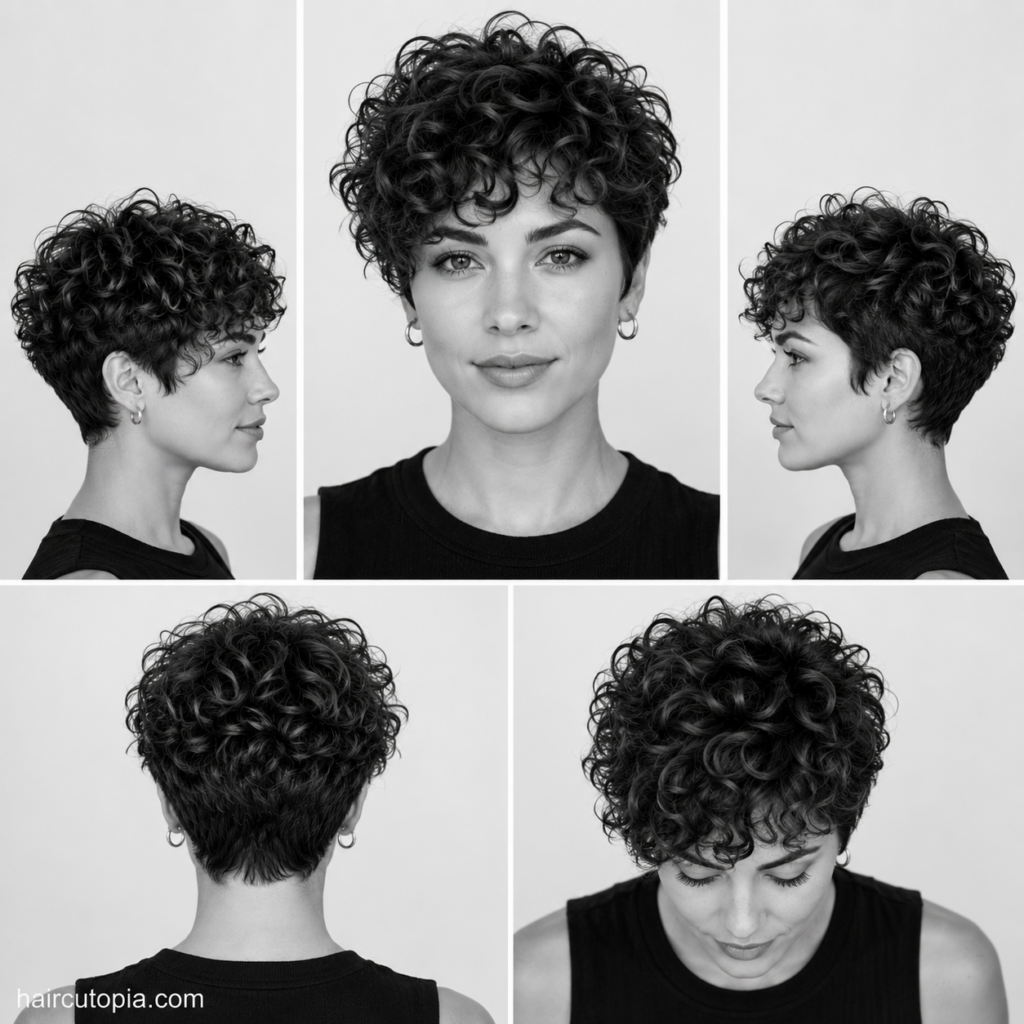
You can also ask your stylist to show you the haircut from the back and sides.
A curly pixie is a three-dimensional shape.
The profile and back matter just as much as the front.
Are Long Pixie Haircuts Good for Naturally Curly Hair?
Yes. A long pixie can be an excellent choice for naturally curly hair.
The shorter length reduces weight while the longer top gives curls room to form.
The most important part is customizing the haircut.
Curl pattern, shrinkage, and density should influence where the stylist leaves length and where weight is removed.
When the shape works with your curls, styling can become surprisingly simple.
Long Curly Pixie vs. Curly Pixie Bob
Both styles keep more length than a traditional short pixie.
A long curly pixie usually features:
- A shorter neckline
- More crown emphasis
- Defined pixie shaping
- Greater contrast between the top and sides
A curly pixie bob usually has:
- More side length
- A fuller perimeter
- A softer bob-like silhouette
- Additional weight near the jaw or ears
If you want a clearly short haircut with visible crown texture, choose a long pixie.
If you prefer more length around your face, a pixie bob may feel more comfortable.
Final Thoughts on Long Pixie Haircuts for Curly Hair
Long pixie haircuts give curly hair the freedom to move without carrying the weight of a longer style.
Curls can become bouncier. Crown volume can feel more intentional. A tapered back can create structure while longer curls around the face maintain softness.
The best curly pixie is not about controlling every curl.
It is about creating a shape that allows your natural texture to work.
Choose a stylist who understands shrinkage, be realistic about your daily routine, and pay attention to how your curls naturally fall.
With the right shape, a long pixie can make curly hair feel lighter, expressive, and beautifully individual.