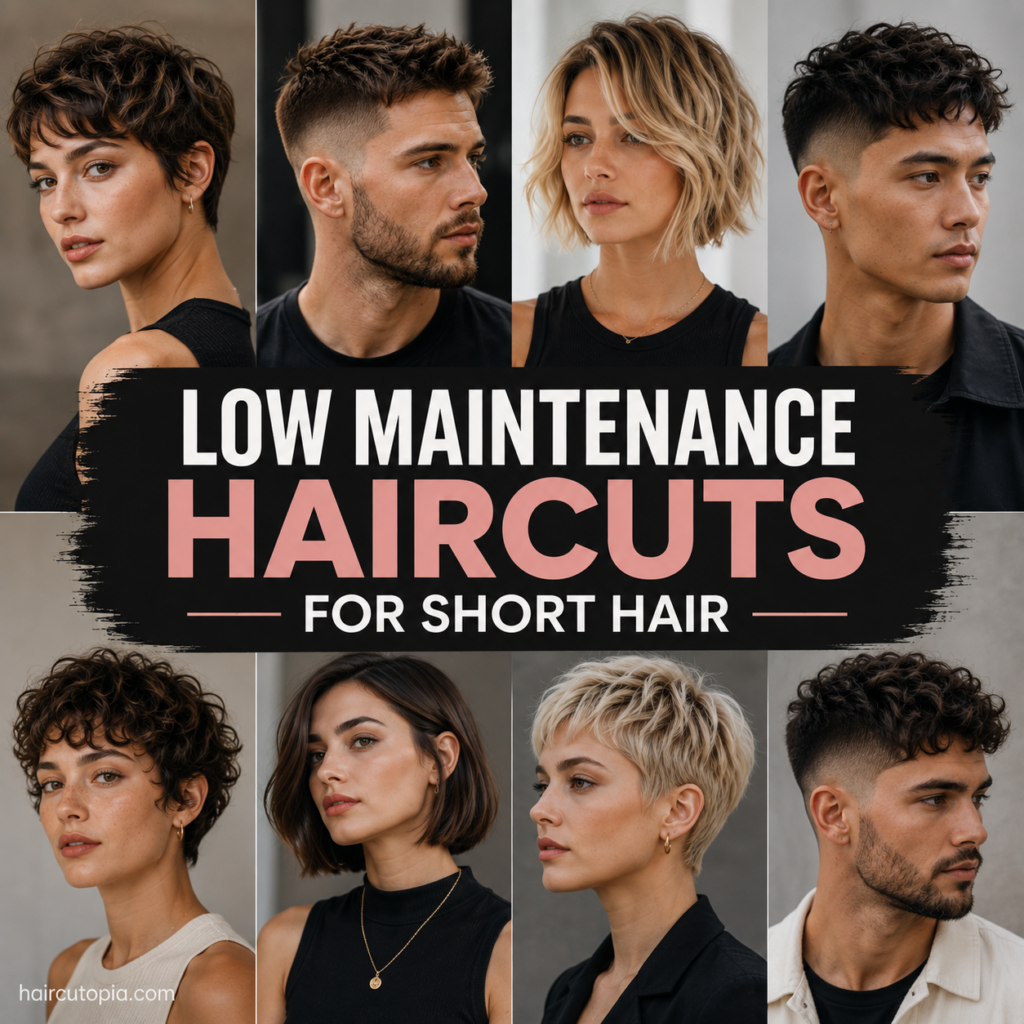
Thick hair can be a dream when you want volume, texture, and a haircut that holds its shape. It can also feel heavy, bulky, or difficult to style when the cut does not work with your natural density.
That is exactly why bixie haircuts for thick hair are worth considering.
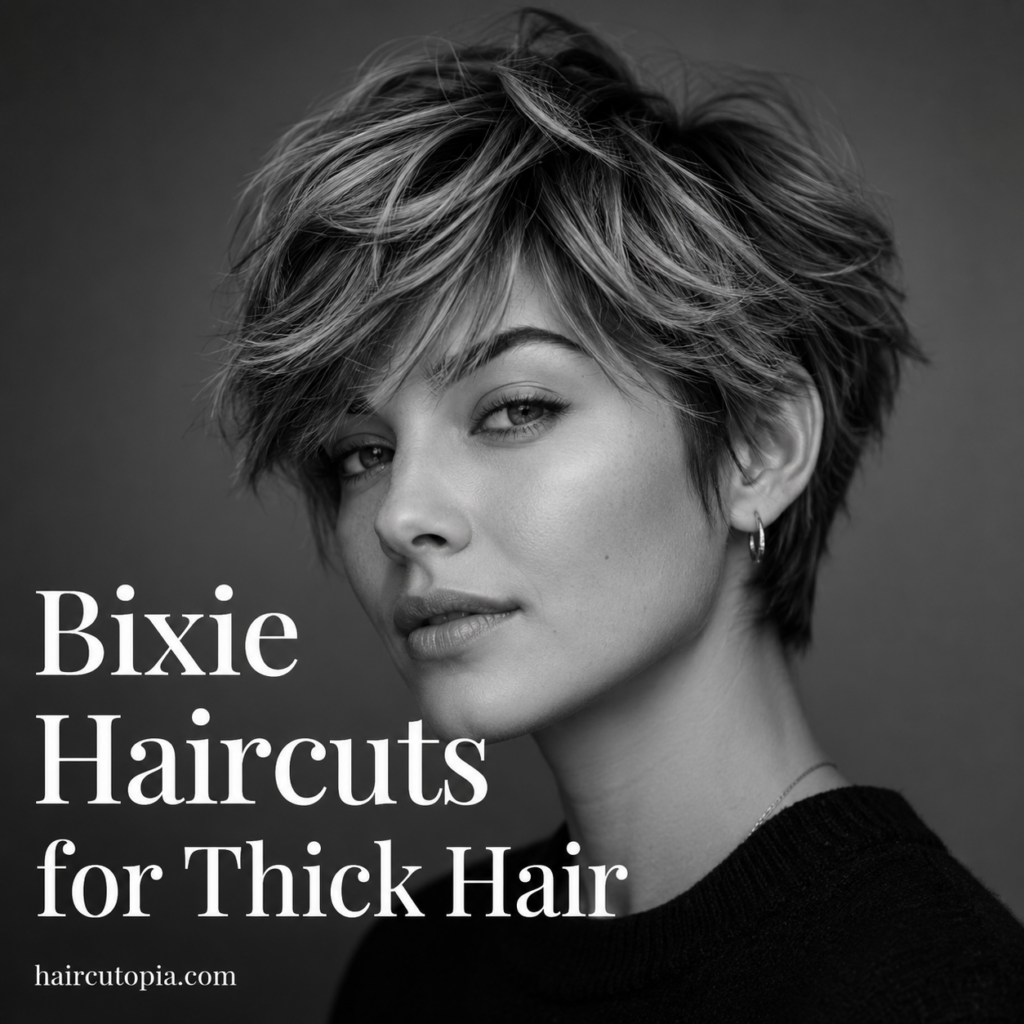
A bixie blends the cropped shape of a pixie with the softer length and movement of a bob. On thick hair, the right bixie can remove unnecessary weight while keeping enough fullness to create a polished, modern shape.
Whether your hair is straight, wavy, curly, or naturally textured, there is plenty of room to customize this haircut. The key is choosing layers, length, and texture that complement your hair rather than simply cutting it shorter.
Here are 25 bixie haircut ideas for thick hair, along with practical styling tips and advice for finding the right version for you.
Why Bixie Haircuts Work So Well for Thick Hair
Thick hair naturally gives a bixie structure. Instead of relying heavily on styling products to create volume, dense hair can help the haircut maintain its shape throughout the day.
The challenge is managing excess weight.
A well-cut bixie uses strategic layering and internal weight removal to create movement. The goal is not necessarily to make thick hair look thin. It is to redistribute the fullness so the haircut feels balanced.
Benefits of a bixie for thick hair include:
- Less weight around the sides and back
- More visible movement through the layers
- Faster washing and drying compared with longer styles
- Natural volume at the crown
- Plenty of styling flexibility
- A softer alternative to a traditional pixie cut
The bixie also gives you more length to work with than many short haircuts. You can tuck it behind the ears, wear a fringe, create a side part, or emphasize your natural texture.
25 Bixie Haircuts for Thick Hair
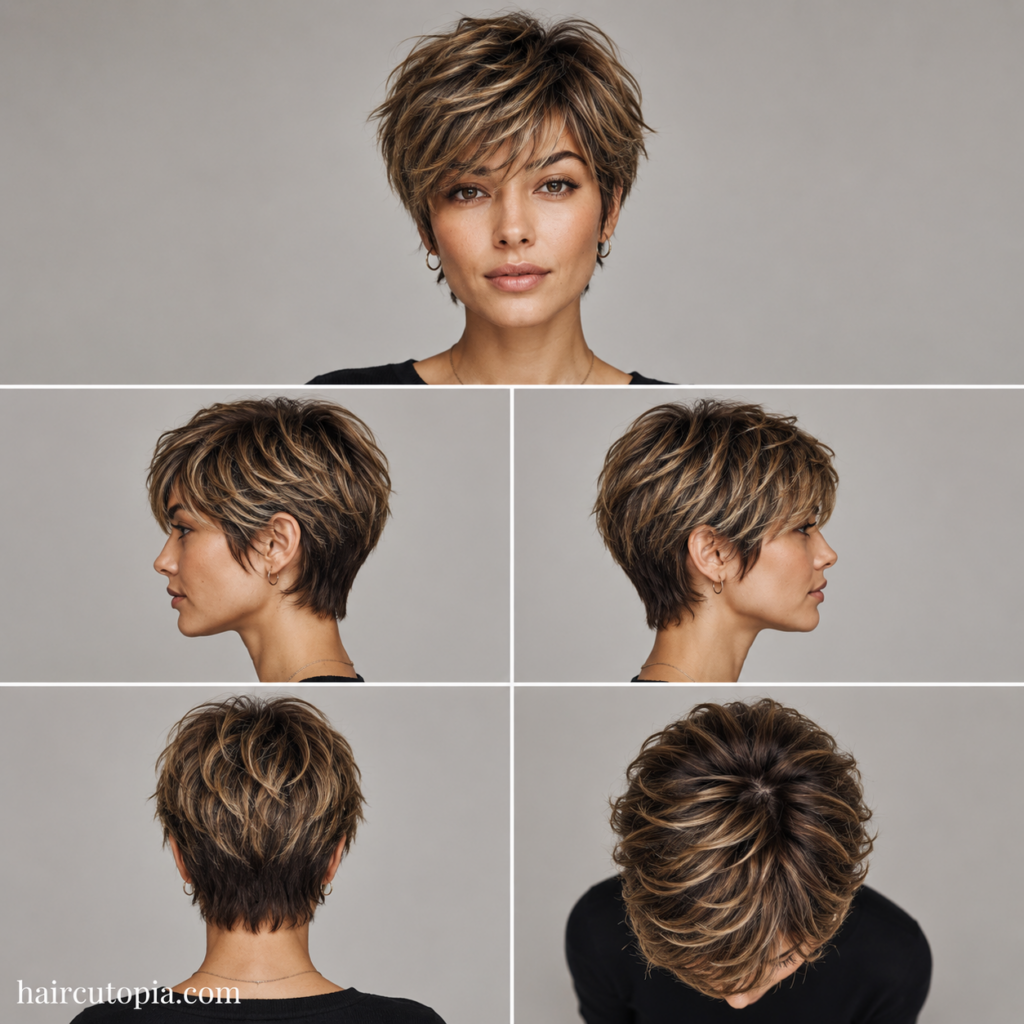
1. Layered Bixie for Thick Hair
A layered bixie is one of the most practical options for dense hair. Layers break up heavy sections and allow the haircut to move more naturally.
Ask your stylist to focus on removing internal weight while maintaining a defined outer shape. This prevents the ends from looking overly thin or wispy.
The result is a full haircut that feels noticeably lighter.
2. Textured Bixie Cut
Texture can completely change the appearance of thick hair.
A textured bixie uses separated layers and piecey ends to give dense hair more definition. Instead of forming one solid shape, the haircut develops visible movement.
A small amount of styling paste or lightweight texture cream can help separate the layers.
3. Long Bixie for Thick Hair
Not ready for a dramatic short haircut? A long bixie is a comfortable place to start.
Extra length around the ears, fringe, and nape creates a softer silhouette. You still get the benefits of a shorter layered haircut without moving directly into pixie territory.
Long bixies are also easier to tuck behind the ears.
4. Bixie With Side-Swept Bangs
Side-swept bangs help soften the front of a thick bixie.
The diagonal movement of the fringe can visually balance fullness through the sides and crown. Longer bangs also give you several styling options.
Wear them smooth, slightly tousled, or tucked away when you want your face more open.
5. Choppy Bixie Haircut
Choppy layers give thick hair a more casual, lived-in appearance.
This version works especially well when you want to avoid a perfectly rounded or overly polished shape. Uneven-looking texture is intentionally created throughout the haircut.
The cut should still be technically balanced, even when the finished style looks effortless.
6. Bixie With Crown Layers
Thick hair can sometimes become flat at the crown because of its weight.
Shorter crown layers help create lift and redirect volume upward. This gives the bixie a more dimensional profile.
The sides can remain slightly longer to prevent the haircut from becoming too round.
7. Feathered Bixie for Thick Hair
Feathered layers create a softer interpretation of the bixie.
The ends are styled away from the face or gently separated to create airy movement. On thick hair, careful weight removal is important so the feathering does not become excessively bulky.
This style has a light, flowing appearance despite the shorter length.
8. Bixie With Curtain Bangs
Curtain bangs can blend naturally into longer bixie layers.
The center or slightly off-center opening frames the face while the sides of the fringe connect with the haircut. This creates a continuous shape rather than a separate block of bangs.
Longer curtain bangs are usually easier to manage on thick hair.
9. Shaggy Bixie Haircut
A shaggy bixie combines short haircut structure with intentionally undone layers.
Expect plenty of movement around the crown, sides, and fringe. The shape works particularly well with naturally wavy thick hair.
Air-drying can help emphasize the relaxed texture.
10. Sleek Bixie for Straight Thick Hair
Thick, straight hair can create a beautifully defined bixie silhouette.
A sleek bixie focuses on clean lines and controlled movement. Internal layering can reduce bulk without making the surface appear heavily textured.
Use a smoothing cream before blow-drying for a more polished finish.
11. Wavy Bixie for Thick Hair
Natural waves give a bixie instant dimension.
Instead of straightening the hair, the haircut can be shaped around your wave pattern. Longer layers usually allow waves to form more naturally.
A lightweight curl cream or mousse can help define the texture without weighing it down.
12. Curly Bixie Haircut
A curly bixie can create a rounded, expressive shape with plenty of personality.
The stylist should consider curl shrinkage and density before determining the final length. Removing too much weight in the wrong areas can affect the overall curl pattern.
Look for a stylist comfortable working with naturally curly short hair.
13. Bixie With Wispy Bangs
Wispy bangs provide contrast against thick hair.
The lighter fringe opens the face while the rest of the haircut maintains its natural fullness. This can be particularly flattering if a heavy blunt fringe feels overwhelming.
The bangs can be worn straight or slightly separated.
14. Side-Parted Bixie
Changing the part can dramatically alter a short haircut.
A deep side part creates asymmetrical volume and gives thick hair a more directional shape. One side can appear fuller while the opposite side stays tucked or controlled.
This is an easy way to add drama without choosing an extreme haircut.
15. Rounded Bixie Haircut
A rounded bixie emphasizes a smooth, curved silhouette.
The shape follows the head while maintaining slightly more length than a traditional pixie. Thick hair naturally supports the structure.
Internal weight removal is essential to prevent the haircut from becoming too wide.
16. Bixie With Tapered Nape
A tapered nape gives the back of a bixie a cleaner finish.
The hair gradually becomes shorter toward the neckline while the crown and upper layers remain longer. This helps control dense hair at the back of the head.
It can also make the haircut feel cooler and lighter.
17. Messy Bixie for Thick Hair
The messy bixie is designed to look relaxed rather than perfectly styled.
Layers are tousled in different directions to emphasize movement. Thick hair provides enough natural body to make this style especially effective.
Use your fingers instead of a brush when styling.
18. Bixie With Face-Framing Layers
Face-framing layers create softness around the cheeks and jawline.
These pieces can be customized based on your face shape and preferred length. Longer sections near the front also make the transition to short hair feel less dramatic.
They work particularly well with side-swept or curtain bangs.
19. Undercut Bixie for Very Thick Hair
For extremely dense hair, an undercut can remove significant bulk.
The shortest sections are usually hidden underneath longer layers. This allows the visible portion of the bixie to maintain softness and movement.
Keep in mind that undercuts require regular maintenance as the shorter hair grows.
20. Bixie With Long Bangs
Long bangs create a dramatic focal point at the front of the haircut.
The fringe can reach the cheekbones or even the jawline depending on the overall shape. Thick hair gives longer bangs a substantial, polished appearance.
Ask for subtle layering if the fringe feels too heavy.
21. Razored Bixie Haircut
A razor can create soft separation through thick hair when used by an experienced stylist.
Razored ends often appear lighter and less blunt. This technique can help create a more fluid bixie shape.
However, razor cutting is not ideal for every hair texture, particularly certain curl patterns or hair prone to frizz.
22. Bixie With Flipped Ends
Flipped ends add playful movement to a layered bixie.
Selected sections are styled outward around the sides or back. The effect can be subtle or more dramatic depending on the length.
A small round brush or flat iron can help create the bends.
23. Asymmetrical Bixie for Thick Hair
An asymmetrical bixie uses intentionally uneven lengths to create a modern silhouette.
One side may be longer around the face while the opposite side is cropped closer. Thick hair helps emphasize the contrast between the two sections.
This haircut looks especially striking with a deep side part.
24. Soft Bixie With Blended Layers
If you prefer understated haircuts, choose a bixie with softly blended layers.
The transitions between lengths are subtle, creating a smooth and cohesive shape. Weight is removed internally rather than through obvious choppy sections.
This is a polished option that can work well in professional settings.
25. Voluminous Bixie Haircut
Instead of trying to minimize thick hair, a voluminous bixie embraces it.
The crown is styled with lift while the sides are shaped to maintain balance. Strategic layering prevents the haircut from becoming excessively wide.
This style works beautifully when you enjoy bold, full-bodied short hair.
How to Ask Your Stylist for a Bixie on Thick Hair
The word “bixie” can mean slightly different things to different stylists. Clear communication is important.
When discussing your haircut, mention:
- How much length you want around the ears
- Whether you prefer a visible or covered neckline
- How much daily styling you are comfortable doing
- Whether your hair becomes bulky at the sides
- Your natural wave or curl pattern
- Whether you regularly air-dry or blow-dry your hair
It also helps to explain what you do not want.
For example, if you dislike excessive volume around the ears or a rounded mushroom-like shape, tell your stylist before the haircut begins.
The best bixie haircuts for thick hair are customized around density rather than copied exactly from a reference.
Should Thick Hair Be Thinned for a Bixie?
Some weight removal is often helpful, but aggressive thinning is not always the answer.
Traditional thinning shears can reduce density quickly. When overused, however, they may create short internal hairs that contribute to frizz or unwanted volume as they grow.
Depending on your hair texture, a stylist may use:
- Internal layering
- Point cutting
- Slide cutting
- Selective razor cutting
- Limited thinning shear work
The technique matters as much as the amount of hair removed.
You want the bixie to feel lighter while still maintaining enough density to support its shape.
How to Style a Bixie Haircut With Thick Hair
One advantage of a bixie is that styling does not have to be complicated.
For a Smooth Finish
Apply a lightweight smoothing product to damp hair.
Blow-dry in the direction you want the layers to sit. A small round brush can help control the fringe and create gentle movement.
Finish with a minimal amount of serum on the ends.
For a Textured Finish
Allow the hair to dry naturally or rough-dry it with your fingers.
Work a small amount of texture paste between your hands before applying it to the mid-lengths and ends.
Pinch individual sections to create separation.
For Natural Waves
Apply mousse or lightweight curl cream to damp hair.
Scrunch gently and allow the waves to air-dry. A diffuser can be used when you want additional volume.
Avoid repeatedly touching the hair while it dries.
For Extra Crown Volume
Direct the crown hair away from its natural growth pattern while blow-drying.
Once dry, move the hair back into place. This simple technique can create lift without excessive teasing.
Best Styling Products for Thick Bixie Haircuts
Thick hair usually does not need heavy products to create volume.
In many cases, lighter formulas work better.
Useful products include:
- Lightweight smoothing cream
- Flexible styling paste
- Texture spray
- Curl cream for waves or curls
- Volumizing mousse
- Heat protectant
- Lightweight finishing serum
Start with a small amount of product.
Short hair can quickly look greasy or stiff when too much styling product is applied.
How Often Should You Trim a Bixie?
Most bixie haircuts benefit from a trim every six to eight weeks.
Because the haircut sits between a bob and pixie, small amounts of growth can noticeably change the shape. The nape may become longer, crown layers can lose lift, and thick sections may begin feeling heavy again.
If you are growing the bixie into a bob, you may extend the time between appointments.
For maintaining a precise shape, more frequent trims are usually easier.
Is a Bixie Good for Very Thick Hair?
Yes, but customization is essential.
Very thick hair may require additional internal weight removal, shorter underneath sections, or carefully placed layers. Simply cutting dense hair into a standard bixie outline can create excessive width.
Your stylist should consider:
- Overall hair density
- Individual strand thickness
- Natural texture
- Growth patterns
- Desired styling routine
These details determine where volume should stay and where weight should be removed.
Bixie Haircuts for Thick Hair by Face Shape
A bixie can be adjusted to complement different face shapes.
Round Faces
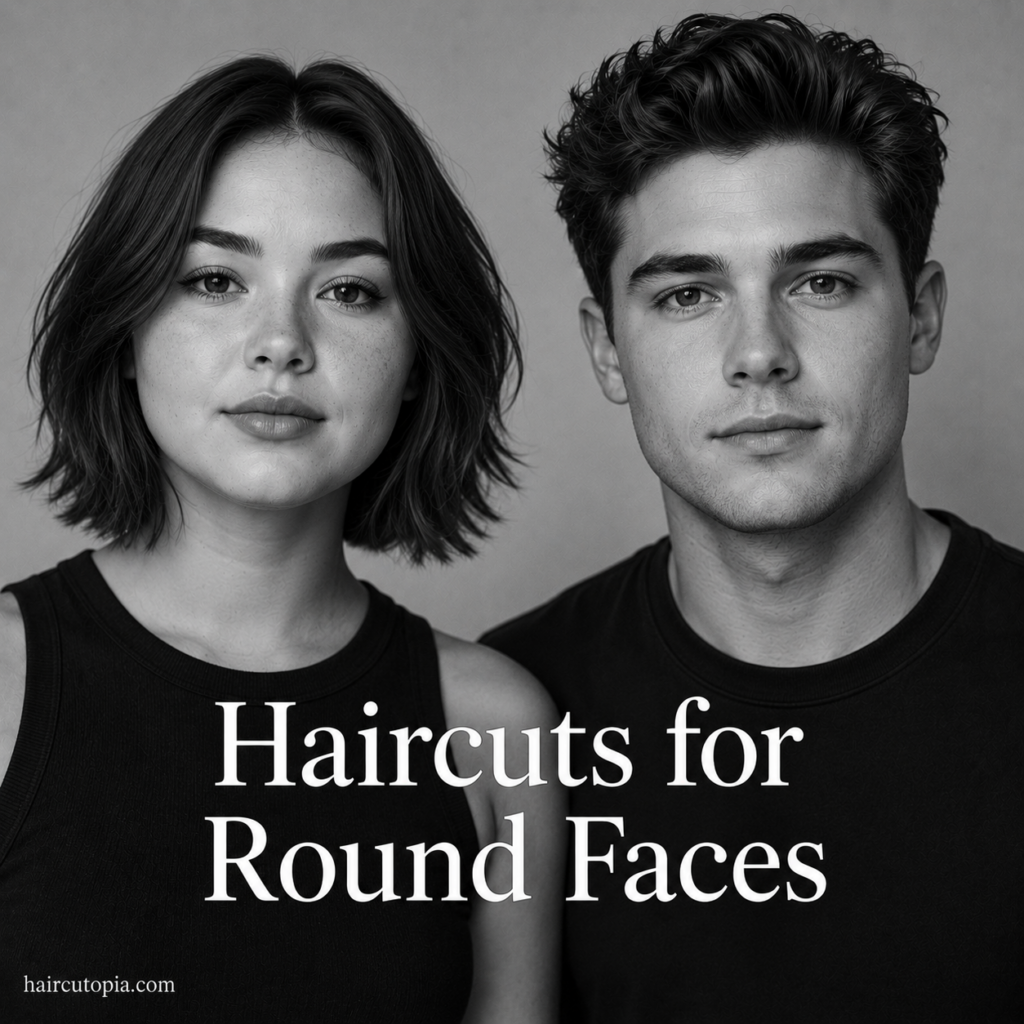
Try longer front sections, side-swept bangs, and crown height. Avoid concentrating all the volume directly at cheek level.
Oval Faces
Oval faces can usually experiment with many bixie shapes, including short fringes, rounded cuts, and asymmetrical styles.
Square Faces
Soft layers, waves, and face-framing pieces can create movement around a defined jawline.
Heart-Shaped Faces
Longer fringe and controlled crown volume can help balance a narrower chin.
Long Faces
Consider fuller sides and a fringe. Excessive height at the crown may visually lengthen the face further.
Face shape is only one consideration. Hair texture and personal style are equally important when choosing a haircut.
Common Mistakes to Avoid With a Thick Hair Bixie
A bixie should make thick hair easier to manage, not create additional frustration.
Watch out for these common problems:
- Removing too much weight at once
- Cutting the crown excessively short
- Overusing thinning shears
- Ignoring natural growth patterns
- Choosing a shape that requires more styling than you want to do
- Applying heavy styling products
- Waiting too long between maintenance trims
A thoughtful consultation can prevent many of these issues.
Final Thoughts on Bixie Haircuts for Thick Hair
Bixie haircuts and thick hair can be an excellent combination.
Natural density gives the haircut body and structure, while strategic layers help remove the weight that often makes thick hair difficult to manage. From shaggy and textured styles to smooth, softly blended cuts, the bixie can be customized in dozens of ways.
The most important factor is balance.
You want enough weight removed to create movement without losing the natural fullness that makes thick hair so versatile. With the right shape and a styling routine that fits your lifestyle, a bixie can feel lighter, modern, and surprisingly easy to wear.