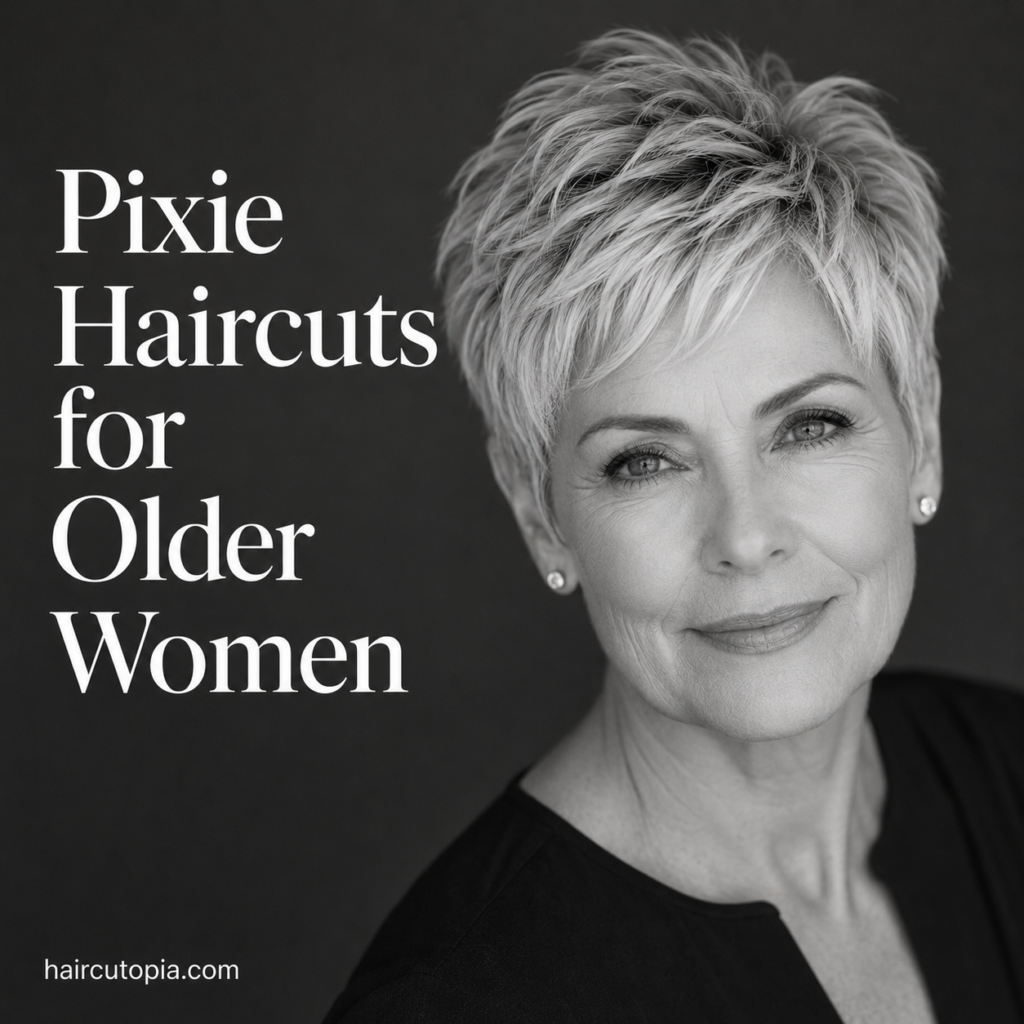
Pixie haircuts for older women are proof that short hair can be anything but boring. A well-shaped pixie can look soft and elegant, modern and textured, or bold and full of personality. It can also simplify your daily routine while making the most of your natural hair texture.
There is no single “older women’s pixie cut.” Hair density, face shape, personal style, and the amount of time you want to spend styling matter much more than age.
Some women prefer a classic short pixie with neat sides. Others want longer bangs, messy crown texture, natural curls, or a dramatic silver hairstyle. The best cut is one that works with your hair and still feels like you.
If you are considering going shorter or refreshing your current pixie, these ideas can help you find a flattering and realistic style.
Why Pixie Haircuts Work So Well for Older Women
Pixie haircuts create structure without requiring a lot of length.
This can be especially helpful when hair texture changes over time. Hair may become finer, less dense, more coarse, or naturally wavy in areas where it was once straight.
A shorter haircut allows a stylist to build shape directly into the hair.
Some reasons women choose pixie cuts include:
- Faster washing and drying
- Less time spent styling
- Easier ways to create crown volume
- More control over thick or coarse hair
- A defined shape for fine hair
- Less reliance on heat tools
- A stylish way to showcase gray or silver hair
Short hair does require regular trims if you want to preserve a specific shape. However, many women find the quick daily routine worth the extra salon visits.
Classic Pixie Haircut
The classic pixie is short around the sides and neckline with slightly more length through the crown.
It has a clean, balanced shape that can be styled casually or polished for a more formal appearance.
This haircut works particularly well with straight or slightly wavy hair.
For everyday styling, use a lightweight cream and shape the hair with your fingers. A small amount of root spray can add lift if the crown tends to fall flat.
The classic pixie is also a good starting point if you are cutting longer hair short for the first time.
Textured Pixie Haircut
A textured pixie uses short layers to create movement and separation.
The hair is not meant to sit perfectly smooth. Instead, individual pieces move in slightly different directions, giving the haircut a relaxed appearance.
Texture can help fine hair look fuller and make thick hair feel lighter.
How to Style a Textured Pixie
Start with dry or nearly dry hair.
Rub a very small amount of matte styling paste between your fingertips. Lightly pinch sections around the crown and fringe.
Avoid coating every strand.
The goal is to create natural separation rather than a stiff, heavily styled finish.
Long Pixie Haircut for Older Women
A long pixie keeps extra length through the top, sides, or fringe.
It is a great option if you want short hair without feeling completely cropped.
The longer sections provide styling flexibility.
You can:
- Sweep the fringe to one side
- Tuck hair behind the ears
- Add gentle waves
- Create crown volume
- Wear the hair smooth
- Style the top with soft texture
A long pixie can also make growing out short hair easier because it naturally transitions toward a short bob.
Layered Pixie Haircut
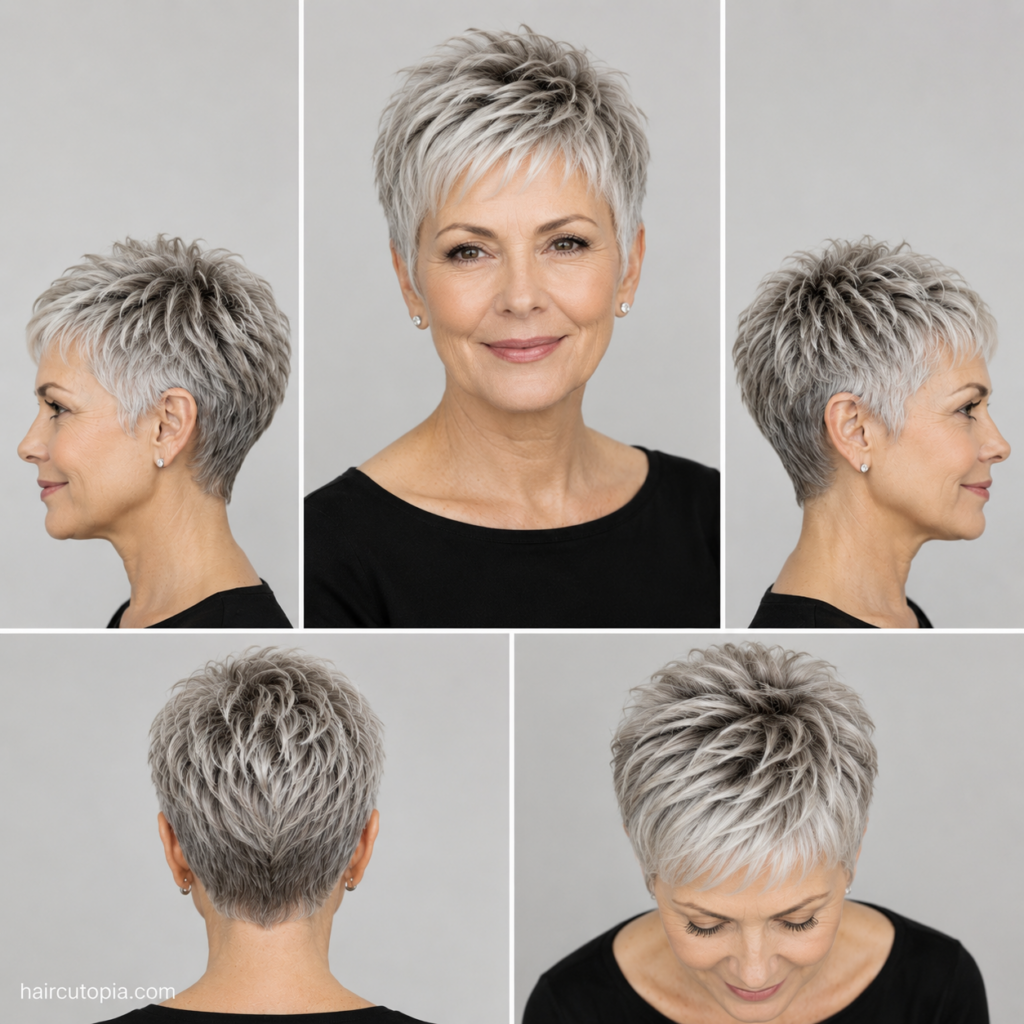
Layers are one of the most important elements in many pixie haircuts.
Short crown layers can create lift. Longer layers add softness. Internal layers can remove weight from thick hair without making the haircut look overly choppy.
A stylist can adjust the layering based on your hair density.
Fine hair usually benefits from carefully placed layers that preserve fullness.
Thick hair may need more internal weight removal.
The best layered pixie should naturally fall into shape with minimal effort.
Pixie Haircut With Side-Swept Bangs
Side-swept bangs soften the appearance of a pixie haircut.
The diagonal movement across the forehead draws attention toward the eyes and creates a flattering frame around the face.
Longer side bangs are particularly versatile.
You can wear them smooth, slightly textured, or tucked away from the face.
If you have a strong natural growth pattern around the hairline, ask your stylist to consider it when choosing the direction of the fringe.
Pixie Haircut With Wispy Bangs
Wispy bangs create a lighter alternative to traditional fringe.
Small sections of hair fall gently across the forehead instead of forming a heavy, solid line.
This can create a softer appearance around the face.
Wispy bangs also work well with fine hair because they do not require a large amount of density.
As the fringe grows, it usually blends easily into the surrounding layers.
Pixie Haircuts for Fine Hair
Fine hair often responds well to shorter haircuts.
Longer lengths can pull the hair downward, making the roots appear flatter. Removing excess length allows the hair to sit closer to its natural volume.
Good pixie haircut features for fine hair include:
- Short crown layers
- A slightly longer top
- Soft texture
- Side-swept fringe
- Tapered sides
- Minimal aggressive thinning
Ask your stylist to preserve density.
Too much razor cutting or thinning can sometimes make fine hair appear even less full.
For styling, choose lightweight mousse, root spray, or texture powder.
Pixie Haircuts for Thinning Hair
Thinning hair and naturally fine hair are not exactly the same.
With thinning hair, density may vary across different areas of the scalp.
A customized pixie can help create a more balanced shape.
For example, additional length may be left through the crown or fringe while other sections are cut shorter.
Strategic texture can also reduce noticeable separation between individual strands.
Avoid extremely heavy styling products, which can cause the hair to clump together.
A lightweight volumizing product often creates a softer appearance.
Pixie Haircuts for Thick Hair
Thick hair provides plenty of density for a pixie haircut.
The challenge is controlling bulk.
Without proper shaping, short thick hair can become wide around the sides.
Internal layers help remove excess weight while preserving the outside silhouette.
Tapered pixies and undercut styles can also work well.
The top can remain longer and textured while the lower sections are kept closer to the head.
Pixie Haircuts for Gray and Silver Hair
Gray hair can look striking in a short pixie.
Natural variations between silver, white, charcoal, and darker strands become more visible when the hair is layered and textured.
A pixie can turn those color differences into a feature of the hairstyle.
How to Care for Gray Pixie Hair
Gray hair may feel more dry or coarse than previously pigmented hair.
A simple care routine may include:
- Moisturizing shampoo
- Lightweight conditioner
- Occasional hydrating treatments
- Heat protectant
- Purple shampoo when needed
Purple shampoo can help reduce yellow tones, but frequent use is not always necessary.
If your silver hair begins looking dull or slightly purple, reduce how often you use toning products.
Pixie Haircuts for Naturally Wavy Hair
Natural waves add movement to a pixie haircut.
A slightly longer layered pixie gives the waves enough room to form.
Instead of straightening the hair, consider working with the natural texture.
Apply a lightweight wave cream to damp hair and gently scrunch.
Allow the hair to air-dry or use a diffuser.
Once dry, separate individual sections with your fingertips.
The result should feel relaxed and natural.
Pixie Haircuts for Curly Hair
Curly pixie cuts can be soft, playful, or dramatic.
The shape depends heavily on the curl pattern.
A stylist should account for shrinkage before choosing the final length. Curls can appear significantly shorter after drying.
Many curly pixies keep additional length through the crown.
This allows the curls to create natural volume while shorter sides maintain the overall shape.
Use a moisturizing curl cream or light gel to encourage definition.
Choppy Pixie Haircut
A choppy pixie uses visibly separated layers.
The ends may appear slightly uneven by design.
This gives the haircut a modern, casual appearance.
Choppy pixies often work well with straight or slightly wavy hair.
For styling, use a small amount of matte paste.
Twist or pinch a few sections around the crown.
Do not try to define every piece. Slight imperfection is part of the style.
Soft Feminine Pixie Haircut
A pixie haircut can still feel soft and feminine.
Longer fringe, feathered layers, and gentle edges create a less structured appearance.
The hair may naturally frame the forehead and temples.
A soft pixie works particularly well with subtle waves.
Use a lightweight styling cream rather than a strong wax.
The goal is movement rather than firm hold.
Tapered Pixie Haircut
A tapered pixie gradually becomes shorter around the sides and neckline.
The smooth transition creates a clean silhouette.
The crown can remain longer and textured.
This contrast helps create shape without making the haircut feel overly severe.
Tapered pixies usually require regular trims to maintain the neat outline.
Pixie Haircut With Volume on Top
Crown volume can make a pixie haircut feel more dynamic.
Height draws the eye upward and creates a longer visual line.
This can be particularly flattering for rounder face shapes.
To create volume:
- Apply a root-lifting product to damp hair.
- Blow-dry the crown upward.
- Use your fingers or a small brush to lift the roots.
- Finish with a lightweight texture spray.
Avoid applying heavy oils near the crown.
They can quickly flatten short hair.
Sleek Pixie Haircut
A sleek pixie offers a polished alternative to textured styles.
The hair is styled smooth with a defined shape.
A side part can add structure and create movement across the forehead.
Use a small amount of smoothing cream to control flyaways.
If you use a flat iron, work with small sections and keep the temperature moderate.
Short hair can be easily exposed to excessive heat.
Asymmetrical Pixie Haircut
An asymmetrical pixie uses different lengths on each side.
One side may remain shorter while the opposite side features longer fringe.
The contrast creates visual interest.
Asymmetry does not need to be extreme.
A slightly longer side bang can make a classic pixie feel noticeably more modern.
Spiky Pixie Haircut
Modern spiky pixie cuts are softer than the heavily gelled styles of previous decades.
Short crown layers are lifted and separated.
The hair still moves naturally.
A matte styling paste works well.
Apply the product to your fingertips and gently lift individual sections.
Avoid coating the entire hairstyle with gel.
Undercut Pixie Haircut
An undercut removes length underneath the top sections of hair.
The sides or back may be clipped shorter.
This can make thick hair easier to manage.
The longer top provides styling flexibility and creates contrast.
Undercuts require frequent trims if you want to preserve a sharp difference between the lengths.
Low-Maintenance Pixie Haircuts for Older Women
A truly low-maintenance pixie should follow your natural hair pattern.
If your hair is straight, a classic or tapered pixie may require minimal styling.
Wavy hair often works well with soft layers.
Curly hair benefits from enough length to allow curls to form.
The biggest mistake is choosing a haircut that requires you to completely change your natural texture every morning.
Tell your stylist exactly how much time you normally spend on your hair.
If you prefer to air-dry and leave the house, say so.
The haircut can be designed around that routine.
Choosing a Pixie Haircut for Your Face Shape
Face shape can help guide your choice, although it should never become a strict rule.
Round Face
Look for crown volume and slightly shorter sides.
Side-swept fringe can create additional angles.
Oval Face
Oval faces can usually wear many different pixie styles.
Classic, textured, cropped, and asymmetrical cuts can all work.
Square Face
Soft layers and wispy bangs can balance a defined jawline.
Avoid overly boxy shapes if you prefer softness.
Heart-Shaped Face
Longer fringe can balance a wider forehead and narrower chin.
Side-swept pixies are a popular option.
Long Face
Consider adding texture or volume around the sides.
Extremely tall crown volume may visually lengthen the face further.
How to Ask Your Stylist for the Right Pixie Cut
Bring several reference photos to your appointment.
Try to choose hairstyles with hair texture similar to yours.
Then explain exactly which details you like.
For example:
- “I like the volume through the crown.”
- “I want the neckline to stay soft.”
- “I prefer longer fringe.”
- “I want the sides tapered around my ears.”
- “I usually air-dry my hair.”
These details give your stylist more useful information than simply asking for a pixie haircut.
How Often Should You Trim a Pixie Haircut?
Most pixie haircuts benefit from a trim every four to eight weeks.
Short tapered styles may need maintenance closer to four weeks.
Longer pixies can often go six to eight weeks.
If you enjoy a softer, grown-out shape, you may be comfortable waiting longer.
Pay attention to the areas around the ears and neckline.
These sections often reveal growth first.
Best Styling Products for Pixie Haircuts
You usually need less product than expected.
Helpful products include:
- Lightweight mousse
- Root-lifting spray
- Texture spray
- Matte styling paste
- Soft styling cream
- Flexible hairspray
- Lightweight smoothing serum
Start with a very small amount.
Short hair can become weighed down quickly.
How to Keep a Pixie Haircut Looking Modern
Modern pixie haircuts usually emphasize natural movement.
The hair does not need to look perfectly sculpted.
Soft texture and flexible styling often create a more current appearance.
You can refresh an existing pixie by:
- Growing the fringe longer
- Adding crown texture
- Trying a deeper side part
- Tapering the neckline
- Softening the edges
- Adding subtle asymmetry
Sometimes a minor change is enough to make your haircut feel completely different.
Are Pixie Haircuts Good for Older Women?
Pixie haircuts can be an excellent option for older women because they are adaptable.
They can create shape in fine hair, control thick hair, showcase natural curls, and highlight silver tones.
Age itself should not determine the haircut.
Your hair texture, lifestyle, and personal style are much more important.
A pixie should feel comfortable and realistic for your daily routine.
Final Thoughts on Pixie Haircuts for Older Women
Pixie haircuts for older women come in an incredible range of styles.
You can choose a classic short pixie, a soft layered cut, a textured silver hairstyle, a longer pixie with side bangs, or a bold undercut.
The right haircut should work with your natural hair rather than requiring constant correction.
Think about your hair texture, how much styling you enjoy, and how frequently you are comfortable visiting the salon.
Bring reference photos to your stylist and discuss the specific details you like.
A well-designed pixie can be stylish, flattering, and refreshingly easy to wear.
Related Posts
 Short Haircuts for Curly Hair: 25 Stylish Ideas, Tips, and Maintenance Guide
 Medium Bangs Haircuts: 25 Stylish Ideas for a Soft, Flattering Look
 Curtain Bangs Haircuts for Oval Faces: 25 Stylish Ideas That Never Go Out of Fashion
 Short Layered Haircut Haircuts: 25 Stylish Ideas That Add Volume, Texture, and Confidence