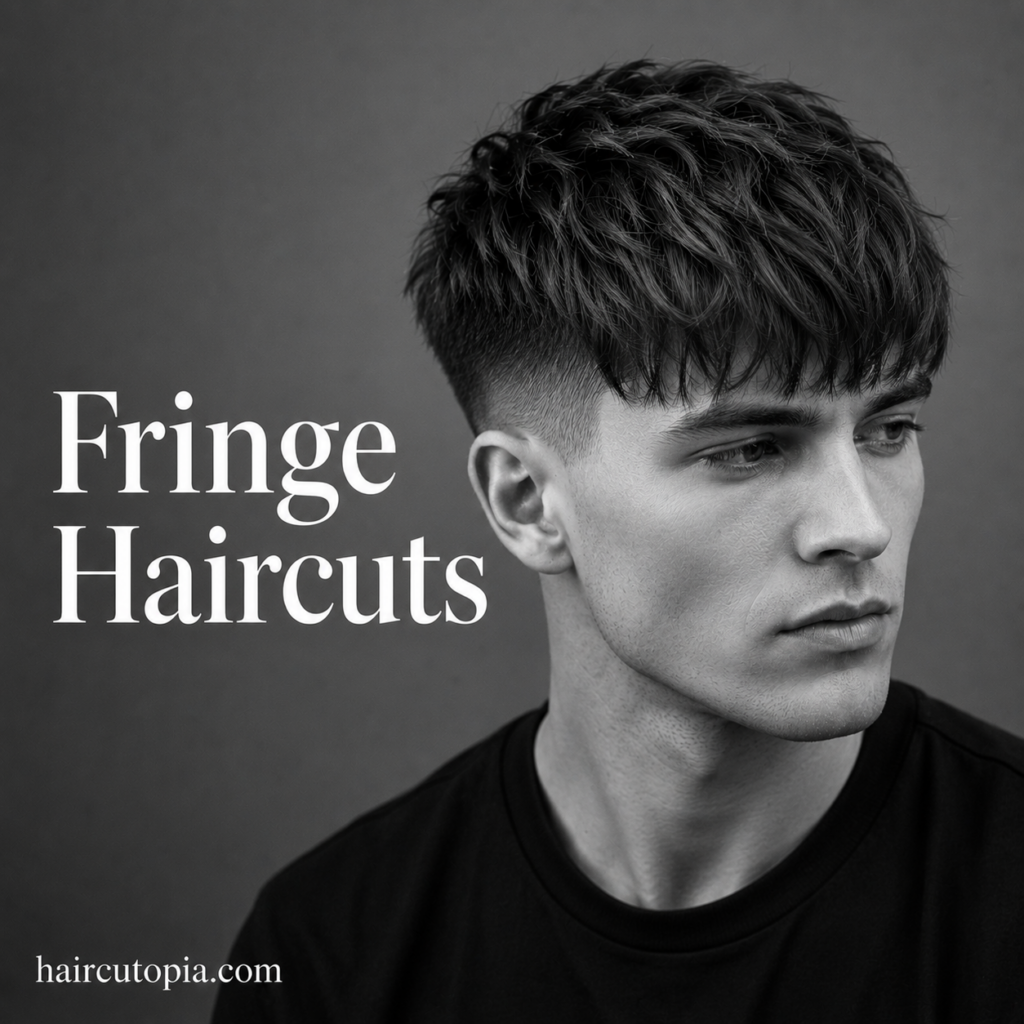
Fringe haircuts have become one of the most popular men’s haircuts in recent years, offering a stylish combination of texture, movement, and versatility. Whether you prefer a short textured fringe, a messy modern look, or a longer curtain-inspired style, a fringe can completely transform your appearance while remaining surprisingly easy to maintain.
One of the biggest advantages of a fringe haircut is its adaptability. It works with straight, wavy, curly, and even coily hair, while helping balance different face shapes and soften facial features. From sharp fades to relaxed textured crops, fringe hairstyles have evolved far beyond their traditional roots.
In this complete guide, you’ll discover everything you need to know about fringe haircuts, including the most popular styles, how to choose the right fringe for your face shape and hair type, styling advice, maintenance tips, and what to ask your barber.
What Is a Fringe Haircut?
A fringe haircut features hair that falls forward over the forehead instead of being brushed upward or backward. The fringe itself can be short, long, textured, straight, layered, or swept slightly to one side depending on the desired look.
Most modern fringe hairstyles combine a longer textured top with shorter tapered or faded sides to create contrast and balance.
Common features include:
- Hair styled toward the forehead
- Textured or layered top
- Tapered or faded sides
- Versatile styling options
- Modern appearance
A fringe can be subtle or bold, making it suitable for a wide variety of personal styles.
Why Fringe Haircuts Are So Popular
Fringe hairstyles have become increasingly popular because they offer a fashionable look without requiring excessive styling.
Some of the biggest benefits include:
- Modern appearance
- Easy to customize
- Suitable for many face shapes
- Works with most hair textures
- Can help disguise a high forehead
- Adds movement and dimension
- Looks great with fades and tapers
Whether you want something edgy or understated, there’s a fringe haircut that fits your style.
Fringe Haircuts vs. Textured Crop
A textured crop haircut keeps the overall length shorter and uses consistent layering across the top, usually finishing with a shorter forward fringe.
Although these styles often overlap, they aren’t exactly the same.
Fringe Haircut
- Focuses on the front section
- Fringe can vary greatly in length
- More styling flexibility
- Available in numerous variations
Textured Crop
- Shorter overall length
- Consistent layering
- Usually features a shorter fringe
- Simpler styling
Many textured crops include a fringe, but not every fringe haircut is a textured crop.
Popular Types of Fringe Haircuts
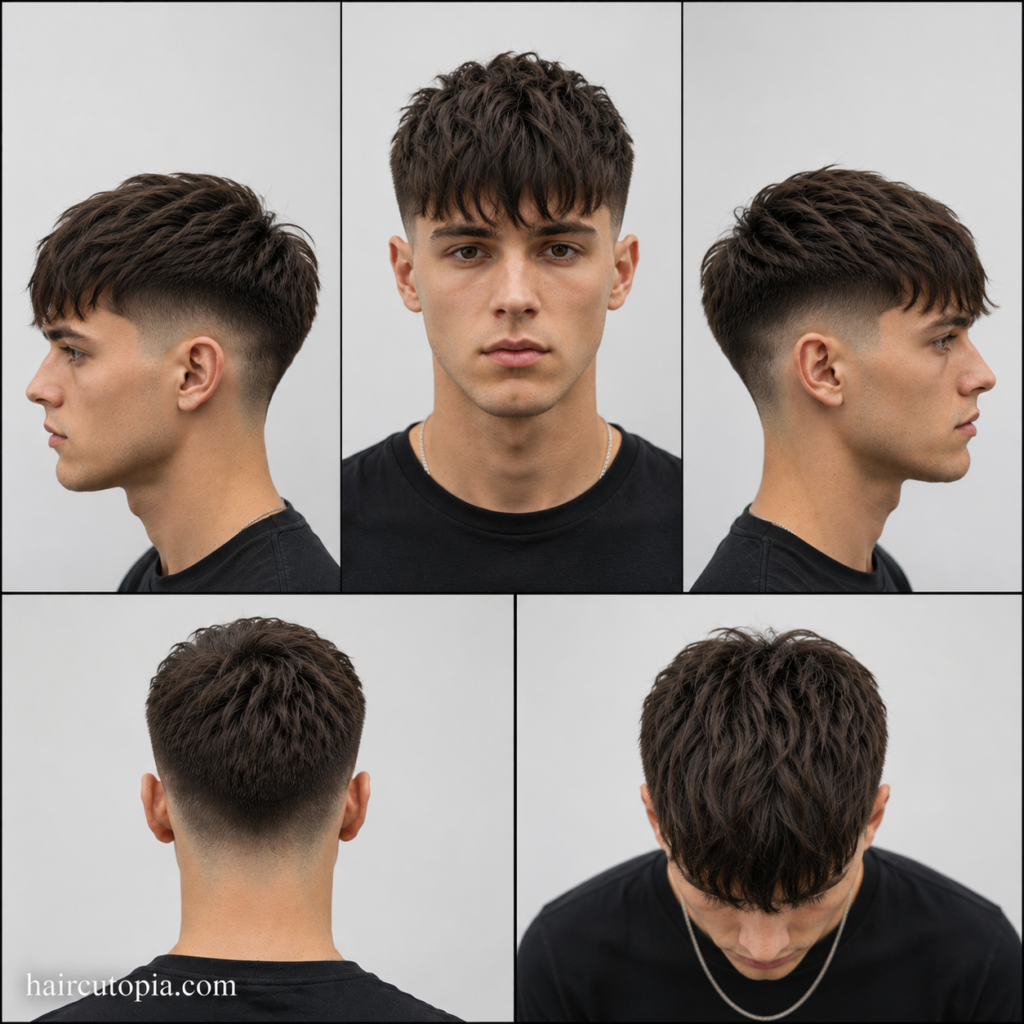
Modern barbers offer countless fringe variations.
Classic Fringe
The traditional version features a neatly cut fringe with tapered sides.
Benefits include:
- Timeless appearance
- Professional styling
- Easy maintenance
- Clean finish
Textured Fringe
One of today’s most requested hairstyles.
Advantages include:
- Natural movement
- Modern finish
- Fuller appearance
Perfect for thick and wavy hair.
Short Fringe
A short fringe creates a sharp, clean appearance while remaining easy to maintain.
Ideal for:
- Active lifestyles
- Minimal styling
- Professional environments
For a more structured variation, the Caesar cut pairs a short, straight fringe with a relatively uniform top, creating a classic alternative to more heavily textured fringe styles.
Long Fringe
Keeping additional length creates more movement and styling options.
Popular looks include:
- Side-swept fringe
- Layered fringe
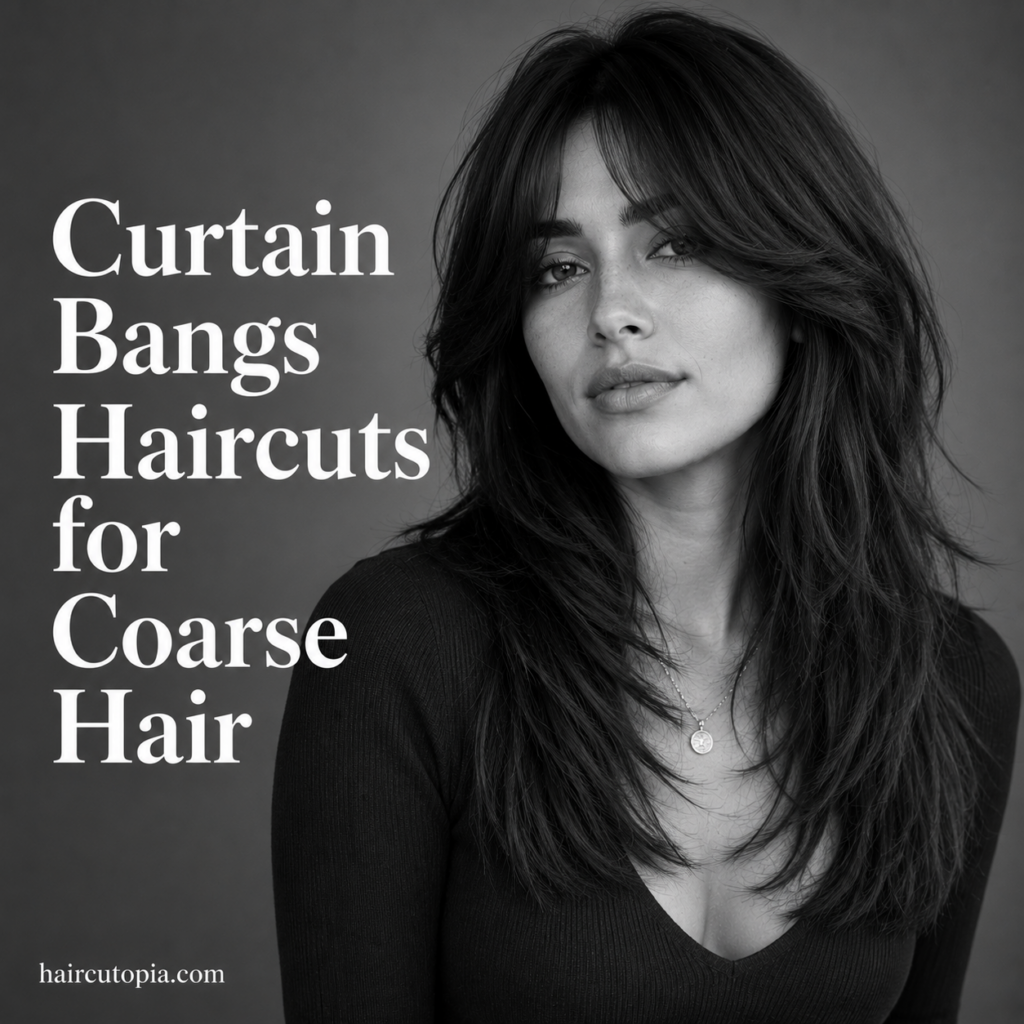
- Curtain-inspired fringe
Curly Fringe
Natural curls create outstanding texture while maintaining a youthful appearance.
Messy Fringe
A relaxed fringe styled with matte clay produces effortless texture.
Fringe with Fade
Pairing a fringe with one of several modern fade haircuts creates additional contrast while keeping the attention on the textured hair toward the front.
Popular fade options include:
Fringe with Taper
A taper fade provides a softer transition than a full fade while maintaining a polished appearance around the sides and neckline.
Modern Fringe Hairstyles
Today’s fringe haircuts combine classic barbering with contemporary styling.
Textured Fringe with Low Fade
One of the most versatile combinations.
Creates:
- Balanced proportions
- Modern appearance
- Easy maintenance
Skin Fade Fringe
A skin fade emphasizes the textured top and creates maximum contrast.
French Fringe
Inspired by the French crop, this version features a more defined forward fringe.
Curtain Fringe
Longer fringe sections parted near the center create a relaxed, fashionable appearance.
Fringe with Beard
One of today’s most popular combinations.
Popular beard styles include:
- Stubble
- Short beard
- Full beard
- Boxed beard
Choosing a Fringe by Hair Type
Straight Hair
Straight hair highlights the shape of the fringe.
Recommended styles include:
- Classic fringe
- Short fringe
- Side-swept fringe
Thick Hair
Thick hair naturally creates volume and texture.
Popular options include:
- Textured fringe
- Messy fringe
- Fade fringe
Fine Hair
Light layering creates the appearance of fuller hair.
Matte products help add texture without weighing hair down.
Wavy Hair
Natural waves produce effortless movement.
Minimal styling is often required.
Curly Hair
Curly fringes have become increasingly popular.
Benefits include:
- Defined curls
- Natural texture
- Unique appearance
Coily Hair
Modified fringes paired with tapers or fades create bold contemporary styles while showcasing natural texture.
Choosing a Fringe by Face Shape
Oval Face
Nearly every fringe variation works well.
Round Face
Pairing the fringe with a fade helps create additional length.
Recommended:
- Textured fringe
- Short fringe
- Mid fade fringe
Square Face
Fringes soften strong jawlines while maintaining masculine structure.
Excellent choices include:
- Messy fringe
- Textured fringe
- Classic fringe
Heart Face
Fringes naturally balance wider foreheads.
Longer textured styles often work especially well.
Diamond Face
The added fullness across the forehead helps balance prominent cheekbones.
Long Face
Fringes are one of the best hairstyles for longer face shapes because they visually reduce facial length.
Styling a Fringe Haircut
Most fringe haircuts require only a few minutes of styling.
Matte Clay
Ideal for:
- Texture
- Medium hold
- Natural finish
Texture Powder
Perfect for:
- Fine hair
- Added volume
- Lightweight styling
Hair Paste
Provides:
- Flexible movement
- Soft definition
Hair Cream
Excellent for:
- Curly hair
- Wavy hair
- Frizz control
Blow drying while directing the fringe forward helps create additional texture and control.
Fringe Haircuts with Beards
Fringe hairstyles pair well with facial hair.
Popular combinations include:
- Fringe with stubble
- Fringe with short beard
- Fringe with boxed beard
- Fringe with full beard
Maintaining a clean neckline and well-groomed beard creates a balanced overall appearance.
How Often Should You Get a Fringe Haircut?
Maintenance depends largely on fringe length.
Typical schedule:
- Every 2–3 weeks for skin fades
- Every 3–4 weeks for textured fringes
- Every 4–5 weeks for longer styles
Regular trims prevent the fringe from becoming difficult to manage.
How to Ask Your Barber for a Fringe Haircut
Tell your barber:
- Desired fringe length
- Fade or taper preference
- Texture
- Top length
- Neckline style
- Beard blending if needed
Bringing reference photos is one of the easiest ways to ensure you get the exact style you want.
Common Fringe Haircut Mistakes
Avoid these common issues:
- Cutting the fringe too short
- Using too much styling product
- Ignoring your natural hairline
- Waiting too long between trims
- Choosing a fringe that doesn’t suit your hair texture
A well-balanced fringe should complement your facial features rather than overpower them.
Frequently Asked Questions
What is a fringe haircut?
A fringe haircut features hair that falls forward over the forehead, combined with shorter sides that are usually tapered or faded.
Are fringe haircuts still popular?
Yes. Fringe haircuts remain one of today’s most fashionable men’s hairstyles thanks to their versatility, texture, and modern appearance.
What’s the difference between a fringe and a French crop?
A French crop typically has a shorter, more structured fringe, while fringe haircuts include a much wider range of lengths and styling options.
Does a fringe work with curly hair?
Absolutely. Curly fringes create natural texture and movement while maintaining a stylish, contemporary appearance.
How often should you trim a fringe?
Most fringe haircuts benefit from trims every three to four weeks, while faded versions usually require maintenance every two to three weeks.
Final Thoughts
Fringe haircuts continue to be one of the most versatile and stylish choices for modern men. From textured crops and messy fringes to curtain styles and fade combinations, there’s a fringe haircut for virtually every face shape, hair type, and lifestyle.
With the right barber, quality styling products, and regular maintenance, a fringe haircut can deliver a fresh, youthful appearance that’s easy to personalize. Whether you prefer something clean and understated or bold and fashion-forward, the fringe remains one of the best ways to add texture, character, and modern style to your look.

Related Posts
 Bangs Haircuts for Frizzy Hair: 18 Stylish Fringe Ideas That Work With Your Natural Texture
 Bangs Haircuts for Straight Hair: 18 Sleek and Stylish Fringe Ideas to Refresh Your Look
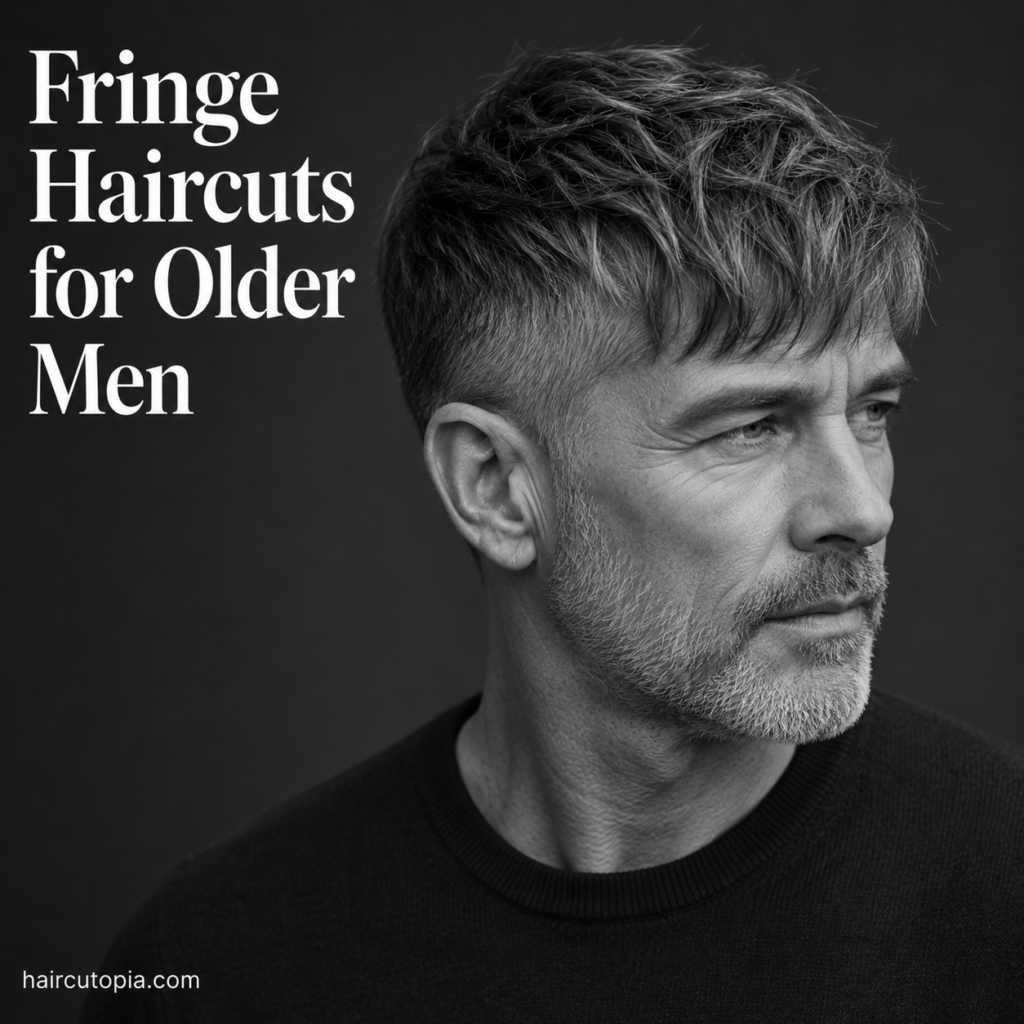 Fringe Haircuts for Older Men: 25 Stylish and Age-Appropriate Looks
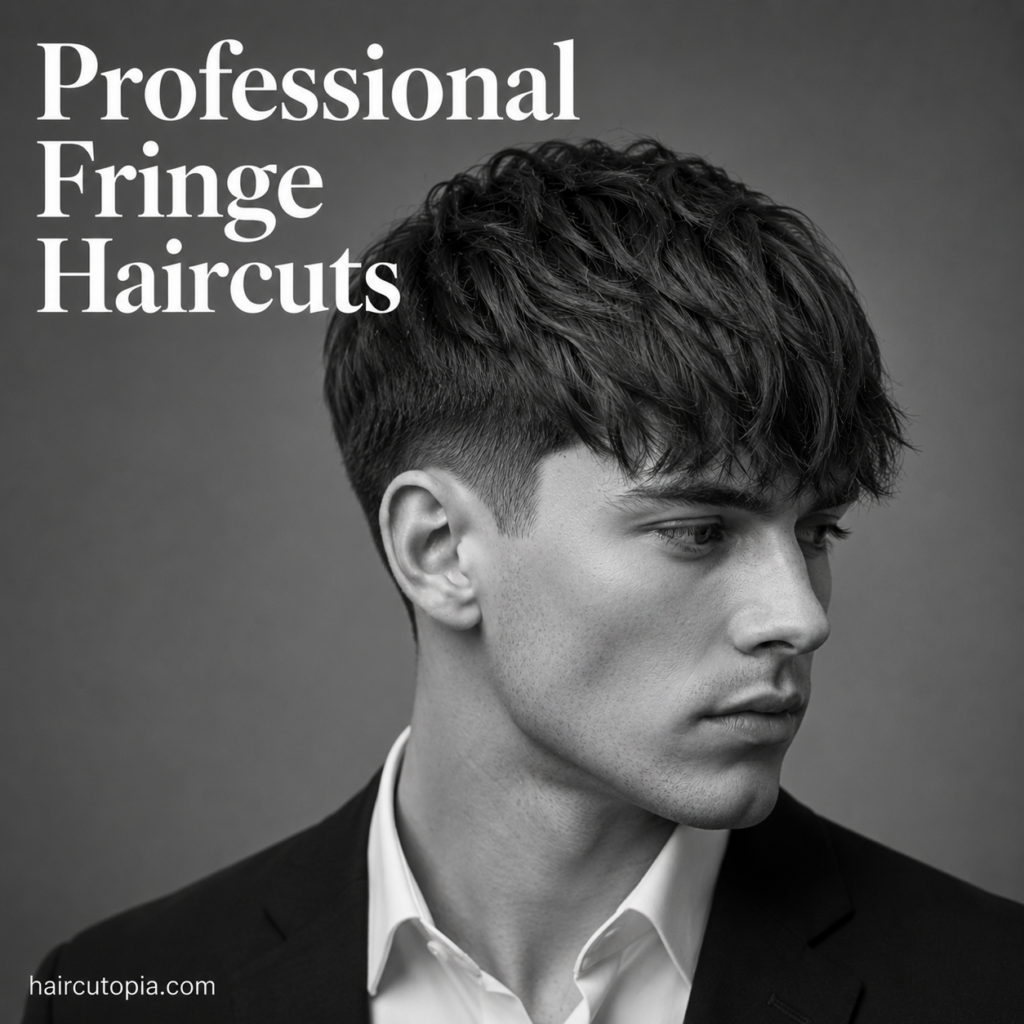 Professional Fringe Haircuts: 25 Clean and Stylish Looks for the Modern Workplace