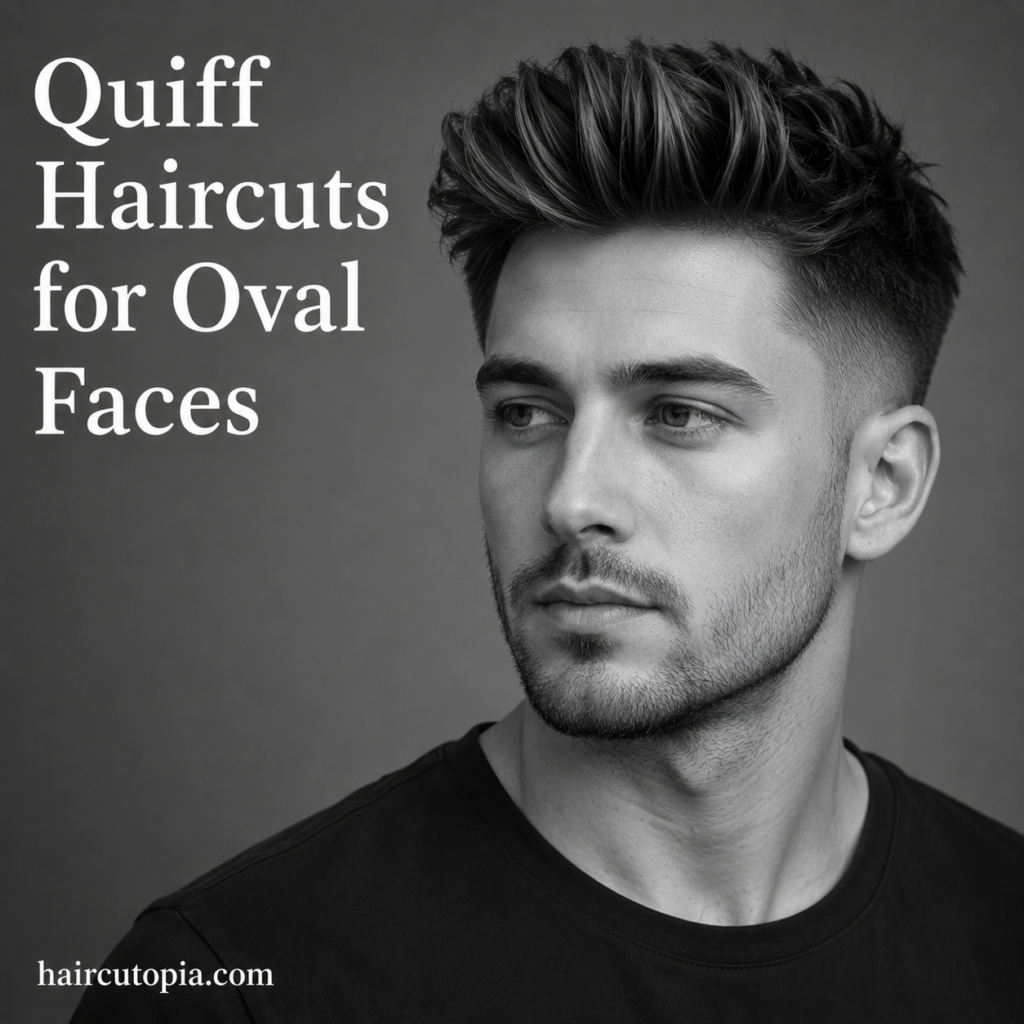
An oval face shape is often considered one of the most versatile face shapes for men’s haircuts. It has balanced proportions, a slightly longer face length than width, and a jawline that is usually softer than a square face but more defined than a round one.
That flexibility makes the quiff an especially strong choice.
A quiff adds lift at the front, movement through the top, and enough structure to make a haircut feel intentional without looking too rigid. Whether you prefer a classic taper, a textured modern finish, or a bold skin fade, there is a quiff style that can work with an oval face.
The main goal is balance. Oval faces can handle volume well, but an overly tall quiff or extremely tight sides can make the face look longer than it really is. Choosing the right proportions will keep the haircut sharp and natural.
Why Quiff Haircuts Work for Oval Faces
The quiff is defined by longer hair at the front that is styled upward and back. It can be smooth and polished, messy and textured, short and subtle, or high and dramatic.
For oval faces, this versatility is a major advantage. You are not limited to one specific amount of height or one type of fade. Instead, you can choose a quiff based on your hair texture, personal style, and how much daily styling you are willing to do.
A well-cut quiff can help you:
- Add shape and volume to finer hair
- Make thick hair look more controlled
- Show off natural wave or texture
- Create a polished look for work or formal events
- Keep a casual haircut looking put together
The best quiff haircut for an oval face usually has a balanced top and sides. It should add height without becoming too tall, and the sides should be neat without being shaved too aggressively unless that is the look you want.
Best Quiff Haircuts for Oval Faces
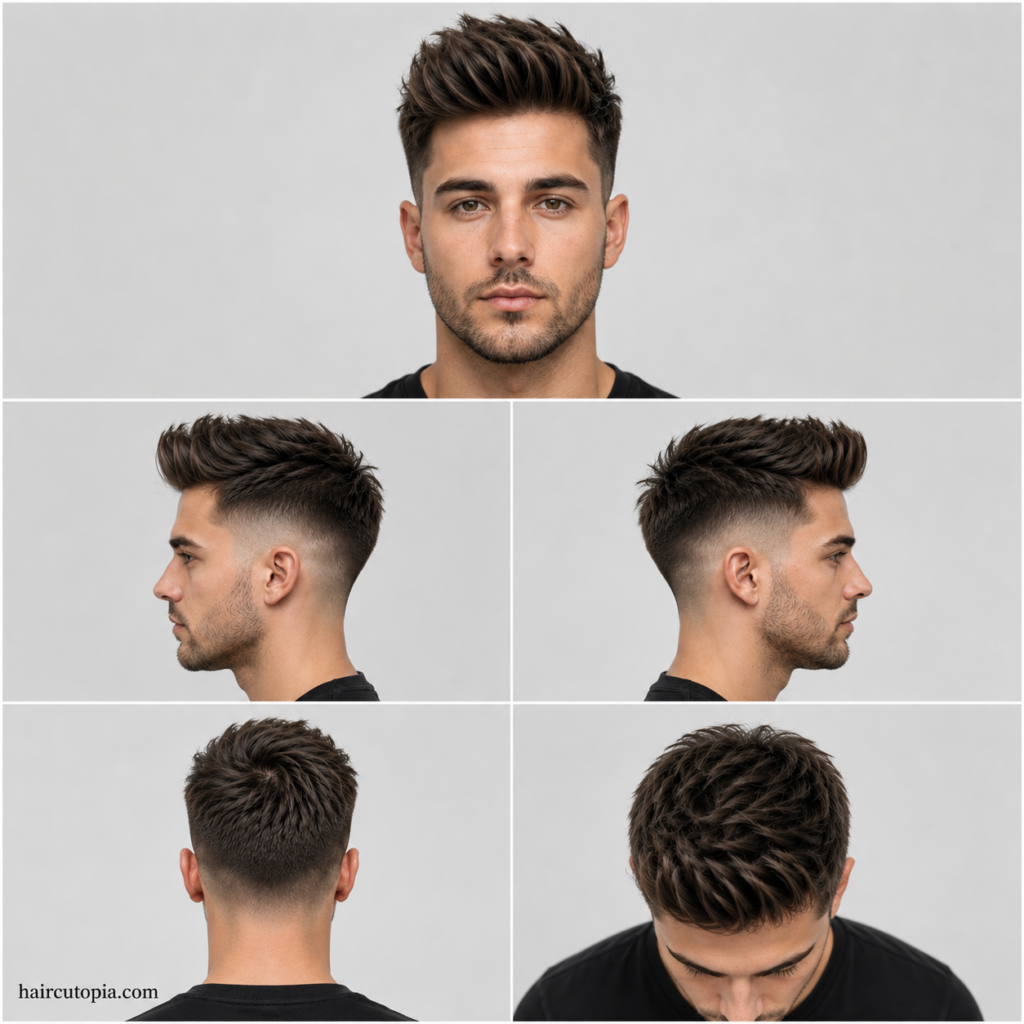
Classic Quiff with a Taper
The classic quiff with a taper is one of the most timeless options for an oval face. It keeps enough length around the sides and back to create a natural shape, while the top is styled upward and slightly back.
A taper gives the haircut a clean finish around the ears and neckline without removing too much weight. This helps maintain facial balance and makes the style easier to grow out.
The classic version is a good choice if you want a haircut that works in almost every setting. It can look professional with a little pomade or more relaxed with a matte paste.
Best for:
- Straight hair
- Medium-density hair
- Men who prefer a polished but not overly sharp style
- Anyone who wants a lower-maintenance fade alternative
Textured Quiff with a Low Fade
A textured quiff with a low fade has a modern look without being too extreme. The hair on top is cut with layers and point-cutting to create movement, while the fade starts low around the ears.
For oval faces, a low fade is often a smart choice because it keeps some visual weight at the sides. That prevents the face from appearing overly long while still giving the haircut a clean, current finish.
Texture also makes the quiff easier to style. Instead of trying to create a perfectly smooth wave, you can use a matte product and work the hair into a natural, separated shape.
Medium Quiff with Mid Fade
A medium quiff with a mid fade gives you a little more contrast. The fade rises higher than a low fade, but it does not remove as much side weight as a high fade.
This makes it a flexible middle ground for oval faces. It looks sharp, works with many hair types, and can be styled in different ways depending on the occasion.
Keep the top around 3 to 5 inches long if you want enough room for lift and texture. The front can be blow-dried upward and back, while the crown stays slightly more relaxed.
A medium quiff is a good option if you want a hairstyle that looks deliberate but does not require a long styling routine.
Short Quiff with a Skin Fade
A short quiff with a skin fade is clean, bold, and easy to maintain on top. The front is left long enough to lift, but the overall length is shorter than a traditional quiff.
Because an oval face can handle a wide range of haircut proportions, this style can work well. Still, it is best to avoid making the quiff too tall. Pairing a very high front with a skin fade can exaggerate face length.
Keep the quiff compact and textured. A small amount of lift at the front is enough to create the shape without making the haircut feel top-heavy.
This style works well for men who like:
- Crisp barbershop fades
- Shorter hair with a styled finish
- A clean neckline and side profile
- Quick daily styling
Side-Swept Quiff
A side-swept quiff is a slightly softer take on the classic style. Instead of lifting the front straight back, the hair is styled upward and then swept gently to one side.
This creates a diagonal line through the hair, which can add interest without adding too much height. It is especially useful if your hair naturally grows in one direction or you prefer a less symmetrical style.
For oval faces, a side-swept quiff can be paired with a taper, low fade, or scissor-cut sides. It looks refined with a bit of shine, but it can also be styled with a matte finish for a more casual look.
Messy Quiff with Scissor-Cut Sides
Not every quiff needs a fade. A messy quiff with scissor-cut sides has a more relaxed, slightly longer appearance that works especially well for oval faces.
The sides are left with enough length to blend naturally into the top. The front still has lift, but the overall haircut feels softer and less structured.
This is a strong option for men with thick hair, wavy hair, or hair that has a lot of natural movement. It can also be a good choice if you do not want to visit the barber every few weeks for fade maintenance.
Ask for texture through the top and a clean but natural shape around the ears and neckline.
Long Quiff with a Taper Fade
A longer quiff gives you more styling flexibility. You can wear it high and swept back, loose and textured, or pushed slightly to one side.
Oval faces can usually handle this extra length well, but the style should still be controlled. Too much height combined with very short sides can make the face look stretched.
A taper fade works nicely with a longer quiff because it keeps the haircut clean while preserving enough side weight to balance the top.
This style is best if you enjoy styling your hair and do not mind using a blow dryer most mornings.
Wavy Quiff with a Low Taper
Natural waves can make a quiff look effortless. The texture adds volume on its own, which means you may not need to build as much height with heat styling.
A low taper keeps the sides neat without taking away from the natural movement on top. For oval faces, this creates a balanced shape that feels modern but not overly sculpted.
The key is to avoid cutting the top too short. Wavy hair shrinks as it dries, so leave enough length for the front to lift and bend naturally.
Use a lightweight styling cream or texture paste to define the waves while keeping the hair touchable.
How Much Length Do You Need for a Quiff?
The amount of length you need depends on the type of quiff you want.
For most styles, the front should be at least 3 inches long. That gives you enough hair to lift and direct backward. If you want a larger, more dramatic quiff, you may need 4 to 6 inches on top.
Here is a simple guide:
- Short quiff: 2 to 3 inches on top
- Medium quiff: 3 to 5 inches on top
- Long quiff: 5 inches or more on top
Your barber may recommend slightly different lengths depending on whether your hair is straight, thick, fine, curly, or wavy.
What to Ask Your Barber for a Quiff Haircut
The easiest way to get a better result is to explain both the haircut you want and how you plan to style it.
You can say:
“I have an oval face and want a quiff that keeps the proportions balanced. Leave enough length at the front to style up and back, add texture on top, and keep the sides neat without taking them too high.”
Then specify your preferred side finish:
- “I want a low taper with natural weight on the sides.”
- “Give me a mid fade, but keep the top medium length.”
- “Keep the sides scissor cut and blended.”
- “I want a short quiff with a clean skin fade.”
- “Leave enough length for a loose, textured quiff.”
If possible, bring reference photos. Look for examples with a similar hair type, hairline, and density. A photo can show the overall direction, but your barber can adjust the cut to suit your own hair.
How to Style a Quiff for an Oval Face
A quiff looks best when it has lift and movement, but it does not need to look stiff or overly polished.
1. Begin With Damp Hair
After showering, towel dry your hair until it is slightly damp. Apply a pre-styler such as a sea salt spray, volumizing mousse, or lightweight styling cream.
This gives the hair more grip before you use heat.
2. Blow-Dry Into Shape
Use a blow dryer to lift the front upward and back. A vent brush works well for a more natural quiff, while a round brush can create more volume.
For oval faces, keep the height moderate. You want the quiff to complement the face shape, not make it look noticeably longer.
3. Use the Right Styling Product
Choose your product based on the finish you want:
- Matte clay or paste for texture and natural separation
- Cream for soft movement and wavy hair
- Pomade for a smoother, more classic finish
- Fiber for stronger hold with a matte look
Start with a small amount. You can always add more, but too much product can flatten the quiff or make it look greasy.
4. Keep the Shape Balanced
Style the front upward and slightly back. Avoid pushing all of the hair into a tall, narrow peak unless you are intentionally going for a more dramatic look.
If you have a longer oval face, a side-swept quiff or textured forward lift can help keep the haircut balanced.
5. Finish With Flexible Hold
A light hairspray can help the quiff stay in place, especially in humid weather or if your hair is naturally fine. Use a flexible formula so the hair can still move naturally.
Best Products for Quiff Haircuts
The best product depends on your hair type and the amount of hold you need.
Fine Hair
Fine hair usually benefits from a volumizing spray or mousse before blow-drying. Finish with a lightweight clay or paste that adds texture without weighing the hair down.
Thick Hair
Thick hair often needs a stronger hold product. A firm clay, fiber, or pomade can help keep the quiff in place and control excess bulk.
Wavy Hair
Use a styling cream, sea salt spray, or texture paste. These products help define natural movement without making waves feel stiff.
Straight Hair
Straight hair can work well with almost any quiff product. A matte paste is a safe everyday option, while pomade is useful if you want a more polished finish.
Common Quiff Mistakes to Avoid
Oval faces are flexible, but proportions still matter. Avoid these common mistakes if you want the haircut to look balanced.
- Making the top too tall with a high skin fade
- Taking the sides too tight if your face is already long
- Using too much heavy product
- Keeping the fringe too short to create lift
- Styling the quiff into a stiff, rounded shape
- Ignoring your natural hair direction or cowlicks
- Skipping regular trims and allowing the sides to lose their shape
A good quiff should look like it belongs to your hair, not like it is fighting against it.
How Often Should You Trim a Quiff?
Most quiff haircuts need a trim every three to five weeks.
If you have a skin fade or high fade, you may want to visit the barber every two to three weeks to keep the sides sharp. A taper or scissor-cut style can usually go longer between appointments.
The top does not need to be cut as often as the sides. Many people simply clean up the fade and neckline while keeping the length needed to style the quiff.
Final Thoughts
Quiff haircuts are an excellent match for oval faces because they offer so much flexibility. You can wear a classic taper quiff, a textured low-fade version, a relaxed messy style, or a shorter modern quiff without fighting your natural proportions.
The best choice comes down to your hair type, how much time you want to spend styling, and whether you prefer a polished or casual finish. Keep the top balanced, avoid going too extreme with height and tight sides, and choose a fade or taper that fits your routine.
With the right cut and a little styling, a quiff can become one of the most versatile haircuts in your rotation.

Related Posts
 Haircuts for Men with Diamond Faces: The Best Styles to Complement Your Features
 Haircuts for Men with Heart Faces: 25 Styles That Balance Your Features
 Haircuts for Men with Oval Faces: 35 Stylish Cuts That Always Look Good
 Quiff Haircuts for Business Professionals: Polished Styles That Command Confidence