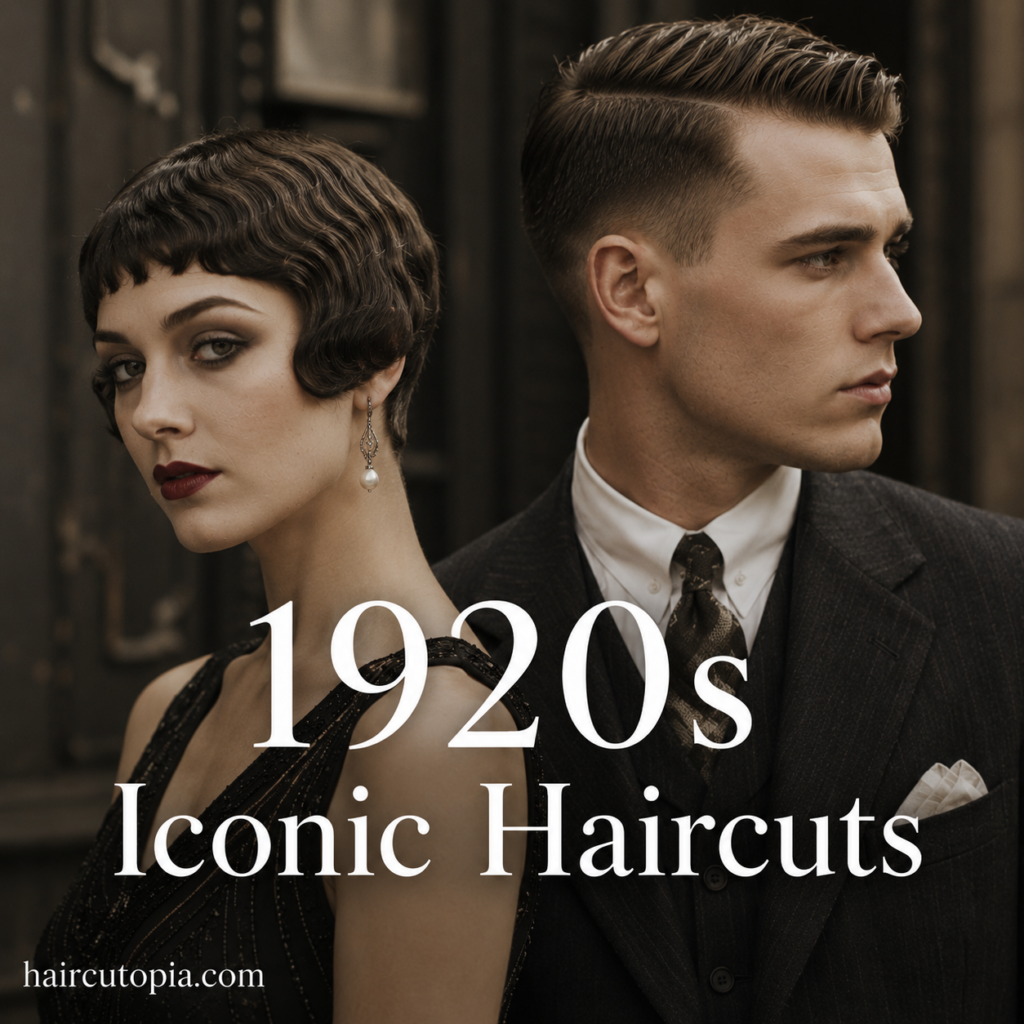
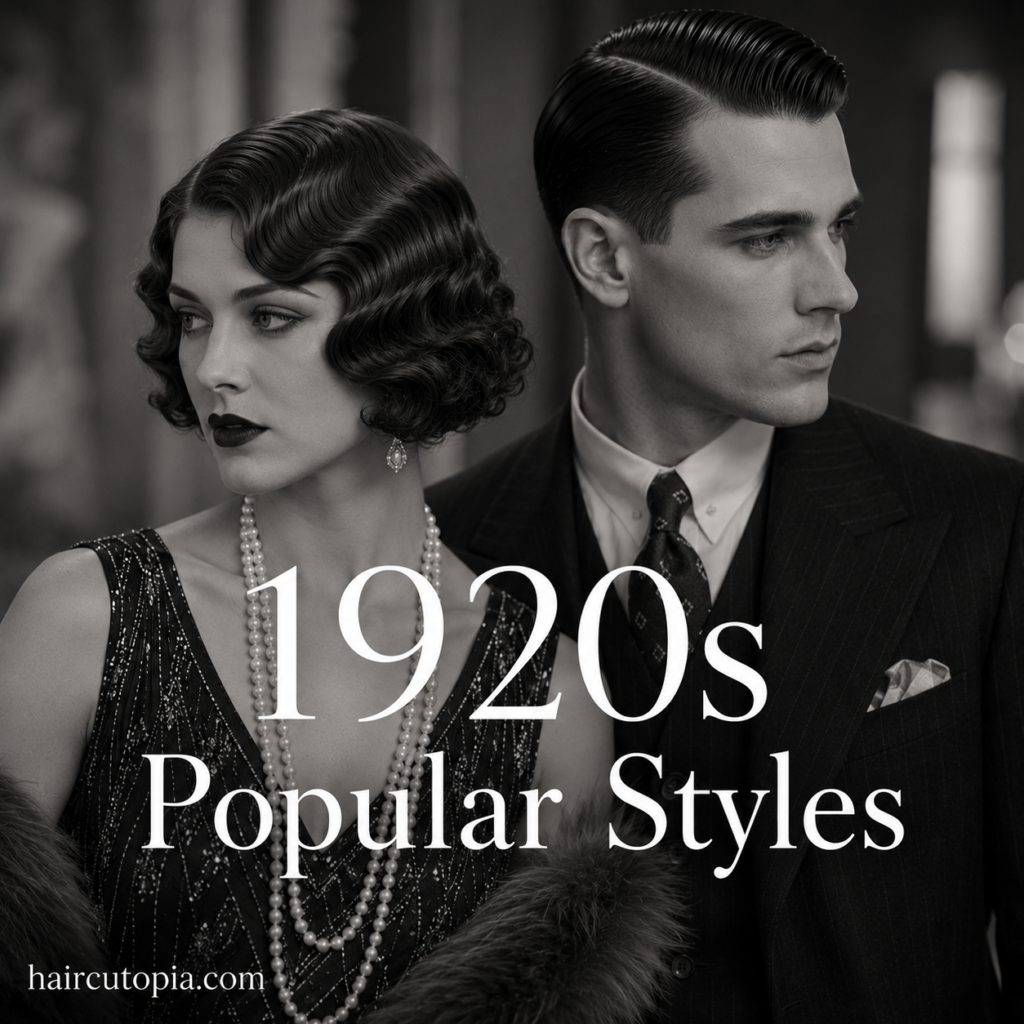
The 1920s gave us some of the most recognizable hair looks in modern history.
Short bobs, sculpted finger waves, glossy side parts, decorative headbands, sleek men’s hair—the decade had a distinctive visual identity that is still easy to recognize more than a century later.
But there wasn’t just one “1920s hairstyle.”
Women wore everything from daring cropped cuts to long hair carefully rolled and pinned at the nape. Some embraced the increasingly fashionable bob, while others created faux versions without sacrificing their length. Men generally kept things more traditional, favoring short sides, longer tops, sharp parts, and plenty of control.
Certain styles, however, became especially representative of the era.
Here are the popular 1920s hair styles that helped define the Roaring Twenties, along with the details that made each one stand out.
What Hair Styles Were Popular in the 1920s?
Women’s hair changed dramatically during the decade.
Short styles became increasingly fashionable, particularly among younger women embracing the modern fashions associated with the period. The bob became the obvious standout, but different versions gave women plenty of ways to make the look their own.
Waves were everywhere, too.
Finger waves and Marcel waves could turn relatively simple short hair into something glamorous and carefully sculpted.
Long-haired women weren’t left behind. Buns, rolls, pinned curls, and faux bobs allowed them to follow contemporary fashion while keeping their length.
Among men, popular styles tended to be short, polished, and carefully combed.
Some of the era’s best-known looks included:
- Classic bob hairstyles
- Finger-wave bobs
- Shingle styles
- Eton crops
- Straight bobs with bangs
- Marcel waves
- Faux bobs
- Low buns and rolls
- Flapper-inspired hairstyles
- Men’s side parts
- Slicked-back men’s hair
- Short-back-and-sides styles
While some of these now look distinctly vintage, others have barely left fashion.
1. The Classic Bob
If one style had to represent women’s hair in the 1920s, it would be the bob.
The hair was cut significantly shorter than the long styles traditionally worn by women, often ending around the ears or jaw.
What made the bob so popular was its versatility.
It could be worn straight and simple during the day, then transformed with waves or accessories for an evening look.
Different versions also suited different tastes.
Some women preferred strong, blunt lines. Others wore softer curled ends or waves around the cheeks.
The basic silhouette was modern, practical, and unmistakably different from the elaborate long hairstyles of previous generations.
2. The Finger-Wave Bob
The finger-wave bob combined two of the decade’s biggest hair fashions.
Short hair provided the silhouette, while carefully shaped waves created the texture.
The waves formed a repeating S-pattern around the head, usually sitting fairly close to the scalp.
A deep side part often made the look even more dramatic.
The style could be particularly striking around the forehead and temples, where each curve was clearly visible.
Finger-wave bobs became closely associated with the glamorous side of 1920s fashion and remain one of the most recognizable choices for vintage-inspired styling today.
3. The Shingle Style
The shingle pushed the short-hair trend further.
Instead of maintaining the same length around the entire head, hair toward the nape was cut much closer while longer sections remained around the sides.
The result created a sculpted shape that followed the head and neck.
From the front, the style could resemble a bob.
From behind, the closely tapered nape revealed a much shorter and more daring cut.
Women could wear a shingle smooth or incorporate waves through the longer sections.
It was sophisticated, practical, and very modern for its time.
4. The Eton Crop
For women willing to go especially short, the Eton crop offered one of the decade’s boldest looks.
Hair was cropped close to the head, producing a sleek silhouette with an androgynous edge.
It could be worn smooth or shaped with small waves near the forehead and temples.
The style stood out because it moved even further away from conventional expectations surrounding women’s long hair.
Modern pixie cuts and close crops share some of the same visual appeal.
A century later, the idea of women wearing hair this short is completely ordinary. During the 1920s, it could feel much more daring.
5. The Straight Bob With Bangs
Not everyone wanted waves.
A smooth bob with straight bangs created one of the decade’s strongest geometric looks.
The hair framed the face with clean lines while the fringe emphasized the eyes.
Depending on the exact cut, the ends might sit around the ears, cheeks, or jaw.
The style worked especially well on naturally straight hair because relatively little texture was needed to establish the silhouette.
Modern blunt bobs with full bangs can look remarkably similar, which shows how well the basic design has aged.
6. The Waved Bob
The waved bob offered a softer alternative to the straight version.
Instead of sculpting every section into tight finger waves, the hair could feature broader waves or curls that added movement through the sides and ends.
This gave the bob a more romantic appearance.
Some styles remained smooth at the crown before becoming curlier toward the cheeks. Others featured waves throughout.
The waved bob was versatile enough to move between daytime and evening wear depending on how carefully the hair was styled.
7. Marcel Waves
Marcel waves were already known before the 1920s, but their elegant appearance fit perfectly with the decade’s preference for controlled texture.
Traditionally created using heated waving irons, Marcel waves formed smooth, repeating curves through the hair.
They could be worn on shorter or longer lengths.
The effect tended to look polished and deliberate rather than loose and casual.
For evening occasions, the waves could be paired with decorative accessories to create an especially glamorous finish.
Modern waving and curling tools make similar styles much easier to reproduce today.
8. Deep Side-Parted Hair
Sometimes the defining feature of a popular style wasn’t the length but the part.
Deep side parts appeared frequently in both women’s and men’s hair.
For women, the part created the perfect foundation for waves sweeping across the forehead and around the temples.
It added asymmetry and made short styles feel more dramatic.
For men, a clean side part gave the hair structure and reinforced the neat, polished grooming standards of the period.
The side part has returned countless times since then and remains one of the most adaptable styling details inherited from the era.
9. Flapper-Inspired Hair
The flapper became one of the most enduring images associated with the Roaring Twenties.
There wasn’t one specific flapper hairstyle, but certain combinations became closely connected with the look.
Typical elements included:
- Bobbed or apparently short hair
- Finger or Marcel waves
- A deep side part
- Small curls around the face
- Decorative headbands
- Jeweled accessories
- A polished finish
The headband became particularly recognizable.
Placed across the forehead or slightly higher on the head, it could feature beads, jewels, feathers, or other decorative details.
The combination of short hair, waves, and an elaborate accessory remains one of the easiest ways to create an instantly recognizable 1920s-inspired look.
10. Spit Curls and Kiss Curls
Small curls around the face provided another way to personalize short hair.
These carefully arranged curls might sit against the forehead, temple, or cheek.
Rather than appearing accidental, each curl was deliberately shaped.
They could soften a severe bob or add extra detail to a waved style.
Because the rest of the hair often remained close to the head, even a tiny facial curl could become surprisingly noticeable.
Modern editorial and formal hairstyling occasionally brings these details back, especially when creating a strong vintage aesthetic.
11. The Faux Bob
The bob may have been fashionable, but not everyone wanted to cut off years of hair growth.
Enter the faux bob.
Long hair could be curled or waved before the ends were tucked underneath and pinned out of sight.
From the front and sides, the finished style appeared much shorter.
This allowed women to experiment with the fashionable bob silhouette without actually cutting their hair.
It also demonstrates something important about 1920s fashion: long hair remained very much present even during the height of the short-hair craze.
The faux bob is still useful today for vintage events, weddings, photo shoots, or simply experimenting with shorter-looking hair.
12. Low Buns
Women who kept their hair long had several fashionable options.
The low bun was one of the simplest.
Hair could be parted and smoothed before being gathered around the nape.
The front might remain relatively sleek or incorporate waves around the forehead and temples.
Keeping the bun low and compact allowed the hairstyle to maintain the streamlined appearance associated with the decade.
A low bun also worked well when elaborate accessories weren’t practical or desired.
13. Rolled and Pinned Hair
Another popular approach for longer hair involved rolling the length inward and securing it with pins.
The roll could stretch across the back of the head or concentrate closer to the nape.
Front sections could then be styled independently.
For example, a woman might wear pronounced waves around the face while hiding most of her long hair within the roll at the back.
This created the illusion of a shorter silhouette from certain angles while retaining the full length.
14. Decorative Headband Styles
Hair accessories deserve their own place among popular 1920s styles because they could dramatically change the finished appearance.
Headbands ranged from relatively simple bands to elaborate jeweled pieces.
Even a basic bob could become an evening hairstyle once the right accessory was added.
Popular embellishments included:
- Beads
- Rhinestones
- Metallic details
- Feathers
- Decorative flowers
- Brooch-style ornaments
A headband also drew attention toward the eyes and forehead, complementing the low, close-fitting shapes of many fashionable hairstyles.
15. Cloche-Friendly Hair
The cloche hat and 1920s hair fashion were natural partners.
Cloche hats fit closely around the head and often sat low toward the eyebrows.
That left little room for large hairstyles.
Short bobs, compact waves, and tightly arranged long hair worked much better underneath.
Women might leave small sections visible around the cheeks or nape while keeping the rest of the hair relatively flat beneath the hat.
The popularity of the cloche helped reinforce the streamlined hair silhouette already developing throughout the decade.
16. The Classic Men’s Side Part
Men’s hair was less dramatically transformed during the 1920s, but several styles became strongly associated with the era.
The side part was one of the most popular.
Hair was typically kept shorter around the sides and back while enough length remained on top to comb neatly toward one side.
A clearly defined part gave the hairstyle structure.
The finish was usually smooth and controlled.
Unlike many historical styles, this one requires almost no modification to work today.
A traditional side part with a subtle taper can still look completely contemporary.
17. Slicked-Back Men’s Hair
Slicked-back hair offered another polished option for men.
The longer top was combed backward rather than strongly toward one side.
Styling products helped keep everything in position and provided the shine associated with fashionable grooming.
The sides and back remained neat and relatively short.
Modern slick backs sometimes use very aggressive fades or dramatic differences between the top and sides. A more traditionally blended version comes much closer to the 1920s appearance.
18. Short Back and Sides
The basic short-back-and-sides structure was another practical men’s choice.
Hair around the ears and neckline remained neat while additional length on top provided styling flexibility.
The top could then be:
- Side-parted
- Combed backward
- Styled with a slight wave
- Smoothed close to the head
The concept is still fundamental to barbering.
Today’s fades and tapers are more varied and sometimes much more dramatic, but the underlying idea is familiar.
19. Combed-Back Wavy Hair for Men
Men with naturally wavy hair didn’t necessarily have to flatten every bit of texture.
Instead, waves could be directed backward or toward the side while maintaining a tidy overall shape.
This created a slightly softer appearance than an extremely slick style.
The important detail was control.
The hair might have movement, but it was still deliberately arranged.
That polished approach separated fashionable men’s hair from the looser, intentionally messy styles common today.
20. Center-Parted Men’s Hair
Although the side part was especially prominent, some men wore longer top sections with a center part.
Hair was divided through the middle and directed toward either side.
On straight or gently wavy hair, this produced a balanced, relatively soft silhouette.
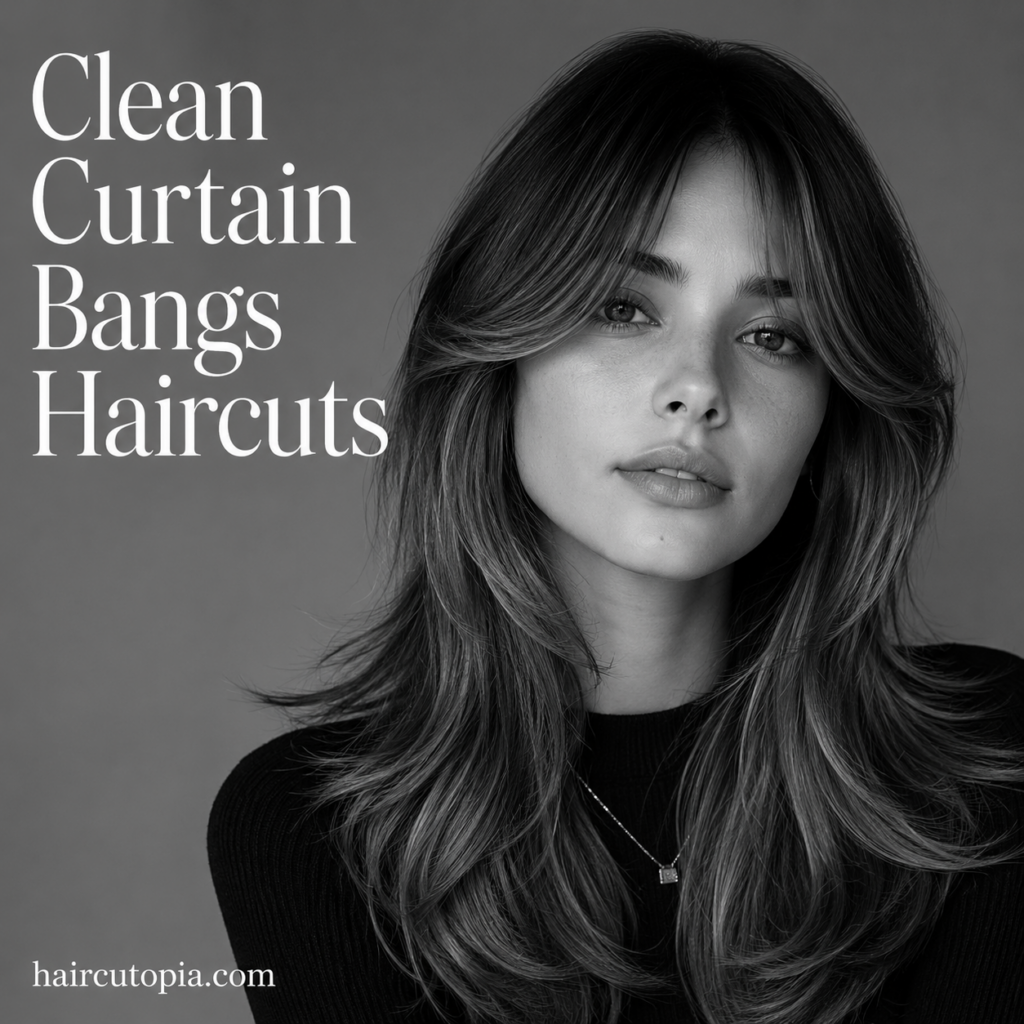
Interestingly, the general concept feels familiar again thanks to the return of modern curtain hairstyles.
The contemporary version tends to be more textured and relaxed, but the basic center-parted structure has a much longer history.
What Made 1920s Hair Look Different?
Several characteristics tied many of these popular styles together.
The first was control.
Whether hair was straight, curled, or waved, it usually looked deliberately arranged.
Another was a relatively compact silhouette.
Women’s short hair naturally stayed close to the head, while long hair was frequently pinned or rolled rather than worn loose down the back.
Men’s hair followed a similarly tidy philosophy.
Common visual characteristics included:
- Smooth surfaces
- Defined parts
- Controlled waves
- Compact shapes
- Polished finishes
- Carefully placed curls
- Strong outlines
- Decorative accessories
These details make authentic-looking 1920s hair relatively easy to distinguish from modern interpretations.
Popular Women’s Styles vs. Men’s Styles
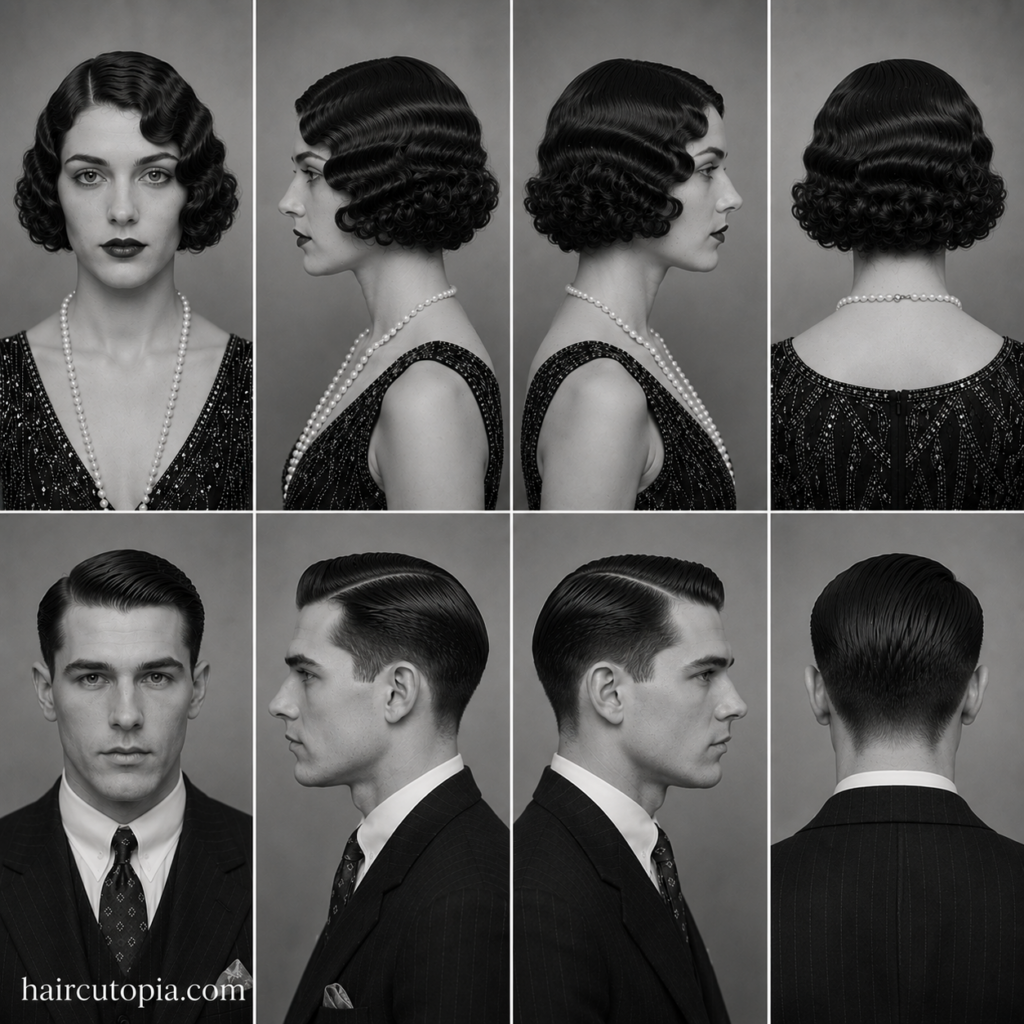
Women’s and men’s hair followed somewhat different paths during the decade.
For women, the biggest story was experimentation.
Hair became shorter, more varied, and increasingly connected with rapidly changing fashion.
Popular women’s looks included bobs, crops, waves, faux bobs, and compact updos.
Men’s fashion remained more consistent.
The emphasis was on neat grooming rather than radical changes in length.
Short sides, side parts, slicked tops, and polished finishes dominated.
Despite those differences, both shared one important characteristic: hair was supposed to look finished.
Messiness was rarely the goal.
How to Choose a 1920s Style Today
Recreating a 1920s look doesn’t necessarily mean creating a historically exact hairstyle.
You can decide how strong you want the vintage influence to be.
For a subtle approach, consider:
- A jaw-length bob
- A deep side part
- Soft structured waves
- A classic men’s taper
- A polished side-parted men’s style
For a more obvious vintage look:
- Add finger waves.
- Use a glossy finish.
- Incorporate a decorative headband.
- Create small curls around the face.
- Pin long hair into a faux bob.
- Keep the overall silhouette close to the head.
For a historically inspired costume or themed event, combining several of these elements will create a much stronger period effect.
Which 1920s Styles Are Still Popular?
Many of them.
The bob is an obvious example.
It has been reinvented countless times and remains one of the most important women’s haircuts.
Short crops survived as well, eventually becoming completely mainstream.
Finger waves are less common for everyday wear but continue to appear in formal, celebrity, and editorial hairstyling.
Men’s side parts, slick backs, and short-back-and-sides cuts remain staples.
Even center-parted men’s hair has cycled back into fashion.
The details change, but the foundations continue to return.
Frequently Asked Questions About Popular 1920s Hair Styles
What was the most popular women’s hairstyle in the 1920s?
The bob became the decade’s defining women’s style. It appeared in numerous variations, including straight, waved, shingled, and fringe-wearing versions.
What was the most popular men’s hairstyle in the 1920s?
Neatly side-parted hair with shorter sides and additional length on top was one of the era’s most recognizable men’s styles. Slicked-back hairstyles were also popular.
Were finger waves popular in the 1920s?
Yes. Finger waves became strongly associated with fashionable short hair and remain one of the most recognizable styling techniques from the decade.
Did all women have short hair in the 1920s?
No. Many women continued wearing long hair. Low buns, rolls, pinned curls, and faux bobs allowed longer hair to fit the fashionable silhouettes of the period.
What hairstyle did flappers wear?
There wasn’t one specific flapper hairstyle. Short bobs, finger waves, Marcel waves, faux bobs, decorative curls, and jeweled headbands could all contribute to the flapper look.
Did men slick their hair back in the 1920s?
Yes. Slicked-back and neatly side-parted styles were fashionable. Grooming products helped maintain a smooth, polished finish.
What 1920s hairstyle is easiest to wear today?
A classic bob or men’s side part is probably the easiest because both remain common modern styles. Adding finger waves or vintage accessories creates a stronger historical influence.
Can long hair be styled like the 1920s?
Yes. Long hair can be rolled, pinned into a low bun, waved, or tucked into a faux bob to create a period-inspired silhouette without cutting the length.
Why 1920s Popular Styles Still Stand Out
Few decades have created such an instantly recognizable collection of hair looks.
The bob represented a dramatic change in women’s fashion. Finger waves transformed short hair into sculpted designs. Faux bobs allowed long-haired women to experiment with the new silhouette, while headbands and other accessories added the glamour now associated with flapper style.
Men developed their own enduring classics through side parts, slick backs, and neatly groomed short cuts.
Some of these looks now belong mainly to vintage styling.
Others never really went away.
That’s what makes popular 1920s hair styles so interesting. The decade feels visually distinct, yet many of its biggest ideas are still sitting in barber chairs and salon stations today—just updated for another generation.