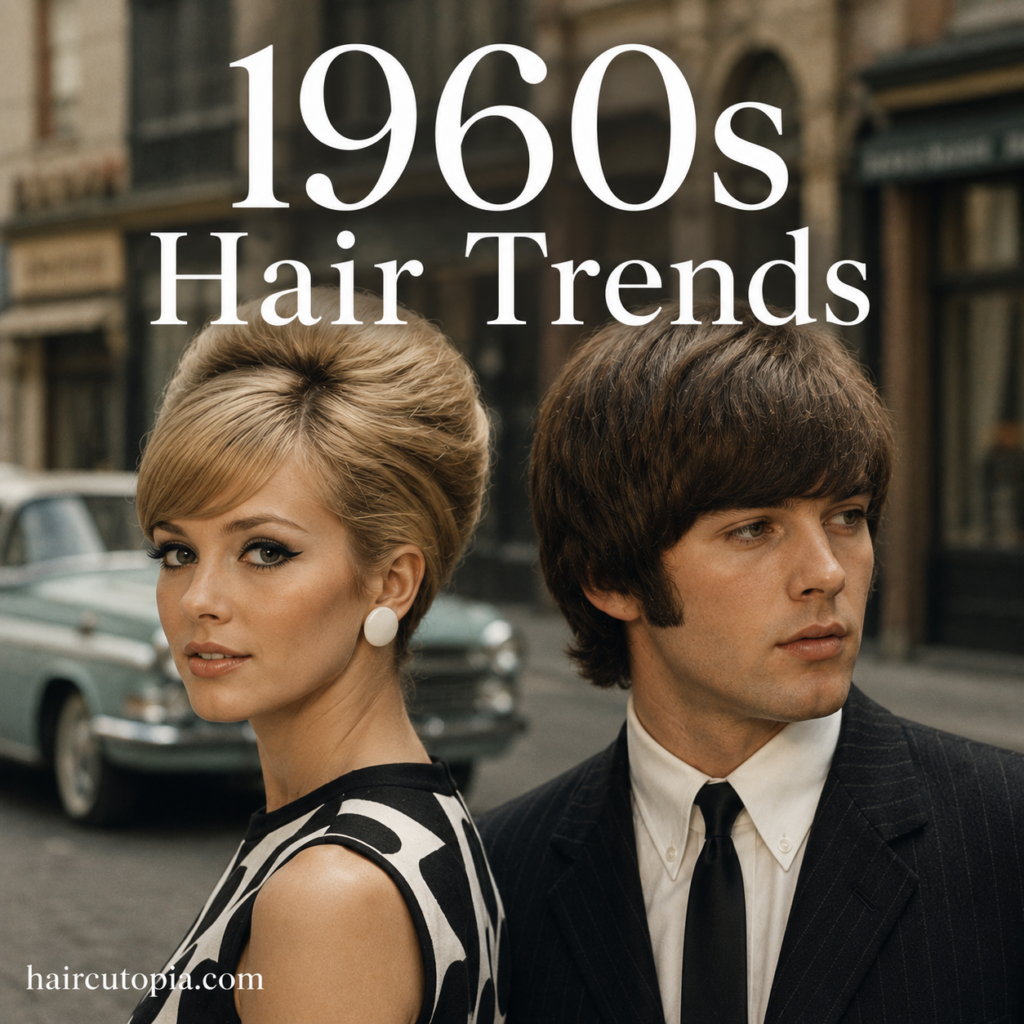
The 1960s was a decade unlike any other for hair. Fashion evolved rapidly, music reshaped culture, and beauty trends reflected a growing desire for individuality. Hairstyles changed dramatically throughout the decade, moving from polished, structured looks in the early years to relaxed, natural styles by the end.
From towering bouffants and sleek Mod bobs to long hippie hair and bold pixie cuts, the 1960s introduced trends that continue to influence salons and runways today.
In this guide, we’ll explore the biggest 1960s hair trends, why they became popular, and how they still inspire modern hairstyles.
Why the 1960s Were So Influential for Hair
Hair became more than just a beauty routine during the 1960s—it became a form of self-expression.
Several major cultural movements shaped the decade’s hairstyles:
- The British Invasion
- The Mod fashion movement
- Hollywood glamour
- The rise of television
- Rock and roll
- The hippie counterculture
- Women’s changing roles in society
Unlike previous decades that favored one dominant style, the 1960s embraced constant change, making it one of the most diverse periods in hair history.
How Hair Trends Changed Throughout the Decade
The decade can generally be divided into three distinct phases.
Early 1960s (1960–1963)
Early styles focused on elegance and sophistication.
Popular characteristics included:
- Structured volume
- Teased crowns
- Smooth finishes
- Soft curls
- Formal updos
Salon visits and daily styling were common during this period.
Mid-1960s (1964–1966)
Fashion became cleaner and more modern.
Major trends included:
- Precision haircuts
- Geometric shapes
- Sleek bobs
- Pixie cuts
- Graphic fringes
Haircuts themselves became the statement rather than elaborate styling.
Late 1960s (1967–1969)
By the end of the decade, beauty became much more natural.
Popular features included:
- Long hair
- Center parts
- Natural texture
- Loose waves
- Layered movement
This relaxed aesthetic paved the way for many of the trends that defined the 1970s.
The Biggest Women’s Hair Trends of the 1960s
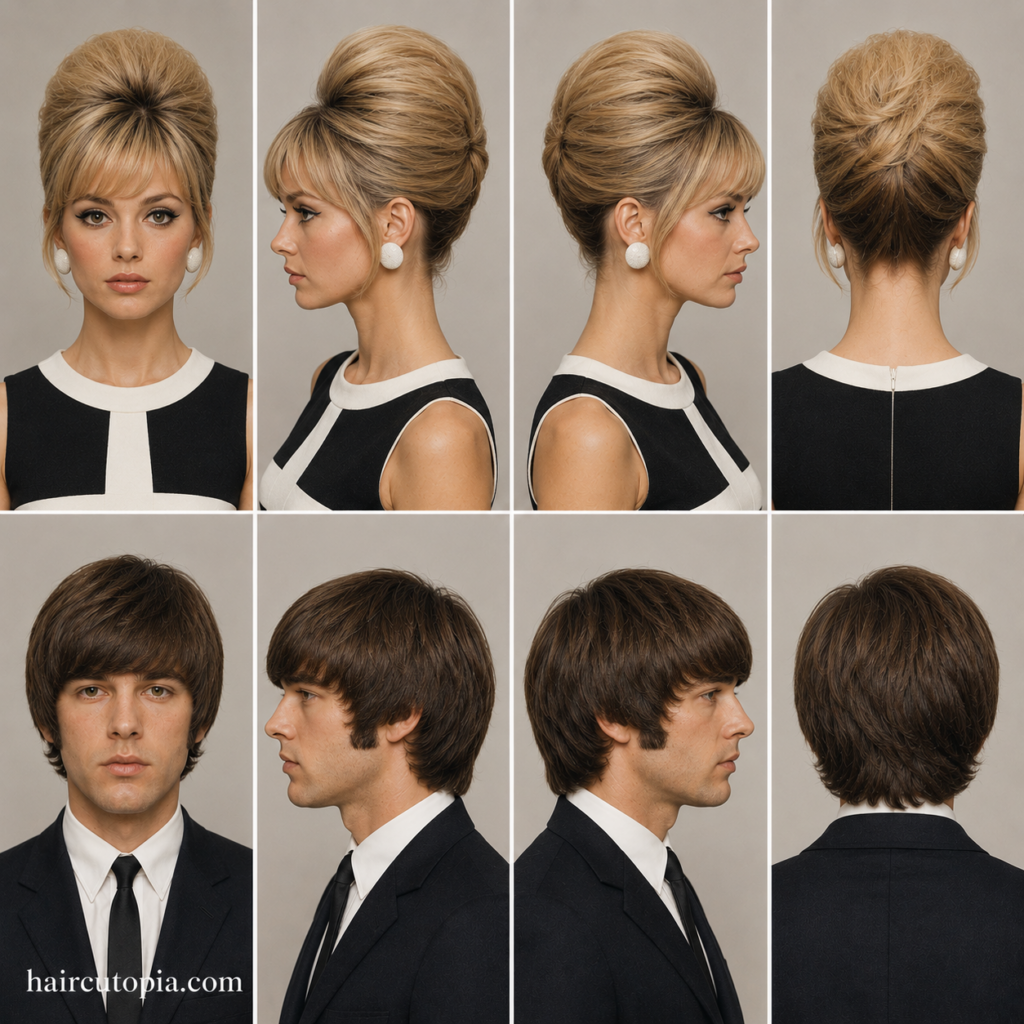
Voluminous Bouffants
Few hairstyles are more closely associated with the early 1960s than the bouffant.
Hair was teased at the crown to create dramatic height before being smoothed into a polished silhouette.
The trend emphasized:
- Height
- Fullness
- Rounded shapes
- Elegant styling
- Long-lasting hold
Bouffants became a symbol of sophistication and glamour.
The Beehive
The beehive took volume to another level.
This sculptural updo stacked hair high on the head to create a distinctive silhouette.
Characteristics included:
- Towering height
- Smooth exterior
- Carefully pinned sections
- Strong structure
- Formal elegance
It remains one of the most recognizable hairstyles in fashion history.
Precision Bob Haircuts
The arrival of precision cutting completely changed hairstyling.
Instead of relying on teasing and rollers, stylists created perfectly balanced cuts that naturally held their shape.
Features included:
- Blunt ends
- Clean lines
- Minimal layering
- Smooth texture
- Easy maintenance
This trend still influences many modern bob haircuts.
Pixie Cuts
Short hair became increasingly fashionable during the decade.
The 1960s pixie typically featured:
- Soft edges
- Cropped sides
- Longer top
- Smooth styling
- Feminine silhouette
It represented confidence and modern fashion.
Flip Hairstyles
The flip became one of the decade’s signature everyday looks.
Hair was curled outward at the ends to create playful movement.
The style usually included:
- Shoulder-length hair
- Smooth roots
- Flipped ends
- Soft volume
- Side part
It was youthful without sacrificing elegance.
Long Natural Hair
Toward the late 1960s, long hair became a defining trend.
Rather than being heavily styled, it emphasized:
- Healthy shine
- Center part
- Natural texture
- Minimal product
- Soft movement
This effortless aesthetic reflected changing social attitudes and the influence of the hippie movement.
Curtain Bangs
Curtain bangs first became widely popular during the late 1960s.
Benefits included:
- Face framing
- Soft appearance
- Easy styling
- Versatility
- Natural movement
Today, they’re once again among the most requested salon styles.
Popular Men’s Hair Trends
Men’s hairstyles evolved just as dramatically during the decade.
Longer hair gradually replaced the short military-inspired cuts of previous generations.
The Mop Top
The mop top became one of the defining hairstyles of the 1960s.
Its characteristics included:
- Medium length
- Rounded shape
- Full fringe
- Hair covering the ears
- Thick appearance
The style helped transform men’s fashion worldwide.
Side-Parted Styles
Classic side parts remained popular throughout much of the decade.
Typical features included:
- Tapered sides
- Medium-length top
- Clean neckline
- Professional appearance
- Light styling products
These hairstyles worked equally well in business and casual settings.
Longer Layered Hair
As the decade progressed, men’s hairstyles became increasingly relaxed.
Popular features included:
- Ear-length hair
- Light layers
- Natural texture
- Side-swept fringe
- Minimal styling
These trends eventually evolved into the longer hairstyles of the 1970s.
Hair Color Trends of the 1960s
Hair color also reflected the decade’s changing tastes.
Popular shades included:
Blonde
From platinum to honey blonde, lighter shades became especially fashionable.
Rich Brunette
Glossy brunettes complemented many structured hairstyles.
Natural Black
Deep black hair created striking contrast with bold eye makeup and Mod fashion.
Auburn and Red
Warm reds added vibrancy while maintaining a natural appearance.
Unlike modern trends, vivid fashion colors were relatively uncommon outside artistic circles.
Texture Trends Throughout the Decade
The preferred hair texture changed significantly over time.
Early Years
- Smooth
- Controlled
- Sculpted
- Highly polished
Later Years
- Soft
- Air-dried
- Natural
- Slightly wavy
This transition reflected broader cultural changes emphasizing individuality over perfection.
Popular Hair Accessories
Accessories became an essential part of many hairstyles.
Popular choices included:
- Wide headbands
- Decorative barrettes
- Velvet bows
- Silk scarves
- Floral crowns
- Pillbox hats
- Hair ribbons
- Jeweled clips
Many complemented both Mod fashion and the bohemian styles of the late decade.
Hair Styling Tools of the 1960s
Creating these iconic hairstyles required specialized tools.
Common essentials included:
- Hair rollers
- Teasing combs
- Round brushes
- Blow dryers
- Bobby pins
- Hair nets
- Curling irons
Many households relied on weekly roller sets to maintain volume.
Popular Hair Products
Styling products played a huge role in achieving the decade’s signature looks.
Common favorites included:
- Hairspray
- Setting lotion
- Hair cream
- Pomade
- Mousse-like setting foams
- Shine sprays
Toward the end of the decade, lighter products became increasingly popular.
Celebrity Influence on 1960s Hair Trends
Celebrities and musicians had a major impact on hairstyle trends.
Fashion icons helped popularize:
- Bouffants
- Pixie cuts
- Precision bobs
- Long natural hair
- Mop tops
- Center parts
Magazine covers and television appearances quickly turned these looks into worldwide trends.
How the Mod Movement Changed Hair
The British Mod movement introduced a completely new aesthetic.
Instead of elaborate curls, Mod hairstyles focused on:
- Geometry
- Sharp lines
- Bold fringes
- Precision cuts
- Minimal styling
This modern approach remains influential in contemporary hairstyling.
The Hippie Movement’s Influence
Late in the decade, hairstyles became far less structured.
The hippie movement encouraged:
- Natural texture
- Long hair
- Minimal styling
- Individuality
- Simplicity
Rather than chasing perfection, the focus shifted toward authenticity.
Modern Hairstyles Inspired by the 1960s
Many salon favorites today borrow directly from 1960s trends.
Popular examples include:
- Curtain bangs
- Sleek bobs
- Modern pixie cuts
- Voluminous blowouts
- Long center parts
- Soft retro waves
- Rounded bobs
These updated interpretations combine vintage inspiration with contemporary cutting techniques.
Tips for Wearing a 1960s-Inspired Look Today
You don’t have to recreate every vintage styling method to capture the spirit of the decade.
Instead:
- Use volumizing products instead of heavy teasing.
- Choose softer versions of classic silhouettes.
- Keep hair healthy and shiny.
- Add subtle layers for movement.
- Customize vintage styles to suit your face shape and hair type.
These adjustments make iconic 1960s trends easier to wear every day.
Frequently Asked Questions
What was the biggest hair trend of the 1960s?
The decade featured several defining trends, including bouffants, beehives, precision bobs, mop tops, and long center-parted hairstyles.
Why did hairstyles change so much during the 1960s?
Fashion, music, cultural movements, and changing social attitudes all contributed to the rapid evolution of hairstyles throughout the decade.
Were 1960s hairstyles high maintenance?
Some styles, particularly bouffants and beehives, required significant styling time. Others, such as precision bobs and long natural hairstyles, were much easier to maintain.
Are 1960s hair trends still popular?
Yes. Curtain bangs, sleek bobs, pixie cuts, voluminous blowouts, and natural center-parted hairstyles all draw inspiration from the 1960s.
Which 1960s hair trend is easiest to recreate?
Long, naturally textured hair with a center part or a sleek blunt bob are among the simplest options for achieving a modern take on 1960s style.
Final Thoughts
The 1960s was one of the most innovative decades in hairstyling history. It began with glamorous, carefully sculpted looks and ended with relaxed, natural styles that celebrated individuality. Few eras have produced such a wide variety of iconic trends, from towering bouffants and polished beehives to sleek Mod cuts and carefree hippie hair.
Today, those influences remain everywhere. Whether it’s a precision bob, curtain bangs, a voluminous blowout, or long, effortless layers, modern hairstyles continue to borrow from the creativity and confidence of the 1960s. The decade proved that hair could be both a fashion statement and a reflection of cultural change—a legacy that still shapes beauty trends today.