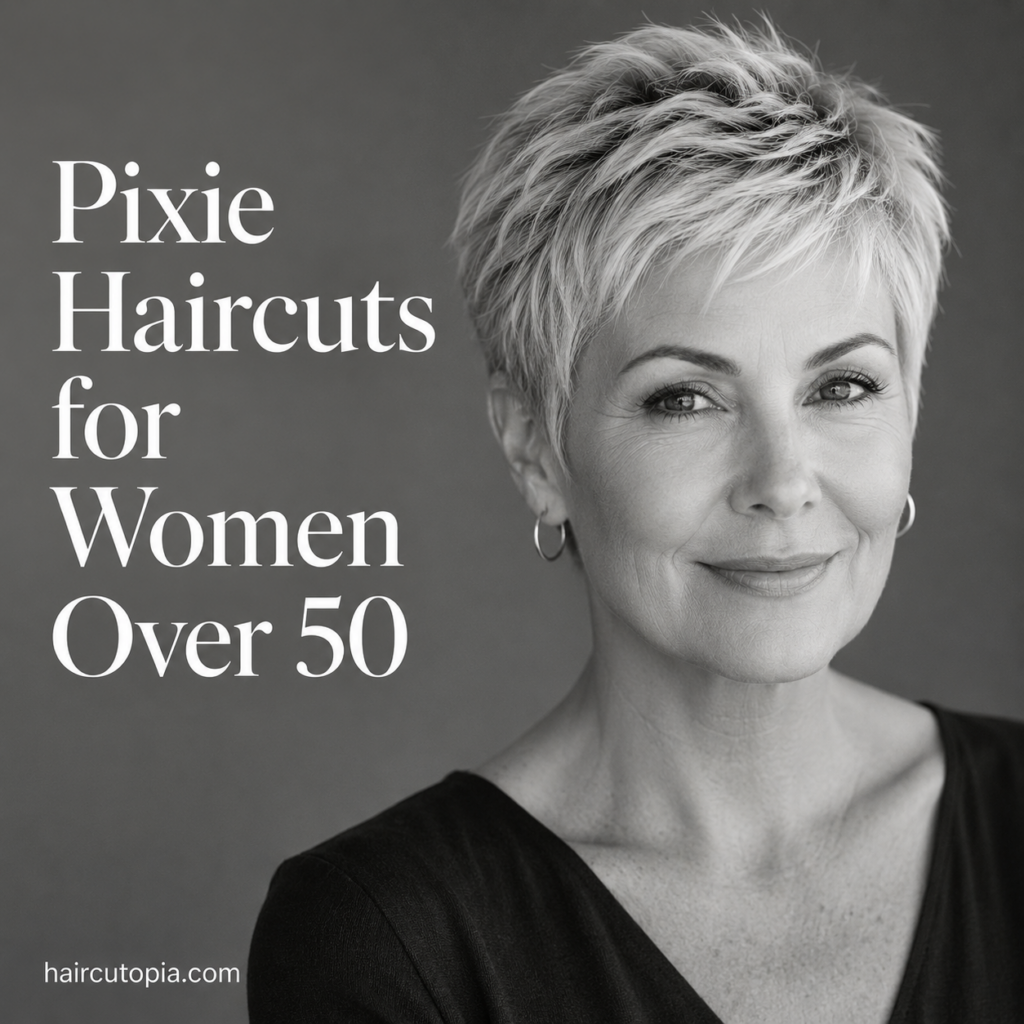
Pixie haircuts for women over 50 are stylish, practical, and far more versatile than they sometimes get credit for. A pixie can be soft and feminine, textured and modern, sleek and polished, or bold with short tapered sides and extra volume on top.
The best part is that a good pixie haircut works with your hair rather than making you fight it every morning.
Hair texture can change over time. Some women notice finer strands or less density, while others find that gray hair becomes thicker, coarser, or more naturally wavy. A thoughtfully shaped pixie can make these changes easier to manage while highlighting your eyes, cheekbones, and natural features.
If you are considering going shorter, these pixie haircut ideas for women over 50 can help you find a style that suits your hair, face shape, and everyday routine.
Why Pixie Haircuts Are Popular With Women Over 50
There is a reason pixie cuts remain one of the most popular short hairstyles for women over 50. They create a defined shape without requiring a lot of length or complicated styling.
A pixie also puts more attention on the face. The eyes, brows, cheekbones, and jawline become more visible when hair is not covering them.
Other benefits include:
- Faster washing and drying
- Less daily heat styling
- Easy ways to create crown volume
- A lighter feel for thick hair
- More structure for some fine hair types
- Plenty of options for gray and silver hair
- Quick styling with minimal products
Pixie haircuts are not completely maintenance-free. Shorter styles usually need regular trims to preserve their shape. However, the daily routine can be much simpler than maintaining longer hair.
Classic Pixie Haircut for Women Over 50
The classic pixie remains a timeless option.
This haircut is usually shorter around the ears and neckline with slightly more length through the crown and top. The shape is clean without feeling overly severe.
A classic pixie works particularly well if you want a haircut that can move easily between casual and polished settings.
For everyday styling, you may only need a lightweight styling cream. Smooth the sides with your fingers and gently lift the top.
For a more polished appearance, create a subtle side part and use a small brush while blow-drying.
Textured Pixie Haircut
A textured pixie adds movement through short, separated layers.
Instead of every strand sitting perfectly in place, the hair has a slightly tousled appearance. This makes the style feel modern and relaxed.
Texture can also help create the appearance of fullness.
Why Texture Works Well for Fine Hair
When fine hair lies completely flat, the scalp may become more visible. Strategic layers create movement and small areas of separation that make the overall hairstyle appear fuller.
The important word is strategic.
Too much thinning can have the opposite effect. If your hair is fine, ask your stylist to preserve density while creating texture through carefully placed layers.
Use a small amount of matte paste or lightweight texture cream to define individual pieces.
Long Pixie Haircut
A long pixie is an excellent option if you are not ready for an extremely short haircut.
The sides and back remain relatively short, while the top and fringe are left longer.
This additional length gives you more styling options.
You can:
- Sweep the fringe across your forehead
- Tuck the sides behind your ears
- Add gentle waves
- Create volume at the crown
- Wear the hair smooth
- Style the top with piecey texture
A long pixie can also be easier to grow out if you eventually decide to transition into a short bob.
Layered Pixie Haircut
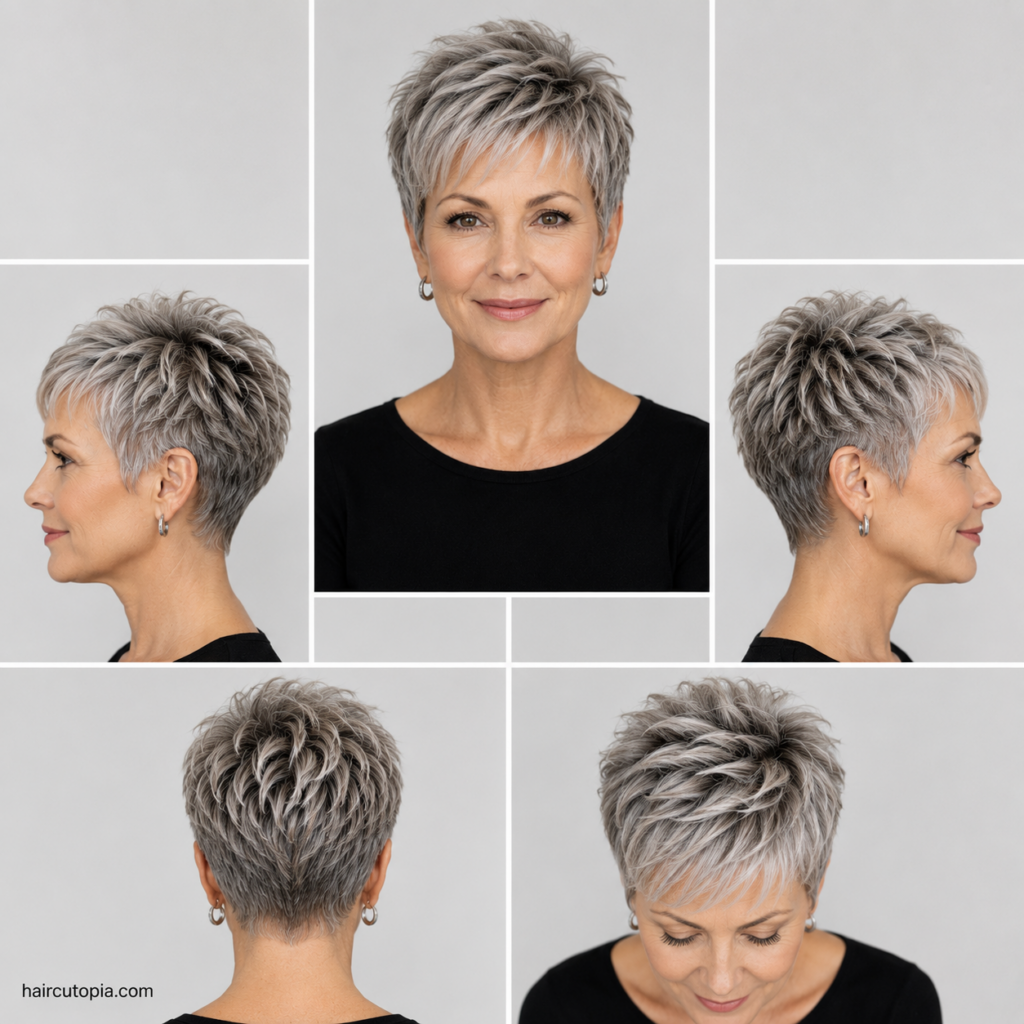
Layers help control the shape of a pixie haircut.
Short layers can add lift through the crown, while longer layers create softness and movement.
For women over 50, layering can be especially helpful when hair texture begins to change. A stylist can adjust the haircut based on where your hair feels thick, fine, flat, or naturally wavy.
Where Layers Matter Most
Crown layers can create height and volume.
Layers around the fringe can soften the forehead and frame the eyes.
Internal layers can remove weight from thick hair without making the outside of the haircut appear excessively choppy.
A personalized layered pixie will usually be easier to style than a one-length short haircut.
Pixie Haircut With Side-Swept Bangs
Side-swept bangs pair beautifully with pixie haircuts.
The fringe creates a diagonal line across the forehead, adding movement and softness to the hairstyle.
Longer side bangs can also make the transition to short hair feel less dramatic.
If you prefer a softer appearance, ask for feathered or lightly textured ends.
For more definition, keep the fringe slightly heavier and style it with a noticeable side part.
Pixie Haircut With Wispy Bangs
Wispy bangs are lighter and more separated than traditional fringe.
Small pieces of hair fall naturally across the forehead rather than forming one solid line.
This creates a relaxed, soft appearance.
Wispy bangs can work particularly well with fine hair because they do not require a large amount of density.
They are also relatively forgiving as they grow.
Pixie Haircuts for Fine Hair Over 50
Fine hair is one of the most common reasons women consider shorter hairstyles.
Long hair can sometimes pull fine strands downward, reducing volume around the roots. A pixie removes much of that weight.
The best pixie haircuts for fine hair usually focus on shape rather than aggressive thinning.
Consider:
- Short crown layers
- A slightly longer top
- Soft side-swept fringe
- Subtle texture
- Tapered sides
- Lightweight styling products
Avoid applying heavy oils or thick styling creams near the roots.
A lightweight mousse or root-lifting spray can provide volume without making the hair feel coated.
Pixie Haircuts for Thick Hair Over 50
Thick hair provides plenty of natural density for a pixie haircut.
The challenge is controlling bulk.
If the sides are cut without considering weight distribution, the haircut may become too wide around the temples or ears.
A stylist can use internal layering to remove weight while maintaining the outer shape.
Tapered pixies and undercut pixies can also work well for extremely thick hair.
The top can remain longer and textured while the lower sections stay neat and controlled.
Pixie Haircuts for Gray Hair
Gray hair can look incredibly striking in a pixie cut.
Natural silver, white, and salt-and-pepper tones become more noticeable when the hair is short and textured.
Individual layers reflect light differently, highlighting the natural variation in color.
Caring for Gray Pixie Hair
Gray hair can sometimes feel drier or more coarse.
Consider using:
- A moisturizing shampoo
- Lightweight conditioner
- Hydrating hair masks
- Heat protectant before blow-drying
- Occasional purple shampoo for unwanted yellow tones
Avoid overusing purple shampoo. Too much can leave some gray hair looking dull or slightly violet.
Pixie Haircuts for Naturally Wavy Hair
Natural waves can add softness and movement to a pixie.
A longer layered pixie usually gives waves enough room to form.
Instead of straightening your hair every morning, ask your stylist to shape the haircut around your natural wave pattern.
For easy styling:
- Apply a small amount of wave cream to damp hair.
- Gently scrunch the hair.
- Allow it to air-dry or use a diffuser.
- Separate the waves with your fingers.
Avoid brushing the hair once it is completely dry if brushing causes your natural texture to become fluffy.
Pixie Haircuts for Curly Hair
Curly pixie haircuts can look playful, sophisticated, or dramatic depending on the shape.
The stylist should consider curl shrinkage before deciding on the final length.
Some curls may spring significantly shorter once the hair dries.
A curly pixie often looks beautiful with additional length through the top. The curls create natural volume while shorter sides help maintain the silhouette.
Use a moisturizing curl cream or lightweight gel to encourage definition.
Choppy Pixie Haircut
A choppy pixie uses noticeably separated layers to create texture.
The ends may appear slightly uneven by design, giving the haircut a casual, modern appearance.
This style works particularly well for straight or slightly wavy hair.
To style a choppy pixie, warm a small amount of matte paste between your fingers. Lightly twist or pinch individual sections.
You do not need to define every piece.
A slightly imperfect finish is part of the style.
Soft Feminine Pixie Haircut
Not every pixie needs sharp edges or dramatic texture.
A soft feminine pixie uses feathered layers, longer fringe, and gentle movement.
The edges around the ears and neckline may also be slightly softer rather than sharply defined.
This type of pixie is a good choice if you want short hair but prefer a romantic or understated style.
A lightweight styling cream can enhance the softness without creating stiffness.
Pixie Haircut With Volume on Top
Volume through the crown can change the entire shape of a pixie.
Extra height draws the eye upward and creates a longer visual line.
This can be particularly flattering for round faces.
The sides are typically kept closer to the head while the crown remains longer.
To create volume:
- Apply a root-lifting product to damp hair.
- Blow-dry the crown upward.
- Use your fingers or a small round brush.
- Finish with a lightweight texture spray.
Avoid heavy hairspray near the roots because it can cause fine hair to collapse.
Sleek Pixie Haircut
A sleek pixie creates a smooth, polished appearance.
The hair may be styled with a defined side part or brushed gently away from the forehead.
This style works especially well with straight hair.
Use a lightweight smoothing cream to control flyaways.
If your hair is naturally wavy, a small flat iron can smooth individual sections. Always use heat protectant before applying direct heat.
Tapered Pixie Haircut
A tapered pixie gradually becomes shorter around the sides and neckline.
The transition creates a clean shape without an abrupt change in length.
Tapered pixies can be particularly flattering for women who want a neat hairstyle that requires very little morning styling.
The crown can remain textured or smooth depending on your preference.
Regular trims help preserve the tapered shape.
Asymmetrical Pixie Haircut
An asymmetrical pixie introduces different lengths on each side.
One side may be tucked close to the head while the opposite side features longer fringe.
This creates movement and visual interest.
The asymmetry can be subtle or dramatic.
Even a slightly longer side-swept fringe can give a classic pixie a more contemporary appearance.
Spiky Pixie Haircut
Modern spiky pixie haircuts focus on texture rather than stiff, heavily gelled spikes.
Short crown layers are styled upward and separated with the fingers.
The result is playful and energetic.
A matte styling paste works particularly well for this style.
Start with a very small amount and add more only if needed.
Undercut Pixie Haircut
An undercut removes significant length underneath the top sections of hair.
The sides, back, or both may be clipped shorter.
This can be a practical option for women with extremely thick hair because it reduces bulk.
The longer top creates contrast and can be styled in several directions.
Keep in mind that undercuts require frequent trims if you want to maintain a sharp appearance.
Low-Maintenance Pixie Haircuts for Women Over 50
If easy styling is your priority, choose a pixie that follows your natural hair pattern.
Straight hair may work well with a classic tapered pixie.
Wavy hair can benefit from soft layers.
Curly hair often looks best when enough length remains for the curls to form naturally.
The most low-maintenance haircut is usually one that does not require you to completely change your natural texture every morning.
Tell your stylist how you normally style your hair.
Be specific.
If you usually air-dry your hair and spend five minutes styling, your stylist needs to know that before creating the haircut.
Choosing a Pixie Haircut for Your Face Shape
Face shape can help guide your haircut choice, although personal preference should always come first.
Round Face
Pixies with crown volume and shorter sides can create a longer visual line.
Side-swept bangs can add flattering angles.
Oval Face
Oval faces can typically wear many different pixie styles.
Classic, cropped, textured, and asymmetrical pixies are all options.
Square Face
Soft layers and wispy fringe can balance a stronger jawline.
Consider avoiding extremely boxy shapes if you prefer a softer appearance.
Heart-Shaped Face
Longer fringe can help balance a wider forehead and narrower chin.
Side-swept pixies work especially well.
Long Face
Look for texture and volume around the sides.
Extremely tall crown volume may make the face appear longer.
How to Ask Your Stylist for a Pixie Haircut
Bringing reference photos is one of the easiest ways to communicate with your stylist.
However, do not simply show a photo and say, “I want this.”
Explain what you specifically like.
You might say:
- “I like the texture through the crown.”
- “I want the sides to stay soft around my ears.”
- “I want enough length to sweep my bangs.”
- “I do not want a severe neckline.”
- “I prefer a haircut that works when air-dried.”
Your stylist can then adapt the inspiration to your hair density, texture, and face shape.
How Often Should a Pixie Haircut Be Trimmed?
Most pixie haircuts need trimming every four to eight weeks.
Very short tapered cuts may need attention every four weeks.
Longer pixies can often go six to eight weeks between appointments.
The haircut will not suddenly look bad after that point. It simply begins to change shape.
Some women enjoy the growing-out stages and intentionally allow their pixie to become longer and softer between trims.
Best Styling Products for Pixie Haircuts
Short hair usually requires less product than you think.
Useful products include:
- Lightweight mousse for volume
- Root spray for lift
- Texture spray for movement
- Matte paste for definition
- Styling cream for softness
- Light hairspray for flexible hold
- Smoothing serum for sleek styles
Start with a small amount.
You can always add more product, but removing excess product usually means washing your hair again.
How to Keep a Pixie Haircut Looking Modern
A modern pixie usually has movement.
The hair does not need to be perfectly shaped or heavily sprayed into place.
Natural texture, soft separation, and flexible styling help keep the haircut feeling current.
You can also update an existing pixie by:
- Growing the fringe longer
- Adding crown texture
- Creating a deeper side part
- Tapering the neckline
- Softening the edges
- Adding subtle asymmetry
- Changing how you style the top
Sometimes a small adjustment makes the haircut feel completely different.
Are Pixie Haircuts Good for Women Over 50?
Pixie haircuts can be an excellent choice for women over 50, but age itself is not the deciding factor.
Hair texture, density, face shape, lifestyle, and personal style matter far more.
A pixie can highlight facial features, simplify a daily routine, and create shape in hair that feels flat or difficult to manage.
The best results come from choosing a haircut designed around your actual hair.
Final Thoughts on Pixie Haircuts for Women Over 50
Pixie haircuts for women over 50 can be classic, soft, textured, bold, curly, sleek, or effortlessly casual.
There is no single version of the pixie that works for everyone.
A woman with fine straight hair may prefer a layered pixie with crown volume. Someone with thick hair might choose a tapered or undercut style. Natural waves and curls can become the main feature of a longer textured pixie.
Think about your normal styling routine before choosing a haircut. Bring reference photos to your stylist and explain which details you like.
The right pixie should feel like a natural extension of your personal style. More importantly, it should be a haircut you can realistically enjoy and style at home.
Related Posts
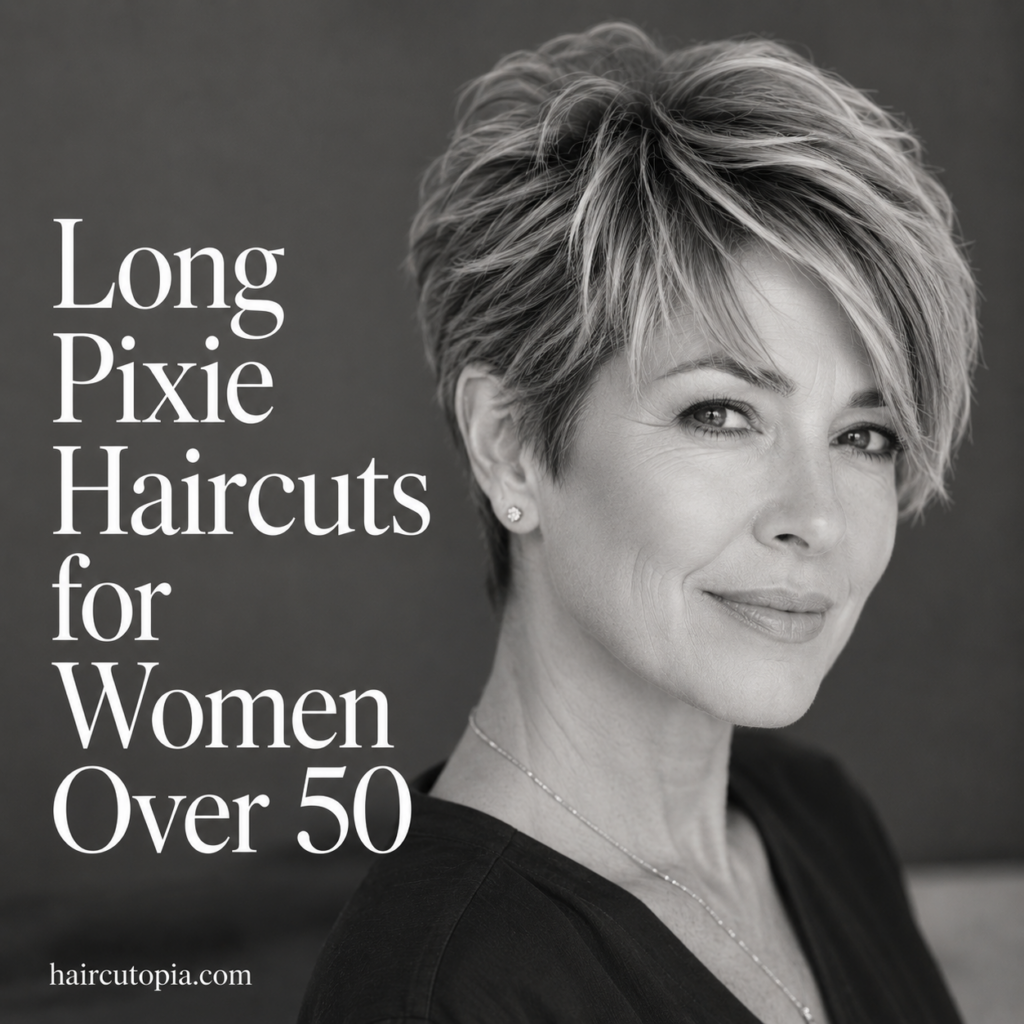 Long Pixie Haircuts for Women Over 50: Flattering, Modern, and Easy to Style
 Haircuts for Long Faces: The Complete Guide to Finding Your Most Flattering Style
 Haircuts for Diamond Faces: The Complete Guide to Finding Your Most Flattering Style
 Haircuts for Heart Faces: The Complete Guide to Finding Your Most Flattering Style