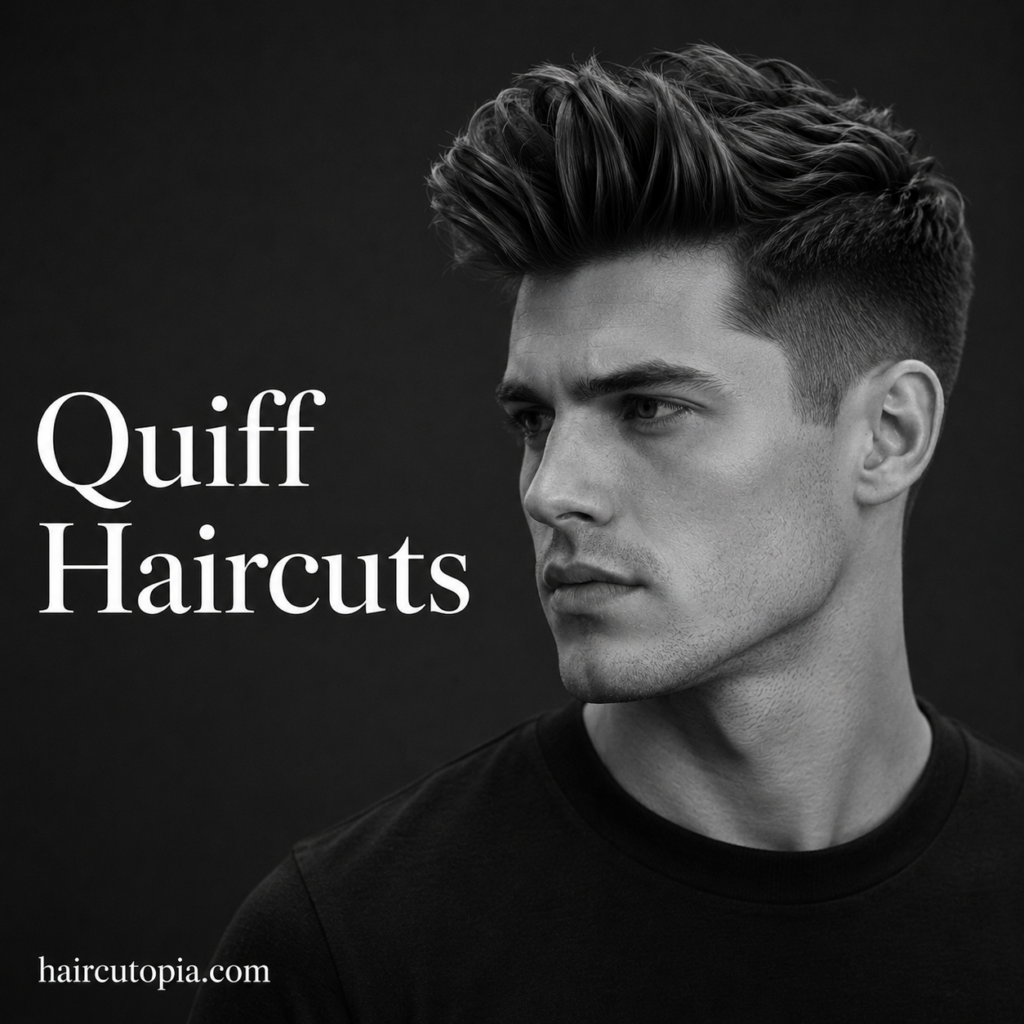
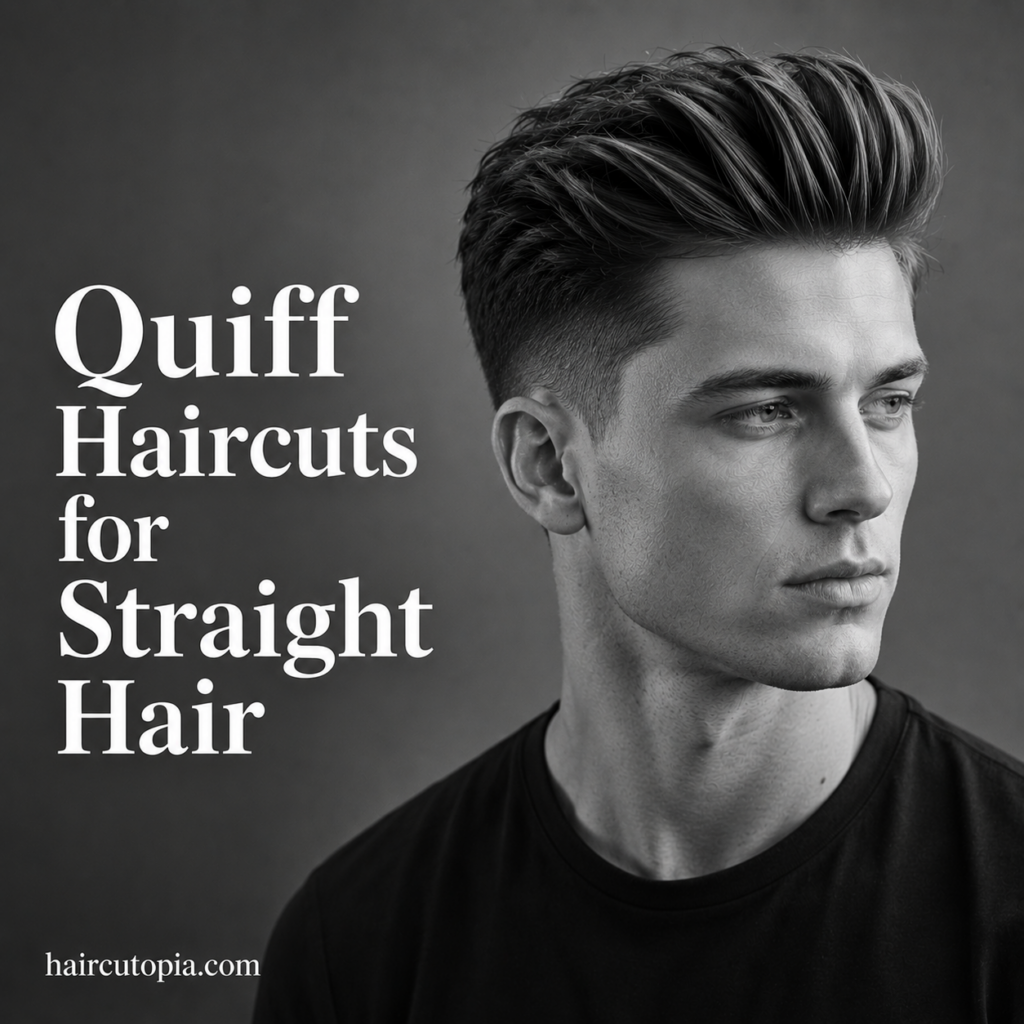
A quiff is one of the most adaptable hairstyles for men with straight hair. Straight hair can be shaped into a clean classic quiff, a textured modern version, a polished side-swept style, or a relaxed brushed-up look.
Unlike curly or wavy hair, straight hair does not automatically create movement or lift. That means the haircut and styling routine matter more. The upside is that straight hair is often easier to direct, part, and refine once you know how to work with it.
The best quiff for straight hair has enough length at the front to create height, enough texture to avoid a flat or overly smooth finish, and sides that support the overall shape.
Why a Quiff Works for Straight Hair
Straight hair is easy to guide upward and back, which makes it a natural fit for a quiff. It can create a clean, defined silhouette that works in both casual and professional settings.
The style also gives straight hair more personality. Without added shape, straight hair can sometimes fall flat or look too uniform. A quiff creates lift at the front and adds structure through the top.
A quiff can help straight hair look:
- More voluminous at the front
- More textured and dimensional
- Cleaner around the sides and neckline
- More polished without looking overly formal
- Easier to adapt for different face shapes and personal styles
The main challenge is keeping the hair from collapsing. Straight hair often needs a little help from a blow dryer, pre-styler, and the right finishing product.
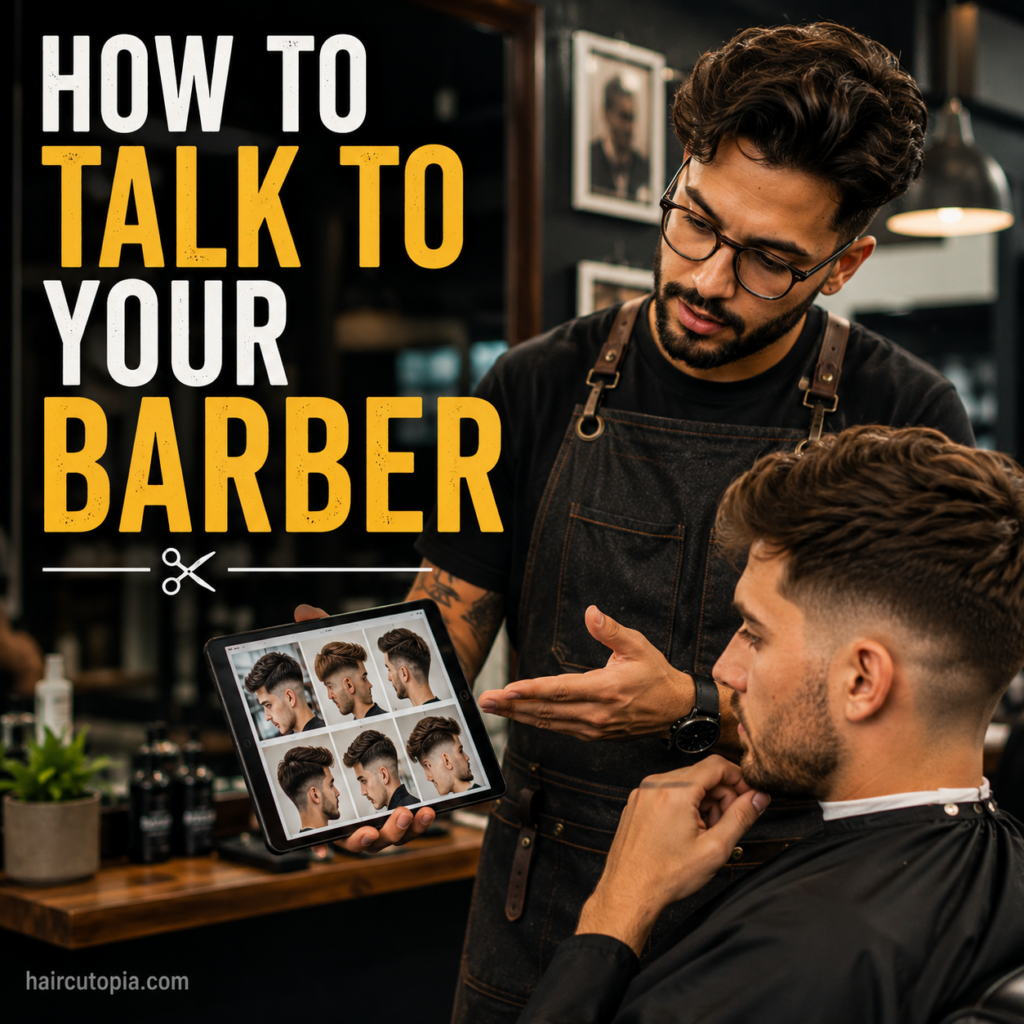
What to Ask Your Barber for a Straight-Hair Quiff
The right haircut should make styling easier, not force you to use a handful of product every morning.
Ask your barber to leave enough length on top for the front to lift. Most straight-hair quiffs work well with around 3 to 5 inches on top, although shorter versions can still work if you prefer low maintenance.
A simple request could be:
“I want a textured quiff that works with straight hair. Leave enough length at the front to style upward and back, add texture through the top, and keep the sides clean and blended.”
You may also want to ask for:
- Extra length at the front
- Point cutting or light layering for texture
- A low taper, mid taper, fade, or scissor-cut sides
- Weight removal if your straight hair is thick and heavy
- A natural blend through the crown
- A neckline that fits your preferred level of maintenance
If your hair is fine or tends to fall flat, ask your barber not to over-thin the top. Fine straight hair needs enough density to hold the quiff shape.
Best Quiff Haircuts for Straight Hair
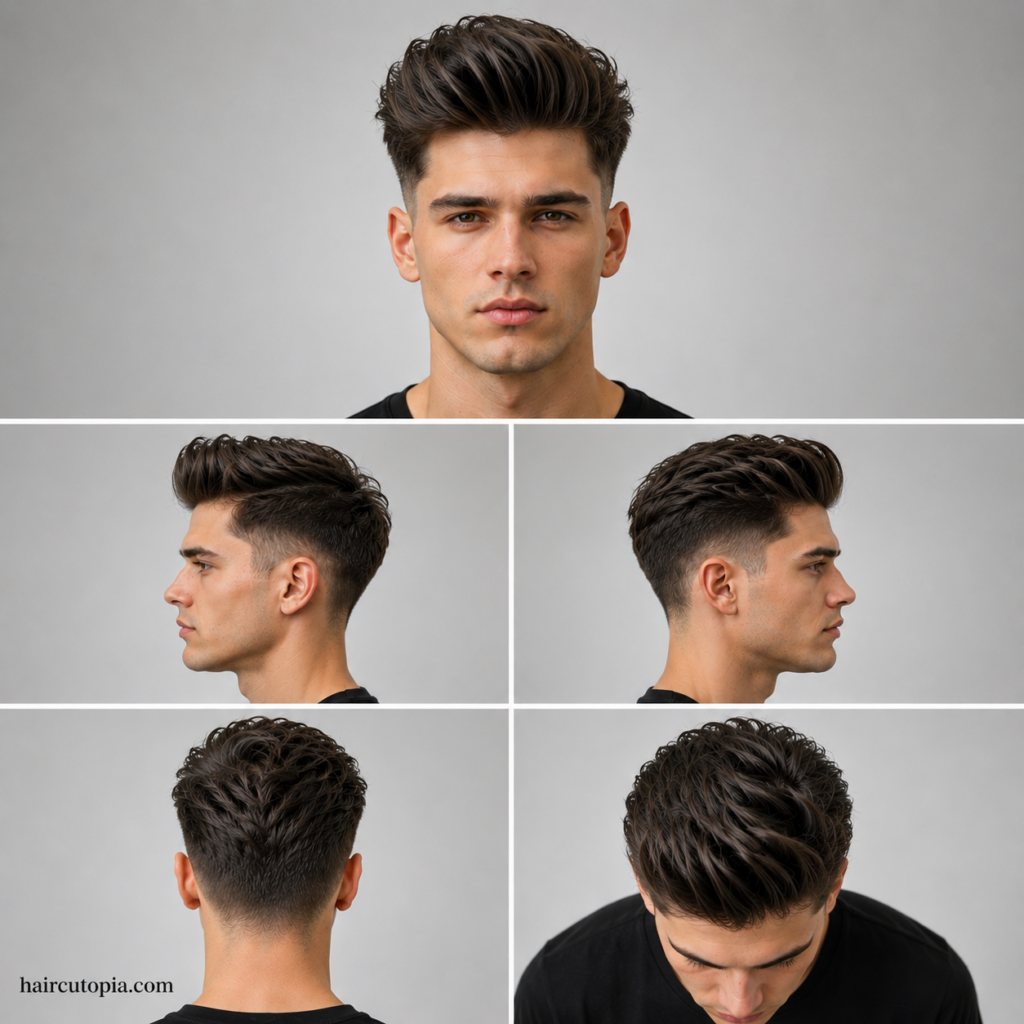
Classic Quiff with Tapered Sides
The classic quiff is clean, timeless, and easy to wear. The front is styled upward and back, while the sides are tapered neatly without being taken extremely short.
This style works especially well for medium-density straight hair. It can be styled with a small amount of pomade or styling cream for a smoother finish, or with matte paste for a more natural look.
A classic quiff is a strong choice if you want something polished enough for work but still modern.
Textured Quiff with Low Fade
A textured quiff with a low fade gives straight hair more movement and contrast. The low fade keeps the haircut tidy around the ears and neckline, while the textured top prevents the style from looking too flat.
The front is lifted and slightly separated rather than combed into one smooth shape. This gives the haircut a more relaxed, current feel.
Use a matte clay or texture paste to create separation. Avoid applying too much product, since straight hair can quickly look greasy or weighed down.
Short Quiff with Mid Taper
A short quiff is ideal if you like the shape of a quiff but do not want a long styling routine. The top is usually kept around 2 to 3 inches, with a little extra length at the front.
A mid taper creates a clean transition through the sides and back. It adds structure without the high contrast of a skin fade.
This haircut works well for men with straight hair that grows outward or becomes difficult to manage at longer lengths.
Side-Swept Quiff
A side-swept quiff combines the height of a quiff with the direction of a side part. The front is lifted and swept diagonally across the top.
This is a useful option for straight hair because it creates movement and keeps the style from looking too vertical or stiff. It also works well if your hair naturally grows to one side.
Keep the part soft and natural. A hard part can look too severe unless you prefer a very sharp, classic barbershop style.
Brushed-Back Quiff
A brushed-back quiff is smoother and more refined than a textured version. The front is lifted, then directed backward into the rest of the hair.
Straight hair is especially good for this style because it can be combed into a clean shape with minimal frizz. A blow dryer and medium-hold styling cream or water-based pomade can help keep it in place.
This is a great option for formal events, office settings, or anyone who likes a more polished finish.
Messy Textured Quiff
A messy textured quiff gives straight hair a more casual, modern edge. The top is styled upward with separation and a slightly undone finish.
The goal is not to make the hair look unkempt. Instead, you want visible texture that keeps the quiff from looking too perfect.
This style works well with a low taper, low fade, or scissor-cut sides. It is also a good choice if you want a hairstyle that can look better as it relaxes during the day.
Long Quiff with Scissor-Cut Sides
A longer quiff with scissor-cut sides creates a softer, more classic silhouette. The top is left around 4 to 6 inches, while the sides are blended with scissors rather than clipped into a fade.
This style works well for straight hair that has medium to thick density. It gives you more styling options, including a side-swept quiff, brushed-back quiff, or loose textured finish.
Because the top is longer, regular trims are important. Without shape, straight hair can start to look heavy or fall forward.
Quiff with Skin Fade
A quiff with a skin fade creates a strong contrast between the longer top and closely faded sides. It is a bold option that works well if you like a sharp, modern haircut.
The top should have enough texture to balance the tight fade. A completely smooth top can make the contrast feel too severe, while a lightly textured quiff keeps the haircut more natural.
A low skin fade is easier to wear for most face shapes. A high skin fade creates a more dramatic look and puts more focus on the height of the quiff.
Quiff with Drop Fade
A drop fade curves down behind the ear instead of following a straight line around the head. It adds detail from the side and back while keeping the top full.
This style works well for straight hair because the clean fade gives structure, while the quiff provides volume and personality.
A drop fade is a good choice if you want something more customized than a standard low or mid fade without making the haircut overly flashy.
Quiff with Temple Fade
A temple fade focuses on cleaning up the hair around the temples and sideburns while leaving the rest of the sides more natural.
This is a subtle option for men who want a fresh outline without committing to a full fade. It works especially well with textured or messy straight-hair quiffs.
The temple fade gives the haircut a neat finish while allowing the top and sides to grow out more naturally.
How to Style a Quiff with Straight Hair
Straight hair usually needs heat and direction to create a quiff that lasts. Product alone can add hold, but it will not create the same root lift as a blow dryer.
Try this simple routine:
- Start with towel-damp hair.
- Apply a pre-styler such as sea salt spray, volumizing mousse, or lightweight styling cream.
- Blow-dry the front upward and back while lifting the roots with your fingers or a vented brush.
- Dry the sides in the direction you want them to sit.
- Use a small amount of matte clay, paste, pomade, or styling cream.
- Work the product through the top, focusing on the roots and front.
- Shape the quiff with your fingers, then finish with flexible-hold hairspray if needed.
If your hair falls flat quickly, use a cool shot from the blow dryer after shaping the front. This can help set the style before you apply finishing product.
Best Products for Straight-Hair Quiffs
The right product depends on whether you want a matte, textured, smooth, or high-hold finish.
Sea Salt Spray
Sea salt spray adds grip and texture before blow-drying. It is useful for straight hair that feels too soft or slippery to style easily.
Volumizing Mousse
Mousse adds lift at the roots without making the hair heavy. It is a good choice for fine straight hair or hair that tends to collapse.
Matte Clay
Matte clay gives strong hold and texture. It works especially well for short, textured, or messy quiffs.
Styling Paste
Styling paste provides flexible hold and a natural finish. It is a good everyday option for medium-length quiffs.
Water-Based Pomade
Water-based pomade works well for classic and brushed-back quiffs. It adds shine and control but is easier to wash out than traditional oil-based pomade.
Flexible-Hold Hairspray
A light hairspray can help keep the front lifted, especially in humid weather or on long days. Use it sparingly so the quiff stays touchable.
Common Mistakes to Avoid with Straight Hair
Straight hair can make a quiff look clean and sharp, but a few mistakes can leave it flat or overly stiff.
Try to avoid:
- Skipping the blow dryer and relying only on product
- Using too much pomade or wax
- Growing the top too long without adding texture
- Cutting the top too short to create visible lift
- Taking the sides too high without enough volume on top
- Creating a hard part when your hair is fine or flat
- Applying product to soaking wet hair
- Brushing the quiff into a perfectly smooth wall of hair
A little texture usually makes straight hair look more natural. Even a polished quiff benefits from some separation at the front.
Choosing a Straight-Hair Quiff for Your Face Shape
A quiff can be adapted for most face shapes by adjusting the height, side length, and amount of texture.
Round Faces
A slightly taller quiff can add vertical length and make the face look more defined. Pair it with a low or mid fade to reduce width at the sides.
Oval Faces
Oval faces can wear nearly any quiff style. Classic, textured, side-swept, and brushed-back versions all tend to work well.
Square Faces
A textured quiff with a low taper can soften strong angles while keeping the haircut structured and masculine.
Long Faces
Keep the quiff moderate in height and leave a little more length on the sides. Too much height combined with very short sides can make the face appear longer.
Heart-Shaped Faces
A side-swept or softer textured quiff can balance a wider forehead and narrower chin. Avoid overly tight sides if you want a more even overall shape.
How Often Should You Trim a Straight-Hair Quiff?
Most straight-hair quiffs need a trim every 3 to 5 weeks to keep the shape clean. If you wear a fade, you may want a cleanup every 2 to 3 weeks.
Longer quiffs can often go a little longer between full cuts, but regular shaping keeps the top from becoming too heavy and the sides from losing their balance.
If you are growing out the top, ask for a maintenance trim. Your barber can clean up the neckline, remove bulk where needed, and keep the haircut looking intentional without taking away too much length.
Final Thoughts
A quiff is one of the best ways to give straight hair more lift, shape, and personality. The right cut can be classic and polished, modern and textured, or relaxed enough for everyday wear.
Keep enough length at the front, use a blow dryer to create root lift, and choose products that match the finish you want. With a little practice, a straight-hair quiff can become an easy, dependable style that looks sharp from morning to night.