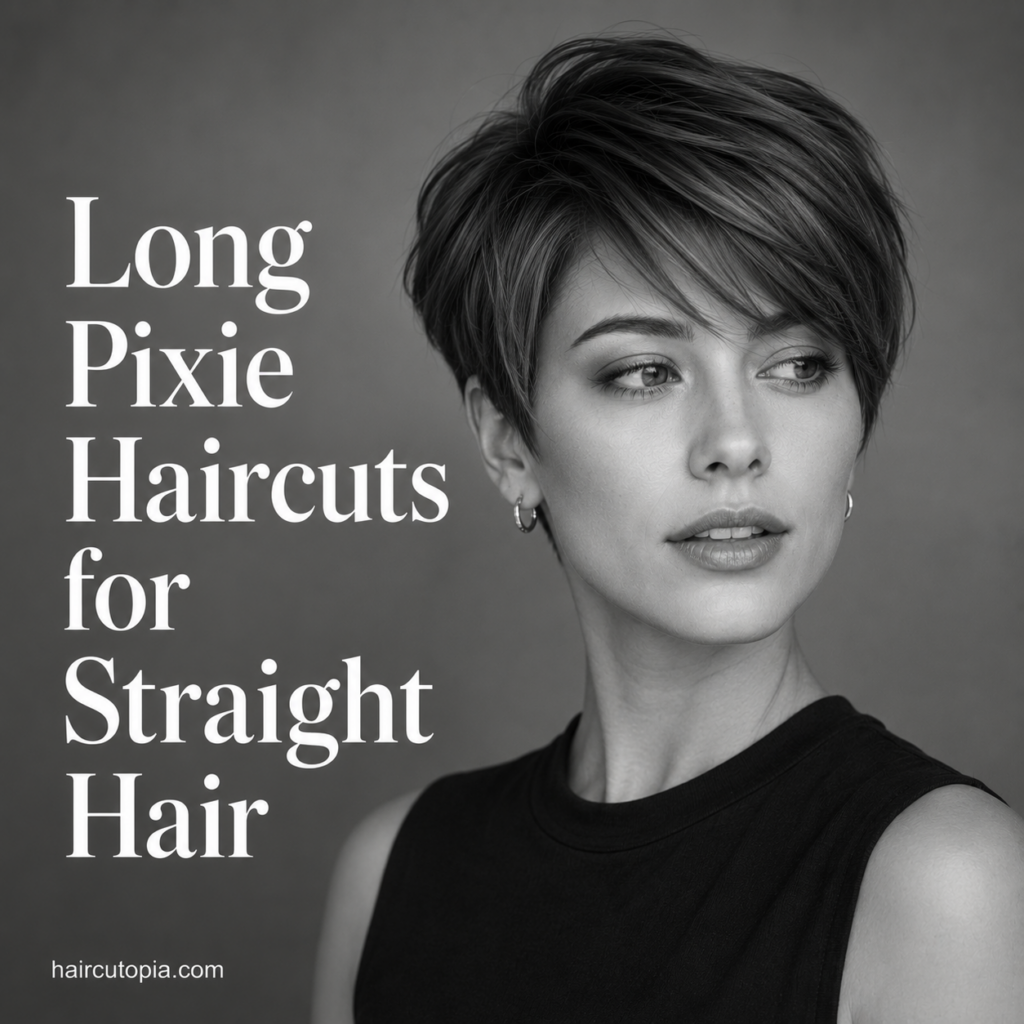
Straight hair can make every detail of a short haircut visible. The layers, fringe, neckline, and overall shape are right there on display, which is exactly why a long pixie can look so sharp and stylish on naturally straight hair.
It also means the cut needs to be thoughtful.
Without enough shape, straight hair may fall flat. Too much thinning can leave the ends looking wispy. The right long pixie creates movement through strategic layering, changes in length, and a fringe that works with your natural growth pattern.
Long pixie haircuts for straight hair can be sleek and polished, softly textured, dramatically asymmetrical, or casually tousled. You can keep a longer top for styling flexibility or taper the back for a clean, defined silhouette.
If you are thinking about going shorter, these 25 long pixie haircut ideas offer plenty of inspiration.
Why Long Pixie Haircuts Work So Well for Straight Hair
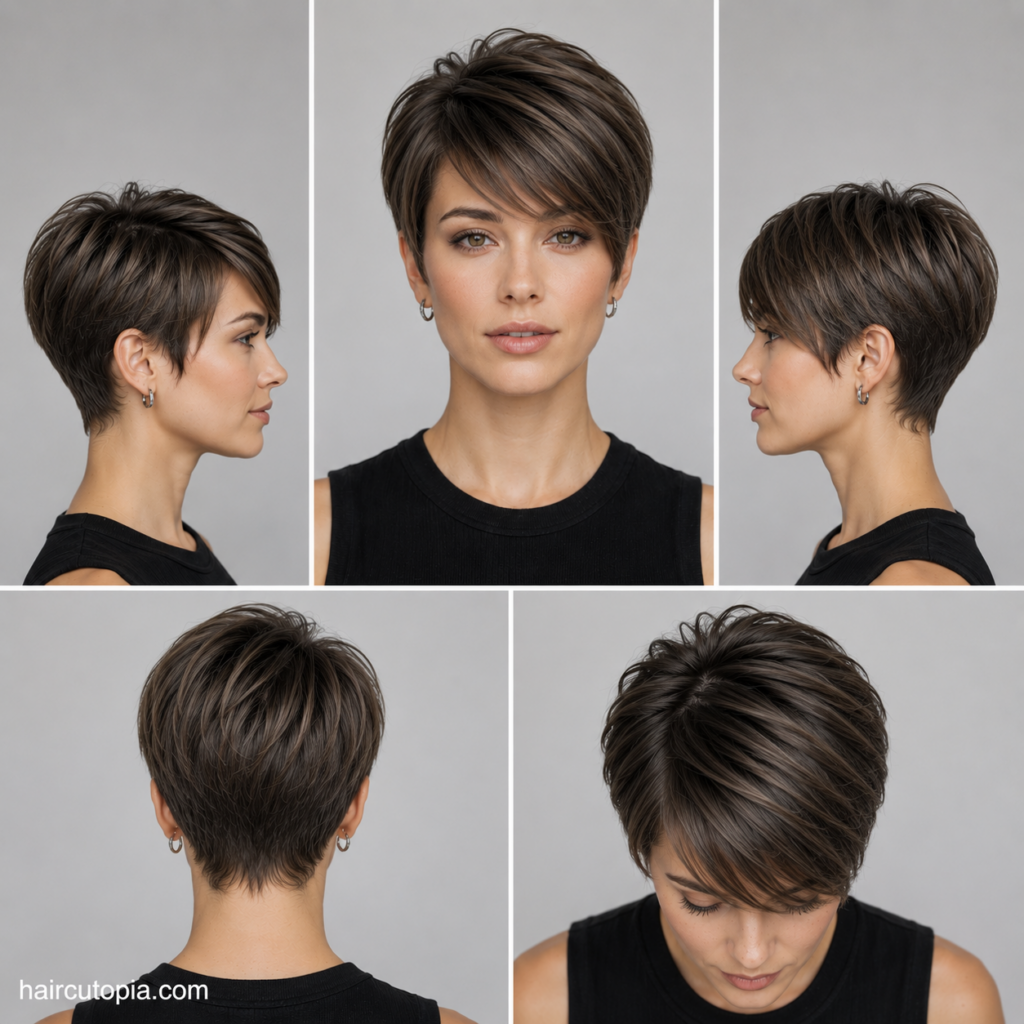
Straight hair clearly shows the structure of a haircut.
That can be a major advantage with a long pixie.
Clean lines remain visible. Side-swept bangs naturally follow the shape of the cut. Carefully placed layers can create movement without relying on curls or waves.
A long pixie may also make straight hair easier to style because the reduced length removes some of the weight that pulls the roots downward.
The best styles often use:
- Longer sections through the top
- Strategic crown layering
- A defined fringe
- Carefully shaped sides
- A tapered or softly graduated back
The haircut itself creates much of the visual interest.
1. Layered Long Pixie for Straight Hair
Layers can prevent straight hair from falling into one flat shape.
Longer layers through the crown and top create movement while shorter supporting sections provide subtle lift.
The layering should blend naturally.
If you want a softer look, ask your stylist to avoid overly choppy transitions between lengths.
2. Sleek Long Pixie Haircut
A sleek pixie highlights the smooth texture of straight hair.
The top is styled close to the head with a clean, polished finish.
Longer sections can sweep across the forehead or tuck neatly behind the ears.
Use a lightweight smoothing cream to control flyaways without making the roots greasy.
3. Long Pixie with Side-Swept Bangs
Side-swept bangs add movement to naturally straight hair.
The fringe moves diagonally across the forehead, creating direction and softness.
Longer bangs offer more styling options.
You can wear them smooth, slightly lifted, or tucked away from the face.
4. Textured Long Pixie for Straight Hair
Texture can make straight hair appear more dimensional.
A textured pixie uses subtle separation between layers.
The goal is not to make the hair look messy.
Instead, individual sections are lightly defined to show the shape of the haircut.
A small amount of matte paste can help emphasize the ends.
5. Straight Pixie Bob
A pixie bob combines the clean outline of a short bob with the lighter structure of a pixie.
The sides remain longer while the back is shaped shorter.
Straight hair clearly displays the graduation between lengths.
This haircut can look especially polished with a smooth blowout.
6. Long Pixie with a Tapered Nape
A tapered neckline gives a long pixie a clean foundation.
The hair gradually becomes shorter toward the neck.
Longer top sections create contrast.
This style works particularly well with straight hair because the tapered shape remains highly visible.
7. Side-Parted Long Pixie
A side part creates natural direction.
More hair falls toward one side, adding visible movement.
The fuller side can sweep across the forehead.
The opposite side may sit close to the head or tuck behind the ear.
Changing the position of your part can dramatically alter the appearance of the haircut.
8. Long Pixie with Long Bangs
Long bangs give straight pixie hair plenty of flexibility.
The fringe can fall across the forehead, sweep to the side, or be pushed backward.
Keeping additional length around the front can also make the transition to short hair feel less dramatic.
This is a good option for a first pixie haircut.
9. Choppy Long Pixie for Straight Hair
Choppy layers create visible separation.
Straight hair makes the difference between each section easy to see.
The haircut can feel slightly edgy without becoming extreme.
Use a lightweight styling paste to define selected pieces.
Avoid applying product evenly throughout the entire haircut.
10. Asymmetrical Straight Long Pixie
An asymmetrical pixie keeps one side noticeably longer.
The clean texture of straight hair emphasizes the uneven silhouette.
The longer side can frame the cheekbone or jawline.
The shorter side creates contrast.
This haircut can be subtle or dramatically uneven depending on your preference.
11. Feathered Long Pixie Cut
Feathered layers create soft movement through straight hair.
The ends are shaped to flow away from one another.
This prevents the haircut from appearing too solid.
Use a small round brush while blow-drying to encourage the feathered effect.
A flexible hairspray can maintain the shape.
12. Long Pixie with Crown Volume
Crown volume creates height and balance.
Longer top sections are styled upward while the sides remain controlled.
Straight hair may need a little styling support to maintain the lift.
Apply a lightweight root spray before blow-drying.
Direct the crown upward with your fingers or a brush.
13. Long Pixie with Wispy Bangs
Wispy bangs create a light frame around the forehead.
Straight hair naturally supports the separated texture.
The fringe should still have enough density to create a visible shape.
Over-thinning the bangs may make them appear sparse.
Ask for soft separation rather than aggressive texturizing.
14. Shaggy Long Pixie for Straight Hair
A shaggy pixie adds relaxed movement to straight hair.
Layers through the crown create texture.
Longer pieces around the fringe and sides keep the haircut soft.
The style does not need to look perfectly arranged.
A small amount of dry texture spray can enhance the undone finish.
15. Long Pixie with Tucked Sides
Tucking the sides behind the ears creates an instant styling change.
The top and fringe appear more prominent.
You can tuck both sides for a cleaner appearance or only one side for an asymmetrical effect.
This simple technique works particularly well with smooth straight hair.
16. Long Pixie with a Deep Side Part
A deep side part creates dramatic direction.
A larger section of hair sweeps across the head.
This can also create additional root lift.
For extra volume, dry the hair with the part temporarily positioned on the opposite side.
Flip it back once the roots are dry.
17. Rounded Long Pixie for Straight Hair
A rounded pixie follows the natural shape of the head.
The crown remains softly full.
The sides gradually blend into the back.
Straight hair makes the smooth silhouette easy to see.
Precision cutting is important because uneven weight distribution may be more noticeable.
18. Long Pixie with Face-Framing Pieces
Longer sections around the face create softness.
The pieces may fall near the temples, cheekbones, or jawline.
This is a useful option if you prefer some movement around the face.
The back can remain clearly pixie length.
19. Messy Long Pixie for Straight Hair
Straight hair can be styled with intentional messiness.
The haircut uses texture and separation to create movement.
Apply a lightweight texture spray to dry hair.
Use your fingertips to lift the crown and separate selected sections.
Avoid heavily coating the hair with wax.
20. Long Pixie with Lifted Bangs
Longer bangs can be styled upward.
This creates height at the front of the haircut.
Use a small round brush while blow-drying.
Direct the fringe upward and slightly backward.
Finish with flexible hairspray rather than a heavy pomade.
21. Long Pixie for Fine Straight Hair
Fine straight hair can benefit from the reduced weight of a pixie.
Keeping strategic length through the crown helps maintain visual density.
Avoid excessive layering.
A stronger perimeter and softly layered top can create a fuller appearance.
Use lightweight volumizing products near the roots.
22. Long Pixie for Thick Straight Hair
Thick straight hair provides plenty of natural structure.
A long pixie can remove overall weight while maintaining movement.
Internal layering may help reduce bulk.
The visible surface sections can remain longer to create a smooth silhouette.
The goal is controlled density rather than aggressive thinning.
23. Long Pixie with Piecey Texture
Piecey styling emphasizes selected sections of the haircut.
Straight hair works particularly well with this finish.
Use a tiny amount of styling paste.
Focus on the fringe, crown, and ends.
Leave some areas untouched.
The contrast creates a more natural appearance.
24. Grown-Out Straight Pixie
A grown-out pixie has additional length around the sides, crown, and fringe.
The shape feels softer and less structured.
Straight hair can transition smoothly through this stage.
Regular neckline trims help maintain an intentional silhouette while the top continues growing.
25. Natural Straight Long Pixie
A natural straight pixie works with your existing growth pattern.
The haircut follows your natural part and the direction your hair prefers to fall.
This approach can reduce daily styling time.
A lightweight styling cream may be all you need to guide the hair into place.
How to Choose the Best Long Pixie for Straight Hair
Straight hair varies significantly.
Some hair is extremely fine and silky. Other straight hair is thick, coarse, and resistant to styling.
Before choosing a pixie, consider:
- Strand thickness
- Overall hair density
- Natural root volume
- Growth direction
- Cowlicks
- Your natural part
- How easily your hair holds texture
- Your normal styling routine
Pay particular attention to cowlicks.
Short hair can make strong growth patterns more visible.
A skilled stylist may leave additional length in those areas to help control the direction of the hair.
Should Straight Hair Be Layered in a Long Pixie?
Usually, but the amount of layering should match your hair density.
Fine straight hair may need fewer layers to maintain fullness.
Thick straight hair may benefit from more internal weight removal.
Strategic layering can help:
- Create crown movement
- Add texture through the top
- Shape longer bangs
- Reduce bulk in thick areas
- Prevent a solid, heavy silhouette
The haircut should still feel connected.
Too many disconnected layers can make straight hair difficult to style.
How to Add Volume to a Straight Long Pixie
Straight hair can sometimes settle flat against the scalp.
A few simple techniques can create lift.
Blow-Dry Against the Natural Direction
Move the roots in the opposite direction from where they naturally fall.
Once dry, arrange the hair into place.
This creates temporary lift.
Use a Lightweight Root Product
Apply a small amount of root-lifting spray or volumizing mousse.
Avoid saturating the hair.
Too much product may create stiffness.
Focus on the Crown
You do not need maximum volume everywhere.
Lifting the crown can change the entire silhouette of the haircut.
Keep the sides slightly more controlled.
Change Your Part
Moving your part can create instant root lift.
Even a small change may make a noticeable difference.
Use Dry Texture Spray
Dry texture spray can add grip to silky straight hair.
Apply lightly through the crown.
Gently separate the hair with your fingers.
How to Style a Long Pixie with Straight Hair
Straight pixies can usually be styled quickly.
1. Start with Damp Hair
Gently towel-dry your hair.
Remove excess moisture without aggressively rubbing the strands.
2. Apply Your Styling Product
Choose a lightweight product based on your desired finish.
Use mousse for volume, smoothing cream for sleek styles, or texture spray for separation.
3. Establish the Direction
Decide where you want your fringe and part to sit.
Short hair dries quickly.
Guide the hair into position early.
4. Blow-Dry the Crown
Lift the roots with your fingers or a brush.
Direct airflow toward the shape you want to create.
5. Define Selected Sections
Once dry, use a small amount of styling paste.
Separate a few pieces around the fringe and crown.
6. Finish Lightly
Use flexible hairspray if needed.
Avoid creating a stiff surface.
Natural movement keeps a long pixie looking modern.
Best Products for a Straight Long Pixie
Useful styling products may include:
- Lightweight volumizing mousse
- Root-lifting spray
- Dry texture spray
- Lightweight smoothing cream
- Flexible hairspray
- Soft matte paste
- Dry shampoo
- Lightweight serum
Product choice depends on your hair density.
Fine straight hair usually needs lighter formulas.
Thicker hair may handle slightly richer styling products.
How to Keep a Straight Pixie from Looking Flat
The haircut itself plays an important role.
If the crown has too much weight, styling products may not solve the problem.
You can also:
- Blow-dry the roots upward
- Change your part occasionally
- Avoid heavy oils near the scalp
- Use dry texture spray
- Focus volume at the crown
- Maintain regular trims
- Avoid over-brushing after styling
A little separation can make straight hair appear more dimensional.
How Often Should You Trim a Straight Long Pixie?
Most long pixie haircuts benefit from a trim every six to eight weeks.
Highly structured cuts may need maintenance sooner.
Shaggy or grown-out styles can usually go longer.
Straight hair clearly displays the shape of a haircut.
When the neckline becomes heavy or the crown stops sitting properly, a reshaping appointment can restore the silhouette.
What to Ask Your Stylist For
Explain how your hair behaves at home.
Tell your stylist:
- Whether your roots fall flat
- Where you have cowlicks
- How your natural part sits
- Whether your hair holds styling
- If your hair becomes oily quickly
- How often you use heat tools
- How much daily styling you want
Bring photos that show the haircut from multiple angles.
The side and back views are particularly important with a pixie.
Are Long Pixie Haircuts Good for Naturally Straight Hair?
Yes. Straight hair can showcase the structure of a long pixie beautifully.
The clean texture makes layers, tapered sections, and asymmetrical shapes highly visible.
A long pixie also provides more styling flexibility than an extremely short cut.
You can sweep the fringe, change your part, create crown volume, or wear the hair sleek.
The key is choosing a shape that matches your hair density and natural growth pattern.
Long Straight Pixie vs. Straight Pixie Bob
A long straight pixie usually features:
- A shorter neckline
- More crown emphasis
- Greater texture through the top
- A clearly short-hair silhouette
A straight pixie bob generally has:
- More side length
- A stronger perimeter
- A softer bob-inspired shape
- Additional weight around the ears or jaw
Choose a long pixie if you want a lighter, more textured haircut.
Consider a pixie bob if you prefer a fuller outline and additional length around the face.
Final Thoughts on Long Pixie Haircuts for Straight Hair
Long pixie haircuts can give straight hair shape, direction, and movement without requiring complicated styling.
Strategic layers can prevent the hair from sitting flat. Longer bangs create styling flexibility. A tapered neckline gives the haircut a clean foundation.
The best results come from working with your natural growth pattern.
Pay attention to your part, crown, and cowlicks. Use lightweight products and allow some movement to remain.
Whether you prefer sleek, textured, asymmetrical, or softly grown out, a long pixie can make straight hair feel fresh, modern, and surprisingly versatile.