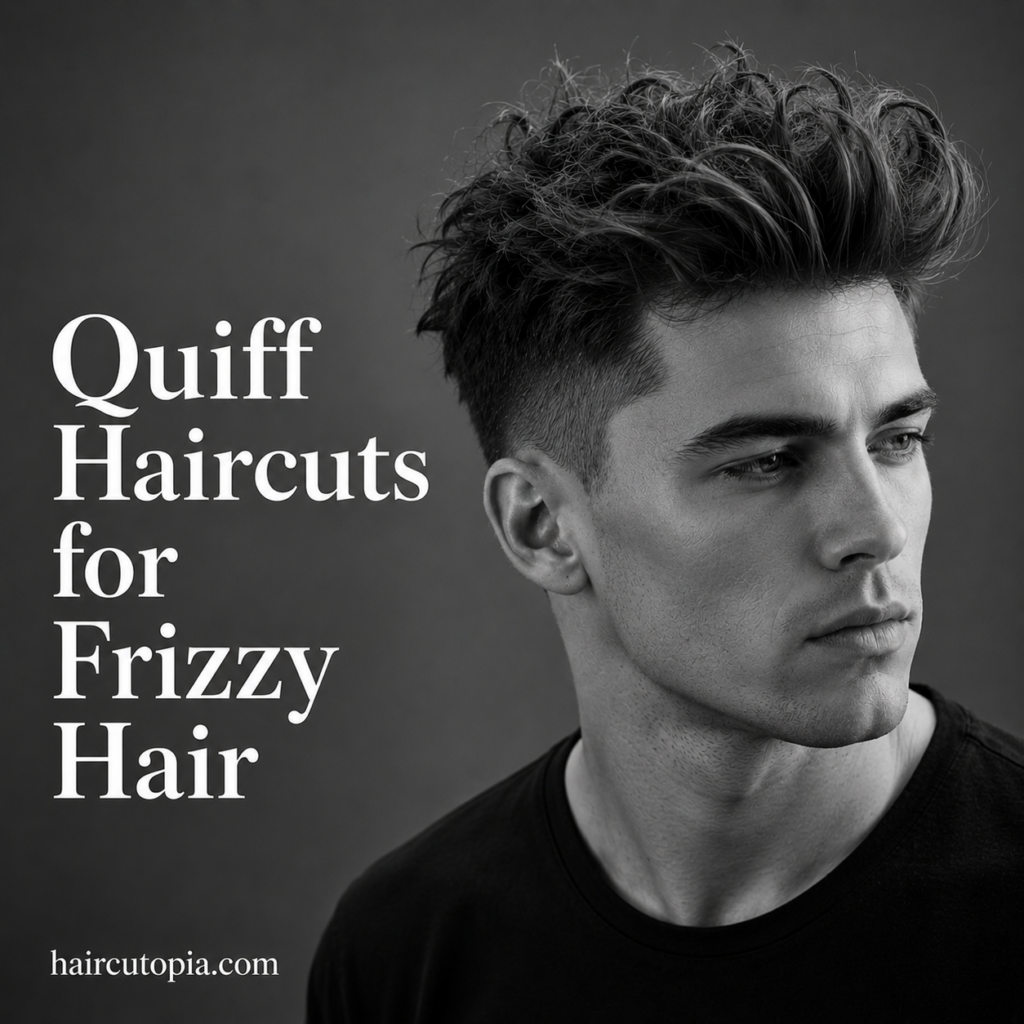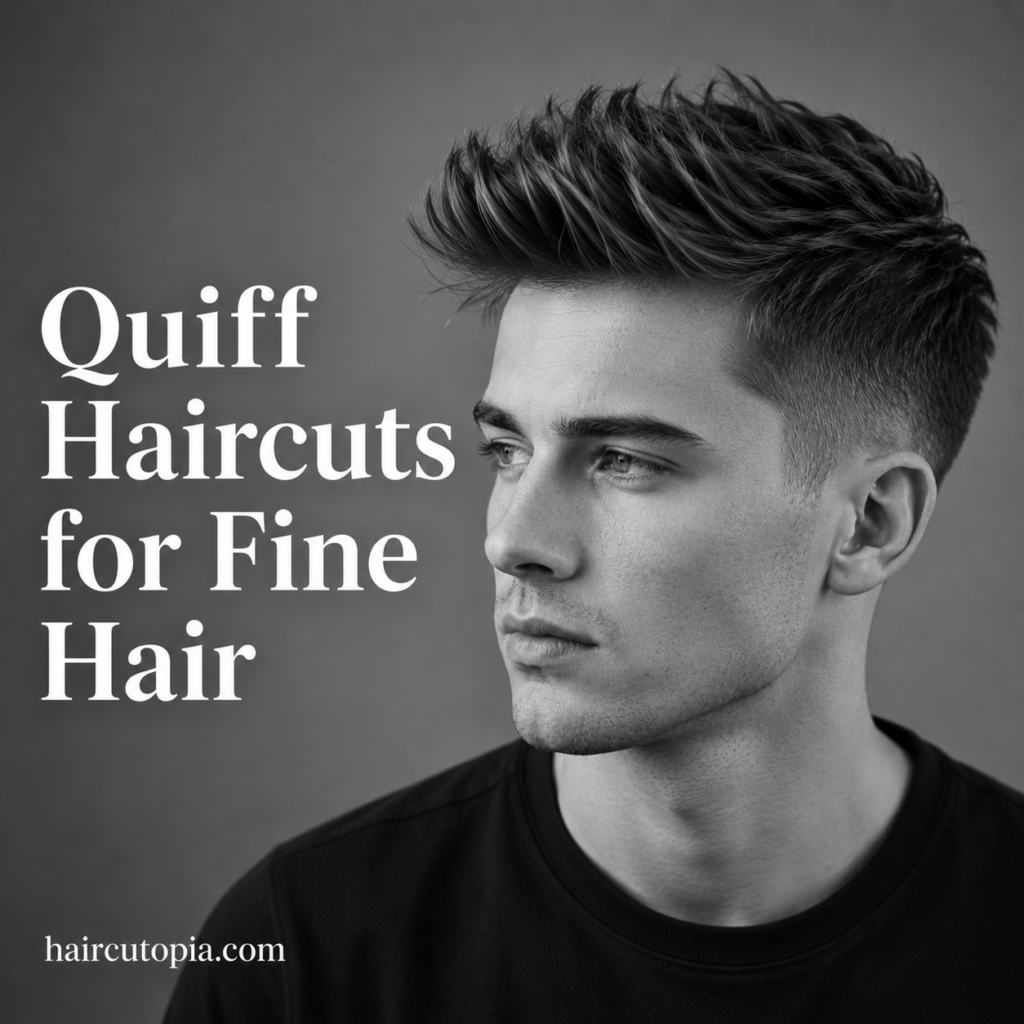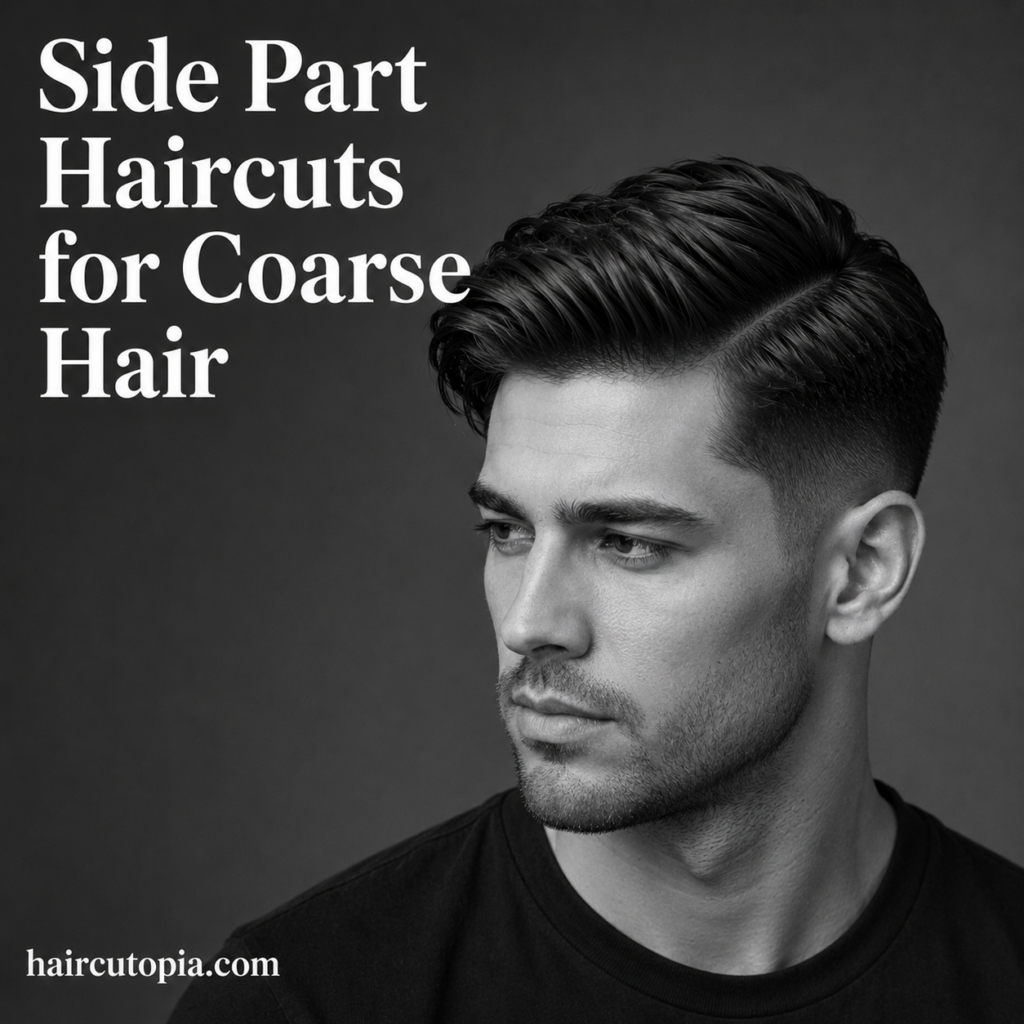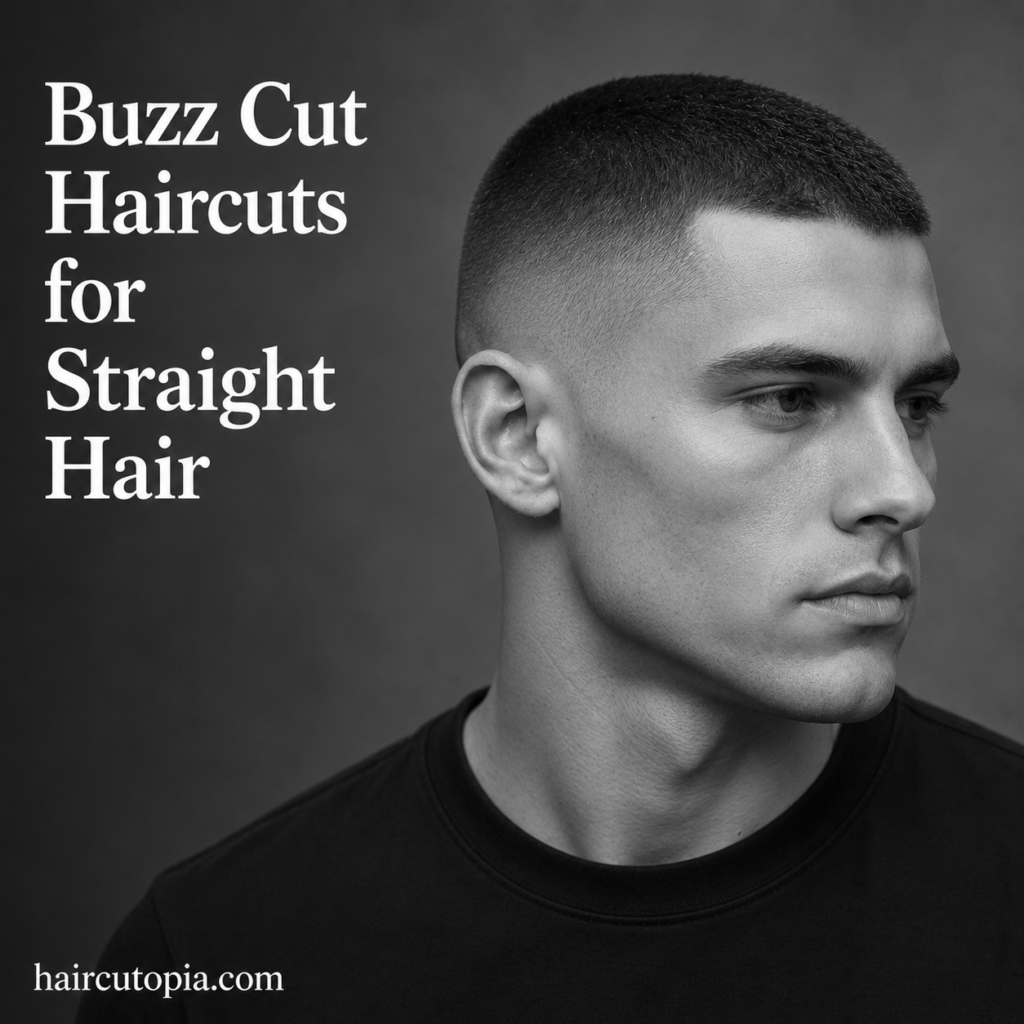
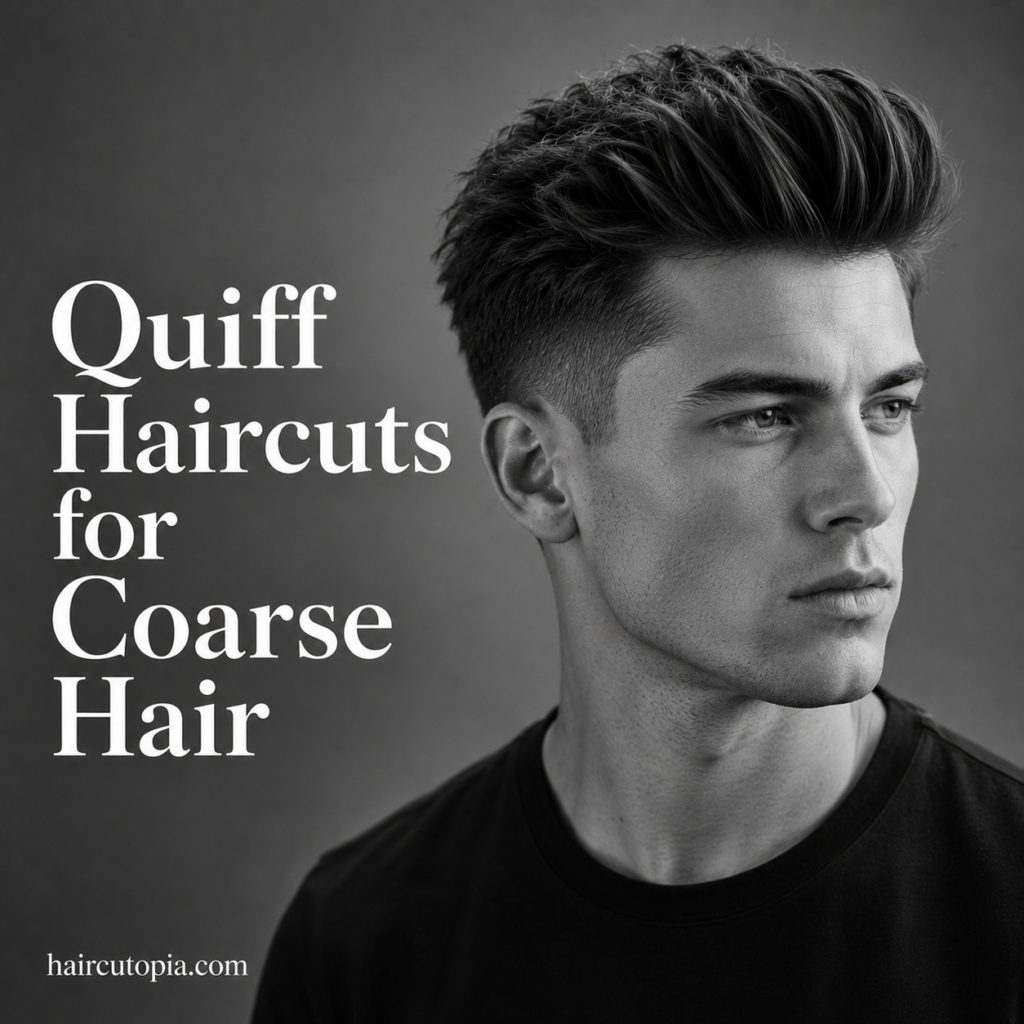
A quiff can be an excellent haircut for coarse hair. Coarse strands naturally have strength, texture, and lift, which gives the style a solid foundation before you even reach for a blow dryer or styling product.
The challenge is control. Coarse hair can feel heavy, expand outward, resist certain directions, or become dry and rough if it is cut or styled without a plan. A good quiff uses that natural strength to create height at the front while keeping the sides and crown balanced.
The best version is not always the tallest one. For coarse hair, a quiff usually looks better when it has shape, texture, and movement instead of excessive volume.
Why a Quiff Works Well for Coarse Hair
Coarse hair has a larger strand diameter than fine hair. It often feels stronger, fuller, and more resistant to flattening. That makes it well suited to a quiff, which needs enough structure to hold its shape.
A well-cut quiff can help coarse hair look:
- More controlled without looking flat
- Fuller through the front and top
- Cleaner around the sides and neckline
- More polished while keeping natural texture
- Easier to style into a consistent shape
The main goal is to manage bulk. Coarse hair can become wide at the sides or overly heavy through the crown, so the haircut needs strategic shaping rather than simply leaving everything long.
Coarse Hair vs. Thick Hair: What Is the Difference?
Coarse hair and thick hair are not the same thing, although many people use the terms interchangeably.
Coarse hair refers to the width of each strand. Individual hairs are larger in diameter and can feel stronger or rougher.
Thick hair refers to density. It means you have a high number of hairs growing from the scalp.
You can have:
- Coarse hair with low density
- Fine hair with high density
- Coarse and thick hair
- Coarse hair that is straight, wavy, curly, or coily
This matters because coarse hair may hold a quiff well even if it is not especially dense. It also means that product choice and weight removal should be based on how your hair behaves, not just how full it looks.
What to Ask Your Barber for a Coarse-Hair Quiff
A good coarse-hair quiff needs enough length to create shape, but it also needs internal weight removal so the hair does not become bulky or difficult to direct.
Tell your barber that your hair is coarse and tends to feel heavy or expand outward. Ask for texture and weight removal through the top and upper sides, while keeping enough length at the front for lift.
A simple request could be:
“I have coarse hair and want a textured quiff with controlled volume. Leave enough length at the front to style upward and back, but remove bulk so it does not get too wide or heavy.”
You may also want to ask for:
- Around 3 to 5 inches on top
- Slightly more length at the front
- Point cutting or layering for movement
- Internal weight removal through dense areas
- A low taper, mid taper, or fade on the sides
- A blended crown that does not puff up
- A natural or tapered neckline
If your hair is very coarse and thick, ask your barber to avoid leaving blunt, one-length sections on top. Those can make the quiff look boxy and harder to style.
Best Quiff Haircuts for Coarse Hair
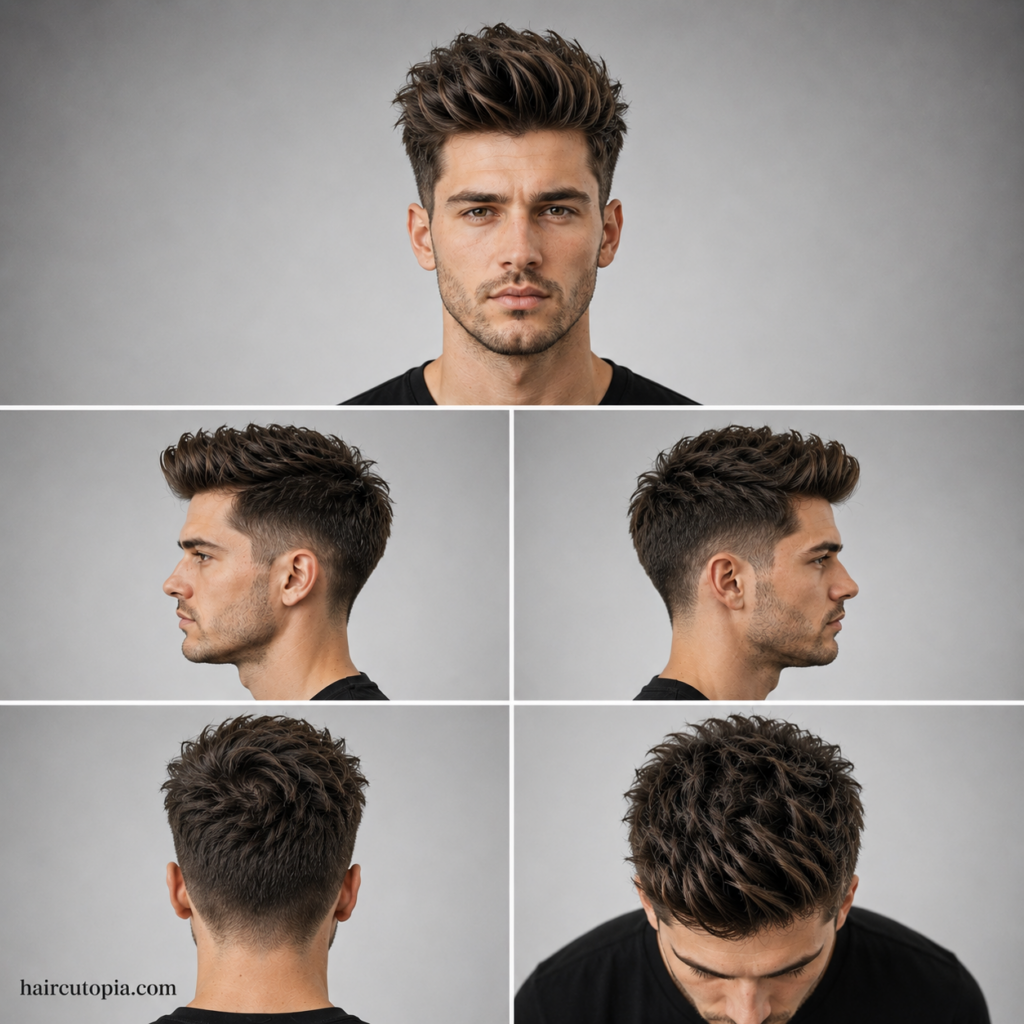
Textured Quiff with Low Taper
A textured quiff with a low taper is one of the best options for coarse hair. The top has enough length to show natural texture, while the taper keeps the temples, ears, and neckline clean.
The low taper does not remove too much hair from the upper sides, which helps the haircut look balanced as it grows out.
Ask for texture through the top and subtle weight removal around the sides. This keeps the quiff from becoming too dense or stiff.
Short Quiff with Mid Fade
A short quiff is a practical option if your coarse hair becomes difficult to control at longer lengths. The top stays around 2 to 3 inches, with slightly more length at the front.
A mid fade creates a clean contrast and removes bulk from the sides. It can make coarse hair feel lighter and easier to manage, especially in warm weather.
This style is a good choice if you want a sharp haircut with a shorter daily styling routine.
Messy Textured Quiff
A messy textured quiff works well with coarse hair because the natural texture does much of the styling for you. Instead of trying to smooth every strand into place, you use separation and movement to create a relaxed finish.
The top should be layered lightly so it can move. A matte clay or styling paste can add definition without making the hair look overly shiny.
This is a strong everyday style for men who want a quiff that still looks good when it loosens up during the day.
Classic Quiff with Scissor-Cut Sides
A classic quiff with scissor-cut sides gives coarse hair a softer, more traditional shape. The sides are blended rather than faded tightly, which can help prevent the haircut from looking too severe.
This works especially well if your coarse hair is straight or slightly wavy. The top can be brushed back for a polished finish or styled with light texture for a more casual look.
Scissor-cut sides also grow out more naturally, which makes this a good option if you prefer fewer barber visits.
Quiff with Low Fade
A low fade keeps the haircut neat around the ears and neckline while leaving more length through the upper sides. This is useful for coarse hair because it removes bulk without creating too much contrast.
The top can be styled into a textured quiff, a loose brushed-back quiff, or a side-swept variation.
A low fade is a good choice if you want a modern haircut that still feels easy to wear in everyday settings.
Quiff with Skin Fade
A quiff with a skin fade creates a bold contrast between the longer top and closely faded sides. It can look especially sharp on coarse hair because the strong strands hold the top shape well.
The key is making sure the top has enough texture. A dense, smooth quiff paired with a skin fade can look too rigid. Adding separation helps soften the overall look.
A low skin fade is usually the most versatile option. A high skin fade creates more drama and works best if you like a stronger contrast.
Side-Swept Quiff
A side-swept quiff gives coarse hair a clear direction, which can make it easier to control. The front is lifted and guided diagonally across the top instead of being pushed straight back.
This style works well if your hair naturally grows to one side or if you want to reduce the appearance of width through the top.
Keep the part soft and natural. A hard part can make coarse hair look overly structured unless you prefer a very sharp barbershop finish.
Long Textured Quiff
A longer quiff can look great on coarse hair when it is layered properly. The top is left around 4 to 6 inches, allowing for more height, movement, and styling flexibility.
The extra length should be balanced with weight removal. Without it, coarse hair can become too heavy and may push outward instead of flowing back.
This style works best if you are willing to spend a little more time blow-drying and shaping your hair each morning.
Quiff with Drop Fade
A drop fade curves down behind the ear, following the natural shape of the head. It gives the haircut a more detailed profile while removing weight from the lower sides.
This is a great option for coarse hair because it helps control bulk without taking too much from the top or upper sides.
Pair it with a textured quiff for a modern look that feels sharp from every angle.
Brushed-Back Quiff
A brushed-back quiff is clean and polished. The front is lifted, then directed back into the rest of the hair for a smoother silhouette.
Coarse hair can hold this shape well, but it may need a little more moisture and control than finer hair. A styling cream or water-based pomade can help guide the hair without making it dry or crunchy.
Ask your barber to remove enough internal weight so the top can move backward instead of standing too stiffly.
How to Style a Quiff with Coarse Hair
Coarse hair usually responds best when it is softened slightly before styling. Starting with damp hair and using a pre-styler can make it easier to direct.
Try this routine:
- Start with towel-damp hair.
- Apply a lightweight styling cream, leave-in conditioner, or heat protectant.
- Add sea salt spray or mousse if you want more texture and lift.
- Blow-dry the front upward and back, using your fingers or a vented brush to guide the shape.
- Dry the sides in the direction you want them to sit.
- Work a small amount of matte clay, paste, or pomade through the top.
- Use your fingertips to separate the hair and soften the finish.
If your hair becomes dry or puffy after blow-drying, use a small amount of styling cream at the end. This can calm flyaways without flattening the quiff.
Best Products for Coarse-Hair Quiffs
Coarse hair often needs products that provide hold while also keeping the strands flexible and conditioned.
Styling Cream
A styling cream is useful for coarse hair because it adds control and softness. It works well as a pre-styler or finishing product for a natural quiff.
Matte Clay
Matte clay gives strong hold and texture. It is a good choice for short, textured, or messy quiffs, especially if your hair is dense.
Styling Paste
Styling paste provides flexible hold with a natural finish. It works well if you want to restyle your quiff during the day.
Water-Based Pomade
Water-based pomade is ideal for polished, brushed-back quiffs. It adds shine and control while being easier to wash out than oil-based pomade.
Sea Salt Spray
Sea salt spray can add grip and texture before blow-drying. Use it lightly if your hair tends to feel dry, and follow it with a conditioning product if needed.
Leave-In Conditioner
A leave-in conditioner can make coarse hair feel softer and easier to manage. It is especially useful if your hair gets dry, rough, or frizzy.
Common Mistakes to Avoid with Coarse Hair
Coarse hair can hold a quiff well, but it can also become difficult to manage if the cut or routine is too aggressive.
Try to avoid:
- Leaving the top one blunt length
- Skipping weight removal in dense areas
- Using too much dry, high-hold product
- Overusing sea salt spray on already dry hair
- Cutting the sides too short without balancing the top
- Styling with no heat protection
- Brushing the hair too aggressively after it dries
- Waiting too long between trims
A little softness goes a long way. Coarse hair usually looks best when it has structure but still moves naturally.
Choosing a Coarse-Hair Quiff for Your Face Shape
A quiff can work with most face shapes when the height and sides are adjusted properly.
Round Faces
A slightly taller quiff can add vertical length and definition. A low or mid fade can reduce width around the sides.
Oval Faces
Oval faces can wear nearly any quiff variation. Textured, classic, side-swept, and brushed-back styles all work well.
Square Faces
A textured quiff with a low taper can soften strong facial angles while keeping the haircut structured.
Long Faces
Avoid excessive height at the front. Keep the quiff moderate and leave some length around the sides for balance.
Heart-Shaped Faces
A softer side-swept or textured quiff can balance a wider forehead and narrower chin. Avoid taking the sides too tight if you want a more even shape.
How Often Should You Trim a Coarse-Hair Quiff?
Most coarse-hair quiffs benefit from a trim every 3 to 5 weeks. If you wear a fade, you may want a cleanup every 2 to 3 weeks to keep the sides sharp.
Longer quiffs can go a little longer between full cuts, but regular shaping is important. Coarse hair can lose its balance quickly when the sides become bulky or the top becomes too heavy.
If you are growing out the top, ask for a maintenance trim. Your barber can remove bulk, clean up the neckline, and keep the shape manageable without taking away the length you are growing.
Final Thoughts
A quiff is a great haircut for coarse hair because it uses the strength and natural texture of the strands instead of fighting them. The right cut gives you height at the front, controlled volume through the top, and cleaner sides that keep the whole style balanced.
Focus on a haircut with thoughtful weight removal, use products that provide hold without drying out your hair, and blow-dry the front into place before adding finishing product.
With the right routine, a coarse-hair quiff can look sharp, textured, and easy to wear every day.