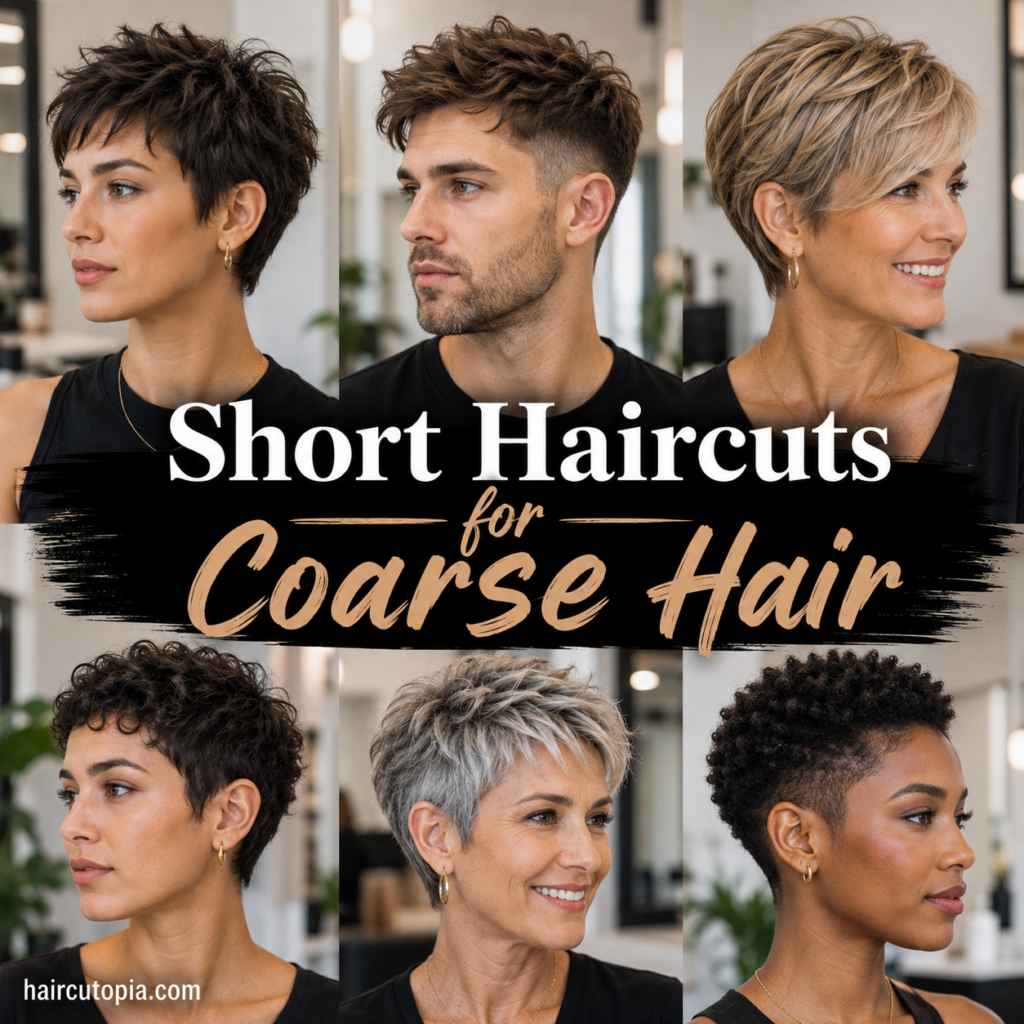
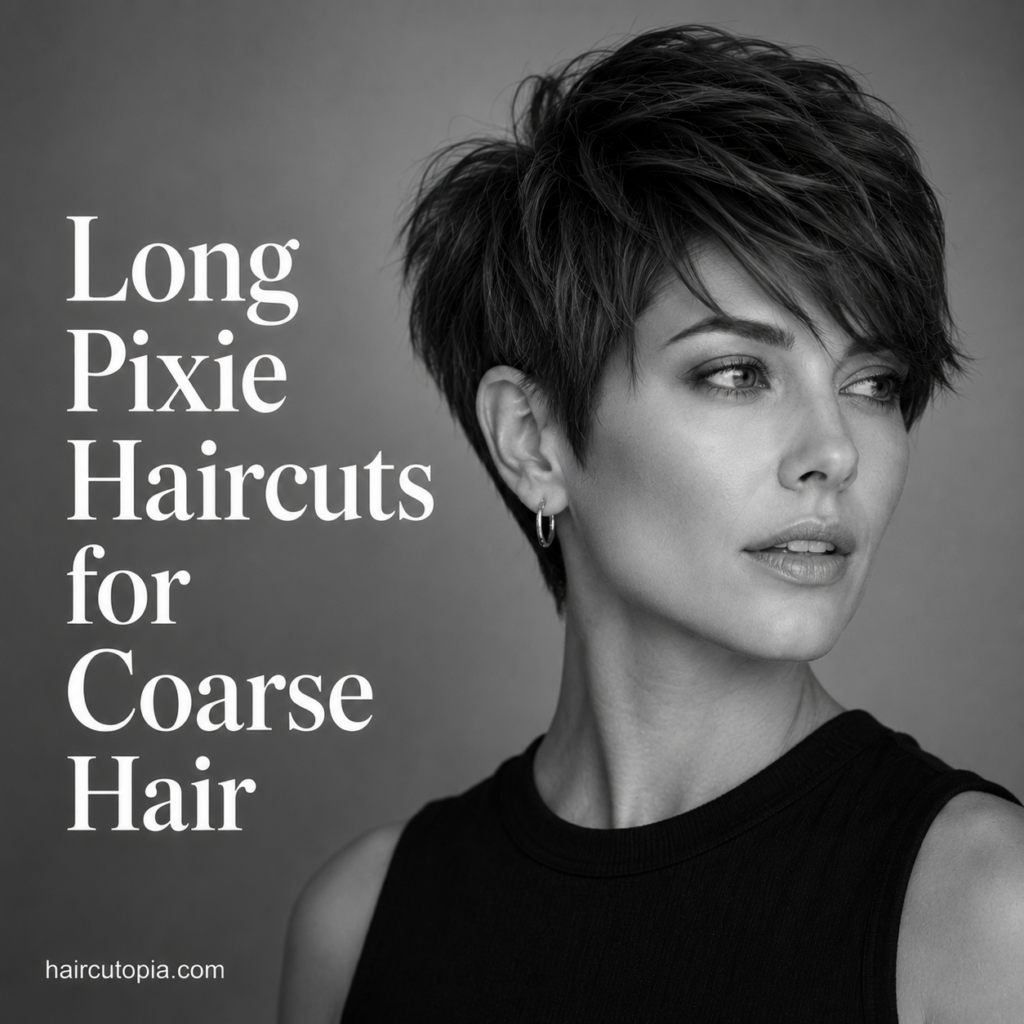
Coarse hair can be incredibly striking in a short haircut. The individual strands have enough substance to hold shape, show texture, and create natural volume that finer hair often needs styling products to achieve.
But coarse hair also has a mind of its own.
It may feel bulky in certain areas, resist lying flat, or expand when humidity enters the picture. A very short pixie can sometimes exaggerate strong growth patterns, while longer hair may become heavy and difficult to shape.
That is where a long pixie can work beautifully.
Long pixie haircuts for coarse hair keep enough length to control the direction of the strands while removing unnecessary weight. The top can be layered for movement, the sides can be shaped to reduce bulk, and the neckline can be tapered for a cleaner silhouette.
The goal is not to fight your hair’s natural strength. It is to use that structure to create a haircut with personality.
Here are 25 long pixie haircut ideas for coarse hair, along with practical tips for choosing, styling, and maintaining the right cut.
Why Long Pixie Haircuts Work So Well for Coarse Hair
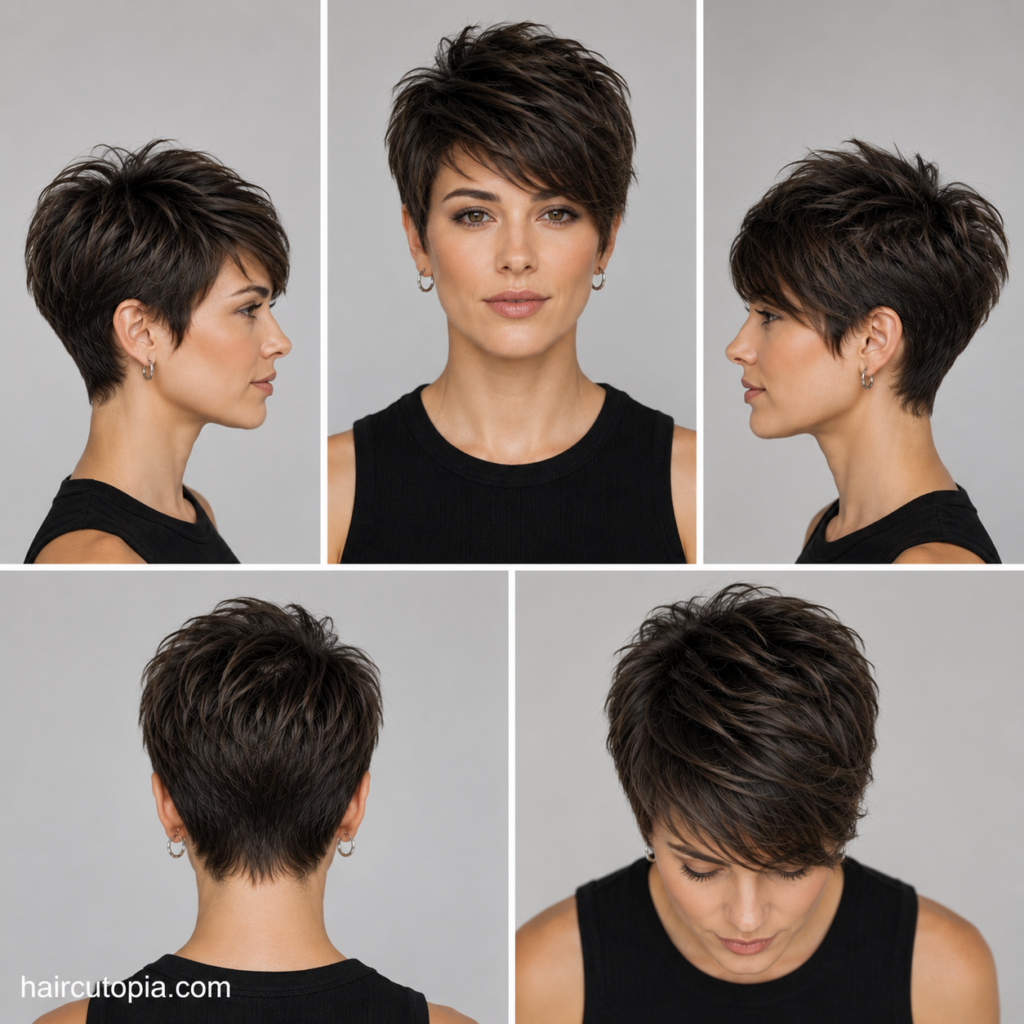
Coarse hair refers to the diameter of the individual strands.
Each strand is generally thicker than a fine or medium strand. This does not necessarily mean you have extremely dense hair, although coarse hair can certainly be thick as well.
Because the strands have more structure, coarse hair often holds a haircut’s shape extremely well.
A long pixie can take advantage of that natural strength.
The additional length helps control strong growth patterns, while carefully placed layers remove weight where the hair feels bulky.
A well-designed long pixie may help coarse hair feel:
- Lighter
- Easier to shape
- More controlled around the sides
- Naturally textured
- Less bulky at the neckline
- More flexible to style
The cutting technique matters just as much as the final length.
1. Layered Long Pixie for Coarse Hair
Strategic layers can remove weight from coarse hair.
The crown and top remain long enough to create movement, while selected areas are layered to prevent excessive bulk.
The stylist should consider how the hair naturally falls.
Randomly removing weight can create sections that stick outward.
A thoughtful layered shape allows the hair to move while maintaining control.
2. Textured Long Pixie for Coarse Hair
Coarse strands naturally display texture.
A textured pixie emphasizes that quality by separating selected sections of the haircut.
The result can feel modern and slightly undone.
Use a small amount of styling paste or cream.
Focus on the ends rather than coating the entire haircut.
3. Long Pixie with Side-Swept Bangs
Side-swept bangs can soften the strong structure of coarse hair.
Keeping the fringe longer gives the strands enough weight to move across the forehead.
Very short bangs may lift or separate depending on your growth pattern.
Longer bangs are usually easier to direct.
Use a brush while blow-drying to establish the shape.
4. Long Pixie with a Tapered Nape
A tapered neckline can remove bulk from the back of coarse hair.
The hair gradually becomes shorter toward the neck.
Longer sections remain through the crown.
This creates a clean contrast between the textured top and controlled back.
It can also make the haircut feel lighter during warmer weather.
5. Coarse Hair Pixie Bob
A pixie bob keeps additional length around the sides.
The fuller perimeter can work beautifully with coarse strands.
Internal weight removal may help prevent the haircut from becoming too wide.
The surface remains smooth while hidden sections underneath create movement.
6. Shaggy Long Pixie for Coarse Hair
A shaggy pixie embraces natural texture.
Layers through the crown encourage movement, while longer sections around the fringe and sides maintain softness.
Coarse hair can hold the separated shape extremely well.
Use a lightweight styling cream to control frizz without flattening the texture.
7. Long Pixie with Crown Volume
Coarse hair often creates natural lift.
A crown-focused pixie uses that volume intentionally.
The top remains longer while the sides are shaped closer to the head.
This directs the silhouette upward rather than outward.
A small amount of styling product can help maintain separation through the crown.
8. Side-Parted Long Pixie
A side part gives coarse hair a clear direction.
The longer section can sweep across the forehead.
The opposite side remains more controlled.
Establishing a strong part can make daily styling easier because the haircut has a defined movement pattern.
9. Long Pixie with Long Bangs
Long bangs provide enough weight to control coarse strands.
The fringe can sweep to the side, fall slightly over the forehead, or be pushed backward.
This additional length also creates styling flexibility.
Avoid over-thinning the bangs.
Maintaining some weight can help the fringe sit more naturally.
10. Choppy Long Pixie for Coarse Hair
Coarse hair can support visible choppy layers.
The strong strands clearly show differences in length.
This creates a piecey, textured appearance.
However, the haircut still needs balance.
Too many disconnected sections may cause the hair to expand unpredictably.
Ask for controlled choppy texture rather than random thinning.
11. Asymmetrical Long Pixie
An asymmetrical pixie keeps one side noticeably longer.
Coarse hair emphasizes the directional shape.
The longer side can frame the cheekbone or jawline.
The shorter side reduces bulk and creates contrast.
This haircut can look particularly striking with naturally straight or slightly wavy coarse hair.
12. Long Pixie with Shorter Sides
Shorter sides create a more controlled silhouette.
The top remains longer and textured.
This can be useful if coarse hair tends to expand around the ears.
The transition between the top and sides can be softly blended or intentionally defined.
13. Feathered Long Pixie Cut
Feathered layers can soften the appearance of coarse strands.
The ends are shaped to move away from one another.
This creates a lighter visual texture.
A round brush can help emphasize the feathered effect.
Use a smoothing product before blow-drying if your hair is prone to frizz.
14. Tousled Long Pixie for Coarse Hair
A tousled pixie works with natural texture.
The hair is styled in slightly different directions rather than smoothed into one uniform shape.
Coarse strands often hold this look well.
Apply a lightweight cream or styling paste.
Use your fingers to create movement through the crown and fringe.
15. Long Pixie with a Deep Side Part
A deep side part creates dramatic direction.
A larger section of hair sweeps toward one side.
The weight of the longer section can help control coarse strands.
The opposite side may be tucked behind the ear or styled closer to the head.
16. Sleek Long Pixie for Coarse Hair
Coarse hair can look incredibly polished when styled smooth.
A sleek pixie relies on controlled layers and a strong overall shape.
Apply a heat protectant and smoothing product before blow-drying.
Direct the airflow downward along the hair shaft.
Finish with a small amount of lightweight serum through the ends.
17. Rounded Long Pixie for Coarse Hair
A rounded pixie creates a balanced silhouette.
The crown maintains fullness while the sides gradually blend toward the back.
Coarse strands can hold the rounded shape beautifully.
Internal weight removal may be necessary if the hair is also very dense.
The visible surface should remain smooth and connected.
18. Long Pixie with Face-Framing Layers
Longer pieces around the face create softness.
The sections may fall near the temples, cheekbones, or jawline.
Face-framing layers can balance the strong texture of coarse hair.
They also provide movement when the sides are tucked behind the ears.
19. Messy Long Pixie for Coarse Hair
A messy pixie uses the natural body of coarse hair.
The style does not require perfect placement.
Apply a small amount of texture product.
Lift the crown and separate selected sections.
Avoid applying heavy wax throughout the entire haircut.
Too much product can make coarse hair feel stiff.
20. Long Pixie for Coarse Straight Hair
Straight coarse hair clearly displays the structure of a pixie.
Longer top sections can sweep smoothly across the head.
Internal layering helps reduce weight.
A tapered back creates a clean finish.
This hair type often works well with precise, architectural shapes.
21. Long Pixie for Coarse Wavy Hair
Natural waves soften coarse strands.
A long pixie allows the wave pattern to remain visible.
Strategic layering can remove bulk without disrupting the texture.
Use a lightweight wave cream.
Allow the hair to air-dry or use a diffuser for additional definition.
22. Long Pixie for Coarse Curly Hair
Coarse curls can create dramatic volume.
The haircut should account for shrinkage and density.
Longer curls through the crown give the texture room to form.
The sides and neckline can be shaped to control width.
A stylist experienced with curly hair can customize the layers around your curl pattern.
23. Long Pixie with Piecey Texture
Piecey styling works naturally with coarse strands.
The thickness of the individual hairs makes separated sections highly visible.
Use a tiny amount of styling paste.
Define the fringe and selected crown pieces.
Leave some areas softer.
The contrast prevents the style from looking overly stiff.
24. Grown-Out Pixie for Coarse Hair
A grown-out pixie maintains additional length throughout the haircut.
The sides become fuller and the fringe gains movement.
Coarse hair may become bulky during the grow-out process.
Regular shaping appointments can remove weight from specific areas while preserving length.
25. Natural Texture Long Pixie
A natural texture pixie works with the direction and body of coarse hair.
The stylist considers where the hair naturally lifts, bends, or sits flat.
The haircut is shaped around those patterns.
This can significantly reduce styling time.
Instead of forcing the hair into place, you guide the movement that already exists.
How to Choose the Best Long Pixie for Coarse Hair
Coarse hair can be straight, wavy, curly, or coily.
The strand thickness is only one part of the picture.
Before choosing a pixie, consider:
- Your natural texture
- Overall hair density
- Growth direction
- Cowlicks
- Areas that become bulky
- Humidity response
- Natural crown volume
- Your normal styling routine
A person with low-density coarse hair may need a completely different cutting technique from someone with extremely dense coarse hair.
Your stylist should evaluate both strand thickness and overall density.
Coarse Hair vs. Thick Hair: What Is the Difference?
Coarse hair and thick hair are not exactly the same.
Coarse describes the diameter of individual strands.
Thick usually describes overall hair density.
You can have coarse hair with relatively low density.
You can also have fine individual strands but a very high number of them.
This distinction matters when choosing a long pixie.
Dense hair may require strategic bulk removal.
Coarse strands may require enough length to control their natural direction.
Your haircut should address the actual characteristics of your hair rather than relying on a general label.
Should Coarse Hair Be Thinned in a Pixie Cut?
Sometimes, but thinning needs to be done carefully.
Removing weight can make coarse hair easier to manage.
However, aggressive thinning may create short internal hairs that push the longer sections outward.
This can increase frizz or unwanted volume.
A stylist may use:
- Internal layering
- Point cutting
- Controlled texturizing
- Strategic weight removal
- Graduation
The exact technique depends on your texture.
The goal is to reduce unnecessary bulk while maintaining a strong shape.
How to Style a Long Pixie with Coarse Hair
Coarse hair often responds well to a structured styling routine.
1. Start with Damp Hair
Gently remove excess water.
Avoid aggressively rubbing the hair with a towel.
This can increase surface frizz.
2. Apply a Smoothing or Styling Product
Choose a lightweight cream based on your natural texture.
Distribute the product evenly.
Focus on the mid-lengths and ends.
3. Establish the Direction
Position your part and fringe.
Coarse hair may resist changing direction once completely dry.
Guide the hair early in the styling process.
4. Blow-Dry in Sections
Use controlled airflow.
A brush can help smooth straight or wavy coarse hair.
Curly textures may benefit from diffusing.
5. Define Selected Pieces
Once dry, apply a small amount of styling paste.
Focus on the fringe and crown.
6. Finish with Lightweight Hold
Use flexible hairspray if needed.
The hair should still be able to move.
Best Products for a Coarse Long Pixie
Coarse hair may benefit from slightly richer products than fine hair.
Useful options include:
- Smoothing cream
- Lightweight leave-in conditioner
- Styling cream
- Soft pomade
- Flexible styling paste
- Anti-humidity product
- Heat protectant
- Lightweight hair serum
Avoid assuming that more product will create more control.
Start with a small amount and add only when needed.
How to Prevent a Coarse Pixie from Looking Bulky
Bulk usually comes from the combination of density, strand thickness, and haircut shape.
A few adjustments can help.
Consider:
- Keeping length where the hair needs weight
- Removing bulk internally
- Tapering the neckline
- Shaping the sides closer to the head
- Directing volume toward the crown
- Using smoothing products
- Maintaining regular trims
The solution is not always cutting the hair shorter.
Sometimes additional length helps control strong strands.
How to Control Frizz in a Coarse Pixie
Coarse hair can be prone to surface frizz, especially when dry.
Focus on moisture and gentle styling.
Use a moisturizing conditioner.
Apply a leave-in product when needed.
Avoid repeatedly touching the hair while it dries.
When blow-drying, direct airflow along the hair rather than randomly moving the dryer around the head.
A small amount of serum can help smooth the ends.
How Often Should You Trim a Coarse Long Pixie?
Most long pixie haircuts benefit from a trim every six to eight weeks.
Dense or highly structured styles may need maintenance sooner.
Shaggy pixies can often go longer.
Pay attention to where bulk develops.
If the sides begin expanding or the neckline becomes heavy, the haircut may need reshaping.
What to Ask Your Stylist For
Tell your stylist exactly what you find difficult about your hair.
For example:
- “My hair becomes bulky around my ears.”
- “The back sticks outward.”
- “My crown naturally has a lot of volume.”
- “My fringe is difficult to control.”
- “My hair expands in humidity.”
- “I do not want to straighten my hair every day.”
These details are extremely useful.
Bring reference photos, but also discuss how much daily styling you are willing to do.
A haircut should work outside the salon.
Are Long Pixie Haircuts Good for Coarse Hair?
Yes. Coarse hair can be an excellent match for a long pixie.
The strong strands naturally hold shape and texture.
Keeping additional length gives the hair enough weight to remain controlled, while strategic layering can remove unnecessary bulk.
The most important factor is customization.
A pixie designed around your density, texture, and growth patterns can feel significantly easier to manage than a generic short haircut.
Long Pixie vs. Pixie Bob for Coarse Hair
A long pixie generally has:
- A shorter neckline
- More crown emphasis
- Greater contrast between the top and sides
- A clearly short-hair silhouette
A pixie bob usually features:
- More side length
- A fuller perimeter
- Additional weight around the ears
- A softer bob-inspired shape
If your coarse hair becomes bulky around the sides, a long pixie may provide more control.
If you prefer additional weight and length around the face, a pixie bob may work better.
Final Thoughts on Long Pixie Haircuts for Coarse Hair
Long pixie haircuts can turn the natural strength of coarse hair into an advantage.
The strands already have body. They hold texture. They can create a defined shape without endless teasing or volumizing products.
The right haircut simply needs to direct that structure.
Keep length where your hair needs weight. Remove bulk strategically. Shape the sides and neckline with your natural growth patterns in mind.
Whether you prefer a sleek pixie, a shaggy textured cut, or a dramatic asymmetrical style, coarse hair can give a long pixie incredible definition and personality.