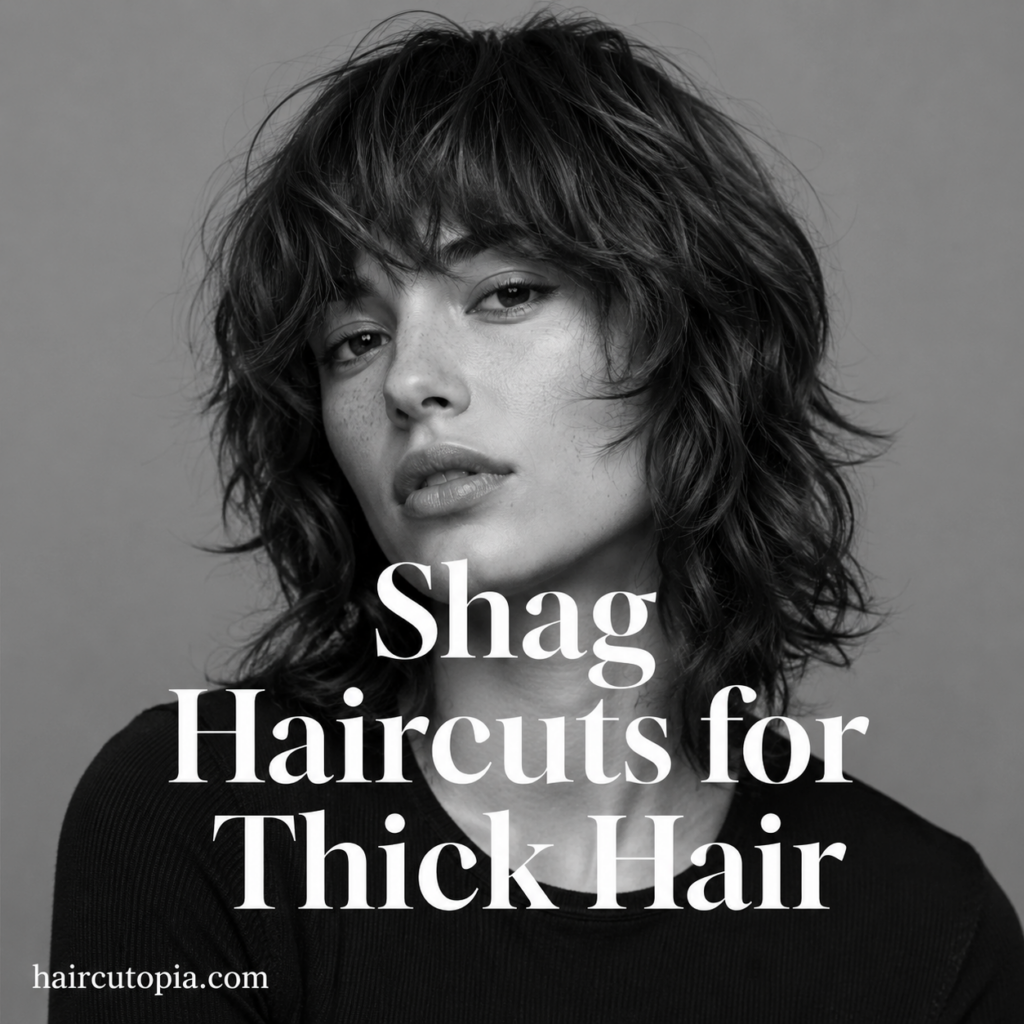
Thick hair can look full, healthy, and naturally luxurious, but anyone who actually has it knows there is another side to the story. Heavy ends, too much bulk, endless drying time, and hair that seems to expand the second humidity hits can make choosing the right haircut surprisingly difficult.
That is exactly why shag haircuts work so well for thick hair.
A shag uses strategic layers, movement, and texture to break up density without making the hair look thin. Instead of forcing thick hair into a perfectly controlled shape, the cut works with its natural volume. The result can feel lighter, look more dimensional, and often require less effort to style.
From short, choppy cuts to long flowing layers, there are plenty of ways to customize a shag. Here are 25 shag haircuts for thick hair that balance volume, texture, and modern style.
Why Shag Haircuts Work So Well for Thick Hair
The traditional shag is known for its layers. Shorter pieces around the crown create lift, while longer layers through the sides and back encourage movement.
For thick hair, those layers serve a practical purpose.
A well-cut shag can:
- Remove excess weight from dense hair
- Break up bulky ends
- Create natural movement
- Give waves and curls more definition
- Reduce the triangular shape thick hair sometimes develops
- Add softness around the face
- Make air-drying more manageable
The key is thoughtful layering. Removing too much hair in the wrong places can create unwanted puffiness, while carefully placed layers help thick hair fall into a more flattering shape.
25 Best Shag Haircuts for Thick Hair
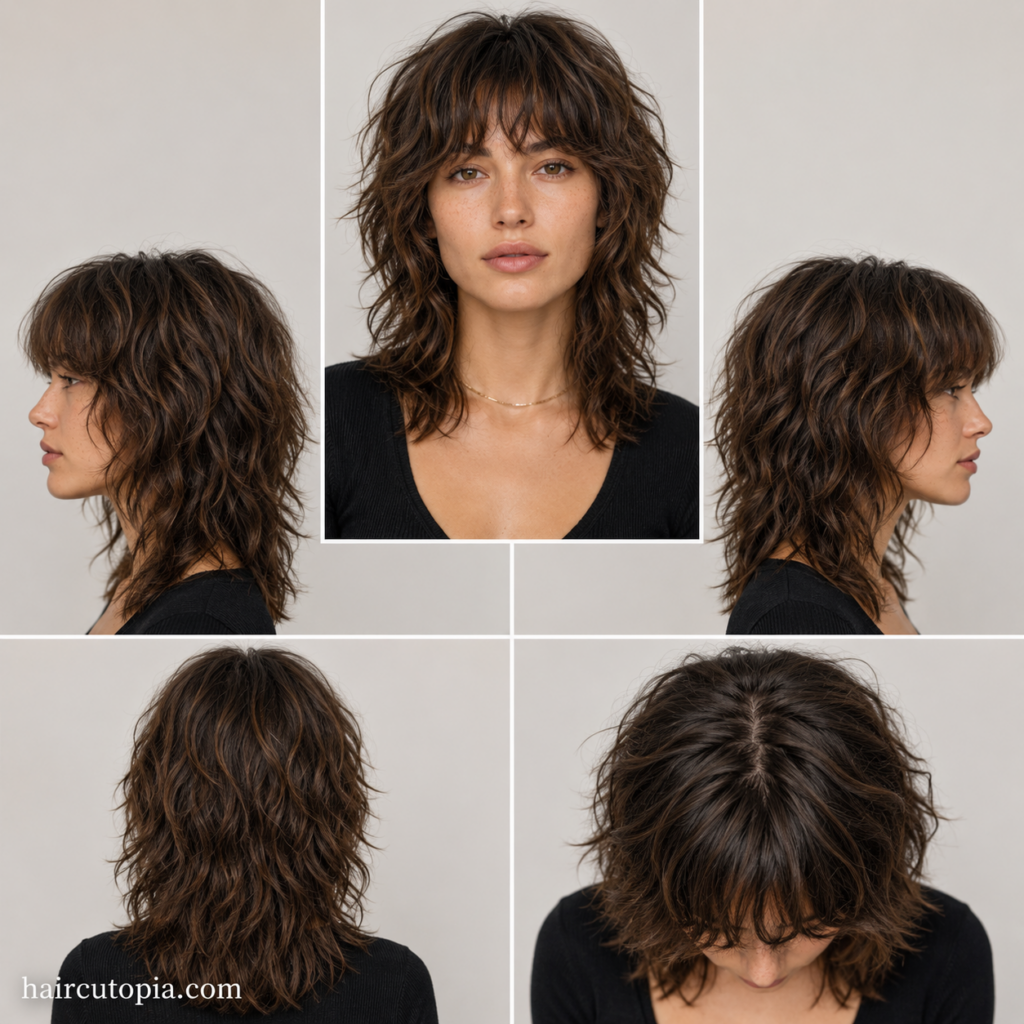
1. Classic Layered Shag for Thick Hair
The classic shag is an easy starting point if you want noticeable layers without committing to an extreme haircut. It typically features shorter crown layers, textured lengths, and plenty of movement through the ends.
On thick hair, the layers help redistribute volume so the style does not feel overly heavy at the bottom.
This cut works especially well on naturally wavy hair. A lightweight styling cream or texture spray can bring out the layers without creating a stiff finish.
2. Long Shag with Face-Framing Layers
If you love your length but want thick hair to feel lighter, a long shag is worth considering.
Long layers remove weight while maintaining the overall length of the haircut. Face-framing pieces can begin around the cheekbones, jawline, or chin depending on the effect you want.
The softer front layers also keep long, thick hair from appearing like one solid curtain of hair.
Ask your stylist to preserve fullness through the perimeter while adding internal movement. This gives you the airy shag effect without sacrificing too much density at the ends.
3. Shoulder-Length Shag for Thick Hair
A shoulder-length shag offers a comfortable middle ground between short and long hair.
The length is easy to manage, while layered sections help prevent thick hair from becoming too wide or bulky. Crown layers add lift, and textured ends create a relaxed finish.
This style is particularly flattering when worn slightly tousled. You do not need every strand perfectly placed. In fact, a little separation between the layers makes the haircut look more intentional.
4. Shag Haircut with Curtain Bangs
Curtain bangs and shag layers naturally complement each other.
The bangs typically part near the center and sweep away from the face, gradually blending into the surrounding layers. On thick hair, this creates softness through the front without adding the heaviness of a dense, blunt fringe.
Longer curtain bangs are also relatively versatile. You can wear them parted, swept to one side, or blended into a ponytail on casual days.
For a cohesive shape, ask your stylist to connect the bangs into the cheekbone and jaw-length layers.
5. Choppy Shag for Thick Hair
A choppy shag creates stronger separation between layers.
Instead of soft, invisible layering, this haircut embraces obvious texture. The ends may look slightly piecey, uneven, and intentionally undone.
Thick hair gives this style enough density to support dramatic layers without looking sparse. However, the exact amount of texturizing matters.
If your hair is prone to frizz, ask for controlled choppy layers rather than excessive razor cutting. You want movement, not hundreds of tiny flyaway ends.
6. Wavy Shag Haircut
Natural waves can make a shag look almost effortless.
The layers give individual wave patterns more room to form, which can reduce the stretched-out appearance that sometimes happens when thick hair becomes too heavy.
A wavy shag usually looks best with minimal styling. Apply a curl cream or lightweight mousse to damp hair, gently scrunch the lengths, and allow the hair to air-dry or diffuse.
Once dry, avoid brushing through the waves. Use your fingers to separate sections and adjust the shape.
7. Curly Shag for Thick Hair
Thick curly hair can benefit enormously from the right layered shape.
Without layers, dense curls may become heavy at the crown and overly full toward the ends. A curly shag introduces shorter sections throughout the haircut, allowing curls to spring upward more naturally.
The result is often a rounder, more balanced silhouette.
Because curl patterns shrink differently, choose a stylist who understands curly hair. The layers should be placed according to how your curls naturally sit when dry, not simply how the hair looks when stretched straight.
8. Medium Shag with Wispy Bangs
Wispy bangs create a lighter alternative to thick, full fringe.
This works particularly well for dense hair because the bangs can visually soften the forehead without introducing another heavy section of hair. The finer fringe also contrasts nicely with the fuller layers throughout the haircut.
A medium-length shag keeps the overall style versatile and easy to tie back.
For a softer finish, keep the bangs slightly longer around the outer edges so they blend naturally into the side layers.
9. Short Shag for Thick Hair
Going short does not mean thick hair has to become round or difficult to control.
A short shag uses layering to break up density and create a more deliberate shape. Shorter crown pieces provide height, while tapered or textured ends keep the sides from looking overly wide.
This haircut can be styled smooth, tousled, or slightly messy depending on your mood.
A small amount of styling paste worked through dry ends can help define individual layers.
10. Shaggy Bob for Thick Hair
The shaggy bob combines the structure of a bob with the movement of a shag.
Rather than maintaining a perfectly blunt baseline, the haircut includes textured layers that create a softer, more relaxed outline. This can make a bob much easier to wear on thick hair.
The layers reduce the dense, triangular shape that sometimes develops with traditional chin-length cuts.
Try a slightly longer shaggy bob that falls between the chin and shoulders if your hair tends to expand when cut short.
11. Wolf-Inspired Shag Haircut
The wolf cut takes shag layering in a more dramatic direction.
It usually features substantial volume around the crown, shorter face-framing sections, and longer lengths through the back. The contrast between the layers creates an intentionally bold silhouette.
Thick hair is ideal for this type of haircut because there is enough density to create strong shape.
If you prefer something more wearable, ask for a softened wolf-inspired shag. The stylist can blend the transitions between layers while preserving the recognizable crown volume.
12. Shag with Bottleneck Bangs
Bottleneck bangs are narrower near the forehead and gradually widen toward the cheekbones.
That curved shape fits naturally into a layered shag.
For thick hair, bottleneck bangs can remove visual heaviness around the face while still giving you a noticeable fringe. The longer outer sections also make the bangs easier to grow out.
Style them with a round brush or a gentle bend from a flat iron. Avoid creating too much curl, as a softer sweep usually looks more modern.
13. Textured Shag with Razored Ends
Razor cutting can create an airy, feathered finish on certain thick hair types.
The technique helps soften heavy ends and creates visible separation throughout the layers. Straight or slightly wavy thick hair often responds particularly well to this type of texture.
However, razor cutting is not ideal for everyone.
Very frizz-prone, damaged, or tightly curled hair may require a different layering technique. Talk with your stylist about how your hair behaves before requesting heavily razored ends.
14. Shag Haircut for Thick Straight Hair
Straight thick hair can sometimes appear heavy because the density is clearly visible from roots to ends.
A shag introduces shape and dimension.
Shorter crown layers prevent the top from lying completely flat, while longer pieces create movement through the mid-lengths. Textured ends also help the haircut look less rigid.
For everyday styling, a quick blow-dry with your fingers may be enough. A dry texture spray can add separation if the layers tend to blend together.
15. Soft Shag with Blended Layers
Not every shag needs dramatic, disconnected layers.
A soft shag uses gradual layering to create movement while maintaining a polished appearance. The layers are still present, but the transitions are more subtle.
This is a great choice if you are trying a shag haircut for the first time or work in an environment where you prefer a more understated style.
The cut also grows out gracefully because there are fewer extreme differences between the shortest and longest sections.
16. Shag with Full Bangs
Full bangs create a bold frame around the face.
With thick hair, the fringe naturally has plenty of density. The surrounding shag layers help balance that fullness so the bangs do not feel disconnected from the rest of the haircut.
Consider keeping the bangs lightly textured rather than perfectly blunt. A little movement through the ends can make them easier to style.
Regular bang trims will be important, especially if your hair grows quickly.
17. Modern 70s Shag
The 1970s shag continues to influence modern layered haircuts.
Today’s version often features a softer crown, sweeping bangs, and feathered layers that move away from the face. The shape feels retro without looking like a costume.
Thick hair gives the feathered sections natural fullness.
Use a round brush to direct the front layers away from your face, then loosen everything with your fingers. The goal is movement rather than a perfectly sculpted blowout.
18. Shag with Deep Side Bangs
A deep side fringe can dramatically change the shape of a shag.
The longer bang sweeps across the forehead and blends into the layered sides. This creates asymmetry and can add extra movement around the face.
It is also a practical option if you do not want to maintain short bangs.
Thick hair may need some internal weight removed from the fringe so it falls naturally instead of forming one heavy section.
19. Collarbone-Length Shag
The collarbone is a particularly versatile length for thick hair.
It is long enough to pull into a ponytail but short enough to remove some of the weight associated with longer styles. Add shag layers, and the haircut gains even more movement.
This length works with straight, wavy, and loosely curly textures.
Ask for layers that begin high enough to create shape but leave enough density through the bottom to prevent thin-looking ends.
20. Shag with Chunky Face-Framing Layers
Chunky face-framing layers create a stronger, more noticeable outline around the face.
These sections may begin near the cheekbones and descend in visible steps toward the jaw and shoulders. The rest of the haircut can remain softly layered for balance.
This is a good option if you frequently wear your hair down and want the haircut to have an obvious shape from the front.
A smooth blowout will emphasize the layers, while natural texture creates a more relaxed effect.
21. Messy Shag for Thick Hair
The messy shag is designed to look slightly undone.
Layers are cut to encourage movement in different directions, creating texture without requiring precise styling. Thick hair works beautifully with this approach because natural density gives the haircut plenty of body.
Try applying mousse to damp hair and rough-drying with your fingers.
Once the hair is dry, use a tiny amount of texture paste on selected ends. Avoid applying product everywhere. Random definition helps maintain the effortless appearance.
22. Shag with Rounded Layers
Rounded shag layers create a softer silhouette around the head.
Instead of focusing on extreme crown height, the haircut distributes volume more evenly. This can work particularly well for thick curls and waves.
The rounded shape feels full but controlled.
Your stylist may adjust the layer placement based on your face shape and natural texture. The goal is to encourage volume where it is flattering while reducing bulk in heavier areas.
23. Extra-Long Shag for Thick Hair
You can absolutely wear a shag without giving up extra-long hair.
The secret is using layers to remove internal weight while maintaining the longest perimeter. Shorter sections around the face and crown create movement, while the back remains dramatically long.
This haircut can make waist-length or mid-back hair feel noticeably lighter.
Because very long thick hair can still require substantial styling time, consider asking your stylist about hidden or internal layers in particularly dense sections.
24. Shag with Micro Bangs
Micro bangs bring an edgier feel to a layered shag.
The short fringe creates a strong visual contrast against the textured lengths. Since the bangs expose more of the forehead, they immediately make the haircut feel bold and intentional.
Thick hair can support micro bangs well, but the section should be carefully controlled.
A stylist may choose a narrower bang section to prevent the fringe from becoming too dense.
This is a higher-maintenance option because short bangs quickly show growth.
25. Low-Maintenance Shag for Thick Hair
A low-maintenance shag focuses on working with your natural texture.
The stylist places layers where your hair already wants to bend, wave, or create volume. Bangs may be kept longer, and the overall shape is designed to grow out without constant trims.
This haircut is especially practical if you prefer air-drying.
Bring photos of your hair in its natural state to your appointment, particularly if you normally arrive at the salon with straightened or heat-styled hair. Your stylist needs to understand how the hair behaves on a regular day.
How to Choose the Right Shag for Your Thick Hair
Not every shag works exactly the same way. Your natural texture, length, and styling routine should influence the cut you choose.
Consider Your Natural Texture
Straight thick hair often benefits from visible texturizing and crown layers. Without enough movement, the layers may blend together and look heavy.
Wavy hair usually works beautifully with medium and long shags because the layers encourage natural bends.
Curly hair requires more careful layer placement. Removing weight can improve curl definition, but excessively short layers may create more volume than you want.
Think About How Much Volume You Want
Some shag haircuts intentionally create dramatic crown volume.
If you already feel like your thick hair is too big, a heavily layered wolf cut may not be the best choice. A softer shag with blended layers can remove weight without creating extreme height.
Be specific with your stylist.
Instead of simply saying, “I want less volume,” explain where the hair feels too bulky. You may want fullness at the crown but less width around the sides, for example.
Decide Whether You Want Bangs
Bangs are a signature feature of many shag haircuts, but they are not mandatory.
Popular options include:
- Curtain bangs
- Wispy bangs
- Bottleneck bangs
- Full textured bangs
- Side-swept bangs
- Micro bangs
If you prefer low-maintenance hair, longer curtain or bottleneck bangs are usually easier to manage. They blend into the haircut as they grow.
Be Realistic About Styling
Some shags truly are wash-and-wear. Others look effortless because someone spent 30 minutes creating carefully placed bends with a styling tool.
Think about your actual routine.
If you rarely heat style, choose a haircut designed around your natural texture. If you enjoy blowouts and styling, you can experiment with more dramatic layers that become especially visible when shaped.
What to Ask Your Stylist for
Communication is especially important when cutting thick hair.
Bring several reference photos that show similar hair density and texture to your own. A shag on fine, straight hair will behave very differently from the same haircut on dense waves.
You can also discuss:
- Where your hair feels the heaviest
- Whether your hair expands in humidity
- How often you heat style
- Whether you normally air-dry
- How much length you are comfortable losing
- Whether you want visible or blended layers
- How frequently you are willing to get trims
Try to describe the result you want rather than focusing only on technical haircut terms.
For example, saying, “I want my hair to feel lighter through the sides, but I still want the ends to look full,” gives your stylist useful information.
How to Style a Shag Haircut on Thick Hair
One of the best things about a shag is that it does not need to look perfectly polished.
The haircut is designed around texture and movement.
For Straight Hair
Apply a lightweight volumizing product near the roots and a smoothing cream through the ends.
Rough-dry most of the hair, then use a round brush on the face-framing layers. Direct those sections away from the face to highlight the shape.
Finish with a dry texture spray if you want more separation.
For Wavy Hair
Apply a lightweight curl cream or mousse to damp hair.
Scrunch the hair gently, then air-dry or use a diffuser. Avoid touching the hair excessively while it dries because this can encourage frizz.
Once completely dry, shake the roots with your fingertips.
For Curly Hair
Work curl cream or gel through very wet hair.
Style the curls in their natural direction, paying particular attention to shorter crown and face-framing layers. Diffuse on low heat or allow the hair to air-dry.
When the hair is fully dry, gently separate any sections that have clumped together too heavily.
For a Messy, Textured Finish
Start with dry hair.
Apply texture spray through the mid-lengths and ends, lifting sections as you work. Use your fingers to twist a few random pieces.
You can also add loose bends with a curling iron, alternating the direction of each section.
The important part is not curling every strand. Too much uniformity can hide the shag’s natural texture.
Best Products for Thick Shag Haircuts
Thick hair often needs moisture and control, but heavy products can flatten the movement created by shag layers.
Consider keeping your styling routine relatively simple.
Useful products may include:
- Lightweight leave-in conditioner
- Curl cream for waves or curls
- Volumizing mousse
- Heat protectant
- Dry texture spray
- Lightweight smoothing cream
- Flexible-hold hairspray
- Small amounts of styling paste for piecey ends
Apply richer products primarily through the mid-lengths and ends.
If you place heavy oils or creams near the crown, the shorter shag layers may lose their lift.
How Often Should You Trim a Shag?
Most shag haircuts benefit from a trim every 8 to 12 weeks.
Shorter, highly structured shags may need attention sooner. Long, blended shags can often go longer between appointments.
Bangs are a different story.
Short or full bangs may require trimming every three to six weeks, while curtain bangs can usually grow longer without immediately losing their shape.
Watch how your hair begins to behave.
If the crown starts falling flat, the ends feel heavy again, or the face-framing sections no longer sit correctly, your layers may need reshaping.
Are Shag Haircuts High Maintenance on Thick Hair?
They do not have to be.
In many cases, a shag actually makes thick hair easier to manage because the haircut removes unnecessary weight. Hair may dry faster, natural texture can become more visible, and the overall shape requires less manipulation.
The maintenance level depends largely on the specific cut.
A shag with micro bangs and dramatic short layers will require more regular salon visits. A long shag with curtain bangs and blended layers is generally easier to grow out.
Your styling expectations matter too. A naturally tousled shag is relatively forgiving. A perfectly smooth, feathered finish will take more effort.
Can a Shag Make Thick Hair Look Frizzy?
A poorly planned haircut can emphasize frizz, but the shag itself is not automatically the problem.
Excessive thinning, over-texturizing, or creating too many short pieces may cause frizz-prone hair to expand.
If frizz is a major concern, tell your stylist before the haircut begins.
You may benefit from:
- Longer layers
- Less aggressive texturizing
- Scissor-cut ends instead of heavy razor work
- More weight left around the perimeter
- Moisture-focused styling products
Your haircut should be adapted to your hair’s natural behavior.
Is a Shag Good for Very Thick Hair?
Yes. In fact, very thick hair is one of the best candidates for a shag.
The natural density provides enough hair to create multiple layers while maintaining fullness. Strategic weight removal can also make extremely thick hair feel significantly more comfortable.
The biggest mistake is removing weight randomly.
A stylist experienced with dense hair will consider where the volume sits and how each layer affects the overall silhouette.
Final Thoughts on Shag Haircuts for Thick Hair
Shag haircuts and thick hair are a natural match when the layers are placed thoughtfully.
The right cut can remove uncomfortable bulk, bring out waves or curls, and give heavy hair a much more defined shape. You can keep things soft with long blended layers or embrace a dramatic look with choppy texture, bold bangs, and extra crown volume.
The best shag is not necessarily the trendiest version. It is the one designed around your hair density, natural texture, and everyday styling routine.
Bring realistic inspiration photos to your stylist, explain where your hair feels heaviest, and be clear about how much maintenance you actually want. With the right approach, a shag can make thick hair feel lighter without losing the full, healthy appearance that makes it so beautiful.