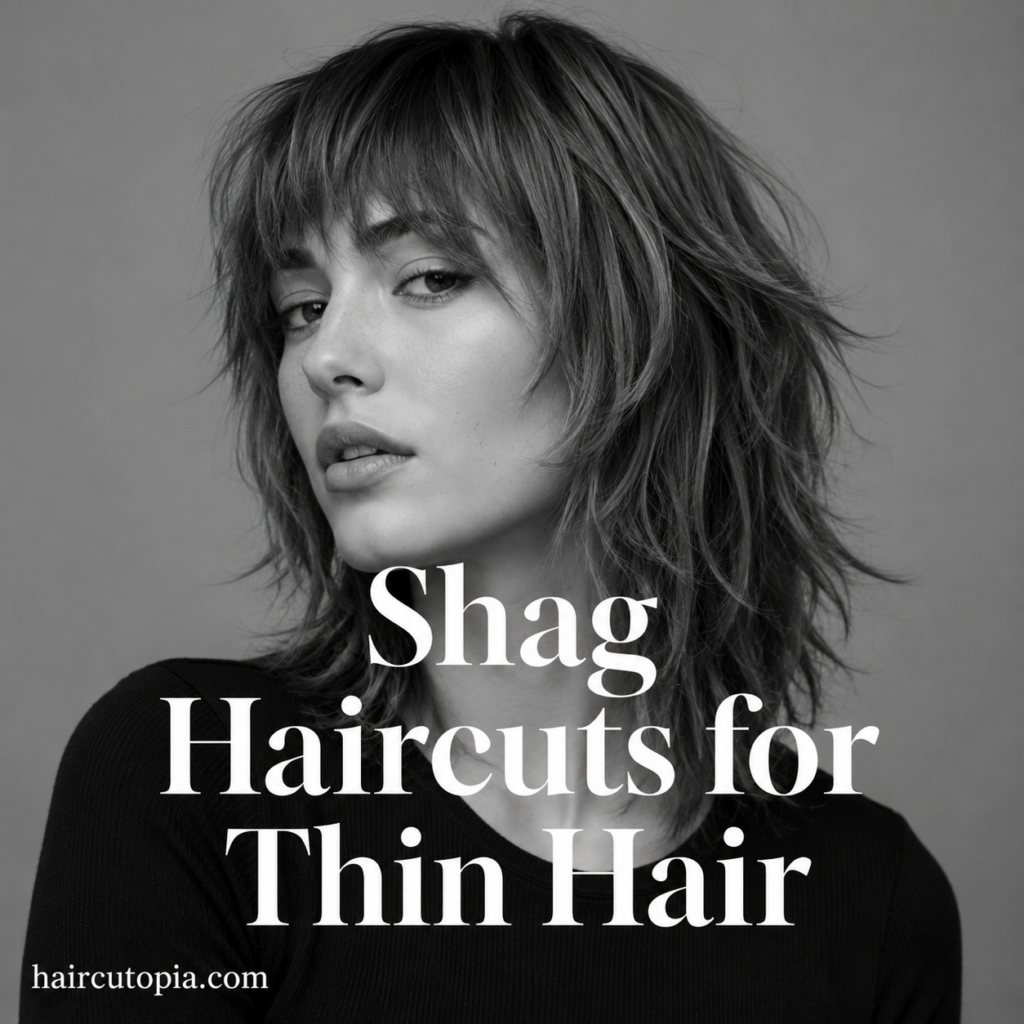
Thin hair can be frustrating to style. You create volume in the morning, check the mirror a few hours later, and somehow everything has fallen flat again. Heavy ends can make the roots look even less full, while the wrong layers may leave the hair feeling sparse.
A shag haircut can completely change how thin hair sits.
With shorter layers around the crown, face-framing pieces, and textured ends, a shag creates movement in areas where thin hair often looks flat. The goal is not to remove large amounts of hair. Instead, the cut uses strategic layering to make the hair you have look more dimensional and lively.
Shags are also surprisingly versatile. You can keep the layers soft and blended, add curtain bangs, embrace a messy texture, or choose a shorter cut with plenty of crown volume.
If you are looking for a haircut that gives thin hair more shape without requiring a complicated styling routine, these shag haircut ideas are a great place to start.
Why Shag Haircuts Work for Thin Hair
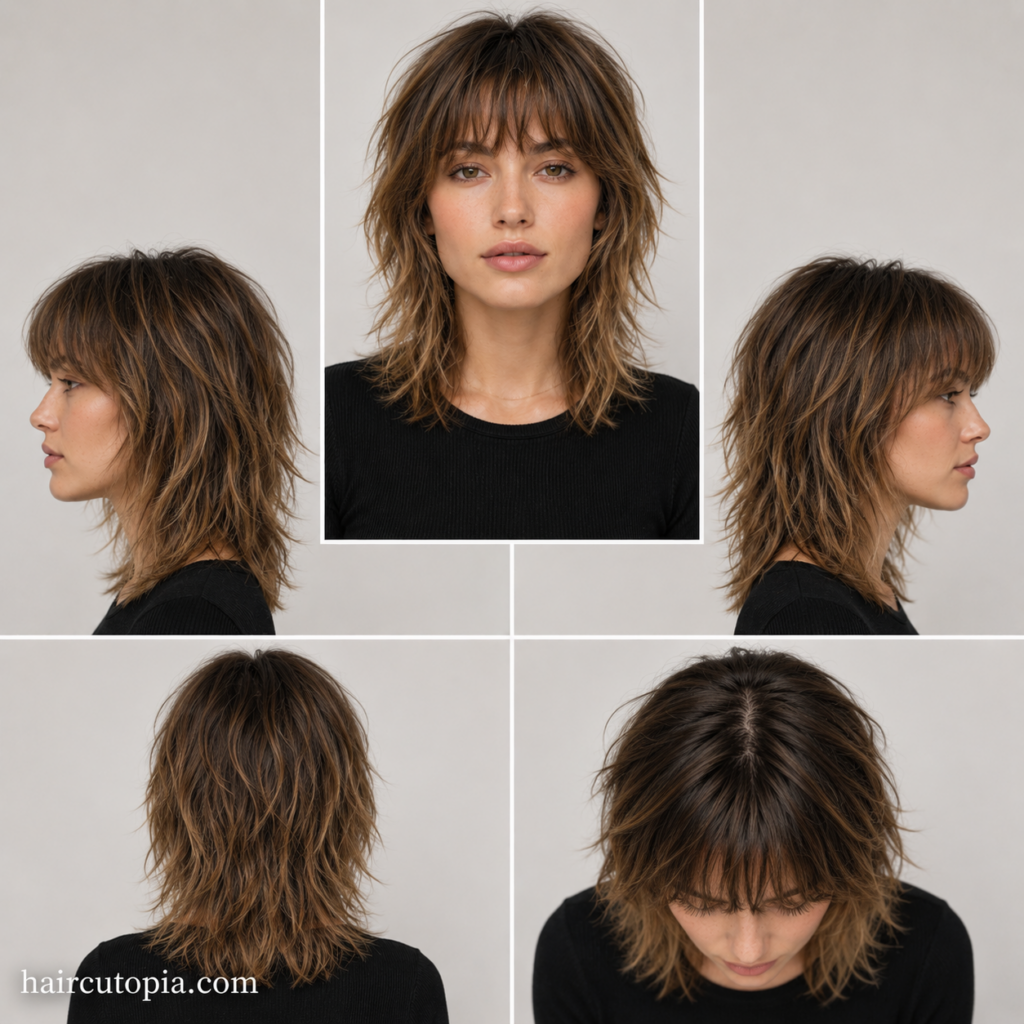
Shag haircuts are built around layers, but that does not mean every section of hair needs to be heavily thinned.
For thin hair, the placement of those layers matters more than the number of layers.
Shorter pieces near the crown can create lift and prevent the top of the hair from looking flat. Face-framing sections add movement around the cheeks and jaw, while lightly textured ends keep the haircut from appearing heavy.
A well-designed shag can help thin hair look:
- Fuller around the crown
- More textured through the lengths
- Less flat at the roots
- Softer around the face
- More dimensional when styled
- Naturally tousled instead of limp
The perimeter is especially important. Leaving enough density through the ends helps maintain the appearance of fullness.
This is why a shag for thin hair should usually be customized differently from a shag designed for extremely thick hair.
25 Best Shag Haircuts for Thin Hair
1. Soft Layered Shag for Thin Hair
A soft shag is one of the easiest ways to introduce layers without making thin hair feel overly textured.
The layers are gently blended rather than dramatically disconnected. Shorter pieces around the crown create subtle lift, while longer sections maintain fullness through the bottom.
This haircut works especially well if you are nervous about losing density.
Ask your stylist for soft internal movement and light face-framing layers. The goal is to create shape without removing too much weight from the perimeter.
2. Short Shag with Crown Volume
Short hair naturally weighs less, which can make it easier to create volume.
Add shag layers and the effect becomes even more noticeable.
A short shag typically features cropped crown layers with slightly longer pieces around the sides and back. The shorter sections lift more easily and can make the top of the hair appear fuller.
Use a lightweight volumizing mousse at the roots before blow-drying.
You can also flip your part occasionally to create instant lift.
3. Shag Haircut with Curtain Bangs
Curtain bangs are a natural match for a shag.
The bangs part near the center and gradually blend into the surrounding layers. This creates movement around the face without requiring a heavy section of hair for a full fringe.
For thin hair, keep curtain bangs relatively light.
A stylist can create the shape using a narrow section near the hairline, preserving more hair through the sides and back.
Longer curtain bangs are also easy to style with a round brush or a quick bend from a flat iron.
4. Shoulder-Length Shag for Thin Hair
Shoulder-length hair can sometimes fall flat when the ends become too heavy.
A shag introduces layers that help break up that weight.
The most effective versions maintain a relatively full baseline while adding shorter sections through the crown and front.
This creates the illusion of more movement without sacrificing the density of the ends.
A shoulder-length shag is also versatile enough for ponytails, half-up styles, and loose waves.
5. Wispy Shag with Light Bangs
Wispy bangs can make thin hair look intentionally airy.
Instead of trying to create thick, dense fringe, this haircut embraces lighter pieces across the forehead. The bangs blend into textured layers around the temples and cheekbones.
The overall result feels soft and relaxed.
Avoid cutting the bangs too far back into the crown. Taking an overly large section can reduce fullness throughout the rest of the haircut.
6. Wavy Shag for Thin Hair
Natural waves can make thin hair appear fuller because the bends create space between individual strands.
Shag layers encourage those waves to move more freely.
Without the weight of one-length hair, shorter sections may develop more noticeable texture. Even a subtle wave pattern can become more visible after layering.
Apply a lightweight mousse or wave spray to damp hair and scrunch gently.
Allow the hair to air-dry or use a diffuser on low heat.
7. Chin-Length Shaggy Bob
A chin-length shaggy bob combines a compact shape with textured layers.
Because the hair is shorter, the ends are less likely to become weighed down. Light crown layers can create additional lift.
This haircut works particularly well for straight or slightly wavy thin hair.
Keep the perimeter fairly strong.
Too much texturizing around the bottom can make the haircut appear sparse, so the shag effect should primarily come from strategic layering and styling.
8. Modern 70s Shag for Thin Hair
The modern 70s shag features sweeping bangs, crown volume, and feathered layers.
For thin hair, the style can be softened to preserve density.
Instead of creating dozens of heavily textured sections, the stylist can focus on a few carefully placed layers around the crown and face.
Blow-dry the front sections away from your face using a round brush.
A little movement around the cheekbones immediately makes the haircut look more dimensional.
9. Shag with Bottleneck Bangs
Bottleneck bangs begin narrower near the forehead and widen as they blend toward the cheekbones.
The curved shape creates a natural transition into shag layers.
This type of fringe works well for thin hair because it does not require a massive section of hair.
The longer outer pieces also create visible movement around the face.
Style the bangs with a gentle bend rather than a tight curl for a softer finish.
10. Messy Shag for Thin Hair
A slightly messy texture can make thin hair look fuller than a perfectly smooth finish.
The reason is simple. Separation and movement create visual dimension.
A messy shag uses light layers that can be styled in different directions. Some pieces bend inward, others move away from the face, and the crown remains slightly tousled.
Apply dry texture spray to the roots and mid-lengths.
Use your fingers to lift and separate sections instead of brushing everything into place.
11. Long Shag for Thin Hair
Long thin hair requires careful layering.
If too many layers are added, the ends may begin to look sparse. However, a thoughtfully designed long shag can create movement while maintaining length.
Ask for face-framing sections and a limited number of longer layers.
The shortest crown pieces should still have enough length to blend naturally into the haircut.
Keeping the bottom perimeter relatively full will help the hair appear denser.
12. Shag with Side-Swept Bangs
Side-swept bangs create movement across the forehead and can help disguise a flat hairline.
The longer fringe blends into the side layers, creating a soft diagonal shape.
This is a good option if you want bangs without committing to a full fringe.
Try changing the direction of your part when blow-drying.
Drying the bangs in the opposite direction before sweeping them into place can create extra root lift.
13. Textured Pixie Shag
A pixie shag combines short hair with noticeable texture.
The crown is typically left slightly longer, allowing the hair to move in different directions. Shorter sections around the sides help emphasize the volume on top.
Thin hair often responds well to this shape because there is less length pulling the roots downward.
A small amount of styling paste can define individual pieces.
Use very little product at first. Heavy waxes can quickly flatten thin hair.
14. Collarbone-Length Shag
Collarbone-length hair provides enough length for movement without the weight of very long hair.
This makes it a practical choice for thin hair.
Add light crown layers and face-framing sections to create a relaxed shag shape. The bottom should remain relatively full.
This haircut works particularly well with loose waves.
Alternate the direction of each bend when using a curling iron to prevent the hair from forming one uniform pattern.
15. Shag with Micro Bangs
Micro bangs create a bold focal point at the front of the haircut.
Because the fringe is extremely short, it can be created from a relatively small section of hair.
This helps preserve density throughout the rest of the haircut.
The combination of short bangs and textured layers gives thin hair a deliberately edgy appearance.
Keep in mind that micro bangs require frequent trims to maintain their shape.
16. Curly Shag for Thin Hair
Thin curly hair can sometimes become flat at the crown while maintaining volume through the ends.
Shag layers can help redistribute that shape.
Shorter crown sections allow curls to spring upward, while face-framing pieces create definition around the cheeks.
The exact placement of layers should follow your natural curl pattern.
A stylist experienced with curls can help avoid cutting sections that shrink much shorter than expected.
17. Shag with Flipped-Out Ends
Flipped ends create visible movement and can make thin hair look more dynamic.
The shag layers provide multiple lengths that can be styled outward.
Use a round brush or flat iron to gently turn selected sections away from the face.
You do not need to flip every layer.
A few strategically styled pieces around the cheekbones and shoulders are often enough to emphasize the haircut.
18. Soft Wolf-Inspired Shag
A traditional wolf cut can involve dramatic layering, which may be too aggressive for some thin hair types.
A softened version offers a more wearable alternative.
The crown remains slightly shorter and fuller, while the lower layers transition gradually into the length.
This creates the recognizable wolf-inspired silhouette without leaving the ends looking overly thin.
Ask for blended layers rather than extreme disconnection.
19. Shag with Deep Side Part
Changing your part can instantly affect how full your hair appears.
A deep side part pushes more hair toward one side, creating noticeable root lift.
Combine that with shag layers and the haircut gains even more movement.
This styling approach works especially well for short and medium-length shags.
If your hair naturally falls into the same part every day, switch sides while the hair is damp and blow-dry the roots in the new direction.
20. Rounded Shag for Thin Hair
A rounded shag creates a soft, curved silhouette around the head.
Layers are placed to encourage fullness around the crown and sides while maintaining enough density through the ends.
This shape works beautifully with waves and loose curls.
The rounded outline makes the hair appear intentionally full rather than simply layered.
Ask your stylist to consider how your hair naturally falls when designing the shape.
21. Shaggy Lob for Thin Hair
The long bob, or lob, is already a popular choice for thin hair.
Adding light shag layers gives the classic shape more personality.
Keep the overall length between the shoulders and collarbone. Subtle crown layers create lift, while face-framing pieces add movement.
The strong baseline of the lob helps preserve the appearance of thickness.
This is an excellent option if you want a modern shag without dramatic layering.
22. Shag with Piecey Bangs
Piecey bangs use small separated sections instead of one solid fringe.
This creates texture while requiring less hair.
The bangs can be styled slightly messy, allowing small spaces between individual pieces.
Continue the texture through the surrounding shag layers for a cohesive look.
A tiny amount of lightweight styling paste can help separate the bangs.
Rub the product between your fingertips before touching the hair.
23. Air-Dried Shag for Thin Hair
If you prefer minimal styling, choose a shag designed around your natural texture.
The stylist can place layers where your hair naturally bends or develops movement.
This allows the haircut to create shape even when air-dried.
Apply a lightweight leave-in product to damp hair and gently scrunch the lengths.
Avoid repeatedly touching the hair while it dries.
Once dry, lift the roots with your fingertips to loosen the shape.
24. Shag with Face-Framing Layers
Face-framing layers can dramatically change thin hair without altering the entire haircut.
Shorter pieces around the cheekbones and jaw create visible movement from the front.
The back and perimeter can remain relatively full.
This is a good introduction to shag styling if you are hesitant about adding extensive layers.
Ask your stylist to gradually connect the front sections into the rest of the haircut.
25. Low-Maintenance Shag for Thin Hair
A low-maintenance shag focuses on soft layers and natural movement.
The crown layers are long enough to grow out gracefully, while the face-framing pieces can be tucked behind the ears or blended into the rest of the hair.
Long curtain bangs are often a practical addition.
The haircut should still look intentional even when you skip heat styling.
If you normally air-dry your hair, tell your stylist before the haircut begins. The shape should be designed around how your hair behaves in everyday life.
How to Choose the Right Shag for Thin Hair
The best shag haircut depends on your natural texture, current length, and the areas where your hair tends to look flat.
Consider Your Hair Density
Thin hair and fine hair are not exactly the same.
Fine hair refers to the diameter of individual strands. Thin hair refers to the amount of hair or overall density.
You can have fine strands but a large amount of hair. You can also have thicker individual strands with lower density.
Understanding your hair type helps your stylist decide how much layering is appropriate.
Lower-density hair generally needs more weight preserved through the perimeter.
Pay Attention to the Crown
The crown is one of the most important areas when creating a shag for thin hair.
Shorter layers can add lift, but cutting them too short may expose more scalp or create pieces that are difficult to blend.
The ideal length depends on your density and natural growth pattern.
Cowlicks should also be considered before adding very short crown layers.
Keep Enough Fullness at the Ends
One of the biggest concerns with layering thin hair is creating see-through ends.
A strong perimeter can help prevent this.
Your stylist may add movement through the upper and middle sections while leaving more density around the bottom.
This creates the visual texture of a shag without sacrificing fullness.
Choose Bangs Carefully
Bangs can look beautiful with thin hair, but the section used to create them matters.
Taking too much hair from the crown may reduce density elsewhere.
Lighter options include:
- Wispy bangs
- Curtain bangs
- Bottleneck bangs
- Piecey bangs
- Side-swept bangs
Full, heavy bangs may still work depending on your density, but they require more hair.
What to Ask Your Stylist for
Bring photos of shag haircuts on people with hair similar to yours.
Pay attention to density and texture, not just the haircut itself.
You can tell your stylist:
- Where your hair usually looks flat
- Whether your scalp becomes visible in certain areas
- How you normally part your hair
- Whether you air-dry or blow-dry
- How much daily styling you are willing to do
- Whether you want noticeable or subtle layers
- How important maintaining length is to you
Be clear that you want to preserve fullness.
A useful request might be, “I want movement and crown volume, but I don’t want the ends heavily thinned.”
That gives your stylist a much clearer direction than simply asking for a shag.
How to Style a Shag Haircut for More Volume
The haircut creates the foundation, but styling can emphasize the layers.
Start with Lightweight Products
Heavy products are one of the quickest ways to flatten thin hair.
Choose lightweight formulas whenever possible.
Apply volumizing mousse or root spray near the scalp. Keep smoothing products and oils primarily on the ends.
Blow-Dry the Roots First
Focus on the roots before the lengths.
Lift sections with your fingers or a brush while directing airflow toward the root area.
You can also dry the hair in the opposite direction of your natural part.
Once the roots are mostly dry, flip the hair back into place.
Add Random Bends
Perfect curls are not necessary for a shag.
Use a curling iron or flat iron to create loose bends in selected sections.
Alternate directions and leave some pieces relatively straight.
The variation creates texture and makes the haircut appear fuller.
Use Dry Texture Spray Carefully
Dry texture spray can add separation and grip.
Lift sections of hair and apply the product lightly through the roots and mid-lengths.
Avoid completely saturating the hair.
Too much product can create buildup and eventually weigh the style down.
Best Products for a Shag Haircut on Thin Hair
You do not need a large collection of styling products.
A few lightweight options are usually enough.
Consider using:
- Volumizing mousse
- Root-lifting spray
- Lightweight leave-in conditioner
- Heat protectant
- Dry texture spray
- Flexible-hold hairspray
- Lightweight styling cream
Dry shampoo can also provide temporary root texture, even when your hair is clean.
Apply a small amount near the roots and massage it through with your fingertips.
How Often Should You Trim a Shag for Thin Hair?
Most shag haircuts benefit from reshaping every 8 to 12 weeks.
Short shags may require more frequent trims because crown layers quickly change as they grow.
Longer, blended shags are generally more forgiving.
Bangs may need separate maintenance.
Short fringe can require trims every three to six weeks, while curtain bangs can often grow for several months before needing significant reshaping.
If your haircut begins looking flat again, your layers may have grown past the point where they create effective lift.
Can a Shag Make Thin Hair Look Thinner?
Yes, if too much hair is removed.
Heavy razor cutting, excessive thinning, and too many short layers can reduce visible density.
That does not mean thin hair should avoid shag haircuts.
It simply means the cut needs to be customized.
The most flattering shags for thin hair typically combine:
- Strategic crown layers
- Soft face-framing pieces
- A relatively full perimeter
- Limited thinning
- Lightweight styling
The goal is movement, not maximum texture.
Is a Short or Long Shag Better for Thin Hair?
Short and medium-length shags often create the most visible volume because there is less weight pulling the hair downward.
However, long hair can still work.
If you prefer long hair, keep the layering relatively controlled and maintain density through the ends.
Your natural texture also matters.
Wavy or curly thin hair may maintain volume at longer lengths, while very straight hair may appear fuller when cut closer to the shoulders.
Are Shag Haircuts Low Maintenance?
Many shag haircuts are relatively easy to style.
The natural texture of the haircut means every strand does not need to sit perfectly.
A little messiness often improves the look.
However, highly structured shags with short bangs or dramatic crown layers may require more frequent trims.
If low maintenance is your priority, choose longer bangs and softly blended layers.
Final Thoughts on Shag Haircuts for Thin Hair
A shag haircut can give thin hair the movement and shape it often lacks, but the best results come from careful layering.
You do not need aggressive texturizing or dozens of short layers. A few strategically placed sections around the crown and face can create lift while preserving fullness through the ends.
Whether you choose a short shag, a shoulder-length cut, a shaggy lob, or a longer layered style, focus on a shape that works with your natural texture and daily routine.
Tell your stylist where your hair tends to fall flat and be clear that maintaining density is important. With the right cut and a lightweight styling routine, a shag can make thin hair look softer, fuller, and much more dynamic.

Related Posts
 Haircuts for Women with Curly Hair: 25 Flattering Styles for Every Curl Type
 Short Haircuts for Curly Hair: 25 Stylish Ideas, Tips, and Maintenance Guide
 Haircuts for Women with Thin Hair: 25 Flattering Styles That Add Volume and Confidence
 Short Haircuts for Thin Hair: 25 Flattering Styles That Add Volume and Confidence