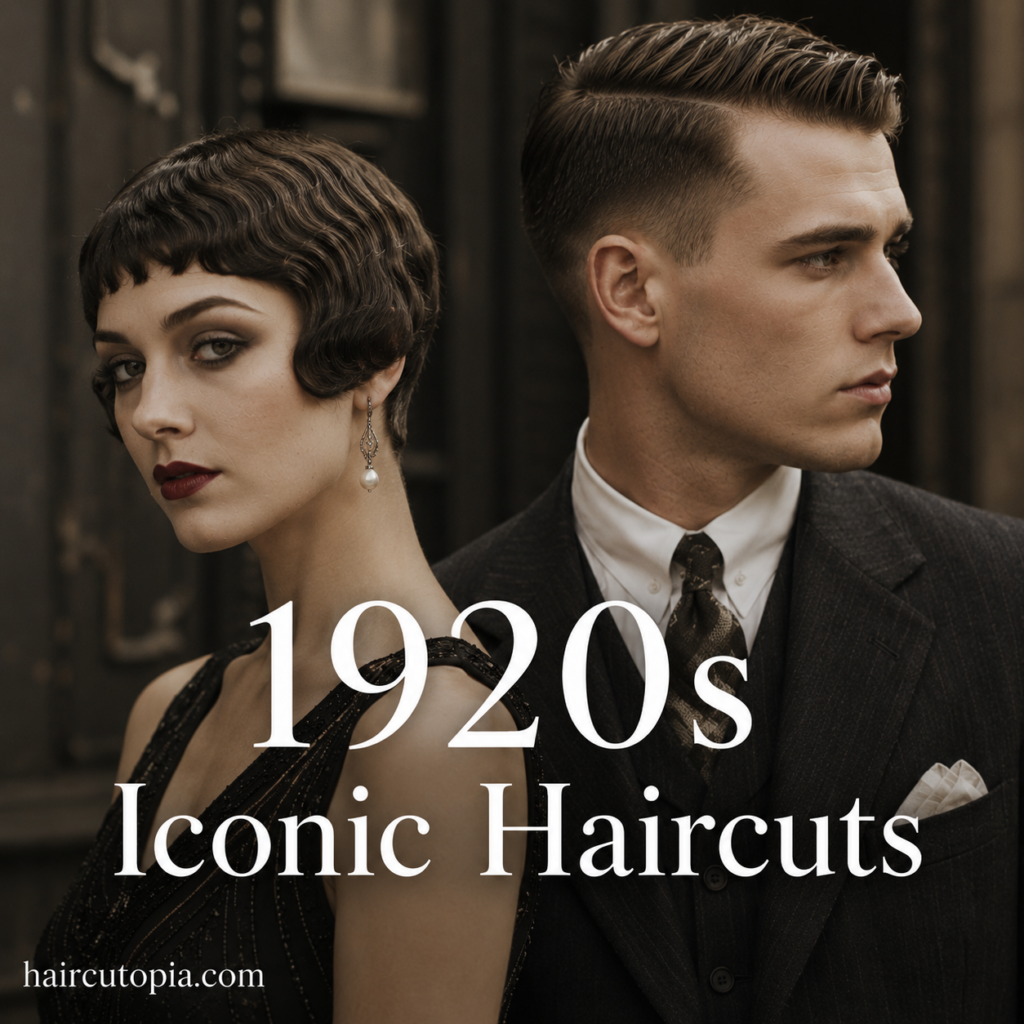
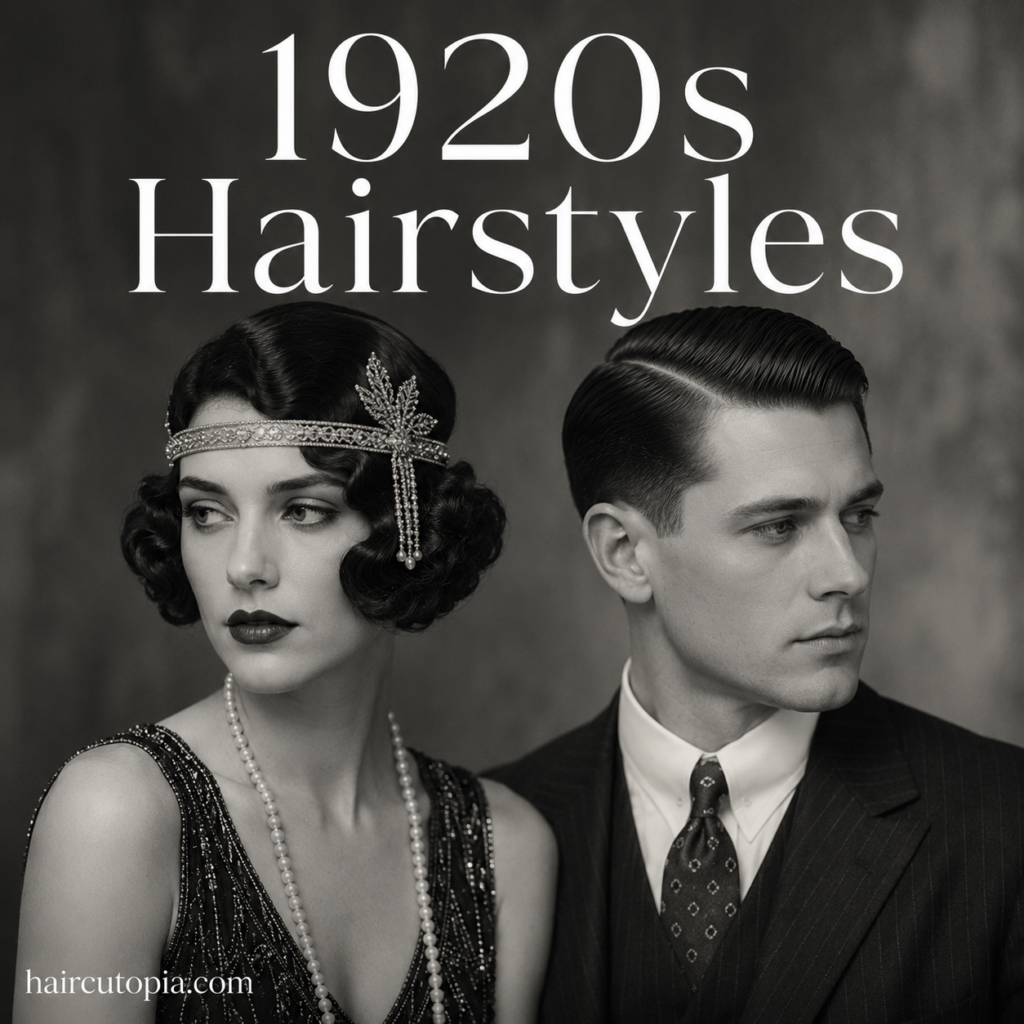
Few decades have produced hairstyles as instantly recognizable as the 1920s.
Think sculpted finger waves, glossy side parts, softly curled bobs, decorative headbands, and carefully arranged evening styles. The hair of the Roaring Twenties had a polished look that could be glamorous, playful, dramatic, or surprisingly simple.
It was also a decade of change.
Short hair became increasingly fashionable for women, but long hair certainly didn’t disappear. Women who kept their length found clever ways to pin, roll, wave, and tuck it into fashionable shapes. Men’s hairstyles remained comparatively conservative, favoring clean parts, slick finishes, and neatly controlled hair.
More than a century later, many of these looks still influence hairstyling. Finger waves appear on red carpets, vintage-inspired updos remain popular for formal events, and classic men’s side parts barely look dated at all.
From flapper-inspired waves to elegant long-hair styles, here’s a closer look at the hairstyles that defined the 1920s.
What Were Hairstyles Like in the 1920s?
1920s hairstyles were generally polished and deliberate.
For women, the silhouette often stayed close to the head. Even when curls and waves were involved, they were usually controlled rather than excessively voluminous.
Short hairstyles became one of the decade’s biggest fashion statements. Bobbed hair worked especially well with cloche hats, headbands, and the streamlined clothing styles becoming fashionable at the time.
Long hair was still widely worn, however. Instead of leaving it loose, women frequently pinned or rolled the length into compact styles around the nape.
Popular elements of women’s 1920s hairstyles included:
- Finger waves
- Marcel waves
- Deep side parts
- Sculpted curls
- Smooth bobs
- Rolled and pinned long hair
- Low buns
- Faux bobs
- Decorative headbands
- Jeweled hair accessories
Men generally wore shorter hair with considerably less variation in length.
A clean side part, slicked-back top, and neatly groomed sides created the polished appearance associated with men’s fashion during the decade.
Finger Waves
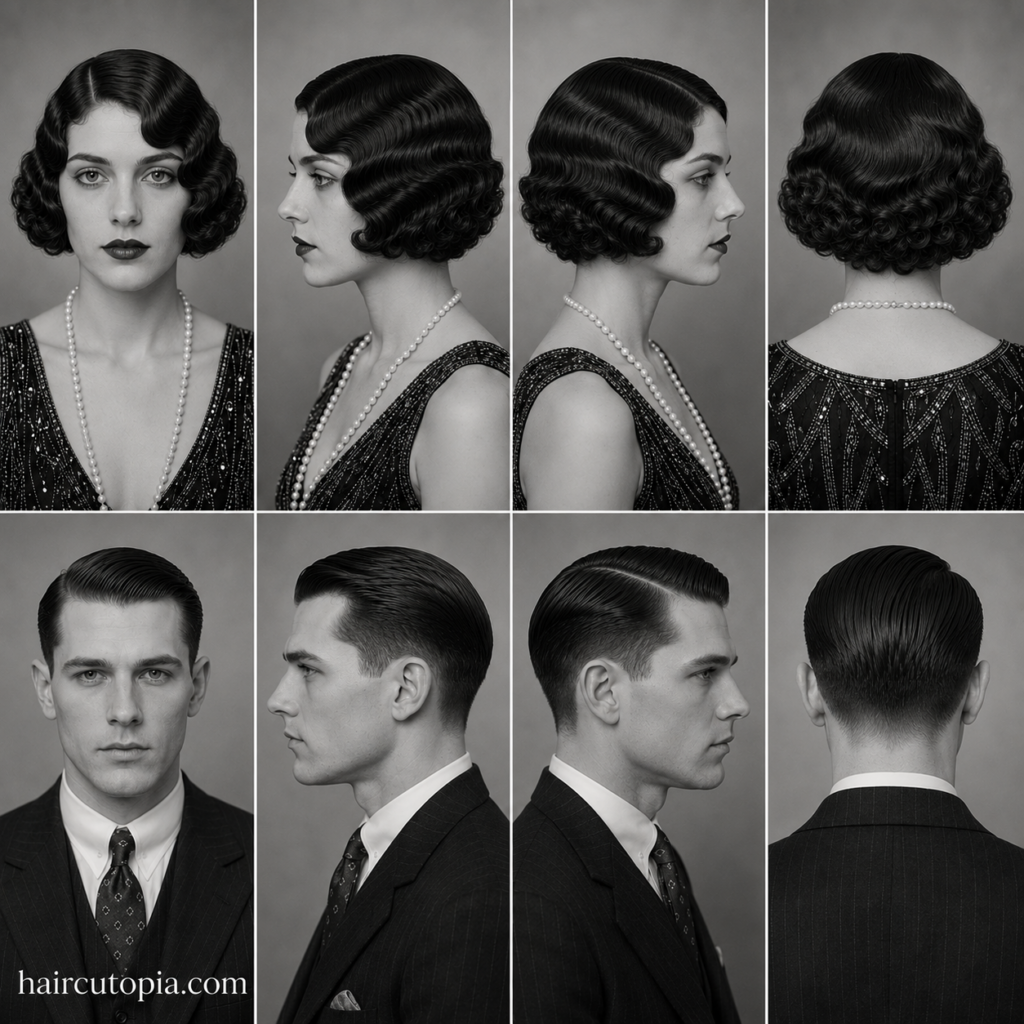
Finger waves are perhaps the most recognizable styling technique associated with 1920s hair.
Instead of creating individual curls, the hair is shaped into a continuous series of S-shaped waves. The finished pattern sits close to the scalp and creates a smooth, sculpted appearance.
Traditional finger waves were formed on damp hair using the fingers and a comb.
The stylist would carefully push sections of hair in alternating directions, creating ridges between each curve. Once the hair dried, the pattern remained in place.
Finger waves were particularly effective on short hair because the entire hairstyle could be shaped around the head.
Why Finger Waves Became So Iconic
Finger waves complemented the shorter haircuts gaining popularity during the decade.
They could make a simple short hairstyle look elegant without requiring long hair or elaborate pinned arrangements.
The technique also photographed beautifully.
Strong wave patterns created visible texture even in black-and-white photography, helping the style become closely associated with actresses, performers, and fashionable women of the period.
Today, finger waves remain one of the easiest ways to make a hairstyle look distinctly 1920s.
Marcel Waves
Marcel waves offered another way to create the smooth, repeating wave patterns fashionable during the era.
Unlike finger waves, Marcel waves were traditionally formed using heated waving irons.
The technique actually predates the 1920s, but it remained highly influential as waved hairstyles became increasingly fashionable.
Marcel waves typically appear slightly fuller and more rounded than tightly sculpted finger waves. They could be used on both short and longer hair.
The resulting hairstyle had an elegant rhythm, with waves flowing consistently from one section to the next.
Modern curling irons and waving tools make similar effects much easier to create today.
Flapper Hairstyles
The flapper became one of the most enduring cultural images of the Roaring Twenties.
Flapper fashion was associated with shorter dresses, dancing, nightlife, cosmetics, changing social attitudes, and increasingly adventurous hairstyles.
There wasn’t one official “flapper hairstyle.”
Instead, several fashionable styles became associated with the look.
A classic flapper-inspired hairstyle might include:
- Short hair or a faux bob
- Finger or Marcel waves
- A deep side part
- Curled sections around the cheeks
- A decorative headband
- A feather or jeweled accessory
- A smooth, glossy finish
The combination of short hair and a dramatic headpiece is particularly recognizable today.
For a more subtle interpretation, finger waves and a side part can create the same vintage influence without requiring elaborate accessories.
The Waved Bob
The bob may have provided the shape, but waves gave it personality.
A waved bob softened the straight perimeter of short hair and added movement around the cheeks and jawline.
Some versions featured waves across nearly the entire head. Others kept the crown smooth while concentrating curls toward the sides and ends.
This flexibility made the style suitable for both daytime and evening wear.
A waved bob could look youthful and playful with softer curls or sophisticated and glamorous with precisely sculpted waves.
That versatility is one reason the look remains closely associated with the decade.
Sleek Straight Bob Hairstyles
Not every fashionable 1920s hairstyle involved waves.
Straight hair could be worn smooth and close to the head, allowing the shape of the bob itself to become the main feature.
These hairstyles often featured:
- A center or side part
- Straight bangs
- Smooth sides
- Minimal volume
- Blunt or gently curved ends
The result could look strikingly geometric.
When paired with a straight fringe, the hairstyle framed the face with strong lines that contrasted with softer waved styles.
Modern blunt bobs often recreate a similar silhouette, even when they aren’t intentionally styled to look vintage.
1920s Hairstyles With Bangs
Bangs were another important element of short hairstyles during the decade.
Straight fringes worked particularly well with smooth bobs, creating a strong frame around the eyes.
Other hairstyles used shorter or slightly curved bangs.
Women wearing side parts often skipped a traditional fringe entirely. Instead, the front section could sweep across the forehead before blending into waves around the temple.
Popular fringe approaches included:
- Straight full bangs
- Short blunt bangs
- Side-swept front sections
- Waved fringes
- Curved bangs following the forehead
The choice of fringe could dramatically change the overall character of a short hairstyle.
Side-Parted 1920s Hairstyles
A deep side part was one of the easiest ways to create a sophisticated 1920s silhouette.
The asymmetry worked beautifully with waves.
Hair could sweep across the forehead before forming a pronounced curve near the temple, while the opposite side remained relatively close to the head.
The effect drew attention to the eyes and cheekbones.
Side parts weren’t limited to women’s styles either. They became equally important in men’s grooming, where a crisp part helped create a neat, formal appearance.
Center-Parted Hairstyles
Center parts offered a different look.
Rather than emphasizing dramatic asymmetry, the hair was divided evenly and styled toward either side.
On shorter hair, a center part could create a symmetrical bob.
Longer hairstyles sometimes used the same approach before gathering the remaining hair into a bun or roll at the back.
While perhaps less immediately associated with the stereotypical flapper image, center parts were very much part of the broader styling vocabulary of the period.
Spit Curls
Small sculpted curls around the forehead, cheeks, or temples added detail to otherwise smooth hairstyles.
Often called spit curls, these decorative curls were shaped close to the skin.
A single curl could create a delicate accent near the cheek, while several could become a more dramatic design element.
They worked especially well with short hairstyles because there was no long hair competing for attention.
Modern hairstylists still occasionally use similar details for vintage-inspired formal looks and editorial styling.
Kiss Curls
Kiss curls were another decorative variation involving small, carefully arranged curls near the face.
The terminology surrounding these small facial curls can overlap, but the basic idea was similar: a small section of hair was shaped into a deliberate curl against the forehead or cheek.
These details helped soften sleek hairstyles and could make even very short hair feel elaborate.
They also provided a way to personalize an otherwise simple waved style.
1920s Hairstyles for Long Hair
The popularity of short hair can easily overshadow an important fact: plenty of women kept their hair long throughout the 1920s.
Long hair simply required different styling.
Instead of wearing the full length loose, women could arrange it into buns, rolls, coils, or tucked styles that maintained the decade’s compact silhouette.
The front sections could still be waved, allowing someone with long hair to participate in current fashion without cutting it.
Low Buns
A low bun was a practical option for long hair.
The hair could be parted and smoothed before being gathered toward the nape.
Front sections might remain sleek or be shaped into waves.
Because the bun sat relatively low and close to the head, the finished hairstyle maintained the streamlined appearance popular during the decade.
Rolled Hairstyles
Long hair could also be rolled inward and pinned.
The roll might extend across the back of the head or concentrate around the nape.
From certain angles, carefully rolled hair could appear much shorter than it actually was.
This made rolled hairstyles particularly useful for women who liked the fashionable appearance of shorter hair but didn’t want to commit to cutting their length.
Pinned Curls
Curls could be arranged and pinned close to the head to control long hair.
Rather than allowing the curls to fall freely down the back, pinning them created a compact shape.
Decorative pins or combs could then be added for evening occasions.
The Faux Bob
The faux bob was one of the cleverest ways to participate in the short-hair trend without actually cutting the hair.
Long hair was curled or waved before the ends were tucked underneath and pinned.
The visible sections created the illusion of a bob.
A successful faux bob concealed most of the remaining length while leaving soft curls or waves around the face.
It was particularly effective with naturally wavy or curled styling because the texture helped disguise the tucked sections.
The technique remains useful today for anyone creating a historically inspired look while keeping long hair.
1920s Updos
Updos during the 1920s generally avoided the towering volume associated with some earlier periods.
Instead, hair tended to stay relatively close to the head.
Low buns, rolls, coils, and pinned curls were practical choices.
For evening wear, the front might feature carefully sculpted waves while the remaining length was secured at the back.
Decorative combs, jeweled pins, or headbands could add glamour without dramatically increasing the size of the hairstyle.
This combination of sleek front sections and a compact updo works particularly well for modern vintage-inspired weddings and formal events.
Headband Hairstyles
Few accessories are more strongly associated with modern interpretations of flapper fashion than the decorative headband.
Headbands could sit across the forehead or higher on the head depending on the style.
Some were relatively simple. Others featured elaborate embellishments.
Popular decorative elements included:
- Beading
- Rhinestones
- Feathers
- Metallic details
- Fabric flowers
- Decorative brooches
The accessory could turn a simple waved hairstyle into an evening look almost instantly.
Today, a jeweled headband remains one of the simplest ways to emphasize the 1920s influence of a hairstyle.
Cloche Hat Hairstyles
The cloche hat became a defining fashion accessory of the 1920s.
Its close-fitting bell shape sat low on the head, often reaching toward the eyebrows.
That design worked particularly well with short, compact hairstyles.
A large, voluminous hairstyle would have been difficult to fit underneath. A sleek bob or close-fitting wave pattern, however, complemented the shape perfectly.
Hair might remain visible around the cheeks, ears, or nape while the crown stayed underneath the hat.
Fashion and hairstyling therefore influenced each other throughout the decade.
Evening Hairstyles of the 1920s
Evening hairstyles allowed for more decoration and drama.
Waves could become more pronounced, curls more carefully sculpted, and accessories more elaborate.
A fashionable evening style might combine a deep side part with glossy waves and a jeweled headpiece.
Long-haired women could create a similarly glamorous effect by waving the front sections and pinning the remaining length into a low arrangement.
The goal was elegance rather than excessive volume.
That restrained glamour is one reason 1920s hairstyles remain popular inspiration for formal events today.
Men’s Hairstyles in the 1920s
Men’s hairstyles during the 1920s emphasized neat grooming.
Hair was typically shorter around the sides and back with enough length left on top to create a defined part or combed-back shape.
Styling products helped maintain a smooth finish.
Compared with modern men’s hair, visible texture was usually less important than control and shine.
Classic Side Part
The side part was one of the decade’s signature men’s styles.
A clearly defined part separated the longer top before the hair was combed neatly toward the side and back.
The style could be relatively flat or feature a slight lift through the front.
It remains remarkably wearable today.
Pairing a classic side part with a modern taper creates a hairstyle that references the 1920s without looking overly historical.
Slicked-Back Hair
Men with enough length on top could comb the hair backward.
Pomade or similar grooming products kept the strands controlled and created the glossy finish fashionable at the time.
Unlike some modern slick-back styles, the sides were generally kept neat rather than deliberately disconnected from the top.
The result was polished and formal.
Combed-Back Waves
Men with naturally wavy hair could incorporate that texture into a neatly combed style.
Rather than eliminating the wave entirely, the hair could be directed backward or toward the side while maintaining its natural movement.
This created a softer alternative to extremely straight slicked-back hair.
How 1920s Hair Was Styled
Creating polished hairstyles without modern blow dryers, flat irons, and digital curling tools required different techniques.
Wet styling played an important role.
Hair could be shaped with combs and fingers before being allowed to dry in position. Pins helped secure curls, while heated irons could produce more defined waves.
Styling products also helped control the hair.
Depending on the hairstyle and individual routine, people used products and techniques designed to provide hold, shine, and smoothness.
The finished result was often more structured than the deliberately undone styles popular today.
How to Create a 1920s-Inspired Hairstyle Today
You don’t need historically accurate tools to recreate the appearance.
Modern products and equipment make the process much easier.
For a classic short 1920s-inspired style:
- Create a deep side part.
- Apply styling mousse or gel to damp hair.
- Shape the front into defined S-waves.
- Keep the sides close to the head.
- Curl or tuck the ends depending on the length.
- Allow the style to set completely.
- Finish with light hairspray or shine product.
For long hair, create the same waved front before rolling or pinning the remaining length at the nape.
A decorative headband can make the historical influence more obvious.
How to Make 1920s Hairstyles Look Modern
Historical inspiration doesn’t require recreating every detail.
In fact, reducing some of the formality can make these hairstyles much easier to wear today.
Try combining one vintage element with contemporary styling.
For example:
- Pair finger waves with a modern bob.
- Use a deep side part without heavily sculpting the entire head.
- Create softer Marcel-inspired waves.
- Wear a vintage-style headband with natural texture.
- Combine a classic men’s side part with a modern taper.
- Use a faux bob with looser contemporary curls.
This approach keeps the character of the era while avoiding a costume-like appearance.
1920s Hairstyles vs. 1920s Haircuts
Although the terms are often used interchangeably, there’s a useful distinction.
A haircut describes the underlying shape and length of the hair. A hairstyle describes how that hair is arranged.
The bob, shingle, and Eton crop are examples of cuts associated with the decade.
Finger waves, Marcel waves, slicked-back styling, low buns, faux bobs, and decorative curls describe ways those cuts—or longer hair—could be styled.
Understanding the difference helps explain why photographs from the 1920s show so much variety even among people with similar hair lengths.
Frequently Asked Questions About 1920s Hairstyles
What was the most popular hairstyle in the 1920s?
Short bobbed hair styled with waves became one of the most recognizable looks of the decade. Finger waves, Marcel waves, smooth bobs, and side-parted styles were especially fashionable.
Did women wear long hair in the 1920s?
Yes. Long hair remained common. Women frequently arranged it into low buns, rolls, coils, pinned curls, or faux bobs to achieve the compact silhouette fashionable during the period.
What is a typical flapper hairstyle?
A typical flapper-inspired look features short or faux-bobbed hair with finger waves or Marcel waves. Decorative headbands, feathers, jeweled accessories, and small facial curls can make the style more dramatic.
How did women curl their hair in the 1920s?
Women used several techniques, including wet setting, finger waving, pinning, and heated waving irons. Marcel waving was particularly important for producing consistent sculpted waves.
Did 1920s hairstyles have bangs?
Yes. Some short hairstyles featured straight or short bangs, while others used side parts and waved front sections instead of a conventional fringe.
What hairstyles did men wear during the 1920s?
Men commonly wore short, neat hairstyles with side parts, slicked-back tops, or carefully combed waves. Styling products helped create the smooth, polished finish associated with the decade.
Can you create a 1920s hairstyle with long hair?
Yes. A faux bob is one of the best options. Long hair can also be waved at the front and arranged into a low bun, roll, or pinned curls at the back.
Are 1920s hairstyles still fashionable?
Elements of them certainly are. Bobs, finger waves, deep side parts, sleek men’s styles, and vintage-inspired waves continue to appear in contemporary hairstyling.
Why 1920s Hairstyles Still Matter
1920s hairstyles remain memorable because they captured a moment when ideas about fashion and personal appearance were changing rapidly.
Short hair gave women new ways to experiment with their appearance. Waves and curls transformed relatively simple cuts into sophisticated styles. Long-haired women adapted those same trends through rolls, buns, and faux bobs.
Men’s grooming from the decade created its own lasting legacy through clean side parts, polished finishes, and neatly controlled shapes.
More than a century later, these ideas haven’t disappeared.
Finger waves still appear at formal events. Vintage-inspired bobs continue to cycle back into fashion. Classic men’s side parts remain a barbershop staple.
The styling tools may have changed, but the appeal hasn’t.
That’s what makes 1920s hairstyles worth revisiting. They aren’t simply relics of the Roaring Twenties. Many of them became foundations for the hairstyles that followed.