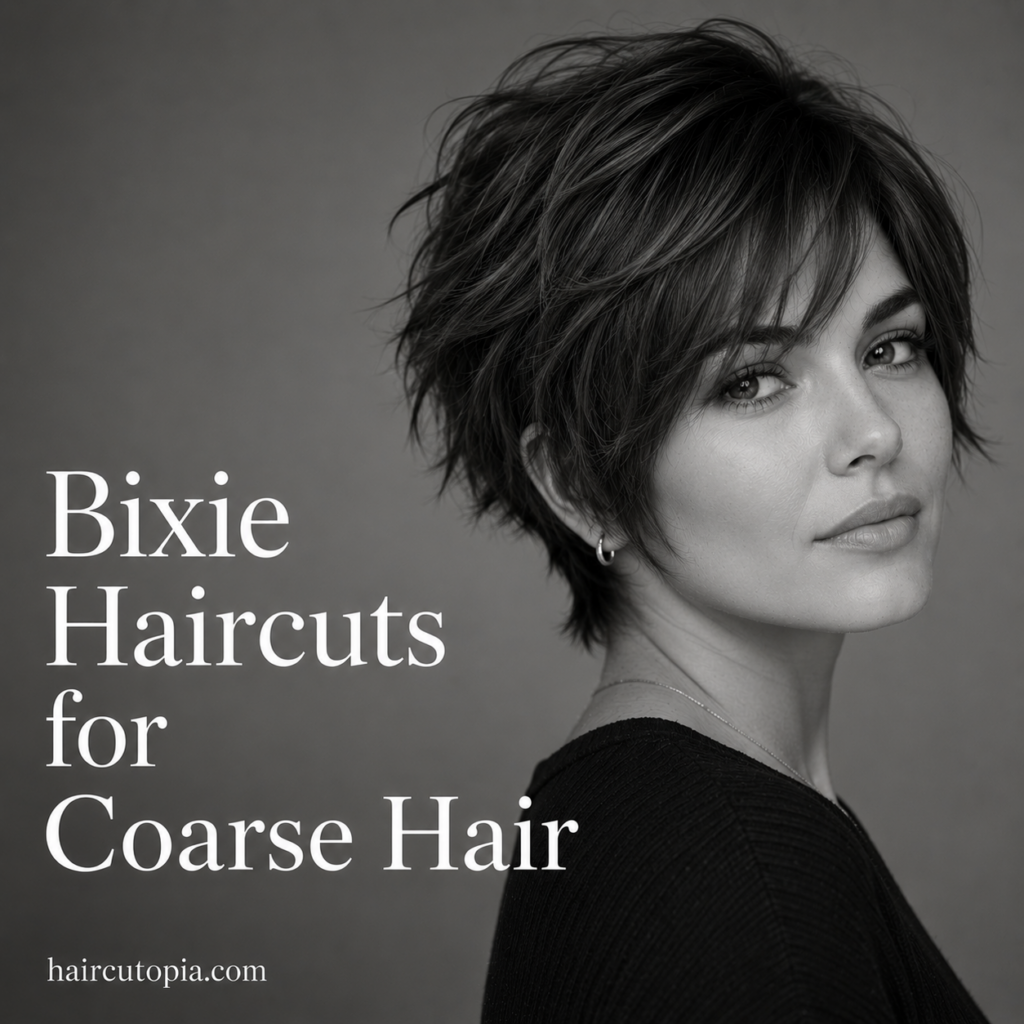
Coarse hair has a personality all its own. It’s often strong, full of natural texture, and capable of holding shape better than finer hair types. But it can also feel bulky, stubborn, or difficult to style if the haircut isn’t designed with its unique texture in mind.
That’s one reason the bixie has become such a popular option.
Combining the cropped ease of a pixie with the softer length of a bob, a bixie haircut offers the perfect balance of structure and movement. When customized for coarse hair, it removes unnecessary weight while allowing your natural texture to become one of the haircut’s biggest strengths.
Whether your hair is straight, wavy, or somewhere in between, these bixie haircut ideas can help you find a style that feels modern, flattering, and surprisingly easy to manage.
Why a Bixie Works Well for Coarse Hair
Coarse hair doesn’t necessarily mean thick hair.
Coarse refers to the diameter of each individual strand, while thick hair describes overall density. You can have coarse hair with average density, or even coarse hair that isn’t particularly full.
Because coarse strands naturally have more body, they often benefit from strategic shaping rather than excessive layering.
A well-designed bixie can:
- Reduce unnecessary weight
- Create softer movement
- Make styling easier
- Showcase natural texture
- Prevent a bulky silhouette
- Add shape around the face
- Keep volume balanced from crown to neckline
The goal isn’t to remove all the fullness. It’s to distribute it more evenly.
25 Bixie Haircuts for Coarse Hair
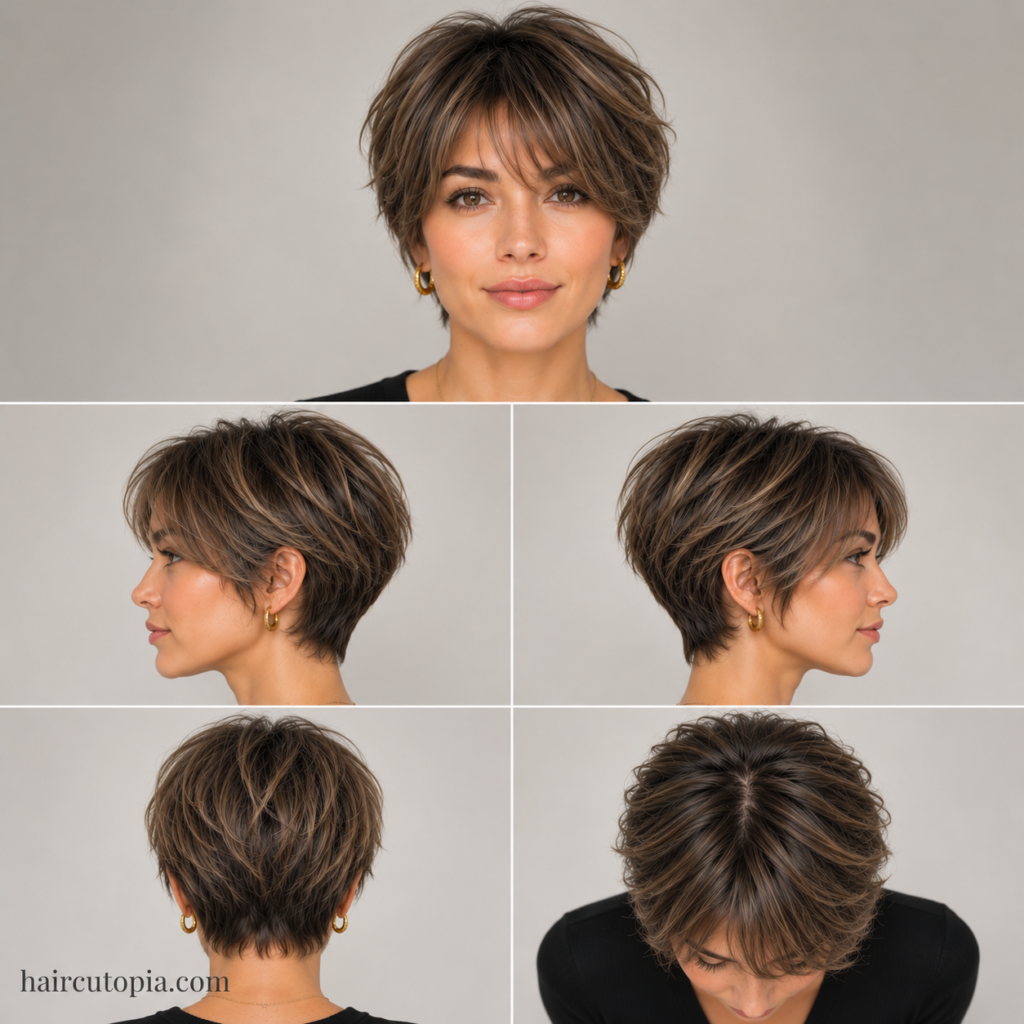
1. Soft Layered Bixie
Soft layering helps coarse hair feel lighter without making it appear overly thin.
Instead of aggressive texturizing, blended layers create movement while preserving the haircut’s structure.
This is one of the most versatile bixie styles.
2. Textured Bixie
Coarse hair naturally creates texture, making this haircut look effortless.
A stylist can refine the ends just enough to encourage separation without sacrificing fullness.
A lightweight styling cream helps define individual pieces.
3. Long Bixie
A longer bixie offers additional styling options while keeping the weight manageable.
Longer face-framing sections soften the haircut and create a balanced silhouette.
This version grows out beautifully.
4. Bixie with Side-Swept Bangs
Side-swept bangs break up the density around the front while adding movement.
The fringe blends smoothly into the rest of the haircut and flatters most face shapes.
5. Choppy Bixie
Visible texture gives coarse hair a modern edge.
Rather than creating perfectly smooth lines, this haircut embraces natural variation.
Small amounts of styling paste help emphasize the layers.
6. Crown-Layered Bixie
Strategic crown layers remove excess weight from the top while maintaining fullness.
The result feels lighter without sacrificing volume.
This style works especially well on naturally straight coarse hair.
7. Feathered Bixie
Feathered ends soften coarse strands and create airy movement.
The haircut appears lighter while still maintaining healthy-looking density.
8. Bixie with Curtain Bangs
Curtain bangs complement coarse hair beautifully because the strands naturally support the shape.
The fringe blends into the side layers for an effortless finish.
9. Shaggy Bixie
If you enjoy relaxed hairstyles, a shag-inspired bixie adds movement throughout the haircut.
The textured layers create an intentionally lived-in appearance.
10. Sleek Bixie
Coarse hair often holds a smooth blowout exceptionally well.
A sleek bixie highlights the haircut’s clean lines while showcasing the natural shine of healthy strands.
11. Tousled Bixie
This relaxed version embraces natural texture.
Finger styling and a lightweight styling cream are often enough to create a casual finish.
12. Wispy Bangs Bixie
Wispy bangs soften the forehead without adding unnecessary bulk.
They create balance while allowing the rest of the haircut to remain fuller.
13. Side-Parted Bixie
Changing the part instantly changes the shape.
A deep side part creates lift while distributing coarse hair more evenly.
14. Rounded Bixie
Rounded shaping creates a balanced silhouette.
The fullness is carefully distributed around the head rather than concentrated in one area.
15. Tapered Bixie
A tapered neckline removes excess weight from the back while keeping volume through the crown.
The contrast creates a polished profile.
16. Face-Framing Bixie
Longer front layers soften stronger facial features.
They also help reduce the visual heaviness that coarse hair can sometimes create around the face.
17. Asymmetrical Bixie
An asymmetrical shape gives coarse hair a modern, fashion-forward appearance.
The difference in length naturally creates movement.
18. Blunt Bixie
Blunt edges can look incredibly healthy on coarse hair.
Because coarse strands naturally appear substantial, the clean perimeter creates a striking finish.
19. French-Inspired Bixie
Minimal styling, soft texture, and relaxed elegance define this version.
Coarse hair naturally supports the effortless look.
20. Pixie-Forward Bixie
Shorter sides and a textured top create a lightweight feel.
This version removes more weight while preserving movement through the crown.
21. Bob-Forward Bixie
If you prefer slightly more length, this variation keeps the softness of a bob while introducing lighter layers.
It’s ideal if you’re transitioning from longer hair.
22. Air-Dried Bixie
Many coarse hair types air-dry surprisingly well with the right haircut.
Strategic shaping encourages the strands to settle naturally.
23. Voluminous Blowout Bixie
Coarse hair often responds beautifully to a round-brush blowout.
The finished look feels polished, full, and glamorous.
24. Low-Maintenance Bixie
Designed to work with your natural texture, this haircut minimizes styling time.
A strong cut does most of the work.
25. Modern Minimalist Bixie
Simple, structured, and timeless.
This version relies on excellent cutting rather than dramatic styling products or complicated techniques.
How to Ask Your Stylist for a Bixie for Coarse Hair
Reference photos are helpful, but explaining your hair’s behavior is equally important.
Tell your stylist:
- Where your hair feels bulky
- Whether it expands in humidity
- If it tends to lie flat or lift naturally
- Areas that become difficult to style
- How often you heat style
- Whether you prefer air-drying
- How much maintenance you’re comfortable with
These details help determine how much weight should be removed.
Coarse Hair vs. Thick Hair
Many people use these terms interchangeably, but they describe different characteristics.
Coarse Hair
- Individual strands are thicker.
- Hair feels stronger.
- Naturally holds shape well.
Thick Hair
- Refers to the number of hairs.
- Can be fine, medium, or coarse.
Someone with coarse hair may not actually have thick hair.
Understanding the difference helps your stylist customize the haircut more effectively.
How to Style a Bixie for Coarse Hair
Coarse strands often require fewer products than expected.
Smooth Finish
Apply heat protectant before blow-drying.
Use a round brush to smooth the surface while maintaining natural movement.
Textured Finish
Work a small amount of styling cream through the ends.
Separate layers using your fingertips.
Everyday Styling
Many bixies simply require blow-drying with your hands before applying a lightweight finishing product.
Air-Dried Look
Apply leave-in conditioner sparingly.
Allow the hair to dry naturally while avoiding frequent touching.
Best Products for Coarse Hair
Because coarse strands can sometimes become dry, moisturizing products often work well.
Good options include:
- Lightweight smoothing cream
- Leave-in conditioner
- Heat protectant
- Styling cream
- Flexible hairspray
- Shine serum
- Lightweight texture spray
Avoid using excessive amounts, which can make shorter hair feel heavy.
How Often Should You Trim a Coarse Hair Bixie?
Schedule trims every six to eight weeks.
Regular maintenance keeps the shape balanced while preventing bulky growth around the neckline and sides.
Best Face Shapes for a Coarse Hair Bixie
Round Faces
Extra crown height and longer front layers help elongate facial features.
Oval Faces
Nearly every bixie variation works beautifully.
Square Faces
Soft face-framing layers balance stronger jawlines.
Heart-Shaped Faces
Curtain bangs and gentle side volume create harmony.
Long Faces
Fringes and balanced side fullness create proportion.
Common Mistakes to Avoid
Coarse hair benefits from thoughtful cutting.
Avoid:
- Over-thinning the ends
- Excessive texturizing
- Heavy styling waxes
- Waiting too long between trims
- Ignoring humidity
- Removing too much weight near the crown
A balanced haircut almost always performs better than an aggressively layered one.
Is a Bixie Easy to Maintain?
For many people, yes.
Coarse hair naturally holds shape well, meaning the haircut often styles itself with minimal effort.
Most daily routines involve:
- Apply a lightweight styling product.
- Blow-dry or air-dry.
- Define a few pieces if desired.
That’s often all it takes.
Can You Grow Out a Coarse Hair Bixie?
Absolutely.
Because coarse hair maintains structure well, the grow-out phase often looks intentional.
Occasional shaping appointments help maintain balance while transitioning toward a bob.
Final Thoughts on Bixie Haircuts for Coarse Hair
A bixie haircut can be an excellent choice for coarse hair because it works with your texture instead of fighting it. Strategic shaping removes unnecessary weight while preserving the strength and body that make coarse strands unique.
Whether you prefer a sleek finish, soft layers, textured movement, or a low-maintenance wash-and-go style, there’s a bixie that can be customized to fit your hair type, face shape, and routine.
The best results come from embracing your natural texture and choosing a stylist who understands how coarse hair behaves. With the right cut, your bixie can feel lighter, easier to style, and effortlessly modern.