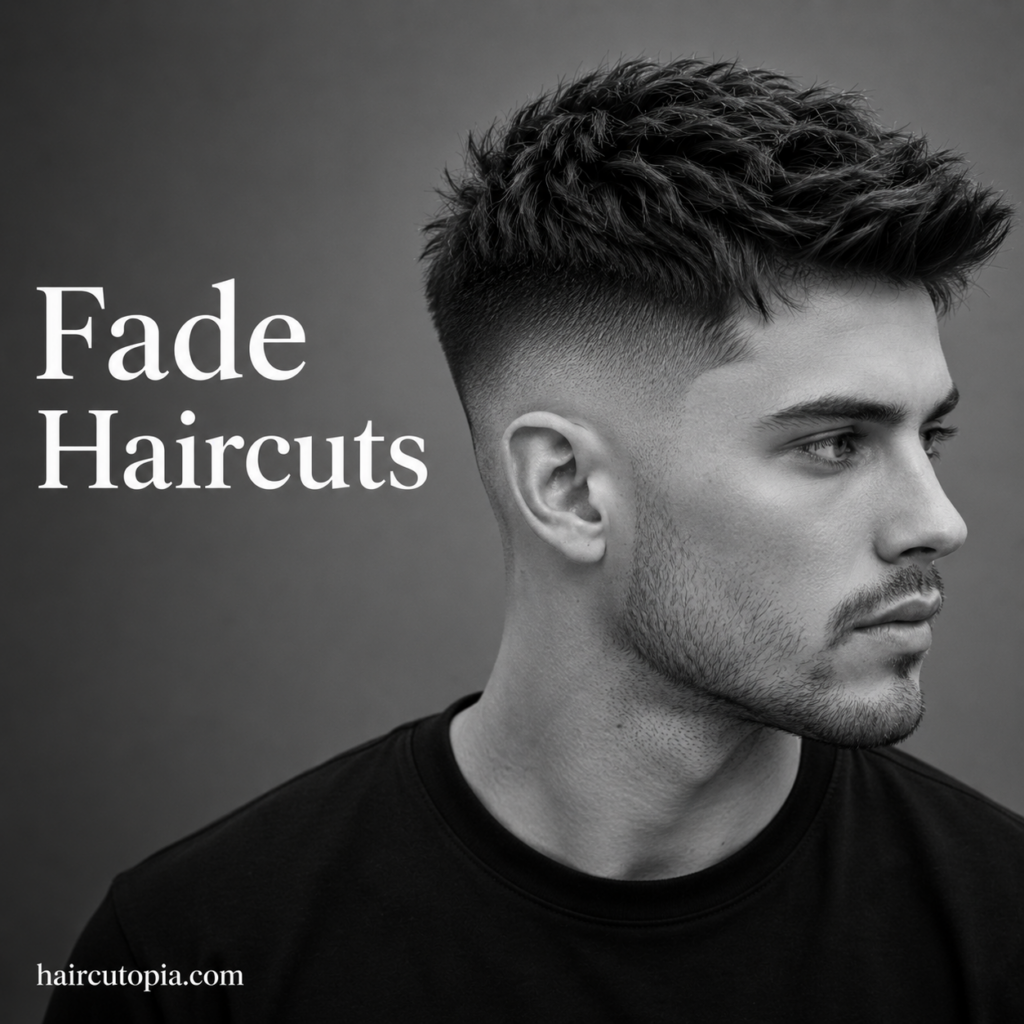
Fade haircuts have become one of the most popular men’s haircuts, and it’s easy to see why. They’re clean, versatile, and can be customized to suit almost any face shape, hair type, or personal style. Whether you prefer a subtle low fade for the office or a bold skin fade with a textured top, there’s a fade haircut that fits your look.
One of the biggest advantages of a fade is how well it pairs with other hairstyles. From buzz cuts and crew cuts to pompadours and curly tops, a fade adds structure and sharpness without taking attention away from the hairstyle itself.
This guide covers everything you need to know about fade haircuts, including the different types, who they suit best, styling tips, maintenance, and how to ask your barber for the perfect fade.
What Is a Fade Haircut?
A fade haircut is a cutting technique where the hair gradually transitions from longer lengths at the top to shorter lengths along the sides and back. The hair “fades” seamlessly into the skin or very short hair, creating a clean, blended appearance.
Unlike traditional haircuts with a noticeable change in length, a fade uses smooth blending to create a polished finish.
The amount of contrast depends on the style you choose. Some fades are subtle and conservative, while others create a dramatic modern look.
Why Fade Haircuts Are So Popular
Fade haircuts have remained popular because they’re incredibly adaptable.
Benefits include:
- Clean and modern appearance
- Works with almost every hairstyle
- Suitable for straight, wavy, curly, and coily hair
- Easy to customize
- Professional yet stylish
- Makes hairstyles look sharper
- Pairs well with beards
- Suitable for all ages
Whether you’re getting your first fade or trying something new, the style offers plenty of flexibility.
The Main Types of Fade Haircuts
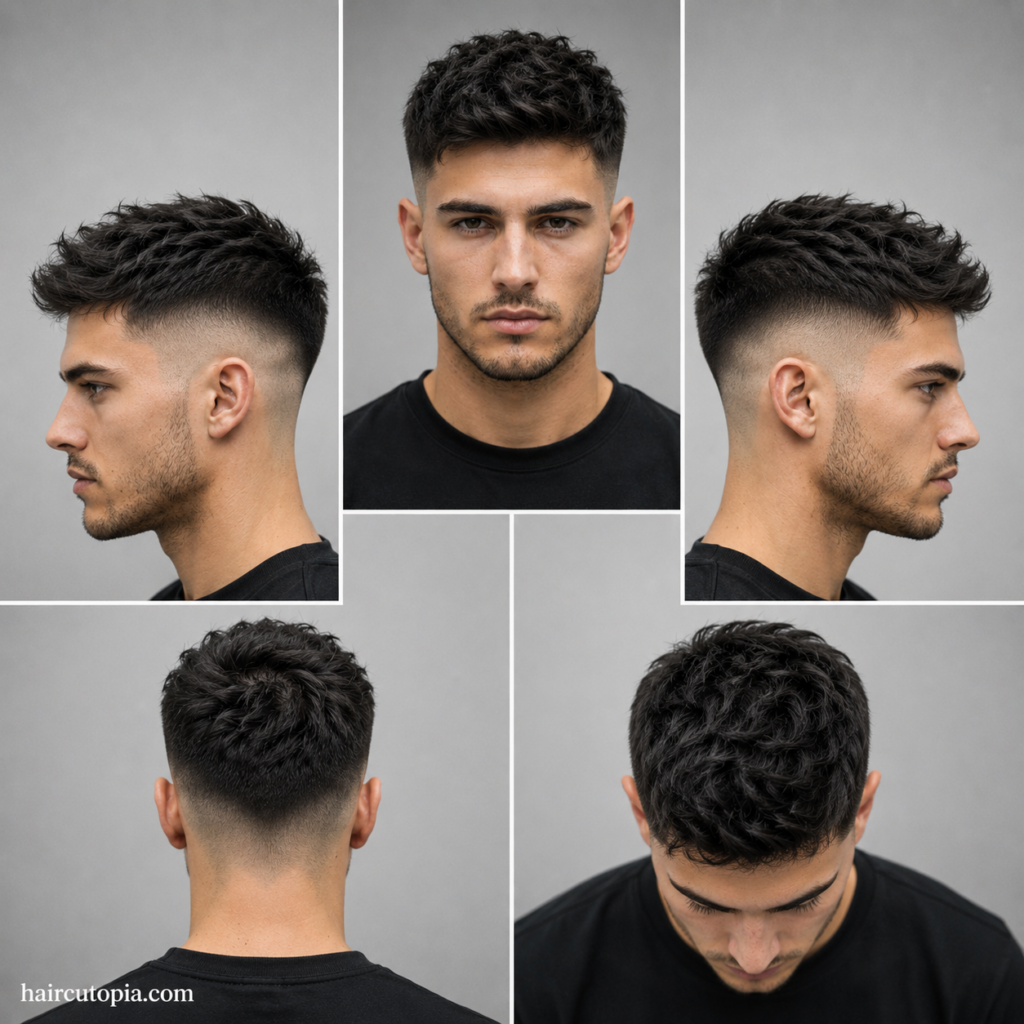
Although there are many fade variations, most fall into a few primary categories.
Low Fade
The low fade haircut begins just above the ears and follows the natural hairline around the head, creating one of the most subtle and versatile fade styles.
This creates:
- A subtle transition
- Conservative appearance
- Easy maintenance
- Professional finish
A low fade works especially well for office environments and men who prefer classic hairstyles.
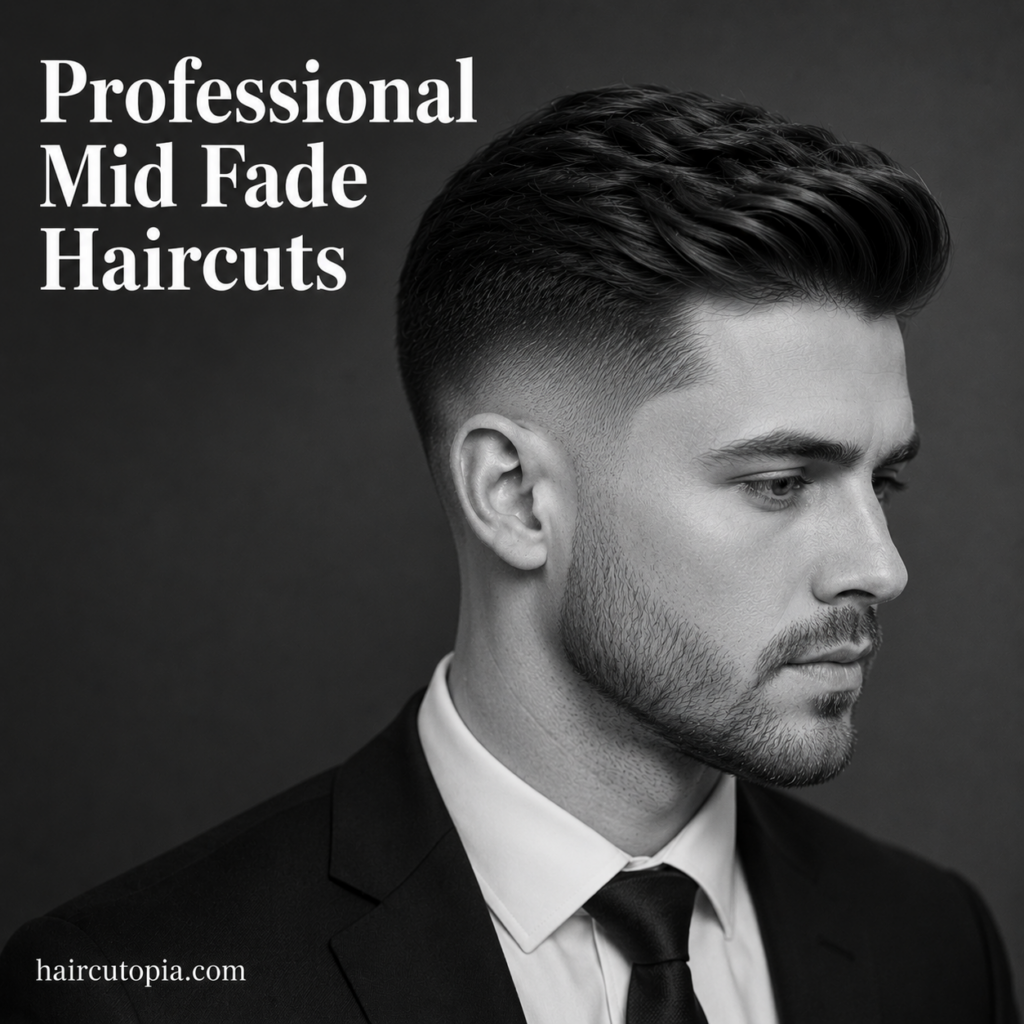
Mid Fade
A mid fade haircut starts roughly halfway up the sides of the head, creating a balanced amount of contrast between the longer top and shorter sides.
It offers a balance between subtle and dramatic.
Benefits include:
- Clean silhouette
- Versatile styling
- Suitable for most face shapes
- Great with textured hairstyles
Many barbers recommend a mid fade for first-time clients because it suits so many different looks.
High Fade
A high fade haircut begins much higher on the head, creating stronger contrast between the top and sides.
It’s ideal for:
- Bold styles
- Thick hair
- Athletic looks
- Modern hairstyles
High fades naturally draw attention to the hair on top.
Skin Fade
Also called a bald fade, the skin fade haircut blends completely down to shaved skin for maximum contrast and an exceptionally clean finish.
Characteristics include:
- Maximum contrast
- Extremely clean finish
- Crisp appearance
- Modern style
Because skin fades grow out more quickly, they require frequent maintenance.
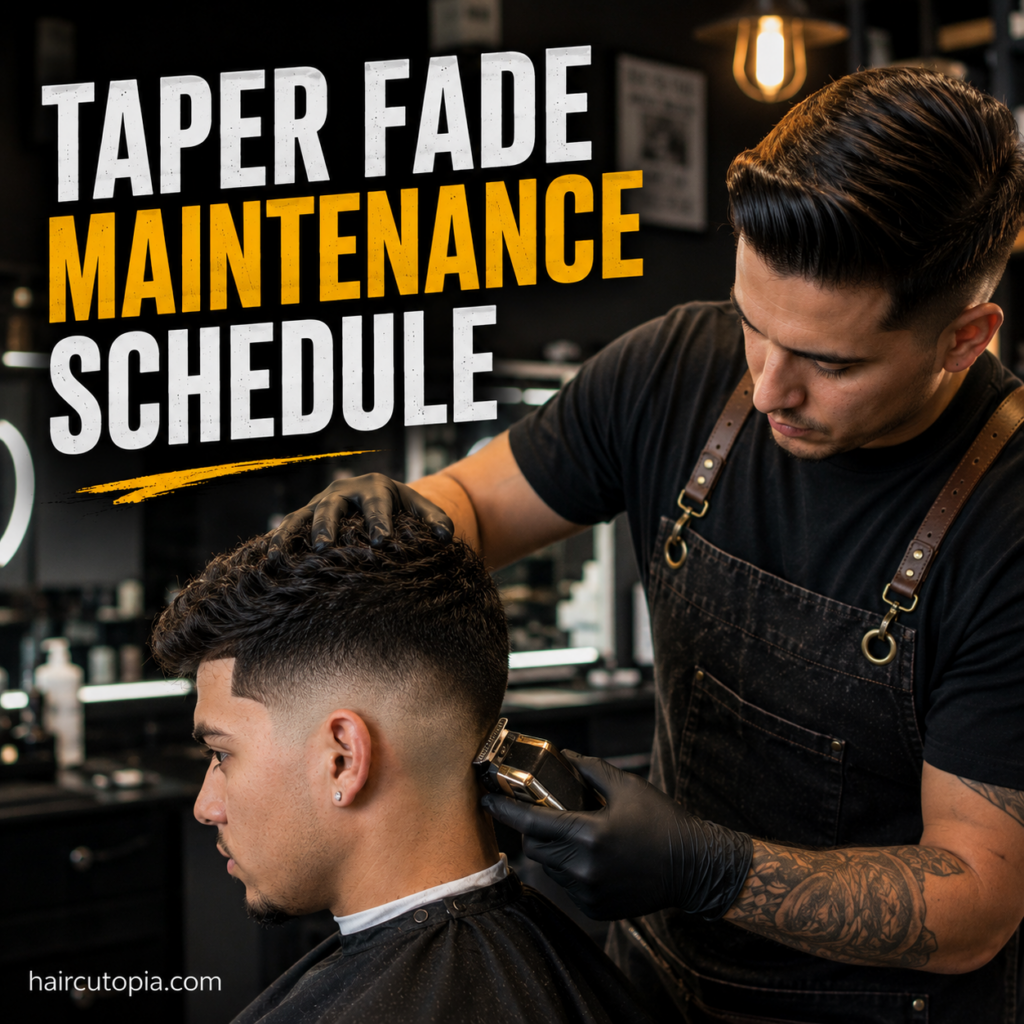
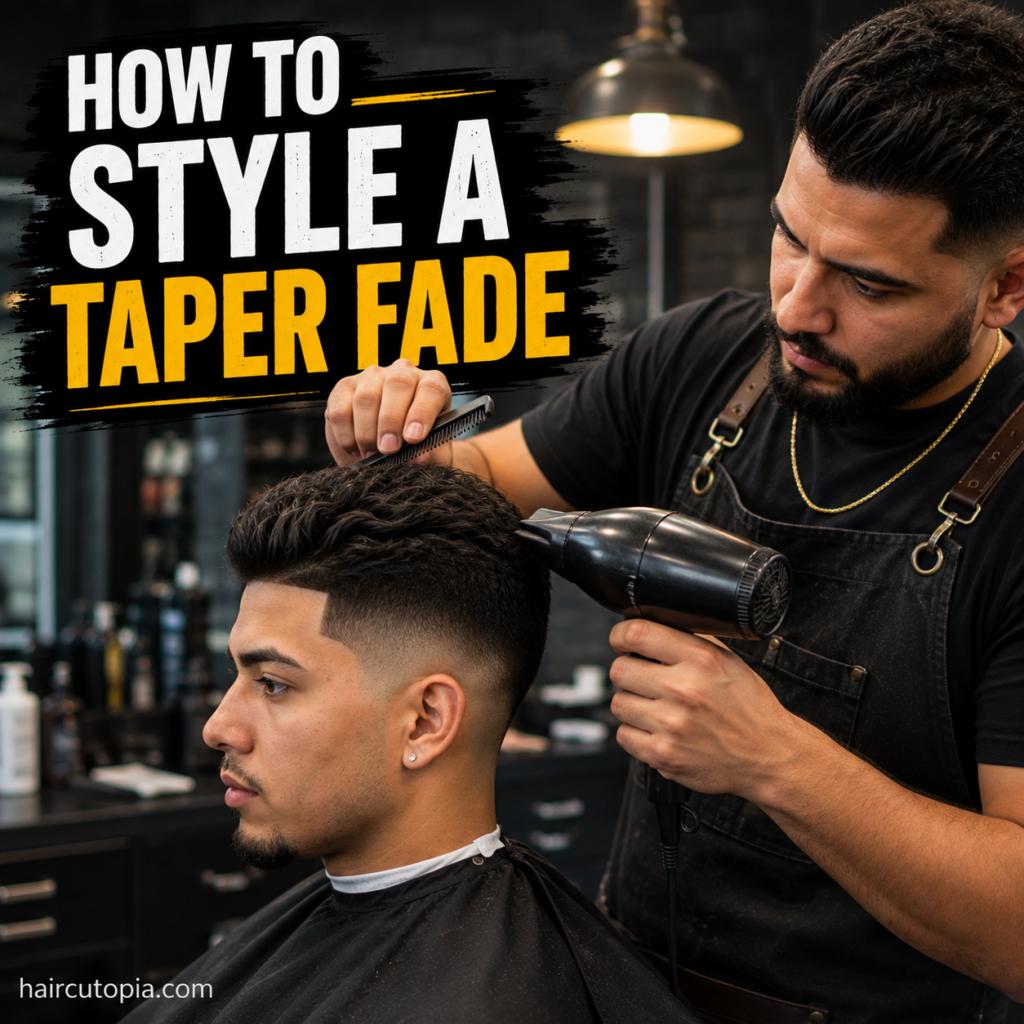
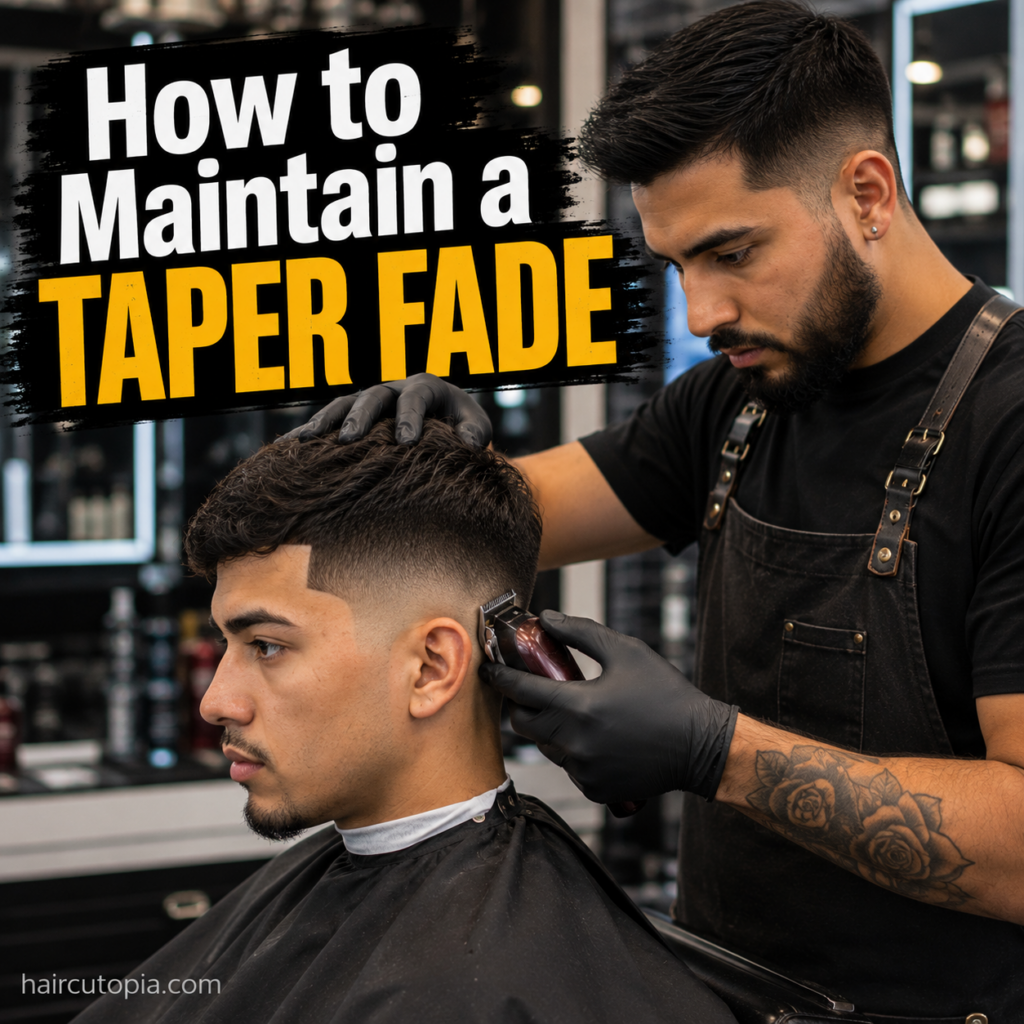
Taper Fade
A taper fade haircut combines elements of both a traditional taper and a fade, concentrating the shortest transition around the sideburns and neckline.
Instead of fading high around the head, the transition is concentrated near the:
- Sideburns
- Neckline
- Around the ears
This creates a softer, more traditional appearance.
Drop Fade
A drop fade curves downward behind the ear instead of following a straight line.
Benefits include:
- Natural shape
- Modern appearance
- Better balance for many head shapes
- Enhanced profile
Drop fades have become increasingly popular with textured hairstyles.
Burst Fade
A burst fade wraps around the ears while leaving more length near the back.
You’ll often see burst fades paired with:
- Faux hawks
- Curly tops
- Modern mullets
- Mohawks
This fade creates a bold, eye-catching look.
Temple Fade
Also known as a Brooklyn fade or blowout fade, this style focuses on fading only around the temples.
It’s popular because it:
- Keeps more overall length
- Looks clean
- Frames the face
- Works well with curls
Temple fades are especially common in textured and curly hairstyles.
Fade Haircuts by Hair Length
Short Fade Haircuts
Short fades are among the easiest hairstyles to maintain.
Popular combinations include:
These styles require little daily styling while maintaining a sharp appearance.
Medium Fade Haircuts
Medium-length hair creates more styling possibilities.
Popular options include:
The extra length adds versatility without becoming difficult to manage.
Long Top Fade Haircuts
Keeping significant length on top creates dramatic contrast.
Examples include:
- Pompadour fade
- Textured fringe fade
- Curly fade
- Layered fade
These styles require more styling but offer a fashionable finish.
Fade Haircuts for Different Hair Types
Straight Hair
Straight hair showcases the precision of a fade particularly well.
Recommended styles:
- Side part fade
- Pompadour fade
- Slick back fade
- Ivy League fade
The clean lines of straight hair make blending especially noticeable.
Thick Hair
Thick hair pairs naturally with fade haircuts because removing weight from the sides creates better balance.
Great options include:
- High fade
- Textured crop fade
- Quiff fade
- French crop fade
Barbers often remove bulk through layering for easier styling.
Fine Hair
Fine hair benefits from hairstyles that add texture.
Recommended fades include:
- Low fade
- Mid fade
- Textured crop fade
- Crew cut fade
Keeping the top textured helps create the illusion of greater density.
Wavy Hair
Natural waves add movement and volume.
Popular fade combinations include:
- Low fade with waves
- Curly fringe fade
- Wavy comb over fade
- Mid fade with texture
Many men choose matte styling products to enhance natural movement.
Curly Hair
Fade haircuts and curls are one of today’s most popular combinations.
Options include:
- Curly taper fade
- Burst fade
- Temple fade
- Low fade curls
- High fade curls
The fade keeps the sides neat while allowing curls to stand out.
Coily Hair
Fade haircuts are equally effective on coily hair.
Popular styles include:
- Temple fade
- High fade
- Burst fade
- Taper fade
These cuts maintain clean edges while highlighting natural texture.
Choosing a Fade by Face Shape
Oval Face
Oval faces suit nearly every fade variation.
Excellent choices include:
- Low fade
- Mid fade
- Skin fade
- High fade
The balanced proportions allow for almost unlimited styling.
Round Face
Round faces benefit from added height.
Recommended styles include:
- High fade
- Mid fade
- Pompadour fade
- Quiff fade
These create a longer, more angular appearance.
Square Face
Strong jawlines pair well with structured fades.
Popular options:
- Low fade
- Skin fade
- Crew cut fade
- Buzz fade
These cuts emphasize masculine facial features.
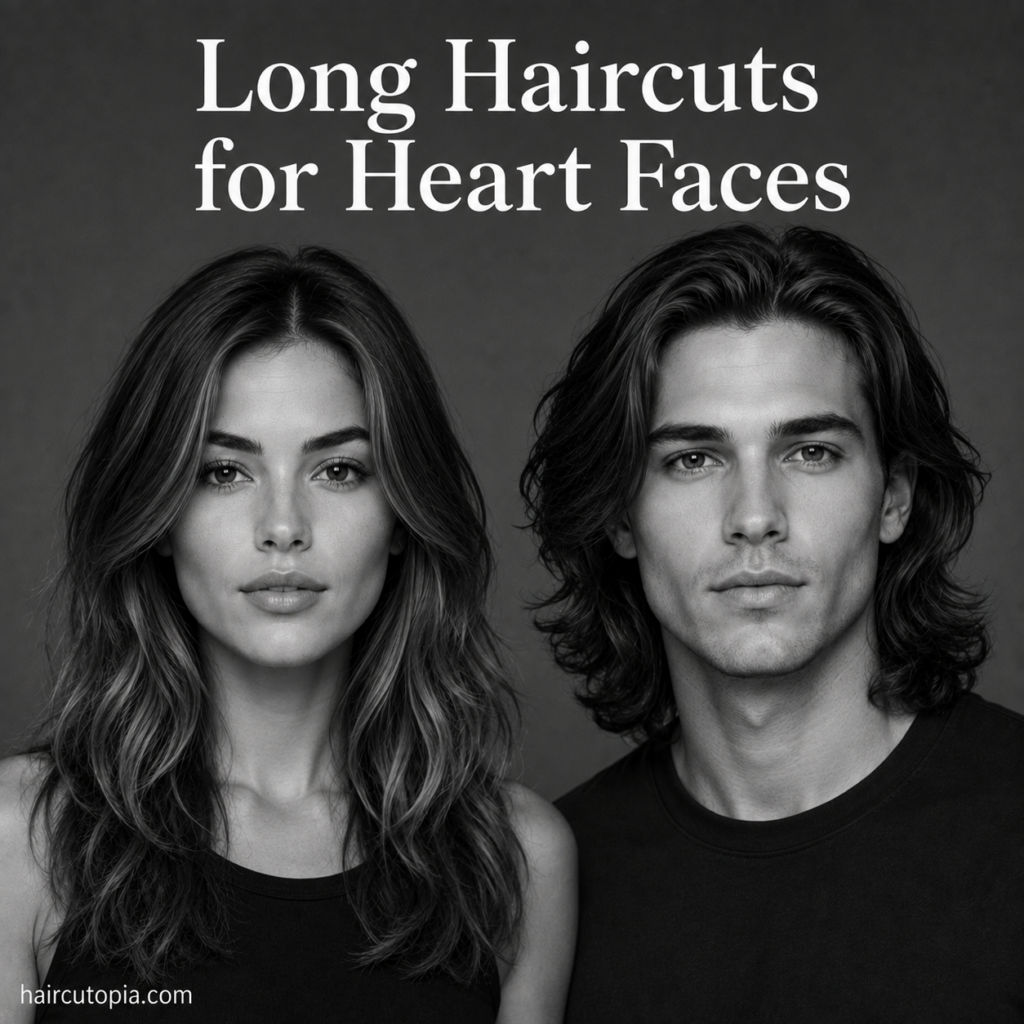
Heart Face
Heart-shaped faces often look best with balanced proportions.
Try:
- Low fade
- Taper fade
- French crop fade
- Textured fringe fade
Avoid excessive height on top.
Diamond Face
Diamond faces benefit from slightly softer fades.
Great choices include:
- Low fade
- Mid fade
- Side part fade
- Fringe fade
These help balance forehead and cheekbone width.
Long Face
Long faces should avoid overly high hairstyles.
Better options include:
- Low fade
- Mid fade
- Caesar fade
- French crop fade
Keeping moderate height maintains facial balance.
Fade Haircuts That Pair Well with Beards
One reason fades remain so popular is how naturally they blend into facial hair.
Popular combinations include:
- Low fade with full beard
- Mid fade with boxed beard
- Skin fade with stubble
- Burst fade with beard
- Temple fade with short beard
A skilled barber can blend the sideburn area smoothly into the beard for a seamless finish.
Fade Haircuts for Different Ages
Teenagers
Popular choices include:
- Burst fade
- Textured crop fade
- Curly fade
- High fade
These styles reflect current trends while remaining versatile.
Young Professionals
Professional-friendly fades include:
- Low fade
- Mid fade
- Side part fade
- Ivy League fade
These balance style with workplace appropriateness.
Mature Men
Older men often prefer:
- Taper fade
- Low fade
- Crew cut fade
- Caesar fade
These styles remain timeless and easy to maintain.
Styling Fade Haircuts
One of the best things about fade haircuts is that the sides require very little attention. Most styling focuses on the hair on top.
Popular styling products include:
Matte Clay
Ideal for:
- Texture
- Volume
- Natural finish
Pomade
Best for:
- Slick backs
- Side parts
- High shine
Hair Paste
Provides:
- Medium hold
- Flexible styling
- Natural movement
Sea Salt Spray
Perfect for:
- Loose texture
- Wavy styles
- Volume
Hair Cream
Excellent for:
- Longer hair
- Curly hair
- Frizz control
Choose products based on your hair type rather than simply following trends.
How Often Should You Get a Fade?
Fade haircuts require regular maintenance to keep their crisp appearance.
General schedule:
Every 2 Weeks
- Skin fade
- Bald fade
- High fade
Every 3 Weeks
- Mid fade
- Low fade
- Burst fade
Every 4 Weeks
- Taper fade
- Longer textured styles
The sharper the fade, the faster it loses its clean look as the hair grows.
How to Ask Your Barber for a Fade
Being specific helps your barber understand exactly what you want.
Mention:
- Fade height
- Hair length on top
- Desired texture
- Neckline preference
- Sideburn style
- Beard blending
Bringing several reference photos is one of the easiest ways to communicate your expectations.
Common Fade Haircut Mistakes
Avoid these common issues:
- Choosing a fade that doesn’t suit your face shape
- Ignoring your hair’s natural growth pattern
- Waiting too long between cuts
- Using too much product
- Skipping regular maintenance
- Not communicating clearly with your barber
A great fade depends just as much on maintenance as the initial haircut.
Frequently Asked Questions
What is the difference between a fade and a taper?
A fade blends the hair much shorter along the sides and back, often down to the skin. A taper keeps more length and usually focuses around the sideburns and neckline.
Which fade is the most popular?
The low fade and mid fade remain two of the most requested styles because they work with nearly every hairstyle and are suitable for both casual and professional settings.
Are fade haircuts professional?
Yes. Low fades, taper fades, and mid fades are widely accepted in professional workplaces and offer a clean, polished appearance.
Do fade haircuts work with curly hair?
Absolutely. Fade haircuts are one of the best ways to showcase natural curls while keeping the sides neat and manageable.
How long does a fade stay looking fresh?
Most fades maintain their sharp appearance for about two to three weeks before needing a touch-up, depending on hair growth and the type of fade.
Final Thoughts
Fade haircuts have earned their place as one of the most versatile and enduring styles in modern barbering. From subtle taper fades to bold skin fades, there’s a variation for nearly every face shape, hair type, and lifestyle. The ability to pair a fade with classic cuts like the crew cut or modern favorites like the textured crop makes it one of the most adaptable haircut techniques available.
Choosing the right fade comes down to your personal preferences, maintenance routine, and the amount of contrast you want in your hairstyle. Work with an experienced barber, communicate your goals clearly, and maintain regular appointments to keep your fade looking clean and sharp year-round.