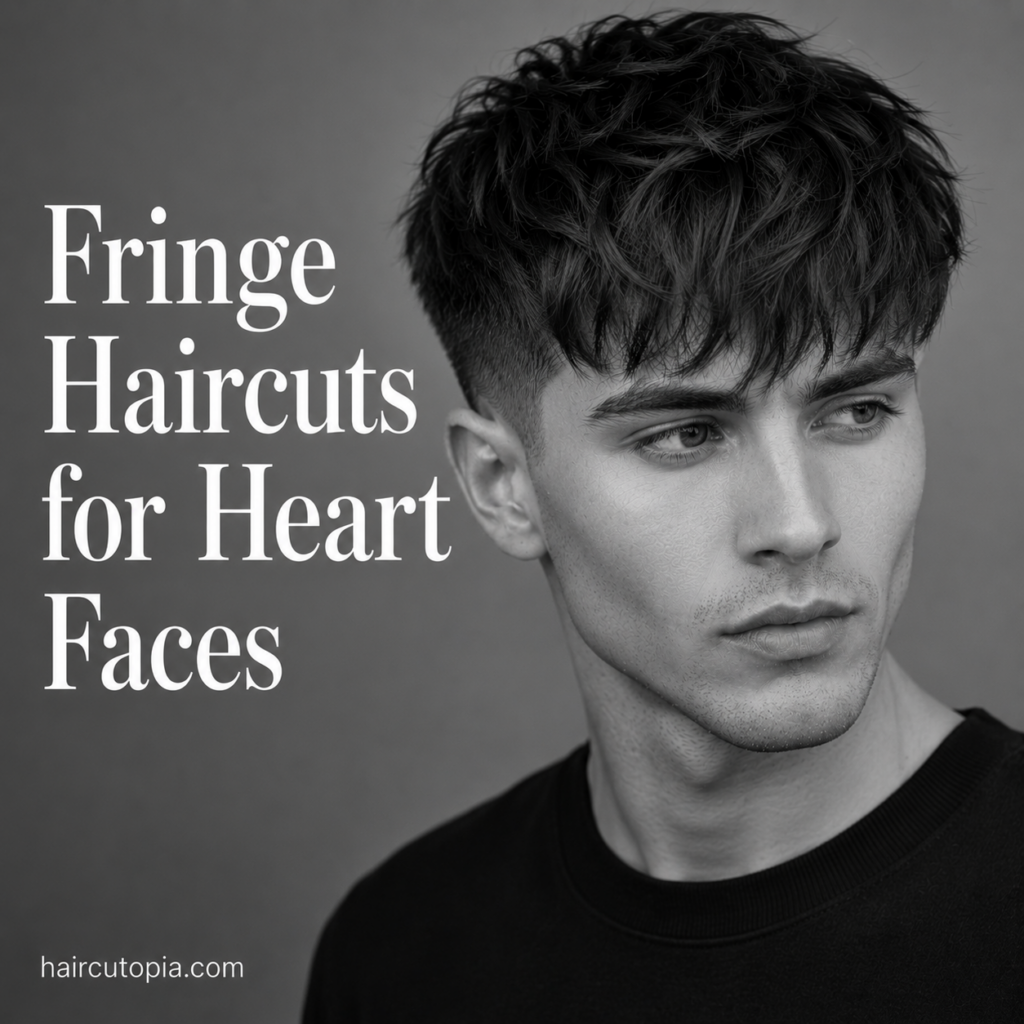
A heart-shaped face is one of the most distinctive face shapes, with a broader forehead, defined cheekbones, and a narrower chin. The right fringe haircut can balance these proportions by softening the forehead, adding texture, and drawing attention toward the center of the face.
Fortunately, there are plenty of fringe styles that work beautifully with heart-shaped faces. From textured crops to relaxed curtain fringes, the right cut can complement your natural features while giving you a stylish, modern appearance.
In this guide, you’ll learn which fringe haircuts work best for heart-shaped faces, how to style them, and what to avoid when choosing your next haircut.
What Is a Heart-Shaped Face?
A heart-shaped face typically has:
- A wider forehead
- Prominent cheekbones
- A narrower jawline
- A pointed or slightly tapered chin
- Balanced facial length
The goal of a fringe is to reduce emphasis on the upper part of the face while creating better overall balance.
Why Fringe Haircuts Work for Heart Faces
A fringe naturally covers part of the forehead, helping create more balanced facial proportions.
Benefits include:
- Softens a broad forehead
- Frames the eyes
- Balances a narrow chin
- Adds texture and movement
- Creates a youthful, modern appearance
The best styles tend to have natural texture rather than a heavy, blunt finish.
Best Fringe Haircuts for Heart Faces
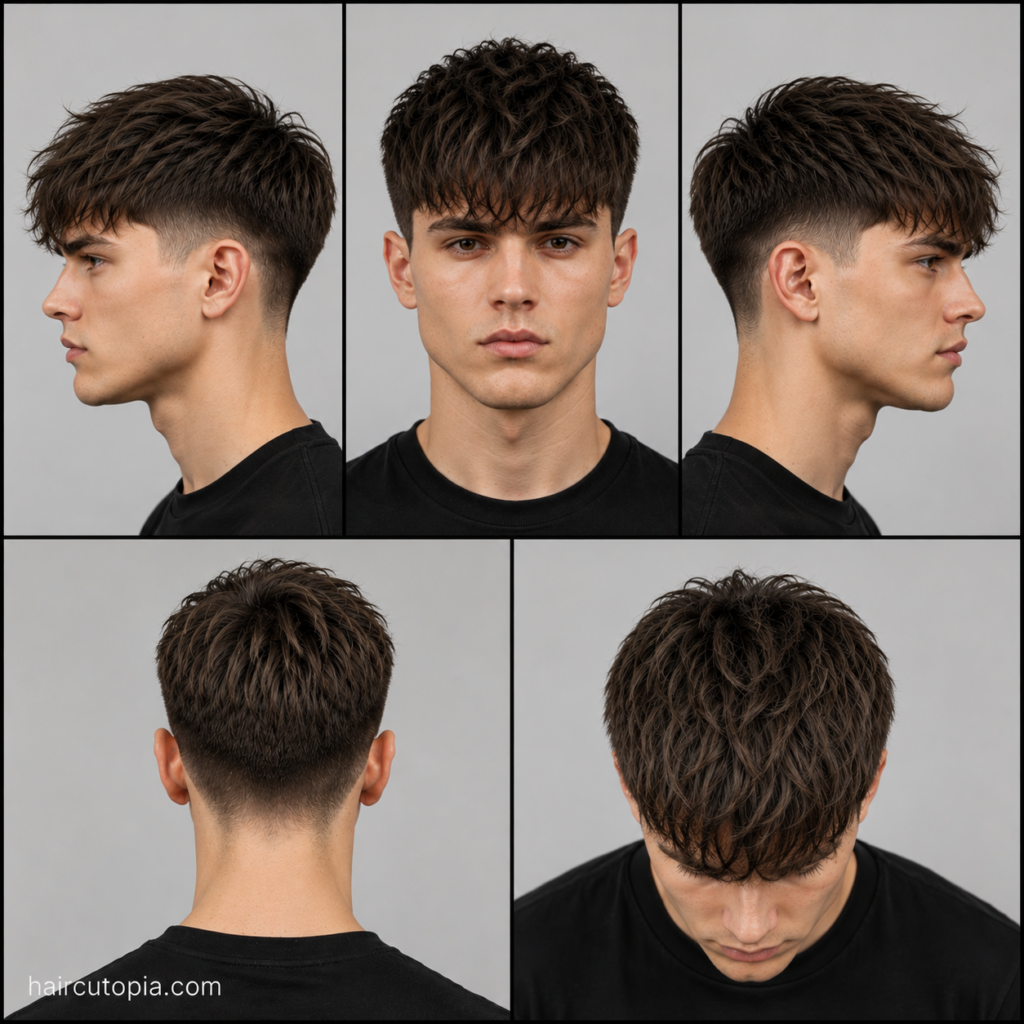
Textured Fringe
A textured fringe is one of the most flattering hairstyles for heart-shaped faces.
The layered finish softens the forehead while maintaining movement and volume.
Benefits include:
- Natural texture
- Easy styling
- Balanced proportions
- Modern appearance
Pair it with a taper fade or low fade for a clean finish.
Side-Swept Fringe
A side-swept fringe creates diagonal movement that naturally breaks up forehead width.
It’s a timeless style suitable for both casual and professional settings.
Advantages include:
- Softer facial framing
- Versatile styling
- Classic appearance
- Easy maintenance
Curtain Fringe
Curtain hairstyles are an excellent choice because they naturally frame both sides of the face.
The center part helps distribute volume evenly instead of concentrating it across the forehead.
Benefits include:
- Relaxed style
- Balanced proportions
- Soft movement
- Trendy appearance
French Crop
A lightly textured French crop works well for heart-shaped faces.
Keep the fringe soft rather than blunt to avoid making the forehead appear wider.
Why it’s popular:
- Low maintenance
- Structured appearance
- Easy grooming
- Clean finish
Messy Fringe
A messy fringe embraces natural texture while avoiding rigid lines.
The relaxed styling helps soften facial features without adding unnecessary width.
This style offers:
- Casual appearance
- Natural volume
- Modern texture
- Minimal styling
Long Fringe
A longer fringe provides more styling flexibility while helping reduce emphasis on a broader forehead.
You can wear it:
- Swept forward
- Brushed to the side
- Loosely textured
- Slightly parted
Layering helps keep the hairstyle lightweight.
Short Textured Fringe
A short textured fringe creates a clean, balanced appearance that’s easy to maintain.
It’s ideal for men who prefer:
- Simple styling
- Modern grooming
- Low maintenance
- Everyday versatility
Fringe Styles to Avoid
Certain fringe styles may exaggerate the proportions of a heart-shaped face.
Avoid:
- Thick blunt bangs
- Very short straight-across fringes
- Heavy bowl cuts
- Extremely high-volume tops with flat sides
- Overly wide curtain fringes
Soft texture generally creates a more balanced appearance.
Best Fades to Pair with a Fringe
Low Fade
A low fade keeps the haircut balanced without creating excessive contrast.
Ideal for:
- Side-swept fringe
- Curtain fringe
- Professional styles
Mid Fade
A mid fade is one of the most versatile choices.
Works well with:
- Textured fringe
- French crop
- Messy fringe
Taper Fade
A taper fade creates a natural transition that complements softer fringe styles.
It’s an excellent everyday option.
High Fade
A high fade can work well if the fringe has enough texture to maintain facial balance.
It pairs best with shorter hairstyles.
Choosing a Fringe by Hair Type
Thick Hair
Thick hair naturally provides volume and texture.
Recommended:
- Textured fringe
- Messy fringe
- Curtain fringe
Fine Hair
Fine hair benefits from lightweight layers that create the appearance of fullness.
Good choices include:
- French crop
- Side-swept fringe
- Short textured fringe
Wavy Hair
Natural waves create effortless movement.
Recommended:
- Curtain fringe
- Messy fringe
- Long textured fringe
Curly Hair
Curly fringes soften facial features while showcasing natural texture.
Consider:
- Curly fringe
- French crop
- Layered fringe
How to Style a Fringe for a Heart-Shaped Face
Focus on creating texture rather than excessive height.
A simple routine includes:
- Start with towel-dried hair.
- Apply a lightweight styling cream or matte clay.
- Blow dry while directing the fringe naturally.
- Separate the layers with your fingers.
- Finish with texture powder if extra definition is needed.
Avoid pushing the hair straight upward, which can emphasize the forehead.
Best Styling Products
Choose lightweight products that maintain movement.
Popular options include:
- Matte clay
- Styling paste
- Texture powder
- Sea salt spray
- Lightweight styling cream
These help create natural-looking texture without stiffness.
Haircare Tips
Healthy hair always makes styling easier.
Maintain your fringe by:
- Washing with a quality shampoo.
- Conditioning regularly.
- Getting trims every 4–6 weeks.
- Avoiding excessive heat styling.
- Using products suited to your hair type.
Routine maintenance keeps your fringe looking fresh.
Common Mistakes to Avoid
Choosing a Blunt Fringe
Straight-across bangs often emphasize a broad forehead.
Textured layers usually provide a softer, more flattering finish.
Adding Too Much Height
Extreme volume on top can make the forehead appear even wider.
Aim for balanced texture instead.
Ignoring Hair Texture
Working with your natural hair type creates better long-term results than forcing a style that doesn’t suit it.
Skipping Regular Trims
Fringe haircuts quickly lose their shape as they grow.
Regular barber visits help maintain balance.
How to Ask Your Barber
A simple explanation works well.
Try saying:
“I’d like a textured fringe that helps balance my heart-shaped face. Please soften the forehead, keep natural movement, and recommend the best fade for my hair type.”
Reference photos can also help communicate your preferred style.
Is a Fringe Haircut Good for Heart Faces?
Absolutely. A well-designed fringe can soften a broader forehead while creating better balance between the upper and lower portions of the face. With textured layers, natural movement, and the right fade, heart-shaped faces can pull off a wide variety of modern fringe hairstyles.
Whether you prefer a textured crop, side-swept fringe, curtain hairstyle, or relaxed messy finish, the key is choosing a style that complements your natural proportions instead of exaggerating them.
Frequently Asked Questions
Are fringe haircuts good for heart-shaped faces?
Yes. Fringe haircuts help soften a broader forehead and create better facial balance.
What is the best fringe for a heart-shaped face?
A textured fringe is one of the best options because it adds movement while naturally balancing facial proportions.
Can I wear a curtain fringe with a heart-shaped face?
Absolutely. Curtain fringes frame the face beautifully and reduce emphasis on a wider forehead.
Which fade works best with a fringe?
Low fades, taper fades, and mid fades all pair well with fringe hairstyles for heart-shaped faces.
How often should I trim my fringe?
Most fringe haircuts benefit from a trim every 4–6 weeks to maintain their shape and styling ease.
Related Posts
 Bangs Haircuts for Heart Faces: 25 Flattering Fringe Styles to Balance Your Features
 Haircuts for Long Faces: The Complete Guide to Finding Your Most Flattering Style
 Haircuts for Diamond Faces: The Complete Guide to Finding Your Most Flattering Style
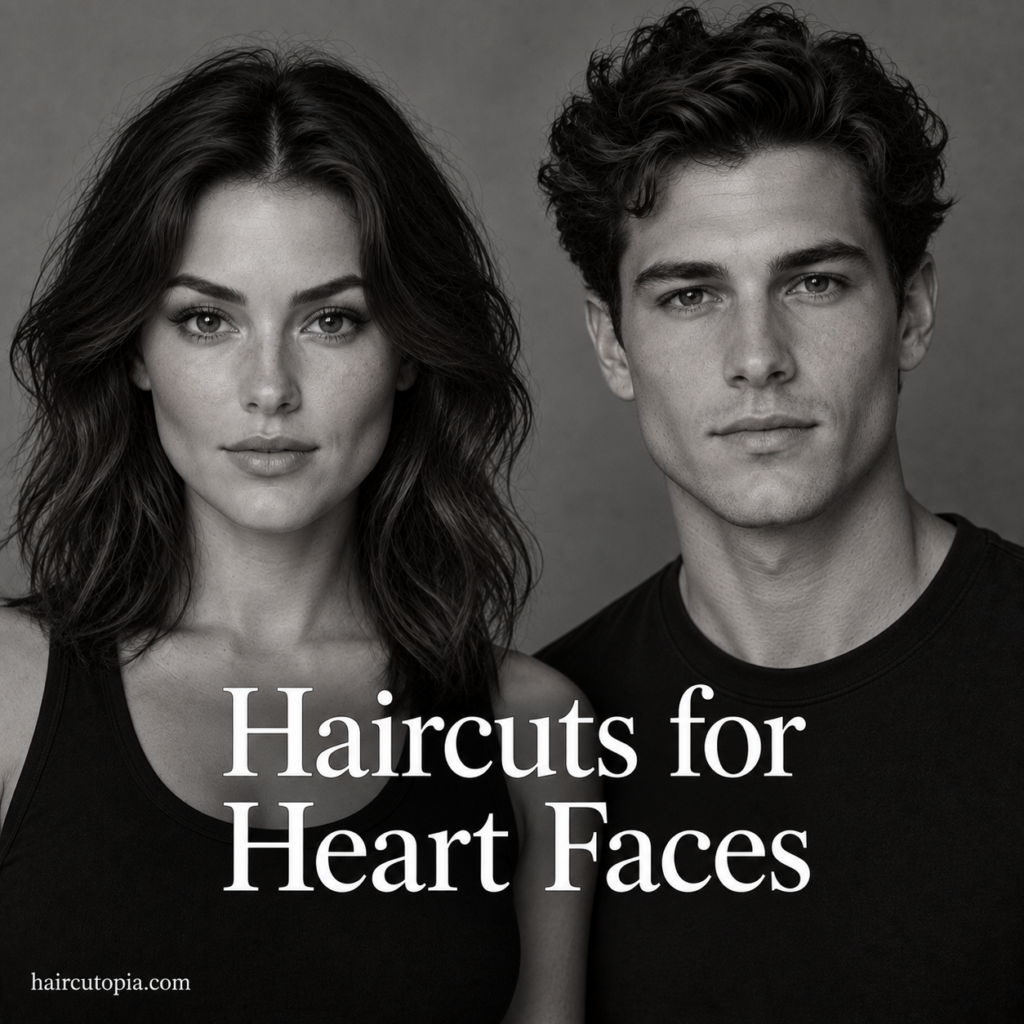 Haircuts for Heart Faces: The Complete Guide to Finding Your Most Flattering Style