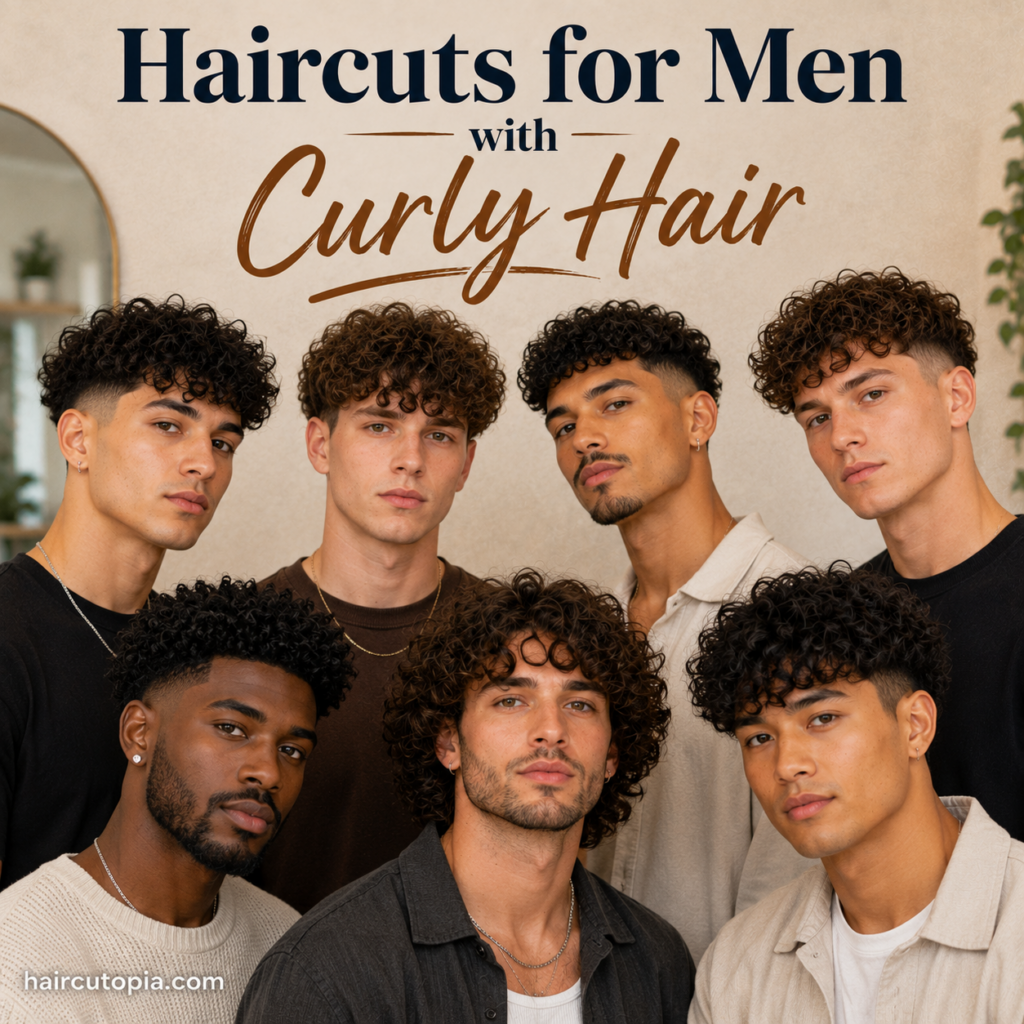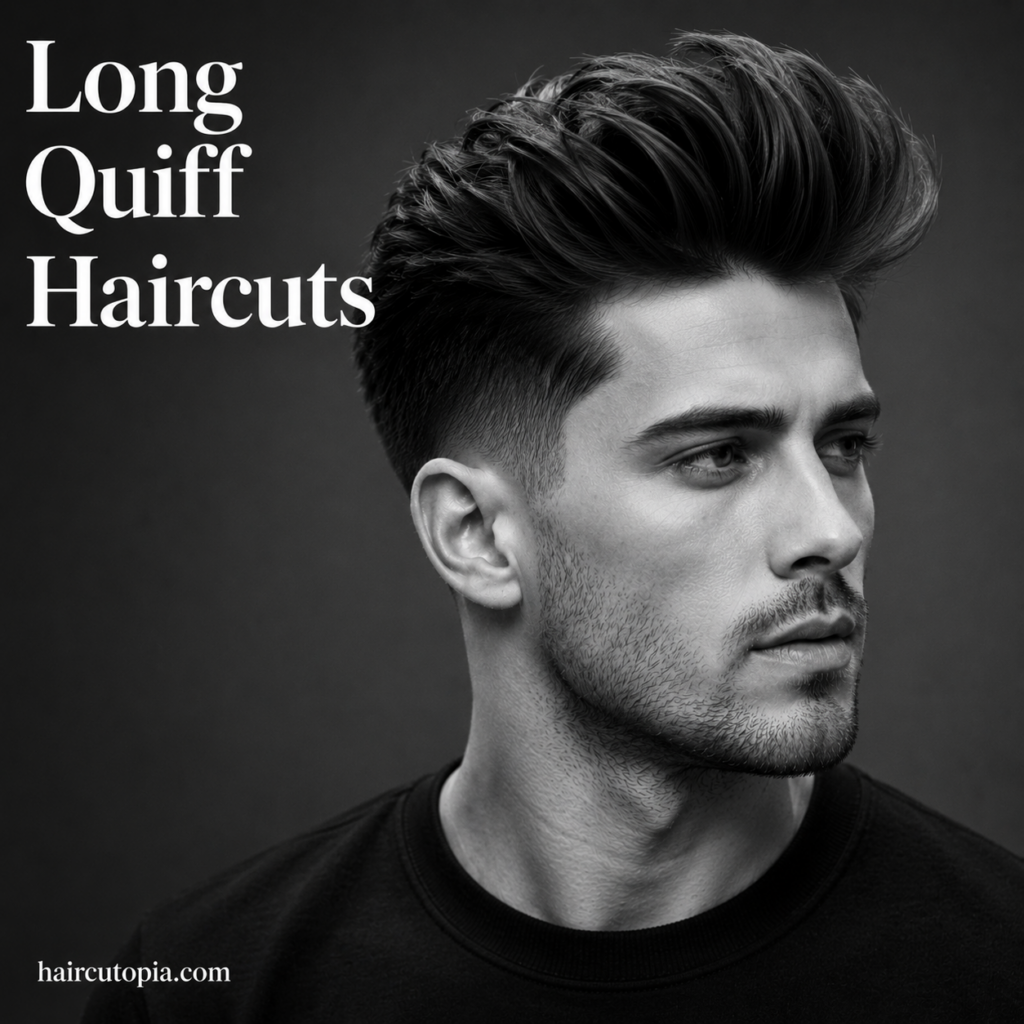
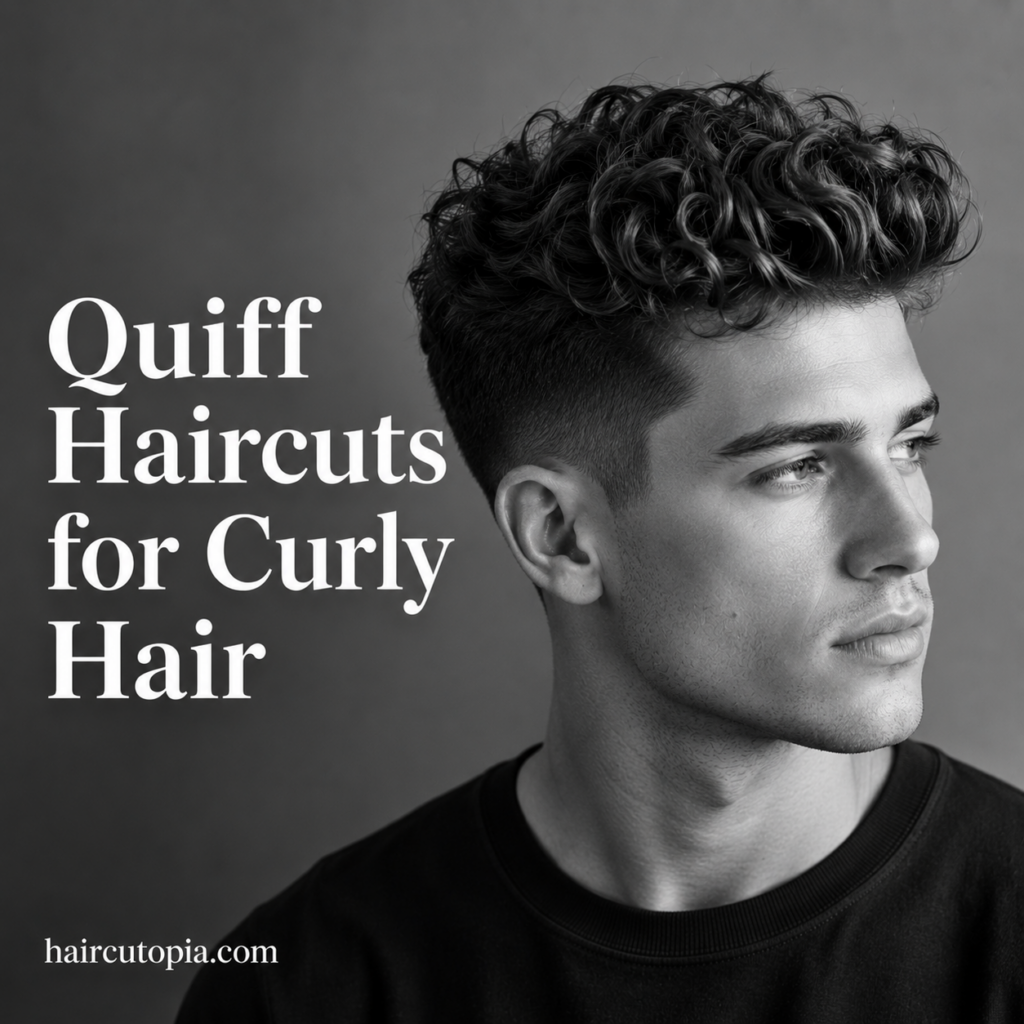
A quiff can look especially good on curly hair. Curls already bring texture, movement, and natural volume, so the style does not need to be forced into a perfectly smooth, high-shine shape to work.
The best curly quiff embraces what the hair naturally wants to do. Instead of flattening curls or trying to make them behave like straight hair, the cut uses their lift at the front and their texture through the top.
Whether your curls are loose, medium, tight, or somewhere in between, a quiff can give them a sharper outline while keeping the finished look relaxed and natural.
Why a Quiff Works for Curly Hair
Curly hair has built-in volume, which is one of the main things a quiff needs. The front can be lifted upward and slightly back, while the rest of the curls add fullness and texture across the top.
A curly quiff also has more movement than a traditional smooth quiff. It can look polished, but it rarely looks overly formal or stiff.
A well-cut quiff can help curly hair look:
- More structured without losing its natural texture
- Fuller through the front and top
- Cleaner around the sides and neckline
- Easier to style into a consistent shape
- More intentional than simply letting curls grow out evenly
The goal is usually controlled volume, not maximum volume. Too much width at the sides can make the haircut look unbalanced, especially with dense curls.
What to Ask Your Barber for a Curly Quiff
The right haircut makes all the difference with curly hair. Curls shrink as they dry, so a cut that looks short while wet can end up much shorter than expected.
Tell your barber that you want enough length on top to lift the curls into a quiff shape. Ask them to account for shrinkage and keep the front slightly longer than the rest of the top.
A simple request could be:
“I want a curly quiff with enough length at the front for natural lift. Keep the curls textured on top, clean up the sides, and avoid taking too much weight out.”
You may also want to ask for:
- Around 3 to 5 inches on top, depending on curl tightness
- Extra length at the front
- Light shaping rather than aggressive thinning
- A low taper, mid taper, or fade on the sides
- A blended crown so the haircut grows out naturally
- A neckline that matches how clean or natural you want the finish to look
If your curls are tight or coily, ask your barber to cut conservatively. It is always easier to remove more length than to wait for curls to grow back.
Best Quiff Haircuts for Curly Hair
Short Curly Quiff
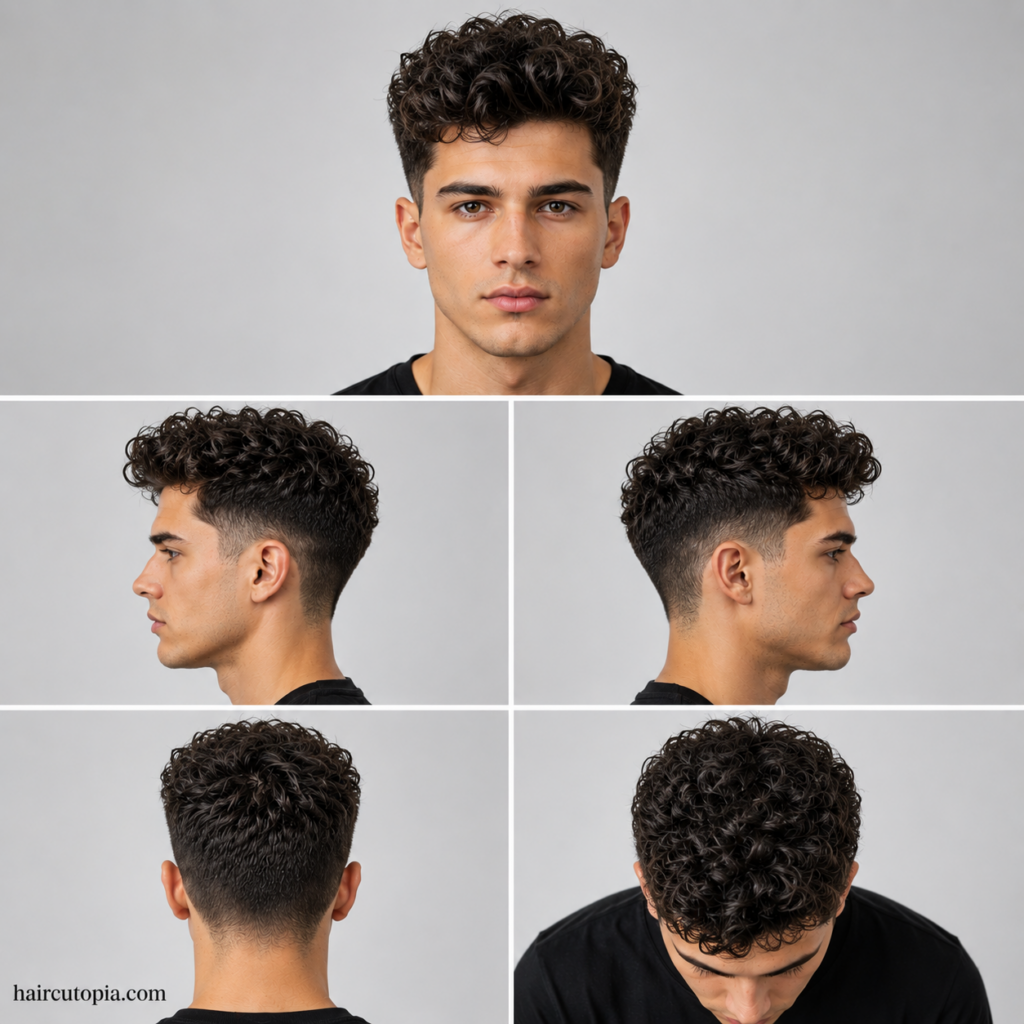
A short curly quiff is a practical, easy-to-maintain style. The top is kept short enough to stay controlled, but long enough for the curls at the front to rise naturally.
The sides can be tapered or faded, depending on how much contrast you want. A low taper gives a softer look, while a mid fade creates a sharper outline.
This is a great choice if you want to keep your curls neat without losing their texture.
Textured Curly Quiff with Low Fade
A low fade keeps the sides tidy while leaving enough hair near the upper sides to support the shape of the curls on top.
The top is left longer and styled with a curl cream or mousse, allowing the curls to sit upward and slightly back. The result is modern, clean, and easy to wear in casual or professional settings.
A low fade is often more forgiving than a high fade because it does not make the curl volume on top look too disconnected.
Curly Quiff with Taper Fade
A taper fade is one of the most versatile options for curly hair. It gradually shortens around the temples, ears, and neckline while leaving more natural fullness through the sides.
This creates a clean haircut without taking away the softness that makes curly hair look good.
A curly quiff with a taper fade works well if you want a style that grows out naturally. It is also a good option if you do not want to visit the barber every two weeks to keep a skin fade looking sharp.
Messy Curly Quiff
A messy curly quiff is relaxed, textured, and intentionally imperfect. The curls are encouraged to lift at the front, while the rest of the top is left with natural movement.
This style is ideal for men with loose curls or wavy-curly hair. It looks best when the curls are hydrated and defined rather than dry and overly separated.
Use a lightweight curl cream or leave-in conditioner, then scrunch the hair upward as it dries. Avoid brushing the curls once they are dry, since that can create frizz.
Curly Quiff with Mid Fade
A mid fade creates more contrast than a low fade while still keeping the haircut balanced. It can work well for medium-density curls and men who want a more modern, sharper look.
The key is keeping enough length on top. If the curls are cut too short, they may not have enough weight or shape to form a visible quiff.
A mid fade can be especially flattering if you have a rounder face shape because it creates a little more height and definition.
Long Curly Quiff
A long curly quiff gives you more volume, movement, and styling flexibility. The curls on top are left longer, often 4 to 6 inches or more depending on curl pattern.
You can wear the front high and loose, push it back for a more polished look, or let a few curls fall forward for a softer finish.
This style needs more care than a short curly quiff. Regular conditioning, occasional trims, and the right products are important if you want the curls to stay defined rather than becoming bulky.
Curly Quiff with Drop Fade
A drop fade curves down behind the ear and follows the natural shape of the head. Paired with a curly quiff, it creates a more detailed silhouette from the side and back.
This haircut works well when the curls are dense or voluminous because the fade removes bulk around the lower sides while keeping the top full.
A drop fade can also make the hairstyle feel more customized than a standard fade, especially when paired with a clean lineup around the temples.
Curly Quiff with Scissor-Cut Sides
Not every curly quiff needs a fade. Scissor-cut sides can create a softer, more classic look that keeps the haircut fuller overall.
This is a good option for men with looser curls, wavy hair, or a preference for a less dramatic contrast. The sides are shaped and blended rather than clipped down tightly.
A scissor-cut curly quiff can also be easier to grow out and may require fewer barber visits than a fade-heavy style.
Curly Quiff with Fringe
A curly quiff with fringe combines a little forward curl definition with lift at the front. It can be a useful style if you have a high forehead, uneven hairline, or simply prefer a softer shape.
Instead of pushing every curl straight back, a few curls are allowed to sit naturally near the front while the rest is styled upward.
Keep the fringe light and textured. A heavy fringe can make curly hair feel bulky and can hide the quiff shape.
Curly Quiff with Temple Fade
A temple fade focuses on cleaning up the hair around the temples and sideburns while leaving most of the sides and back natural.
This is a subtle but effective choice for curly hair. It gives the quiff a cleaner frame without removing too much volume from the overall haircut.
It works especially well for men who like a natural curly top but still want a fresh, barbershop-style finish.
How to Style a Curly Quiff
Curly hair usually looks best when it is styled with moisture and gentle direction. The goal is to define the curls while encouraging the front to lift.
Try this simple routine:
- Start with damp, freshly washed hair.
- Apply a leave-in conditioner or lightweight curl cream.
- Add mousse if you want more lift and hold at the front.
- Use your fingers to guide the front curls upward and slightly back.
- Diffuse on low or medium heat, lifting the roots as you dry.
- Let the rest of the curls dry naturally or continue diffusing.
- Finish with a small amount of curl-defining cream if needed.
Avoid rough towel-drying. Use a microfiber towel or soft cotton T-shirt to gently squeeze out excess water. This helps reduce frizz and keeps the curl pattern intact.
Best Products for a Curly-Hair Quiff
The best products for curly hair focus on hydration, definition, and flexible hold.
Leave-In Conditioner
A leave-in conditioner helps keep curls soft, hydrated, and easier to shape. It is especially useful if your hair tends to feel dry or frizzy.
Curl Cream
Curl cream adds definition without making the hair stiff. It is a strong everyday option for a natural curly quiff.
Volumizing Mousse
Mousse can give the front extra lift and help the quiff hold its shape. Look for an alcohol-free or curl-friendly formula if your hair dries out easily.
Lightweight Gel
A lightweight gel can provide stronger hold for humid days or longer curly quiffs. Scrunch it into damp hair, then let it dry before gently breaking any cast with your hands.
Sea Salt Spray
Sea salt spray can add texture to looser curls and wavy hair, but use it sparingly. Too much can leave curls dry or rough.
Common Curly Quiff Mistakes to Avoid
A curly quiff can look effortless, but a few mistakes can make it harder to manage.
Try to avoid:
- Cutting curls too short at the front
- Forgetting to account for shrinkage
- Using too much heavy wax or pomade
- Brushing curls dry
- Over-thinning dense curls
- Taking the fade too high without enough length on top
- Skipping conditioner
- Using high heat without a diffuser or heat protectant
The best results usually come from working with your curl pattern rather than trying to change it completely.
Choosing a Curly Quiff for Your Face Shape
A curly quiff can be adjusted to suit most face shapes by changing the height, width, and side length.
Round Faces
A little extra height at the front can make the face appear longer. Pair the quiff with a mid fade or taper to reduce width at the sides.
Oval Faces
Oval faces can wear almost any curly quiff variation. A short textured quiff, taper fade, or longer loose version can all work well.
Square Faces
A softer curly quiff can balance a strong jawline. A low taper or scissor-cut sides often creates a more natural shape than an extremely high fade.
Long Faces
Avoid too much height at the front. Keep the quiff moderate and leave some length through the sides to maintain balance.
Heart-Shaped Faces
A curly quiff with a softer taper can balance a wider forehead and narrower chin. Avoid overly tight sides if you want a more even overall shape.
How Often Should You Trim a Curly Quiff?
Most curly quiffs benefit from a trim every 4 to 6 weeks. If you wear a fade, you may want a cleanup every 2 to 3 weeks to keep the sides sharp.
Longer curly quiffs can usually go a little longer between full cuts, but regular shaping helps prevent the sides from becoming bulky and the top from losing its form.
If you are growing your curls out, ask for a maintenance trim. Your barber can clean up the neckline and remove uneven bulk without taking away the length you have been building.
Final Thoughts
A quiff is a great way to give curly hair more structure while keeping the texture that makes it unique. The right version can be clean and modern, relaxed and messy, or polished enough for more formal settings.
Keep enough length at the front, choose a taper or fade that suits your style, and use moisture-focused products that define the curls without weighing them down.
Once you find the right balance of shape, length, and styling routine, a curly quiff can become one of the easiest ways to make your natural texture look sharper and more intentional.