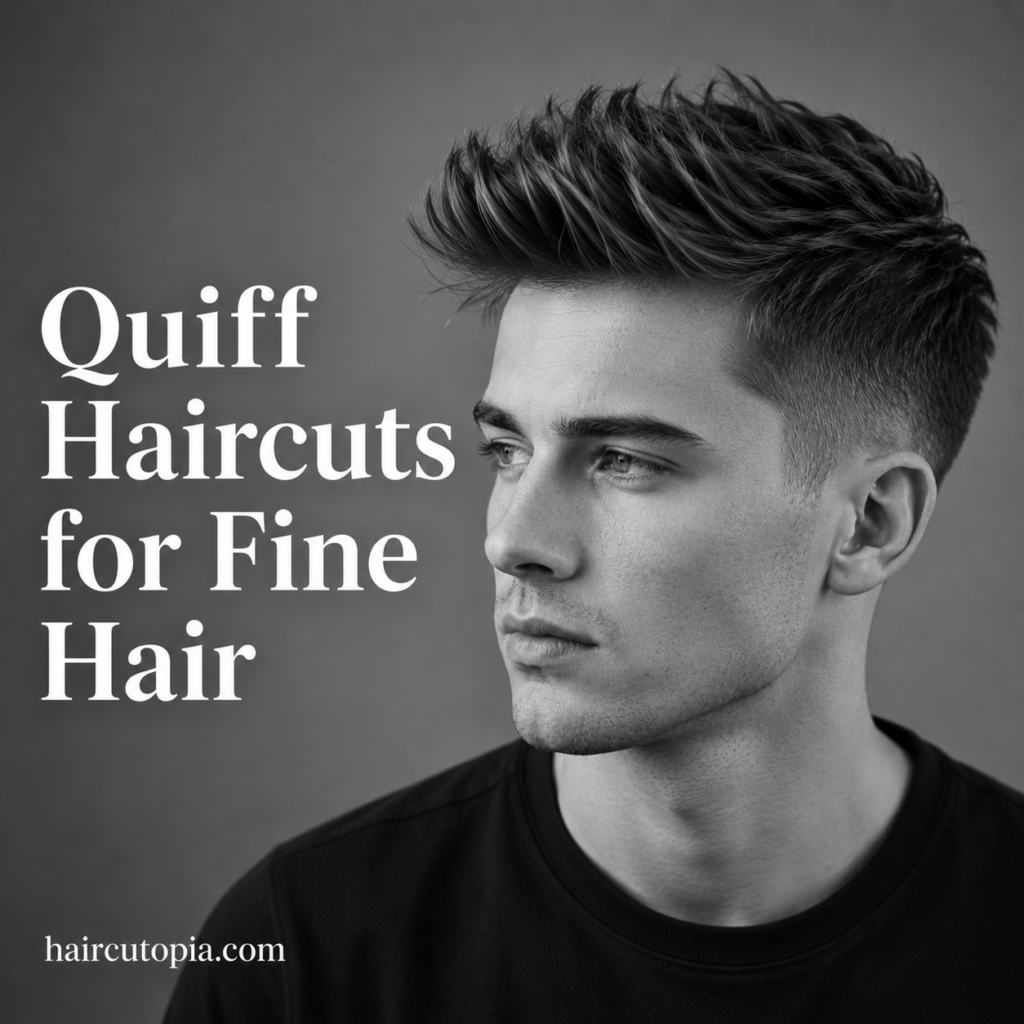
A quiff can be a great haircut for men with fine hair. It creates lift at the front, adds shape through the top, and makes the hair look more substantial without needing a long or overly complicated style.
Fine hair is different from thin hair, although the two are often used interchangeably. Fine hair refers to the diameter of each individual strand. You may have plenty of fine hair, but because each strand is lightweight, it can fall flat, separate easily, or struggle to hold volume.
That is where a well-cut quiff comes in. With the right length, texture, and styling routine, a quiff can make fine hair look fuller, more structured, and easier to manage.
Why a Quiff Works Well for Fine Hair
A quiff lifts the hair away from the scalp instead of letting it lie flat. That alone can create the appearance of more volume.
The style also adds direction. When fine hair is styled upward and slightly back, it looks more intentional and less likely to appear limp or overly soft.
A quiff can help fine hair look:
- Fuller at the front
- More textured through the top
- More balanced with the sides
- Cleaner and more styled overall
- Less flat by the end of the day
The best quiff for fine hair is usually not the biggest one. A moderate amount of height with natural texture tends to look more believable and hold up better.
Fine Hair vs. Thin Hair: What Is the Difference?
Fine hair describes the texture of individual strands. The strands are smaller in diameter, often soft, lightweight, and smooth.
Thin hair describes lower hair density. It means there are fewer hairs growing from the scalp, which can make the scalp more visible.
You can have:
- Fine hair that is still very dense
- Fine hair that is also thin
- Thick hair with fine individual strands
- Coarse hair with low density
This matters because a man with fine but dense hair may be able to wear a fuller quiff than someone with fine hair and visible thinning. In both cases, though, lightweight styling and smart cutting techniques are important.
What to Ask Your Barber for a Fine-Hair Quiff
A good barber can make fine hair much easier to style. The haircut should create shape without removing so much weight that the hair becomes wispy.
Tell your barber you want a quiff that adds volume and texture but still looks natural. Ask them to keep extra length at the front and use light point cutting or soft layering through the top.
A simple way to explain it is:
“I have fine hair and want a short textured quiff that creates volume. Please leave enough length at the front to style upward, but avoid over-thinning the top.”
You may also want to ask for:
- About 2 to 4 inches of length on top
- Slightly longer length at the front
- Soft texture instead of heavy thinning
- A low taper or subtle fade
- A natural blend through the crown
- Sides that are not taken too high or too tight
Avoid asking for too much texturizing if your hair is already very fine. A little texture adds movement, but too much can make the ends look sparse.
Best Quiff Haircuts for Fine Hair
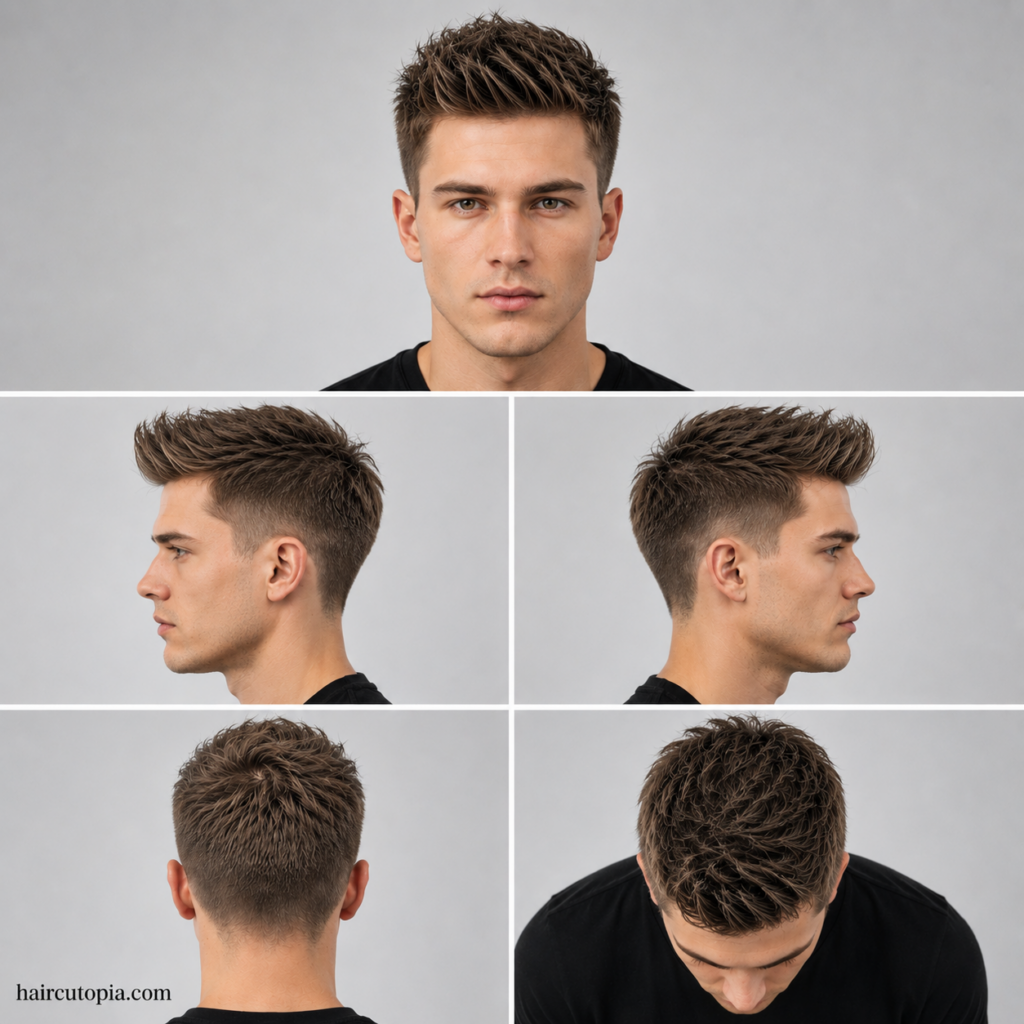
Short Textured Quiff
A short textured quiff is one of the easiest and most reliable choices for fine hair. The top stays light enough to lift, while the front has enough length to create a soft upward shape.
The texture keeps the style from looking flat or overly smooth. It also makes fine hair appear more dimensional, especially when styled with a matte product.
This is a good option if you want something low-maintenance that still looks put together.
Soft Quiff with Low Taper
A low taper gives the haircut a clean outline without removing too much hair from the sides. That is useful for fine hair because keeping some fullness around the upper sides can make the top look more balanced.
The quiff itself should be soft rather than sharply sculpted. Think natural lift and movement, not a stiff wall of hair.
This style works well for everyday wear and grows out nicely between barber visits.
Textured Quiff with Low Fade
A low fade can give fine hair a more modern look while keeping the contrast manageable. The fade starts low around the ears and neckline, leaving more hair around the upper sides.
The top is styled with loose texture and a modest amount of height. This keeps the hairstyle looking full without putting too much focus on the scalp.
If you have a strong hairline and decent density, a low fade can be a great match for a fine-hair quiff.
Side-Swept Quiff
A side-swept quiff is especially helpful if your fine hair naturally falls to one side. It uses that natural direction instead of fighting it.
The front is lifted and swept diagonally across the head, creating more movement and visual coverage. It can also make the top appear fuller because the hair is not separated straight down the middle.
Keep the side part soft. A hard part can expose more scalp and make fine hair look flatter.
Messy Quiff
A messy quiff is relaxed, textured, and forgiving. It works well with fine hair because it does not require every strand to stay perfectly in place.
The top is blow-dried upward, then finished with a small amount of matte paste or texture powder. The result should look light and slightly undone, not messy in a careless way.
This style is a strong choice if your hair loses shape during the day. A little natural movement can make the haircut look better rather than worse.
Brushed-Up Quiff
A brushed-up quiff is a simpler version of the classic quiff. Instead of sweeping the hair dramatically backward, the front is lifted upward and directed slightly back.
This creates a clean, modern shape that is easy to style with fine hair. It does not need much length, and it works well with tapered sides or a low fade.
A brushed-up quiff is also a good choice if you are new to styling your hair with a blow dryer.
Classic Quiff with Scissor-Cut Sides
Not every quiff needs a fade. Keeping the sides scissor-cut and slightly longer can create a softer, fuller-looking haircut.
This approach works particularly well for fine hair because it avoids a sharp contrast between the top and sides. The overall shape feels more natural and can be easier to grow out.
The top can be styled neatly for work or loosened up with texture for a more casual finish.
Quiff with a Soft Fringe
A quiff with a soft fringe leaves a little hair forward near the hairline while lifting the rest of the front upward. It is useful for men who want some coverage around the forehead without wearing a full fringe.
The style can create a fuller-looking front section while still keeping the height and shape of a quiff.
Ask your barber to keep the fringe light and textured. A heavy, blunt fringe can weigh down fine hair.
Wavy Quiff for Fine Hair
If your fine hair has even a slight wave, use it. Natural movement can make fine hair look thicker and more textured.
A wavy quiff is usually styled with sea salt spray or mousse before blow-drying. The front is lifted gently, while the rest of the top is left with a little natural bend.
This creates a casual, lived-in look that does not depend on heavy product.
How to Style a Quiff for Fine Hair
The styling process matters as much as the haircut. Fine hair usually needs help at the roots, but it can quickly become weighed down if you use too much product.
Follow these steps for a natural-looking quiff:
- Start with clean, towel-damp hair.
- Apply a lightweight volumizing mousse, root-lift spray, or sea salt spray.
- Blow-dry the front upward and back while lifting the roots with your fingers or a small brush.
- Dry the sides in the direction you want them to sit.
- Use a pea-sized amount of matte paste, lightweight clay, or texture powder.
- Gently shape the front and avoid overworking the hair once it is dry.
- Finish with a light flexible-hold hairspray if needed.
Blow-drying is the step that creates the volume. Styling product mainly helps hold the shape after you have built it.
Best Styling Products for Fine Hair Quiffs
Fine hair usually responds best to lightweight products with a natural or matte finish.
Volumizing Mousse
Mousse gives the roots lift before blow-drying and can help the quiff stay in place without feeling sticky.
Root-Lifting Spray
A root-lifting spray is useful if your hair tends to flatten quickly. Apply it near the front and crown before blow-drying.
Sea Salt Spray
Sea salt spray adds grip and texture, making fine hair feel less silky and easier to shape. Use it sparingly to avoid dryness.
Matte Paste
A matte paste gives flexible hold with a natural finish. It works well for short textured quiffs and messy styles.
Texture Powder
Texture powder can add quick lift and grip at the roots. It is especially useful for refreshing a quiff later in the day.
Flexible-Hold Hairspray
A light hairspray can help lock in the shape without making fine hair stiff. Avoid strong formulas that make the hair look crunchy or overly fixed.
Styling Mistakes to Avoid with Fine Hair
Fine hair can look great in a quiff, but a few common mistakes can make it harder to manage.
Try to avoid:
- Applying too much product
- Using heavy waxes or oily pomades
- Growing the top too long without adding shape
- Cutting the sides too high and tight
- Over-texturizing with thinning shears
- Creating a sharp hard part
- Blow-drying without lifting the roots
- Touching the hair constantly after styling
A lighter approach usually works best. Build the shape with heat, then use just enough product to keep it in place.
Choosing a Fine-Hair Quiff for Your Face Shape
A quiff can be adjusted to suit nearly any face shape.
Round Faces
A slightly taller quiff can add vertical length and make the face look more defined. A low or mid taper can keep the sides clean.
Oval Faces
Oval faces can wear almost any quiff style. Short textured quiffs, side-swept versions, and classic quiffs all work well.
Square Faces
A soft textured quiff can balance strong angles. Keep the sides tapered rather than extremely tight for a more natural finish.
Long Faces
Avoid too much height. A modest quiff with slightly longer sides can help keep the face in proportion.
Heart-Shaped Faces
A side-swept or softer quiff can balance a wider forehead and narrower chin. Avoid overly sharp fades if you want a more balanced shape.
How Often Should You Trim a Fine-Hair Quiff?
Most fine-hair quiffs benefit from a trim every 3 to 5 weeks. This keeps the front light enough to lift and prevents the haircut from losing its shape.
If you wear a fade, you may want a cleanup every 2 to 3 weeks. If your sides are longer and scissor-cut, you can often wait a little longer between appointments.
Regular trims are especially helpful for fine hair because long, uneven ends can make the style look flatter and less polished.
Final Thoughts
A quiff is one of the best ways to give fine hair more height and structure. The most flattering version is usually light, textured, and easy to move rather than overly tall or heavily styled.
Keep the top at a manageable length, avoid heavy products, and use a blow dryer to lift the roots before applying styling product. A good cut does most of the work, while the right routine helps the style stay full throughout the day.
With a little practice, a fine-hair quiff can become a dependable everyday haircut that looks fuller, sharper, and more confident.

Related Posts
 Caesar Cut Haircuts for Straight Hair: Timeless Styles with a Modern Edge
 Textured Crop Haircuts: The Complete Guide to Modern, Stylish, and Low-Maintenance Looks
 Short Taper Fade Haircuts: Clean, Modern Styles That Never Go Out of Fashion
 Short Fringe Haircuts: 25 Stylish Ideas, Who They Suit, and How to Style Them