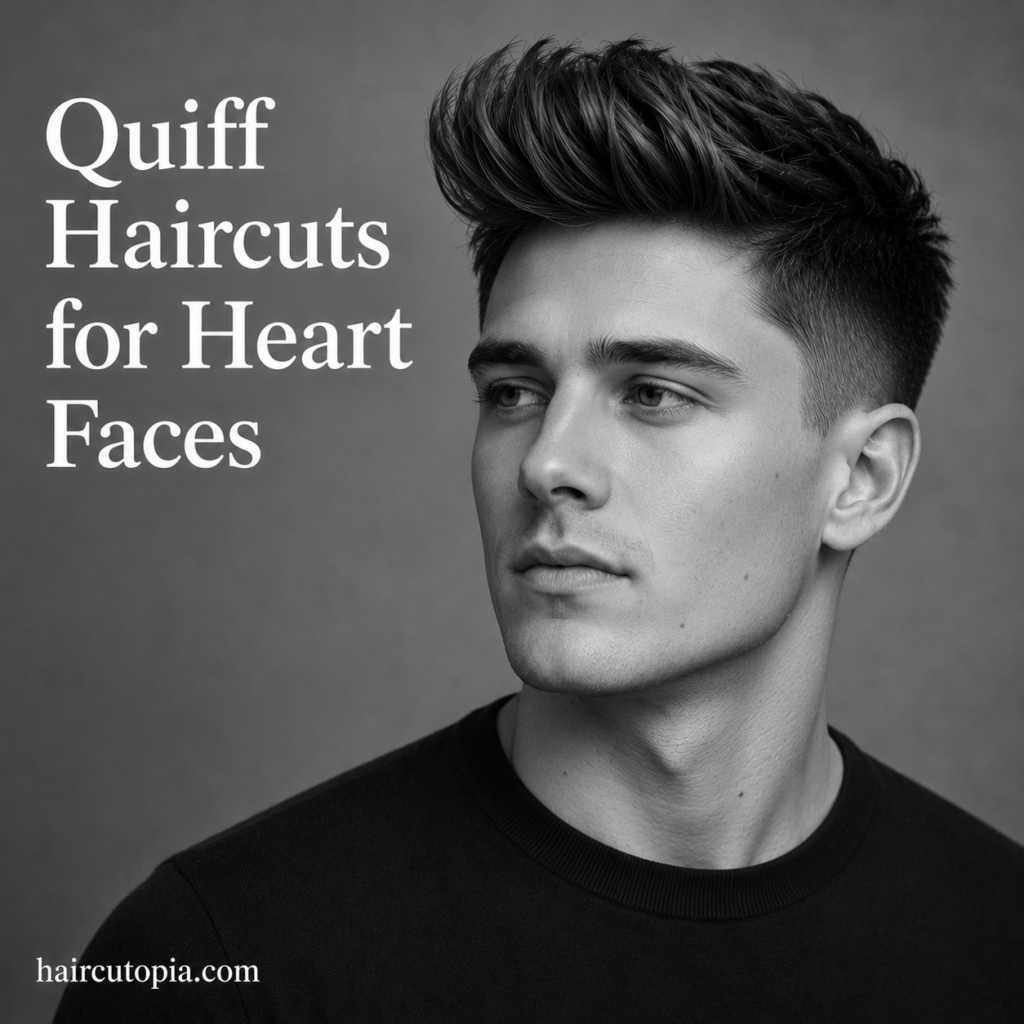
A heart-shaped face usually has a broader forehead, noticeable cheekbones, and a narrower jawline that comes to a softer point at the chin. It is a distinctive face shape, and the right haircut can help bring those proportions into balance.
A quiff can work very well for heart faces, but the cut needs to be chosen carefully. Since a quiff adds volume at the front, an overly tall or wide style can make the forehead look even broader. The best versions keep the height controlled, use texture to soften the shape, and avoid taking the sides too tight.
The goal is to create a haircut with movement and structure while keeping the overall silhouette balanced from forehead to jaw.
Why Quiff Haircuts Work for Heart Faces
A quiff is defined by longer hair at the front, styled upward and back. It can add volume, create a more polished look, and give the top of the head a stronger shape.
For heart-shaped faces, the most flattering quiffs tend to be slightly softer and less dramatic than the styles that work for round faces. Instead of building a lot of height directly above the forehead, it is often better to create texture and a gentle side-swept direction.
A well-balanced quiff can help:
- Add movement without making the forehead look wider
- Bring attention toward the center of the face
- Create a fuller appearance around the temples and sides
- Balance a narrow chin with moderate volume on top
- Give straight, wavy, or thick hair more shape
The key is avoiding extremes. A quiff should complement the face rather than becoming the main feature.
Best Quiff Haircuts for Heart Faces
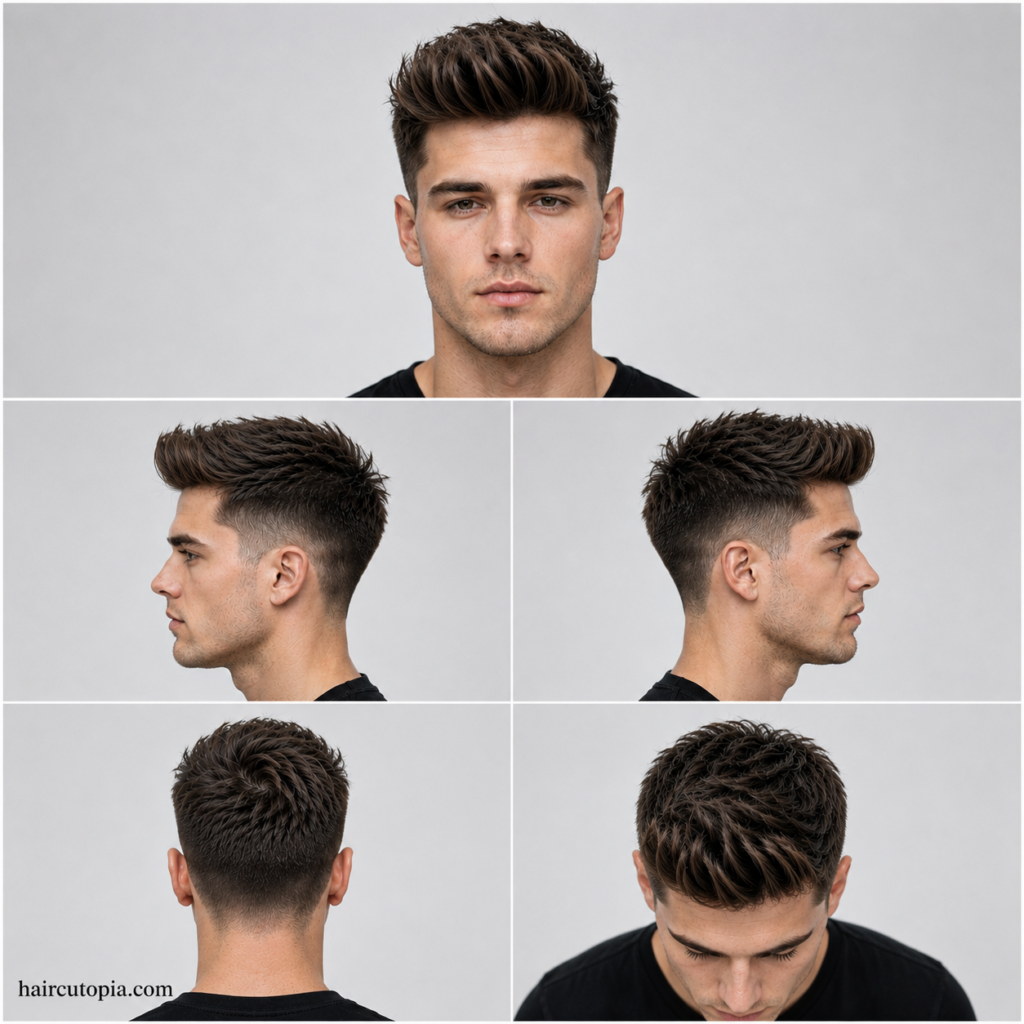
Textured Quiff with a Low Taper
A textured quiff with a low taper is one of the best all-around choices for heart faces. The top has enough length to lift and move, but the sides are not faded too aggressively.
That extra side weight is useful because it helps balance a wider forehead and narrower lower face. A low taper keeps the haircut clean around the ears and neckline while still preserving a natural shape.
Ask your barber for soft texture through the top and a controlled quiff that does not stand too high. The front can be lifted slightly, then directed back or to one side.
This style works especially well for:
- Straight hair
- Slightly wavy hair
- Medium or thick hair
- Men who want a versatile everyday haircut
Side-Swept Quiff with Scissor-Cut Sides
A side-swept quiff is especially flattering for heart-shaped faces because it creates a diagonal line instead of adding volume evenly across the forehead.
The front is lifted gently and swept to one side, while the sides are kept longer and blended with scissors. This softens the overall look and prevents the haircut from feeling too tight around the temples.
Scissor-cut sides are a strong choice if you want a more natural style or if your hair has wave and movement. They also make the haircut easier to grow out.
For a cleaner version, ask for a subtle taper around the ears and neckline without a high fade.
Messy Quiff with a Low Fade
A messy quiff with a low fade gives heart faces a modern, casual option. The low fade keeps the sides neat, while the textured top adds movement without looking too formal.
The important detail is the height. Keep the quiff medium rather than tall, and avoid styling it straight up in a large vertical shape. A slightly forward or side-swept finish often looks more balanced.
Use a matte clay or texture paste to create separation. The finished style should look relaxed, not overly sculpted.
Wavy Quiff with a Soft Taper
Wavy hair naturally works well with a heart-shaped face because it creates softness around the forehead and temples. A wavy quiff uses that texture instead of trying to force the hair into a smooth, rigid shape.
A soft taper keeps the haircut tidy while allowing the sides to retain some natural fullness. This is important because very short sides can make the upper part of the face appear wider.
Ask your barber to leave enough length on top for the wave to form naturally. Layers and point-cutting can help reduce bulk while keeping the style light.
A lightweight styling cream or sea salt spray usually works better than a heavy pomade for this look.
Short Quiff with a Tapered Side Part
A short quiff with a subtle side part is a smart option if you want something neat and easy to style. The front is left long enough for a small amount of lift, while the top stays shorter and more controlled.
The side part adds direction without making the haircut feel too wide. A taper around the ears and neckline keeps everything clean and professional.
This style is a good fit for men who prefer:
- Shorter hair
- A polished everyday look
- Minimal morning styling
- A haircut that works in professional settings
Avoid taking the part too hard or shaving in a visible line. A softer, natural part usually suits a heart face better.
Medium Quiff with a Mid Taper
A medium quiff with a mid taper gives you a little more height and contrast while still keeping the haircut balanced. The sides are shorter than a scissor-cut style, but the taper is not pushed so high that it makes the forehead look wider.
This style works well if you like a cleaner barbershop finish but do not want a skin fade. Keep the top textured and slightly relaxed rather than perfectly smooth.
The front can be styled up and back, but it should stay fairly compact. A wide, fluffy quiff can throw off the proportions of a heart-shaped face.
Long Textured Quiff with Natural Sides
A longer textured quiff can work well for heart faces when the sides are left natural and blended. The added length creates movement, while the fuller sides help balance the lower half of the face.
This style is best for men with thicker or wavier hair. It has a relaxed, modern look and can be worn slightly messy, side-swept, or brushed back with a soft finish.
Because there is more hair to work with, regular styling is important. Blow-drying the front into place and using a lightweight product will keep the quiff from becoming too wide or heavy.
How Much Length Do You Need for a Quiff?
Most quiffs need at least 3 inches of length at the front. That gives you enough hair to lift it slightly and direct it back or to the side.
For heart faces, medium length is often the sweet spot. You want enough length for texture and movement, but not so much that the style becomes overly tall or wide.
A simple guide:
- Short quiff: 2 to 3 inches on top
- Medium quiff: 3 to 5 inches on top
- Long quiff: 5 inches or more on top
If your hair is wavy or curly, remember that it may shrink as it dries. Your barber may leave more length than expected so the quiff still has enough movement once styled.
What to Ask Your Barber for a Quiff Haircut
When you sit down in the chair, mention your face shape and the overall balance you want.
You can say:
“I have a heart-shaped face, so I want a textured quiff with moderate height and some softness around the sides. Keep the top long enough to style up and slightly to the side, but do not make it too tall or too wide.”
Then choose the side finish that fits your style:
- “Give me a low taper and keep some weight through the sides.”
- “Keep the sides scissor cut and naturally blended.”
- “I want a low fade, but do not take it too high.”
- “Add texture on top so it looks relaxed, not stiff.”
- “Leave enough length for a side-swept quiff.”
Reference photos are useful, but choose examples with similar hair texture and density when possible. A photo of a thick-haired quiff may not translate the same way on fine, straight hair.
How to Style a Quiff for a Heart Face
For heart-shaped faces, styling should focus on controlled volume and natural movement.
1. Start With Damp Hair
Towel dry your hair after washing, leaving it slightly damp. Apply a small amount of pre-styler, such as sea salt spray, mousse, or a lightweight styling cream.
This helps the hair hold its shape without needing too much heavy product later.
2. Blow-Dry With a Soft Direction
Use a blow dryer to lift the front gently upward, then guide it back or slightly to one side. A vent brush works well for a natural finish, while a round brush can create a smoother quiff.
Avoid drying the front straight up into a tall wall. A softer curve or side sweep is usually more flattering.
3. Use a Matte Product
Matte clay, paste, or styling cream is usually a better choice than high-shine gel. These products create texture and hold without making the hair look stiff.
Use a small amount, warm it between your hands, and work it through the hair. Focus on creating separation rather than forcing every strand into place.
4. Keep the Width Controlled
The top should have movement, but it should not spread outward at the temples. Use your fingers to keep the quiff slightly narrow and directed back.
If your hair naturally expands at the sides, use a little extra product around the temple area to keep the shape controlled.
5. Finish With Flexible Hold
A light hairspray can help keep the quiff in place throughout the day. Choose a flexible formula so the hair still looks natural and touchable.
Best Styling Products for Quiff Haircuts
The best product depends on your hair type and the look you want.
Fine Hair
Fine hair benefits from volumizing mousse or sea salt spray before blow-drying. Finish with a lightweight clay or paste that adds texture without weighing the hair down.
Thick Hair
Thick hair may need a stronger clay, fiber, or medium-hold pomade to control bulk. Blow-drying first will make the style easier to shape.
Wavy Hair
Use a styling cream, sea salt spray, or texture paste. These products define natural movement and keep the quiff from looking too polished or stiff.
Straight Hair
Straight hair works well with matte paste, clay, or a light pomade. If your hair falls flat easily, use a pre-styler before blow-drying.
Quiff Haircut Mistakes to Avoid With a Heart Face
The wrong proportions can make a quiff feel too top-heavy. Avoid these common mistakes:
- Styling the front too tall
- Creating too much width across the forehead
- Taking the sides into a very high skin fade
- Using too much glossy product
- Keeping the top smooth and overly rigid
- Cutting the sides too short when the chin is narrow
- Ignoring natural wave or texture
A heart-shaped face usually benefits from a softer quiff with moderate height and some natural fullness around the sides.
How Often Should You Trim a Quiff?
Most quiff haircuts need a trim every three to five weeks.
If you have a low fade or taper, you may want a cleanup every two to four weeks to keep the edges looking fresh. Scissor-cut sides can often go four to six weeks between appointments.
The top can usually be left longer as long as it still styles easily and does not start to feel heavy.
Final Thoughts
Quiff haircuts can be a great match for heart-shaped faces when they are kept balanced. The most flattering styles usually have moderate height, textured movement, and sides that are neat without being shaved too tight.
A textured quiff with a low taper is an easy starting point, while a side-swept quiff with scissor-cut sides offers a softer, more natural option. If you have wavy hair, lean into that texture rather than trying to force a perfectly smooth finish.
Keep the volume controlled, avoid overly high fades, and let the haircut work with your natural hair type. With the right cut and a few minutes of styling, a quiff can add shape and confidence without overpowering your features.

Related Posts
 Haircuts for Men with Heart Faces: 25 Styles That Balance Your Features
 Quiff Haircuts for Business Professionals: Polished Styles That Command Confidence
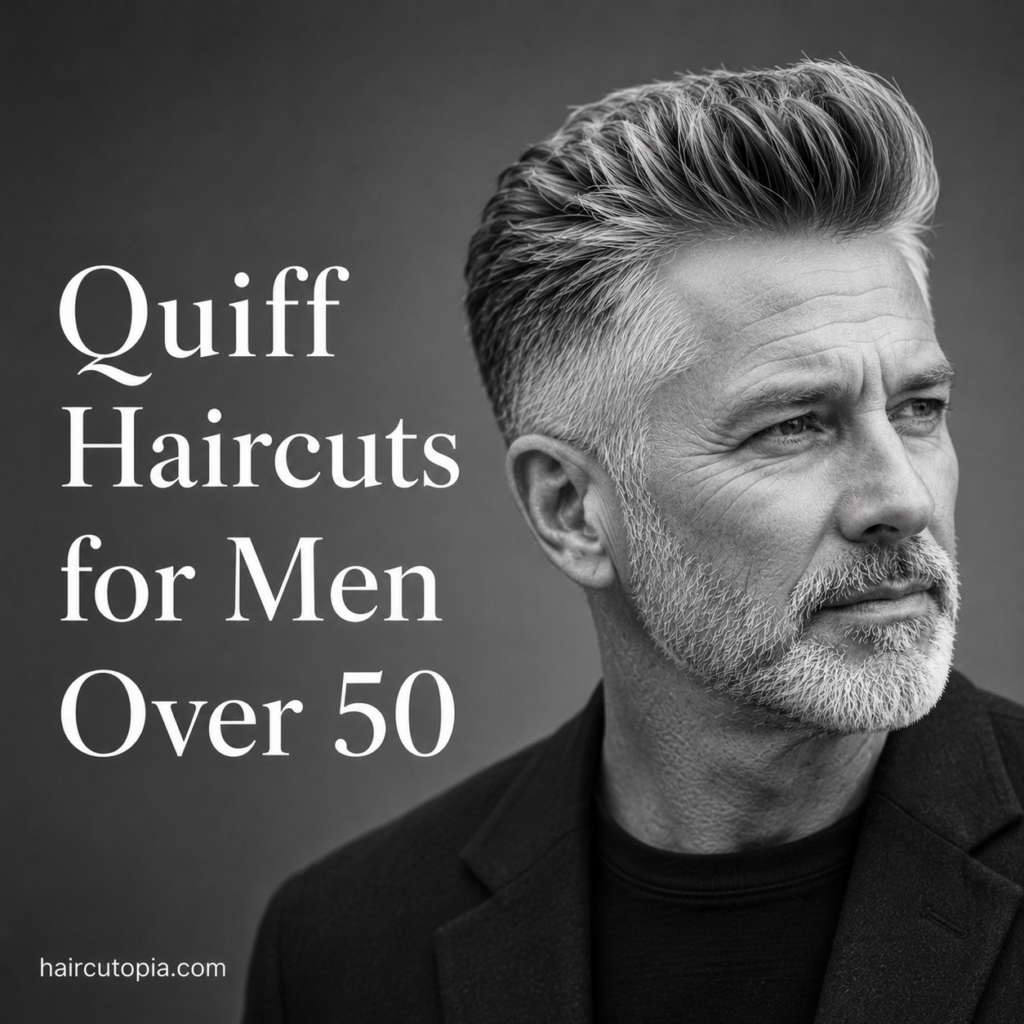 Quiff Haircuts for Men Over 50: Timeless, Refined Styles That Never Go Out of Fashion
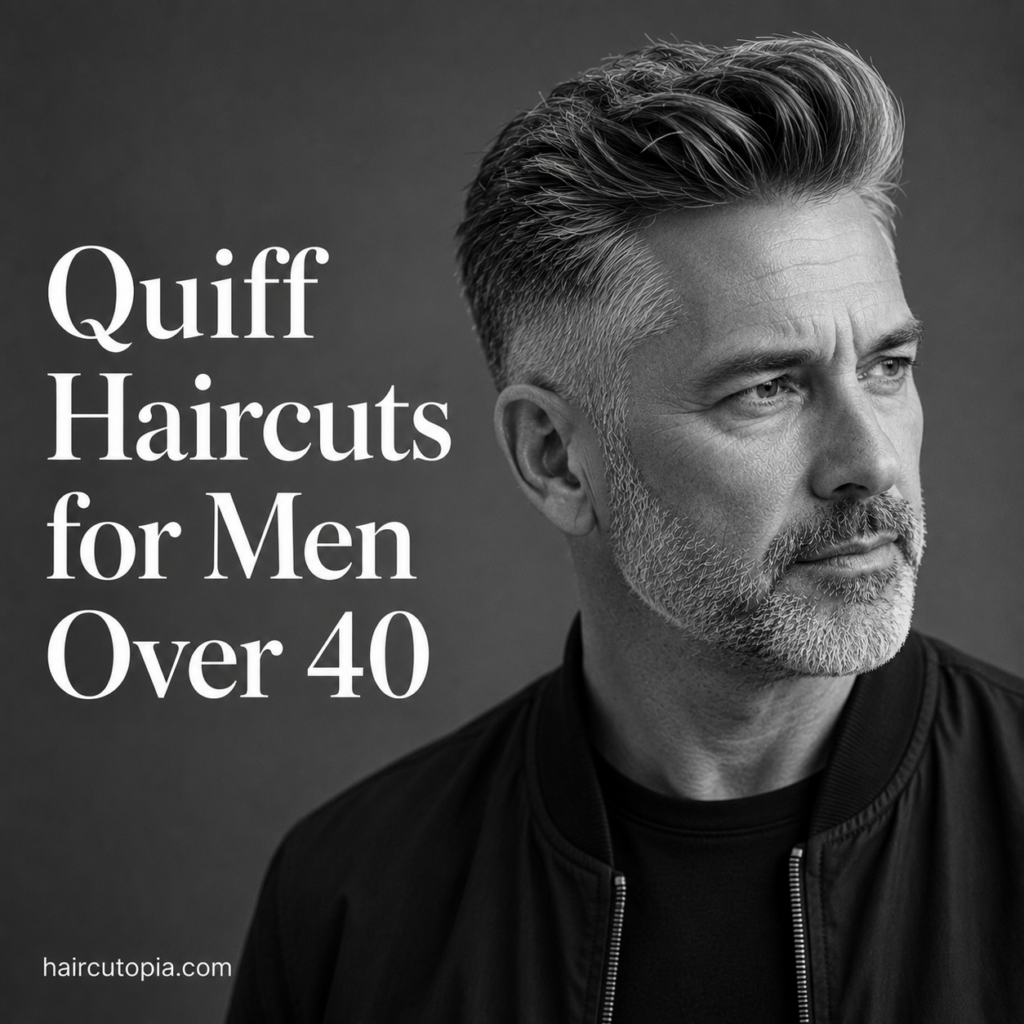 Quiff Haircuts for Men Over 40: Sophisticated Styles That Balance Confidence and Modern Appeal