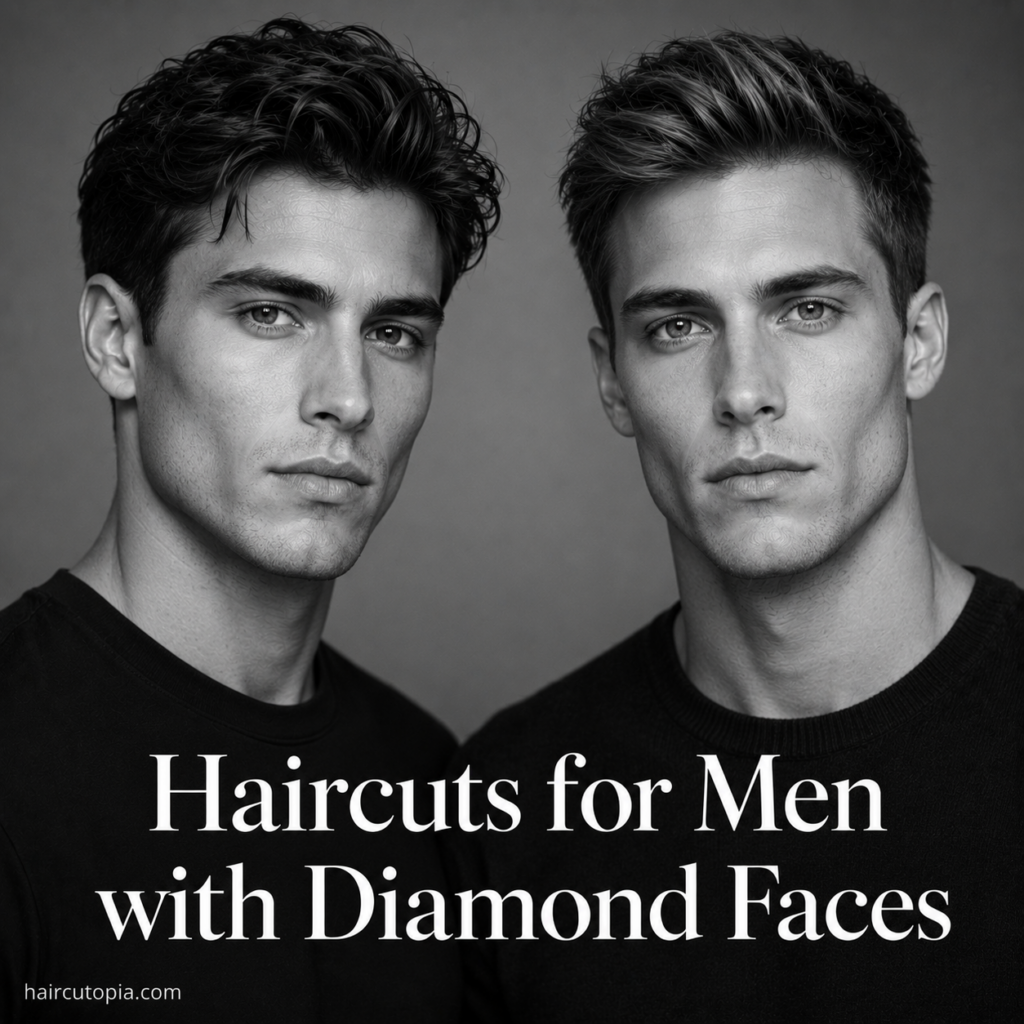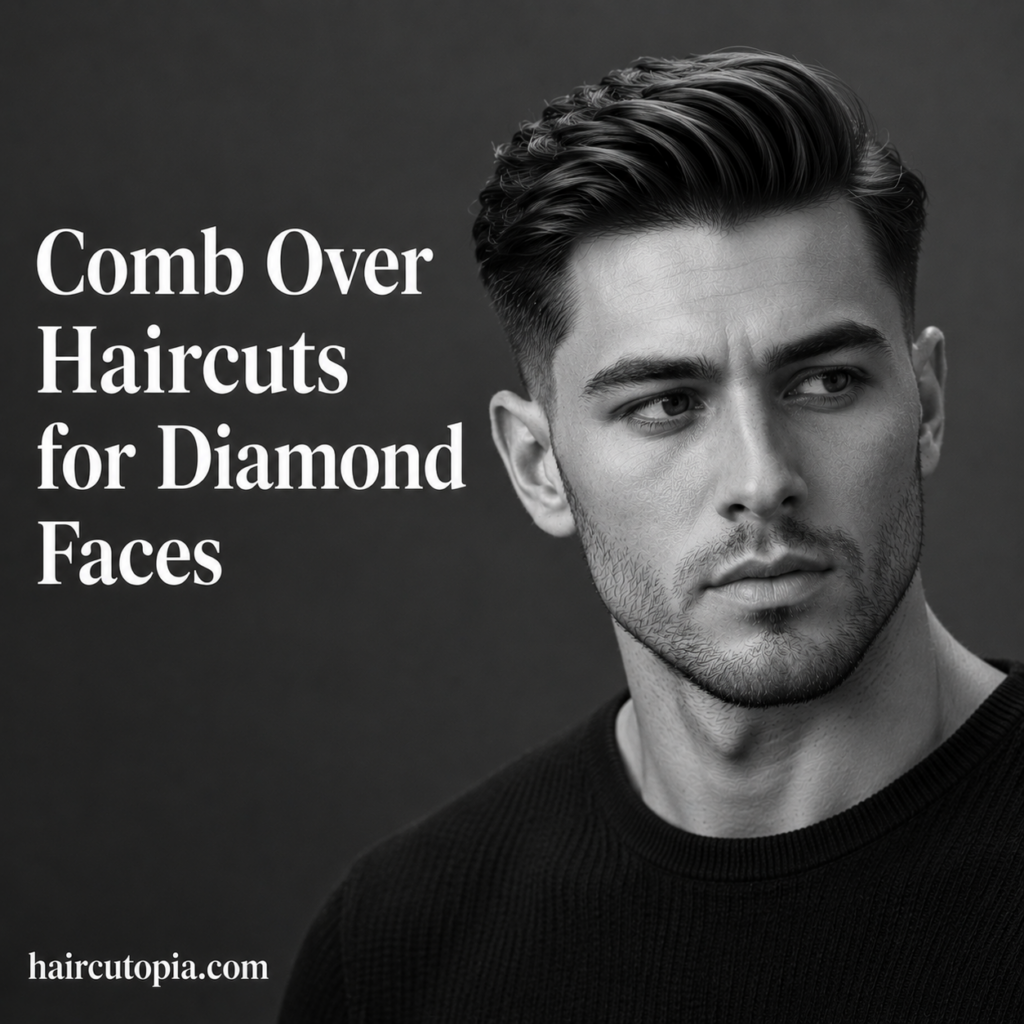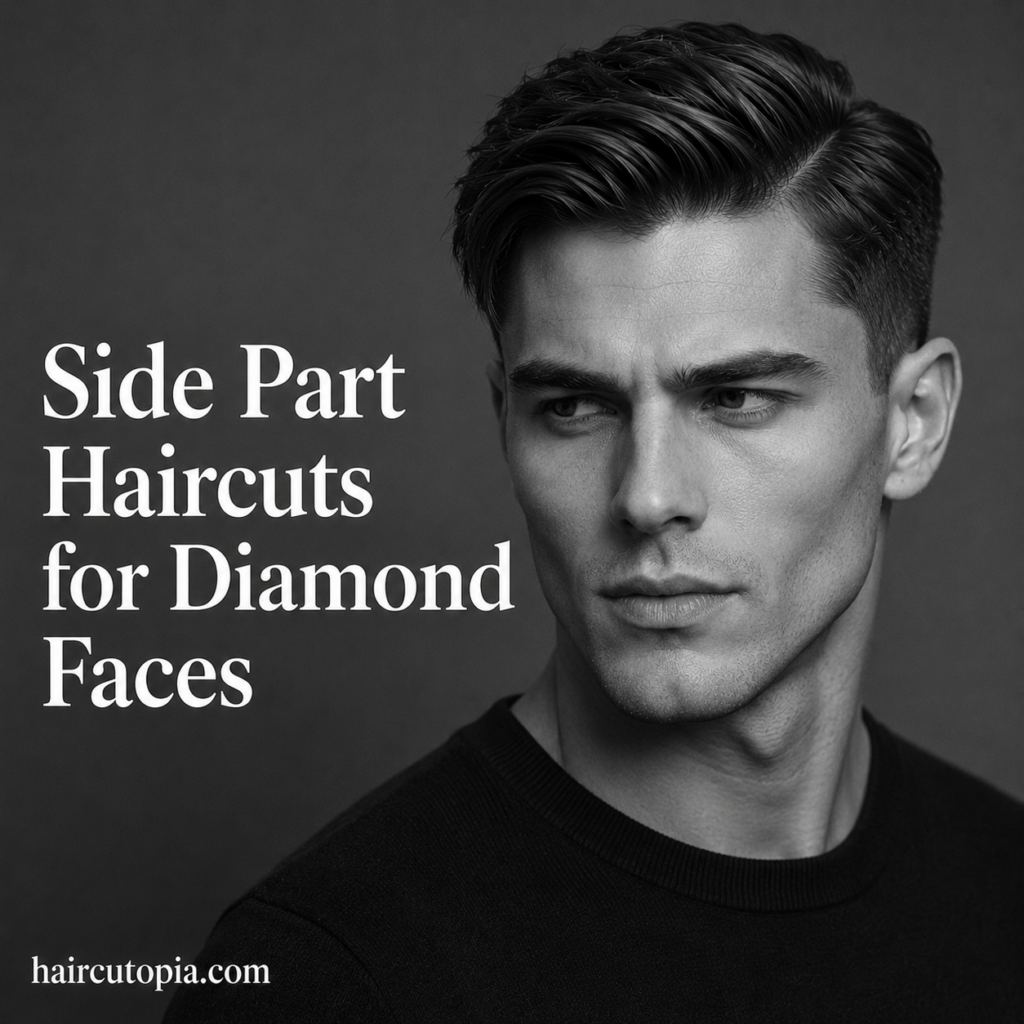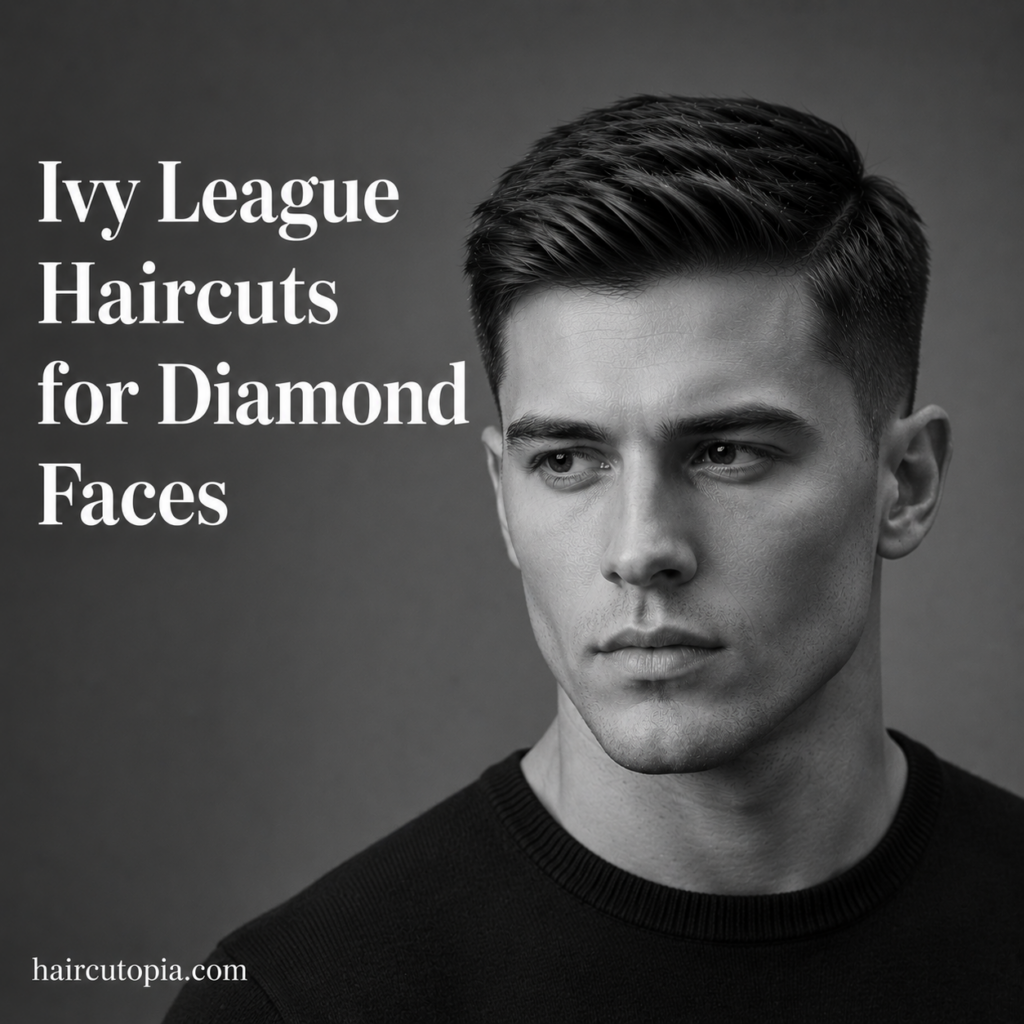
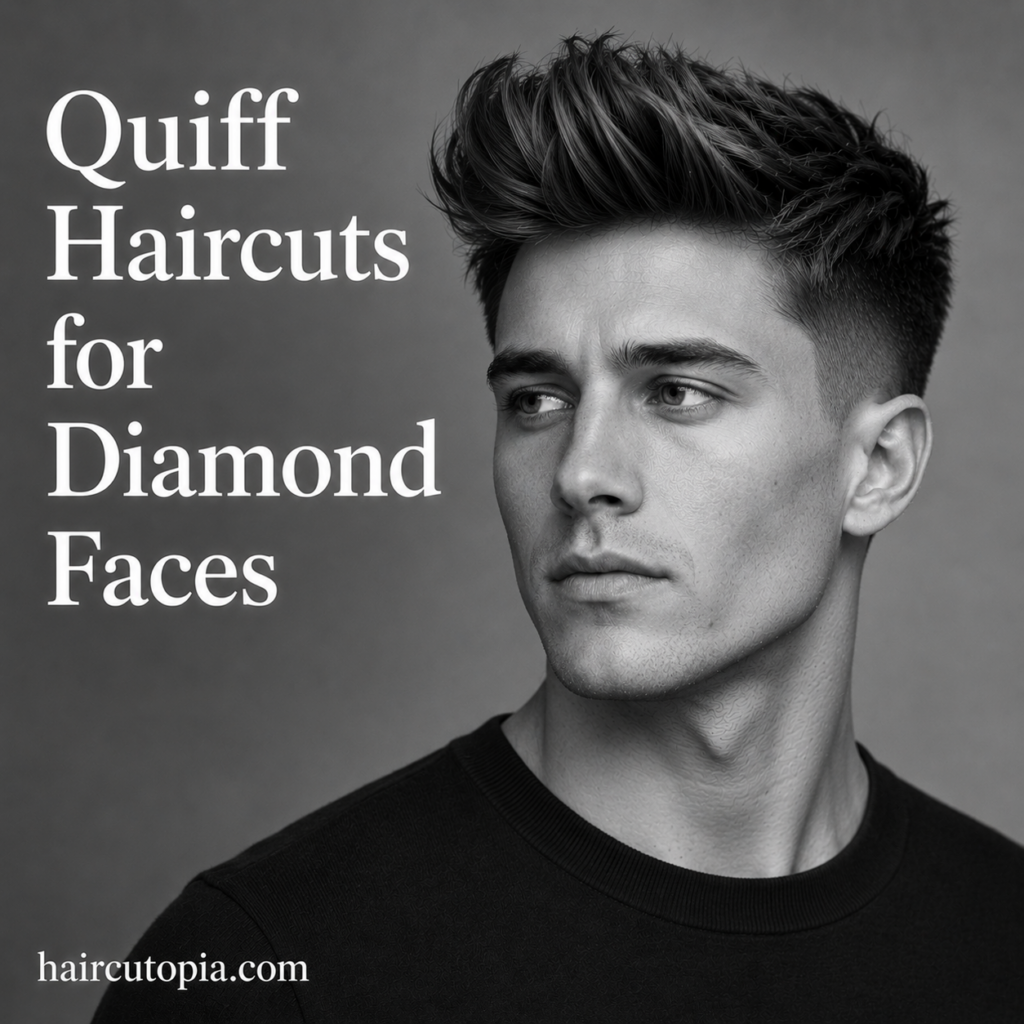
A diamond face shape is usually defined by prominent cheekbones, a narrower forehead, and a tapered jawline or chin. It is one of the more angular face shapes, which means the right haircut can make a big difference in how balanced the overall look feels.
A quiff can be an excellent choice for diamond faces because it adds volume through the forehead and top of the head. That extra width in the right place helps balance wider cheekbones and can make the face look more proportionate.
The key is choosing a quiff that has movement and moderate width rather than one that is extremely tall, narrow, or tightly faded at the sides. A little softness around the temples usually goes a long way.
Why Quiff Haircuts Work for Diamond Faces
The quiff is built around longer hair at the front, styled upward and back. Depending on the cut and styling, it can add height, texture, width, or all three.
For diamond-shaped faces, the most useful benefit is controlled volume around the forehead. Since the cheekbones are often the widest part of the face, adding some fullness above them helps create a more balanced silhouette.
A flattering quiff for a diamond face usually includes:
- Moderate volume at the front and temples
- Texture that softens sharp facial angles
- Side length that is not faded too high or too tight
- A natural shape rather than a rigid, narrow peak
- Enough top length to style with movement
The goal is not to hide your cheekbones. They are a strong feature. The haircut should simply keep the upper and lower parts of the face from looking too narrow by comparison.
Best Quiff Haircuts for Diamond Faces
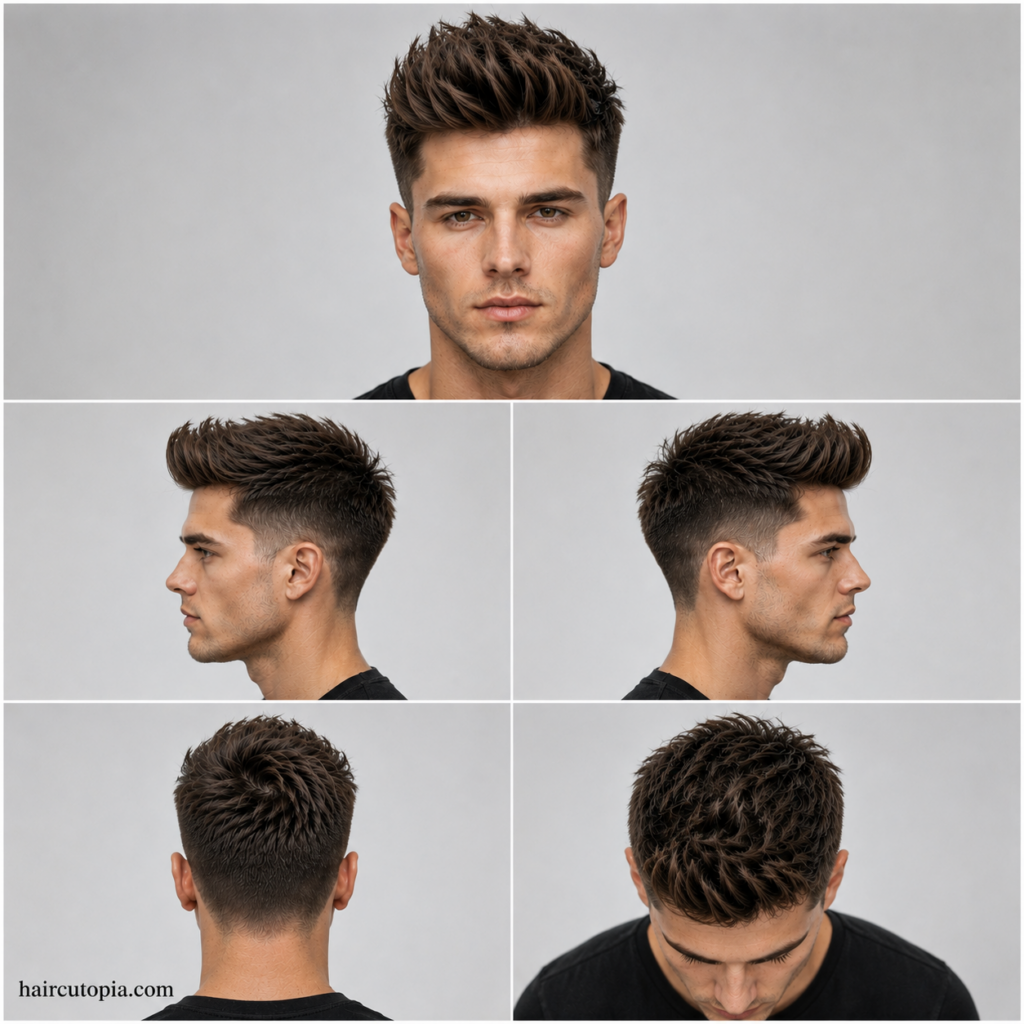
Textured Quiff with a Low Taper
A textured quiff with a low taper is one of the most balanced options for diamond faces. The hair on top is left long enough to create lift and texture, while the sides are cleaned up gradually around the ears and neckline.
The low taper is important because it keeps some fullness near the temples. That helps balance prominent cheekbones without making the haircut look bulky.
Ask for texture through the top and a slightly wider, natural quiff rather than a tall, narrow one. The front can be lifted and directed back with a soft finish.
This style works well for:
- Straight hair
- Wavy hair
- Medium to thick hair
- Men who want a modern but versatile haircut
Side-Swept Quiff with Scissor-Cut Sides
A side-swept quiff is a strong choice for diamond faces because it creates a softer, more diagonal shape across the forehead. Instead of adding height straight up, the hair is lifted and moved gently to one side.
Scissor-cut sides keep more natural weight around the temples and upper sides of the head. This helps balance the face without drawing even more attention to the cheekbones.
This style can look polished with a light pomade or more casual with a matte paste. It is especially useful if your hair naturally grows in one direction.
For the best result, keep the part soft. A hard shaved part can create extra angles that may make a diamond face look sharper than necessary.
Messy Quiff with a Low Fade
A messy quiff with a low fade offers a more casual, current look. The low fade keeps the sides tidy, while the textured top adds softness and movement.
For diamond faces, the fade should stay low. A high fade can remove too much width around the temples and make the cheekbones stand out even more.
Keep the quiff medium in height and slightly loose in shape. The goal is natural texture, not a tall, tightly controlled front.
A matte clay, styling paste, or sea salt spray can help create the right finish.
Wavy Quiff with a Soft Taper
Wavy hair can be especially flattering for diamond faces because it naturally softens angular features. A wavy quiff uses that texture to add movement through the front and upper sides of the head.
A soft taper keeps the haircut neat while leaving enough length around the temples to maintain balance. This prevents the top from looking disconnected from the sides.
Ask your barber to leave enough length for the wave to form. Over-thinning wavy hair can make it look flat or frizzy, so light layering is usually a better approach.
Use a styling cream or lightweight texture product to define the wave without making it stiff.
Medium Quiff with a Mid Taper
A medium quiff with a mid taper gives you a sharper finish while still preserving some side weight. The taper rises a little higher than a low taper but is not as aggressive as a high fade.
This style works well if you want a cleaner barbershop look without making the sides look too tight. Keep the top textured and slightly wider through the front rather than styling it into a narrow peak.
The medium quiff gives you enough height to add structure, but it should stay relaxed. A little movement at the front helps soften the cheekbones and keeps the style from looking too severe.
Long Textured Quiff with Natural Sides
A longer quiff with natural sides is a great option if you have thick, wavy, or medium-length hair. The top is left longer for movement, while the sides are blended rather than faded down tightly.
This creates a fuller shape around the upper half of the face, which can be very flattering for diamond face shapes. The extra side length helps keep the cheekbones from becoming the sole focal point.
Style the front up and slightly back, or sweep it to the side for a softer finish. This cut does require more styling than a short quiff, but it gives you plenty of flexibility.
Short Textured Quiff with a Taper Fade
A short textured quiff is a good choice if you prefer a lower-maintenance haircut. The front is long enough to lift slightly, while the rest of the top stays compact and easy to manage.
A taper fade works better than a high skin fade because it keeps the sides from looking too narrow. The haircut should have some softness around the upper sides, even if the neckline and area around the ears are kept clean.
This is a practical style for men who want a neat, everyday haircut without needing to blow-dry a long quiff each morning.
How Much Length Do You Need for a Quiff?
Most quiff styles need at least 3 inches of length at the front. That gives you enough hair to lift and direct back without the style collapsing.
For diamond faces, medium length is often the easiest range to work with. It provides enough volume to balance the forehead and cheekbones without becoming too tall or narrow.
A simple guide:
- Short quiff: 2 to 3 inches on top
- Medium quiff: 3 to 5 inches on top
- Long quiff: 5 inches or more on top
Your barber may adjust the length depending on your hair type. Fine hair may need more length for visible volume, while thick or wavy hair may need less because it naturally stands up more easily.
What to Ask Your Barber for a Quiff Haircut
Tell your barber that you have a diamond face shape and want a quiff that balances the cheekbones without making the sides too tight.
You can say:
“I have a diamond-shaped face, so I want a textured quiff with moderate volume through the front and some natural fullness around the temples. Keep the sides neat, but do not fade them too high or too tight.”
Then choose the side finish you prefer:
- “Give me a low taper and keep some weight around the sides.”
- “Keep the sides scissor cut and naturally blended.”
- “I want a low fade, but leave fullness near the temples.”
- “Add texture through the top so the quiff looks soft and natural.”
- “Leave enough length to sweep the front slightly to one side.”
Reference photos are helpful, but it is best to choose examples with a similar hair type and density. A quiff that looks effortless on thick, wavy hair may need a different approach on fine, straight hair.
How to Style a Quiff for a Diamond Face
The best styling approach for diamond faces is usually controlled volume with a natural finish.
1. Start With Damp Hair
After washing your hair, towel dry it until it is damp. Apply a small amount of pre-styler, such as sea salt spray, volumizing mousse, or lightweight styling cream.
This gives the hair more grip and makes it easier to create lift without overusing finishing product.
2. Blow-Dry Up and Slightly Outward
Use a blow dryer to lift the front upward and back. For diamond faces, allow a little natural width through the upper sides of the quiff rather than directing everything into a narrow center peak.
A vent brush works well for texture, while a round brush can create a smoother finish.
3. Add a Matte Product
Matte clay, paste, or styling cream is usually ideal for this face shape. It adds texture and control without making the hair look stiff or overly shiny.
Use a small amount, warm it between your hands, and work it through the hair. Focus on separation and movement rather than a perfectly smooth finish.
4. Keep the Shape Soft
The front should have lift, but it should not be too tall. Keep the quiff slightly wider and more relaxed around the temples.
A soft side sweep can also help create a more balanced shape across the forehead.
5. Finish With Light Hold
Use a flexible hairspray if you need extra hold. This is especially helpful for fine hair or humid days, but avoid spraying so much that the texture becomes stiff.
Best Styling Products for Quiff Haircuts
The right product depends on your hair type and the look you want.
Fine Hair
Fine hair benefits from a volumizing mousse or sea salt spray before blow-drying. Finish with a lightweight clay or paste that adds texture without weighing the hair down.
Thick Hair
Thick hair may need a stronger clay, fiber, or medium-hold pomade to control bulk and keep the quiff in place.
Wavy Hair
Use a styling cream, sea salt spray, or texture paste. These products define natural movement and help keep the hair soft.
Straight Hair
Straight hair works well with matte paste, clay, or a lightweight pomade. If it falls flat easily, use a pre-styler before blow-drying.
Quiff Haircut Mistakes to Avoid With a Diamond Face
The wrong haircut proportions can make the cheekbones look even more prominent. Avoid these common mistakes:
- Very high skin fades
- Extremely tight sides around the temples
- A tall, narrow quiff with no side volume
- Hard parts that create extra sharp angles
- Overly smooth, rigid styling
- Using too much high-shine product
- Cutting the top too short to create useful volume
For diamond faces, the best quiff shape is usually soft, textured, and moderately wide through the upper part of the head.
How Often Should You Trim a Quiff?
Most quiff haircuts need a trim every three to five weeks.
If you have a low fade or taper, a cleanup every two to four weeks will keep the sides neat. If you choose scissor-cut sides or a longer textured quiff, you may be able to wait four to six weeks between appointments.
The top can usually go a little longer between trims as long as it still holds its shape and does not become too heavy.
Final Thoughts
Quiff haircuts are a great option for diamond faces because they add volume where it helps most: around the forehead and upper sides of the head. The best styles keep the quiff textured, moderately wide, and balanced with sides that are neat but not shaved too tight.
A textured quiff with a low taper is an easy place to start. If you prefer a softer style, a side-swept quiff with scissor-cut sides or a wavy quiff with a soft taper can work especially well.
Keep the volume natural, avoid overly high fades, and choose a style that works with your hair’s natural texture. With the right proportions, a quiff can make a diamond face look balanced, sharp, and effortless.