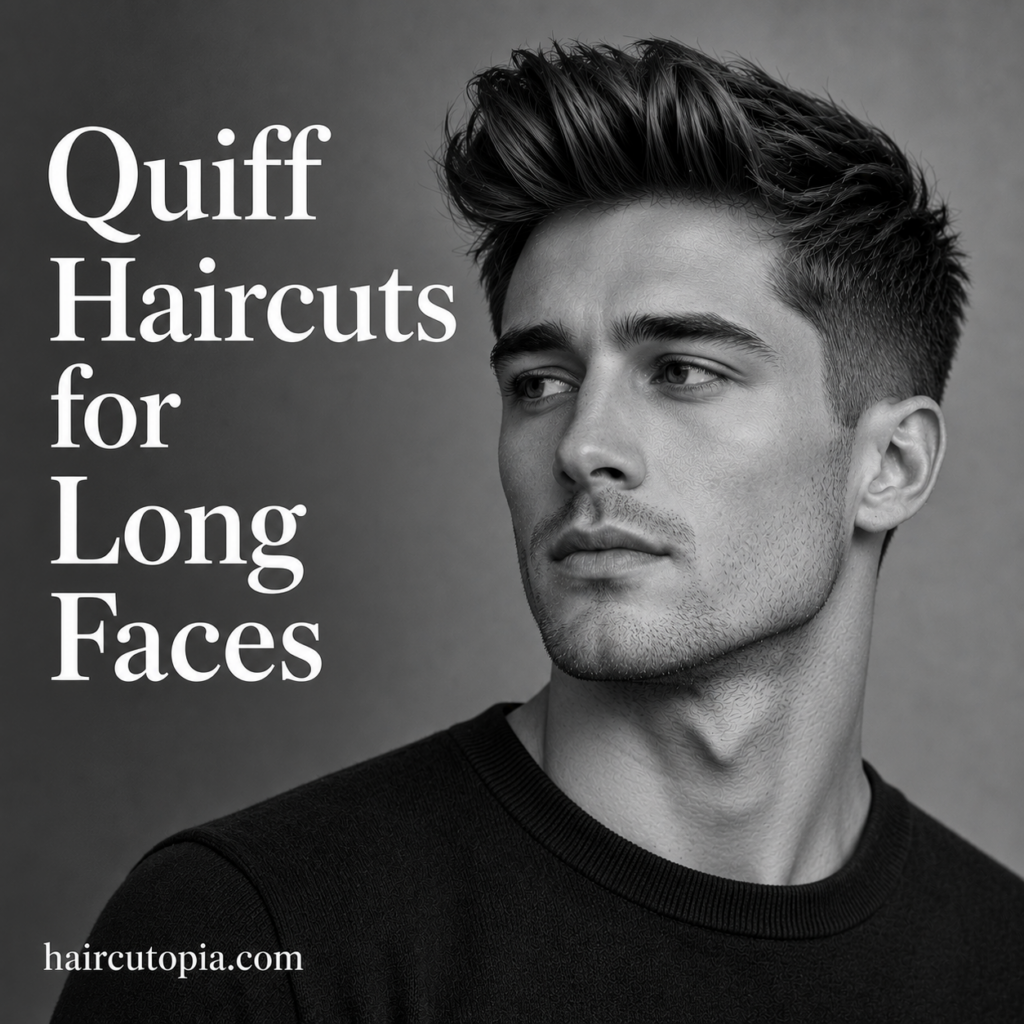
A long face shape, sometimes called an oblong face shape, is typically longer than it is wide. The forehead, cheekbones, and jaw may have a similar width, while the face itself has more vertical length.
That matters when choosing a quiff.
A quiff naturally adds height at the front, which can be flattering for many face shapes. For long faces, though, too much height can make the face appear even longer. The best quiff haircuts keep the volume controlled, add some width through the sides or fringe, and avoid extremely tight fades.
You can absolutely wear a quiff with a long face. The trick is choosing a softer, lower-profile version that balances your proportions instead of stretching them.
Why Quiff Haircuts Can Work for Long Faces
A quiff is a hairstyle with longer hair at the front that is styled upward, back, or slightly to the side. It can be clean and classic, loose and textured, or short and understated.
For long faces, the most flattering quiffs are usually wider and more relaxed rather than tall and narrow. A little texture through the fringe and natural weight at the sides can make the face appear more balanced.
A good quiff haircut for a long face often includes:
- Low to moderate height at the front
- Texture or a side-swept direction
- Some fullness around the temples
- A low taper or scissor-cut sides
- A softer silhouette rather than a tall vertical shape
The aim is to create visual width and avoid adding unnecessary height.
Best Quiff Haircuts for Long Faces
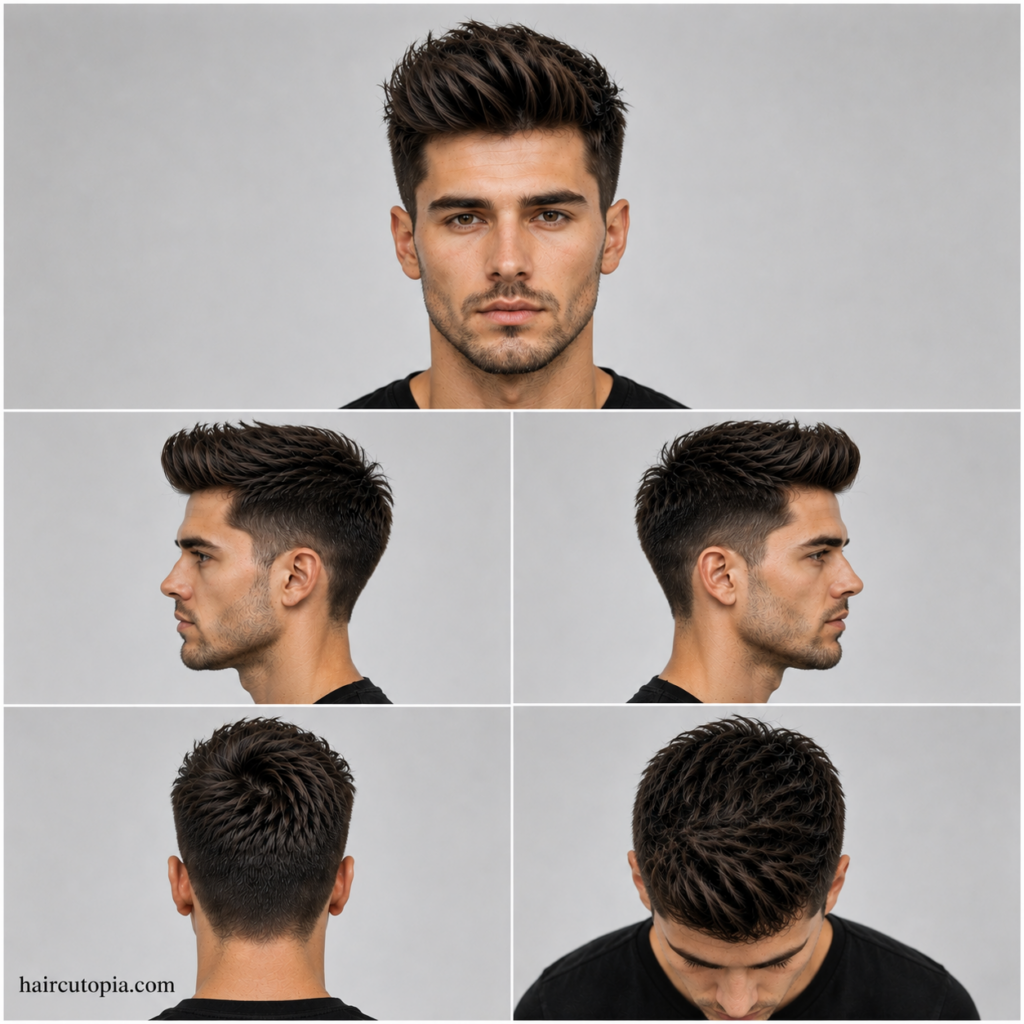
Textured Low Quiff with Scissor-Cut Sides
A textured low quiff with scissor-cut sides is one of the best options for long faces. The top has enough length to style, but the front stays low and relaxed rather than standing straight up.
Scissor-cut sides preserve natural fullness around the temples. That added width helps balance the length of the face and keeps the haircut from looking too narrow.
Ask your barber for soft texture through the top, a low quiff at the front, and sides that are blended rather than faded too tightly.
This style works especially well for:
- Straight hair
- Wavy hair
- Medium to thick hair
- Men who prefer a natural, easygoing look
Side-Swept Quiff with a Low Taper
A side-swept quiff is a smart choice for long faces because it creates a diagonal line rather than a tall vertical one. The front is lifted slightly, then swept to one side for a softer, more balanced finish.
A low taper keeps the area around the ears and neckline clean without removing too much side weight. This is important because high fades can make a long face look even narrower.
Keep the side sweep relaxed. A hard part or a tightly combed style can make the haircut feel too structured and may emphasize length.
Messy Quiff with Natural Volume
A messy quiff can work very well for long faces when it is styled wide and low. The goal is not a big, tall front. Instead, use texture to create movement across the top and a little width through the upper sides.
This style looks especially good on thick or wavy hair because the natural texture does much of the work. The sides can be scissor cut or finished with a low taper, depending on how clean you want the haircut to look.
Use a matte paste or texture cream to keep the style soft. Avoid products that create a stiff, high-shine finish.
Short Quiff with a Low Taper Fade
A short quiff is a practical choice for long faces because it gives you the shape of a quiff without adding too much height. The front is left just long enough to lift slightly, while the rest of the top stays compact.
A low taper fade keeps the sides tidy but should stay low around the ears. Avoid pushing the fade too high, since that can make the head look longer and narrower.
This is a good option if you want a neat haircut that is easy to style in the morning.
Wavy Quiff with Medium-Length Sides
A wavy quiff with medium-length sides creates softness and width, which is exactly what many long faces need. The natural wave keeps the top from looking too flat, while the extra side length helps balance the face.
Instead of cutting the sides into a high fade, keep them blended with scissors or use a subtle taper. The result feels more relaxed and proportional.
Ask your barber to leave enough length for the wave to form naturally. Over-thinning wavy hair can remove the fullness that makes this style work.
French-Inspired Textured Quiff
A French-inspired textured quiff is a slightly more forward, fringe-focused version of the style. The front is lifted only a little and often falls forward or to the side with visible texture.
This can be especially flattering for long faces because the fringe breaks up the forehead and reduces the appearance of vertical length. It still has the quiff shape, but it is less height-focused than a traditional swept-back version.
Pair it with low tapered sides or a soft scissor cut. Keep the finish matte and natural.
Medium Quiff with a Soft Mid Taper
A medium quiff with a soft mid taper can work if you like a cleaner barbershop style but do not want the sides shaved too close. The taper should be blended gradually, leaving enough weight around the upper sides.
The top should be styled with moderate volume and a slightly wider shape. Instead of pushing the front straight up, direct it back and slightly outward for a softer silhouette.
This is a good middle-ground style for men who want a quiff that feels polished but not too dramatic.
How Much Length Do You Need for a Quiff?
Most quiffs need at least 3 inches of length at the front, but long faces usually do better with a shorter or medium-length version.
You want enough length to create texture and direction, not enough to build a tall wall of hair.
A simple guide:
- Short quiff: 2 to 3 inches on top
- Medium quiff: 3 to 4 inches on top
- Longer quiff: 4 to 5 inches on top, styled low and relaxed
If your hair is thick or wavy, you may need less length because your hair naturally has more volume. Fine hair may need a little extra length, but it should still be styled with restraint.
What to Ask Your Barber for a Quiff Haircut
When you explain the haircut, mention that you want to balance a long face shape rather than add more height.
You can say:
“I have a long face, so I want a textured quiff with low to moderate height. Keep some weight on the sides to add balance, and do not take the fade too high. I want the front to be relaxed or slightly side-swept instead of tall and straight up.”
Then choose the side finish that fits your style:
- “Keep the sides scissor cut and naturally blended.”
- “Give me a low taper and leave some fullness near the temples.”
- “I want a short quiff with a low taper fade.”
- “Add texture through the fringe so it does not look too tall.”
- “Leave enough length to style the front slightly forward or to the side.”
Reference photos can help, but choose examples with a similar hair type and density. A quiff that works on thick, wavy hair may need a different cut for fine, straight hair.
How to Style a Quiff for a Long Face
For long faces, styling is mostly about keeping the quiff controlled. You want movement and shape, but not too much vertical lift.
1. Start With Damp Hair
After washing your hair, towel dry it until it is slightly damp. Apply a small amount of sea salt spray, styling cream, or volumizing mousse.
Choose a lightweight pre-styler. Heavy products can make the hair look flat or greasy.
2. Blow-Dry Low and Slightly to the Side
Use a blow dryer to direct the front back and slightly to one side. Keep the airflow lower and more horizontal than you would for a tall quiff.
A vent brush or your fingers can create a natural finish. Avoid using a round brush to build too much height at the front.
3. Use a Matte Styling Product
Matte paste, clay, or styling cream is usually best for a long face. These products create texture without making the hair look overly polished or rigid.
Use a small amount and work it through the hair from back to front. Focus on separation and a slightly wider shape through the top.
4. Add Width, Not Height
Keep the front low to moderate and allow a little natural fullness through the upper sides. A soft side sweep or textured fringe can help create width and reduce the appearance of face length.
Avoid pinching the hair into a narrow center peak.
5. Finish With Flexible Hold
If needed, use a light hairspray to keep the style in place. Choose a flexible hold so the hair can still move naturally throughout the day.
Best Styling Products for Quiff Haircuts
The best product depends on your hair type and how much hold you need.
Fine Hair
Fine hair benefits from a light volumizing mousse or sea salt spray before blow-drying. Finish with a lightweight paste that adds texture without weighing the hair down.
Thick Hair
Thick hair can handle a stronger matte clay or fiber. Use it sparingly so the hair stays soft and does not become too bulky.
Wavy Hair
Use a styling cream, sea salt spray, or texture paste to define natural movement. Avoid heavy pomades that can flatten waves.
Straight Hair
Straight hair works well with matte paste, clay, or lightweight cream. Blow-drying in the right direction is especially important if your hair tends to fall flat.
Quiff Haircut Mistakes to Avoid With a Long Face
A quiff can make a long face look even longer if the proportions are off. Avoid these common mistakes:
- Styling the front too high
- Choosing a high skin fade
- Keeping the sides extremely tight
- Creating a narrow, vertical quiff
- Using a hard part that adds more length
- Making the top too smooth and stiff
- Removing too much weight around the temples
The best quiff shape for a long face is usually low, textured, and slightly wider through the upper part of the head.
How Often Should You Trim a Quiff?
Most quiff haircuts need a trim every three to five weeks.
If you have a low taper, you may want a cleanup every two to four weeks to keep the edges neat. Scissor-cut sides and longer textured styles can often go four to six weeks between appointments.
The top can grow a little longer as long as it does not become too heavy or start to create too much height when styled.
Final Thoughts
Quiff haircuts can work very well for long faces when they are kept low, textured, and balanced with enough side fullness. The goal is not to avoid volume completely. It is to place volume in a way that adds width and movement instead of more vertical length.
A textured low quiff with scissor-cut sides is one of the easiest styles to start with. A side-swept quiff with a low taper is another strong option if you prefer a cleaner finish.
Keep the fade low, avoid a tall center peak, and use texture to create a relaxed shape. With the right cut and styling routine, a quiff can look sharp, modern, and naturally balanced on a long face.

Related Posts
 Haircuts for Men with Long Faces: 20 Flattering Styles That Balance Your Features
 Haircuts for Men with Diamond Faces: The Best Styles to Complement Your Features
 Haircuts for Men with Heart Faces: 25 Styles That Balance Your Features
 Haircuts for Men with Square Faces: 25 Styles That Complement Strong Features