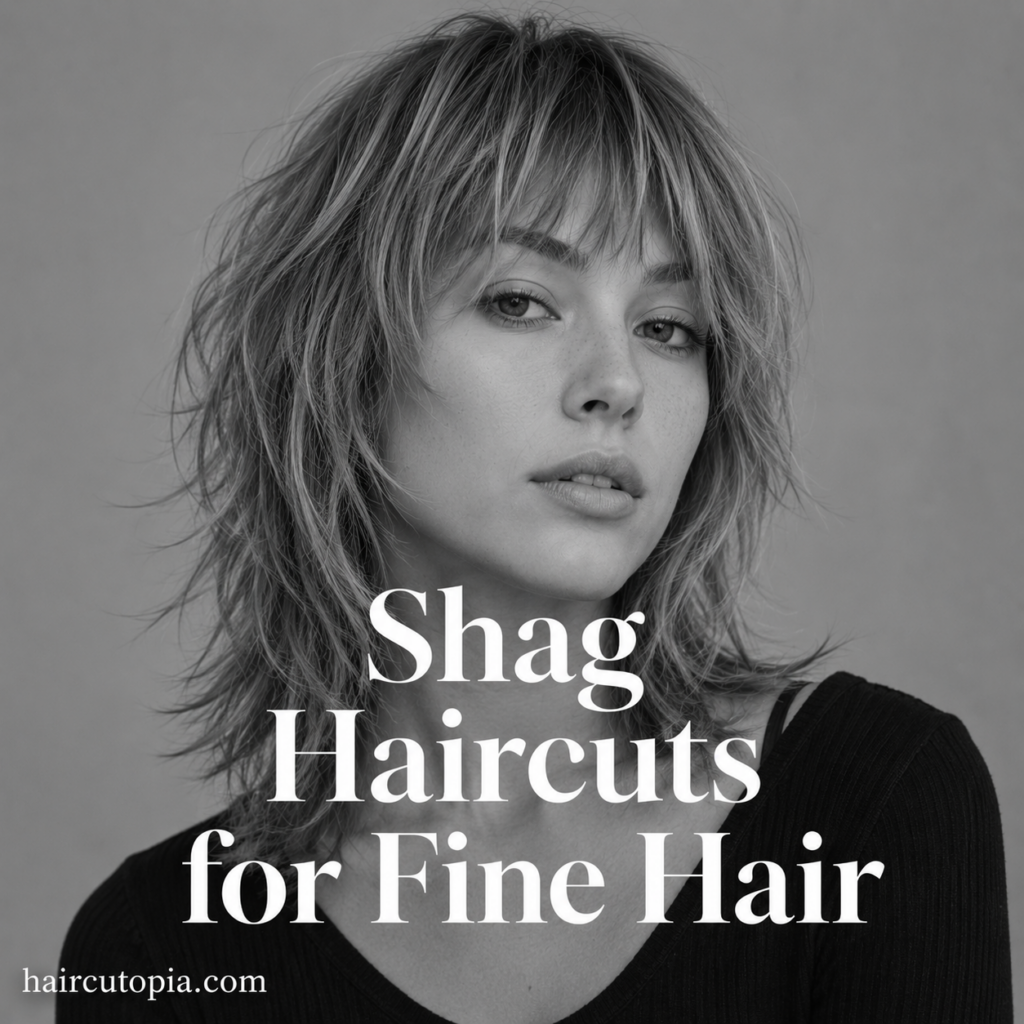
Fine hair has its own personality. It can feel silky and soft, dry quickly, and look beautifully smooth with very little effort. The challenge is usually volume. Add too much length or use the wrong products, and fine strands can fall flat before you even leave the house.
That is where a shag haircut can help.
Shags use layers, face-framing pieces, and textured movement to give hair more shape. For fine hair, the technique needs to be thoughtful. The goal is not to thin out the hair or create hundreds of wispy ends. Instead, strategic layers can encourage lift around the crown and make the overall haircut look more dimensional.
From short, tousled styles to shoulder-length cuts and long shags with soft bangs, there are plenty of ways to adapt this haircut to finer strands.
Here are 25 shag haircuts for fine hair that can add movement without sacrificing the appearance of fullness.
Why Shag Haircuts Work for Fine Hair
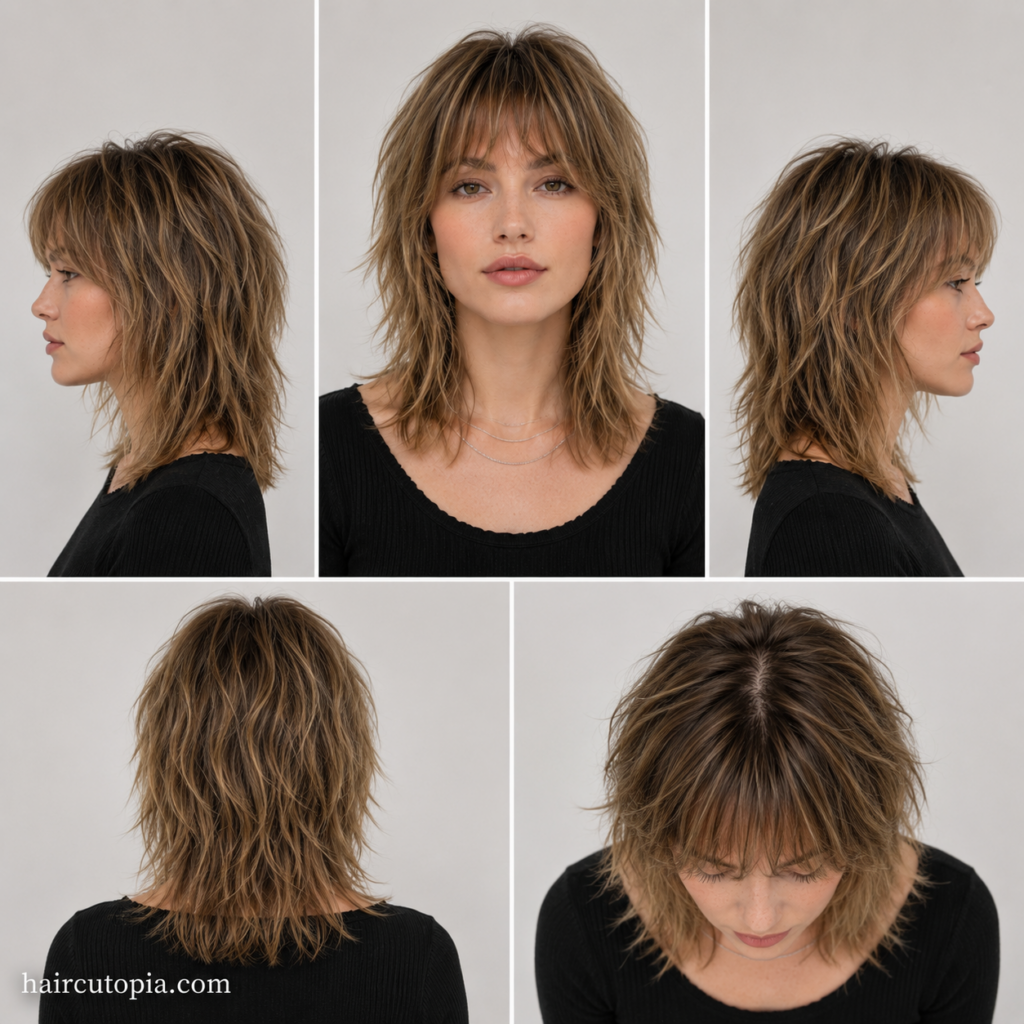
Fine hair refers to the diameter of each individual strand. The strands themselves are smaller than coarse or medium hair, which often makes the hair feel softer and lighter.
Because fine strands weigh less, they can respond beautifully to the right layers.
Shorter sections around the crown may lift more easily. Face-framing pieces create visible movement, and lightly textured ends prevent the haircut from looking stiff or overly solid.
A well-planned shag can help fine hair appear:
- Fuller at the crown
- More textured through the lengths
- Less flat around the roots
- Softer around the face
- More dimensional from different angles
- Naturally tousled and relaxed
The key word is strategic.
Aggressive thinning or excessive razor cutting can make fine hair appear sparse. A stylist should preserve enough density through the perimeter while using layers to create shape in specific areas.
25 Best Shag Haircuts for Fine Hair
1. Soft Shag with Blended Layers
A soft shag is one of the most approachable options for fine hair.
Instead of dramatic, disconnected layers, the haircut uses gradual transitions. Shorter pieces around the crown create subtle lift while longer layers blend into the perimeter.
The result feels modern without looking overly choppy.
This is a good first shag if you normally wear one-length hair and want more movement. Ask your stylist to keep the ends relatively full and focus the layering around the crown and face.
2. Short Shag for Fine Hair
Shorter hair often appears fuller because there is less length pulling the roots downward.
A short shag takes advantage of that natural lift.
Crown layers create height, while textured sections around the ears and nape give the haircut a relaxed shape. The style can be worn smooth or slightly messy.
Use a lightweight mousse before blow-drying and lift the roots with your fingertips.
Avoid heavy styling creams near the scalp.
3. Shag with Curtain Bangs
Curtain bangs blend naturally into a layered shag.
The fringe parts near the center and gradually becomes longer toward the cheekbones. This creates movement around the face without requiring the density of thick, blunt bangs.
Fine hair often works particularly well with longer curtain bangs.
They can be styled with a round brush, tucked behind the ears, or blended into the surrounding layers as they grow.
Ask for a lighter bang section if preserving fullness is important.
4. Shoulder-Length Shag for Fine Hair
Shoulder-length hair provides enough length for movement without becoming excessively heavy.
Add shag layers and the haircut gains even more shape.
The crown can be lightly layered to encourage lift, while face-framing sections create dimension around the cheeks and jaw.
Keep the baseline relatively strong.
A full-looking perimeter helps fine hair appear denser, especially when worn straight.
5. Wispy Shag with Soft Bangs
Fine hair naturally creates delicate, airy texture.
A wispy shag embraces that quality instead of trying to make every section look thick and heavy.
Soft bangs fall lightly across the forehead, while gentle layers add movement through the lengths.
The haircut looks especially good with slightly tousled styling.
Apply a small amount of texture spray through dry hair and separate a few pieces with your fingertips.
6. Wavy Shag for Fine Hair
Waves can instantly make fine hair look more dimensional.
The bends create space between strands, giving the appearance of additional fullness.
A shag encourages natural waves by removing some of the weight that may stretch them downward.
Apply lightweight mousse to damp hair and scrunch gently.
If you use a diffuser, keep the airflow low and avoid repeatedly touching the hair while it dries.
7. Shaggy Bob for Fine Hair
A shaggy bob combines a compact shape with light layering.
The shorter length helps maintain volume, while textured crown pieces prevent the haircut from looking overly structured.
For fine hair, the bottom edge should usually remain fairly full.
The stylist can create the shag effect through upper layers and face-framing sections rather than aggressively thinning the ends.
This haircut works particularly well between chin and jaw length.
8. Modern 70s Shag
The 1970s shag is known for feathered layers and sweeping fringe.
A modern version can be adapted beautifully for fine hair.
Instead of extremely short crown layers, choose softer sections that create lift while still blending into the overall haircut.
Long curtain bangs complete the retro-inspired shape.
Use a round brush to direct the front layers away from your face, then loosen the style with your fingers.
9. Shag with Bottleneck Bangs
Bottleneck bangs begin narrower near the center of the forehead and gradually widen toward the cheekbones.
The curved shape naturally connects to shag layers.
This type of fringe is especially useful for fine hair because it can be created without using a huge section from the crown.
The longer outer pieces also add visible movement around the face.
Style them with a gentle bend for a soft, relaxed finish.
10. Tousled Shag for Fine Hair
Fine hair does not always need to be perfectly smooth.
In fact, a slightly messy texture can make it look fuller.
A tousled shag uses light layers that move in different directions. Some pieces bend toward the face while others flip outward.
This variation creates dimension.
Try applying dry texture spray to the roots and mid-lengths. Lift the hair with your fingertips instead of brushing it into a uniform shape.
11. Collarbone-Length Shag
The collarbone is a versatile length for fine hair.
It is long enough for ponytails and updos but short enough to avoid some of the weight associated with very long hair.
Light crown layers add lift, while face-framing sections create movement.
This haircut works well with straight, wavy, and loosely curled textures.
If your ends tend to look thin, ask your stylist to preserve density through the perimeter.
12. Shag with Side-Swept Bangs
Side-swept bangs create a soft diagonal line across the forehead.
The longer fringe blends naturally into the shag layers around the face.
This is a good option if you want bangs but prefer something easy to grow out.
For extra volume, blow-dry the bangs in the opposite direction of where you plan to wear them.
Once dry, sweep them back into place.
13. Pixie Shag for Fine Hair
A pixie shag is short, textured, and full of movement.
The top and crown are typically left slightly longer, allowing the hair to lift and separate. Shorter sides emphasize the volume above.
Fine strands often respond well to this shape because they are not weighed down by length.
Use a lightweight styling paste to define individual pieces.
Start with a tiny amount. Fine hair can become flat quickly when too much product is applied.
14. Shaggy Lob with Light Layers
A long bob, or lob, provides a strong shape for fine hair.
Adding subtle shag layers creates movement without sacrificing the fullness of the baseline.
Keep the length around the shoulders or collarbone.
Crown layers can be relatively long, while shorter face-framing pieces add interest around the front.
This is a great option if you want a modern layered haircut that still feels polished.
15. Shag with Piecey Bangs
Piecey bangs are intentionally separated into small sections.
Instead of forming one solid fringe, the bangs have visible spaces that create texture.
Fine hair naturally lends itself to this effect.
The key is using lightweight styling products.
Rub a tiny amount of styling cream or paste between your fingertips and apply it only to selected pieces.
Avoid coating the entire fringe.
16. Curly Shag for Fine Hair
Fine curly hair can develop volume through the ends while remaining flat near the roots.
A shag can help balance the shape.
Shorter crown layers allow curls to spring upward, while face-framing pieces create definition around the cheeks.
Layer placement is particularly important with curls because each section may shrink differently.
A stylist familiar with curly hair can shape the haircut according to how your curls behave when dry.
17. Shag with Flipped Ends
Flipped ends create playful movement throughout a shag.
Because the haircut contains multiple lengths, selected layers can be directed outward.
Use a round brush or flat iron to gently flip a few sections around the face and shoulders.
You do not need to style every layer.
Random movement often makes fine hair appear more textured than a perfectly uniform finish.
18. Soft Wolf-Inspired Shag
Wolf cuts typically feature dramatic crown layers and longer lengths through the back.
For fine hair, a softer version is usually more flattering.
Keep the crown layers slightly longer and blend them gradually into the lower sections.
This maintains more density while still creating the distinctive wolf-inspired shape.
Long curtain bangs or bottleneck bangs work particularly well with this haircut.
19. Shag with a Deep Side Part
A deep side part is one of the easiest ways to create temporary volume.
Moving more hair to one side naturally lifts the roots.
Pair the part with shag layers and the effect becomes even more noticeable.
This styling technique works especially well with short and medium-length hair.
Switch your part while the hair is damp and blow-dry the roots in the new direction.
20. Rounded Shag for Fine Hair
A rounded shag creates fullness around the crown and sides.
The layers follow a curved silhouette rather than falling straight downward.
This shape can make fine hair look naturally fuller.
It works particularly well with waves and loose curls.
Ask your stylist to maintain enough weight through the lower sections so the haircut does not become overly wispy.
21. Long Shag for Fine Hair
Fine hair can absolutely be worn long.
The layering simply needs to be controlled.
Focus on longer crown layers and face-framing sections. Avoid removing excessive density through the bottom.
The perimeter should remain relatively full.
Loose waves can help emphasize the layers and create additional dimension.
If your hair becomes flat easily, use a lightweight root-lifting product before drying.
22. Shag with Micro Bangs
Micro bangs create a bold contrast against layered lengths.
The fringe sits well above the eyebrows and can be created from a relatively narrow section of hair.
This allows more density to remain throughout the rest of the haircut.
Micro bangs pair particularly well with short and medium shags.
Keep in mind that the fringe requires regular trims because even a small amount of growth can change the shape.
23. Air-Dried Shag for Fine Hair
A shag designed around your natural texture can simplify your morning routine.
The stylist places layers where your hair naturally bends or develops movement.
After washing, apply a lightweight leave-in conditioner or mousse.
Gently scrunch the hair and allow it to dry.
Once completely dry, lift the roots with your fingertips.
Avoid brushing through the finished texture unless you want a softer, more expanded appearance.
24. Face-Framing Shag
You do not need dramatic layers throughout your entire haircut to create a shag-inspired shape.
Face-framing sections can provide plenty of movement.
Shorter pieces around the cheekbones and jaw draw attention to the front of the haircut.
The back can remain relatively full and lightly layered.
This is a practical choice if your fine hair becomes sparse-looking when heavily layered.
25. Low-Maintenance Shag for Fine Hair
A low-maintenance shag uses longer, softly blended layers.
The crown pieces create subtle lift without requiring constant styling, while longer bangs can be tucked away or blended into the haircut.
The goal is a shape that still looks intentional as it grows.
Tell your stylist how you normally wear your hair.
If you rarely use heat tools, the haircut should work with your natural texture rather than depending on a daily blowout.
How to Choose the Right Shag for Fine Hair
The right shag depends on more than hair texture alone.
Length, density, growth patterns, and your styling routine all affect how the haircut will behave.
Understand Fine Hair Versus Thin Hair
Fine hair and thin hair are often used interchangeably, but they describe different things.
Fine hair refers to the diameter of each strand.
Thin hair refers to overall density or the amount of hair on the scalp.
You can have fine hair with high density. In that case, you may have plenty of hair even though each strand feels delicate.
You can also have fine hair with lower density.
Knowing the difference helps your stylist decide how much layering and texturizing your hair can support.
Consider Your Natural Texture
Straight fine hair often benefits from visible crown layers and a strong perimeter.
Wavy fine hair may need fewer layers because the natural bends already create movement.
Curly fine hair requires careful shaping to maintain definition without creating overly thin sections.
Your stylist should consider how your hair looks naturally, not just how it behaves after a blowout.
Protect the Perimeter
The bottom edge of the haircut has a major impact on how full fine hair appears.
If the perimeter becomes too heavily textured, the ends may look transparent.
Ask your stylist to maintain a stronger baseline while creating movement higher in the haircut.
This balance is especially important for shoulder-length and long shags.
Think About Your Styling Routine
Be realistic about how much time you spend styling your hair.
If you enjoy blowouts and curling tools, dramatic layers can create plenty of styling possibilities.
If you normally air-dry, choose layers designed to encourage your natural movement.
A good haircut should make your routine easier, not create another daily chore.
What to Ask Your Stylist for
Reference photos are helpful, but choose images of people with hair similar to yours.
A shag on coarse, dense hair may not translate directly to fine strands.
Before the haircut, discuss:
- Your natural hair texture
- How much density you have
- Where your hair tends to fall flat
- Whether you normally air-dry
- How often you use heat tools
- Whether you want bangs
- How much length you want to maintain
Be clear that preserving fullness is important.
You might say, “I want crown movement and face-framing layers, but I want to keep the ends looking full.”
That gives your stylist a specific goal.
How to Style a Shag Haircut for Fine Hair
Fine hair often responds best to lightweight styling.
Too many products can quickly flatten the layers you are trying to emphasize.
Apply Volume Products at the Roots
Use mousse, root spray, or a lightweight volumizing product near the scalp.
Focus primarily on the crown.
Avoid applying heavy oils or smoothing creams near the roots.
Blow-Dry in Different Directions
Do not immediately force the hair into its final part.
Dry the roots forward, backward, and from side to side.
This prevents the hair from settling completely flat against the scalp.
Once the roots are dry, arrange the hair into your preferred shape.
Create Loose, Uneven Bends
Use a curling iron or flat iron to add movement to selected sections.
Alternate directions.
Leave some pieces straight.
A slightly irregular texture creates more dimension than identical curls.
Finish with Texture
Dry texture spray can help separate the layers.
Lift sections and apply a small amount through the mid-lengths.
Use your fingers to arrange the hair.
Avoid overworking the style.
A shag usually looks better when the texture feels relaxed.
Best Styling Products for Fine Shag Haircuts
You do not need a complicated product routine.
A few lightweight products can support the haircut without creating buildup.
Useful options include:
- Volumizing mousse
- Root-lifting spray
- Lightweight leave-in conditioner
- Heat protectant
- Dry texture spray
- Flexible-hold hairspray
- Lightweight styling cream
Dry shampoo can also create temporary texture near the roots.
Use a small amount and work it into the scalp with your fingertips.
How Often Should You Trim a Shag on Fine Hair?
Most shag haircuts benefit from a trim every 8 to 12 weeks.
Shorter cuts may need more frequent shaping because crown layers change quickly as they grow.
Long, blended shags are generally easier to maintain.
Bangs may need separate trims.
Micro bangs and short fringe often require attention every three to six weeks. Curtain bangs can usually grow longer without immediately losing their shape.
If the haircut begins to feel flat or the layers stop moving naturally, it may be time for a reshaping appointment.
Can a Shag Make Fine Hair Look Thinner?
It can if too much hair is removed.
Excessive thinning shears, aggressive razor cutting, and extreme layering may leave fine hair looking sparse.
The solution is not avoiding layers completely.
Instead, focus on strategic layering.
A flattering shag for fine hair usually includes:
- Controlled crown layers
- Face-framing movement
- A stronger perimeter
- Limited thinning
- Lightweight styling
The goal is to create dimension while maintaining visible density.
Is a Short Shag Better for Fine Hair?
Short shags often create noticeable volume because the hair has less weight.
Pixie shags, shaggy bobs, and chin-length cuts can all make fine strands appear more lifted.
However, medium and long shags can work too.
The longer the hair, the more important it becomes to control the layering and preserve fullness through the ends.
Your natural texture should also influence the decision.
Are Shag Haircuts Easy to Maintain?
Many shags are surprisingly forgiving.
The haircut is designed around texture, so a few imperfect pieces usually improve the style.
Soft, blended shags with longer bangs are particularly easy to grow out.
Short crown layers and micro bangs require more frequent maintenance.
If you want a lower-maintenance haircut, tell your stylist before the cut. They can adjust the layer lengths to create a shape that grows out more naturally.
Final Thoughts on Shag Haircuts for Fine Hair
Shag haircuts can bring much-needed movement to fine hair without sacrificing softness or fullness.
The secret is controlled layering.
Shorter crown sections can create lift, while face-framing pieces add dimension around the cheeks and jaw. Keeping enough density through the perimeter helps the ends appear fuller.
Whether you prefer a short shag, shaggy bob, shoulder-length style, or long layered haircut, choose a version that fits your natural texture and daily routine.
Be clear with your stylist about preserving fullness and avoid overly aggressive thinning. With thoughtful layers and lightweight styling, a shag can give fine hair a fuller, more textured appearance that still feels natural.
Related Posts
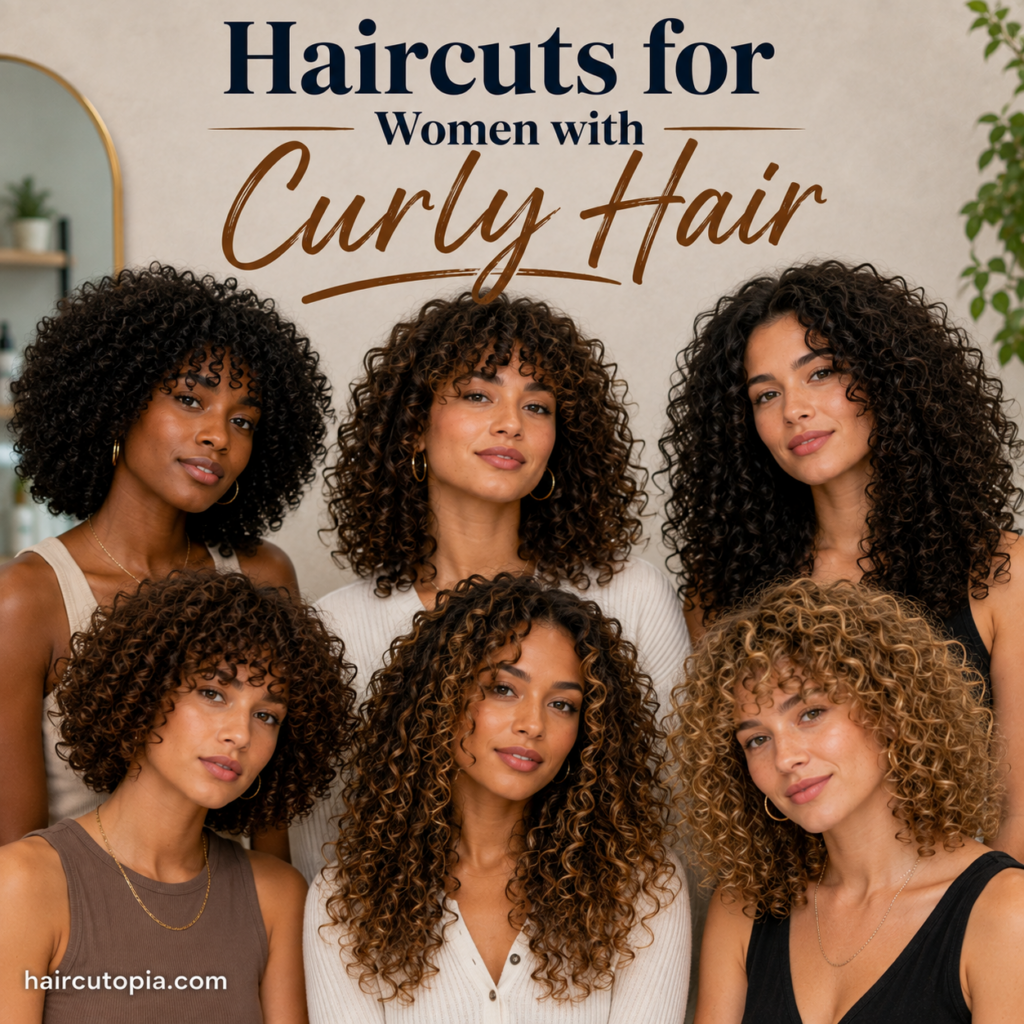 Haircuts for Women with Curly Hair: 25 Flattering Styles for Every Curl Type
 Short Haircuts for Curly Hair: 25 Stylish Ideas, Tips, and Maintenance Guide
 Haircuts for Women with Thin Hair: 25 Flattering Styles That Add Volume and Confidence
 Short Haircuts for Thin Hair: 25 Flattering Styles That Add Volume and Confidence