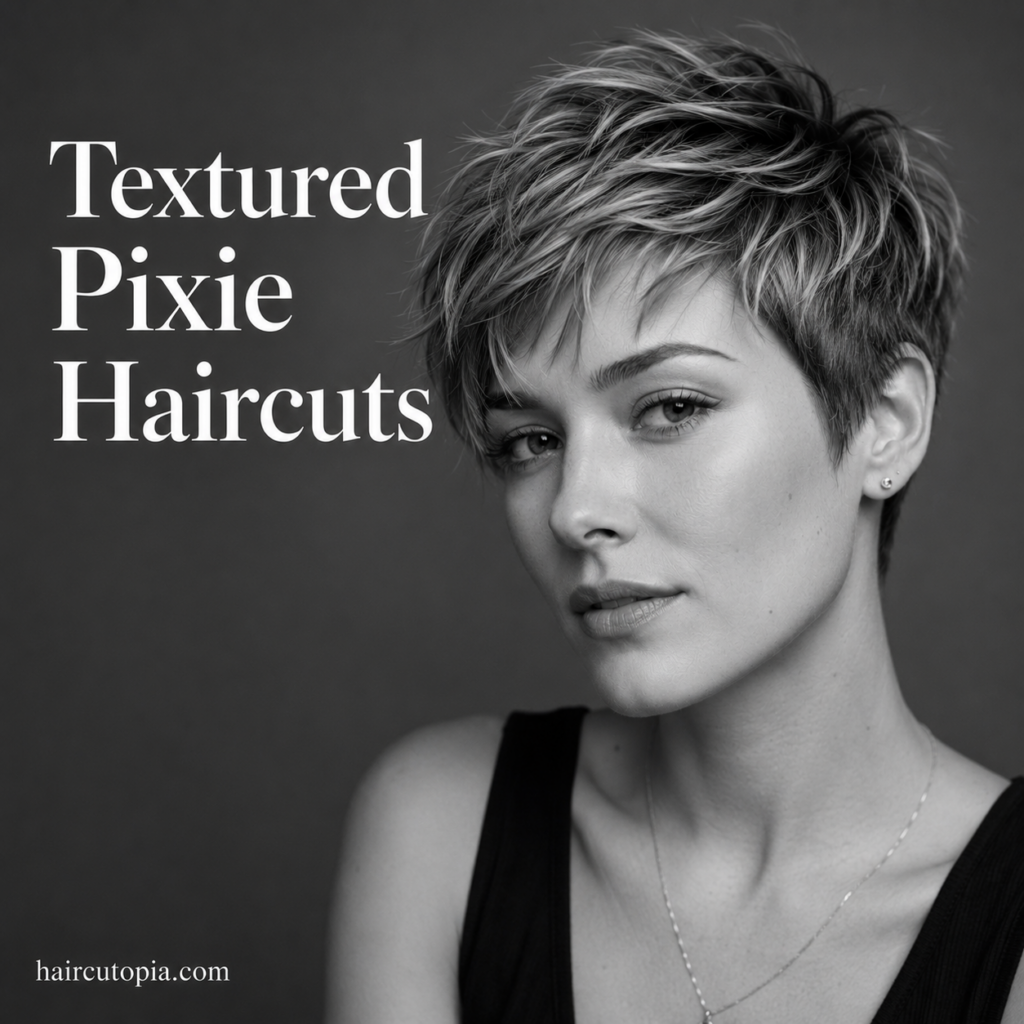
Textured pixie haircuts are all about movement. Instead of every strand sitting perfectly in place, the hair is layered and shaped to create separation, volume, and a more natural finish.
That texture can completely change the personality of a pixie cut.
A classic pixie may look smooth and polished, while a textured version feels softer, more relaxed, or even a little edgy. You can keep the sides short and add piecey layers through the top, wear longer bangs with a tousled finish, or work with natural waves and curls instead of trying to smooth them out.
Textured pixies are also surprisingly versatile. Some need only a small amount of styling paste and a quick finger-style in the morning. Others can be reshaped into sleek, messy, or voluminous looks depending on the day.
If you want a short haircut with visible movement and plenty of character, a textured pixie is worth considering.
What Is a Textured Pixie Haircut?
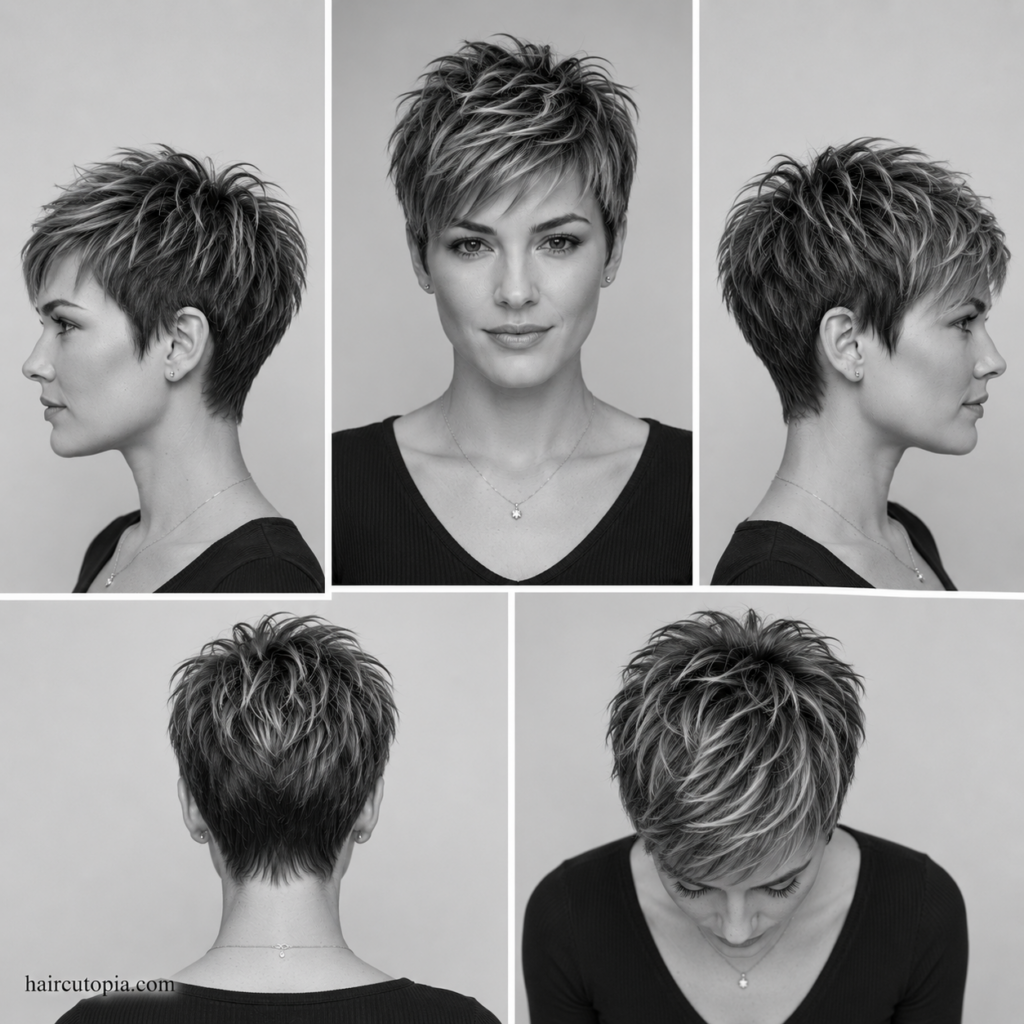
A textured pixie haircut is a short hairstyle that uses layers, cutting techniques, and natural hair movement to create visible separation between sections of hair.
Instead of forming one smooth shape, the haircut shows individual pieces and layers.
The texture may be subtle.
For example, a professional pixie might have gentle separation through the crown while maintaining a polished appearance.
Other textured pixies are much more noticeable, with choppy ends, tousled layers, and strong movement through the top.
Texture can come from several places:
- Layering
- Point cutting
- Natural waves
- Natural curls
- Razored or softened ends
- Styling products
- Blow-drying techniques
The goal is not simply to make the hair look messy.
Good texture creates intentional movement while maintaining the overall shape of the haircut.
Why Choose a Textured Pixie Haircut?
One of the biggest advantages of texture is flexibility.
A perfectly smooth hairstyle may require every section of hair to behave the same way each morning. A textured pixie is often more forgiving.
If one layer moves slightly differently, it can become part of the style.
Other benefits of textured pixie haircuts include:
- More visible movement
- Natural-looking volume
- Easier finger styling
- Less emphasis on perfect placement
- Plenty of options for bangs
- Added dimension for short hair
- Styling flexibility
- A modern, relaxed appearance
Texture can also help highlight the shape of a pixie.
Layers around the crown may create lift, while shorter textured sections near the sides can keep the haircut from looking bulky.
Best Textured Pixie Haircuts for Women
Textured pixies can be short, long, soft, dramatic, curly, or straight. The best version depends on your natural hair and the amount of styling you enjoy.
Short Textured Pixie
A short textured pixie keeps the sides and back cropped while adding visible separation through the top.
The top layers are usually long enough to move in slightly different directions.
This creates dimension without requiring significant length.
A small amount of matte paste can help define individual pieces.
Warm the product between your fingertips and lightly work it through the ends.
Layered Textured Pixie
Layers are the foundation of many textured pixie haircuts.
Different lengths throughout the top and crown create natural movement.
The haircut can be styled softly for everyday wear or given more separation for a stronger textured finish.
Layer placement is especially important.
Fine hair may need fewer layers to maintain density, while thick hair often benefits from internal weight removal.
Choppy Textured Pixie
A choppy pixie uses more noticeable differences in length.
The ends are intentionally piecey and irregular.
This gives the haircut a modern, slightly edgy appearance.
Choppy texture works particularly well with straight and slightly wavy hair because the individual sections remain visible.
Use a matte product rather than a heavy shine product if you want to emphasize the separation.
Messy Textured Pixie
The messy textured pixie is designed to look relaxed.
The layers move naturally rather than following a perfectly controlled direction.
However, there is still a clear haircut shape underneath the texture.
The easiest way to style this cut is to focus on the crown and front.
Lift a few sections, separate the ends, and allow the remaining hair to fall naturally.
Textured Pixie With Side-Swept Bangs
Side-swept bangs add softness to a textured pixie.
The fringe blends into the longer top layers and moves diagonally across the forehead.
Instead of styling the bangs completely smooth, separate a few pieces.
This keeps the fringe connected to the textured appearance of the rest of the haircut.
Side-swept bangs can also be tucked behind the ear as they grow.
Textured Pixie With Long Bangs
Long bangs create more dramatic movement.
The front may reach the eyebrows, cheekbones, or longer depending on the haircut.
Long textured fringe can be:
- Swept across the forehead
- Styled away from the face
- Tucked behind one ear
- Worn with soft waves
- Separated into piecey sections
This style offers plenty of flexibility.
It can look polished one day and intentionally messy the next.
Textured Tapered Pixie
A tapered pixie gradually becomes shorter around the sides and neckline.
Adding texture through the top creates contrast with the cleaner lower sections.
The result is a balanced haircut.
The sides remain easy to manage while the crown provides movement and volume.
This is a good choice if you want texture without a completely shaggy appearance.
Shaggy Textured Pixie
A shaggy pixie has softer edges and irregular layers.
The haircut may include wispy pieces around the ears and neckline.
The crown usually has natural movement rather than a smooth finish.
Shaggy pixies often work well with wavy hair.
They can also grow out more gradually than highly structured short cuts.
Textured Pixie Bob
A pixie bob, or bixie, provides additional length for texture.
The sides and front are usually longer than a traditional pixie.
Layers prevent the haircut from becoming heavy.
The additional length allows natural waves and bends to remain visible.
A texture spray may be enough to style the haircut.
Asymmetrical Textured Pixie
An asymmetrical pixie combines different lengths with visible texture.
One side may be cropped shorter while the opposite side has longer layered fringe.
The contrast creates a strong visual shape.
Texture prevents the longer sections from looking too heavy.
A small amount of styling paste can help separate the layers.
Textured Pixie With an Undercut
An undercut removes length beneath the top layers.
The sides, back, or both may be clipped short.
Longer textured hair on top creates contrast.
This style is particularly useful for thick hair because the undercut removes density.
The top can then be styled with more movement.
Soft Textured Pixie
Texture does not always need to look edgy.
A soft textured pixie uses gentle layering and subtle separation.
The ends may appear wispy rather than sharply choppy.
This style creates natural movement while maintaining a feminine, understated appearance.
Lightweight styling cream usually works better than heavy wax for this finish.
Textured Curly Pixie
Natural curls already provide texture.
The haircut should be shaped to allow the curls to form without creating excessive bulk.
The sides may be slightly shorter while additional length remains through the crown.
Apply curl cream to damp hair.
Allow the curls to air-dry or use a diffuser on a low setting.
Once dry, avoid excessive brushing.
Textured Wavy Pixie
Wavy hair is naturally suited to textured pixie cuts.
Soft bends create movement without much styling.
Layers can encourage the waves to form throughout the top.
A lightweight styling cream or texture spray may be enough.
Gently scrunch the hair while damp and allow it to dry naturally.
Textured Pixie for Straight Hair
Straight hair can create very visible texture when cut correctly.
Choppy layers and piecey ends show clearly.
The haircut may need a small amount of styling product to maintain separation.
Use a matte paste or lightweight clay.
Apply the product mainly to the ends rather than coating the entire strand.
Textured Pixie for Fine Hair
Texture can help fine hair appear fuller.
Shorter lengths reduce weight, while carefully placed layers create movement.
However, excessive texturizing can remove too much density.
The goal is to maintain enough hair through the ends.
For additional volume:
- Apply a lightweight root-lifting product.
- Blow-dry the crown against the natural growth direction.
- Use your fingers instead of a heavy brush.
- Separate a few top layers with matte paste.
- Finish with a light texture spray if needed.
Avoid heavy oils and waxes.
Textured Pixie for Thick Hair
Thick hair often holds texture very well.
The challenge is controlling bulk.
Internal layering can remove weight while preserving the visible top layers.
Tapered sides or an undercut may also help.
Once the haircut has the right shape, styling may be relatively simple.
Use a small amount of product to define the texture.
Textured Pixie Haircuts by Face Shape
Texture can be placed in different areas to adjust the overall silhouette of a pixie.
Textured Pixie Haircuts for Round Faces
Volume through the crown can visually lengthen a round face.
Side-swept texture creates diagonal movement.
Keeping the sides slightly closer to the head may prevent additional width around the cheeks.
An asymmetrical textured pixie can also add definition.
Textured Pixie Haircuts for Oval Faces
Oval faces can usually experiment with many types of texture.
Choppy, soft, shaggy, and messy pixies can all work well.
Consider your natural hair texture when choosing the final shape.
Textured Pixie Haircuts for Square Faces
Soft texture can complement a defined jawline.
Wispy bangs and gentle crown movement create contrast with stronger facial angles.
Wavy and shaggy pixies may work particularly well.
You can also choose a sharper choppy pixie if you prefer emphasizing the angular shape.
Textured Pixie Haircuts for Heart-Shaped Faces
Side-swept fringe can balance a broader forehead.
Soft texture around the temples may create additional movement.
Avoid placing all the volume directly at the top if you want a balanced silhouette.
Textured Pixie Haircuts for Long Faces
Controlled crown volume is usually helpful for long faces.
Instead of creating extreme height, focus on side movement and fringe.
A textured bang can visually shorten the forehead.
Soft waves may also create additional width.
Textured Pixie Haircuts for Diamond Faces
Diamond-shaped faces often feature prominent cheekbones.
Longer textured fringe can help balance a narrower forehead.
Soft temple layers may also create a flattering frame.
A side part can distribute the volume asymmetrically.
How to Choose the Right Amount of Texture
Not everyone wants the same level of movement.
Some women prefer a softly layered haircut.
Others want clearly separated, choppy pieces.
Think about how you normally style your hair.
Subtle Texture
Subtle texture works well if you prefer a polished appearance.
The layers blend together but still create movement.
This style may be appropriate for professional environments or anyone who prefers understated haircuts.
Medium Texture
Medium texture creates visible separation without looking heavily styled.
Individual sections can be seen through the top and crown.
This is one of the most versatile options.
The haircut can be styled smooth or made messier with product.
Strong Texture
Strong texture uses choppy layers and noticeable separation.
The haircut may have an edgy appearance.
Styling products are often used to emphasize individual sections.
This option works well if you want the haircut itself to make a statement.
How to Ask Your Stylist for a Textured Pixie
The word “textured” can mean different things.
Bring reference photos showing the exact type of texture you like.
Try to include multiple angles.
Discuss:
- How short you want the sides
- The desired top length
- Bang length
- Crown volume
- Soft versus choppy texture
- Your natural hair pattern
- Your normal styling routine
Tell your stylist how much product you are comfortable using.
If you prefer air-drying, mention that before the haircut begins.
The cutting technique can be adjusted accordingly.
How to Style a Textured Pixie Haircut
Styling a textured pixie is usually about creating separation.
You do not need to shape every strand.
Start With the Right Amount of Product
Use less than you think you need.
A pea-sized amount may be enough for short hair.
Warm the product between your fingertips before applying it.
Focus on the Ends
Applying product mainly to the ends helps create separation.
Avoid heavily coating the roots unless you are using a product specifically designed for volume.
Use Your Fingers
Your fingertips are often the best styling tool for textured hair.
Lift sections through the crown.
Separate individual pieces.
Guide the fringe into position.
Avoid Perfect Symmetry
Texture usually looks more natural when the hair has slight variation.
One side may have more movement than the other.
That is part of the style.
Best Products for Textured Pixie Haircuts
The best product depends on your hair type and desired finish.
Common options include:
- Matte styling paste
- Lightweight clay
- Texture spray
- Root-lifting spray
- Styling cream
- Curl cream
- Flexible-hold hairspray
Matte products generally emphasize separation.
Creams create a softer appearance.
Texture sprays can add movement without the heavier feel of wax.
How to Add Texture to a Pixie Without Heat
Heat tools are not always necessary.
Start with slightly damp hair.
Apply a lightweight styling product.
Use your fingers to scrunch or lift the top layers.
Allow the hair to air-dry.
Once dry, separate a few sections with your fingertips.
Wavy and curly hair may develop natural texture with very little effort.
Straight hair may need a small amount of matte paste for additional definition.
How Often Should You Trim a Textured Pixie?
Most textured pixies benefit from trims every six to ten weeks.
Short tapered styles may need more frequent maintenance.
Shaggy and longer textured pixies can often grow out for several additional weeks.
You may need a trim when:
- The crown becomes heavy
- Layers stop separating
- The neckline loses its shape
- The sides become bulky
- Bangs are difficult to control
A trim can restore the movement without significantly shortening the haircut.
Are Textured Pixie Haircuts Low Maintenance?
They can be.
Textured pixies are often more forgiving than sleek hairstyles because the hair does not need perfect placement.
A quick finger-style may be enough.
However, some strongly textured haircuts require product to maintain visible separation.
Your natural hair texture also matters.
Wavy hair may create movement automatically.
Straight hair may need a small amount of styling paste.
The easiest option is a haircut designed around how your hair naturally behaves.
How to Grow Out a Textured Pixie
Texture can make the pixie grow-out process easier.
As the layers gain length, the haircut may gradually develop a shaggy appearance.
Regular shaping can prevent excessive bulk around the sides and neckline.
During the grow-out process:
- Keep the neckline neat.
- Allow the top to gain length.
- Maintain movement with light layering.
- Sweep longer bangs to the side.
- Transition gradually into a bixie or short bob.
You do not need to stop getting haircuts completely.
Small adjustments can help maintain a flattering shape.
Is a Textured Pixie Haircut Right for You?
A textured pixie may be a good choice if you enjoy hairstyles with visible movement.
The haircut can work with straight, wavy, curly, fine, or thick hair.
The amount of texture can also be customized.
You may prefer soft, subtle layers or bold, choppy separation.
Think about your daily routine.
If you enjoy quick finger styling and relaxed hairstyles, texture can make a pixie particularly easy to wear.
Final Thoughts on Textured Pixie Haircuts
Textured pixie haircuts bring movement and personality to short hair.
Layers, natural waves, curls, and styling techniques can all create separation and dimension.
The haircut does not need to look perfectly smooth.
That flexibility is part of its appeal.
A short textured pixie can feel modern and simple. A shaggy pixie creates a relaxed appearance. Longer textured bangs add movement around the face.
The best approach is to choose a level of texture that fits your natural hair and styling habits.
With the right shape, a textured pixie can be easy to style, full of movement, and completely adaptable to your personal look.
Related Posts
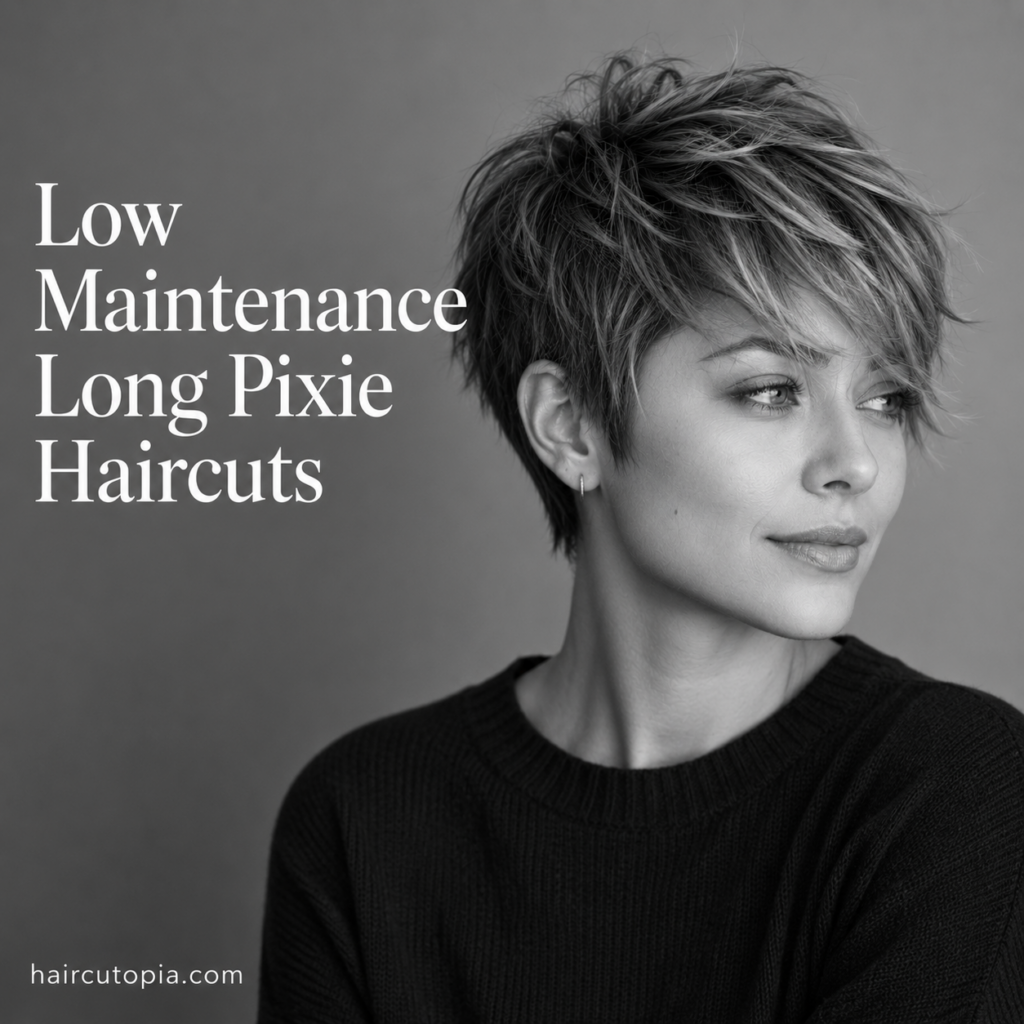 Low Maintenance Long Pixie Haircuts: 30 Easy Styles That Still Look Great
 Lob Haircuts for Women Over 40: 25 Sophisticated Styles That Are Timeless and Flattering
 Long Pixie Haircuts for Coarse Hair: 25 Modern Styles for Shape, Texture, and Control
 Short Fringe Haircuts: 25 Stylish Ideas, Who They Suit, and How to Style Them