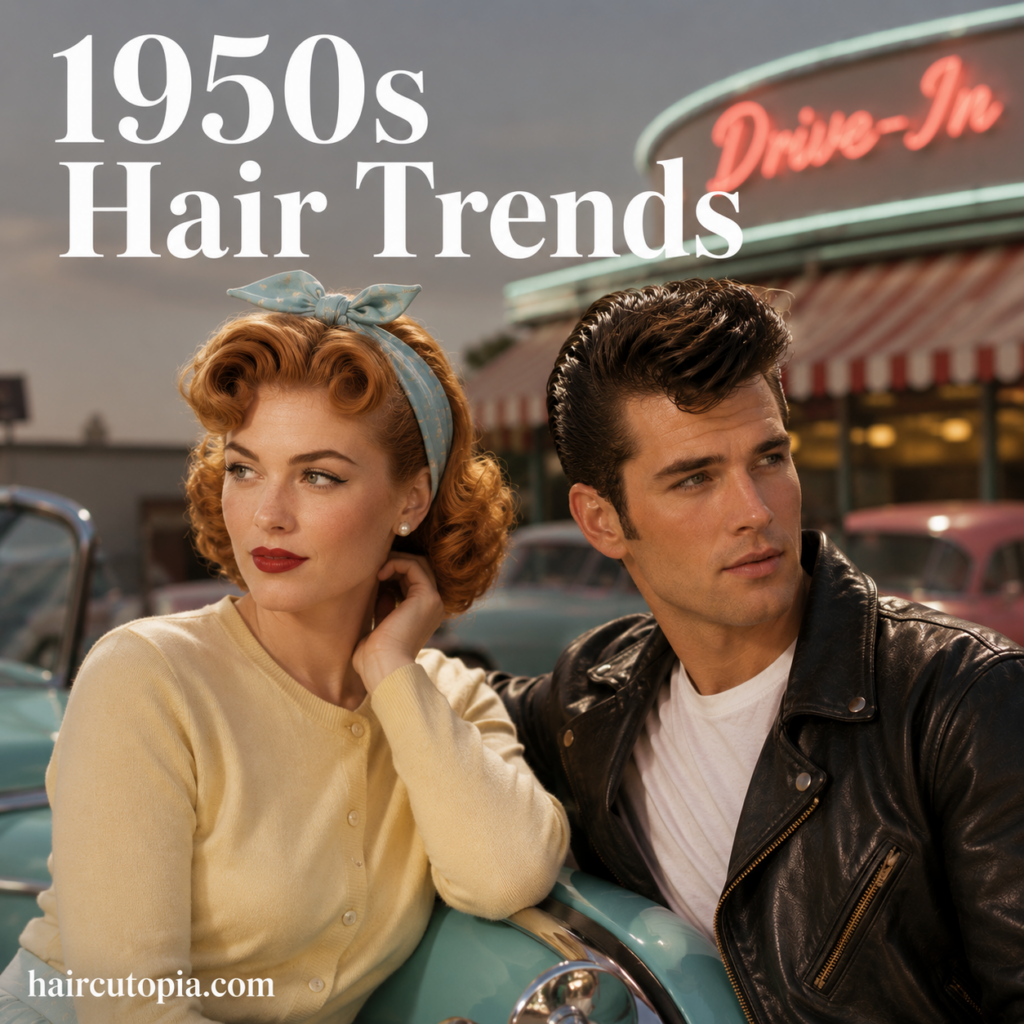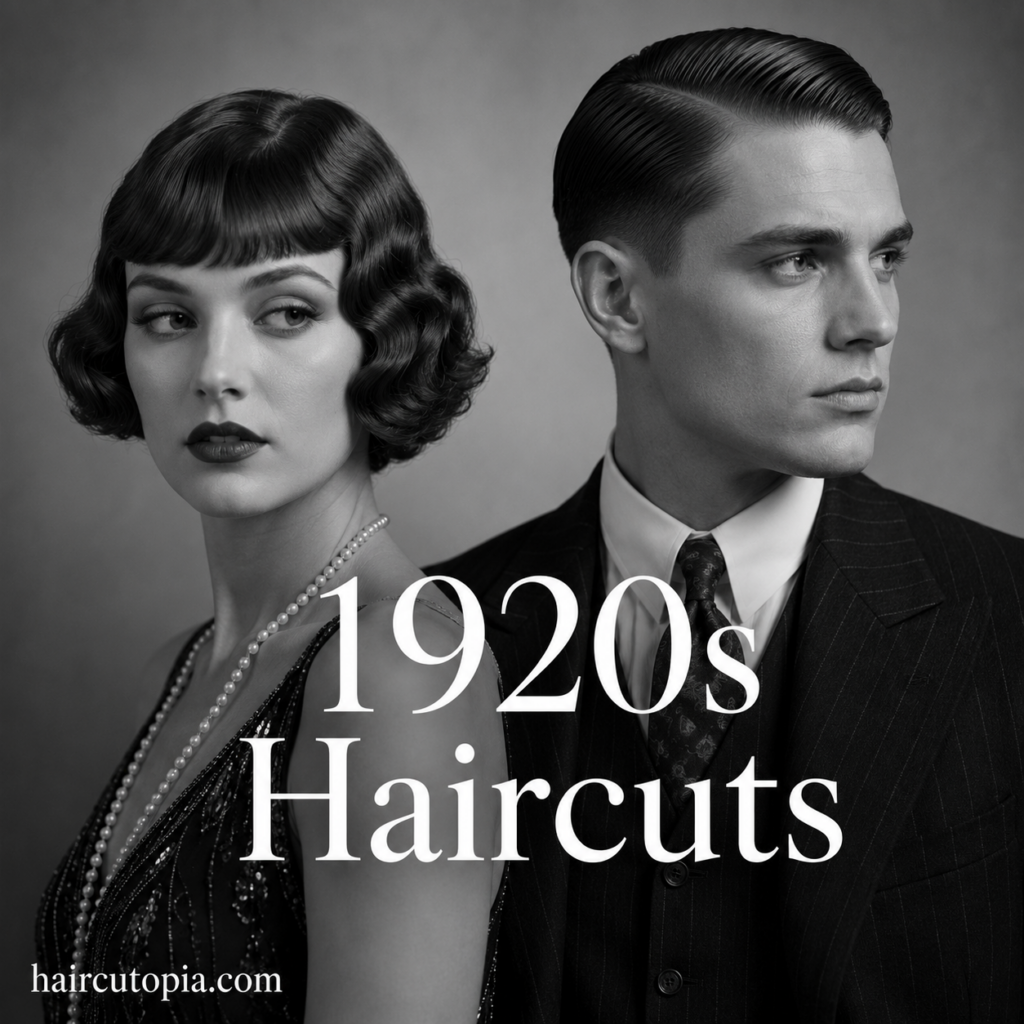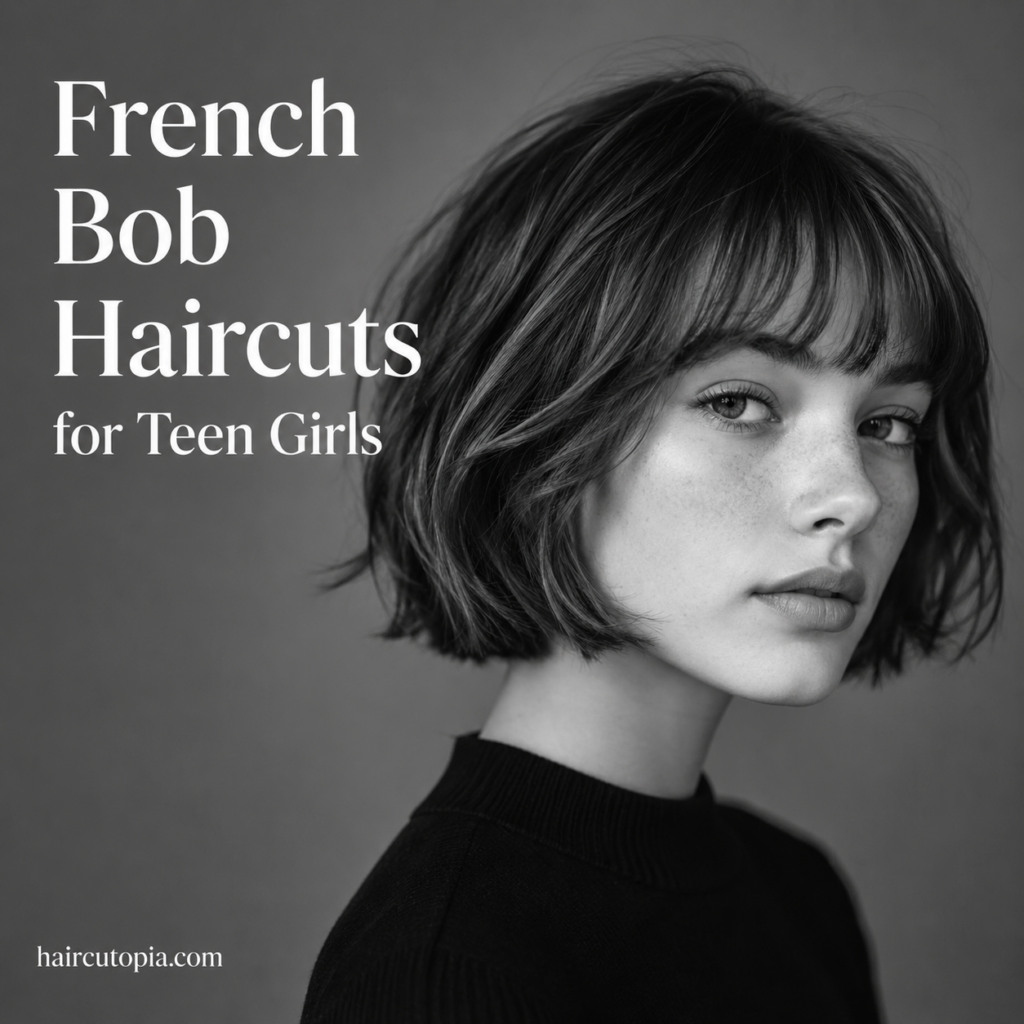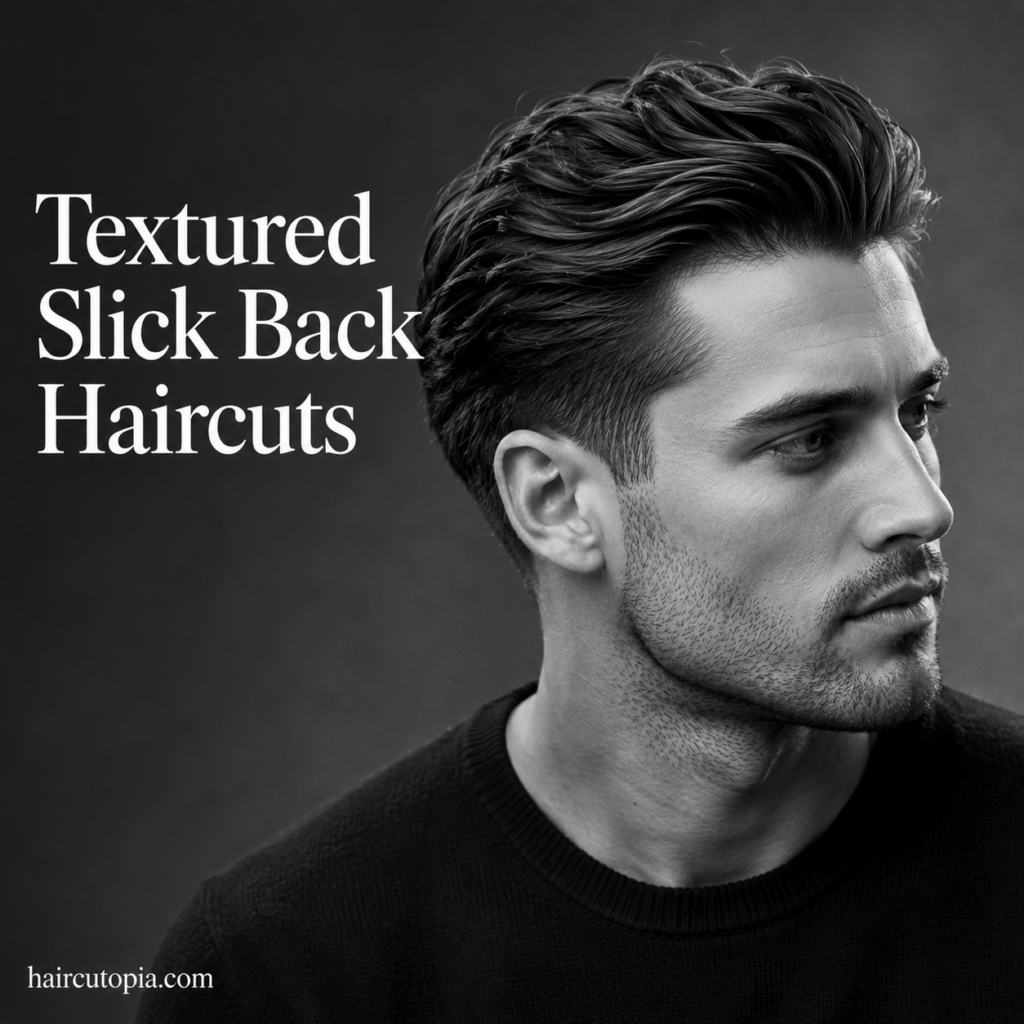
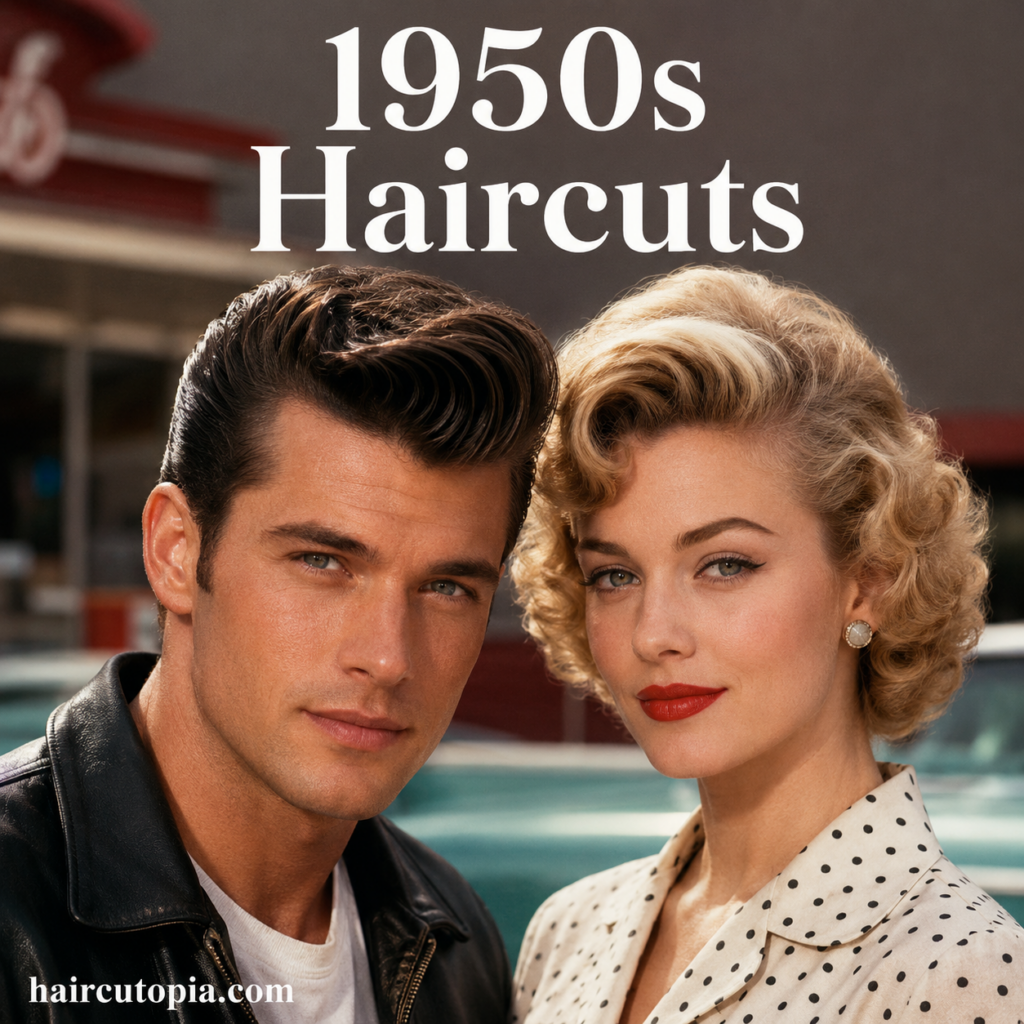
The 1950s were a defining decade for hair. After the practical styles of the 1940s, hairstyles became more polished, expressive, and closely connected to fashion, music, movies, and youth culture.
For women, the decade brought everything from short, sculpted pixie cuts to glamorous curls and carefully shaped bobs. Men embraced neat side parts and slicked-back styles, but the rise of rock and roll also introduced taller, bolder looks such as the pompadour and ducktail.
Many 1950s haircuts still feel familiar today. Modern versions tend to use softer styling and more natural texture, but the recognizable shapes of the decade continue to influence barbershops, salons, fashion shoots, and vintage-inspired looks.
This guide explores the most iconic 1950s haircuts, how men and women wore them, and what made the decade such an important period in hairstyling history.
What Did Hair Look Like in the 1950s?
Hair in the 1950s was generally styled with intention. Even relatively simple cuts were shaped, curled, combed, or set to create a finished appearance.
Women’s hairstyles often emphasized volume, curls, and carefully controlled silhouettes. Short hair became especially fashionable, although shoulder-length and longer styles remained popular.
Men’s hair was usually short around the sides with enough length on top to create a side part, wave, quiff, or slicked-back shape. As rock and roll became increasingly influential, younger men began experimenting with more dramatic hairstyles.
Some defining characteristics of 1950s hair included:
- Structured curls and waves
- Short, shaped women’s haircuts
- Polished bobs
- Side parts
- Slicked-back men’s hair
- Pompadours and quiffs
- Rolled or curled ends
- Carefully styled bangs
- Hair accessories such as scarves and headbands
There wasn’t one universal “1950s haircut.” The decade included conservative everyday styles, glamorous Hollywood looks, rebellious youth hairstyles, and everything in between.
Popular 1950s Women’s Haircuts
Women’s hairstyles changed considerably throughout the decade. Shorter cuts became fashionable, while curls and waves remained important styling elements.
1. The Poodle Cut
The poodle cut is one of the hairstyles most closely associated with the early 1950s.
It featured clusters of tight curls concentrated around the top and sides of the head. The curls created a rounded, highly textured silhouette that resembled the curly coat associated with a poodle.
Despite its playful modern name, the style could look surprisingly glamorous when carefully set.
The poodle cut worked particularly well with naturally curly hair or hair that could hold a strong roller or pin-curl set.
2. The Italian Cut
The Italian cut became fashionable during the 1950s as women embraced shorter, more sculpted hairstyles.
It was typically cut relatively short with soft curls or waves surrounding the face. Compared with some highly structured hairstyles of the period, the Italian cut could have a slightly tousled appearance.
The style helped establish the idea that short women’s hair could be sophisticated, feminine, and fashionable without relying on long curls.
3. The 1950s Pixie Cut
Very short hair became increasingly visible during the decade.
The 1950s pixie was cropped close around the sides and back while leaving slightly more length through the top. Short bangs or softly textured pieces could frame the forehead.
Rather than the heavily layered pixies common today, early versions were often simple and delicately shaped.
The haircut drew attention to the eyes, cheekbones, and neckline, giving it a distinctly modern appearance for the era.
4. The Short Curly Cut
Short curls were everywhere during the 1950s.
Hair was commonly cut somewhere between ear and chin length and styled using rollers or pin curls. Once brushed out, the curls formed soft waves and rounded shapes around the head.
The result could range from tightly sculpted to fluffy and romantic depending on how the curls were arranged.
It was also practical. Shorter hair was easier to set and maintain than many longer hairstyles while still providing the polished appearance fashionable at the time.
5. The 1950s Bob
The bob had already existed for decades, but 1950s versions developed their own character.
Many were chin-length or slightly shorter, with curled-under ends creating a smooth, rounded silhouette. Others incorporated waves, side-swept bangs, or additional volume around the sides.
Unlike the sharply geometric bobs that would become fashionable in the 1960s, 1950s bobs usually looked softer.
6. The Pageboy
The pageboy was another recognizable mid-century haircut.
Hair was generally worn around chin to shoulder length with the ends smoothly curled inward. The overall shape was sleek and controlled, often paired with short bangs or a side part.
The pageboy could be worn casually, but its smooth finish also made it suitable for more formal occasions.
Modern versions sometimes retain the same curved-under silhouette while adding layers or texture.
7. The Bouffant
The bouffant began gaining momentum toward the end of the 1950s and became even more influential during the following decade.
Its defining feature was volume.
Hair was lifted away from the scalp and shaped into a rounded silhouette, particularly around the crown. Backcombing, rollers, and setting products helped maintain the height.
The arrival of the bouffant represented an important shift. Hairstyles were beginning to move away from the smaller, close-to-the-head shapes of the early decade toward the larger silhouettes associated with the 1960s.
8. Curled Shoulder-Length Hair
Not every woman wanted short hair.
Medium-length hair remained popular and was frequently styled with soft curls or waves. The ends might curl inward toward the neck or flip gently outward.
A side part could create additional movement around the face.
This length offered versatility because it could be worn down during the day and arranged into more elaborate styles for formal occasions.
Popular 1950s Men’s Haircuts
Men’s hair during the 1950s ranged from conservative and neatly groomed to some of the most recognizable rebellious hairstyles in popular culture.
9. The Side Part
The classic side part was one of the most common men’s hairstyles of the decade.
Hair was kept relatively short around the sides and back while the top remained long enough to comb neatly to one side.
Pomade or hair tonic helped create the smooth finish associated with the era.
The haircut was appropriate for work, school, and formal settings, making it one of the decade’s most versatile men’s styles.
10. The Crew Cut
The crew cut offered a much shorter alternative.
Hair was clipped close around the sides and back with slightly more length on top. It required relatively little styling and created a clean, athletic appearance.
The crew cut became especially associated with young men, college culture, athletes, and military-inspired grooming.
Its straightforward construction also explains why it has remained a standard barbering option for generations.
11. The Flat Top
The flat top developed from similarly short men’s haircuts but introduced a distinctive shape.
Hair on top was cut and styled upward so that the upper surface appeared relatively flat. The sides were kept significantly shorter to emphasize the squared silhouette.
Maintaining a sharp flat top required precise barbering, making the haircut a showcase of clipper technique.
12. The Ivy League
The Ivy League haircut offered a polished middle ground between a crew cut and a traditional side-parted style.
The sides and back remained short, but the top was left long enough to create a subtle part or sweep the front slightly to one side.
It produced a neat, collegiate appearance without requiring the heavier styling associated with longer 1950s hairstyles.
The Ivy League remains popular today because the basic proportions work well in both professional and casual settings.
13. The Pompadour
Few hairstyles represent 1950s rock-and-roll culture as clearly as the pompadour.
The hair was left longer through the front and top, then swept upward and backward to create noticeable height above the forehead.
Pomade helped keep everything in position while creating the glossy finish commonly associated with the style.
The silhouette could be relatively modest or dramatically exaggerated.
The pompadour became strongly connected with musicians, actors, and emerging youth culture, helping transform men’s hair into a form of personal expression.
14. The Ducktail
The ducktail, sometimes called the D.A., became another famous men’s hairstyle of the decade.
Hair along the sides was slicked backward toward the center of the back of the head. The two sections met in a vertical seam resembling the tail of a duck.
The front could be styled into a pompadour, wave, or slightly raised quiff.
Compared with conservative short haircuts, the ducktail carried a more rebellious reputation and became closely connected with greaser style.
15. The Slick Back
Slicked-back hair offered a simple but unmistakably polished look.
Hair was combed directly backward from the forehead and held in place with styling product. Depending on the haircut, the sides could also be swept backward toward the rear of the head.
The style worked particularly well with medium-length hair and naturally straight or wavy textures.
Modern slick backs often use lighter products for a more natural finish, but the basic technique remains much the same.
16. The 1950s Quiff
The quiff combined shorter sides with additional length at the front.
Instead of lying flat, the front section was brushed upward and slightly backward. This created height without necessarily requiring the larger silhouette of a full pompadour.
The style became particularly popular among younger men influenced by rock-and-roll fashion.
Today’s textured quiffs owe plenty to these mid-century styles.
Rock and Roll Changed 1950s Hair
The emergence of rock and roll had a major influence on men’s fashion and grooming.
Before youth culture became such a powerful force, men’s hairstyles generally emphasized neatness and conformity. Younger generations increasingly used clothing and hair to establish their own identity.
Longer tops, pompadours, slick backs, and ducktails became part of that visual language.
Elvis Presley became one of the era’s most recognizable hairstyle influences. His dark, voluminous hair helped turn the pompadour-style silhouette into an enduring symbol of 1950s rock and roll.
The cultural impact went beyond one performer. Musicians, movie stars, teenagers, and emerging youth subcultures helped make hair an increasingly visible expression of personality.
Hollywood’s Influence on 1950s Women’s Hair
Movies and celebrity culture were equally important for women’s hairstyles.
Marilyn Monroe became famous for short, glamorous blonde curls that helped define the Hollywood beauty ideal of the decade.
Audrey Hepburn represented a very different aesthetic. Her short hairstyles and distinctive fringe demonstrated how elegant a closely cropped haircut could look.
Elizabeth Taylor was also known for polished curls and carefully shaped shorter hairstyles.
Women could see these looks in movies and magazines and adapt elements of them at home or at the salon.
As a result, celebrity hairstyles became increasingly influential in everyday beauty culture.
How 1950s Hair Was Styled
The finished appearance was often just as important as the haircut itself.
Without modern curling irons, flat irons, lightweight styling sprays, and digital hair tools, people relied heavily on mechanical setting techniques and styling products.
Rollers
Rollers were widely used to create curls, waves, and volume.
Hair could be set while damp, allowed to dry, and then brushed into the desired shape. The direction and size of the rollers influenced the final result.
Pin Curls
Pin curls were another important technique.
Small sections of damp hair were wrapped into curls and secured against the scalp with pins or clips. Once dry, they could be brushed into anything from defined curls to soft waves.
Pomade
For men, pomade was particularly important.
It provided the hold needed for slick backs, pompadours, ducktails, and carefully shaped side parts.
Traditional products could create considerably more shine than many contemporary styling products.
Backcombing
As hairstyles became larger toward the end of the decade, backcombing helped create additional volume around the roots.
This technique became even more important during the 1960s as bouffants and other high-volume hairstyles grew larger.
1950s Haircuts by Hair Length
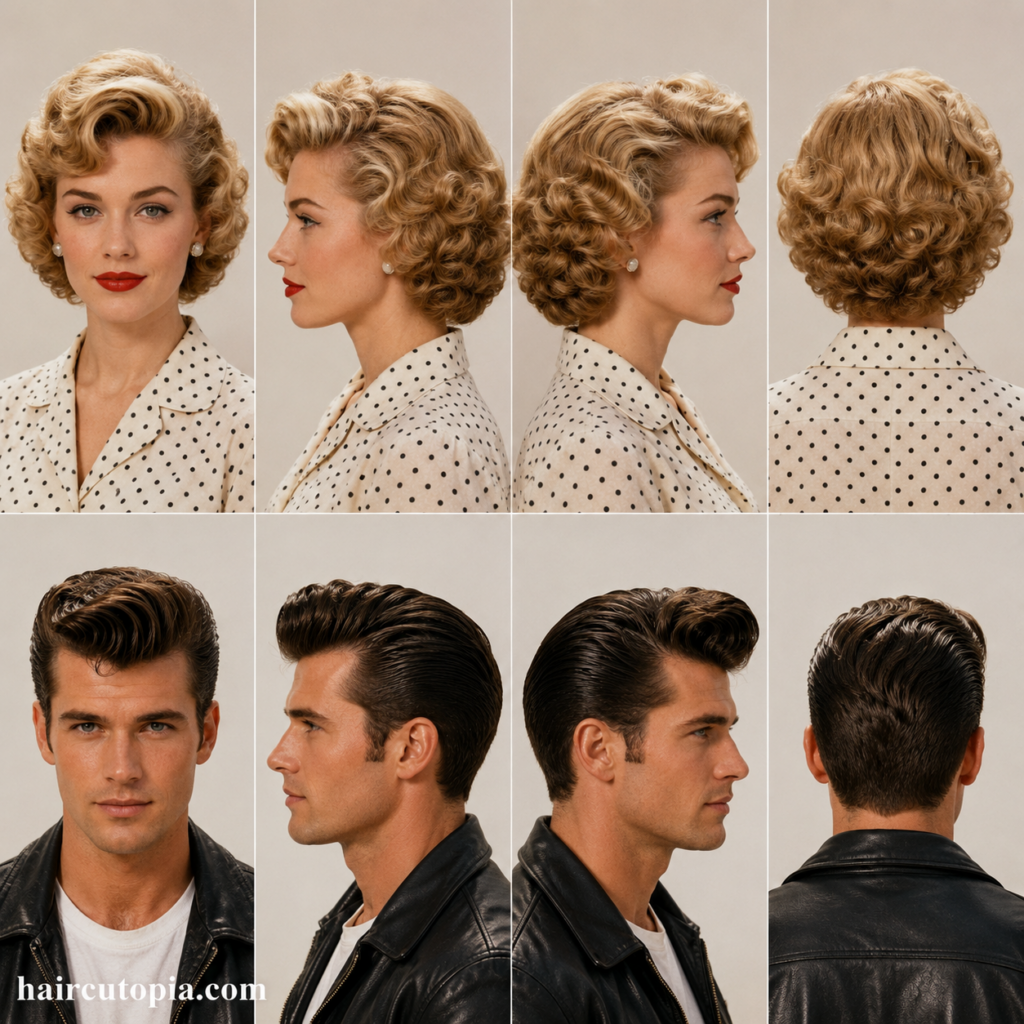
If you’re looking at the decade for inspiration, separating the styles by length can make the options easier to understand.
Short Hair
Popular short styles included:
- Pixie cuts
- Poodle cuts
- Italian cuts
- Short curly cuts
- Crew cuts
- Flat tops
- Ivy League cuts
Short hair could be conservative, glamorous, or rebellious depending on how it was styled.
Medium Hair
Medium-length styles included:
- Pageboys
- Curled bobs
- Shoulder-length curls
- Side-parted men’s styles
- Quiffs
- Pompadours
- Slick backs
- Ducktails
This length provided enough hair for shaping and volume without becoming difficult to control.
Long Hair
Long hair was less central to the decade’s most recognizable haircut trends, particularly compared with later decades.
Women who kept their hair long often wore it curled, waved, pulled back, or arranged into an updo rather than simply leaving it loose.
Long men’s hair was uncommon by modern standards. The longer rebellious styles of the 1950s were still relatively short compared with hairstyles that emerged during the late 1960s and 1970s.
How to Get a 1950s-Inspired Haircut Today
You don’t necessarily need to recreate every historical detail to capture the look of the decade.
Start with the silhouette.
For a men’s 1950s-inspired haircut, that might mean keeping enough length through the front to create a pompadour or quiff while maintaining shorter sides.
For a women’s style, it might mean choosing a chin-length bob, short pixie, sculpted curls, or shoulder-length cut that works well with a roller set.
When talking to your barber or stylist:
- Bring reference photos showing the specific decade and hairstyle.
- Decide whether you want an authentic vintage cut or a modern interpretation.
- Discuss how much daily styling you’re comfortable doing.
- Consider your natural hair texture before choosing a heavily sculpted style.
- Ask how the haircut will look without vintage styling.
That last point matters. Some historical hairstyles depend heavily on rollers, pomade, curling, or setting techniques. The underlying haircut may look quite different when left natural.
Modern Versions of 1950s Haircuts
Many classic 1950s hairstyles have survived because they can be adapted easily.
The biggest difference is usually texture.
Modern styling tends to favor movement and a less rigid finish. A contemporary pompadour, for example, may use matte styling clay rather than shiny pomade. A modern bob might keep the rounded shape while incorporating subtle layers.
Common modern interpretations include:
- Textured pompadours
- Low-fade pompadours
- Messy quiffs
- Natural side parts
- Textured Ivy League cuts
- Soft pixie cuts
- Layered pageboys
- Loose vintage waves
- Modern curly bobs
- Soft bouffant-inspired volume
These styles borrow the proportions of the 1950s without necessarily reproducing the exact grooming techniques.
1950s Haircuts vs. 1940s Haircuts
Although there was plenty of overlap between the decades, their overall aesthetics were different.
1940s hairstyles were heavily influenced by wartime practicality. Women’s hair often incorporated rolls, waves, and pinned arrangements, while men’s cuts generally remained short and conservative.
During the 1950s, hairstyles became increasingly connected with consumer fashion, Hollywood glamour, and youth culture.
Women’s hair moved toward shorter sculpted cuts and eventually larger silhouettes. Men’s styles divided between traditional clean-cut grooming and the more dramatic hairstyles associated with rock and roll.
The transition wasn’t immediate, but by the end of the decade hairstyles were clearly moving toward the experimentation that would define the 1960s.
Why 1950s Haircuts Are Still Popular
There’s a reason these hairstyles continue to return.
Many 1950s haircuts were built around strong, recognizable shapes. A pompadour has an unmistakable profile. A classic pixie emphasizes the face. A curled bob creates a balanced silhouette that can easily be updated.
They also offer plenty of flexibility.
Someone looking for subtle vintage inspiration can choose a neat side part or softly curled bob. Someone wanting a stronger retro look can experiment with a dramatic pompadour, ducktail, poodle cut, or carefully set vintage curls.
Modern barbering and styling products have made many of these looks easier to customize as well.
Frequently Asked Questions About 1950s Haircuts
What was the most popular haircut in the 1950s?
There wasn’t a single haircut worn by everyone. Popular women’s styles included short curls, bobs, pixies, pageboys, and poodle cuts. Popular men’s styles included side parts, crew cuts, Ivy League cuts, pompadours, and ducktails.
What men’s haircut was popular in the 1950s?
The side part and crew cut were common conservative choices. Pompadours, quiffs, slick backs, and ducktails became especially recognizable through rock-and-roll and greaser culture.
What hairstyles did women wear in the 1950s?
Women wore short curled hairstyles, pixie cuts, bobs, pageboys, poodle cuts, shoulder-length curls, and increasingly voluminous styles toward the end of the decade.
Did men have long hair in the 1950s?
Most men’s haircuts were short by today’s standards. Even pompadours and ducktails typically kept the sides relatively controlled while concentrating additional length around the top and front.
How did people curl their hair in the 1950s?
Rollers and pin curls were widely used. Hair was often set while damp and allowed to dry before being brushed and shaped into the finished hairstyle.
Are 1950s haircuts still fashionable?
Yes. Pompadours, crew cuts, Ivy League cuts, pixies, bobs, quiffs, and slick backs all have modern variations. Contemporary versions generally use more natural texture and less rigid styling.
Final Thoughts
1950s haircuts capture an interesting moment in hair history.
The decade still valued polished grooming, but hairstyles were becoming more individual. Hollywood helped popularize glamorous curls and short women’s cuts, while rock and roll gave men’s hair a rebellious new identity.
That combination produced an unusually diverse collection of styles. Crew cuts existed alongside towering pompadours. Short pixies appeared alongside carefully curled pageboys and emerging bouffants.
More than 70 years later, many of those shapes remain part of modern hairstyling.
Whether you’re researching vintage hair, looking for an authentic 1950s haircut, or simply borrowing elements from the decade, the best place to start is with the silhouette. Choose the shape that fits your hair and lifestyle, then decide just how vintage you want the finished look to feel.