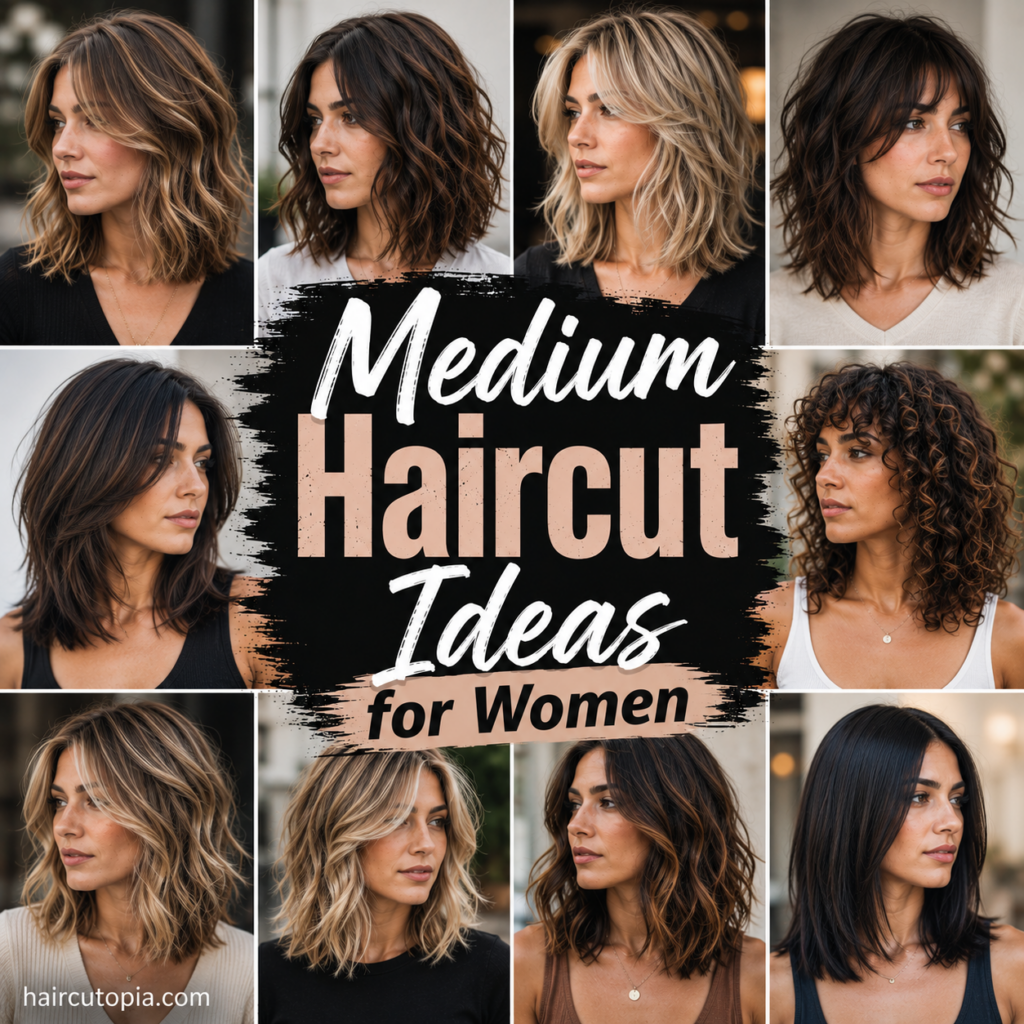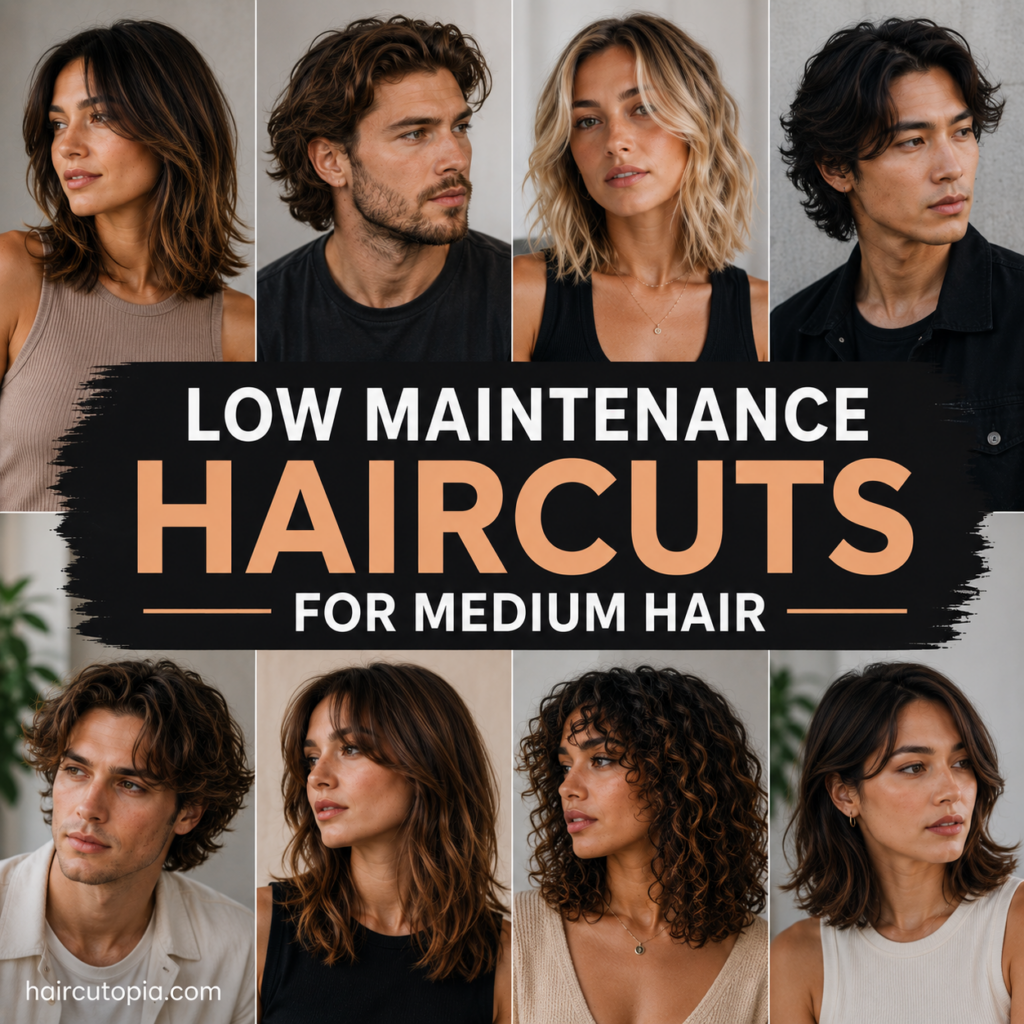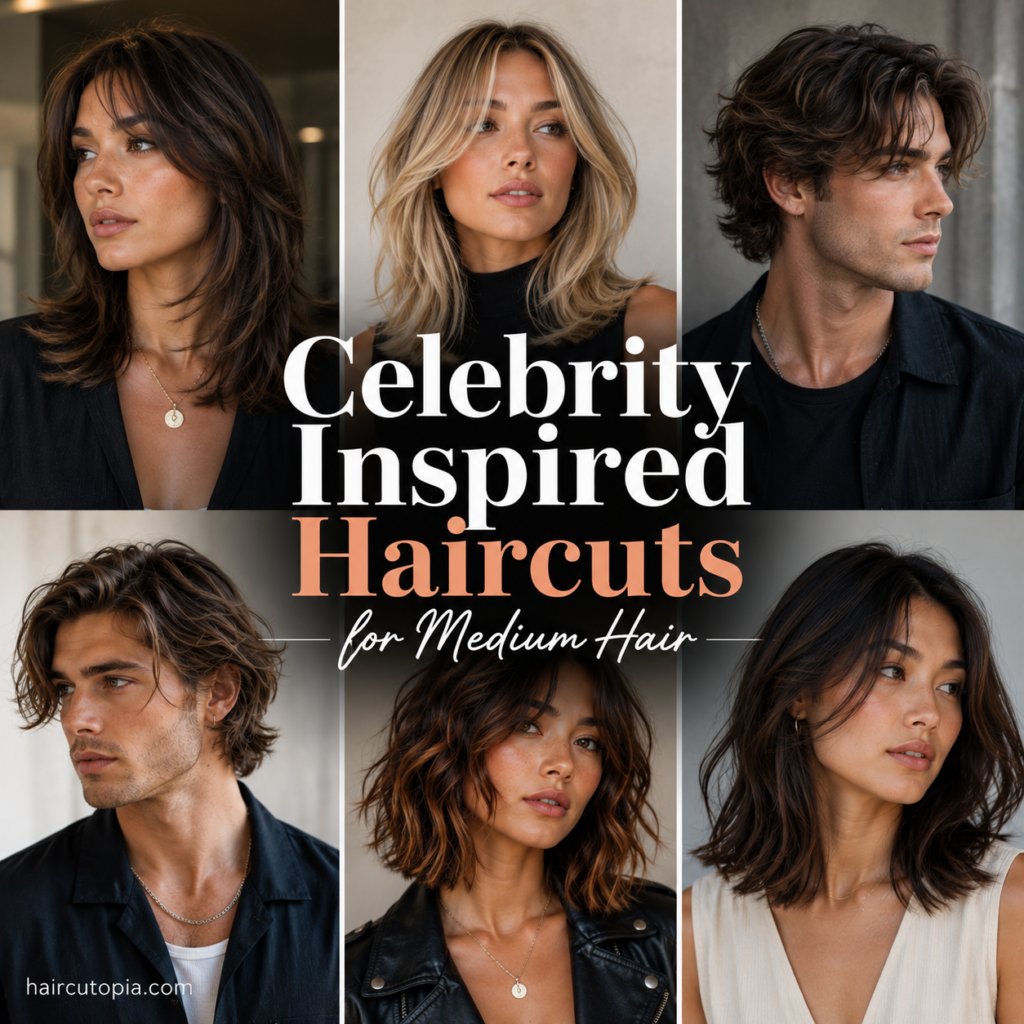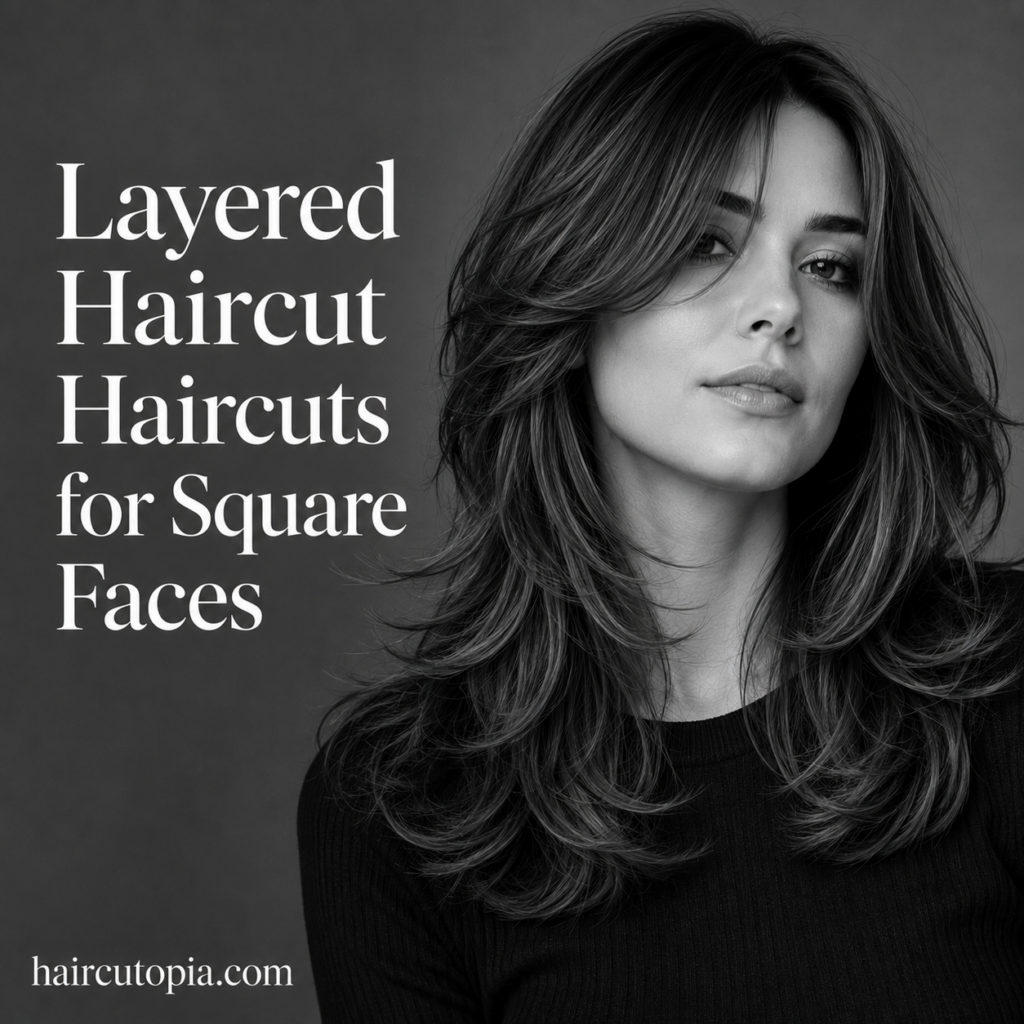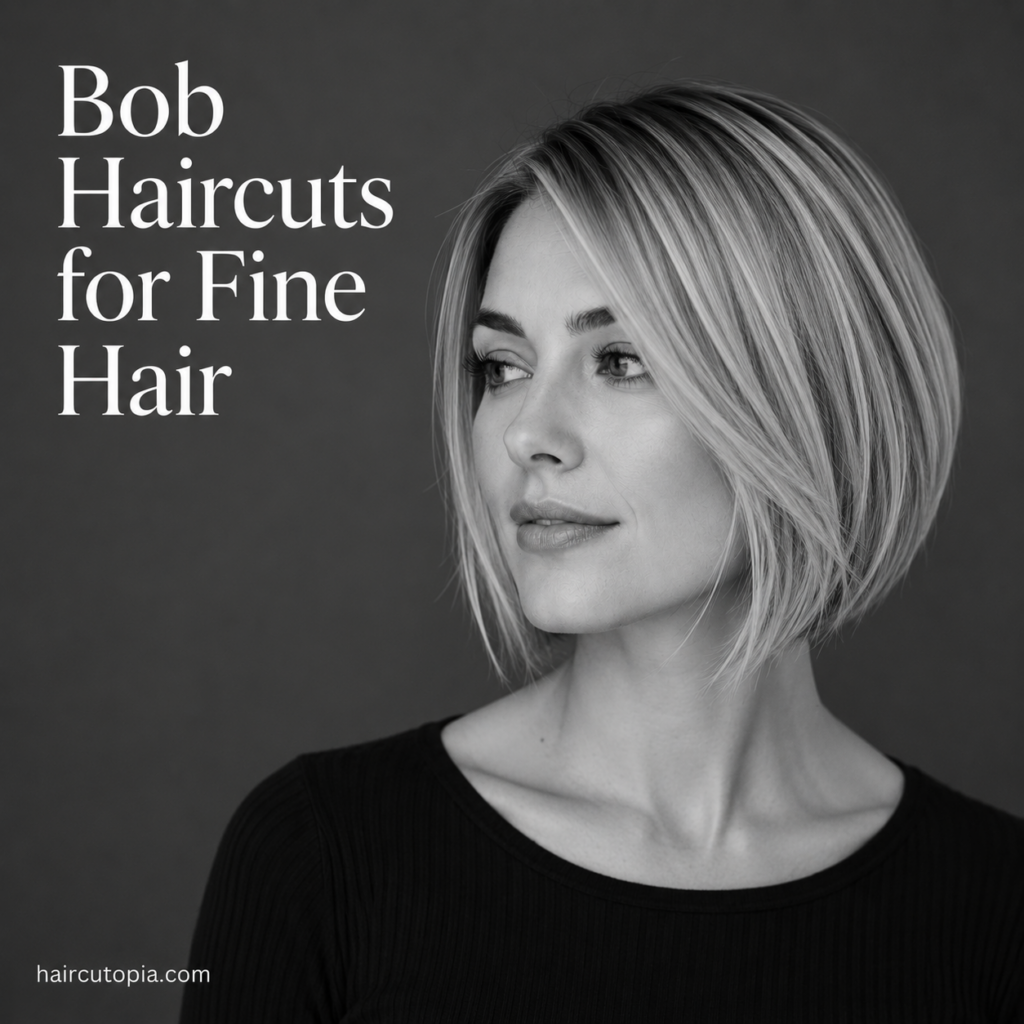
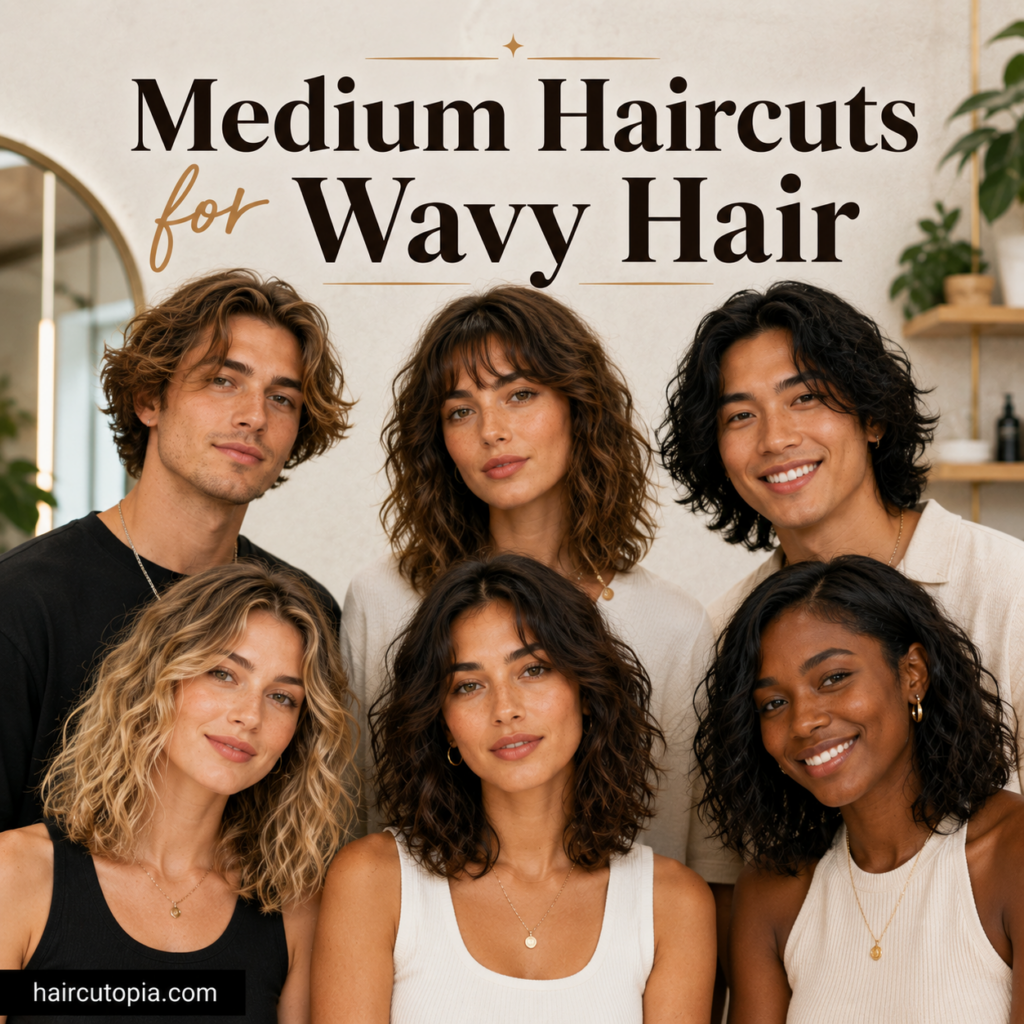
Medium-length hair and natural waves are a pretty easy match. There’s enough length for your wave pattern to develop, but not so much that the weight of your hair pulls all the movement out.
That makes medium haircuts especially versatile for wavy hair. You can keep things simple with a shoulder-length cut, add layers for more movement, try a shag for extra texture, or use face-framing pieces to change the shape without losing much length.
The trick is finding a haircut that works with the way your waves naturally fall.
Some wavy hair gets fuller as it gets shorter. Some needs layers before the wave pattern really shows up. Fine waves may benefit from keeping more weight through the ends, while thick hair often feels better with some of that bulk removed.
If you’re thinking about going shoulder length—or growing out a shorter style—here are some of the best medium haircuts for wavy hair and what to consider before choosing one.
Why Medium-Length Hair Works So Well with Waves
Medium hair gives waves room to form without becoming overly weighed down.
For many people, this means more visible texture than they get with longer hair while still keeping plenty of styling flexibility.
Medium wavy hair can also be:
- Worn down naturally
- Pulled into a ponytail
- Styled half-up
- Tucked behind the ears
- Braided
- Straightened occasionally
- Diffused for more definition
- Air-dried for a relaxed finish
That versatility makes medium length a good middle ground if you’re not ready for a short haircut but want something lighter and easier to manage than long hair.
Best Medium Haircuts for Wavy Hair
There are plenty of ways to wear medium wavy hair. The right option depends on how much layering, volume, and daily styling you want.
1. Shoulder-Length Wavy Haircut
A classic shoulder-length cut is one of the simplest choices for naturally wavy hair.
It removes some of the weight associated with longer hair while leaving enough length for your waves to develop. The result can look polished when styled or casual when left to air-dry.
If your waves are subtle, keeping the perimeter relatively full can help the hair look thicker.
For denser hair, a little layering may prevent the ends from becoming too heavy.
2. Medium Layered Wavy Hair
Layers are one of the most effective ways to bring movement into medium-length wavy hair.
By removing some weight from selected areas, layers can help waves spring up instead of being stretched downward.
They can also create a more balanced silhouette, particularly if your hair tends to become wide or bulky around the bottom.
The amount of layering matters, though. Fine wavy hair may only need a few long layers, while thick hair can often handle more.
3. Wavy Lob
The long bob—or lob—usually falls somewhere between the collarbone and shoulders.
It has the clean shape of a bob without requiring you to go particularly short.
On wavy hair, a lob feels softer and more relaxed than it does on very straight hair. The natural bends break up the perimeter and create movement even when the cut itself is fairly simple.
A lob is also an easy choice if you like switching between natural waves and straighter styles.
4. Textured Lob
A textured lob takes the traditional long bob and gives it a less structured finish.
Instead of a perfectly blunt perimeter, the ends may be lightly textured or layered to create more separation.
This can be particularly flattering on waves because it encourages individual sections to move independently.
The overall effect is casual rather than overly styled—especially when the hair is air-dried.
5. Medium Shag
Wavy hair and shag haircuts work naturally together.
A medium shag typically features shorter layers around the crown with progressively longer layers toward the ends. This creates volume toward the top while encouraging texture throughout the haircut.
You don’t need extremely curly hair for a shag to work. Even looser waves can become more noticeable once some weight is removed.
The style is a particularly good choice if you like a tousled, lived-in finish rather than perfectly controlled waves.
6. Medium Wavy Hair with Curtain Bangs
Curtain bangs blend naturally into medium-length wavy hair.
Because they’re longer than traditional bangs, they can follow the natural wave pattern rather than needing to sit perfectly straight across the forehead.
They also grow out relatively easily.
Curtain bangs can be paired with:
- Shoulder-length cuts
- Lobs
- Shags
- Butterfly-inspired layers
- Face-framing layers
If your bangs tend to curl or shrink significantly when dry, make sure the length accounts for that before cutting.
7. Medium Wavy Hair with Face-Framing Layers
You don’t need layers throughout your entire haircut to change its shape.
Face-framing layers can add movement around the front while preserving fullness through the back and ends.
They can begin around the cheekbones, jaw, chin, or lower depending on the effect you want.
Longer face-framing pieces are usually easier to manage if you prefer minimal styling.
8. Collarbone-Length Wavy Hair
A collarbone cut sits in a particularly versatile spot.
It feels shorter and lighter than long hair but usually remains long enough to tie back.
This length works especially well for people who want a noticeable haircut without committing to a bob.
It also gives waves enough room to develop their natural S-shaped pattern.
9. Medium Wolf Cut
A wolf cut combines shaggy layers with a more pronounced difference between the upper and lower sections of the hair.
Natural waves help soften the haircut, making it possible to wear a less dramatic version of the trend.
The shorter layers can create volume around the crown while longer sections maintain length and movement.
If you want texture without a dramatic silhouette, ask for a softer interpretation with blended layers.
10. Blunt Medium Wavy Hair
Not every wavy haircut needs lots of layers.
A blunt medium-length cut can work beautifully, especially on fine or lower-density hair.
Keeping more hair at the perimeter creates the appearance of thicker ends. Natural waves prevent the straight edge from looking too severe.
You can also combine a relatively blunt perimeter with a few subtle interior or face-framing layers.
11. Medium Wavy Hair with Wispy Bangs
Wispy bangs are lighter and softer than a full fringe.
They can add interest around the face without creating a heavy section of hair that needs constant styling.
On wavy hair, letting the bangs retain a little natural movement often looks better than forcing them completely straight.
Keep in mind that shorter pieces can become wavier as they lose weight, so bangs may dry shorter than expected.
12. Side-Parted Medium Wavy Hair
Sometimes you don’t need a complicated haircut to create a noticeable change.
A side part can shift volume toward one side of the head and create a different shape around the face.
It works particularly well with layered shoulder-length cuts and lobs because the waves naturally create lift and movement around the part.
If you’ve worn the same part for years, changing it can make a familiar haircut feel surprisingly different.
13. U-Shaped Medium Haircut
A U-shaped cut leaves the hair slightly longer through the center of the back and gradually shorter toward the sides.
The shape is subtle at medium length, but it can help the hair flow more naturally than a completely straight perimeter.
Pairing the shape with long layers gives waves additional movement without making the haircut heavily layered.
14. Medium Butterfly-Inspired Layers
Traditional butterfly cuts are often associated with longer hair, but the basic idea can be adapted to medium lengths.
Shorter face-framing sections create movement toward the front while longer layers maintain fullness through the rest of the hair.
On naturally wavy hair, these layers can produce volume without requiring the dramatic blowout styling often associated with the butterfly haircut.
Medium Haircuts for Different Wavy Hair Types
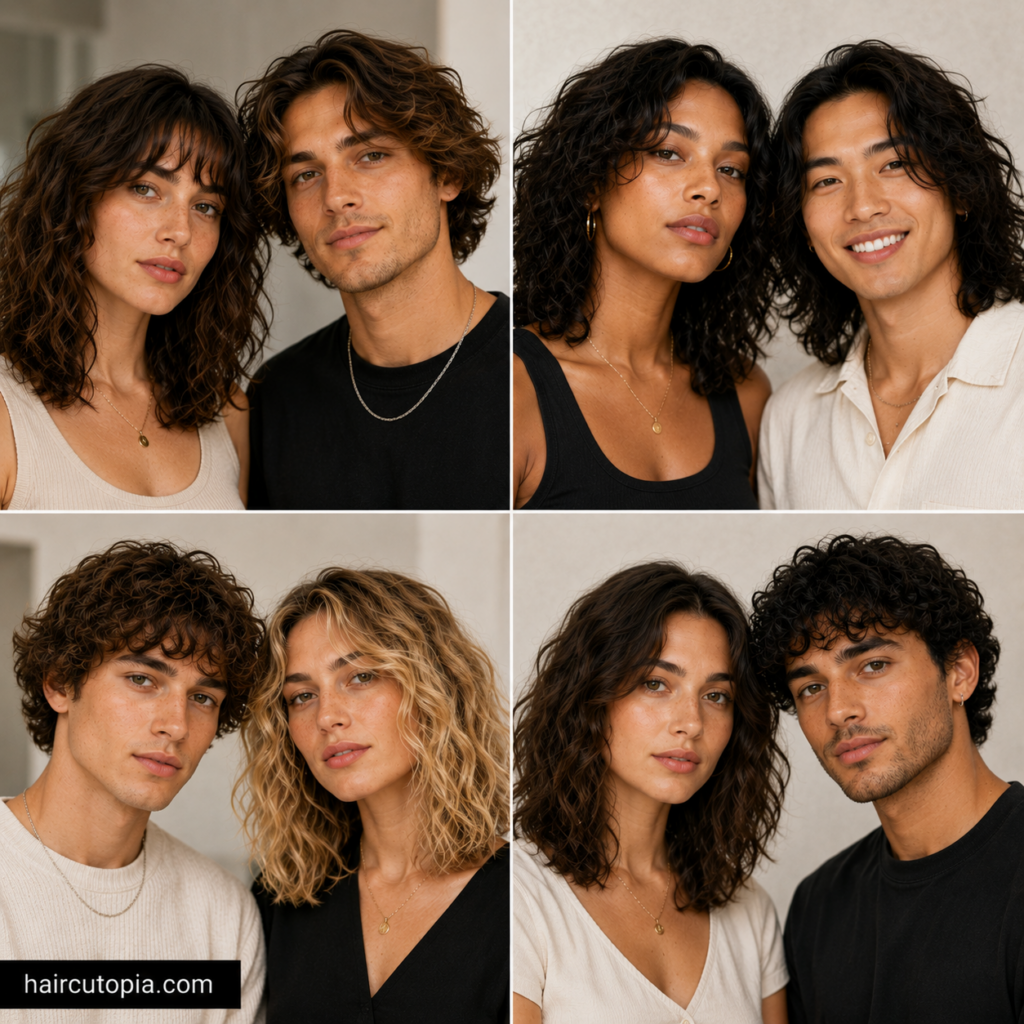
“Wavy hair” covers a fairly broad range of textures.
It’s commonly divided into Types 2A, 2B, and 2C, ranging from subtle bends to strong waves that border on curls.
Your individual pattern matters because the same haircut can behave very differently on each type.
Medium Haircuts for Type 2A Wavy Hair
Type 2A hair generally has a loose wave pattern that can appear nearly straight in some areas.
Because the waves are subtle, excessive layering may remove too much weight and make fine hair appear sparse.
Good options include:
- Blunt shoulder-length cuts
- Lobs
- Collarbone cuts
- Lightly layered styles
- Long face-framing layers
Lightweight styling products can help preserve the pattern without weighing it down.
Medium Haircuts for Type 2B Wavy Hair
Type 2B hair usually has a more noticeable S-shaped pattern through the lengths.
Medium cuts work particularly well because there’s enough length for those waves to form while layers can prevent them from being pulled flat.
Consider:
- Layered shoulder-length cuts
- Textured lobs
- Medium shags
- Face-framing layers
- Soft wolf cuts
Type 2B hair can also respond well to diffusing when you want additional definition.
Medium Haircuts for Type 2C Wavy Hair
Type 2C waves are stronger and may form loose curls in some sections.
This texture often has more volume and noticeable shrinkage, so the finished dry length should be considered before cutting.
Layered cuts can help distribute volume and create shape.
Medium shags, layered lobs, collarbone cuts, and rounded layered styles can all work well.
Medium Wavy Haircuts for Fine Hair
Fine wavy hair can benefit from medium length because it preserves enough hair to create fullness while removing some of the weight that can flatten waves.
The main concern is over-layering.
Too many short layers may leave the ends looking thin, particularly if your hair is also lower density.
Instead, consider:
- A blunt lob
- Shoulder-length hair with minimal layers
- Collarbone-length cuts
- Subtle face-framing pieces
- Light internal layering
Lightweight mousse or styling foam can add definition without coating the hair in heavy product.
Medium Wavy Haircuts for Thick Hair
Thick wavy hair can become bulky at medium length if the haircut doesn’t distribute the weight properly.
This is where layering can be especially useful.
Long layers can create movement, while shorter layers around the crown can add shape and prevent all the volume from collecting toward the ends.
Shags and wolf-inspired cuts can also work well if you enjoy a more textured look.
If you prefer something cleaner, a layered lob or shoulder-length cut can remove bulk while maintaining a simple silhouette.
Should Medium Wavy Hair Be Layered?
In many cases, yes—but layering isn’t automatically necessary.
Layers can help:
- Encourage wave definition
- Remove excess weight
- Add movement
- Create volume around the crown
- Prevent thick hair from looking bottom-heavy
- Frame the face
However, the right amount depends heavily on hair density.
Fine hair often benefits from fewer, longer layers. Thick hair may need more weight removed to achieve the same sense of movement.
If you like the fullness of your ends but want more texture, ask about subtle internal layering or face-framing pieces rather than dramatically shortening layers throughout the haircut.
Medium Wavy Haircuts for Different Face Shapes
Face shape doesn’t determine which haircut you’re allowed to wear. It can, however, help you decide where you want volume, length, and face-framing pieces to fall.
Round Faces
Cuts that fall around or below the shoulders can create a little more vertical length.
Long layers, side parts, and face-framing pieces beginning below the cheekbones are all options worth considering.
Oval Faces
Oval faces can usually accommodate a wide range of medium hairstyles.
Lobs, shags, blunt cuts, bangs, and layered styles can all work depending on your hair texture and personal preference.
Square Faces
Natural waves already provide softness around a defined jawline.
Layered shoulder-length cuts, curtain bangs, side parts, and face-framing layers can add even more movement around the face.
Heart-Shaped Faces
Styles that create movement around the lower half of the face can balance a wider forehead and narrower chin.
Consider curtain bangs, collarbone cuts, lobs, and layers that become fuller around the jaw and shoulders.
Long or Oblong Faces
Medium cuts can create width through the sides rather than concentrating volume entirely at the crown.
Shoulder-length shags, textured lobs, curtain bangs, and layered cuts can all work well.
How to Style Medium Wavy Hair
You don’t need a complicated routine to make natural waves look good.
For an everyday style:
- Apply your preferred styling product to damp hair.
- Distribute it gently without repeatedly brushing through the wave pattern.
- Scrunch the hair upward toward the scalp.
- Air-dry or diffuse using low heat and airflow.
- Avoid constantly touching the hair while it dries.
- Once completely dry, gently soften or separate any sections that feel stiff.
Depending on your texture, you might use mousse, foam, lightweight curl cream, or gel.
You don’t necessarily need all of them. In fact, fine waves often look better with fewer products.
How to Add Volume to Medium Wavy Hair
If your waves look good through the ends but flat near the scalp, focus on the roots rather than adding more product throughout the entire head.
You can try:
- Diffusing with your head tilted
- Changing your usual part
- Using lightweight root products
- Avoiding conditioner directly on the scalp
- Using strategic layers around the crown
- Applying heavy creams only where they’re actually needed
Haircut shape matters too.
If your hair consistently falls flat despite your styling routine, long or heavy layers may be pulling the roots downward.
How to Reduce Frizz in Medium Wavy Hair
Wavy hair doesn’t need to be completely frizz-free to look good. A little natural frizz can actually make the hair look fuller and more relaxed.
For more definition, though, gentle handling makes a difference.
Try applying styling products while your hair is still damp and avoid aggressively rubbing it with a bath towel.
A microfiber towel or soft cotton T-shirt can remove excess water with less friction.
You can also:
- Limit excessive heat styling
- Use conditioner regularly
- Avoid repeatedly brushing dry waves
- Diffuse at a lower speed
- Detangle gently
- Avoid touching your hair excessively while it dries
Humidity can still change how your waves behave, so some variation from one day to another is completely normal.
How Often Should You Trim Medium Wavy Hair?
Medium-length hair generally doesn’t require trims as frequently as a pixie or short bob.
Around every eight to twelve weeks works for many people, although there’s no universal schedule.
A structured lob may need more frequent maintenance if you want to preserve its exact shape. Shags and layered styles can often grow out more naturally.
If you’re growing your hair longer, you may choose to stretch appointments further apart and simply trim damaged or uneven ends when necessary.
What to Ask Your Stylist
A photo can show your stylist the general look you’re after, but it doesn’t explain how you want the haircut to behave every morning.
Tell your stylist about your actual routine.
Useful things to mention include:
- Whether you normally air-dry or diffuse
- How much styling time you’re comfortable with
- Whether your hair becomes significantly shorter when dry
- Where your waves are strongest
- Whether your hair tends to become bulky
- Whether you frequently straighten it
- How much volume you prefer
- Whether you need to be able to tie it back
It’s also helpful to show your stylist your hair in its natural state whenever possible.
That gives them a better idea of how your individual wave pattern behaves.
Are Medium Haircuts Good for Wavy Hair?
Medium length is one of the most versatile options for naturally wavy hair.
It’s long enough to show the wave pattern clearly, short enough to remove some excess weight, and flexible enough for plenty of different hairstyles.
A lob or simple shoulder-length cut works well if you prefer something classic. Layers can bring out more movement, while a shag or wolf-inspired cut can make natural texture the main feature.
And if you aren’t sure how short you eventually want to go, medium length is an easy transition point. You can keep growing it—or gradually move toward a shorter wavy haircut later.
Frequently Asked Questions About Medium Wavy Haircuts
What is the best medium haircut for wavy hair?
Shoulder-length layered cuts, lobs, textured lobs, shags, and collarbone-length cuts are all good options. The best choice depends on your wave pattern, density, face shape, and how much styling you want to do.
What length is best for wavy hair?
There’s no single ideal length, but shoulder to collarbone length works particularly well for many wavy hair types. It provides enough length for waves to develop without the weight associated with very long hair.
Do layers make wavy hair look better?
Layers can make waves more noticeable by removing weight and allowing individual sections to move more freely. However, fine or low-density hair may benefit from fewer layers to preserve fullness.
Is a lob good for wavy hair?
Yes. A lob gives natural waves enough length to form while creating a defined haircut shape. It can be worn blunt, lightly layered, textured, or paired with bangs.
What haircut makes wavy hair look thicker?
Blunt or lightly layered medium cuts can make fine wavy hair appear fuller because they preserve density through the ends. Shoulder-length and collarbone-length cuts are particularly versatile.
Do bangs work with medium wavy hair?
Yes. Curtain bangs, wispy bangs, and longer textured fringe can all work with medium wavy hair. Allowing some natural movement in the bangs can also reduce the amount of daily styling required.
Is medium wavy hair easy to maintain?
It can be. Medium hair usually requires less frequent shape maintenance than very short hair while being easier to wash, dry, and style than very long hair. Your individual texture and haircut will ultimately determine how much daily styling is needed.
Final Thoughts on Medium Haircuts for Wavy Hair
Medium-length hair gives natural waves plenty of room to move.
If you want something simple, a shoulder-length cut or lob can showcase your texture without requiring a dramatic change. If your hair feels heavy or shapeless, layers can bring back movement. And if you prefer something more textured, a shag or softer wolf cut can lean fully into your natural wave pattern.
Pay attention to density as much as wave type. Fine hair may look its best with a stronger perimeter and fewer layers, while thick wavy hair often benefits from removing some weight.
Most importantly, choose a haircut that works with the way you actually wear your hair.
A good medium wavy haircut shouldn’t only look great after a salon appointment. It should still make sense when you’re standing in your bathroom on a regular morning deciding whether you’re going to diffuse it—or just let it air-dry and get on with your day.