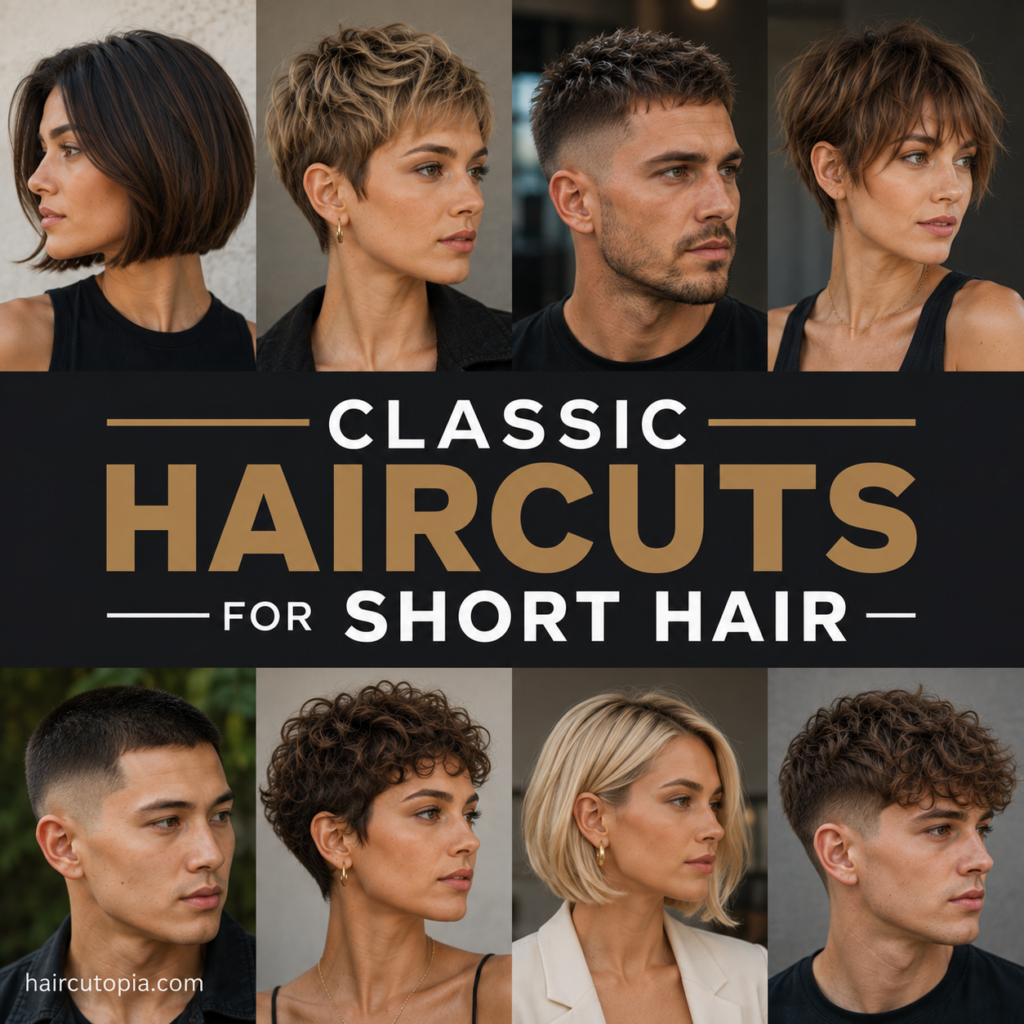
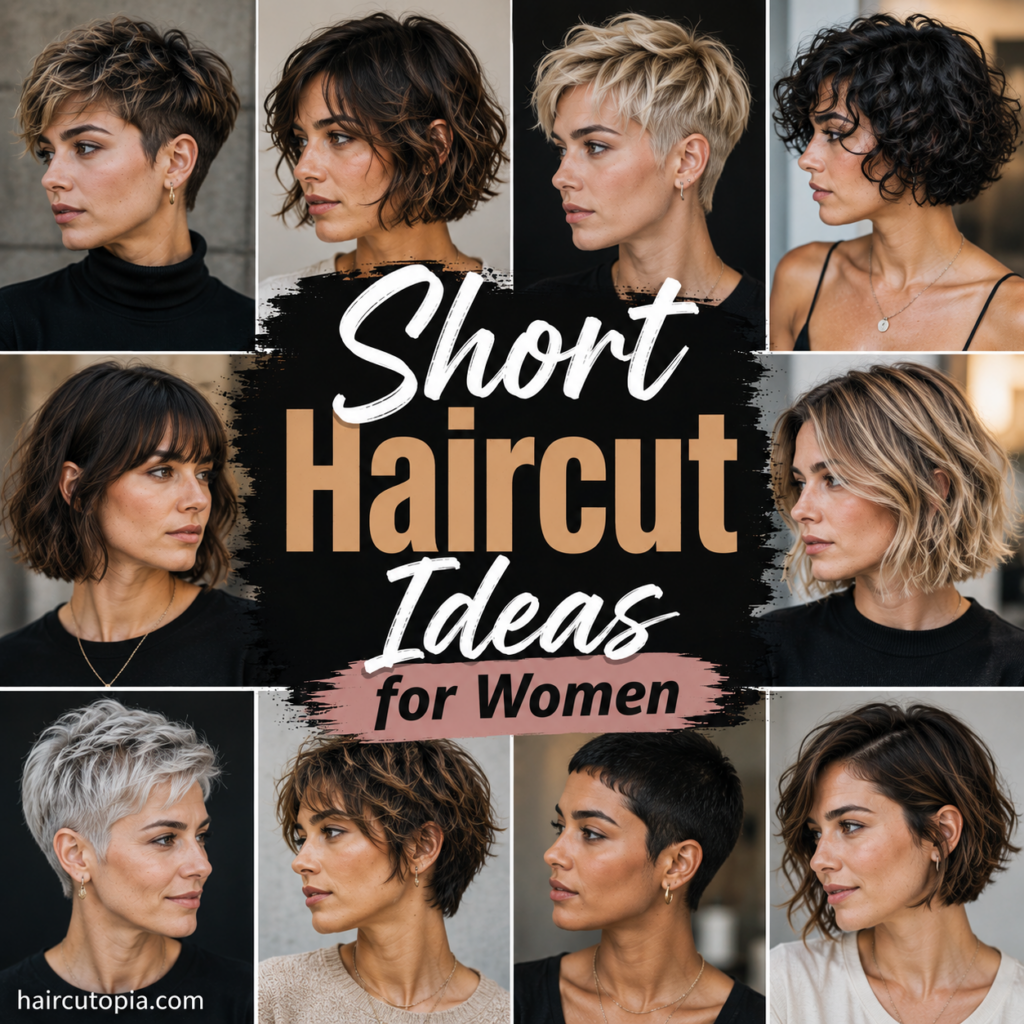
Short hair can completely change the way a hairstyle frames your face, shows off your natural texture, and fits into your everyday routine. It can be polished and classic, soft and feminine, bold and edgy, or wonderfully low-maintenance.
And “short hair” covers much more territory than it might seem.
A chin-length bob and a close pixie cut are both short hairstyles, yet they create very different looks. Add layers, bangs, curls, an undercut, or a different part, and the possibilities expand even further.
Whether you’re considering a major chop or simply looking for a fresh way to shape hair that’s already short, these short haircut ideas for women cover everything from timeless bobs and pixies to textured, curly, wavy, layered, and easy-to-maintain styles.
What Is Considered a Short Haircut for Women?
Short hair generally includes cuts that fall anywhere from very close to the scalp to around the jaw or chin.
That can include:
- Buzz cuts
- Pixie cuts
- Bixies
- Cropped hairstyles
- Ear-length cuts
- Short shags
- Jaw-length bobs
- Chin-length bobs
Some collarbone-length cuts may be described as short or medium depending on the overall shape and the person’s proportions.
Texture also changes how length appears. Curly hair may measure the same as straight hair when stretched but look considerably shorter when worn naturally.
Rather than focusing on an exact measurement, think about where you want the perimeter of the haircut to sit and how much styling flexibility you’d like to keep.
Classic Short Haircuts for Women
Some short hairstyles continue to work decade after decade because they’re easy to personalize.
Classic Bob
The bob is one of the most recognizable short haircuts for women.
In its traditional form, the hair falls somewhere around the jaw or chin with a relatively clean perimeter.
But even a simple bob can be adapted in countless ways.
You can wear it:
- Straight and sleek
- Softly waved
- With a center part
- With a side part
- With bangs
- Tucked behind the ears
- With subtle layers
A classic bob is a good starting point if you want a noticeable change without going extremely short.
Pixie Cut
The pixie takes significantly more length away from the sides and back while leaving enough hair through the top to create shape and texture.
Some pixies are soft and feathered. Others are cropped extremely close.
Leaving additional length on top provides more styling flexibility, while a shorter pixie can be almost wash-and-go.
French Bob
The French bob typically sits around the jaw or slightly above it.
It often has a relaxed rather than overly polished finish and may be paired with bangs.
Straight, wavy, and lightly curly textures can all give the cut a different personality.
Short Pageboy
A modern pageboy takes inspiration from the rounded, structured shape of the traditional cut but can be softened with layering and texture.
The result can range from retro and polished to much more contemporary.
Modern Short Haircut Ideas for Women
Modern short cuts often combine classic shapes with softer texture, stronger layering, or intentionally undone styling.
Textured Pixie
Instead of smoothing every strand into place, a textured pixie emphasizes separation and movement.
Longer pieces through the crown and top can be styled in different directions with a small amount of paste, cream, or lightweight wax.
It’s a useful option if you like short hair but don’t want it to look overly formal.
Choppy Bob
A choppy bob replaces the perfectly even perimeter of a classic bob with more visible texture.
Layers and point-cut ends can give the hair movement and create a casual finish.
It works particularly well when you prefer styling that doesn’t need to look perfectly precise.
Bixie Cut
The bixie sits somewhere between a bob and a pixie.
It’s longer and softer than many traditional pixies but shorter and more layered than a typical bob.
That makes it a useful middle ground if you’re interested in going short but aren’t ready for an extremely cropped style.
Short Shag
A short shag relies heavily on layers.
Shorter sections around the crown create volume and movement, while longer pieces around the sides and back preserve a loose, textured silhouette.
Add bangs and the transformation can be even more noticeable.
Pixie Haircut Ideas for Women
Few short hairstyles have as many variations as the pixie.
Changing the top length, fringe, sideburns, or layering can make one pixie look completely different from another.
Classic Pixie
A classic pixie keeps the sides and back short with slightly more length through the top.
It creates a clean silhouette without requiring the hair to be clipped extremely close.
Long Pixie
A long pixie leaves noticeably more length around the crown, fringe, or sides.
This gives you room to experiment with:
- Side-swept bangs
- Tousled texture
- Volume at the crown
- Tucked sides
- Soft waves
It’s also easier to transition into a bixie or bob if you decide to grow your hair again.
Pixie With Bangs
Adding bangs changes how a pixie frames the face.
They can be:
- Short and wispy
- Long and side-swept
- Textured
- Blunt
- Curly
- Asymmetrical
Longer bangs also provide styling flexibility even when the rest of the haircut is very short.
Messy Pixie
A messy pixie is built around texture rather than a perfectly smooth finish.
Layers throughout the top allow individual sections to separate naturally.
A small amount of matte paste can help create definition without making the hair look stiff.
Undercut Pixie
An undercut removes significantly more length underneath the top sections.
It can be subtle and partially hidden or create an obvious contrast between the closely cropped sides and longer hair above.
Bob Haircut Ideas for Short Hair
If a pixie feels too short, a bob provides more length without giving up the convenience of a shorter haircut.
Chin-Length Bob
A chin-length bob frames the jaw and keeps the hair clearly above the shoulders.
It’s long enough to create waves or texture but still feels distinctly short.
Jaw-Length Bob
Taking the perimeter slightly higher can emphasize the jawline and create a sharper silhouette.
The ends can be blunt or softened depending on the look you want.
Blunt Bob
A blunt bob maintains a strong, relatively even perimeter.
Because the ends remain visually dense, it can make the hair appear fuller.
The cut can be worn sleek or contrasted with loose waves.
Layered Bob
Layers introduce movement and remove some of the weight from a traditional bob.
They’re particularly useful when thick hair becomes bulky around the sides.
Stacked Bob
A stacked bob incorporates shorter layers toward the back, creating additional volume around the crown.
The front can remain longer, producing a graduated silhouette.
Asymmetrical Bob
An asymmetrical bob deliberately keeps one side longer than the other.
The difference can be subtle or dramatic.
It’s an easy way to make a familiar bob shape feel more distinctive.
Short Layered Haircuts for Women
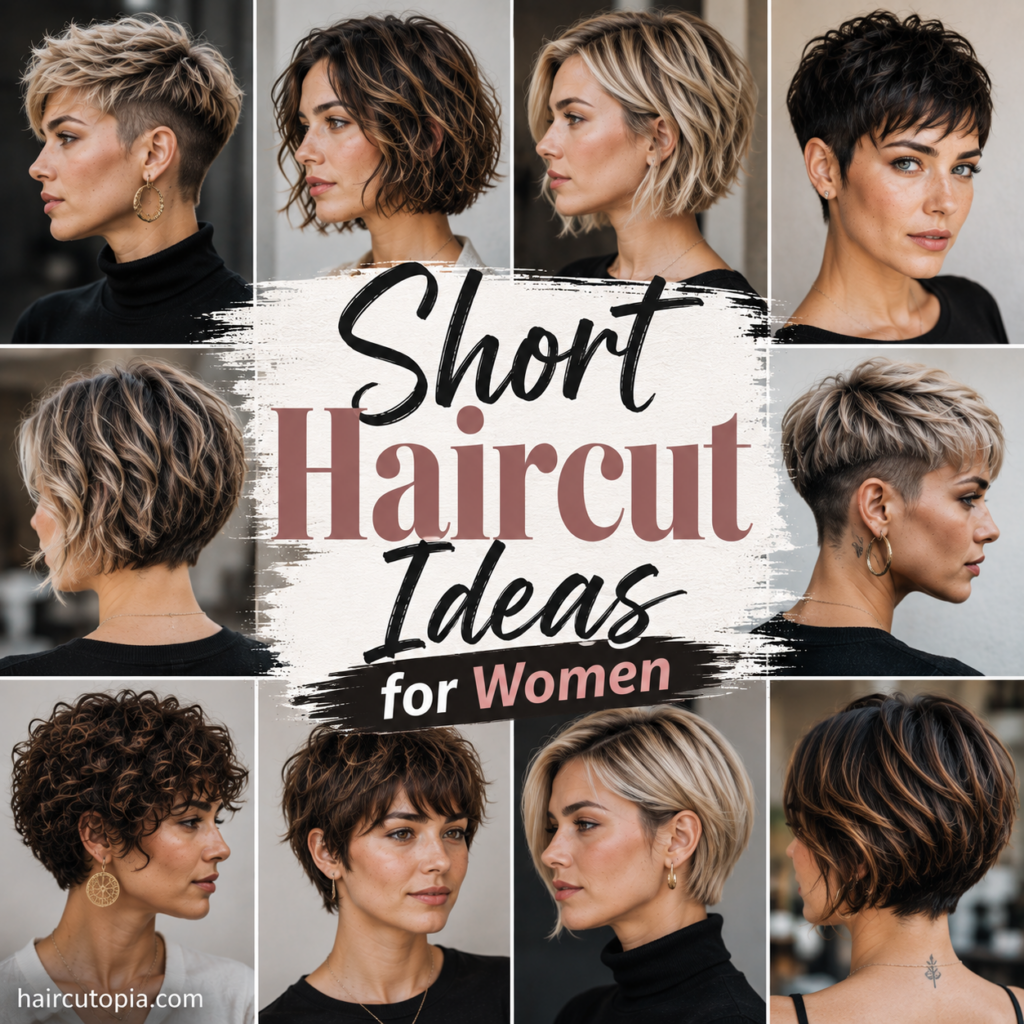
Layers can change the shape of short hair without necessarily changing its overall length.
Soft Layers
Soft layers create subtle movement while preserving much of the haircut’s fullness.
They work particularly well if you want a bob to move more naturally without looking heavily layered.
Choppy Layers
Choppy layers are more visible and deliberately separated.
They can add personality to pixies, bobs, and short shags.
Face-Framing Layers
Shorter pieces around the front can draw attention toward specific areas of the face and soften the transition into the rest of the haircut.
They can be combined with bangs or worn on their own.
Crown Layers
Shorter layers around the crown can create lift and prevent the top of the hairstyle from sitting completely flat.
How short these layers should be depends heavily on hair texture and density.
Short Haircuts With Bangs
Bangs can make a short haircut feel entirely new without requiring a dramatic change everywhere else.
Curtain Bangs
Curtain bangs separate near the center and sweep toward either side.
On a short bob or shag, they can create a soft transition between the forehead and longer side sections.
Wispy Bangs
Wispy bangs allow some of the forehead to remain visible.
They’re less visually heavy than a blunt fringe and can blend easily into layered short hair.
Blunt Bangs
Blunt bangs create a stronger horizontal line.
They pair particularly well with structured bobs when you want a defined, geometric shape.
Side-Swept Bangs
Side-swept bangs move diagonally across the forehead.
They can work with pixies, bixies, bobs, and short layered hairstyles.
Micro Bangs
Micro bangs sit noticeably above the eyebrows.
They’re a much bolder choice and can give a bob, pixie, or shag a distinctive editorial feel.
Short Haircuts for Straight Hair
Straight hair clearly displays the structure of a short haircut.
Clean lines, blunt ends, asymmetry, and precise shapes all become especially visible.
Good options include:
- Blunt bob
- Classic bob
- Sleek pixie
- Bixie
- Asymmetrical bob
- Short layered cut
- French bob
If straight hair tends to sit flat, strategic layering or subtle graduation can create additional movement.
You can also change the look considerably just by switching between a center part and a deep side part.
Short Haircuts for Wavy Hair
Natural waves can make short hairstyles feel effortless.
Rather than trying to straighten every bend, choose a haircut that gives the waves room to form.
Wavy Bob
A bob can showcase natural waves particularly well because the shorter length prevents them from becoming weighed down.
A slightly layered shape can encourage even more movement.
Wavy Pixie
Leaving additional length through the top of a pixie can preserve visible waves.
The sides and back can remain shorter while the top retains natural texture.
Wavy Bixie
A bixie provides enough length for waves to form while maintaining the lightness of a cropped haircut.
Wavy Shag
Shag layers and natural waves naturally complement each other.
The layers encourage movement throughout the haircut rather than concentrating all the texture near the ends.
Short Haircuts for Curly Hair
Short curly hair can range from a close crop to a voluminous bob.
The most important consideration is how the haircut works with your actual curl pattern.
Curly Pixie
A curly pixie can keep the sides relatively short while preserving additional curl length on top.
The result highlights natural texture while reducing overall bulk.
Curly Bob
A curly bob provides enough length for curls to develop while keeping them away from the shoulders.
Layers may help distribute the volume more evenly.
Short Curly Shag
A curly shag uses multiple layers to encourage movement throughout the hair.
Shorter curls around the crown can add volume, while longer sections maintain the overall shape.
Curly Bixie
The bixie’s in-between length works especially well with curls.
There’s enough hair to show the curl pattern without creating the weight of a longer bob.
Short Curly Hair With Bangs
Curly bangs can blend naturally into the rest of a short haircut.
Because curls shrink as they dry, the fringe should be cut with the hair’s natural behavior in mind.
Short Haircuts for Thick Hair
Thick hair gives short cuts plenty of natural volume, but it can also become bulky if too much weight remains in the wrong places.
Useful styles include:
- Layered bob
- Textured pixie
- Bixie
- Short shag
- Graduated bob
- Undercut pixie
Strategic weight removal can help the hair move more naturally.
That doesn’t mean thinning everything aggressively. Removing too much density can sometimes create unwanted puffiness or make the ends appear sparse.
A better approach is shaping the areas where the hair naturally becomes heaviest.
Short Haircuts for Fine or Thin Hair
Shorter hair can be a great option for fine textures because removing excess length reduces weight.
Cuts with a stronger perimeter can also preserve the appearance of density.
Consider:
- Blunt bob
- Chin-length bob
- Classic pixie
- Long pixie
- Bixie
- Softly layered crop
If fullness is the goal, avoid assuming that more layers are always better.
Too many short layers can remove valuable density from fine hair. Subtle layering or a blunt perimeter may produce a fuller appearance.
Short Haircuts for Coily and Kinky Hair
Short hair can beautifully highlight coils and tightly textured patterns.
The shape of the cut is particularly important because natural volume becomes a major part of the silhouette.
Options include:
- Tapered natural cut
- Short rounded Afro
- TWA
- Coily pixie
- Short tapered curls
- Shaped natural crop
A tapered shape can keep the sides and neckline controlled while preserving volume through the crown.
Alternatively, a rounded shape allows the natural texture to become the primary focus.
Very Short Haircut Ideas for Women
Going extremely short can be both practical and visually striking.
Buzz Cut
A buzz cut removes nearly all traditional styling considerations.
The hair is clipped close to the scalp, putting more emphasis on facial features and head shape.
Different clipper lengths can create surprisingly different results.
Buzz Cut With Fade
A fade adds graduation around the sides and back instead of keeping one uniform length everywhere.
This creates additional structure within an extremely short haircut.
Tapered Crop
A tapered crop keeps some length on top while gradually shortening the sides and neckline.
It provides more styling flexibility than a uniform buzz cut.
Close Pixie
A close pixie keeps the recognizable shape of a pixie while minimizing overall length.
It can be softly textured or cut with a more precise finish.
Short Edgy Haircut Ideas
Short hair provides plenty of room for more unconventional shapes.
Asymmetrical Pixie
An asymmetrical pixie may keep one side or the fringe noticeably longer.
The imbalance is intentional and becomes the defining feature of the cut.
Pixie Undercut
Removing significant length around the sides creates strong contrast with the top.
The undercut can also be partially hidden when the longer hair falls over it.
Short Shag With Micro Bangs
Combining shaggy layers with very short bangs creates a distinctive, fashion-forward silhouette.
Disconnected Bob
A disconnected haircut deliberately avoids blending every section smoothly.
Different lengths become visible elements of the design rather than something to hide.
Soft and Feminine Short Haircut Ideas
Short hair doesn’t have to feel severe or angular.
If you prefer a softer appearance, focus on movement, face-framing pieces, and less rigid lines.
Consider:
- Wavy bob
- Long pixie
- Soft bixie
- Layered French bob
- Pixie with side-swept bangs
- Chin-length bob with waves
- Short cut with curtain bangs
Rounded shapes and softly textured ends can also make the haircut feel less structured.
Short Haircuts for Women With Glasses
Glasses already create a strong visual line around the face, so a short haircut can either complement or contrast with the frames.
Pixies can leave the frames completely visible, while bobs and fringes create more framing around them.
Useful options include:
- Pixie with side-swept bangs
- Ear-length bob
- Bixie
- French bob
- Chin-length bob
- Short shag
Consider bringing your everyday glasses to your haircut appointment. Seeing the frames in place can help your stylist determine where bangs and side pieces should fall.
Short Haircut Ideas by Face Shape
Face shape can provide inspiration, but it isn’t a rulebook.
Hair texture, density, hairline, features, glasses, and personal style can matter just as much.
Short Haircuts for Round Faces
Adding height around the crown or keeping some length below the widest part of the face can change the overall proportions.
Possible options include:
- Long pixie
- Asymmetrical bob
- Textured pixie
- Angled bob
- Side-swept bangs
Short Haircuts for Square Faces
You can either emphasize a defined jawline with structured cuts or contrast it with softer texture.
Try:
- Wavy bob
- Soft pixie
- Layered bob
- Bixie
- Short shag
Short Haircuts for Oval Faces
Oval faces can generally work with many short silhouettes.
Pixies, bobs, bixies, shags, crops, blunt cuts, and asymmetrical styles are all possibilities.
Short Haircuts for Long or Oblong Faces
Cuts that introduce width around the sides can help balance longer facial proportions.
Bobs, waves, curls, bangs, and layered cuts are worth considering.
Short Haircuts for Heart-Shaped Faces
Haircuts with movement around the jaw can complement a narrower lower face.
Chin-length bobs, side-swept pixies, wavy bobs, and bixies can all work well.
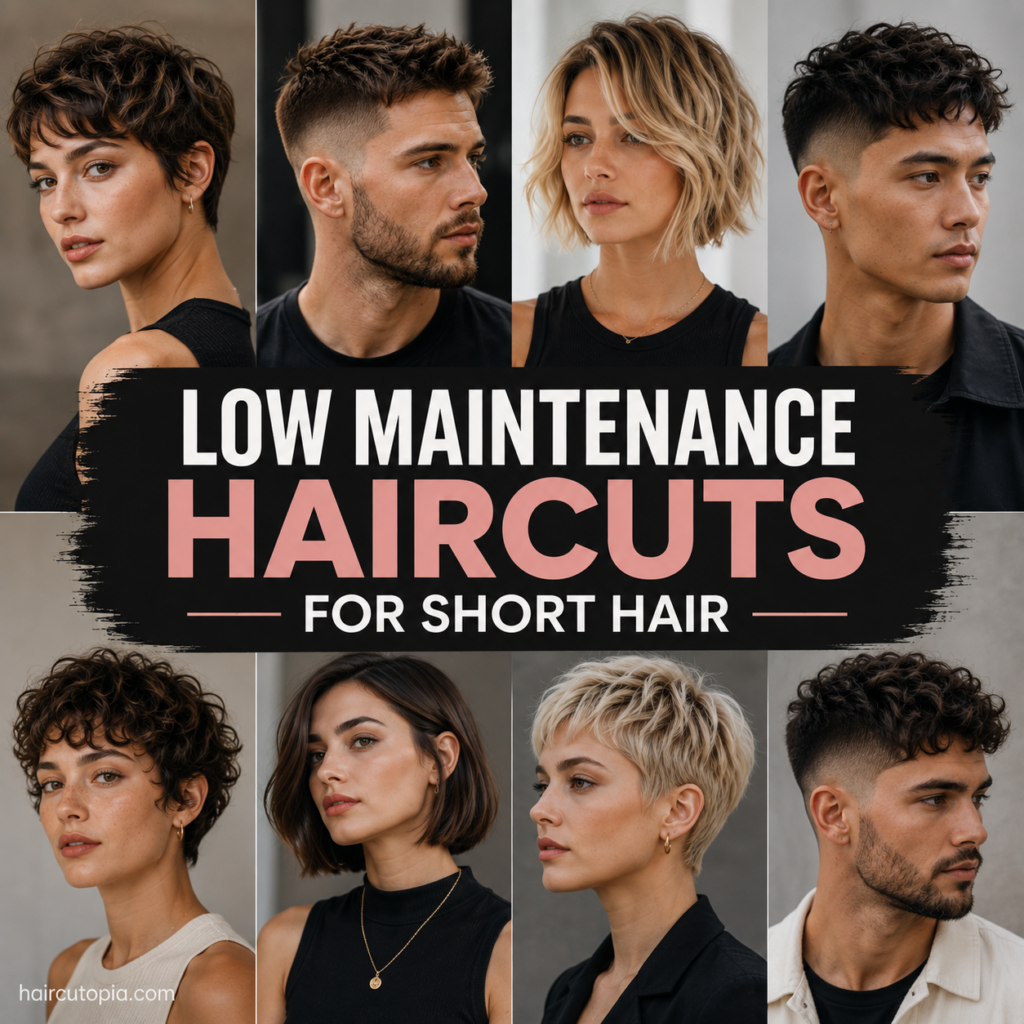
Low-Maintenance Short Haircuts for Women
One of the biggest reasons people go short is convenience.
But there’s an important distinction between low daily maintenance and low haircut maintenance.
A very short pixie may take two minutes to style but need regular trims to preserve its exact shape. A chin-length bob might require more styling but can tolerate additional growth before looking noticeably different.
Lower-maintenance options include:
- Classic pixie
- Textured crop
- Bixie
- Blunt bob
- Natural wavy bob
- Short curly cut
- Tapered natural hairstyle
The easiest option will usually be the one that works with your natural texture instead of requiring you to change it every morning.
Professional Short Haircuts for Women
Short hair adapts easily to professional settings.
A polished bob is an obvious option, but it isn’t the only one.
Consider:
- Sleek pixie
- Long pixie
- Classic bob
- Blunt bob
- Bixie
- Soft layered bob
- Side-parted short cut
- Natural textured crop
A haircut doesn’t need to be perfectly smooth to look polished. Healthy-looking hair and a deliberate shape often matter more than eliminating every bit of texture.
Short Haircuts for Women Over 40
There’s no haircut you suddenly need to adopt after turning 40.
Hair texture and density can change over time, but age alone doesn’t determine which styles work.
Popular options include:
- Layered bob
- Textured pixie
- Bixie
- Wavy bob
- Long pixie
- French bob
- Short shag
Choose based on your hair, lifestyle, and personal style rather than an arbitrary age rule.
Short Haircuts for Women Over 50
The same principle applies after 50.
A short haircut can be sleek, playful, edgy, classic, or anything in between.
If your hair has become finer, a blunt bob or structured pixie may help preserve visual density. If your natural texture has become more pronounced, a layered style can encourage movement.
There’s no reason to automatically avoid bangs, texture, or modern shapes.
Short Haircuts for Women Over 60
Short hairstyles are popular among women over 60 partly because they can be practical, but practical doesn’t have to mean predictable.
Options include:
- Soft pixie
- Textured crop
- Layered bob
- Short curly cut
- Bixie
- Classic bob
- Tapered natural cut
Silver and gray hair can also become a defining feature of the haircut rather than something that needs to be hidden.
The right cut is the one that suits your current hair and the amount of maintenance you actually want.
Short Haircuts With Gray or Silver Hair
Gray and silver hair can look especially striking with short, intentional shapes.
Pixies emphasize the variation between lighter and darker strands, while bobs give silver hair room to catch the light.
Consider:
- Silver pixie
- Gray textured crop
- Blunt silver bob
- Layered gray bob
- Wavy silver bixie
- Short natural curls
If the texture of your hair has changed as it has grayed, choose your haircut based on how it behaves now rather than how it behaved years ago.
How to Know If You’re Ready for Short Hair
Going from long haircut ideas for women to a bob is one thing, especially when you’re starting with hair well below the shoulders.
Going from waist-length hair to a pixie is another.
Before making a dramatic change, think about what you actually like about the short haircut you’re considering.
Ask yourself:
- Do I like having my neck and ears exposed?
- Do I regularly tie my current hair back?
- How much styling do I want to do?
- Am I comfortable with frequent trims?
- Do I want enough length to tuck behind my ears?
- Do I want bangs?
- How does my natural texture behave when short?
- Am I comfortable with the grow-out process?
You don’t need to be nervous about going short, but having realistic expectations makes it much easier to choose the right length.
How to Ask Your Stylist for a Short Haircut
Reference photos are extremely useful.
Instead of bringing just one picture, consider showing two or three examples that demonstrate different elements you like.
Then explain:
- Where you want the overall length to fall
- Whether you want your ears exposed
- How short you’re comfortable going at the neckline
- Whether you want layers
- How much volume you prefer
- Whether you want bangs
- Where you normally part your hair
- How much daily styling you want to do
- Whether you’re comfortable using heat tools
- How frequently you plan to get trims
Also mention anything you strongly dislike about previous short haircuts.
Knowing what you don’t want can be just as helpful as knowing what you do.
How to Style Short Hair
Short hair often needs less product than you might expect.
A basic routine might look like this:
- Start with clean or slightly damp hair.
- Apply a small amount of styling product if needed.
- Direct the hair into its general shape with your fingers.
- Blow-dry for additional volume or control.
- Add definition to individual sections.
- Finish with a light hold product only if necessary.
Bobs may benefit from a round brush or flat iron when you want a polished finish.
Pixies and textured crops can often be styled almost entirely with your fingers.
Styling Products for Short Women’s Hair
The right product depends on the finish you’re trying to create.
Texture Paste
Paste can create separation in pixies, bixies, and choppy short cuts.
Start with a very small amount.
Styling Cream
Cream provides softer control and works well when you want the hair to remain touchable.
Volumizing Mousse
Mousse can add body without the heavier feel of some waxes and creams.
It’s particularly useful for fine hair and styles that need root lift.
Curl Cream
Curl cream can help encourage definition in short curly and wavy hairstyles.
Lightweight Hairspray
A light mist can help preserve shape while maintaining movement.
You don’t necessarily need maximum-hold spray for everyday short hairstyles.
How Often Should You Trim Short Hair?
Short hair tends to reveal growth faster than long hair because even a small amount can alter the silhouette.
A very short pixie or tapered crop may need frequent maintenance if you want to preserve its exact shape.
Bobs are generally more forgiving.
Rather than following a rigid schedule, watch for signs such as:
- The neckline losing its shape
- Hair becoming bulky around the ears
- Bangs becoming too long
- Layers no longer sitting correctly
- The haircut becoming difficult to style
- A bob losing its intended perimeter
If you like how the haircut looks as it grows, there’s no rule saying you need to cut it immediately.
Growing Out a Short Haircut
Short hair eventually grows into medium hair, but the transition isn’t always perfectly smooth. Exploring medium haircut ideas for women can help you choose a target length and shape while you’re growing it out.
A pixie may become a bixie. A bixie can transition into a short bob. A bob can eventually become a lob.
You can make the process easier by:
- Growing the top and front sections first.
- Trimming the neckline when it becomes awkward.
- Allowing shorter side sections to catch up.
- Using bangs or face-framing layers intentionally.
- Changing your part as the length develops.
- Getting reshaping trims rather than returning to your original short cut.
Tell your stylist you’re growing your hair before every appointment. Otherwise, a routine cleanup can accidentally remove months of progress.
Choosing the Right Short Haircut for You
The best short haircut isn’t simply the one that’s trending.
Start with your natural texture.
If you have curls, a cut that allows them to form naturally will probably be easier to live with than one requiring daily straightening. If your hair is very thick, strategic layering may make a bob easier to control. If it’s fine, maintaining a stronger perimeter may create the fullness you’re looking for.
Then consider maintenance.
A precision pixie can be incredibly easy every morning but require frequent salon visits. A messy bob might take longer to style but grow out gracefully.
Most importantly, choose something you actually enjoy wearing.
Short hair is incredibly adaptable. You can go sleek or messy, soft or edgy, classic or modern. You can expose your natural texture or create an entirely new silhouette.
That’s what makes experimenting with short hair so much fun.
Frequently Asked Questions About Short Haircuts for Women
What are the most popular short haircuts for women?
Popular options include pixie cuts, bobs, bixies, French bobs, short shags, textured crops, layered bobs, and short curly hairstyles.
What short haircut is easiest to maintain?
A simple pixie, textured crop, natural curly cut, or blunt bob can be relatively easy to style. Keep in mind that very short cuts may require more frequent trims even if daily styling is minimal.
What short haircut makes fine hair look fuller?
Blunt bobs, chin-length bobs, classic pixies, and minimally layered cuts can help preserve the appearance of density. Excessive layering may make some fine hair appear thinner.
What short haircut works well with thick hair?
Layered bobs, textured pixies, bixies, short shags, and graduated cuts can remove excess bulk while maintaining the natural fullness of thick hair.
Can curly hair be cut short?
Absolutely. Curly pixies, curly bobs, bixies, shags, tapered cuts, and short natural hairstyles can all highlight curls beautifully. The cut should account for shrinkage and your individual curl pattern.
Are short haircuts good for older women?
Short hair can work at any age. Instead of choosing a haircut according to an age bracket, consider your current hair texture, density, lifestyle, face shape, and personal preferences.
Is a pixie cut high maintenance?
Daily styling can be extremely quick, but maintaining a precise pixie shape may require more frequent trims than a bob or longer hairstyle.
What’s the difference between a pixie and a bixie?
A pixie is generally shorter around the sides and back, while a bixie combines elements of a pixie and bob. Bixies usually have more length, layering, and movement around the sides and back.
Should I get bangs with short hair?
Bangs can work beautifully with short hairstyles, but consider how often you’re willing to trim and style them. Curtain, wispy, blunt, side-swept, curly, and micro bangs can each create a very different look.
How do I know if short hair will suit me?
There’s no single face shape or feature required for short hair. Consider the specific cut, your natural texture, desired maintenance level, and how much length you want around your face. A stylist can also adapt most short hairstyles to suit your preferences.