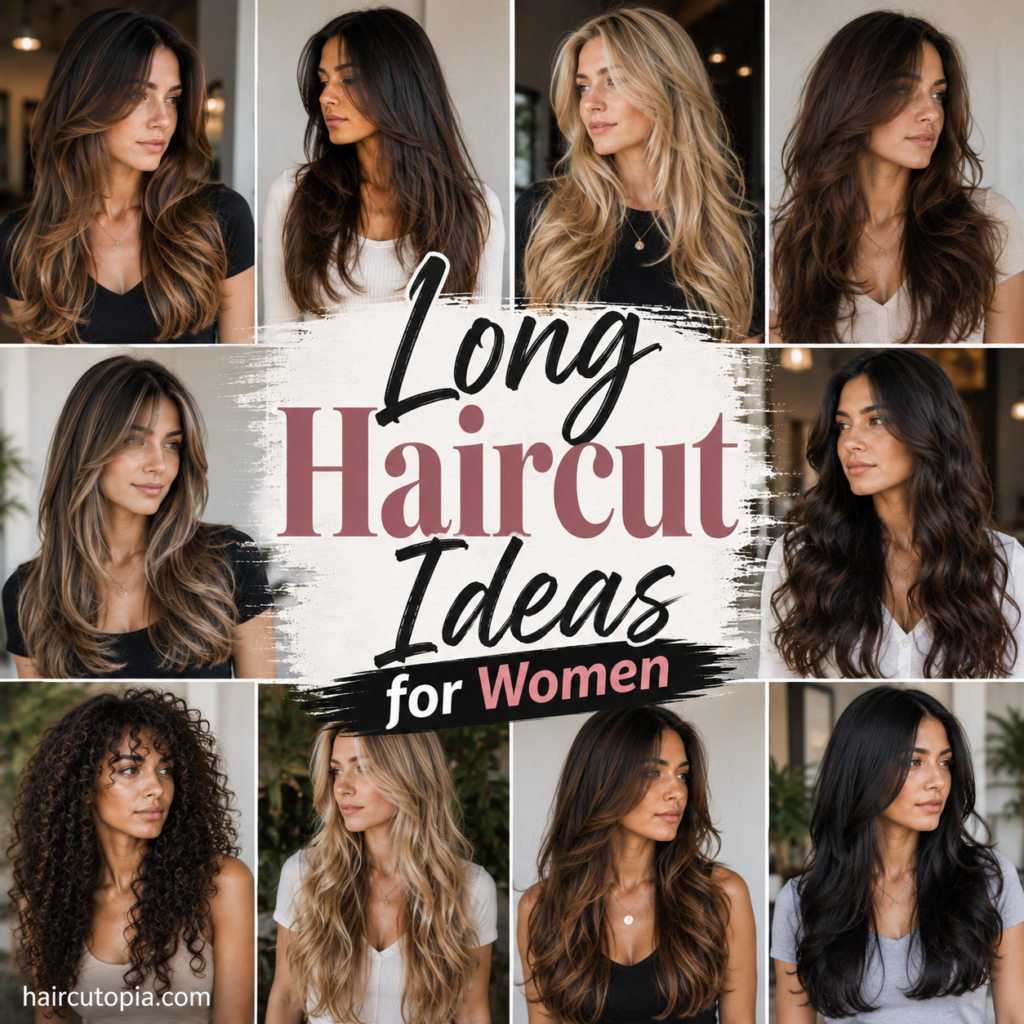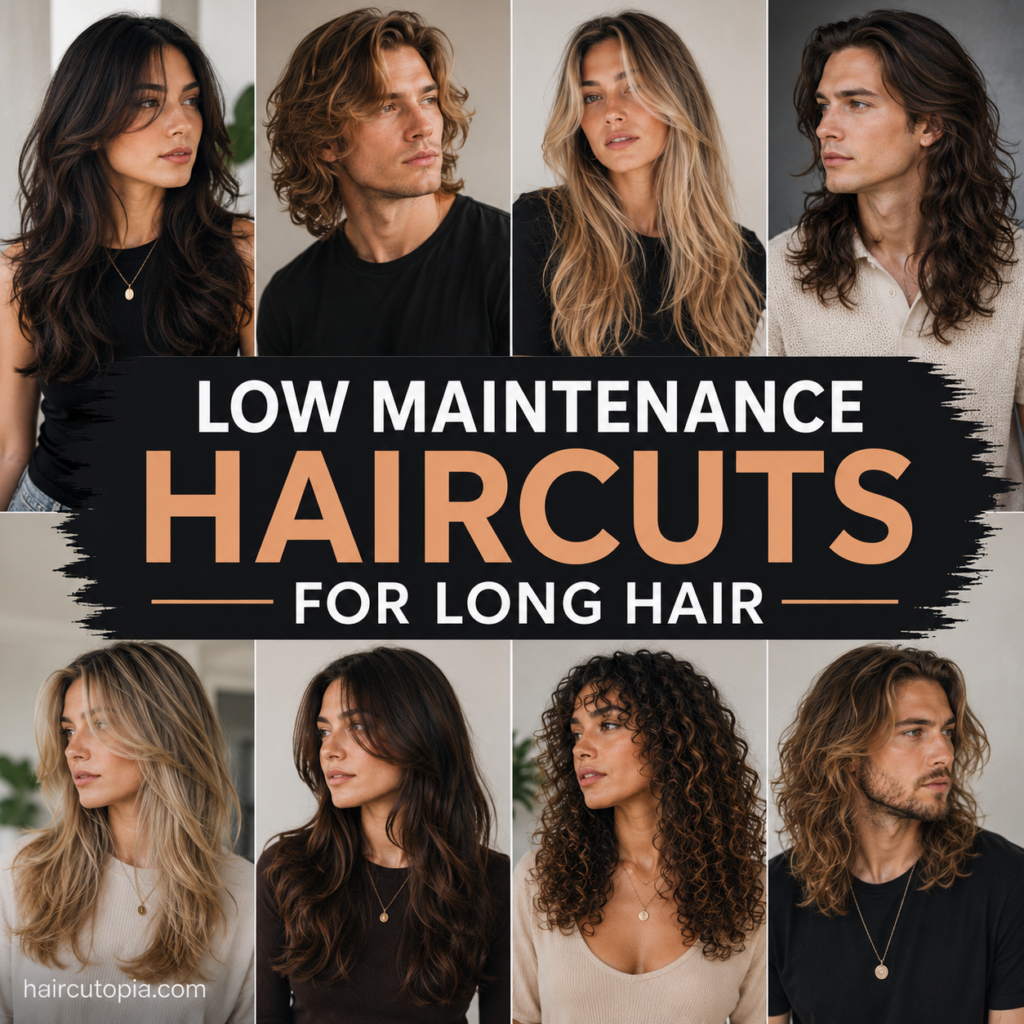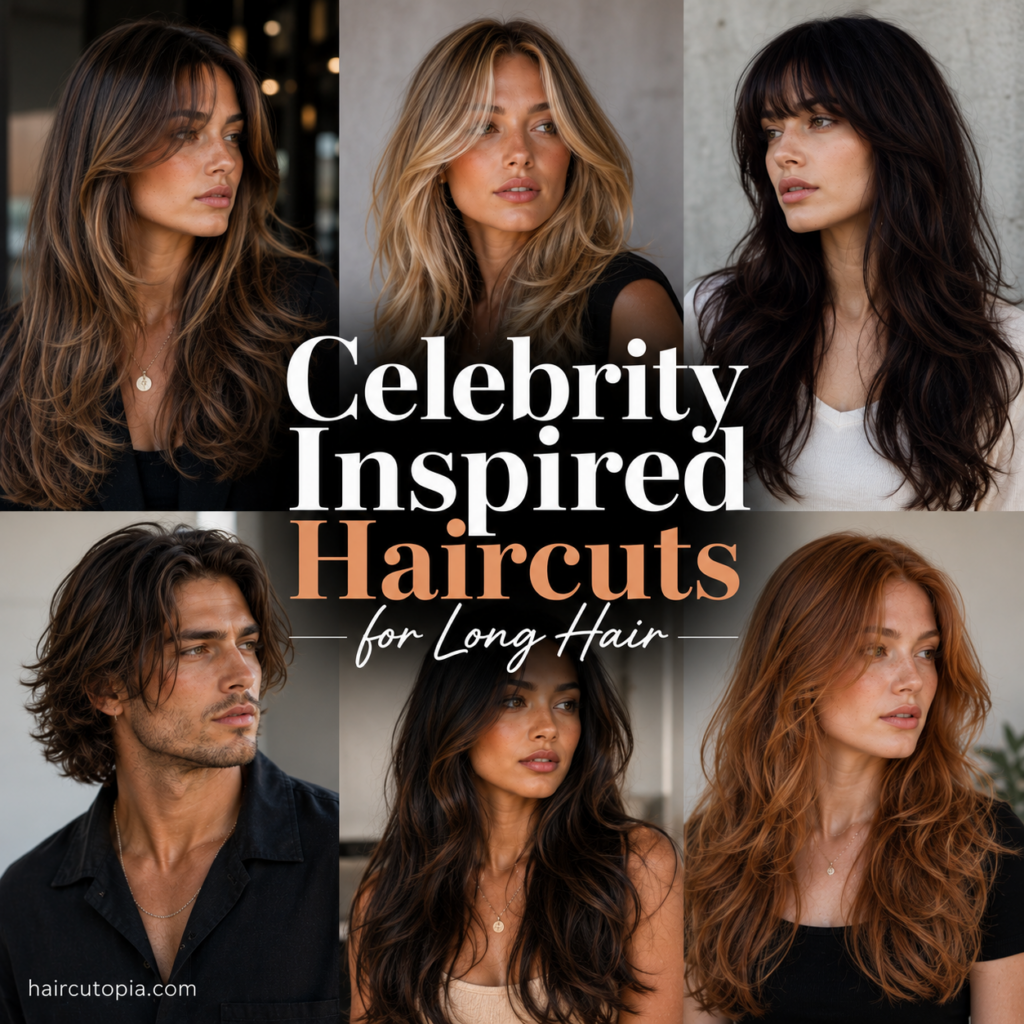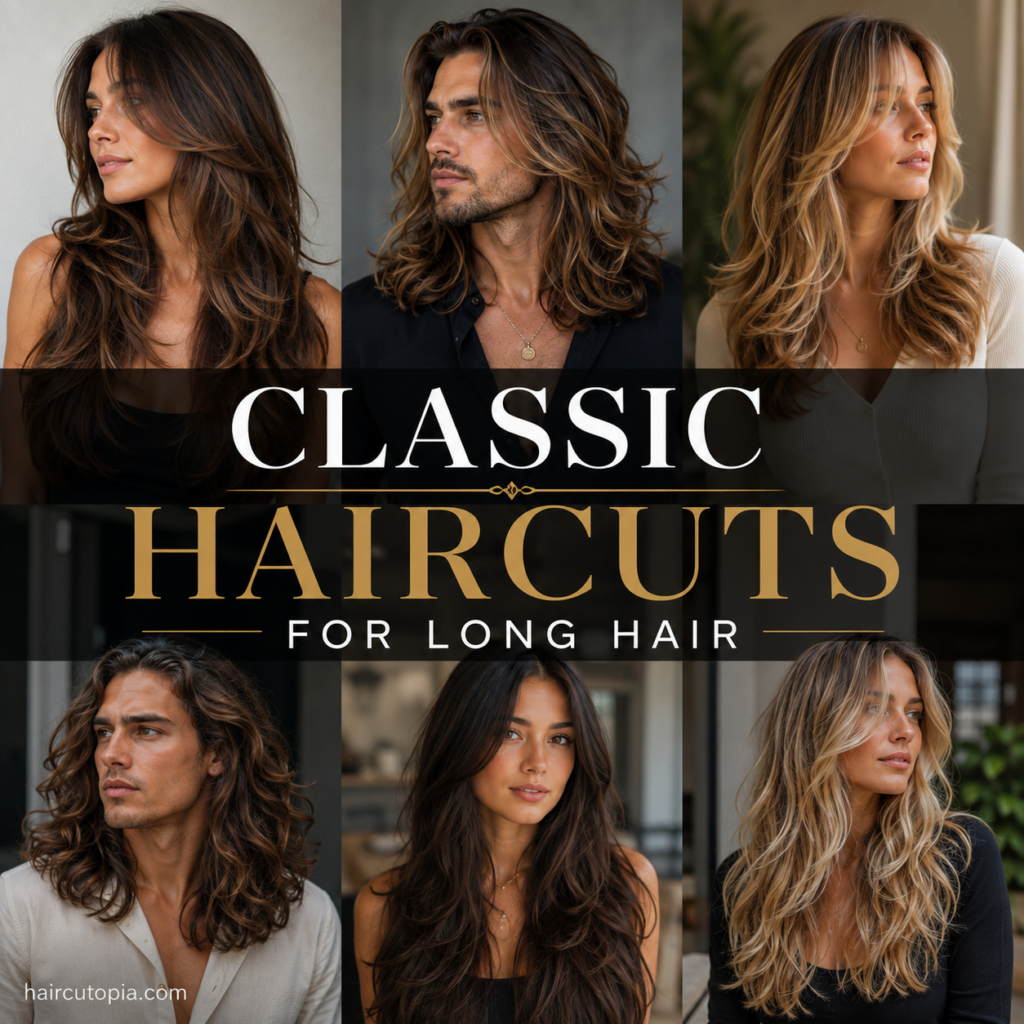
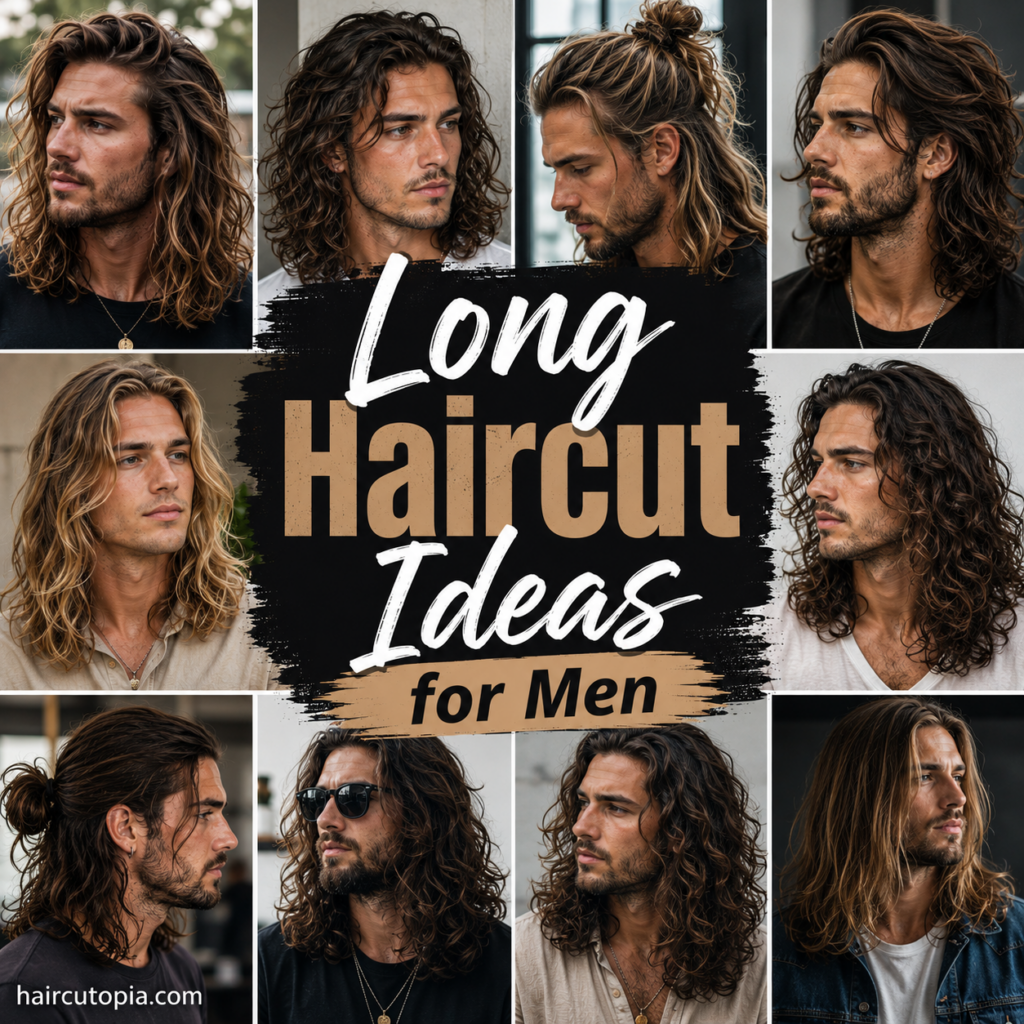
Long hair gives men something shorter cuts simply can’t offer: options.
You can wear it loose and natural, push it behind your ears, sweep it back, add layers, emphasize curls and waves, or tie it up when you want it out of the way. And because long hair changes so much depending on texture, the same basic length can produce completely different looks from one person to another.
The trick is finding a haircut that gives the length some shape. Growing your hair without cutting it at all can eventually leave it heavy, uneven, or difficult to manage. Strategic layers, occasional trims, and the right styling routine can make the difference between hair that simply looks grown out and a long hairstyle that feels intentional.
Whether you’re already past your shoulders or just beginning to grow out a shorter style, these long haircut ideas for men cover classic, modern, layered, straight, wavy, curly, professional, and low-maintenance options.
What Is Considered Long Hair for Men?
There’s no universal point where medium hair officially becomes long.
Generally, men’s hair starts to feel long once it reaches around the ears, jaw, or neck and can comfortably be pushed behind the ears or tied back. Shoulder-length hair and anything beyond it clearly falls into long-hair territory.
Texture makes a difference.
Straight hair shows its full length immediately, while curly and coily hair can appear considerably shorter because of shrinkage.
That means it’s usually better to think about long hair in terms of how it behaves rather than relying on an exact measurement.
Classic Long Haircuts for Men
Long hairstyles have been around far longer than most modern haircut trends. Some of the simplest approaches remain among the most versatile.
Shoulder-Length Hair
Shoulder-length hair is a practical entry point into genuinely long hairstyles.
There’s enough length for movement and styling, but it usually remains easier to wash, dry, and manage than hair that extends much farther down the back.
It works with:
- Straight hair
- Wavy hair
- Loose curls
- Center parts
- Side parts
- Layers
- Swept-back styles
Shoulder length also gives you enough hair for a small ponytail or bun.
Long Layered Hair
Layers are one of the most useful ways to give long hair shape.
Rather than allowing every strand to end at roughly the same point, layers create different lengths throughout the haircut. This can reduce bulk, encourage movement, and help natural waves or curls become more visible.
The amount of layering matters.
Subtle layers preserve fullness, while heavier layering can create a more dramatic, textured appearance.
One-Length Long Hair
Not every long haircut needs extensive layering.
Keeping most of the hair at approximately one length creates a fuller perimeter and a simple, classic shape.
This can work particularly well with straight or slightly wavy hair.
If your hair is extremely thick, however, a completely blunt shape may become heavy. Some internal weight removal can make it easier to manage without changing the overall appearance.
Long Hair With a Side Part
A side part changes the way long hair frames the face.
Instead of falling evenly on both sides, more volume is directed toward one side. The result can look polished when neatly styled or casual when the part is allowed to form naturally.
Modern Long Haircut Ideas for Men
Modern long hairstyles tend to favor natural movement rather than perfectly controlled shapes.
Long Textured Hair
Texture gives long hair separation and dimension.
If your hair already has waves or curls, you may need very little styling to create this effect. Straight hair can gain additional movement through layering and appropriate styling products.
The idea isn’t to make the hair look messy. It’s to prevent it from appearing overly flat or uniform.
Long Messy Hair
Long messy hair works best when there’s a good haircut underneath it.
Layers can encourage different sections to move independently, creating an intentionally relaxed finish.
You can wear it with:
- A center part
- Loose side part
- Hair pushed backward
- Face-framing pieces
- Natural waves
A little styling cream or texturizing product can help maintain separation without making the hair stiff.
Long Hair With Tapered Sideburns
You don’t have to cut the sides short to clean up long hair.
A subtle taper around the sideburns can make the edges look neater while leaving almost all of the overall length intact.
This can be especially useful for men who wear their hair tied back because the area around the ears becomes more visible.
Long Hair With an Undercut
An undercut takes the opposite approach.
Hair on top remains long while part or all of the sides and back are cut much shorter.
With the hair down, the undercut may be partially or completely hidden. Tie the hair up and the contrast becomes obvious.
It’s a bold option that also removes a significant amount of bulk.
Layered Long Haircuts for Men
Layers can completely change the way long hair moves.
They’re particularly helpful if your hair feels heavy, triangular, or flat.
Long Subtle Layers
Subtle layers create movement without dramatically changing the outline of the haircut.
They’re useful if you want your hair to retain a full appearance while avoiding a completely blunt shape.
Long Face-Framing Layers
Face-framing layers create shorter pieces around the front.
Depending on their length, they can begin around the cheekbones, jaw, or chin before gradually blending into the longer hair.
These pieces can soften the transition around the face and make long hair easier to style when worn loose.
Long Shag
The shag uses much more noticeable layering.
Shorter sections around the crown and front transition into longer hair toward the back, creating a deliberately textured silhouette.
Modern shags work especially well with natural waves and curls because the layering encourages movement.
Long Feathered Hair
Feathered layers are designed to sweep away from the face.
The effect can be subtle or dramatic depending on the length and styling.
This style works particularly well when the hair has enough movement to maintain the swept shape.
Long Haircuts for Straight Hair
Straight hair makes the overall shape and condition of a long haircut highly visible.
Because there isn’t much natural curl or wave to disguise unevenness, clean ends and intentional layering become especially important.
Good options include:
- Shoulder-length straight hair
- Center-parted long hair
- Long side part
- Subtle layers
- Face-framing layers
- One-length cuts
- Long slick backs
Straight hair can sometimes lie flat at the roots. Light layering and blow-drying can create additional movement without requiring a dramatic haircut.
Long Haircuts for Wavy Hair
Wavy hair is naturally suited to longer styles because additional length gives the wave pattern room to develop.
Long Natural Waves
Sometimes the best approach is simply shaping the hair around its existing texture.
Long layers can prevent the waves from becoming too heavy while preserving their natural movement.
Shoulder-Length Waves
Shoulder length provides enough room for visible waves without the additional maintenance of extremely long hair.
It’s also long enough to tie back when necessary.
Wavy Center Part
A center part allows waves to frame both sides of the face.
It can look neat when defined or more casual when the part forms loosely.
Wavy Side Part
Moving the part to one side creates additional volume on the heavier side.
This can make long wavy hair feel more dynamic without changing the actual haircut.
Layered Wavy Hair
Layers can help waves develop throughout the hair rather than concentrating primarily near the ends.
The best layering pattern depends on density. Very thick wavy hair may benefit from more weight removal, while finer hair generally needs more fullness preserved.
Long Haircuts for Curly Hair
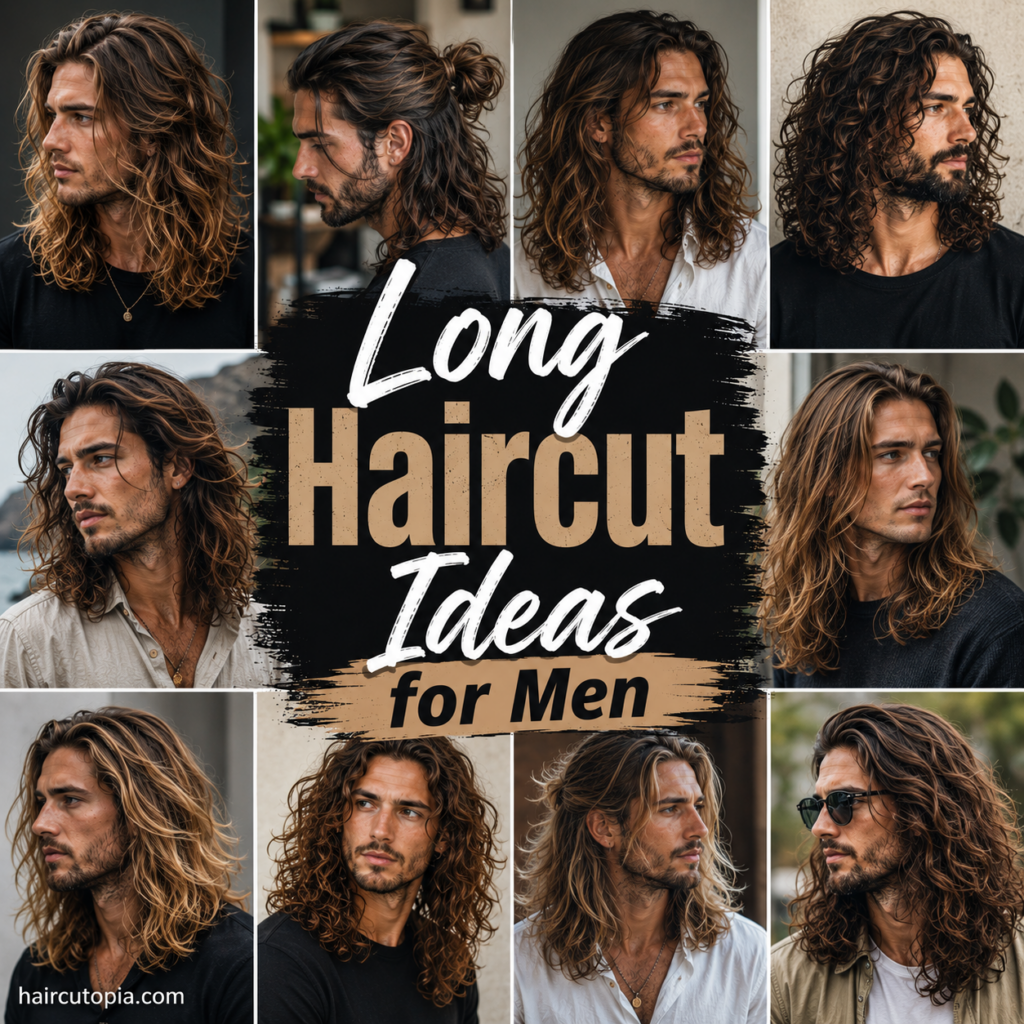
Longer lengths allow curls to form complete patterns that may not be visible with shorter hair.
The challenge is maintaining a shape that distributes volume effectively.
Long Natural Curls
You don’t necessarily need to tame long curls into a perfectly uniform shape.
A curl-conscious haircut can preserve natural variation while removing excess weight where necessary.
Layered Long Curls
Layers can prevent curly hair from becoming excessively heavy toward the bottom.
They can also encourage curls higher on the head by removing some of the weight pulling them downward.
Shoulder-Length Curly Hair
Shoulder-length curls provide substantial texture without requiring the maintenance associated with much longer hair.
Remember that curly hair may appear considerably shorter once dry.
Curly Shag
A curly shag combines natural curl patterns with noticeable layering.
Shorter curls around the crown and front blend into longer sections, producing a textured, high-movement shape.
Long Curly Fringe
Long curly hair doesn’t have to be pushed completely away from the forehead.
A curly fringe can introduce shorter curls around the front while maintaining significant length elsewhere.
Long Haircuts for Thick Hair
Thick hair can look impressive at longer lengths, but managing its weight becomes increasingly important as it grows.
A one-length cut may become bulky, particularly around the sides and lower sections.
Useful options include:
- Long layers
- Internal weight removal
- Long shag
- Shoulder-length scissor cut
- Long taper
- Undercut with long top
- Layered waves
The goal isn’t necessarily to thin the hair everywhere.
Removing too much density can create unwanted frizz or make the ends appear sparse. Strategic weight removal usually produces a better result.
Long Haircuts for Fine or Thin Hair
Long hair can work with finer textures, but preserving density is important.
Too many short layers can make already-fine hair appear thinner.
Consider:
- Blunt shoulder-length cuts
- Minimal layering
- Long center parts
- Soft face-framing pieces
- One-length styles
- Loose swept-back hair
Lightweight styling products are generally preferable because heavy waxes and creams can pull fine hair down.
If you’re concerned about thinning or noticeable changes in density, a barber or stylist can help choose a length and shape that makes the most of the hair you have.
Long Hairstyles With a Middle Part
The middle part is one of the simplest ways to style longer men’s hair.
Hair is divided near the center and allowed to fall on both sides of the face.
It works particularly well with:
- Straight hair
- Loose waves
- Shoulder-length hair
- Face-framing layers
- Long curls
The part doesn’t need to be perfectly centered.
Allowing it to sit slightly to one side can create a softer, less structured appearance.
Long Slicked-Back Hair
Long hair can be directed backward without creating the rigid appearance associated with heavily gelled styles.
For a natural slick back, apply a small amount of styling cream to damp hair and work it backward with your fingers.
A comb creates a cleaner finish.
You can leave the hair loose behind your ears or gather it into a ponytail once it’s long enough.
Bro Flow With Long Hair
Bro flow sits somewhere between a structured haircut and completely free-flowing hair.
The hair naturally moves away from the face and toward the sides and back.
Wavy and thick hair are particularly well suited to this style because their natural movement creates the flow with minimal effort.
As the bro flow styles commonly found among medium haircut ideas for men grow longer, they can gradually transition into shoulder-length hair without requiring a dramatic change in haircut.
Long Shag Haircuts for Men
The shag is a strong option if you want long hair with obvious movement.
Instead of keeping everything at a similar length, the haircut uses layers throughout the crown, sides, and ends.
A long shag can include:
- Choppy layers
- Long fringe
- Curtain fringe
- Face-framing pieces
- Waves
- Curls
- Longer sections around the back
Shags can look deliberately undone, but the underlying shape is important. Randomly allowing hair to grow doesn’t usually create the same result.
Long Hair With Curtains
Curtains aren’t limited to medium hairstyles.
With longer hair, the front sections can divide around the center and gradually blend into longer layers.
Long curtains can be worn with straight, wavy, or curly hair.
They also provide a useful option during the growing-out process because awkward front sections can become intentional face-framing layers.
Long Hair With a Fringe
Long hairstyles don’t always need an exposed forehead.
A fringe can add contrast by placing shorter hair around the front while keeping substantial length through the sides and back.
Options include:
- Long curtain fringe
- Textured fringe
- Wavy fringe
- Curly fringe
- Side-swept fringe
Fringes require more frequent trimming than the rest of long hair, so keep that maintenance difference in mind.
Long Hair With an Undercut
An undercut is one of the easiest ways to reduce the sheer amount of hair you’re managing while keeping dramatic length on top.
The shorter section can be:
- Limited to the sides
- Extended around the back
- Hidden underneath longer hair
- Faded into the sideburns
- Cut to one consistent short length
When the hair is down, a hidden undercut can be surprisingly subtle.
When it’s tied up, the contrast becomes part of the hairstyle.
Man Bun Hairstyles
Once your hair is long enough to gather securely, a bun becomes both a hairstyle and a practical way to keep hair out of your face.
Classic Man Bun
The hair is gathered toward the back or crown and wrapped into a bun.
The exact placement can be adjusted depending on your hair length and preference.
Low Man Bun
A low bun sits closer to the neckline.
It generally creates a more understated appearance than a bun positioned high on the head.
Messy Man Bun
Not every strand needs to be perfectly secured.
Leaving some natural texture or loose pieces can create a more relaxed appearance.
Undercut Man Bun
Combining a bun with an undercut creates dramatic contrast when the hair is tied up.
The long top becomes clearly separated from the closely cut sides and back.
Avoid tying any bun excessively tight on a regular basis. Constant tension isn’t necessary to keep long hair under control.
Ponytail Hairstyles for Men
A ponytail is one of the simplest ways to manage long hair.
You can wear it:
- High
- Mid-level
- Low near the neckline
- Loose and relaxed
- Neatly brushed back
A low ponytail tends to create the most understated appearance and works well once the hair reaches shoulder length.
Use hair ties designed to minimize pulling and snagging rather than ordinary rubber bands.
Half-Up, Half-Down Hair
Can’t decide between wearing your hair loose and tying it back?
You don’t have to.
A half-up style gathers the upper portion of the hair while leaving the lower sections loose.
It’s particularly useful for keeping hair away from your eyes without hiding the overall length.
This style works with straight, wavy, and curly textures.
Long Haircuts With Beards
Long hair and facial hair can create a strong combination, but the overall balance matters.
If both are extremely full, the look can become visually heavy. Cleaning up the beard or introducing shape into the haircut can help create separation.
Popular combinations include:
- Shoulder-length hair with stubble
- Long waves with a short beard
- Man bun with a full beard
- Long slick back with a trimmed beard
- Long curls with short facial hair
- Ponytail with a medium beard
Tapering the sideburns can also create a cleaner transition between long hair and facial hair.
Long Haircuts Without a Beard
Long hair doesn’t require facial hair to create definition.
Without a beard, the haircut itself becomes more prominent around the jaw and neck.
Face-framing layers, a defined center part, natural waves, or a swept-back style can all give the hair additional structure.
Keeping the ends healthy and maintaining a deliberate shape becomes especially noticeable when the hair is the primary feature framing the face.
Professional Long Haircuts for Men
Long hair can work in professional environments, although workplace expectations vary.
For a more polished appearance, consider:
- Neatly swept-back hair
- Low ponytail
- Low bun
- Clean center part
- Shoulder-length layered hair
- Controlled side part
Condition and grooming often matter more than the actual length.
Healthy-looking ends, controlled flyaways, and a clean neckline can make long hair appear much more intentional.
When you need it completely out of the way, a low ponytail or bun is usually the simplest solution.
Low-Maintenance Long Haircuts for Men
Long hair isn’t completely maintenance-free, but you can make it considerably easier by choosing a cut that works with your natural texture.
Good lower-maintenance options include:
- One-length shoulder cut
- Long natural waves
- Bro flow
- Subtle long layers
- Shoulder-length curls
- Loose center part
- Long hair worn tied back
Complicated styling shouldn’t be necessary every day.
A good long haircut should also look reasonable when you simply wash it, let it dry, and wear it naturally.
Long Haircut Ideas by Face Shape
Face shape can help you think about proportions, but it shouldn’t be treated as a strict haircut rule.
Hair texture, density, facial hair, hairline, and personal style can matter just as much.
Round Face
Longer styles can create vertical lines around the face.
Long layers, side parts, and hair worn behind the ears are all options worth considering.
Square Face
Long waves and layers can create a softer contrast with a defined jawline.
Straight shoulder-length styles and slick backs can also emphasize the face’s natural structure.
Oval Face
Oval faces generally work with a broad range of long hairstyles.
Center parts, waves, curls, layers, ponytails, buns, and slicked-back styles are all possibilities.
Long or Oblong Face
Extremely flat, straight hair hanging directly down can sometimes emphasize facial length.
Waves, curls, layers, or additional width around the sides can change those proportions.
Heart-Shaped Face
Long layers and movement around the jaw can complement a narrower lower face.
Waves, face-framing layers, and shoulder-length styles can all work well.
How to Grow Your Hair Long
Growing long hair takes patience.
Hair doesn’t suddenly become easy to manage once you decide to grow it. If you’re starting with one of the many short haircut ideas for men, you’ll probably encounter stages where the sides stick out, the front falls into your eyes, or your old haircut loses its shape.
That’s normal.
Instead of avoiding the barber completely, approach trims differently.
1. Decide What You’re Growing Toward
Choose a general goal.
Are you aiming for shoulder-length waves? A man bun? Long curls? A layered shag?
Knowing the destination helps determine which sections should be preserved.
2. Stop Repeating Your Old Haircut
If you keep asking for your usual short sides every few weeks, those sections will never catch up.
Tell your barber you’re growing your hair.
3. Get Cleanup Trims
A cleanup can address the neckline, damaged ends, or excessive bulk without resetting your progress.
4. Work Through the Awkward Stages
Hair clips, headbands, hats, and styling products can help when the hair isn’t quite long enough to stay where you want it.
5. Adjust Your Routine as It Grows
Longer hair often needs different shampooing, conditioning, drying, and styling habits than short hair.
What worked with a two-inch haircut may not work once your hair reaches your shoulders.
How to Ask Your Barber or Stylist for a Long Haircut
Don’t simply ask to “clean it up” if maintaining length is important.
That phrase can mean different things to different people.
Explain exactly what you’re trying to achieve and show reference photos whenever possible.
Discuss:
- Your target length
- Whether you’re still growing it
- How much you’re comfortable trimming
- Whether you want layers
- How much weight you want removed
- Where you normally part your hair
- Whether you wear it tied back
- How your natural texture behaves
- Whether you want face-framing pieces
- Any areas that are difficult to manage
If your main priority is keeping the length, say that clearly before the haircut begins.
How to Care for Long Hair
As hair gets longer, the older portions have been exposed to washing, drying, sunlight, friction, and styling for much longer than the hair near your scalp.
A basic routine can help keep those lengths manageable.
Shampoo Based on Your Hair and Scalp
There’s no single washing schedule that works for everyone.
Oiliness, texture, activity level, climate, and product use all influence how frequently washing makes sense.
Use Conditioner
Conditioner can help reduce tangling and improve manageability through the lengths and ends.
Concentrate it where your hair needs it rather than automatically applying a heavy amount directly to the scalp.
Detangle Carefully
Long hair is easier to knot.
Work through tangles gently, starting closer to the ends and gradually moving upward rather than aggressively pulling from the roots.
Be Gentle With Wet Hair
Avoid rough towel drying.
Blotting or gently squeezing out excess water creates less friction than vigorously rubbing the hair.
Trim Damaged Ends
You don’t need constant major haircuts, but occasional trims can remove ends that have become difficult to manage.
Styling Products for Long Men’s Hair
Long hair usually benefits from products that preserve movement rather than locking everything into place.
Styling Cream
Styling cream provides light control and can help reduce flyaways without creating a rigid finish.
Leave-In Conditioner
A leave-in conditioner can improve manageability for hair that tends to feel dry or tangle easily.
Sea Salt Spray
Sea salt spray can emphasize texture and waves, although it may feel drying on some hair types if overused.
Curl Cream
Curl cream can help define natural curls and waves while maintaining flexibility.
Lightweight Oil or Serum
A small amount applied primarily toward the lengths and ends can help smooth the appearance of dry or frizzy hair.
With long hair, start with less product than you think you need. You can always add more.
How Often Should Men Trim Long Hair?
There’s no universal schedule.
If you’re maintaining a precise layered shape, you may want trims more frequently. If you’re actively growing your hair and the ends remain manageable, you may be comfortable waiting longer.
Pay attention to the hair itself.
Consider a trim when:
- The ends become noticeably rough
- Tangling increases significantly
- The haircut loses its intended shape
- Layers stop sitting correctly
- The perimeter becomes uneven
- Styling becomes harder than usual
If you’re growing your hair, make sure the person cutting it understands that preserving length is the priority.
Choosing the Right Long Haircut for You
The best long haircut isn’t necessarily the most dramatic one.
Start with your natural texture.
If your hair forms waves as it grows, consider a cut that encourages them. If you have thick curls, thoughtful layering can make the volume easier to manage. If your hair is straight and fine, preserving density may be more useful than adding lots of short layers.
Then think about your daily routine.
Some people enjoy styling their hair every morning. Others want to wash it, let it dry, and move on.
Long hair can accommodate both approaches, but the haircut should reflect which one you actually prefer.
And remember that long hair doesn’t lock you into one look.
You can wear the same haircut loose, parted, pushed back, tied into a ponytail, gathered into a bun, or styled half-up. That’s one of the biggest advantages of growing it in the first place.
Frequently Asked Questions About Long Haircuts for Men
What are the best long haircut ideas for men?
Popular options include shoulder-length hair, long layers, natural waves, long curls, shags, center parts, bro flow, slicked-back styles, ponytails, buns, and long hair with an undercut.
How long does men’s hair need to be considered long?
There’s no official measurement. Hair that reaches the ears, jaw, neck, or shoulders is generally considered medium-to-long or long, depending on the style and texture.
Should men with long hair get layers?
Layers can add movement and reduce excessive weight, especially in thick, wavy, or curly hair. Fine hair may benefit from fewer or longer layers to preserve density.
Is long hair difficult to maintain?
It generally requires more washing, conditioning, detangling, and drying time than short hair. However, daily styling can be surprisingly simple if the haircut works with your natural texture.
Can thin or fine hair be worn long?
Yes, although preserving density becomes particularly important. Blunt or minimally layered shoulder-length styles may make fine hair appear fuller than heavily layered cuts.
What long haircut is best for thick hair?
Long layers, shags, shoulder-length scissor cuts, and strategically debulked styles can help manage thick hair while preserving its natural volume.
What long hairstyles work with curly hair?
Layered curls, curly shags, shoulder-length curls, curly fringes, and long natural curls can all work well. The haircut should account for shrinkage and the natural curl pattern.
Can long hair look professional on men?
Yes. A neat center or side part, swept-back style, low ponytail, low bun, or well-maintained shoulder-length haircut can create a polished appearance. Workplace expectations vary, so the appropriate style depends on your environment.
Should I keep trimming my hair while growing it long?
Occasional trims can help maintain shape and remove damaged ends without sacrificing substantial length. Tell your barber or stylist that you’re growing your hair so they know preserving length is the priority.
Is a man bun bad for your hair?
A loosely secured bun can be a practical way to manage long hair. Avoid repeatedly pulling the hair extremely tight, and use hair ties that don’t aggressively snag or pull the strands.