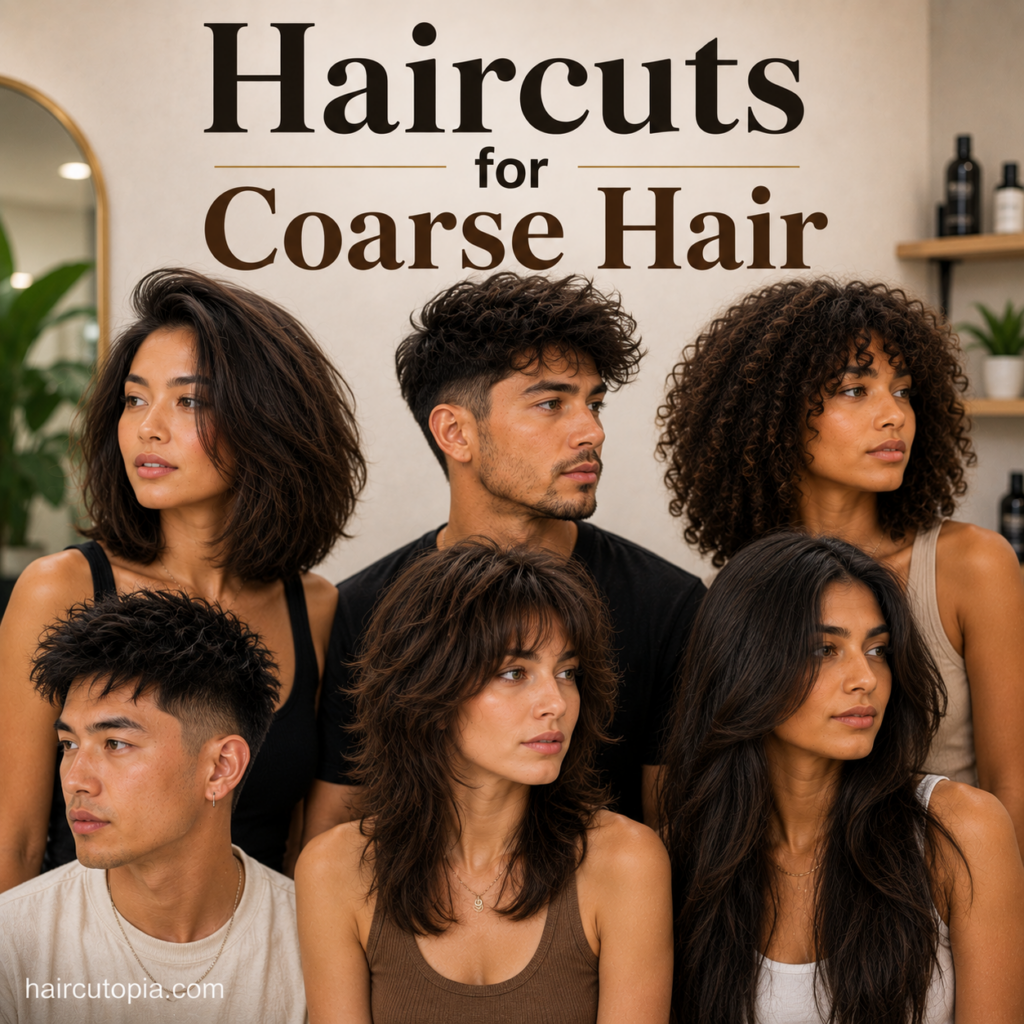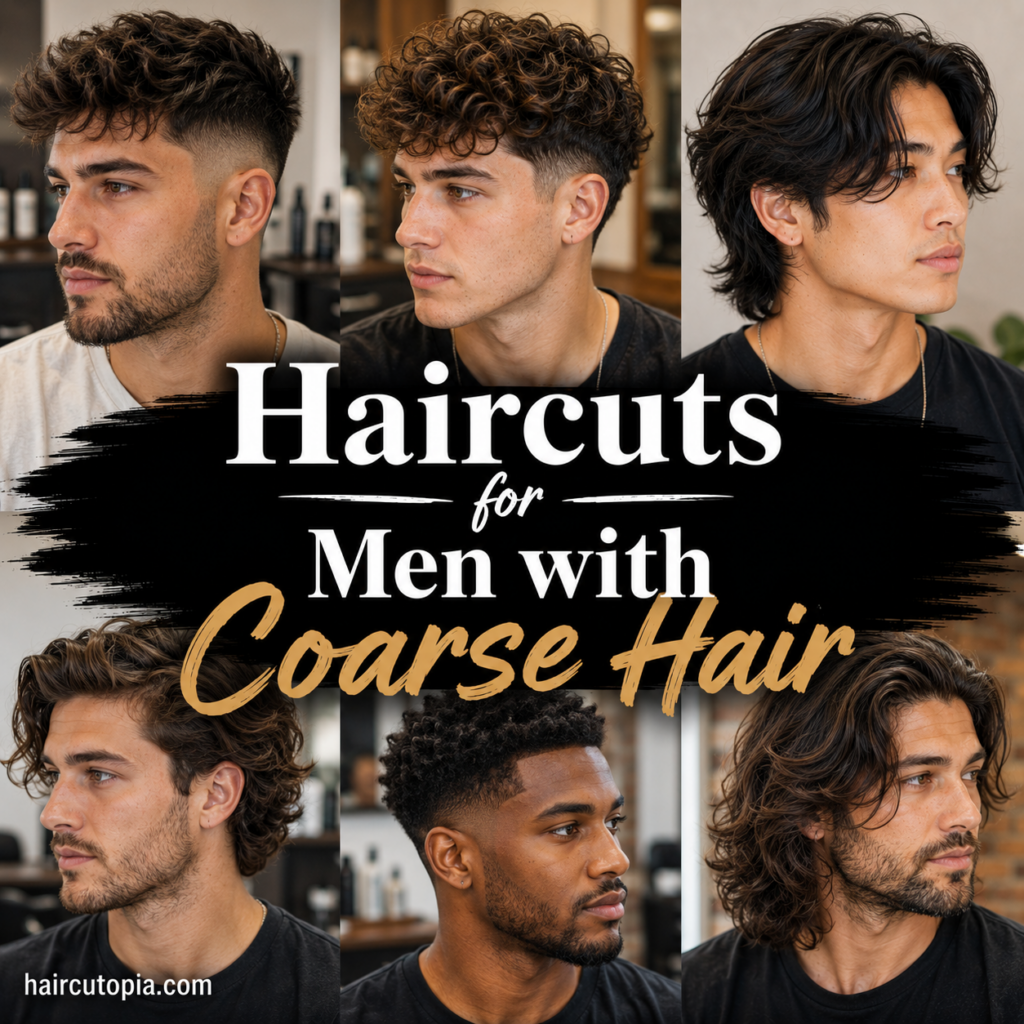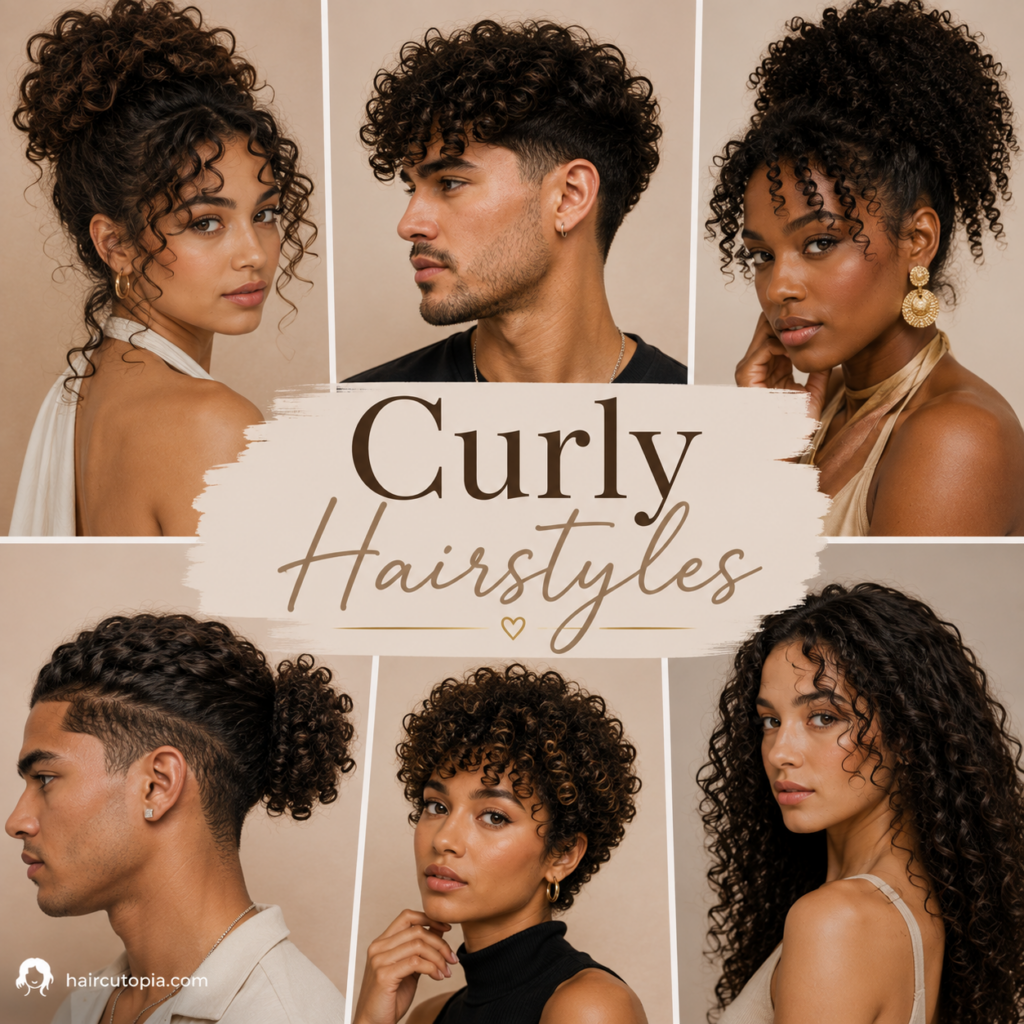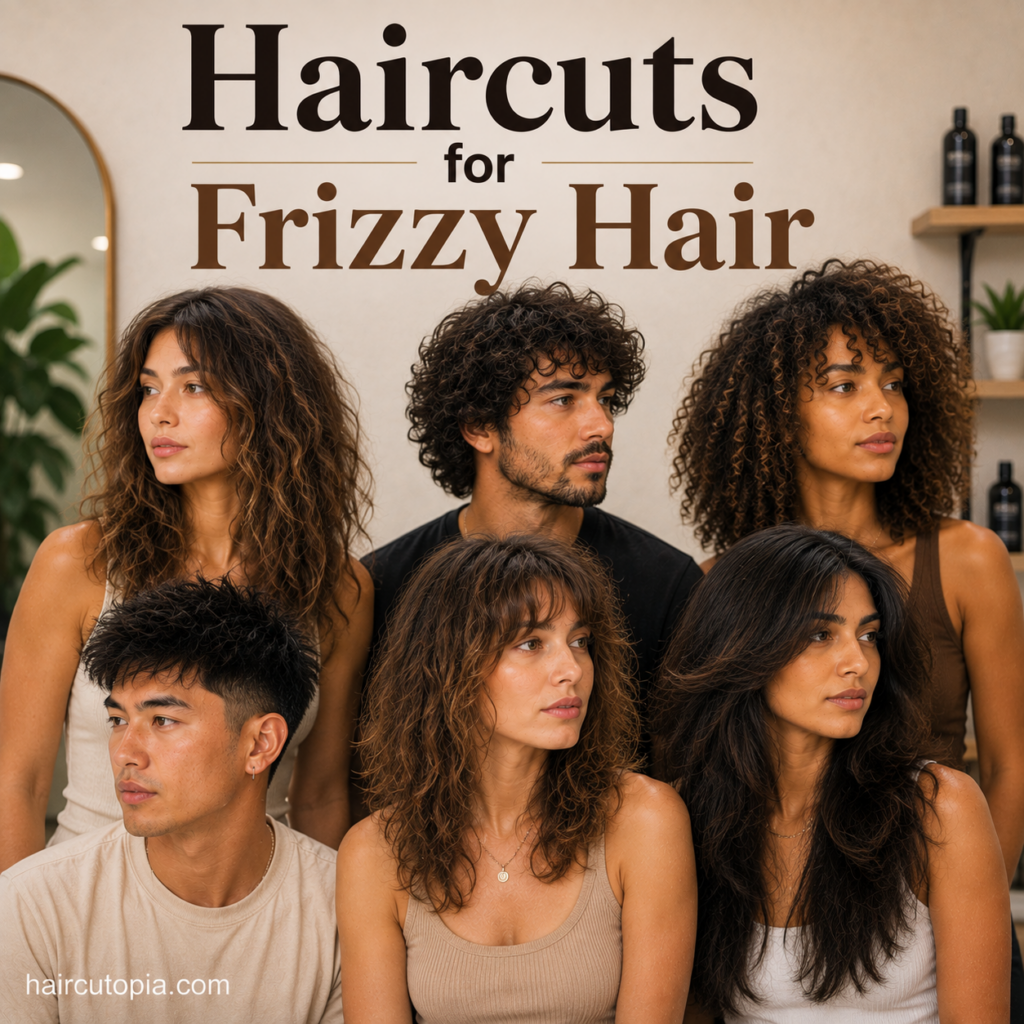
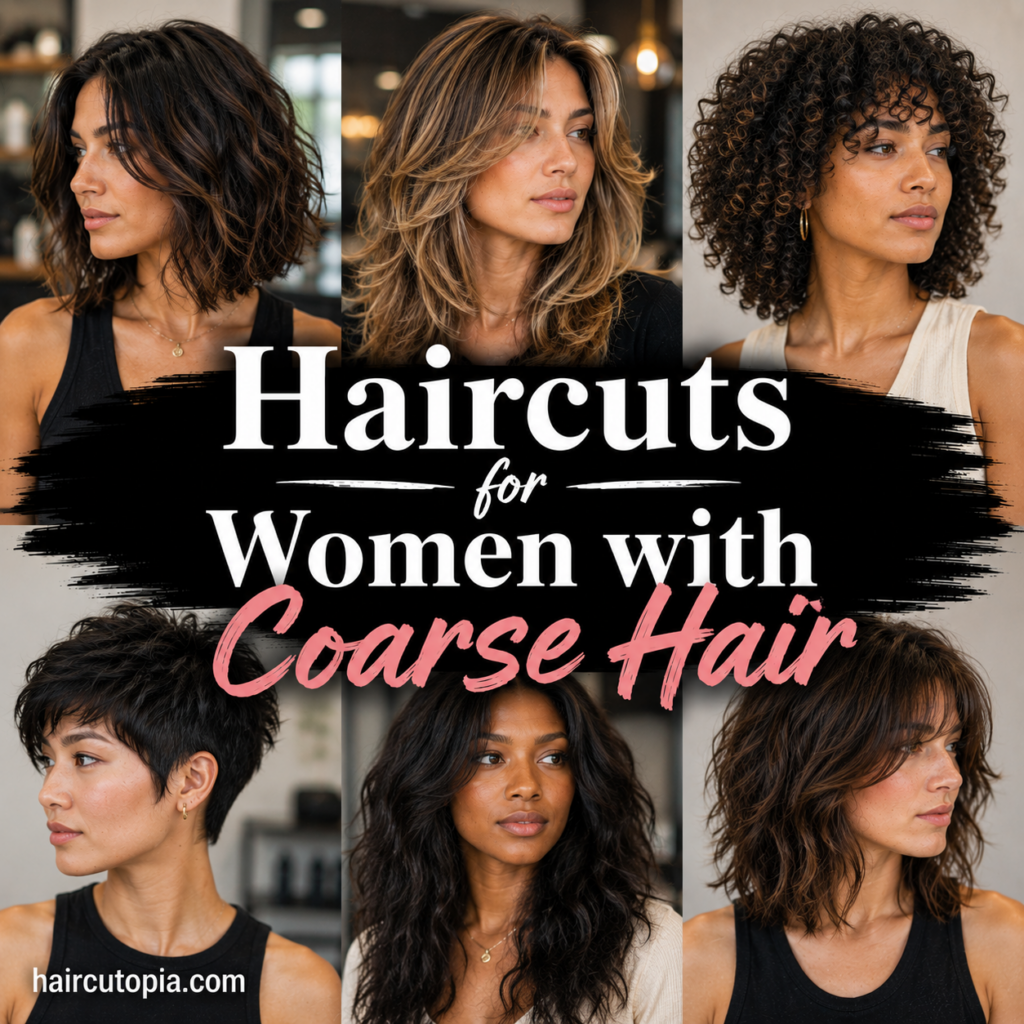
Coarse hair can create the kind of fullness and body that many hairstyles are designed to imitate. The individual strands are thicker, the hair tends to hold its shape well, and layered cuts can have beautiful definition.
But there’s a balancing act.
If you have a lot of coarse hair, certain cuts can become bulky around the sides or ends. Go too short in the wrong areas and the hair may puff outward instead of lying down. Keep everything one length and longer hair can start feeling surprisingly heavy.
The best haircuts for women with coarse hair don’t try to remove all that natural fullness. Instead, they shape it. Strategic layers, a carefully chosen length, and thoughtful weight removal can make coarse hair easier to style while keeping the body that makes it distinctive.
Whether your hair is straight, wavy, curly, short, or long, there are plenty of flattering options.
What Does Coarse Hair Actually Mean?
Coarse hair refers to the diameter of each individual hair strand.
A coarse strand is thicker than a fine or medium strand. That doesn’t necessarily mean you have extremely thick hair overall.
Hair density describes how many strands you have, while coarseness describes the size of those individual strands.
You can have:
- Coarse hair with high density
- Coarse hair with medium density
- Coarse hair with lower density
- Straight coarse hair
- Wavy coarse hair
- Curly or coily coarse hair
This distinction matters when choosing a haircut.
Someone with coarse strands and high density may need significant weight removal. Someone with coarse strands but lower density may benefit from keeping more fullness through the ends.
Why the Right Haircut Matters for Coarse Hair
Coarse hair naturally has structure.
That can make bobs look substantial, pixies beautifully textured, and long layered styles full of movement.
The challenge is controlling where that fullness sits.
A well-designed haircut can help:
- Reduce unwanted bulk
- Make the hair feel lighter
- Improve natural movement
- Bring out waves or curls
- Make styling easier
- Create a more balanced silhouette
- Reduce excessive weight at longer lengths
The answer isn’t necessarily more thinning.
In fact, removing too much hair can sometimes make coarse strands harder to control. Short internal pieces may stick outward or contribute to frizz.
The goal is strategic shaping rather than simply taking hair away.
Best Short Haircuts for Women With Coarse Hair
Short hair can work beautifully with coarse strands, especially when the cut accounts for natural volume and growth patterns.
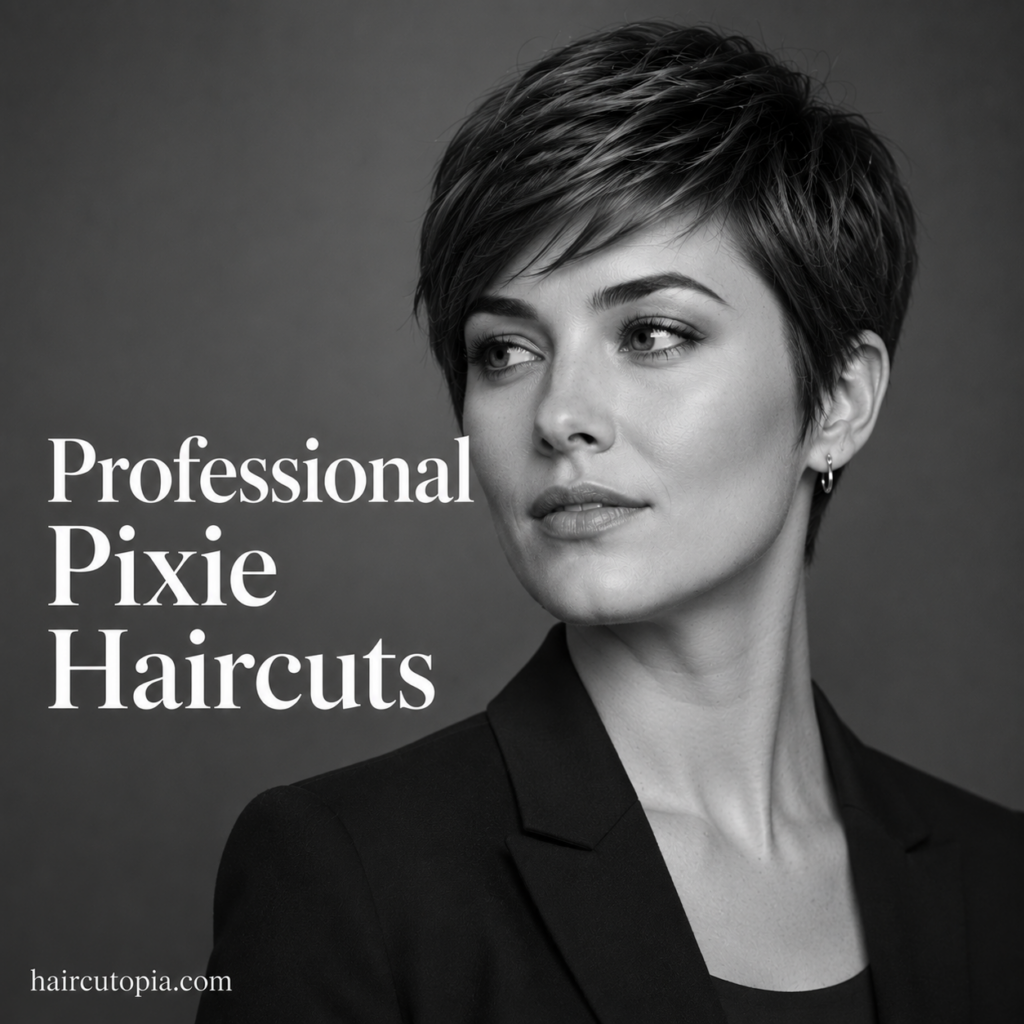
Textured Pixie
A textured pixie makes use of the body coarse hair already has.
Keeping some additional length through the top allows the strands to form visible texture instead of being forced completely flat.
The sides and back can be tapered while the top is styled:
- Forward
- Sideways
- Tousled
- Swept away from the face
- Piecey and defined
A small amount of styling cream or paste may be all you need.
Long Pixie
A long pixie provides more weight and styling flexibility than a very short crop.
That extra length can be especially useful if your coarse hair tends to stick outward when cut too short.
Longer pieces around the top and front can be swept to the side, tucked behind the ears, or worn with a textured fringe.
Bixie Cut
The bixie falls somewhere between a bob and pixie.
It keeps enough length around the sides and back to create movement while using shorter layers to prevent the style from becoming too heavy.
This cut works particularly well if you want something short without committing to a traditional pixie.
Layered Bob
A layered bob is one of the most adaptable short haircuts for women with coarse hair.
Layers help distribute weight rather than allowing all the density to collect at the bottom.
The key is placement.
If your hair already has plenty of volume, too many short layers can make it even fuller. Longer or internal layers may create a smoother shape.
Angled Bob
An angled bob is slightly shorter in the back and longer toward the front.
Coarse straight hair can showcase the clean perimeter particularly well, while wavy textures create a softer interpretation.
For very dense hair, internal weight removal can keep the sides from becoming bulky.
Short Shag
A short shag works with natural texture rather than trying to make coarse hair perfectly smooth.
Layers throughout the crown, sides, and ends create movement and separation.
It’s particularly flattering on coarse wavy hair, where the layers can help bring out the natural pattern.
Best Medium Haircuts for Women With Coarse Hair
Medium length is often a sweet spot for coarse hair.
There’s enough length for the strands to settle naturally but not so much that the hair becomes overwhelmingly heavy.
Layered Lob
A layered long bob usually falls around the shoulders or collarbone.
The added layers prevent dense coarse hair from forming one solid shape.
It’s versatile enough to wear straight, wavy, or curly and still has enough length for a ponytail.
Collarbone Cut
A collarbone cut is simple but surprisingly effective.
The length provides enough weight to control coarse strands while still removing a significant amount of hair compared with a long style.
You can keep the perimeter relatively blunt or add longer layers depending on your density.
Shoulder-Length Layers
Shoulder-length hair with long layers creates movement without making the haircut excessively choppy.
If your hair is extremely dense, internal layers can remove additional weight beneath the surface.
This approach works well when you want your hair to look full but feel lighter.
Medium Shag
A medium shag uses more obvious layering to create a relaxed, textured silhouette.
Coarse hair has enough natural substance to support the shape.
Wavy and curly textures can look particularly good because removing some weight allows the natural pattern to become more noticeable.
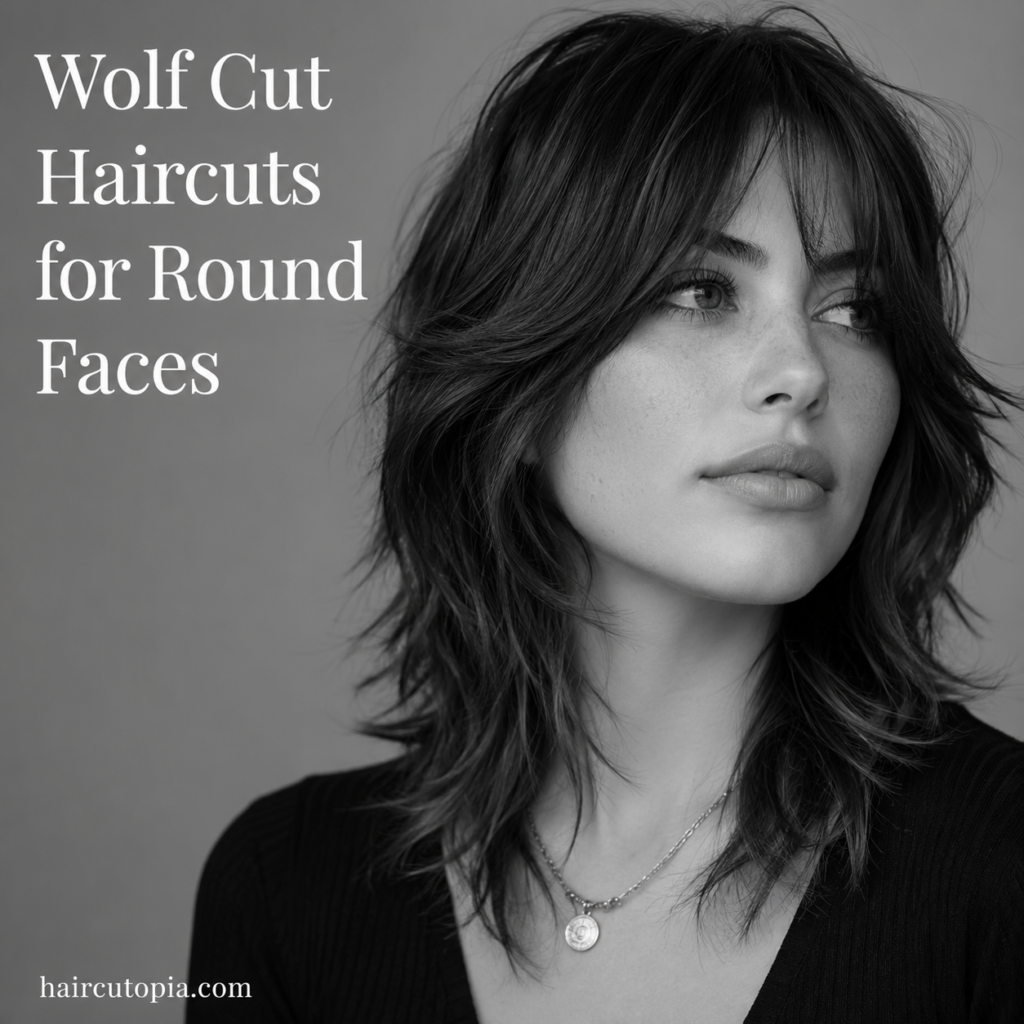
Soft Wolf Cut
The wolf cut combines shorter layers around the crown with longer sections underneath.
On coarse hair, a softer version is often easier to manage than an extremely dramatic cut.
Keeping the upper layers slightly longer can provide movement without creating excessive volume.
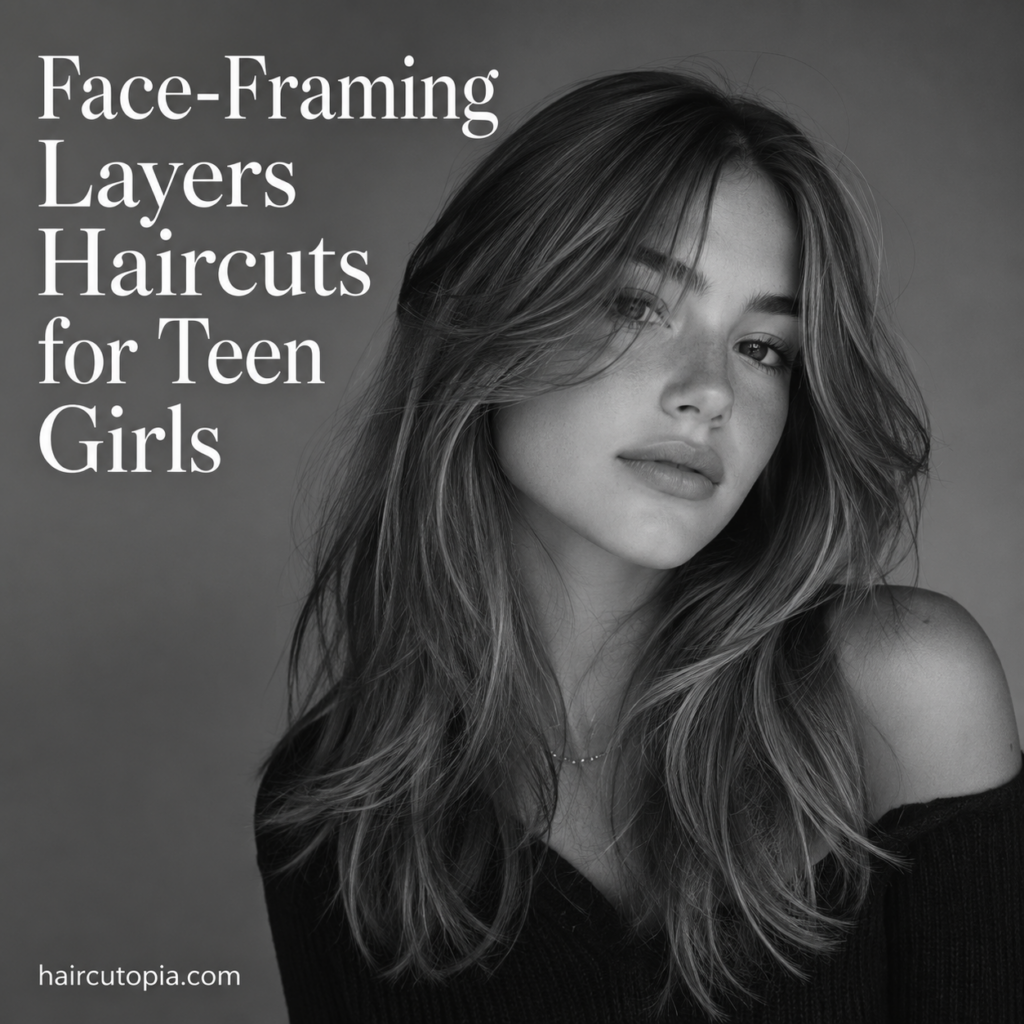
Medium Cut With Face-Framing Layers
If you don’t want layers throughout your entire head, concentrate them around the face.
Face-framing pieces can begin around the cheekbones, jaw, chin, or collarbone.
This gives the front of the haircut movement while preserving more density through the back.
Best Long Haircuts for Women With Coarse Hair
Long coarse hair can be beautiful, but there’s no getting around the fact that it can become heavy.
The right layers can remove a surprising amount of weight without sacrificing much length.
Long Layers
Long layers are one of the most practical choices for coarse hair.
They distribute the density throughout the haircut instead of allowing everything to collect at the bottom.
If you already have plenty of volume around the crown, keep the shortest layers lower.
If the weight of your hair pulls the roots flat, slightly higher layers may create more movement.
Butterfly Haircut
The butterfly haircut combines shorter face-framing layers with longer layers throughout the rest of the hair.
It’s a good choice if you want a noticeably layered appearance while preserving your longest sections.
Coarse strands naturally support the volume and movement associated with this cut.
Long U-Shaped Cut
A U-shaped perimeter creates a soft curve across the back.
The center remains longer while the sides gradually become shorter.
This gives long coarse hair more shape without requiring dramatic layers.
You can also combine a U-shaped perimeter with internal layers to reduce weight.
Long V-Shaped Cut
A V-shaped haircut creates a more noticeable point at the center of the back.
Because the sides are shorter, it naturally removes some weight from the perimeter.
This can work particularly well for very long, dense hair.
Long Shag
A long shag uses layers throughout the hair to create movement and texture.
It’s particularly effective for coarse wavy hair because removing weight can help waves form more freely.
The style is intentionally relaxed, so it doesn’t depend on every strand sitting perfectly in place.
Invisible Layers
Invisible layers reduce weight underneath while keeping the outside of the haircut relatively smooth.
This is a useful option if you want your hair to feel lighter but don’t want an obviously layered style.
They work especially well with straight and slightly wavy coarse hair.
Haircuts for Women With Coarse Straight Hair
Coarse straight hair shows the structure of a haircut clearly.
Blunt edges look stronger, layers are more visible, and shaped perimeters stand out.
Good options include:
- Angled bobs
- Long pixies
- Layered lobs
- Collarbone cuts
- Butterfly cuts
- Long layers
- U-shaped cuts
- Invisible layers
One common issue is hair sticking outward at shorter lengths.
If that happens around your ears, sides, or neckline, cutting those areas even shorter may not solve the problem. Sometimes additional length gives coarse strands the weight they need to settle.
Haircuts for Women With Coarse Wavy Hair
Coarse wavy hair already has natural movement.
The haircut should help that movement form instead of weighing it down.
Consider:
- Layered bobs
- Short shags
- Layered lobs
- Medium shags
- Butterfly cuts
- Long layered cuts
- Soft wolf cuts
Long, one-length hair may stretch out the wave pattern if it’s particularly dense.
Removing weight through carefully placed layers can help bring some of that texture back.
Haircuts for Women With Coarse Curly Hair
Coarse curls can create beautiful shape and substantial volume.
Rather than trying to eliminate that fullness, a good haircut distributes it.
Options include:
- Curly pixies
- Rounded short cuts
- Layered curly bobs
- Curly shags
- Shoulder-length layered curls
- Long rounded layers
Shrinkage is especially important.
Curly hair can appear much longer while wet or stretched than it does once completely dry.
A stylist experienced with curly textures can account for the dry shape and the way individual curl groups naturally sit.
Haircuts for Women With Thick, Coarse Hair
If your hair is both coarse and dense, bulk management becomes a major part of the haircut.
There’s simply more hair occupying the same space.
That doesn’t mean the entire head should be aggressively thinned.
Instead, a stylist may use:
- Internal layers
- Long graduated layers
- Strategic texturizing
- Selective weight removal
- Shaped perimeters
- Face-framing layers
Where the hair is removed matters just as much as how much is removed.
If your hair becomes widest around the sides, for example, adding lots of short layers there could create even more volume.
Coarse Hair With Bangs
Coarse hair can create substantial, defined bangs.
The trick is choosing the right amount of hair for the fringe.
Curtain Bangs
Curtain bangs are one of the easiest options to combine with coarse hair.
They blend naturally into face-framing layers and can work with medium or long styles.
Because they’re longer, they’re also relatively forgiving as they grow.
Bottleneck Bangs
Bottleneck bangs are shorter toward the center and gradually lengthen toward the sides.
They provide more structure than many curtain bangs without creating the solid line of a blunt fringe.
Side-Swept Bangs
Side-swept bangs work well with short, medium, and long cuts.
They can also be incorporated into the rest of the haircut fairly easily if you decide to grow them out.
Textured Bangs
Textured bangs create some separation between the strands.
This can prevent a coarse fringe from feeling overly heavy.
Blunt Bangs
Blunt bangs make a stronger statement.
Coarse strands can create an especially full fringe, so your stylist may use a smaller section than they would on finer hair.
Keep maintenance in mind. Precise bangs usually need more frequent trims.
Choosing a Coarse Haircut for Your Face Shape
Face shape can help you decide where to place length and volume, but it isn’t a strict rulebook.
Your features, hair density, natural texture, and personal style matter too.
Round Faces
Longer lines around the face can create more vertical emphasis.
Angled lobs, long layers, side-swept bangs, and longer face-framing pieces are all options.
Short hair can work too. A pixie with additional height through the top can create a different balance.
Oval Faces
Oval faces generally suit a wide range of cuts.
Pixies, bobs, lobs, shags, bangs, and long layered styles can all work depending on your hair.
Square Faces
Soft layers can create contrast with a defined jawline.
Textured bobs, curtain bangs, shags, and long face-framing layers are worth considering.
A structured bob can also intentionally emphasize angular features.
Heart-Shaped Faces
Haircuts that create movement around the jaw and lower face can complement a wider forehead.
Chin-length bobs, curtain bangs, collarbone cuts, and face-framing layers can all work well.
Long or Oblong Faces
Cuts that create movement through the sides can balance a longer face.
Bobs, shoulder-length styles, bangs, and medium layered cuts are useful options.
How to Remove Bulk From Women’s Coarse Hair
Removing bulk should be targeted.
The goal isn’t to make coarse hair behave like fine hair.
Use Internal Layers
Internal layers remove hidden weight while preserving much of the visible perimeter.
They’re particularly helpful if you want a smoother appearance.
Choose Layer Placement Carefully
Short layers tend to create volume.
If you already have plenty of fullness around the crown, longer layers may be more appropriate.
Be Careful With Thinning Shears
Thinning shears aren’t automatically bad for coarse hair, but overusing them can create short internal strands that contribute to puffiness.
Wavy and curly hair can be particularly sensitive to excessive thinning.
Preserve Enough Weight
Some weight helps coarse hair fall.
Removing too much can actually make the hair expand more.
How to Keep Coarse Hair From Looking Puffy
There’s a difference between healthy volume and unwanted puffiness.
A few adjustments can help.
Keep the Hair Moisturized
Coarse strands may become dry, particularly through the ends.
Regular conditioner and an appropriate leave-in product can make the hair feel smoother and easier to manage.
Don’t Over-Layer
If your hair already has substantial volume, lots of short layers may exaggerate it.
Longer layers can provide movement without creating as much lift.
Account for Humidity
Wavy and curly coarse hair may expand considerably in humid conditions.
Styling products designed for your natural texture can help maintain definition.
Work With Your Natural Pattern
Trying to make naturally wavy or curly coarse hair completely straight every day creates more work.
A haircut designed around your natural texture may require much less styling.
How to Style Women’s Coarse Hair
Coarse hair often holds a style well once it’s shaped.
A simple routine might look like this:
- Start with damp, towel-dried hair.
- Apply leave-in conditioner or a smoothing product if needed.
- Use heat protectant before applying heat.
- Dry the hair in the direction you want it to fall.
- Style face-framing sections separately if necessary.
- Finish with a small amount of serum, cream, or texture product.
If your hair is wavy or curly, air-drying or diffusing may be a better match for your natural pattern.
Start with less product than you think you need. You can always add more.
Low-Maintenance Haircuts for Women With Coarse Hair
Low maintenance depends on both daily styling and salon upkeep.
A pixie may take five minutes to style but require frequent trims. Long layers may take longer to dry but hold their shape for months.
Some practical choices include:
- Long pixies
- Layered bobs
- Collarbone cuts
- Layered lobs
- Long layers
- U-shaped cuts
- Invisible layers
If you usually air-dry, tell your stylist.
A low-maintenance haircut should still have a flattering shape without requiring a professional blowout.
How Often Should Coarse Hair Be Trimmed?
How often you need a haircut depends primarily on the style.
As a general starting point:
- Pixies: every 4–6 weeks
- Short bobs: every 6–10 weeks
- Medium styles: every 8–12 weeks
- Long hair: every 8–12 weeks or as needed
- Bangs: often sooner than the rest of the haircut
You don’t need to follow an exact calendar.
If the shape still looks good and your ends are healthy, you may comfortably wait longer.
What to Ask Your Stylist
A detailed consultation is valuable when working with coarse hair.
Tell your stylist:
- Whether your strands are coarse
- Your overall hair density
- Whether your hair is straight, wavy, curly, or coily
- Where it tends to become bulky
- Whether it expands after drying
- How humidity affects it
- Whether you normally air-dry
- How much daily styling you want to do
- How frequently you’re willing to get trims
- How much length you’re comfortable losing
If you’ve had your hair over-thinned before, mention it.
Instead of simply saying, “Take some of the bulk out,” explain where the hair feels too heavy. That helps your stylist target the problem without removing density you actually want to keep.
Common Mistakes With Women’s Coarse Hair
A few cutting and styling choices can make coarse hair harder to manage.
Over-Thinning
Removing too much internal density can create short pieces that stick outward or become frizzy.
Adding Too Many Short Layers
Short layers create lift.
If your hair is already very full, that may be the opposite of what you want.
Cutting Problem Areas Too Short
Some coarse hair needs length to lie down.
If an area consistently sticks outward, cutting it shorter isn’t always the answer.
Ignoring Natural Texture
A haircut designed for perfectly straight hair may behave very differently when your natural waves or curls return.
Choosing a Cut That Only Works After a Blowout
Think about how you actually style your hair most days.
A haircut that looks great only after 30 minutes with hot tools probably isn’t low maintenance if you normally air-dry.
Finding the Best Haircut for Women’s Coarse Hair
Coarse hair doesn’t need to be tamed into something it isn’t.
Its thicker strands naturally create body, texture, and a substantial shape. The right haircut simply puts those qualities in the right places.
If you want short hair, textured pixies, bixies, layered bobs, and shags can use that natural volume to their advantage. Medium-length lobs, collarbone cuts, and layered styles offer enough weight for control while still creating movement. For longer hair, long layers, butterfly cuts, shaped perimeters, and invisible layers can reduce heaviness without sacrificing the length you’ve grown.
Your texture should guide the details.
Straight coarse hair can showcase structured lines and clean layers. Wavy coarse hair often comes alive when excess weight is removed. Curly coarse hair benefits from shaping that respects its curl pattern and shrinkage.
And if your hair is both coarse and extremely dense, resist the idea that it simply needs to be thinned everywhere.
Good weight removal is strategic. It preserves fullness where it looks great, reduces bulk where it doesn’t, and leaves you with a haircut that feels lighter without losing the natural body that makes coarse hair so versatile.