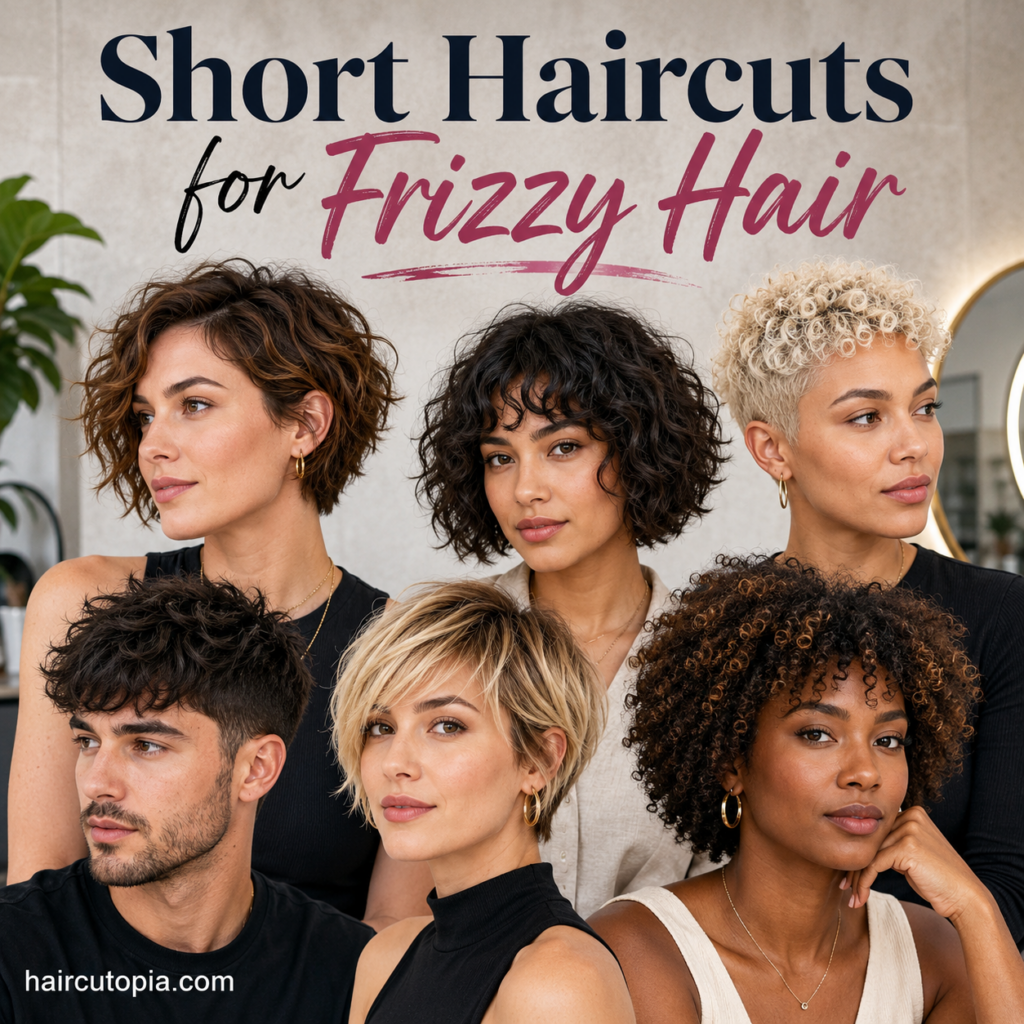
Frizz can make choosing a short haircut feel a little tricky. Go too short in the wrong places and your hair may puff up more than expected. Leave too much bulk and the shape can quickly become difficult to control.
But short hair and frizz can absolutely work together.
The key is choosing a haircut that works with your natural texture instead of trying to force every strand into place. Strategic layers, thoughtful weight distribution, and the right overall shape can turn frizz into texture, movement, and volume rather than something you constantly have to fight.
Whether your hair is straight and frizz-prone, naturally wavy, curly, thick, or somewhere in between, there are plenty of short haircuts worth considering.
What Makes a Short Haircut Good for Frizzy Hair?
A good haircut for frizzy hair isn’t necessarily one that eliminates volume. In fact, trying to remove too much volume can sometimes have the opposite effect.
The goal is usually to create a controlled shape.
That means keeping enough weight where your hair needs it while removing bulk from areas that tend to become overly heavy or triangular.
A flattering short haircut for frizzy hair often includes:
- Strategic rather than excessive layering
- Enough length to give the hair some weight
- A shape that accommodates natural volume
- Soft edges instead of overly rigid lines
- Layers designed around your curl or wave pattern
- Manageable styling requirements
Your hair density matters too. Fine frizzy hair behaves very differently from thick, coarse hair, so two people with similar-looking frizz may need completely different cuts.
Best Short Haircuts for Frizzy Hair
There’s no single haircut that works for everyone. Your natural texture, density, face shape, and preferred styling routine all play a role.
These short styles are especially versatile for hair that’s prone to frizz.
1. Textured Bob
The textured bob is one of the easiest places to start.
Instead of creating a perfectly blunt shape, subtle layers give the hair room to move. Natural waves and slight frizz can actually make this haircut look better because they add dimension.
A textured bob typically falls somewhere between the jaw and shoulders, giving you enough length to maintain some weight.
It’s particularly flattering for:
- Wavy hair
- Medium to thick hair
- Hair with uneven texture
- Anyone who prefers a relaxed style
You can wear it naturally tousled rather than worrying about creating a perfectly smooth finish every morning.
2. Layered Bob
Layers can be helpful for frizzy hair when they’re placed carefully.
A layered bob removes excess bulk and gives thick or wavy hair a more intentional silhouette. The important part is avoiding too many short layers, especially if your hair expands significantly as it dries.
Longer internal layers can provide movement without making the outside of the haircut look overly fluffy.
This style works particularly well when you want something polished but don’t necessarily want to straighten your hair every day.
3. French Bob
A French bob usually sits around the jawline and has a slightly undone finish.
That’s good news for frizz-prone hair.
The style doesn’t depend on every strand being perfectly smooth. A little natural texture gives it personality and keeps the haircut from looking too structured.
Some versions include bangs, while others are worn with a center or slightly off-center part.
If your hair tends to shrink considerably when dry, talk with your stylist about leaving slightly more length than the finished look requires.
4. Wavy Bob
If frizz accompanies natural waves, consider building the haircut around those waves.
A short wavy bob allows bends and movement to become part of the finished style rather than something you have to straighten away.
The length can vary from jaw-length to just above the shoulders.
For an easy everyday look, apply a lightweight styling product to damp hair, gently scrunch, and allow the waves to form naturally.
5. Curly Bob
Naturally curly hair often develops some frizz, particularly in humid weather. A curly bob embraces both volume and texture while keeping the overall length manageable.
The cut can be rounded, slightly graduated, or softly layered depending on your curl pattern.
For curly hair, the finished dry shape matters more than how the haircut looks when it’s soaking wet.
If possible, work with a stylist who regularly cuts curly or highly textured hair.
6. Long Pixie Cut
Not ready for an ultra-short pixie?
A longer pixie gives you some of the convenience of short hair while preserving enough length to work with your natural texture.
The top is usually left longer, while the sides and back are more closely shaped. This allows waves, curls, or tousled texture to become part of the style.
It can also be surprisingly versatile. You can wear the top forward, swept to one side, pushed back, or naturally textured.
7. Textured Pixie Cut
A textured pixie is an especially good option if you don’t want your haircut to depend on a perfectly sleek finish.
Rather than flattening every strand, the cut uses separation and movement intentionally.
A small amount of styling cream or lightweight pomade can help define individual sections without making the hair stiff.
This style tends to work best for people who are comfortable with visible texture and volume.
8. Curly Pixie
A curly pixie allows natural curls to become the main feature of the haircut.
The sides and back can be kept relatively short while additional length remains through the crown and top.
Depending on your curl pattern, the result can range from softly tousled to dramatically voluminous.
One advantage is that you don’t necessarily need to manipulate the curls very much. Properly shaped curls can often be refreshed with a little water and styling product instead of completely restyling the hair.
9. Short Shag
The shag is practically designed for texture.
Its layered construction creates movement and deliberately avoids the overly polished appearance of more traditional short hairstyles.
For wavy or curly frizzy hair, a short shag can make natural volume look intentional.
The biggest consideration is layer placement. Too many aggressively short layers can create unwanted puffiness, particularly on dense hair.
A softer shag with longer layers is often easier to manage.
10. Shaggy Bob
Want something between a bob and a shag?
The shaggy bob combines the recognizable shape of a bob with loose, textured layering.
It works especially well for hair that naturally bends in different directions. Instead of trying to make every section behave identically, the haircut allows that variation to become part of the style.
It’s also a good choice if you prefer hairstyles that don’t need to look exactly the same every day.
11. Bixie Cut
The bixie falls somewhere between a bob and a pixie.
It generally has more length and movement than a traditional pixie but feels lighter and shorter than most bobs.
For frizzy hair, that extra length can be useful. It provides enough weight to keep some areas controlled while still creating a distinctly short hairstyle.
Soft layers around the crown and face can give the cut plenty of movement.
12. Rounded Bob
Sometimes embracing volume is easier than fighting it.
A rounded bob creates an intentional curved silhouette, making it particularly suitable for thick, curly, or naturally voluminous hair.
Instead of trying to make the hair hang completely flat, the haircut distributes fullness around the head.
The result can look especially striking on naturally curly and coily textures.
13. Graduated Bob
A graduated bob is shorter toward the back and gradually becomes longer toward the front.
That structure can help control some of the bulk around the back of the head while preserving length near the face.
The amount of graduation matters. A subtle shape is usually easier to manage on frizz-prone hair than extremely stacked layers.
This is a good option if you like a more defined haircut but still want enough movement for your natural texture.
14. Short Hair with Face-Framing Layers
You don’t necessarily need layers throughout your entire haircut.
Face-framing layers can create softness around the cheeks, jawline, or chin while allowing the rest of the hair to retain more weight.
This approach can be especially helpful for dense hair that becomes too voluminous when heavily layered.
It’s a simple way to add movement without completely changing the structure of a bob or longer short haircut.
15. Short Cut with Curtain Bangs
Curtain bangs can work surprisingly well with frizzy or wavy hair because they aren’t supposed to sit perfectly straight across the forehead.
Their longer, parted shape gives them room to move.
They can be paired with a bob, shag, bixie, or other short layered style.
Just remember that bangs often react to humidity before the rest of your hair does. Leaving them slightly longer can make them easier to manage.
Short Haircuts for Thick, Frizzy Hair
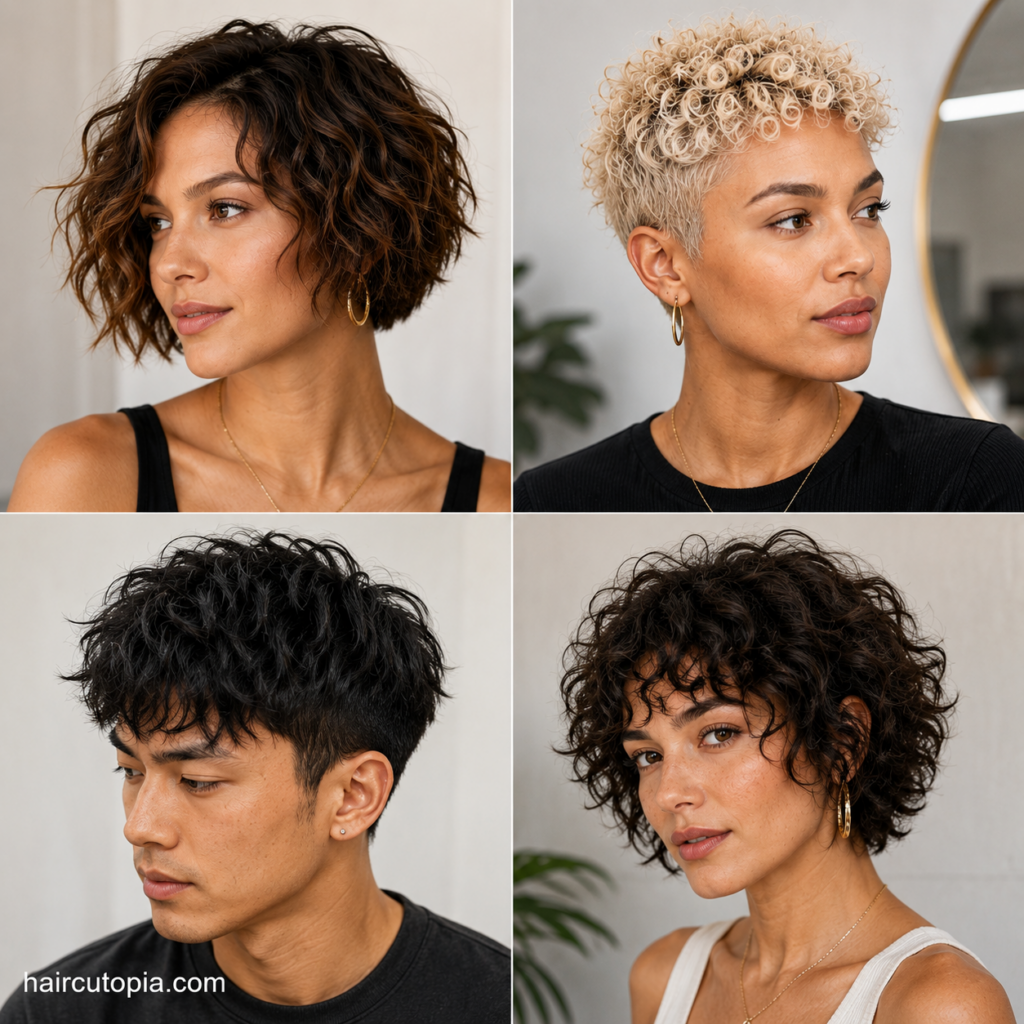
Thick frizzy hair often has plenty of natural volume, so the main goal is usually controlling bulk without removing so much weight that the hair expands.
Good options include:
- Textured bobs
- Longer layered bobs
- Rounded bobs
- Soft shags
- Bixie cuts with longer top sections
- Graduated bobs with subtle shaping
Internal weight removal can sometimes be more effective than adding lots of visible short layers.
Be cautious with aggressive thinning, however. Depending on your texture, excessive thinning can create shorter pieces throughout the hair that become even more prone to frizz.
Short Haircuts for Fine, Frizzy Hair
Fine hair can frizz too, but the cutting strategy is different.
Removing too much hair may leave fine strands looking sparse or wispy. Maintaining some density through the perimeter can make the hair appear fuller.
Consider styles such as:
- Blunt or softly textured bobs
- Jaw-length bobs
- Bixie cuts
- Long pixies
- Lightly layered short cuts
Instead of heavy layering, subtle movement around the face and crown may be enough.
Lightweight styling products are also important because rich creams and heavy oils can quickly weigh fine hair down.
Short Haircuts for Wavy, Frizzy Hair
Wavy hair often sits right in the middle: straight enough to lose definition but textured enough to become noticeably frizzy.
The solution isn’t always smoothing the waves away.
A haircut that encourages their natural pattern can make everyday styling much easier.
Some of the best choices include:
- Wavy bobs
- Textured bobs
- Short shags
- Shaggy bobs
- Bixie cuts
- Layered bobs
Ask your stylist to consider how your waves form when dry. Cutting purely according to wet length can sometimes produce unexpected results once the waves spring back into place.
Short Haircuts for Curly, Frizzy Hair
With curly hair, some visible frizz can simply be part of the texture.
Rather than aiming for completely frizz-free curls, focus on definition, hydration, and a balanced haircut.
Curly bobs, rounded cuts, curly pixies, and short layered styles can all work well.
Shrinkage is particularly important. A haircut that looks relatively long while wet can become significantly shorter once curls dry.
That’s why discussing your desired dry length with your stylist is essential.
Should Frizzy Hair Be Layered?
Yes, but thoughtfully.
Layers can remove bulk, encourage waves or curls, and create movement. They can also make frizz more noticeable if they’re cut too short or used excessively.
The right amount depends heavily on your density and texture.
For thick hair, longer internal layers may help redistribute weight. Fine hair may benefit from fewer layers so the perimeter remains full.
Curly hair often needs layers placed according to the curl pattern rather than following a standard cutting formula.
In other words, don’t ask for layers simply because your hair is frizzy. Ask what type of layering makes sense for the way your hair naturally behaves.
Should You Avoid Very Short Hair If You Have Frizz?
Not necessarily.
Pixies and other very short styles can look fantastic with frizzy, wavy, or curly texture.
But there’s an important tradeoff: cutting away length also removes weight.
If your hair relies on its own weight to stay relatively controlled, suddenly going very short can create considerably more volume.
Before making a dramatic change, ask your stylist how your texture is likely to respond.
A longer pixie or bixie can be a useful transition if you’re unsure about going extremely short.
How to Style Short Frizzy Hair
The haircut itself is only part of the equation. Your styling routine can make a major difference.
Start While Your Hair Is Damp
Frizz often becomes harder to control once the hair has already dried.
Apply your preferred leave-in conditioner, curl product, styling cream, or lightweight serum while your hair is still damp.
Distribute it gently instead of aggressively rubbing the hair.
Avoid Rough Towel Drying
Rubbing wet hair vigorously with a traditional towel can disturb the hair surface and encourage frizz.
Instead, gently squeeze out excess moisture.
A microfiber towel or soft cotton T-shirt can also be useful for removing water without creating as much friction.
Don’t Overload Your Hair with Product
More product doesn’t automatically mean less frizz.
Too much cream, oil, or serum can leave short hair flat, greasy, or separated into heavy sections.
Start with a small amount. You can always add more where needed.
Use Heat Strategically
If you blow-dry your hair, avoid blasting it around randomly with high heat.
For curly and wavy hair, a diffuser can help preserve the natural pattern while reducing unnecessary disturbance.
If you’re creating a smoother finish, direct airflow downward and use appropriate heat protection.
Stop Touching Your Hair
This sounds almost too simple, but constantly running your hands through drying curls or waves can break apart their natural pattern.
Style the hair, position it where you want it, and then give it a chance to dry.
What to Ask Your Stylist
A good consultation is particularly important when cutting frizz-prone hair short.
Instead of simply showing a photo and asking for the same haircut, explain how your hair behaves in everyday life.
Tell your stylist:
- How you normally wear your hair.
- Whether you air-dry or blow-dry it.
- How much your hair shrinks when dry.
- Which areas become especially bulky or frizzy.
- How much styling time you’re willing to spend.
- Whether you regularly straighten or curl your hair.
- What you like and dislike about your current haircut.
Photos of your hair on a typical day can also be useful, especially if you arrive at the salon with it styled differently than usual.
Common Mistakes to Avoid
Short hair can be wonderfully manageable, but a few choices can make frizz more difficult to deal with.
Removing Too Much Weight
Thinning or heavily layering thick hair may initially make it feel lighter, but removing too much weight can allow shorter pieces to expand.
Choosing a Cut That Requires Daily Straightening
If you rarely use hot tools, a haircut that only looks right after a smooth blowout probably isn’t the most practical choice.
Look for inspiration featuring a texture similar to your own.
Ignoring Shrinkage
Waves and curls can appear much shorter after drying.
Always discuss the finished dry length before making a major cut.
Expecting Zero Frizz
Healthy, well-styled hair can still have some frizz.
A realistic goal is usually manageable, defined texture rather than eliminating every flyaway.
How Often Should Short Frizzy Hair Be Trimmed?
Short hairstyles generally need more frequent reshaping than long hair because small amounts of growth can noticeably change the silhouette.
Many people find that somewhere around six to ten weeks works well, although there’s no universal schedule.
A structured pixie may need attention sooner, while a shaggy bob can often grow out gracefully for longer.
Pay attention to the shape rather than the calendar. If your haircut suddenly feels bulky, loses definition, or becomes harder to style, it may be time for a trim.
How to Choose the Right Short Haircut for Your Frizz
Start with your natural texture.
If you have strong waves, look at short hairstyles photographed on wavy hair. If you have tight curls, look for examples with a similar curl pattern and density.
Then think realistically about maintenance.
Do you want to air-dry your hair most mornings? Are you comfortable using a diffuser? Do you prefer something polished or intentionally tousled?
The best haircut isn’t simply the one that looks impressive immediately after leaving the salon. It’s the one you can recreate at home without turning your morning routine into a project.
Final Thoughts
Frizz doesn’t rule out short hair. In many cases, the right short haircut can make natural texture easier to manage because the shape is doing more of the work for you.
Textured bobs, curly bobs, long pixies, bixies, shags, and softly layered cuts are all worth considering. The best choice depends on whether your hair is fine or thick, straight or wavy, loosely curled or tightly textured.
Most importantly, don’t assume your hair needs to be perfectly smooth for a short haircut to look good.
A little volume, movement, and even some frizz can give short hair character. Choose a cut that leaves room for your natural texture, and you’ll spend much less time trying to make your hair behave like something it isn’t.
Related Posts
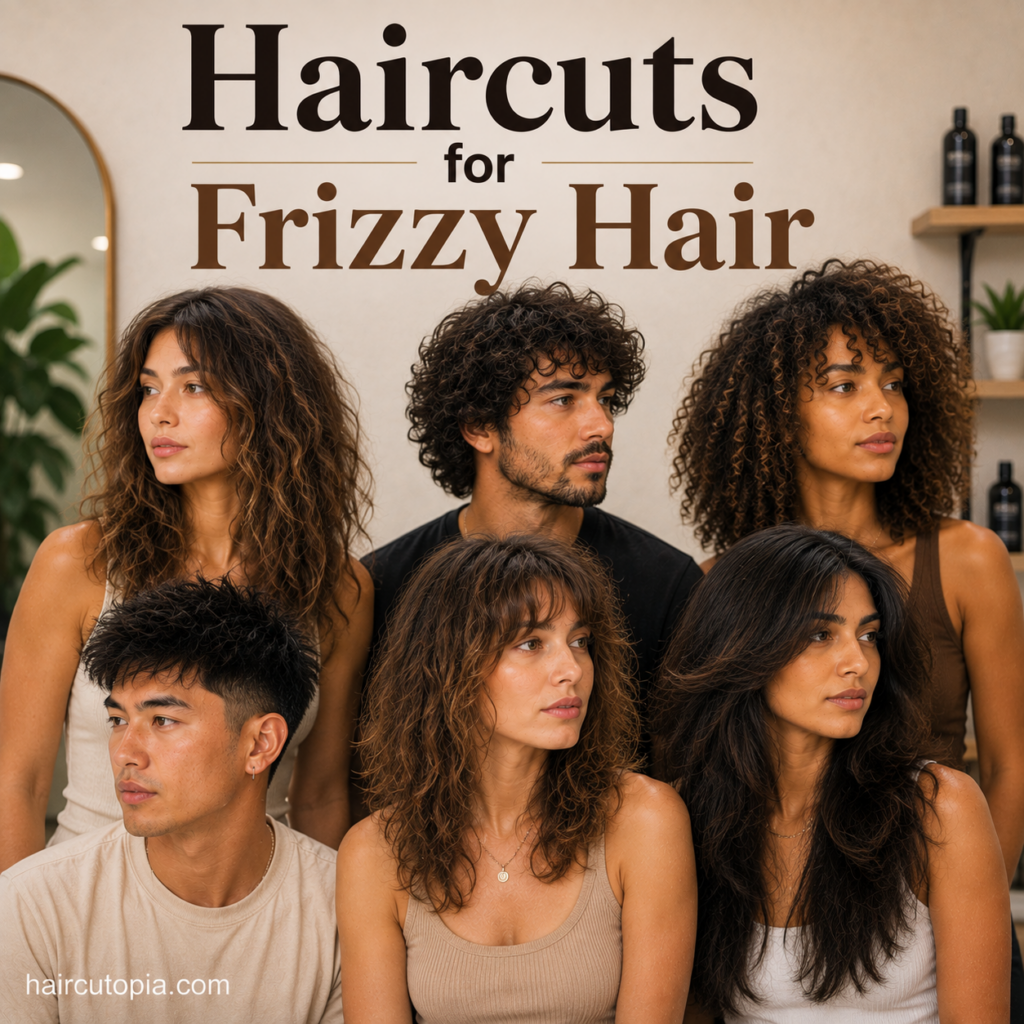 Haircuts for Frizzy Hair: The Complete Guide to Cuts for Every Length and Texture
 Haircuts for Thick Hair: The Complete Guide to Flattering Cuts for Every Length and Texture
 Haircuts for Women with Frizzy Hair: 15 Flattering Styles for Natural Texture
 Long Haircuts for Frizzy Hair: Flattering Styles That Work With Natural Texture