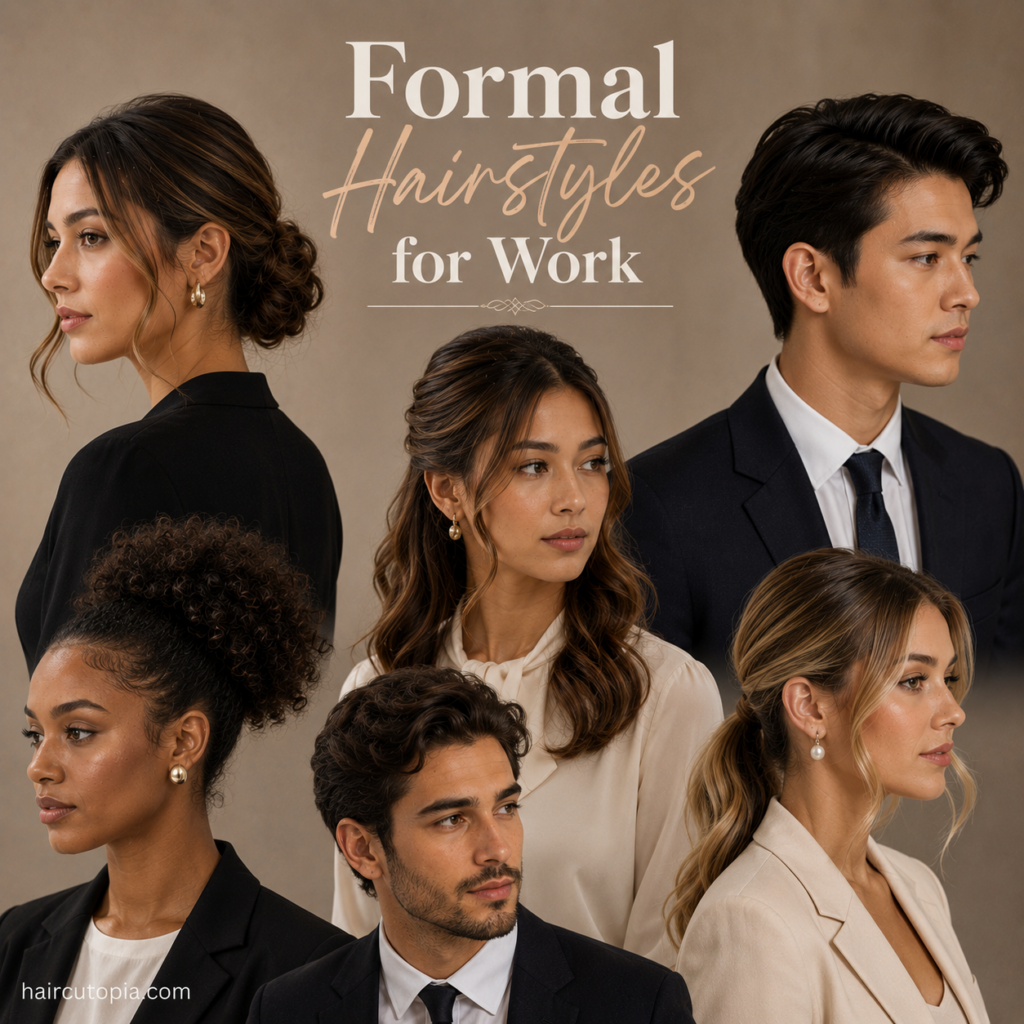
Getting your hair right for work is usually about balance. You want to look polished, but not like you’re headed to a black-tie gala at 9 a.m.
That’s especially true when the occasion calls for something more formal than your everyday office style. Maybe you’re giving a presentation, interviewing for a new position, attending a conference, meeting an important client, taking professional headshots, or heading to a company dinner after work.
The good news is that formal hairstyles for work don’t need to be complicated.
A clean ponytail, smooth bun, defined curls, neat short haircut, or simple half-up style can all look professional. The goal is generally to keep the hairstyle intentional, comfortable, and practical enough to wear through a full workday.
Here are 25 professional hairstyle ideas for different hair lengths and textures, plus tips for choosing a style that fits your workplace and schedule.
1. Sleek Low Ponytail
A sleek low ponytail is one of the easiest ways to create a polished professional look.
Create a clean center or side part, smooth the hair toward the nape, and secure it with an elastic.
For a more finished appearance, take a small section from underneath the ponytail and wrap it around the elastic.
Keep the ponytail straight for a minimalist look or add a gentle bend through the ends.
2. Soft Low Ponytail
Not every professional hairstyle needs to be perfectly sleek.
A softer low ponytail works particularly well if your hair naturally has some wave or texture. Keep a little volume through the crown and allow the ponytail to move naturally.
This version feels polished without looking overly structured.
It’s also comfortable enough for a long day at the office.
3. Classic Low Bun
The low bun is a workplace staple for good reason.
It’s neat, practical, and keeps your hair out of the way while you’re working.
Gather your hair near the nape and twist it into a simple bun. Secure it with pins and smooth any obvious flyaways.
You can wear it with a center part, side part, or gently brushed back.
4. Sleek Low Bun
When you need something slightly more formal, make the low bun cleaner and more structured.
Start with a precise part and smooth the hair closely toward the nape before creating the bun.
This hairstyle works especially well for:
- Job interviews
- Presentations
- Client meetings
- Conferences
- Professional headshots
- Company events
It also pairs naturally with tailored clothing and minimalist accessories.
5. Soft Textured Bun
A textured bun offers a more relaxed alternative.
Instead of pulling everything completely smooth, allow some natural texture and subtle volume to remain.
Keep the bun controlled enough for work, but don’t worry about making every strand perfectly uniform.
This can be a good middle ground when your workplace is professional but not extremely conservative.
6. Classic French Twist
The French twist may have formal-event associations, but a simple version works beautifully in professional settings.
Gather the hair toward the back, roll it vertically, tuck the ends inside, and secure the twist with pins.
For work, keep the style relatively understated.
Skip elaborate accessories and excessive crown volume unless you’re transitioning directly into an evening event.
7. Modern Loose French Twist
A slightly relaxed French twist can feel more contemporary.
Allow a little texture through the crown and avoid pulling the hair painfully tight.
A few subtle pieces around the hairline can soften the style, although you generally want to keep them controlled enough that you’re not constantly pushing hair away from your face.
8. Straight Hair With a Center Part
Sometimes simple is exactly right.
Smooth straight hair with a clean center part creates a modern, professional appearance without requiring an updo.
The key is the finish.
Pay attention to:
- Smooth roots
- Controlled flyaways
- Neat ends
- Natural-looking shine
- Overall shape
You don’t need to flatten every bit of volume. The hair should still have movement.
9. Straight Hair With a Side Part
A side part creates a slightly softer version of the same look.
It can also add volume around the front, which is helpful if a center part makes your hair feel too flat.
Tucking one side behind the ear keeps the hair away from your face and gives the hairstyle a clean, intentional shape.
10. Professional Blowout
A smooth blowout is an excellent option when you want to wear your hair down.
Aim for controlled volume and movement rather than dramatic curls.
Use a round brush to create lift around the roots and gently shape the ends.
The finished style should feel polished enough for an important meeting but natural enough for a regular workday.
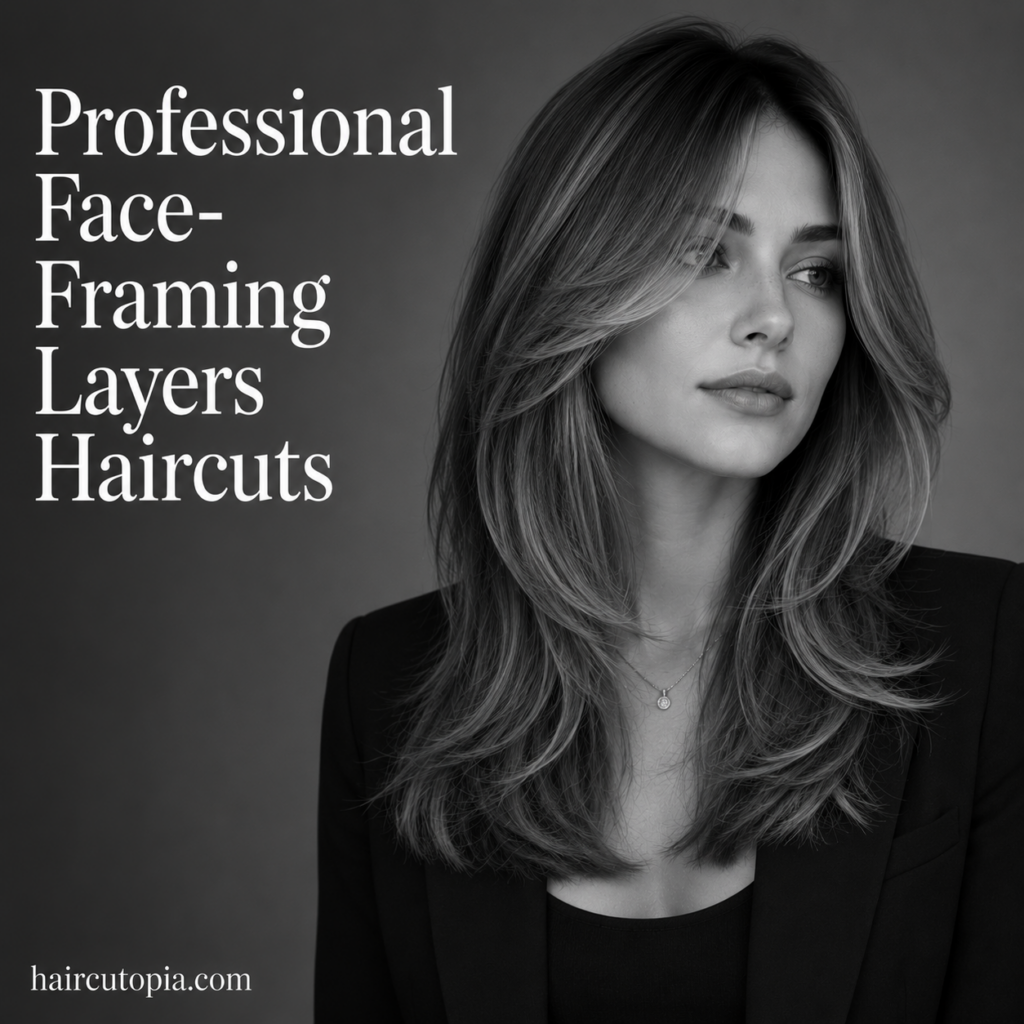
11. Soft Professional Waves
Waves can absolutely work in professional environments.
The difference between work-friendly waves and dramatic evening hair usually comes down to volume and finish.
Keep the waves soft and flowing rather than extremely large or heavily sculpted.
A clean center or side part helps give the hairstyle structure.
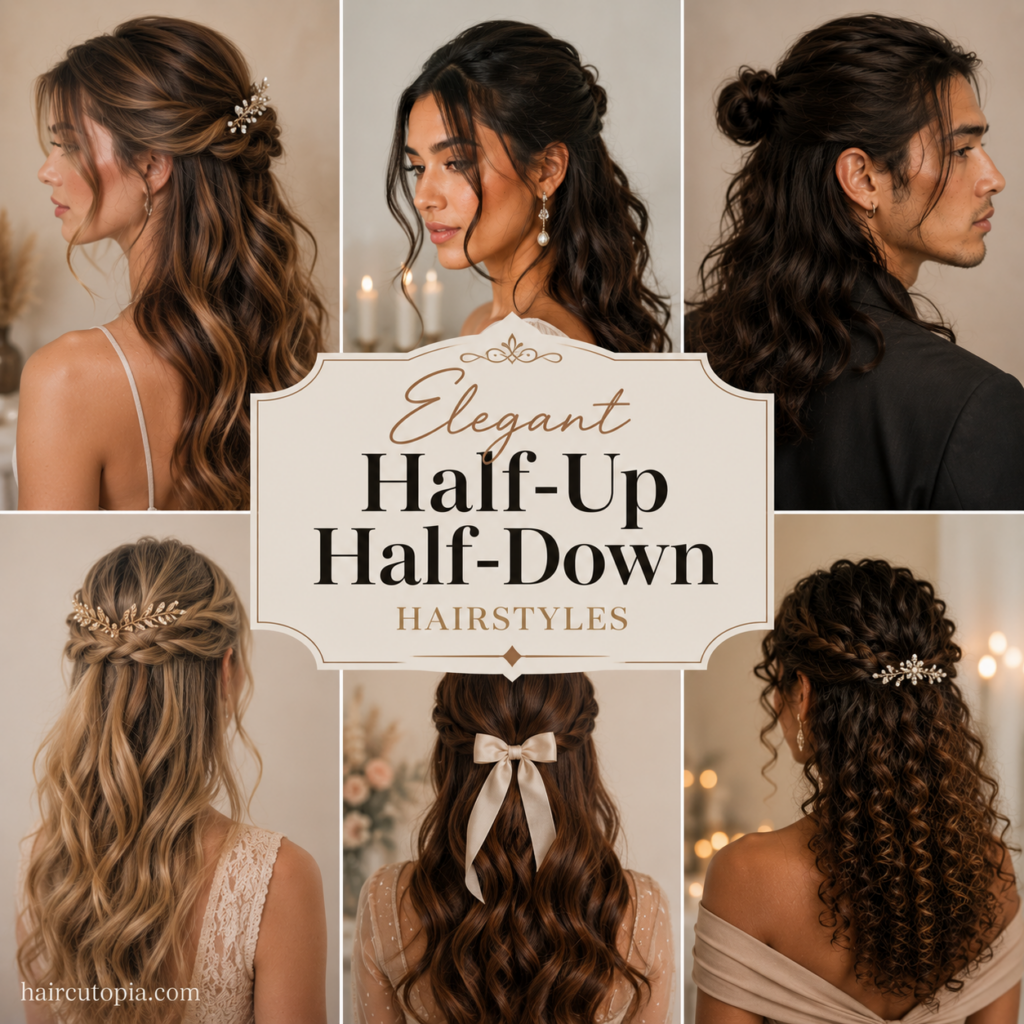
12. Half-Up Professional Hairstyle
A half-up style is useful when you like wearing your hair down but don’t want it falling forward while you work.
Take the front sections and secure them neatly toward the back.
You can leave the remaining hair:
- Straight
- Wavy
- Curly
- Naturally textured
For a more professional finish, choose a simple barrette or discreet pins rather than an elaborate accessory.
13. Twisted Half-Up Hairstyle
Adding a twist gives the basic half-up style a little more detail.
Take a small section from each side, twist the sections backward, and secure them together.
Keep the twists relatively neat rather than pulling them apart for dramatic volume.
It’s a simple style that can transition easily from the office to an after-work dinner.
14. Tucked-Behind-the-Ear Bob
Short and medium bobs don’t require much styling to look professional.
Create a clean part and tuck one or both sides behind the ears.
That small adjustment opens up the face and creates a more deliberate shape.
You can wear the hair straight, softly waved, or naturally textured.
15. Sleek Professional Bob
A smooth bob with a precise shape can look especially polished.
Whether the cut ends at the chin or closer to the shoulders, focus on keeping the silhouette clean.
A center part creates a modern appearance, while a side part feels slightly softer.
If your hair naturally has volume, you don’t need to straighten it completely. The goal is controlled shape rather than eliminating texture.
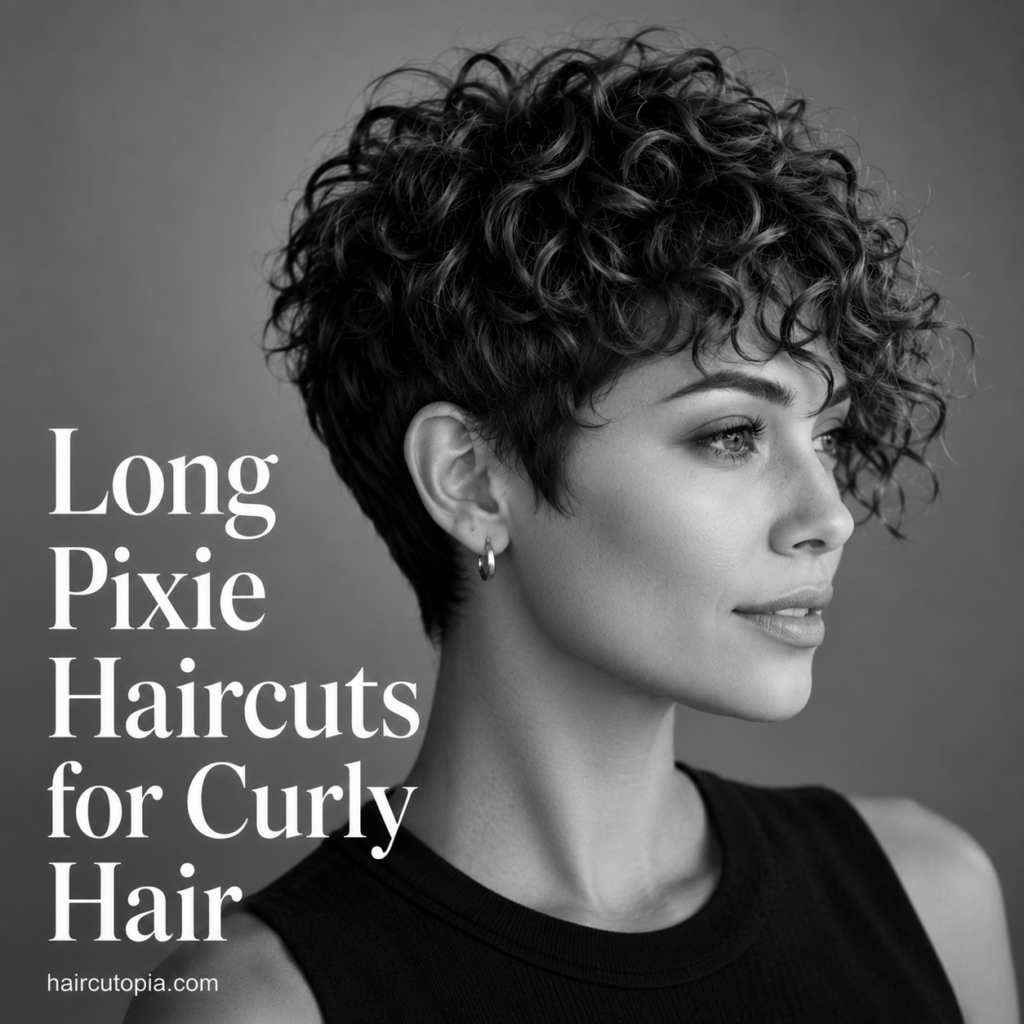
16. Textured Pixie Cut
A pixie can be professional without being completely flat.
Use a small amount of styling product to define the shape and create separation through the top.
Keep the sides controlled while allowing subtle texture where the cut naturally has movement.
This is also an easy hairstyle to refresh during the day.
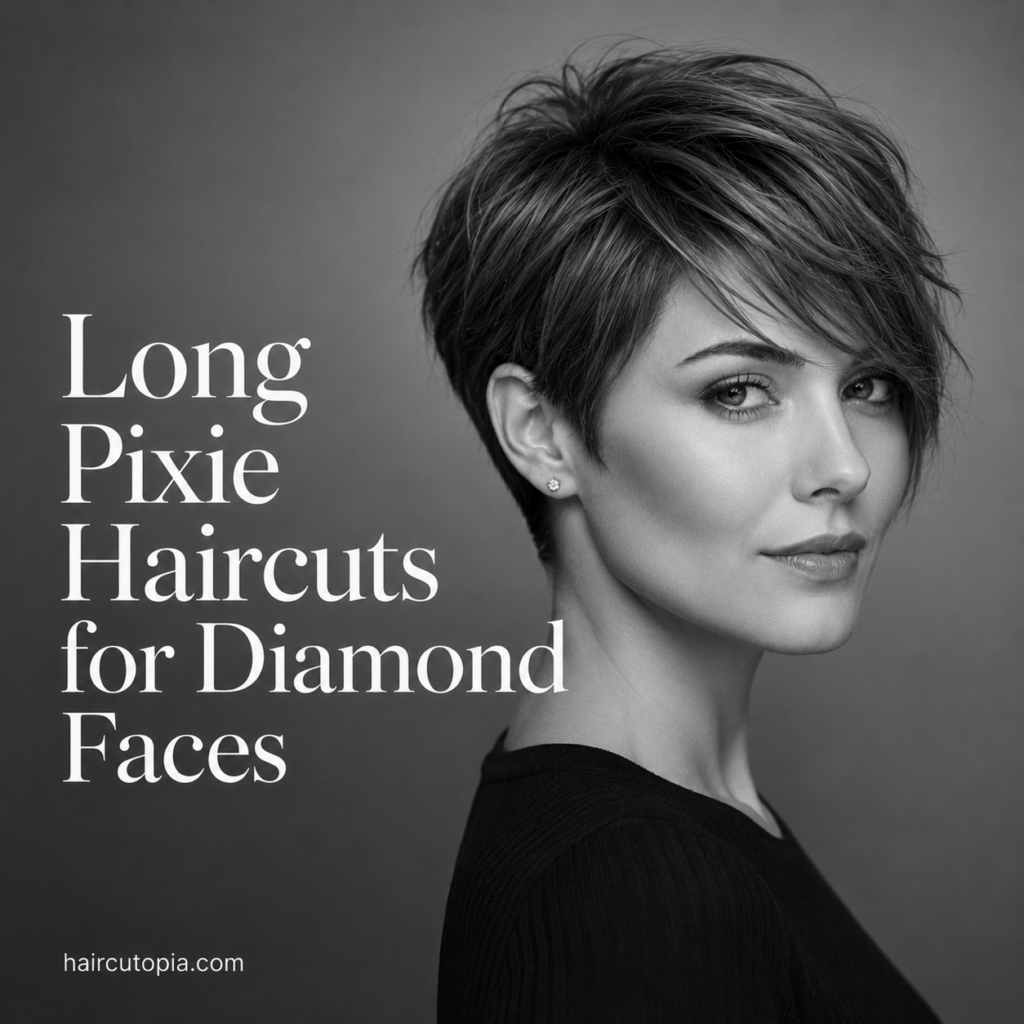
17. Sleek Pixie Hairstyle
For a more formal workplace look, smooth a pixie into a cleaner silhouette.
Create a defined side part or direct the hair neatly away from the face.
A small amount of styling cream or pomade can help control shorter pieces.
Use product sparingly so the hair doesn’t look stiff or greasy.
18. Defined Natural Curls
Natural curls are completely compatible with polished professional styling.
Rather than changing your texture, concentrate on definition and shape.
A deliberate center or side part can provide structure, while controlling obvious frizz around the hairline helps create a finished appearance.
There’s no need to make every curl identical.
19. Curly Half-Up Hairstyle
A half-up style is especially practical for curly hair.
It keeps the front sections away from your face while allowing the natural texture and volume to remain visible.
Gather the upper portion loosely so you don’t flatten the curl pattern.
Use a discreet elastic, clip, or pins to secure the style.
20. Curly Low Bun
A low bun works beautifully with curly hair because the natural texture gives the style dimension.
Gather the hair near the nape without brushing out all of the curls.
Twist or pin sections into place until the bun feels secure.
You can keep the front relatively smooth or allow a small amount of natural texture around the hairline.
21. Professional Natural Puff
A neatly shaped puff can create a polished workplace hairstyle while showcasing natural texture.
The placement can be adjusted depending on your hair length and personal preference.
Keep the base secure but comfortable, and pay attention to the overall shape.
A clean hairline can add definition without requiring the entire style to look slicked down.
22. Sleek High Ponytail
A high ponytail can work for professional settings when the styling is kept clean.
Smooth the hair toward the crown and secure it firmly.
Rather than adding dramatic curls or extreme volume, keep the ponytail relatively simple.
Wrapping a small piece of hair around the elastic creates a more finished appearance.
23. Simple Braid
A classic braid can be practical and professional, particularly with medium or long hair.
Keep the braid neat and relatively controlled.
You can wear it:
- Straight down the back
- Over one shoulder
- Starting from a low ponytail
- As part of a half-up style
Avoid making it so tight that it becomes uncomfortable during a full workday.
24. Braided Low Ponytail
A braided ponytail combines two extremely practical hairstyles.
Create a smooth low ponytail first, then braid the length.
Because the base is already secured, the braid tends to stay neat throughout the day.
This is particularly useful if you have long hair and want to keep it controlled during meetings, commuting, or travel.
25. Polished Men’s Side-Part Hairstyle
A clean side part remains one of the most versatile formal hairstyles for men.
The hair can be neatly combed or styled with some natural texture through the top.
You don’t need a hard, sharply defined part unless that’s the look you prefer.
For a contemporary finish, use enough styling product to maintain the shape without creating a stiff or overly glossy appearance.
Formal Hairstyles for Work With Short Hair
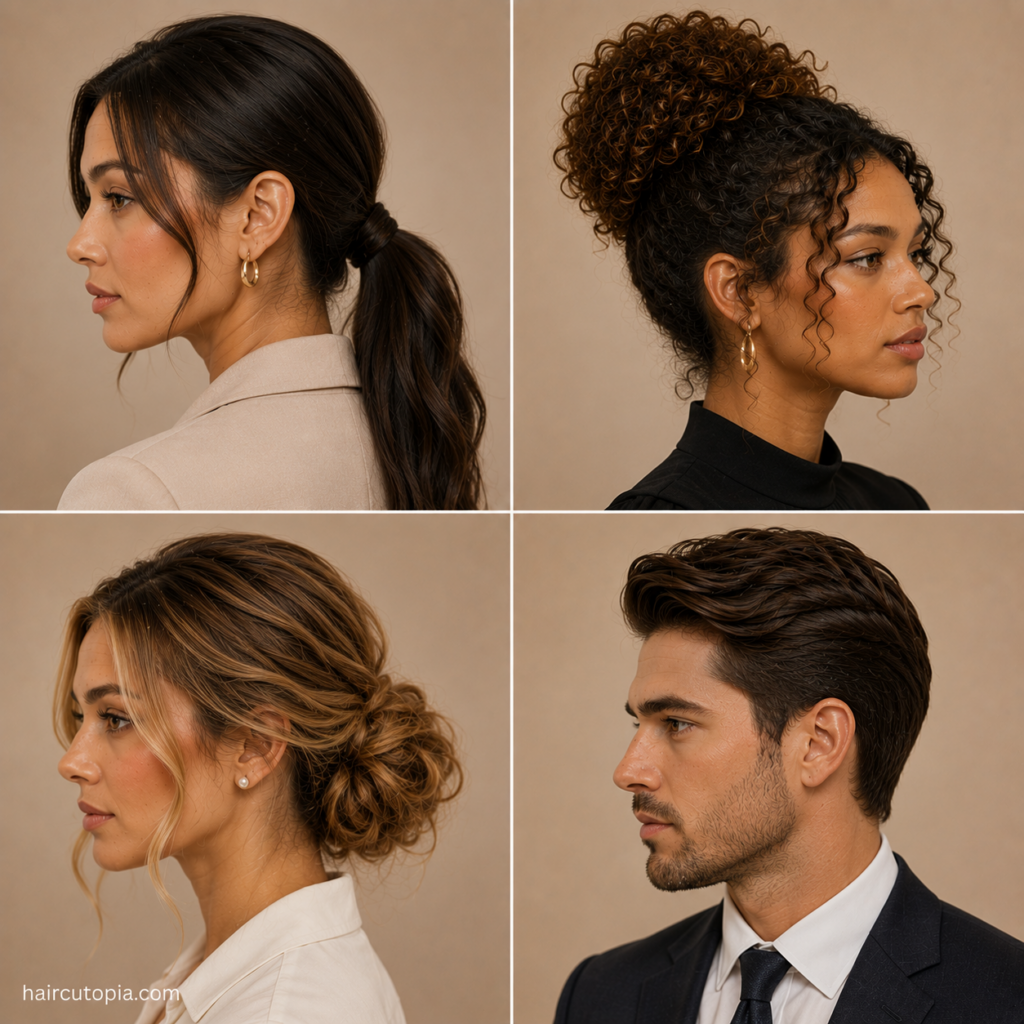
Short hair can be one of the easiest lengths to prepare for work.
You don’t need to create an updo. Instead, concentrate on giving your existing haircut an intentional shape.
Good options include:
- Sleek pixies
- Textured pixies
- Side-parted bobs
- Straight bobs
- Soft waves
- Slicked-back styles
- Defined curls
- Neatly styled crops
Short hairstyles are also relatively easy to refresh before an evening company event.
A little water or styling product may be enough to reshape the hair after a full day.
Formal Hairstyles for Work With Medium Hair
Medium hair offers plenty of flexibility without the extra weight of very long hair.
Professional options include:
- Low ponytails
- Low buns
- French twists
- Half-up hairstyles
- Smooth blowouts
- Soft waves
- Curly updos
- Shoulder-length straight styles
If your hair sits around the shoulders, shorter pieces may escape from buns and twists.
You don’t necessarily have to pin every one of them down. A small amount of softness can still look professional.
Formal Hairstyles for Work With Long Hair
Long hair can be worn up or down in professional environments.
If you want to keep it out of the way, try:
- Low buns
- Ponytails
- Braids
- French twists
- Braided ponytails
For down styles, smooth blowouts, straight hair, and understated waves are all versatile choices.
If your hair is particularly thick or heavy, choose a secure elastic or foundation for updos so you aren’t adjusting them throughout the day.
Professional Hairstyles for Different Hair Textures
The easiest work hairstyle is often one that works with your natural texture instead of fighting it every morning.
Straight Hair
Straight hair lends itself naturally to sleek ponytails, low buns, bobs, blowouts, and simple down styles.
If your hair is very fine or slippery, a little texture product can help pins and elastics stay in place.
Wavy Hair
Natural waves can save you a lot of styling time.
Define a few sections around the face and leave the remaining texture relatively natural.
Waves work particularly well with half-up styles, ponytails, buns, and shoulder-length cuts.
Curly Hair
Curly hair can be worn fully down, half-up, in a ponytail, or gathered into a bun.
Focus on definition and overall shape rather than trying to make every curl uniform.
Coily Hair
Coily hair offers plenty of professional styling possibilities, including puffs, twists, braids, updos, and defined natural styles.
Choose a style that remains comfortable and doesn’t require constant adjustment throughout the workday.
Formal Hairstyles for Job Interviews
Interview hair doesn’t need to look dramatically different from how you normally present yourself professionally.
In fact, feeling comfortable with your hairstyle can help you focus on the conversation instead of wondering whether something has fallen out of place.
Reliable options include:
- Low ponytails
- Low buns
- Smooth blowouts
- Neat short hairstyles
- Defined curls
- Simple braids
- Half-up styles
- Clean men’s side parts or textured styles
Keep hair away from your eyes when possible, especially during video interviews.
You want facial expressions to remain visible.
Formal Hairstyles for Important Meetings and Presentations
Presentations can involve standing, moving, turning your head, and occasionally dealing with microphones or headsets.
Choose something secure.
A ponytail, bun, short hairstyle, or half-up style can prevent you from repeatedly touching your hair.
For video presentations, consider how the hairstyle looks from the front rather than only from the side or back.
A little volume around the crown can prevent longer hair from looking completely flat on camera.
Formal Hairstyles for Conferences
Conference days can be long.
You may leave your hotel early in the morning, spend hours in sessions, meet new people, attend networking events, and then go directly to dinner.
Comfort matters.
Choose a hairstyle that can survive the day with minimal maintenance.
Low ponytails, buns, braids, defined natural styles, and polished short cuts are particularly practical.
Carry a few basic supplies if needed:
- Bobby pins
- Hair elastic
- Small comb
- Travel-size styling product
You don’t need your entire bathroom cabinet.
Formal Hairstyles for Company Dinners and Work Events
An evening company event gives you more freedom than the average workday.
You can add slightly more volume, texture, or polish without crossing into full wedding-guest territory.
For example, you might transform:
- A low ponytail into soft waves
- Straight hair into loose curls
- A daytime bun into a textured updo
- A half-up style with a subtle barrette
- A short haircut with additional texture
If you’re going directly from work, choose a style that can be refreshed quickly rather than completely rebuilt.
How to Choose a Formal Hairstyle for Your Workplace
“Professional” doesn’t mean exactly the same thing everywhere.
A law office, creative agency, hospital, tech company, retail environment, and corporate headquarters can all have very different expectations.
Consider Your Workplace Culture
Look at how people around you normally present themselves.
If the office is relatively casual, an extremely sculpted formal hairstyle might feel unnecessary.
In a more traditional environment, cleaner and more understated styles may fit naturally.
Consider What You’re Doing That Day
Your hairstyle should work with your actual job.
If you’ll be moving around frequently, working with equipment, wearing a headset, or spending time outdoors, practicality becomes more important.
For a presentation or headshot, appearance may deserve a little more attention.
Consider Comfort
A hairstyle that gives you a headache by lunchtime isn’t a good work hairstyle.
Avoid pulling buns and ponytails excessively tight.
Pins should secure the hair without digging into your scalp.
How to Make Your Everyday Hairstyle Look More Professional
You may not need an entirely different hairstyle.
A few small adjustments can make your normal hair look more polished.
Create a Deliberate Part
A defined center or side part gives the hairstyle structure.
You don’t need a perfectly straight line, but making the part intentional can instantly clean up the overall look.
Keep Hair Away From Your Eyes
This is particularly helpful for meetings, interviews, and presentations.
Tuck one side behind your ear, use discreet pins, or choose a half-up style.
Control Flyaways
You don’t need to plaster everything down.
Use a small amount of styling cream, gel, or hairspray where necessary.
Concentrate around the part and hairline rather than coating the entire hairstyle.
Keep Accessories Simple
Work-friendly accessories might include:
- Minimal barrettes
- Neutral headbands
- Simple clips
- Small hairpins
- Hair-colored elastics
A company party may give you more room for decorative accessories than an ordinary Monday morning.
How to Create a Quick Professional Hair Routine
If you’re styling your hair before work, efficiency matters.
You probably don’t want to spend 45 minutes on it every morning.
Try building a repeatable routine:
- Choose two or three dependable hairstyles for your hair length.
- Prepare anything you can the night before.
- Keep your everyday styling products together.
- Use heat only where it’s actually necessary.
- Focus most of your attention around the face and part.
- Secure the hairstyle comfortably.
- Check the back quickly before leaving.
- Carry one elastic or a few pins for emergencies.
Having several reliable options also gives you a backup when your hair refuses to cooperate.
How to Make a Professional Hairstyle Last All Day
Work hairstyles need longevity more than drama.
Start by avoiding excessive product. Too much can make the hair feel heavy or greasy halfway through the day.
For better hold:
- Use lightweight mousse when you need volume.
- Apply texture spray if pins tend to slip.
- Let heat-styled sections cool before touching them.
- Use strong elastics for thick hair.
- Cross bobby pins when additional support is needed.
- Finish with flexible hairspray if necessary.
For humid or rainy weather, choose a hairstyle that works with the conditions rather than spending the entire day trying to preserve something unrealistic.
Should You Wear Your Hair Up or Down for Work?
Either can look professional.
Wearing your hair up can be more practical if you:
- Move around frequently
- Work long hours
- Use a headset
- Get warm easily
- Prefer hair away from your face
Wearing it down works well when you prefer a softer look or have a haircut designed to be worn loose.
Half-up hairstyles offer an easy compromise.
The better choice is whichever lets you work comfortably without constantly touching or adjusting your hair.
Common Mistakes With Formal Work Hairstyles
Work hair should support your day rather than become another task to manage.
Some common mistakes include:
- Pulling the hair too tightly
- Using excessive styling product
- Choosing a hairstyle that requires constant adjustment
- Trying an elaborate new style before an important meeting
- Using accessories that feel distracting
- Ignoring weather conditions
- Creating a style that doesn’t work with required headsets or equipment
- Spending far more time styling than your morning schedule realistically allows
Professional doesn’t mean perfect.
A little natural movement and texture can make the hairstyle feel more comfortable and modern.
Frequently Asked Questions About Formal Hairstyles for Work
What hairstyle looks most professional for work?
There’s no single hairstyle that is universally the most professional. Low buns, ponytails, smooth blowouts, neat short cuts, defined natural curls, and simple braids can all look polished when styled intentionally.
Is wearing your hair down professional?
Yes. Straight hair, waves, curls, coils, bobs, and other down styles can all look professional. Keeping hair reasonably controlled around the face can be helpful during meetings and presentations.
Is a ponytail professional enough for an office?
Absolutely. Both high and low ponytails can work professionally. A low ponytail tends to look more understated, while a neat high ponytail can feel slightly more modern and energetic.
What hairstyle should I wear to a job interview?
Choose something polished that you’re already comfortable wearing. A low ponytail, bun, blowout, defined natural style, simple braid, or neatly styled short haircut can all work well.
Are curly hairstyles professional for work?
Yes. Natural curls are professional. You can wear them down, half-up, in a ponytail, bun, puff, or another style that works with your texture and workplace.
How should I wear my hair for a professional headshot?
Choose a hairstyle that feels representative of how you normally look professionally. Keep your face visible and make sure the overall shape looks balanced from the front, since that’s how most headshots will be framed.
What is an easy formal hairstyle for work when I’m running late?
A low ponytail, simple bun, tucked-behind-the-ear style, or neatly refreshed natural texture can all be done quickly. Focus on the front and overall shape rather than trying to perfect every strand.
Final Thoughts on Formal Hairstyles for Work
The best formal hairstyles for work aren’t necessarily the ones that look the most elaborate.
They’re the styles that help you look polished while still letting you get through your day comfortably.
A low bun can work for an interview. Soft waves can carry you through an important presentation. Defined natural curls can look polished without changing your texture. A neat short haircut may need little more than a few minutes of styling.
Consider your workplace, what you’re doing that day, and how long you’ll be wearing the hairstyle.
Then keep it simple.
When your hair looks intentional and you aren’t constantly thinking about it, you’ve probably found a professional style that works.