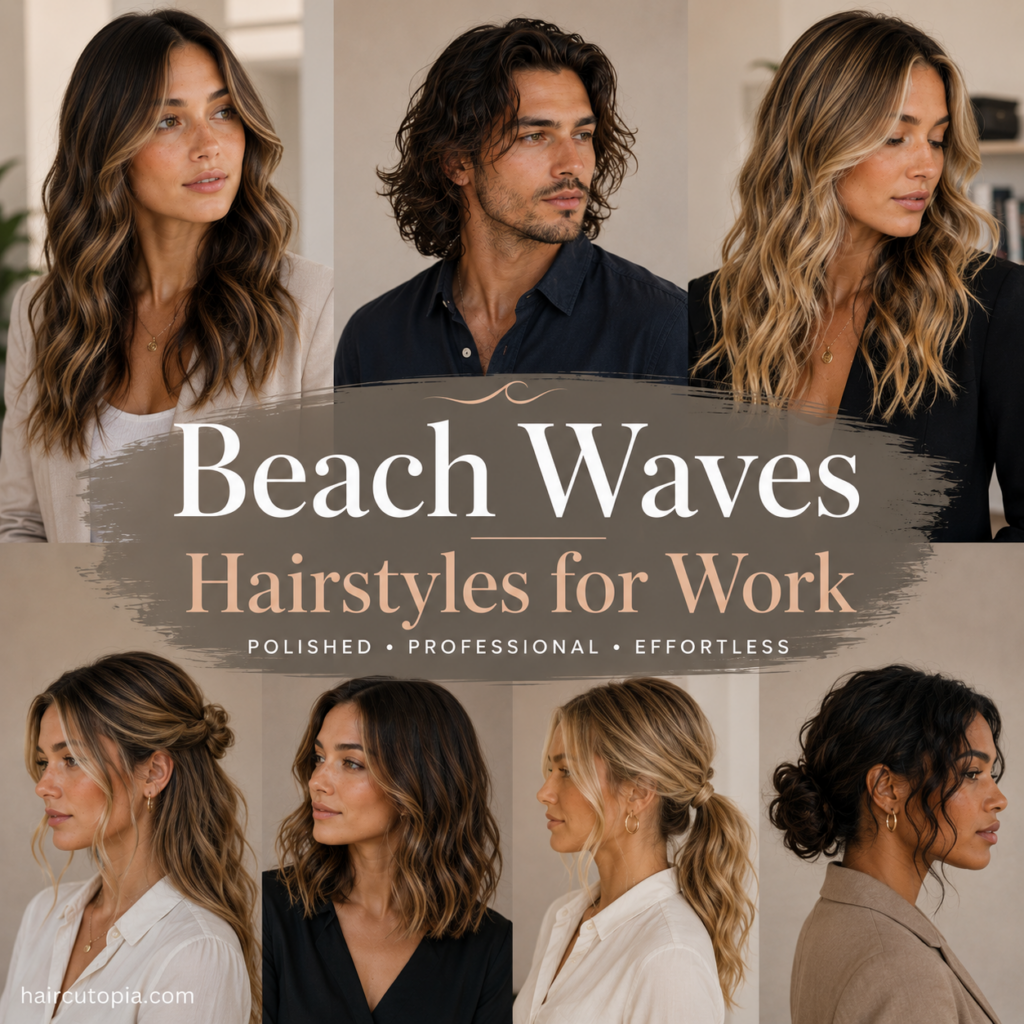
Beach waves might sound more suited to a weekend near the water than a Monday morning meeting, but they can actually be one of the easiest textures to wear to work.
The difference is mostly in the finish.
For a professional setting, beach waves tend to look best when they’re soft, controlled, and intentionally styled rather than heavily tousled. Smooth roots, defined face-framing pieces, and a clean part can take the same loose waves you’d wear on the weekend and make them feel completely office-ready.
They’re also versatile. You can wear your waves down, tuck them behind your ears, pull them into a low ponytail, or turn them into a simple half-up style when you need your hair away from your face.
Here are some of the best beach waves hairstyles for work, from quick everyday options to more polished looks for presentations, meetings, and work events.
Can Beach Waves Look Professional?
Absolutely.
Beach waves aren’t inherently casual. Like most hairstyles, the overall impression depends on how they’re styled.
For work, aim for a little more control than you might with intentionally messy beach hair.
That usually means:
- Keeping the roots relatively smooth
- Creating soft rather than overly tousled waves
- Controlling obvious flyaways
- Using a clean center or side part
- Keeping hair away from your face when necessary
- Avoiding excessive product or stiffness
- Choosing simple, understated accessories
You don’t need every wave to be perfect.
A little variation keeps the hairstyle natural.
1. Classic Polished Beach Waves for Work
The simplest option is also one of the most versatile.
Create broad, loose waves through the middle and lower sections of your hair while keeping the roots relatively smooth.
Leave the ends soft or slightly straighter.
Once the hair has cooled, gently separate the waves rather than aggressively tousling them.
The result has movement without looking overly casual.
2. Center-Parted Office Beach Waves
A clean center part adds structure to loose waves.
Keep the top of the hair smooth and begin the more noticeable texture around cheekbone or jaw level.
Direct the front pieces slightly away from your face.
This combination feels modern and polished without requiring complicated styling.
It works especially well on medium and long hair.
3. Side-Parted Beach Waves
A soft side part is an easy way to create a little volume while maintaining a professional shape.
Rather than making the part extremely deep, move it just enough to create natural lift.
Keep both sides smooth around the roots and allow the waves to develop farther down.
This style works nicely for everyday office wear because it feels polished without looking formal.
4. Deep Side-Parted Waves for Important Meetings
When you want something slightly more elevated, try a deeper side part.
The heavier side naturally creates volume and frames the face.
Tuck the opposite side behind your ear or keep it relatively close to the head.
This can make ordinary beach waves feel more intentional without requiring a completely different hairstyle.
5. Beach Waves With One Side Tucked Behind the Ear
This is one of the easiest ways to make waves feel office-ready.
Style your hair as usual, then tuck one side behind your ear.
The small change opens up your face and creates a cleaner silhouette.
It also works particularly well when you’re wearing earrings or want your hair out of the way during meetings.
6. Beach Waves Tucked Behind Both Ears
For an even cleaner look, tuck both sides behind your ears.
Keep the crown smooth and allow the waves to remain visible through the lengths.
This works well with:
- Bobs
- Lobs
- Shoulder-length hair
- Long layered hair
- Center parts
If shorter pieces keep falling forward, discreet pins can help hold them in place.
7. Work-Ready Beach Waves on a Bob
A bob doesn’t need much texture to look noticeably different.
Create subtle bends through the middle while keeping the roots and ends controlled.
A clean center or side part can give the hairstyle more structure.
Avoid turning every section into a tight curl. On shorter hair, a few gentle bends are often enough.
8. Beach Waves on a Blunt Bob
A blunt bob already has a professional, structured shape.
Beach waves soften the haircut without eliminating that clean perimeter.
Concentrate the movement through the middle of the hair and leave the ends relatively straight.
This allows the blunt shape to remain visible.
It’s a good balance between polished and relaxed.
9. Shoulder-Length Beach Waves for Work
Shoulder-length hair is one of the easiest lengths for workplace waves.
There’s enough hair for the texture to develop, but styling doesn’t usually take as long as it does with very long hair.
Create broad bends and keep the crown relatively smooth.
If you need your hair away from your face later in the day, this length is also easy to pull into a small ponytail or half-up style.
10. Work-Appropriate Beach Waves on Long Hair
Long beach waves can look professional when the texture is controlled.
Use larger sections to create broad movement rather than lots of small curls.
Keep excessive volume away from the roots and concentrate the waves through the lengths.
Long layers can help the hairstyle move more naturally without creating too much fullness at the bottom.
11. Beach Waves With Face-Framing Layers
Face-framing layers can soften a professional hairstyle without making it look messy.
Style the shorter front sections away from your face.
Allow them to blend into the longer waves rather than curling them separately.
This keeps your face visible while still emphasizing the shape of your haircut.
12. Work Beach Waves With Curtain Bangs
Curtain bangs naturally complement loose waves.
For work, keep them relatively controlled and direct them away from your face.
Avoid excessive volume around the bangs if you want a cleaner finish.
The longer sides can blend directly into your face-framing layers.
13. Soft Beach Waves With Wispy Bangs
Wispy bangs don’t need much styling.
Keep the fringe light and relatively natural while creating soft waves through the rest of your hair.
A small bend in the bangs is usually enough.
This creates a softer office hairstyle without requiring much additional effort in the morning.
14. Subtle S-Waves for the Office
S-waves are a great option if traditional curls feel too styled for your workplace.
Instead of spiraling around the hair, the texture bends gently back and forth.
This creates movement while maintaining a relatively smooth overall shape.
A flat iron can be particularly useful for creating this type of wave.
15. Barely-There Beach Waves
If your workplace leans more conservative, keep the texture subtle.
Create only a few broad bends through the lengths.
The goal is movement rather than obvious waves.
This style can make straight hair feel more dimensional without dramatically changing its appearance.
16. Beach Waves With Straight Ends
Leaving the ends straighter can give beach waves a cleaner, more contemporary finish.
Focus the movement through the middle of your hair and stop before reaching the bottom.
This works particularly well on blunt and lightly layered cuts.
It also helps prevent the hairstyle from turning into traditional curls.
17. Smooth Beach Waves With a Natural Part
You don’t always need a perfectly straight part.
If your hair naturally falls slightly off-center, work with it.
Keep the roots smooth and allow the waves to remain soft through the lengths.
This creates an understated look that’s easy to maintain throughout the workday.
18. Low Ponytail With Beach Waves
Already have waves but need your hair completely away from your face?
Pull them into a low ponytail.
The existing texture gives the ponytail movement and prevents it from looking flat.
Keep the hair around the crown relatively smooth for a professional finish.
You can also wrap a small section of hair around the elastic if you want to hide it.
19. Sleek Low Ponytail With Wavy Ends
For a more structured variation, smooth the hair from the roots to the nape and allow the beach-wave texture to remain only in the ponytail.
This gives you the clean appearance of a sleek ponytail with a little movement through the ends.
It’s especially useful for presentations, meetings, or days when you don’t want loose hair around your face.
20. Low Side Ponytail With Soft Waves
A low side ponytail can work for more relaxed workplaces.
Keep the ponytail near the nape rather than high on the side of your head.
Allow the waves to create subtle texture through the lengths.
A clean side part can help the hairstyle feel more intentional.
21. Half-Up Beach Waves for Work
A half-up hairstyle is one of the most practical ways to wear beach waves at work.
Pull the upper sections away from your face while leaving the remaining waves loose.
Secure the hair with:
- A small elastic
- Bobby pins
- A simple barrette
- A minimalist clip
Keep the fastening relatively understated for a professional setting.
22. Twisted Half-Up Work Hairstyle
For a little more detail, twist one section from each side of your head and secure them together at the back.
Keep the twists soft but controlled.
The remaining waves can stay loose underneath.
This works well when you want something slightly dressier than a basic half-up ponytail without creating a formal hairstyle.
23. Half-Up Waves With a Minimalist Barrette
A simple barrette can make a half-up hairstyle look more finished.
Choose an understated accessory rather than something overly decorative.
Metallic, tortoiseshell, matte, or neutral-toned barrettes can all work depending on your workplace and personal style.
The waves provide enough visual interest on their own.
24. Beach Waves With a Small Claw Clip
Claw clips can work in professional settings when the style is neat and the clip itself is relatively simple.
Gather the upper portion of your hair and secure it at the back.
Let the waves remain loose underneath.
This is also a useful midday hairstyle when you’ve had enough of your hair falling forward while you’re working.
25. Low Claw-Clip Twist With Wavy Ends
For a more contained style, gather your hair at the nape and twist it upward before securing it with a claw clip.
Allow some of the wavy ends to remain visible.
Keep the front smooth or leave only a couple of intentional face-framing pieces.
It’s quick, practical, and easy to redo during the day.
26. Low Bun With Beach-Wave Texture
Beach waves create a useful base for a low bun because the existing texture adds shape.
Gather your hair near the nape and create a simple bun.
For work, keep loose pieces to a minimum.
A little softness around the face is fine, but the overall hairstyle should feel secure enough that you aren’t constantly adjusting it.
27. Loose Professional Chignon
A chignon can sound formal, but a softer version works nicely for the office.
Start with lightly waved hair and gather it low.
Pin the hair into a simple shape while allowing some of the natural texture to remain visible.
The result feels polished without becoming overly severe.
28. Beach Waves With a Simple Headband
A minimalist headband can keep waves away from your face while maintaining the texture through the lengths.
Choose a relatively simple design for work.
A headband can be especially helpful if you have shorter front layers that don’t stay tucked behind your ears.
29. Beach Waves With Subtle Highlights
Highlights naturally become more visible when the hair is waved.
The movement causes lighter and darker sections to catch the light differently, creating dimension without requiring dramatic styling.
Soft waves can showcase:
- Traditional highlights
- Babylights
- Balayage
- Face-framing highlights
- Subtle dimensional color
This can make even understated workplace waves appear more textured.
30. Natural Beach Waves for Work
If your hair naturally develops waves, you may not need to recreate them with hot tools.
Focus instead on creating definition and controlling unwanted frizz.
Apply a styling product appropriate for your hair texture to damp hair and encourage the natural wave pattern.
Once dry, refine the front sections if necessary.
Working with your natural texture can make morning styling considerably easier.
31. Second-Day Beach Waves for Work
You don’t need freshly styled hair every morning.
Second-day waves often relax into a softer texture that’s ideal for work.
Instead of completely restyling:
- Refresh the roots if needed.
- Identify flattened sections.
- Restyle only those pieces.
- Adjust the sections around your face.
- Gently blend everything together.
This can dramatically shorten your morning routine.
32. Quick Five-Minute Work Waves
Running late?
Don’t style your entire head.
Focus on the pieces around your face, the top layer, and any obviously flattened sections.
A handful of well-placed bends can make the rest of your hair look intentionally textured.
This technique works especially well on second-day hair.
33. Beach Waves for Video Meetings
Video calls change what people actually see.
Most of the time, the front and upper sections of your hair matter far more than what’s happening underneath or at the back.
Focus on:
- A clean part
- Smooth roots
- Face-framing waves
- Controlled volume around the crown
- Keeping hair away from your eyes
You can save time by styling only the sections visible on camera.
34. Beach Waves for a Job Interview
For an interview, keep things simple.
Soft, controlled waves with a clean part are usually easier to manage than a heavily textured style.
Keep your hair away from your face so you aren’t repeatedly touching or adjusting it.
A low ponytail or half-up style can also work if that’s more comfortable.
The best hairstyle is one you can largely forget about once the conversation starts.
35. Beach Waves for Presentations
If you’re giving a presentation, practicality matters.
You don’t want to keep pushing your hair away from your face while you’re speaking.
Consider:
- Tucking both sides behind your ears
- A half-up hairstyle
- A low ponytail
- A low bun
- A subtle headband
You can still keep plenty of wave texture through the lengths.
36. Beach Waves for Business-Casual Offices
Business-casual workplaces give you plenty of flexibility.
Classic loose waves, side parts, half-up styles, and subtle claw clips can all work.
You can also allow slightly more texture than you might in a very formal workplace.
The important thing is that the hairstyle feels intentional and doesn’t constantly get in your way.
37. Beach Waves for Creative Workplaces
Creative workplaces often allow more room for personal styling.
You might experiment with:
- More noticeable texture
- Messier waves
- Decorative clips
- Deeper side parts
- More volume
- Half-up buns
- Relaxed claw-clip styles
Professional doesn’t have to mean identical.
Your hairstyle can still reflect your personality.
38. Beach Waves for Formal Offices
For conservative or formal workplaces, keep beach waves understated.
Choose smoother, broader waves rather than heavily tousled texture.
Keep the roots controlled and consider a center part, soft side part, low ponytail, or half-up style.
Think polished movement rather than “just came from the beach.”
39. Beach Waves for an After-Work Event
One advantage of beach waves is how easily they transition from work to evening.
You don’t necessarily need to completely restyle your hair.
Try:
- Creating a deeper side part
- Adding volume around the crown
- Refreshing the front waves
- Tucking one side behind your ear
- Swapping a simple clip for a decorative one
- Taking down a workday ponytail and refreshing the lengths
A few changes can make the same hairstyle feel completely different.
40. Work-to-Dinner Side-Swept Waves
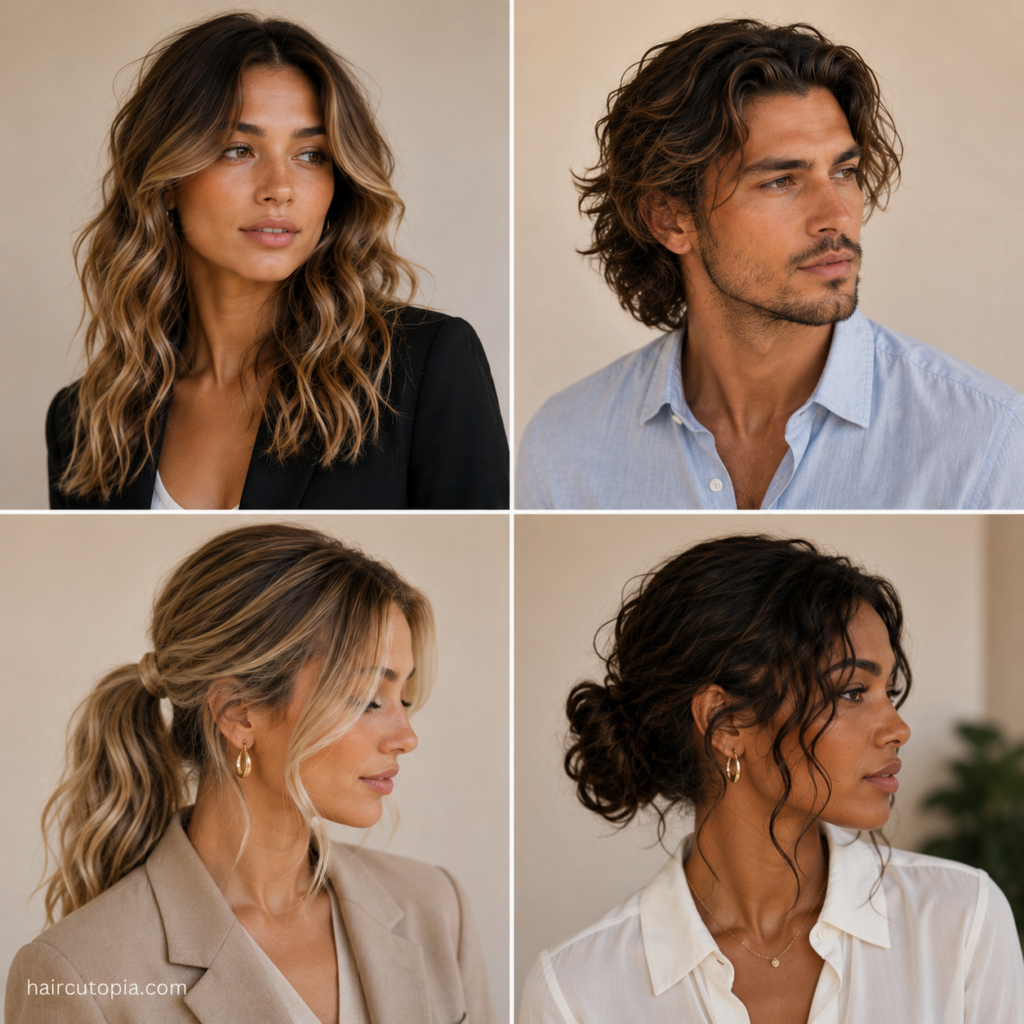
For an easy transition, move most of your waves to one side.
Create a deeper part and tuck or secure the opposite side.
The style instantly feels more evening-ready while preserving the waves you wore throughout the day.
This works particularly well with medium and long hair.
How to Create Professional Beach Waves
The basic technique is similar to casual beach waves. The biggest difference is the finishing.
Using a Curling Iron or Wand
- Begin with completely dry hair.
- Apply heat protectant according to the product directions.
- Divide your hair into manageable sections.
- Create loose bends primarily through the middle and lower lengths.
- Alternate the direction of some sections.
- Direct the pieces around your face away from it.
- Leave the ends slightly straighter if desired.
- Allow the waves to cool completely.
- Separate them gently with your fingers.
- Smooth obvious flyaways and finish lightly.
Avoid aggressively tousling the hair afterward.
You want movement, not excessive separation.
Creating Work-Appropriate Waves With a Flat Iron
A flat iron can create subtle bends that work especially well in professional settings.
Take a section of hair and gently rotate the iron while moving downward.
You can change directions to create an S-shaped wave.
Keep the tool moving so you don’t create sharp creases.
For a subtle office look, you may only need one or two bends per section.
How to Make Beach Waves Look More Professional
If your waves already look too casual, you probably don’t need to start over.
A few adjustments can clean up the style quickly.
Refine Your Part
A defined center or side part adds immediate structure.
Smooth the Roots
You can keep texture through the lengths while maintaining a cleaner shape around the crown.
Fix the Front Sections
If you only have time to restyle two pieces, make them the ones framing your face.
Reduce Excessive Frizz
A little natural texture is fine. Controlling obvious flyaways can make the hairstyle look more finished.
Keep Accessories Simple
Minimalist clips, barrettes, and headbands tend to transition easily into professional settings.
Keep the Hair Out of Your Eyes
A hairstyle that constantly falls forward can become distracting during the workday.
Best Products for Work-Ready Beach Waves
You don’t need many products to create polished waves.
Heat Protectant
Use heat protection whenever you’re styling with hot tools.
Lightweight Smoothing Product
If your hair tends to frizz, a small amount of smoothing product can help create a cleaner finish.
Flexible-Hold Hairspray
Flexible hold can help maintain your waves without making them stiff.
Lightweight Texture Spray
Use texture spray sparingly.
A little can create definition, but too much may push the style toward a messier finish.
Volumizing Product
Fine or flat hair may benefit from subtle root volume.
For work, aim for controlled lift rather than dramatic height.
Beach Waves for Fine Hair at Work
Fine hair can benefit from the volume and dimension waves create.
Use lightweight products and avoid applying heavy oils or creams near the roots.
You also don’t need to create lots of tight waves.
A few broad bends combined with subtle root lift can make the hair appear fuller while maintaining a professional finish.
Beach Waves for Thick Hair at Work
With thick hair, control may matter more than volume.
Keep the roots relatively smooth and concentrate your waves farther down.
If your hair becomes too wide when waved, consider a half-up style, low ponytail, or tucked-back look.
Layers can also help distribute the volume more naturally.
Beach Waves for Straight Hair at Work
Naturally straight hair can create beautifully smooth waves, although they may relax during a long workday.
Allow heat-styled sections to cool before separating them.
If necessary, create the waves slightly more defined in the morning so they settle into the texture you want later.
Use lightweight hold rather than saturating the hair with product.
How to Make Work Beach Waves Last All Day
A work hairstyle needs to survive commuting, meetings, lunch, and whatever else your day throws at it.
To help your waves last:
- Start with completely dry hair when using hot tools.
- Avoid excessive heavy product.
- Let waves cool before separating them.
- Use lightweight hold if necessary.
- Avoid constantly running your fingers through your hair.
- Keep a simple hair tie or clip available for later.
- Refresh only the front sections when necessary.
Your hair doesn’t need to look exactly the same at 5 p.m. as it did at 8 a.m.
Softer waves later in the day can still look polished.
Common Mistakes With Beach Waves for Work
Workplace waves don’t need to be complicated, but a few things can make them harder to manage.
Over-Styling Every Section
You may not need to wave every strand.
Focus on visible areas and let your natural texture do some of the work.
Creating Too Much Root Volume
Some lift is flattering, but excessive volume can make a subtle hairstyle feel much more dramatic.
Using Too Much Texture Spray
Texture is useful, but a very gritty or piecey finish may look more casual than you intended.
Curling Every Section Identically
Beach waves still need natural variation.
Leaving Hair in Your Face
If you know you’ll spend the day pushing your hair back, tuck it, clip it, or choose a half-up style from the beginning.
Using Too Much Hairspray
A professional hairstyle doesn’t need to be frozen in place.
Movement helps waves look natural.
How to Choose Beach Waves for Your Workplace
There’s no universal definition of “professional hair.”
A creative studio and a traditional corporate office may have completely different expectations.
Pay attention to the general environment.
For more formal workplaces, smoother waves, simple parts, low ponytails, and half-up styles are easy choices.
For business-casual environments, you can usually experiment with more texture and accessories.
Creative workplaces may give you even more freedom to play with volume, clips, and intentionally undone styling.
Whatever you choose, make sure the hairstyle is comfortable enough that you aren’t thinking about it all day.
Final Thoughts on Beach Waves Hairstyles for Work
Beach waves can absolutely belong at work.
The key isn’t removing all of their relaxed character. It’s adding just enough structure to make the hairstyle feel intentional.
Keep the roots smooth. Pay attention to the sections around your face. Use accessories strategically when you need your hair out of the way.
And don’t assume you have to start from scratch every morning.
Second-day waves can become a low ponytail. Loose waves can turn into a half-up style before a presentation. Your everyday center part can become a deeper side part before an after-work dinner.
A good work hairstyle should make your morning easier, not harder.
Beach waves give you enough flexibility to look polished while still keeping some movement and personality—and that’s exactly why they work so well.

Related Posts
 Easy Hairstyles for Special Events: 20 Simple, Elegant Ideas
 Low Maintenance Textured Bob Haircuts: 35 Easy Styles That Look Great with Minimal Effort
 Long Textured Bob Haircuts: 35 Beautiful Styles for Effortless Movement and Volume
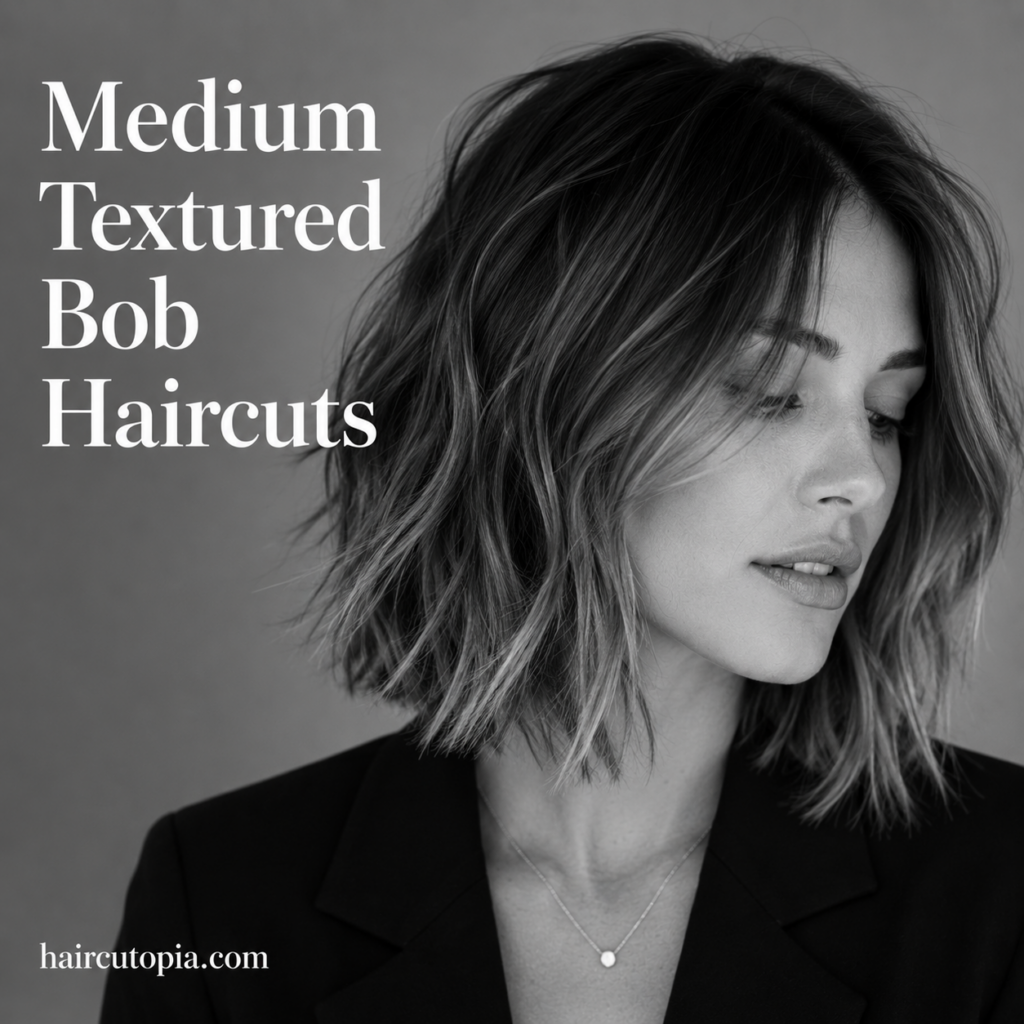 Medium Textured Bob Haircuts: 35 Stylish Ideas for Effortless Volume and Movement