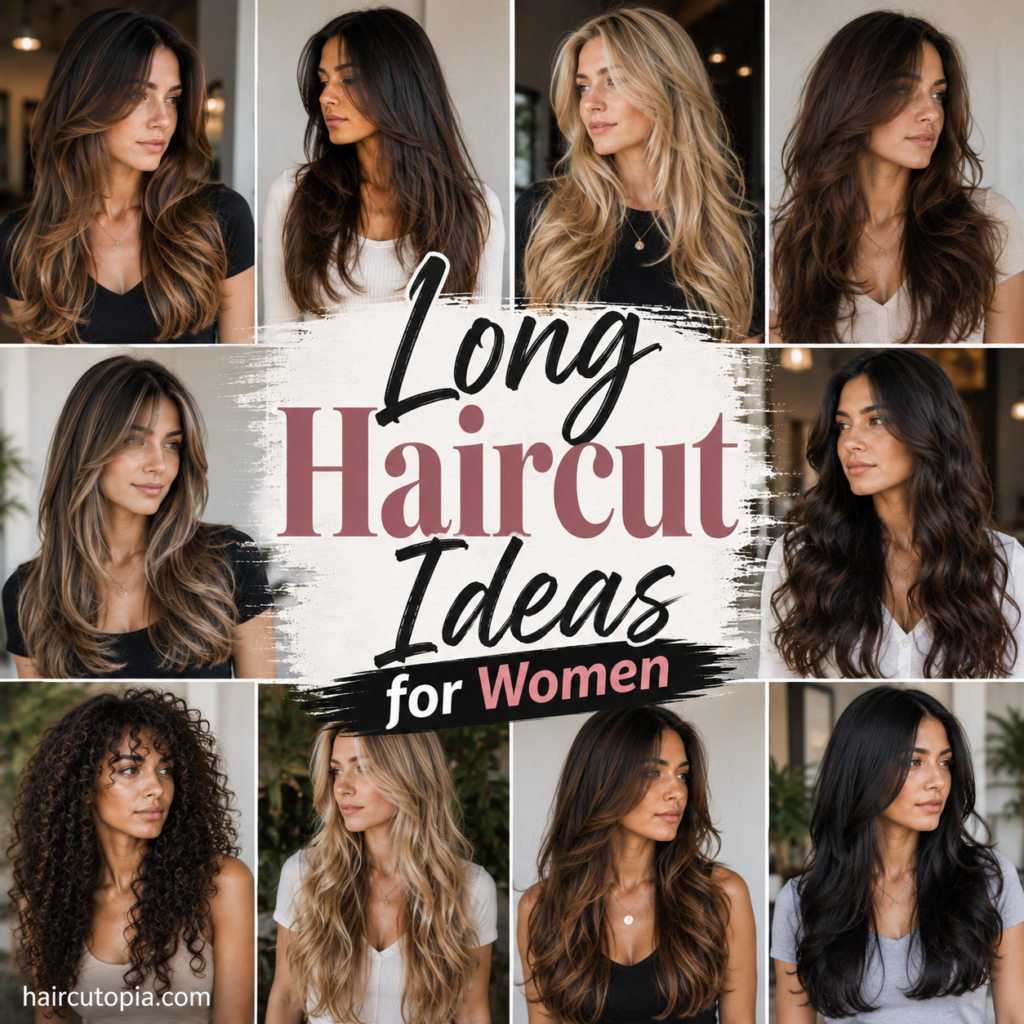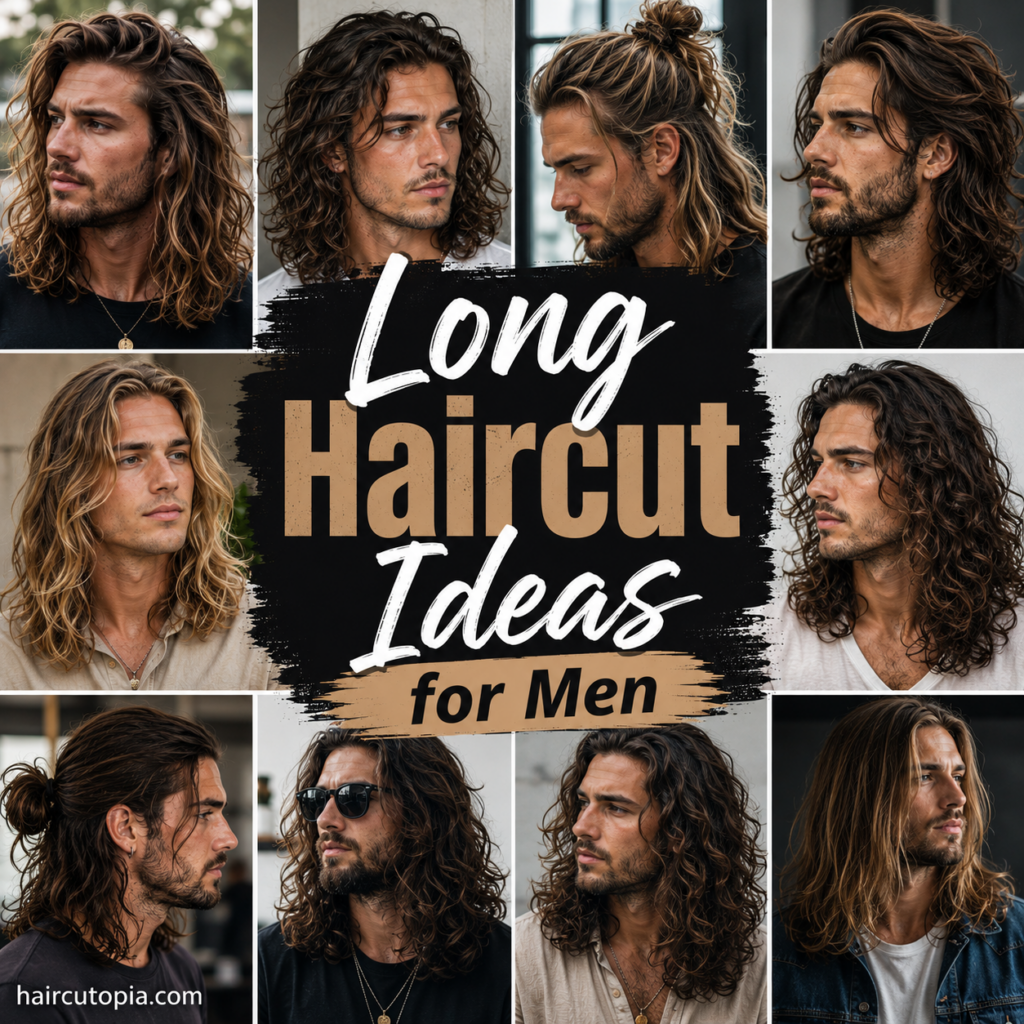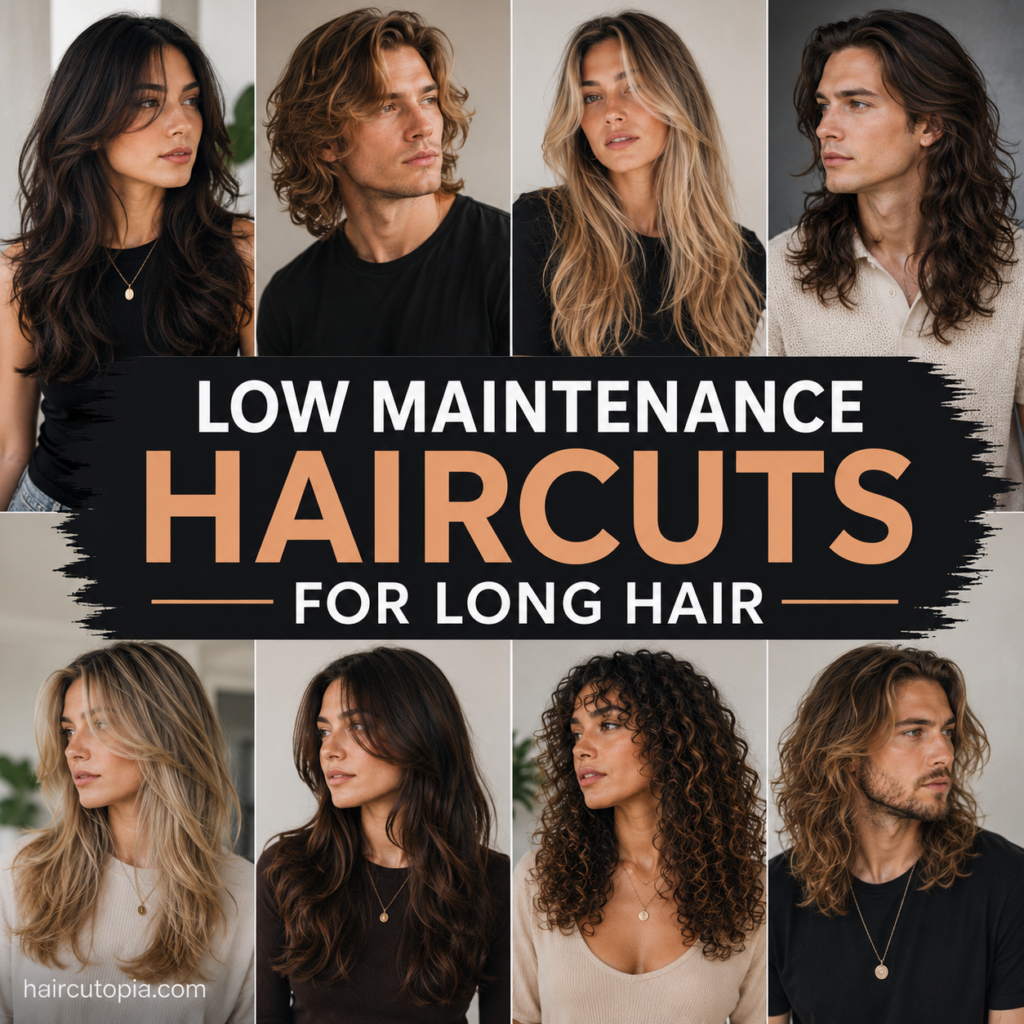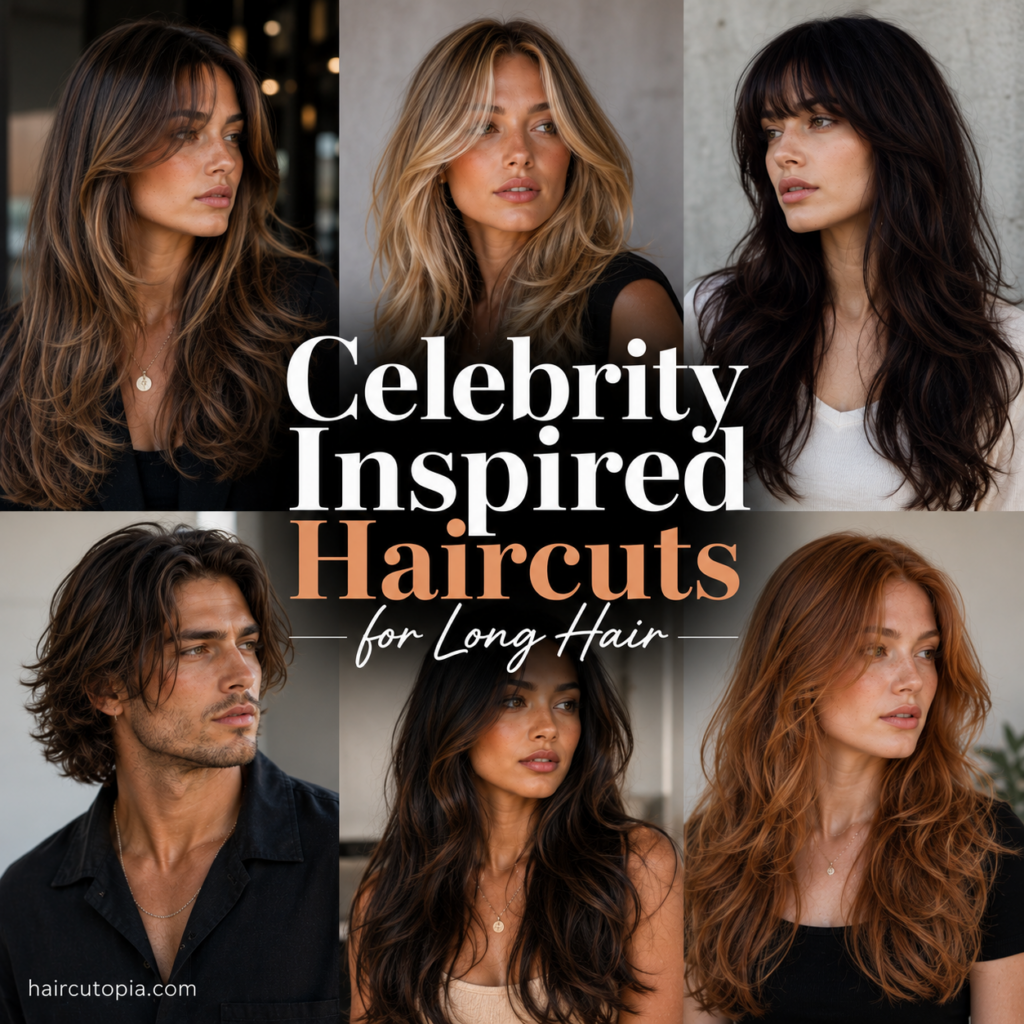
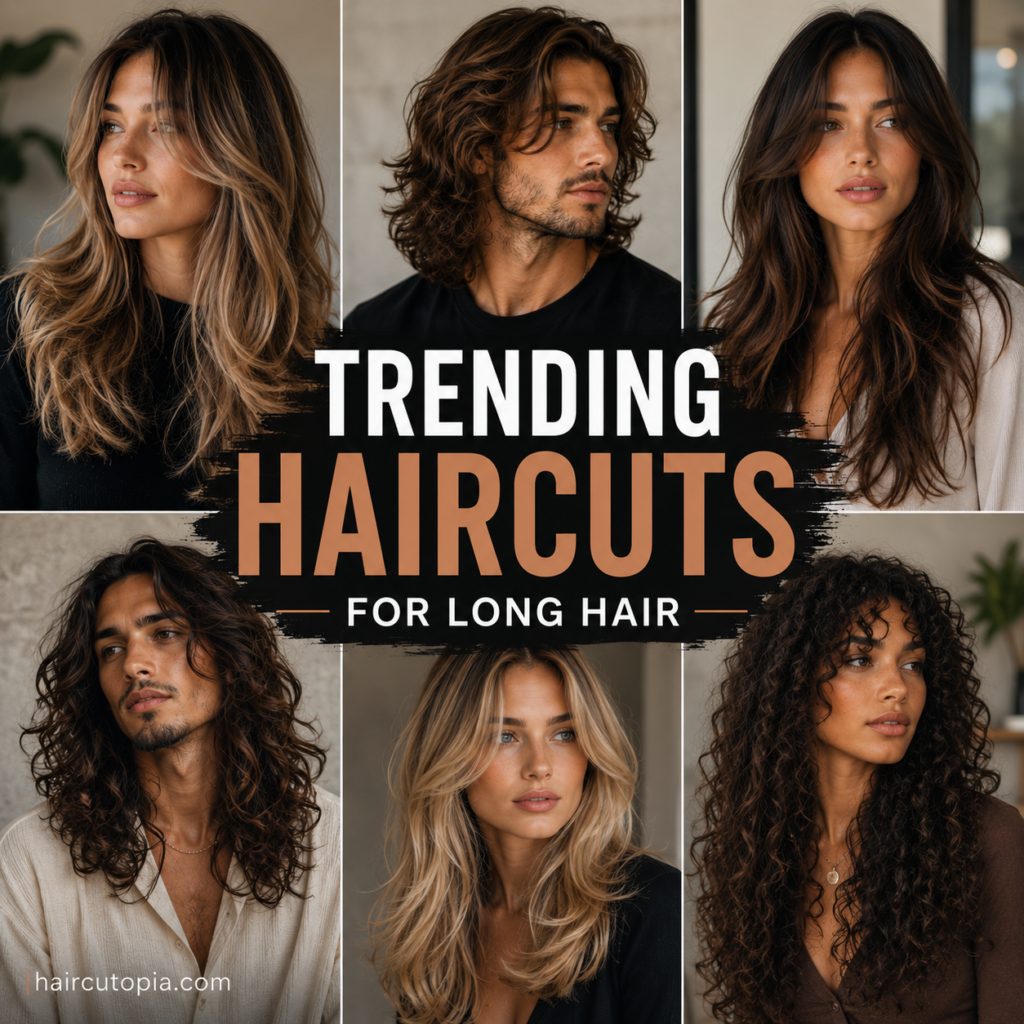
Long hair gives you plenty of length to work with, but keeping it long doesn’t mean keeping the same haircut year after year.
Some of the biggest long-hair trends are less about removing length and more about changing the shape. Layers are getting softer and more intentional, face-framing pieces are becoming a major feature, bangs are being incorporated into longer cuts, and natural waves, curls, and coils are being given room to move.
There are also options for people who prefer a cleaner silhouette. Long blunt cuts and subtle U-shaped perimeters can keep the hair looking full without adding dramatic layers.
For men, longer hairstyles are moving beyond simply “growing it out.” Layered flows, shoulder-length waves, long curls, center parts, and modern shag-inspired cuts can give longer hair a deliberate shape while preserving the length.
If your long hair feels heavy, flat, or simply too familiar, these trending haircuts for long hair can give it a fresh direction without necessarily requiring a major chop.
What Long Haircuts Are Trending Right Now?
Long haircut trends are largely focused on movement, texture, and personalization.
Some of the most popular options include:
- Butterfly layers
- Long face-framing layers
- U-shaped cuts
- V-shaped cuts
- Long blunt cuts
- Long shags
- Long wolf cuts
- Curtain bangs
- Birkin-inspired bangs
- Wispy bangs
- Long curly layers
- Rounded curly cuts
- Long layered waves
- Center-parted men’s hair
- Men’s bro flow
- Long men’s curls
- Shoulder-length men’s cuts
- Modern long mullets
The biggest advantage of long hair is that many of these changes can be made without sacrificing the length you’ve spent months or years growing.
1. Butterfly Layers
Butterfly layers are one of the most recognizable ways to give long hair movement.
The haircut uses shorter face-framing sections that gradually transition into longer layers. When styled away from the face, those sections create a flowing, almost wing-like shape.
The shortest layers may begin around the cheekbones, jaw, or chin depending on how dramatic you want the effect to be.
Who Do Butterfly Layers Work For?
Medium and thick hair can handle significant layering particularly well because there is enough density to maintain fullness through the ends.
If your hair is fine, you can still borrow the concept.
Ask for longer, softer layers that create movement without removing too much weight from the bottom.
2. Long Face-Framing Layers
You don’t have to layer your entire head to make long hair look different.
Face-framing layers concentrate the change around the front.
They can begin around:
- The cheekbones
- The jaw
- The chin
- The collarbone
Shorter pieces create a more noticeable transformation, while longer pieces blend subtly into the rest of the hair.
This is a useful option if you love your current length but feel like your hair needs more shape.
3. Long U-Shaped Cut
A U-shaped haircut creates a softly rounded perimeter when viewed from the back.
The center remains slightly longer while the sides gradually become shorter.
The difference can be very subtle.
This shape gives long hair movement without creating the sharper point associated with a V-cut. It can also make the perimeter look more intentional than hair that’s simply been allowed to grow.
Long layers can be added while preserving the U-shaped outline.
4. Long V-Shaped Cut
The V-cut creates a more dramatic point through the center of the back.
Hair becomes gradually shorter toward the sides, producing a visible V-shaped perimeter.
This style works particularly well when you want to maintain significant length while introducing more shape.
Adding layers can emphasize the effect even further.
The V-shape is generally more noticeable on straight or softly waved hair, although it can also be adapted for curls.
5. Long Blunt Cut
Layers aren’t your only option.
A long blunt cut keeps the perimeter relatively solid, which can make the ends look thicker and healthier.
This is particularly useful for fine hair or hair that has become thin toward the ends.
A blunt long cut can look striking when worn:
- Straight
- With loose waves
- With a center part
- With a deep side part
- In a sleek ponytail
You can also add very subtle face-framing pieces without losing the strong overall perimeter.
6. Long Cascading Layers
Cascading layers create gradual movement throughout long hair rather than concentrating all the layering around the face.
The transitions are generally soft, allowing the layers to blend into one another.
This can help remove some of the weight from very thick hair.
When styled with waves or a blowout, the different lengths become more visible and give the hair a flowing appearance.
7. Long Shag
The shag isn’t limited to short or medium hair.
Long versions maintain significant length while adding shorter layers around the crown and face.
The result is intentionally textured.
A long shag can work especially well with naturally wavy hair because the layers encourage bends and movement.
Bangs are common but optional.
Curtain, wispy, and full textured bangs can all work with the shape.
8. Long Wolf Cut
The wolf cut takes layered texture a step further.
Volume is typically concentrated around the top and crown, while the lower sections become lighter.
On long hair, this creates a noticeable contrast without necessarily sacrificing overall length.
The cut can be dramatic or relatively subtle.
If you like the general idea but aren’t ready for heavy layering, ask for a softer wolf-inspired shape with longer transitions.
9. Long Hair With Curtain Bangs
Curtain bangs can completely change long hair while leaving most of its length untouched.
They usually separate near the center and become progressively longer toward the sides.
The fringe can then flow directly into face-framing layers.
This creates movement around the face without the visual weight of a traditional full fringe.
Longer curtain bangs are also relatively easy to grow out.
10. Birkin-Inspired Bangs
Birkin-inspired bangs create a softer, slightly grown-out fringe.
They generally sit around the eyebrows and have enough separation to avoid looking like one solid block of hair.
Longer pieces near the temples help the bangs transition naturally into the rest of the haircut.
They work especially well with long layers and relaxed waves.
The overall effect feels polished without being overly precise.
11. Long Hair With Wispy Bangs
Wispy bangs provide an even lighter option.
Instead of covering most of the forehead, smaller sections fall naturally across it.
This makes them useful if you want to experiment with bangs without creating an extremely heavy fringe.
They pair well with:
- Long layers
- Butterfly cuts
- Shags
- Straight hair
- Wavy hair
- Softly layered curls
Like any bangs, they still require more frequent trimming than the rest of your hair.
12. Long Hair With Full Bangs
Full bangs create a much stronger contrast with long hair.
The fringe forms a distinct shape across the forehead while the rest of the hair remains long.
This can make an otherwise simple haircut feel completely different.
Full bangs pair especially well with long layers because the movement throughout the rest of the hair balances the heavier fringe.
Straight, wavy, and curly textures can all wear full bangs, although the cutting technique needs to reflect how the hair behaves naturally.
13. Long Layered Waves
If your hair naturally forms waves, long layers can help them become more visible.
Very long hair can sometimes stretch waves downward because of its weight.
Removing strategic amounts of bulk allows more movement to develop.
The goal isn’t necessarily to create short layers everywhere.
Often, a few well-placed sections are enough to prevent the hair from feeling heavy.
14. Long Curly Layers
Long curly hair can become bottom-heavy when everything grows to roughly the same length.
Layers redistribute that volume.
Instead of creating a triangular shape, curls can develop throughout the sides, crown, and ends.
The exact layer placement should depend on your individual curl pattern.
Shrinkage is also important. A layer that looks long while wet may spring significantly higher once dry.
15. Rounded Long Curly Cut
A rounded haircut intentionally distributes curly volume around the head.
Instead of trying to flatten the sides or concentrate all the length at the bottom, the cut creates a balanced silhouette.
This can be particularly effective for dense curls and coils.
The shape may be subtle or dramatic depending on how much volume you want.
Regular shaping can help preserve the outline as the hair continues to grow.
16. Long Layered Coils
Long coily hair can benefit from strategic shaping just as much as straight or wavy hair.
Layers can help distribute density while preserving length.
The finished shape might be rounded, elongated, or slightly tapered depending on the desired silhouette.
The important thing is working with how the coils naturally shrink and expand.
A stylist experienced with your texture can account for those differences while deciding where each section should fall.
17. Long Straight Layers
Straight hair shows layer placement clearly.
Long layers can prevent very long straight hair from appearing like one heavy sheet.
The layers don’t need to be dramatic.
Subtle sections around the front and ends can create enough movement to make the haircut feel lighter while keeping the overall length.
For fine straight hair, preserving density around the bottom is particularly important.
18. Long Center-Parted Hair for Men
Long men’s hair with a center part creates a simple, balanced shape.
The hair falls naturally to either side of the face and can range from around chin length to well past the shoulders.
Straight hair creates a cleaner silhouette, while waves give the style more movement.
Subtle layering can prevent thick hair from becoming excessively bulky.
The style can also be tucked behind the ears or pulled back when needed.
19. Long Bro Flow
The bro flow becomes increasingly relaxed as the hair grows.
Rather than creating a precise part, the hair is encouraged to move backward and away from the face.
Natural waves are particularly well suited to this style.
A good layered cut helps keep the flow intentional instead of allowing the hair to become shapeless.
Lightweight styling cream can provide control without eliminating movement.
20. Long Curly Hair for Men
Long curls create plenty of natural volume.
Instead of allowing every section to grow at exactly the same rate, layers can establish a more balanced shape.
Some men prefer additional length through the back. Others choose a rounded silhouette with more even volume.
A curl cream or leave-in product can help with definition, but the haircut itself should do much of the shaping.
21. Shoulder-Length Men’s Cut
Shoulder length is a practical point for men growing their hair longer.
There’s enough length to pull it back, but it doesn’t have the weight or maintenance of hair extending far beyond the shoulders.
The cut can be worn with:
- A middle part
- A side part
- Natural waves
- Loose curls
- Layers
- A brushed-back flow
Occasional trims help prevent the ends from becoming uneven as the hair grows.
22. Long Modern Mullet
The modern mullet can extend well beyond medium length.
Longer versions preserve substantial hair through the back while using layers around the crown and sides to establish the recognizable shape.
Some versions are deliberately dramatic.
Others blend the different lengths more gradually, creating something closer to a long shag.
Curly and wavy textures can make the transition between lengths feel particularly natural.
Trending Long Haircuts by Hair Type
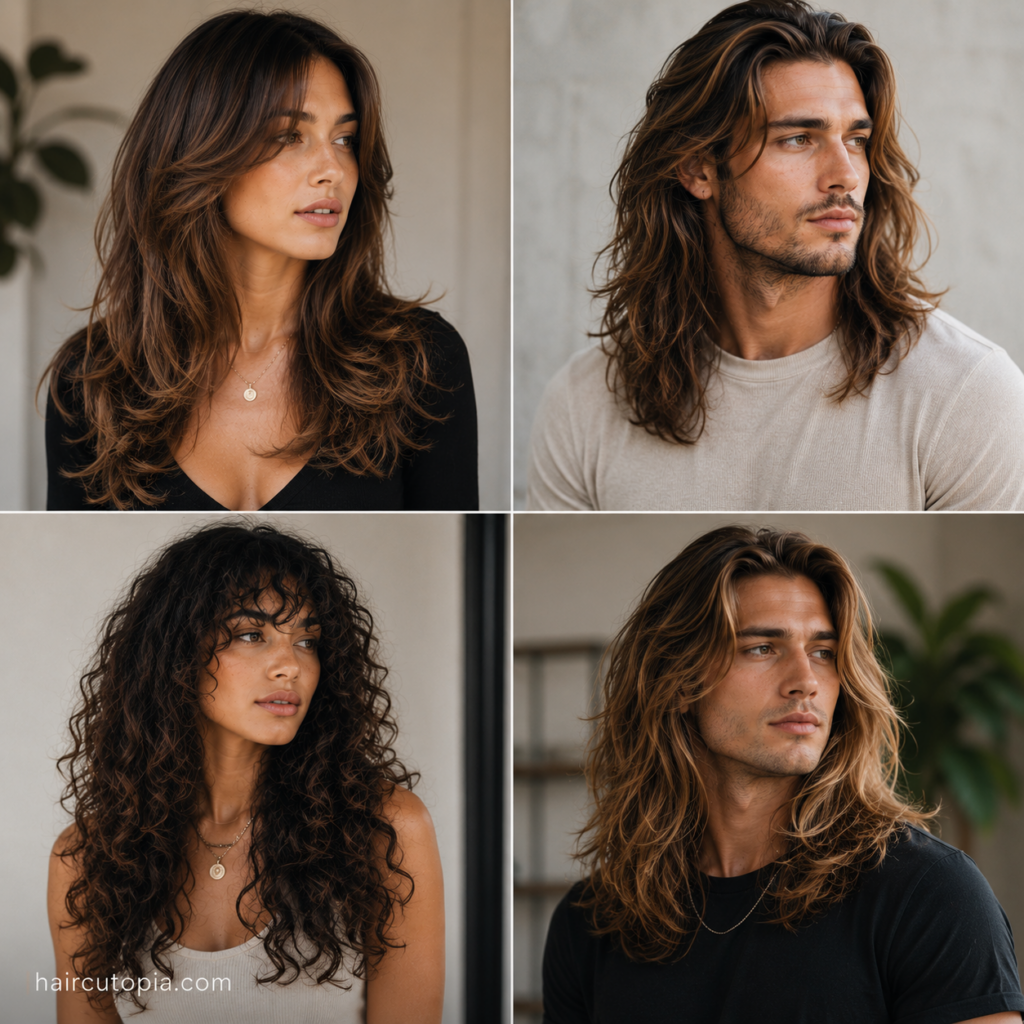
The best long haircut should take advantage of your natural texture rather than constantly fighting it.
Long Haircuts for Straight Hair
Straight hair makes the perimeter and layers particularly visible.
Consider:
- Butterfly layers
- U-shaped cut
- V-shaped cut
- Long blunt cut
- Long face-framing layers
- Curtain bangs
- Long straight layers
Fine straight hair generally benefits from maintaining more density around the ends.
Long Haircuts for Wavy Hair
Waves naturally create the movement that many current long hairstyles are trying to achieve.
Good options include:
- Cascading layers
- Butterfly layers
- Long shag
- Wolf cut
- Bro flow
- Long layered waves
- Curtain bangs
Strategic layering can help waves become more defined by removing excess weight.
Long Haircuts for Curly Hair
Curly hair often benefits from shaping rather than simply trimming the ends.
Consider:
- Long curly layers
- Rounded cuts
- Curly shags
- Long face-framing curls
- Curly wolf cuts
- Layered men’s curls
Always account for shrinkage when choosing the shortest layers.
Long Haircuts for Coily Hair
Long coils can create impressive volume and shape.
Options include:
- Rounded layered cuts
- Long layered coils
- Shaped natural hair
- Face-framing coils
- Long tapered silhouettes
The goal doesn’t have to be reducing volume. Often, carefully distributing it creates the most balanced result.
Best Long Haircuts for Fine Hair
Fine hair can become noticeably thinner toward the ends when it’s grown very long.
For that reason, preserving density is often more important than adding lots of layers.
Consider:
- Long blunt cuts
- Soft U-shaped cuts
- Minimal long layers
- Subtle face-framing pieces
- Longer curtain bangs
You can still create movement.
Just avoid removing so much weight that the lower sections begin to look sparse.
Regular trims can also prevent thin, damaged ends from making the overall hair appear less full.
Best Long Haircuts for Thick Hair
Thick long hair can become heavy.
That’s where strategic layering becomes particularly useful.
Good choices include:
- Butterfly layers
- Cascading layers
- Long shags
- Wolf cuts
- Long curly layers
- Face-framing layers
Internal weight removal can reduce bulk without dramatically changing the visible perimeter.
Talk with your stylist about where your hair feels heaviest rather than simply asking for “lots of layers.”
Best Long Haircuts for Round Faces
If you want to visually elongate a rounder face, longer vertical lines can help.
Consider:
- Long face-framing layers beginning below the chin
- Butterfly layers
- Long center-parted cuts
- Soft U-shaped hair
- Long waves
Volume doesn’t need to disappear completely.
Where the volume sits matters more.
And remember, face shape guidelines aren’t rules. If you love a particular haircut, it can usually be adjusted to suit your proportions.
Best Long Haircuts for Long Faces
Long hair can emphasize vertical proportions, so adding movement around the sides can create balance.
Options include:
- Long waves
- Butterfly layers
- Curtain bangs
- Full bangs
- Long curly layers
- Shaggy cuts
Bangs can visually reduce the amount of visible forehead, while layers around the cheekbones and jaw add width.
Are Layers Still Trending for Long Hair?
Yes. Layers remain one of the most important trends for long hair, but they’re becoming increasingly personalized.
You don’t have to choose between completely blunt hair and extremely heavy layering.
There is plenty of room between the two.
You might keep a strong perimeter while adding subtle internal layers, or concentrate most of the movement around the face.
The amount of layering should depend on your hair density and the finished shape you want.
Are Bangs Trending With Long Hair?
Bangs continue to be a popular way to transform long hair without sacrificing length.
Current options include:
- Curtain bangs
- Wispy bangs
- Birkin-inspired bangs
- Full bangs
- Curly bangs
- Side-swept fringe
Curtain and longer bangs tend to be the easiest to blend into long layers.
Shorter fringes create a stronger transformation but usually require more frequent maintenance.
Blunt or Layered Long Hair: Which Is Better?
Both have advantages.
A blunt cut maintains density and creates a strong perimeter. It’s particularly useful for fine hair or ends that naturally appear thin.
Layers create movement and can reduce bulk. They’re often useful for thick, wavy, or curly hair.
You can also combine both ideas.
Keeping the bottom relatively full while introducing subtle layers higher up can provide movement without sacrificing the appearance of density.
How to Choose a Long Haircut
Long hair represents a significant time investment, so it’s understandable if you’re hesitant about making major changes.
Start with a few questions.
How Much Length Are You Willing to Lose?
Be specific.
“Keep it long” can mean different things to different people.
Show your stylist exactly where you’re comfortable with the perimeter ending.
How Much Layering Do You Want?
Think about the shortest layer as well as the longest.
If you’re uncomfortable with hair ending near your cheekbones, a dramatic butterfly cut probably isn’t the right starting point.
Longer layers can still create movement.
Do You Wear Your Hair Up Often?
If you regularly wear ponytails, buns, or braids, extremely short face-framing layers may fall out of those styles.
Mention this before your haircut.
Your everyday hairstyles should influence where the shortest pieces begin.
How Do You Usually Style Your Hair?
If you rarely blow-dry your hair, don’t judge a haircut entirely by photos featuring professional blowouts.
Ask how the cut will behave when air-dried.
The best haircut should still make sense during your normal routine.
What to Tell Your Hairstylist or Barber
Instead of relying entirely on a haircut name, describe what you want the hair to do.
Discuss:
- Your desired overall length
- How much hair you’re comfortable removing
- Your shortest acceptable layer
- Whether you want bangs
- Where face-framing pieces should begin
- How much volume you prefer
- How you normally style your hair
- Whether you frequently wear it up
Reference photos can help tremendously.
Try to choose examples with hair texture and density similar to yours whenever possible.
How Often Should You Trim Long Hair?
Long hair usually doesn’t need the frequent reshaping required by very short styles.
As a general guideline:
- Long blunt cuts: around every 8–12 weeks
- Long layered cuts: around every 10–16 weeks
- Long curly cuts: around every 10–16 weeks
- Long men’s hairstyles: around every 8–14 weeks
- Bangs: around every 2–6 weeks
These aren’t strict schedules.
If your ends remain healthy and you like how the haircut is growing, you may prefer longer intervals.
How to Keep Long Hair Looking Healthy
Length makes damaged ends more noticeable.
A few habits can help preserve the appearance and condition of long hair.
Be Gentle When Detangling
Start near the ends and gradually work upward instead of forcing a brush through knots from the roots.
This can reduce unnecessary pulling and breakage.
Use Heat Thoughtfully
Heat tools can be useful, but frequent high temperatures may contribute to dryness and damage.
Use appropriate heat protection and avoid using more heat than necessary.
Pay Attention to the Ends
The oldest part of long hair is at the bottom.
If the ends repeatedly split or become extremely dry, a small trim can make the entire haircut look healthier.
Choose Products for Your Texture
Long fine hair may need lightweight products that won’t weigh it down.
Thick curls and coils may need considerably more moisture.
There’s no universal routine that works for every type of long hair.
How to Add Volume to Long Hair
The weight of long hair can pull volume downward.
A few strategies can help:
- Add strategic layers
- Use shorter face-framing pieces
- Change your part
- Use lightweight volumizing products
- Lift the roots while blow-drying
- Avoid applying heavy products near the scalp
If your hair is extremely fine, adding too many layers may have the opposite effect by reducing density.
Balance is important.
How to Make Long Hair Feel Different Without Cutting It Short
You don’t need to lose ten inches to make a noticeable change.
Try:
- Adding face-framing layers.
- Introducing curtain or wispy bangs.
- Changing from a blunt perimeter to a U-shape.
- Adding subtle long layers.
- Switching your usual part.
- Enhancing your natural waves or curls.
These changes preserve most of your length while giving the haircut a different shape.
Is Long Hair High Maintenance?
Long hair can require more time to wash, dry, detangle, and style than shorter lengths.
But it also has an advantage: you can put it up.
Ponytails, buns, braids, clips, and other styles give you options when you don’t want to wear your hair down.
Long cuts also generally require fewer precision trims than pixies or short bobs.
So while the daily hair care may take longer, salon maintenance can actually be less frequent.
How to Grow Long Hair Without Losing Its Shape
Growing long hair doesn’t mean avoiding the salon indefinitely.
Small, strategic trims can keep the shape intentional while preserving progress.
A simple approach is to:
- Trim damaged ends when necessary.
- Keep face-framing pieces blended as they grow.
- Reshape layers periodically.
- Avoid repeatedly removing unnecessary length.
- Adjust the perimeter as the hair gets longer.
The goal is maintaining the haircut while allowing the overall length to progress.
Final Thoughts on Trending Haircuts for Long Hair
Long hair gives you far more options than simply wearing everything at one length.
Butterfly layers can create dramatic movement. Face-framing pieces can update your look without sacrificing the back. Shags and wolf cuts add texture, while blunt and U-shaped cuts preserve fullness.
Curls and coils can be shaped to distribute volume instead of hiding it. And men’s longer hairstyles are embracing layers, waves, curls, center parts, and flowing silhouettes rather than treating long hair as an unfinished haircut.
The best trend is the one that works with the hair you actually have.
Consider your texture, density, styling routine, and how much length you’re comfortable changing. Then adapt the haircut rather than copying it exactly.
You can keep the length you’ve worked hard to grow and still make your hair feel completely new.