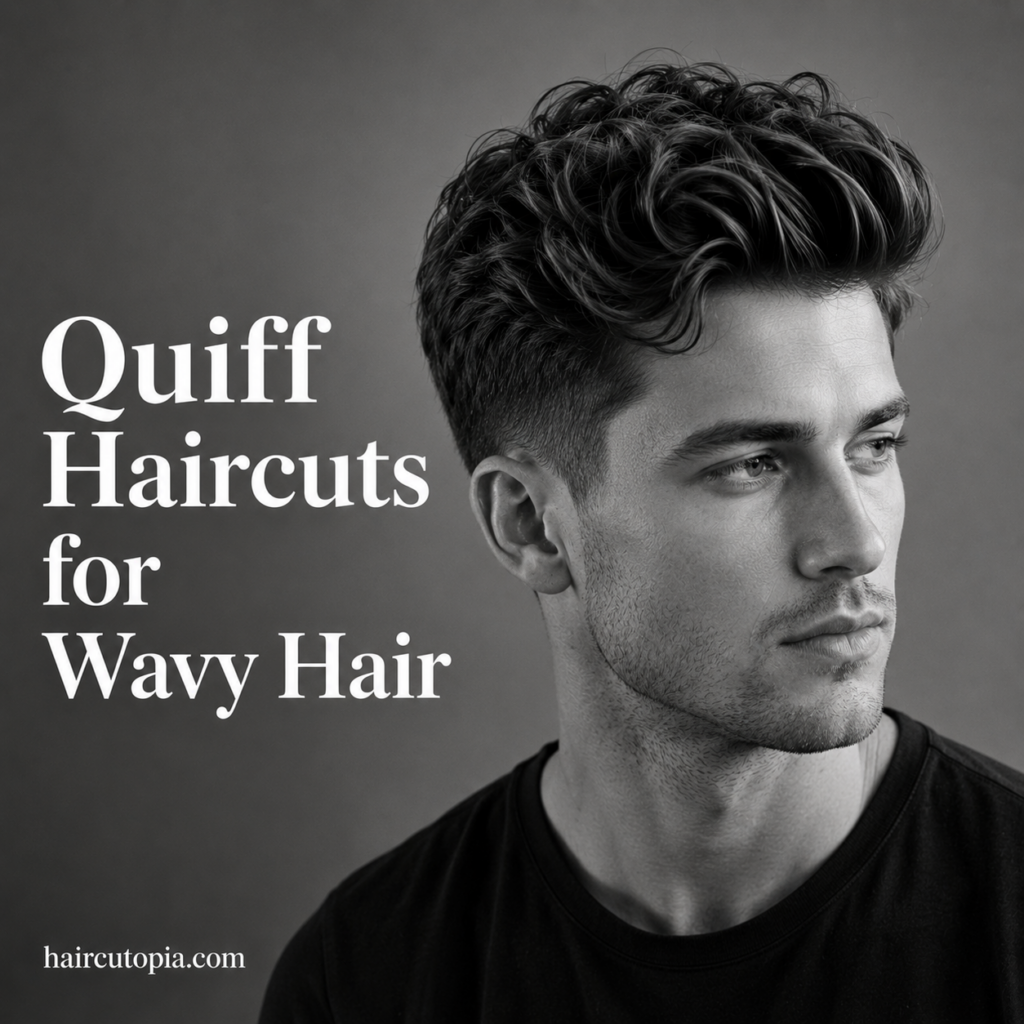
A quiff is one of the best hairstyles for men with wavy hair. Natural waves already bring movement and texture to the top, which gives a quiff a fuller, more relaxed look than a perfectly smooth style.
The key is to work with the wave instead of trying to flatten it out. A good wavy quiff should look lifted at the front, controlled through the sides, and slightly undone in a way that still feels intentional.
Whether your hair has a loose bend, defined S-waves, or a mix of waves and curls, there is a quiff variation that can make the most of it.
Why a Quiff Works So Well for Wavy Hair
Wavy hair has a natural advantage when it comes to quiff styles. It already has texture, which means you do not need to create every bit of movement with styling product.
The wave also helps the front hold a little more height. When it is cut and dried in the right direction, the hair can lift upward and back without looking stiff.
A quiff can help wavy hair look:
- More structured without losing natural movement
- Fuller through the front and top
- Cleaner around the sides and neckline
- More polished than an all-over grown-out style
- Easy to dress up or wear casually
The best results come from keeping the top long enough for the wave to show. If wavy hair is cut too short, it can lose its shape and become harder to style.
What to Ask Your Barber for a Wavy Quiff
A good wavy quiff starts with the right haircut. Your barber should understand that your hair will look different when it is dry, especially if the wave becomes more visible as it dries.
Ask for enough length on top to create a lifted front and natural texture. For most men with wavy hair, that means around 3 to 5 inches on top, with a little extra length at the front.
You can say something like:
“I want a textured quiff that works with my natural waves. Keep enough length at the front for lift, remove bulk where needed, and keep the sides clean without making them too tight.”
You may also want to ask for:
- Soft layers through the top to encourage movement
- Point cutting for texture instead of blunt lines
- A low taper, mid taper, or fade based on your preferred contrast
- A natural blend through the crown
- Slightly longer upper sides if your hair tends to puff out
- A neckline that fits your maintenance routine
If your waves are thick or dense, ask for some internal weight removal. If they are fine, ask your barber to avoid over-thinning, since too much texturizing can make the hair look wispy.
Best Quiff Haircuts for Wavy Hair
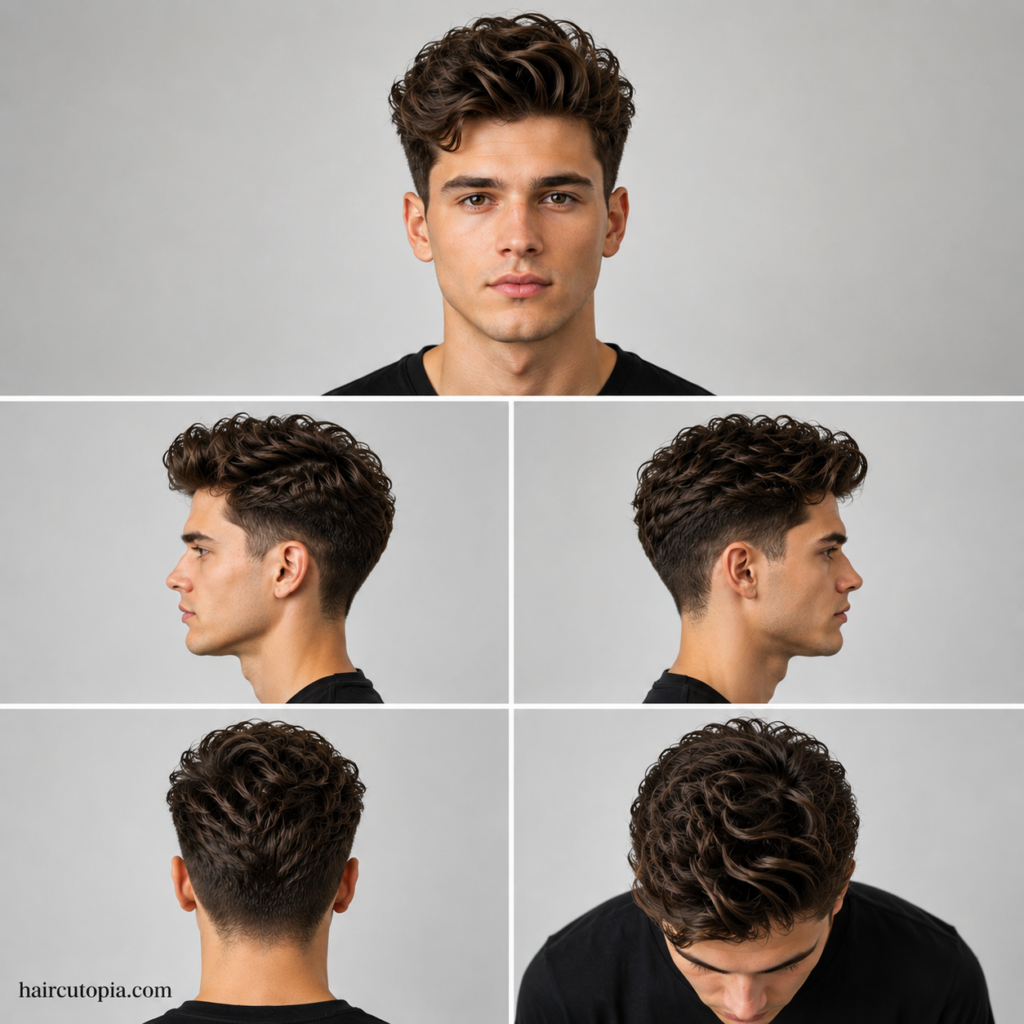
Textured Wavy Quiff
A textured wavy quiff is the most natural place to start. The top is left long enough for the wave pattern to show, while the front is lifted upward and slightly back.
The finish should be relaxed rather than overly polished. A little separation and movement make the hairstyle look better, especially if your waves are not perfectly uniform.
This style works with low tapers, mid tapers, and scissor-cut sides. It is versatile enough for everyday wear and easy to adjust with different products.
Wavy Quiff with Low Taper
A low taper keeps the haircut clean around the temples, ears, and neckline without taking too much hair off the sides.
This is a great option if your wavy hair tends to get wide or puffy near the ears. The taper removes just enough bulk to create shape while keeping the top connected to the sides.
The result is a softer, more natural quiff that grows out well and does not need constant maintenance.
Wavy Quiff with Low Fade
A low fade creates more contrast than a taper, but it still keeps the transition close to the bottom of the head. The upper sides remain longer, which helps the hairstyle look balanced.
The top can be styled into a loose quiff with sea salt spray, mousse, or matte paste. The natural wave gives it texture, while the fade keeps the overall haircut fresh.
A low fade is a good choice if you want a modern look without going too sharp or dramatic.
Messy Wavy Quiff
A messy wavy quiff is relaxed, casual, and easy to wear. The hair is blow-dried upward at the front, then finished with a lightweight product that lets the waves move naturally.
This style looks best when it is not overworked. The goal is controlled texture, not a perfectly sculpted quiff.
A messy wavy quiff works particularly well for medium-length hair and men who prefer a more effortless, lived-in finish.
Side-Swept Wavy Quiff
A side-swept quiff uses your natural wave direction to create movement across the top. The front is lifted, then guided diagonally to one side.
This can be a flattering choice if your hair naturally parts to the left or right. It also helps spread volume across the top rather than concentrating everything in the center.
Keep the part soft. A hard part can make wavy hair look too structured and may interrupt the natural flow of the style.
Wavy Quiff with Mid Fade
A mid fade creates a stronger contrast between the textured top and the shorter sides. It is a good option if you want a more noticeable barbershop-style finish.
The top should stay long enough for the wave to move. If it is cut too short, the hairstyle may look more like a standard textured crop than a quiff.
A wavy quiff with a mid fade can work well for men with round or oval faces because the height at the front adds definition.
Long Wavy Quiff
A long wavy quiff gives you more volume and styling flexibility. The top is often left around 4 to 6 inches, allowing the waves to create a loose, full shape.
You can wear it brushed back for a cleaner look, pushed slightly to one side, or styled with a more relaxed messy finish.
Longer hair does need more maintenance. Regular trims help prevent the top from becoming too heavy, while a lightweight conditioner keeps the waves soft and manageable.
Wavy Quiff with Drop Fade
A drop fade curves down behind the ear, following the natural shape of the head. It gives the haircut more detail from the side and back while keeping the top full.
This is a strong choice for thick wavy hair because it removes weight from the lower sides without making the whole haircut look too disconnected.
Pair it with a textured top and a natural finish. The drop fade adds enough structure that you do not need to over-style the quiff.
Wavy Quiff with Scissor-Cut Sides
Scissor-cut sides create a softer, more classic version of the wavy quiff. Instead of a fade, the sides are shaped and blended with scissors to keep more fullness around the head.
This style works well if you prefer a lower-maintenance haircut or want something that grows out naturally. It can also be a good choice for professional settings where a dramatic fade may not fit your style.
The top can still have plenty of lift, but the overall look feels more relaxed and timeless.
Wavy Quiff with Temple Fade
A temple fade cleans up the hair around the temples and sideburns while leaving most of the sides and back natural.
This is a subtle option that works well for wavy hair because it sharpens the outline without removing too much of the texture and fullness.
It is ideal if you want a fresh look but do not want to commit to a full fade.
How to Style a Wavy Quiff
Styling wavy hair is mostly about enhancing the natural pattern while giving the front enough lift.
Try this simple routine:
- Start with damp hair after washing or lightly misting it with water.
- Apply a sea salt spray, lightweight mousse, or curl-enhancing cream.
- Blow-dry the front upward and back using your fingers or a vented brush.
- Use a diffuser if your waves are close to curly or tend to frizz.
- Dry the sides in the direction you want them to sit.
- Work a small amount of matte paste or styling cream through the top.
- Finish by lightly separating the waves with your fingers.
Avoid combing the hair too much once it is dry. Wavy hair usually looks better with a little natural separation than with a perfectly smooth finish.
Best Products for Wavy Hair Quiffs
The right products can help define the wave, reduce frizz, and hold the quiff in place without making it stiff.
Sea Salt Spray
Sea salt spray adds texture and grip, making it easier to lift the front. It works especially well for loose waves, but use it lightly if your hair tends to feel dry.
Lightweight Mousse
Mousse can add volume and flexible hold without weighing down wavy hair. It is a useful pre-styler before blow-drying.
Curl Cream
A curl cream can work well for stronger waves or wavy-curly hair. It helps define the natural pattern and reduce frizz.
Matte Paste
Matte paste gives the quiff flexible hold and a natural finish. It is a good choice for textured and messy styles.
Styling Cream
A lightweight styling cream is useful if you want a softer, more polished quiff. It can help control flyaways while keeping the hair touchable.
Flexible-Hold Hairspray
A light hairspray can keep the front lifted without making the waves look crunchy. Use it as a finishing step rather than the main styling product.
Common Mistakes to Avoid with Wavy Hair
Wavy hair can be easy to style once you understand it, but a few habits can make the quiff look flat, frizzy, or overly bulky.
Try to avoid:
- Cutting the top too short for the wave to show
- Using heavy pomades or greasy products
- Over-brushing the hair when dry
- Applying too much product at once
- Taking the fade too high without enough length on top
- Ignoring bulk around the upper sides
- Blow-drying without directing the roots upward
- Skipping conditioner if your waves feel dry
A natural finish is usually more flattering than a heavily sculpted one. Let the waves do some of the work.
Choosing a Wavy Quiff for Your Face Shape
A wavy quiff can be adjusted for most face shapes by changing the height, width, and side length.
Round Faces
A little extra height at the front can make the face appear longer. A low or mid fade can help reduce width at the sides.
Oval Faces
Oval faces can wear almost any wavy quiff. Textured, side-swept, messy, and classic versions all tend to work well.
Square Faces
A softer wavy quiff can balance a strong jawline. A low taper or scissor-cut sides usually creates a more natural shape than an extremely high fade.
Long Faces
Keep the quiff moderate in height and avoid taking the sides too short. A little more width around the sides helps keep the face balanced.
Heart-Shaped Faces
A side-swept or textured wavy quiff can soften a wider forehead and balance a narrower chin. Avoid extremely tight sides if you want a more even overall shape.
How Often Should You Trim a Wavy Quiff?
Most wavy quiffs look best with a trim every 4 to 6 weeks. If you wear a fade, you may want a cleanup every 2 to 3 weeks to keep the sides sharp.
Longer wavy quiffs can often go a little longer between full haircuts, but regular shaping helps prevent the top from becoming too heavy and the sides from expanding outward.
If you are growing the top out, ask for a maintenance trim. Your barber can clean up the neckline, shape the sides, and remove unnecessary bulk without taking away the length you want to keep.
Final Thoughts
A quiff is a natural fit for wavy hair because it uses the texture you already have. The right haircut gives the waves structure, while the right styling routine adds just enough lift to make the front stand out.
Keep the top long enough for your wave pattern to show, choose a taper or fade that suits your maintenance routine, and use lightweight products that enhance movement instead of weighing it down.
With the right balance, a wavy quiff can look relaxed, polished, and easy to wear every day.

Related Posts
 Quiff Haircuts: The Complete Guide to Classic, Modern, and Textured Styles
 Quiff Haircuts for Men Over 50: Timeless, Refined Styles That Never Go Out of Fashion
 Quiff Haircuts for Men Over 40: Sophisticated Styles That Balance Confidence and Modern Appeal
 Quiff Haircuts for Teen Boys: Trendy, Easy-to-Style Looks for Every Personality