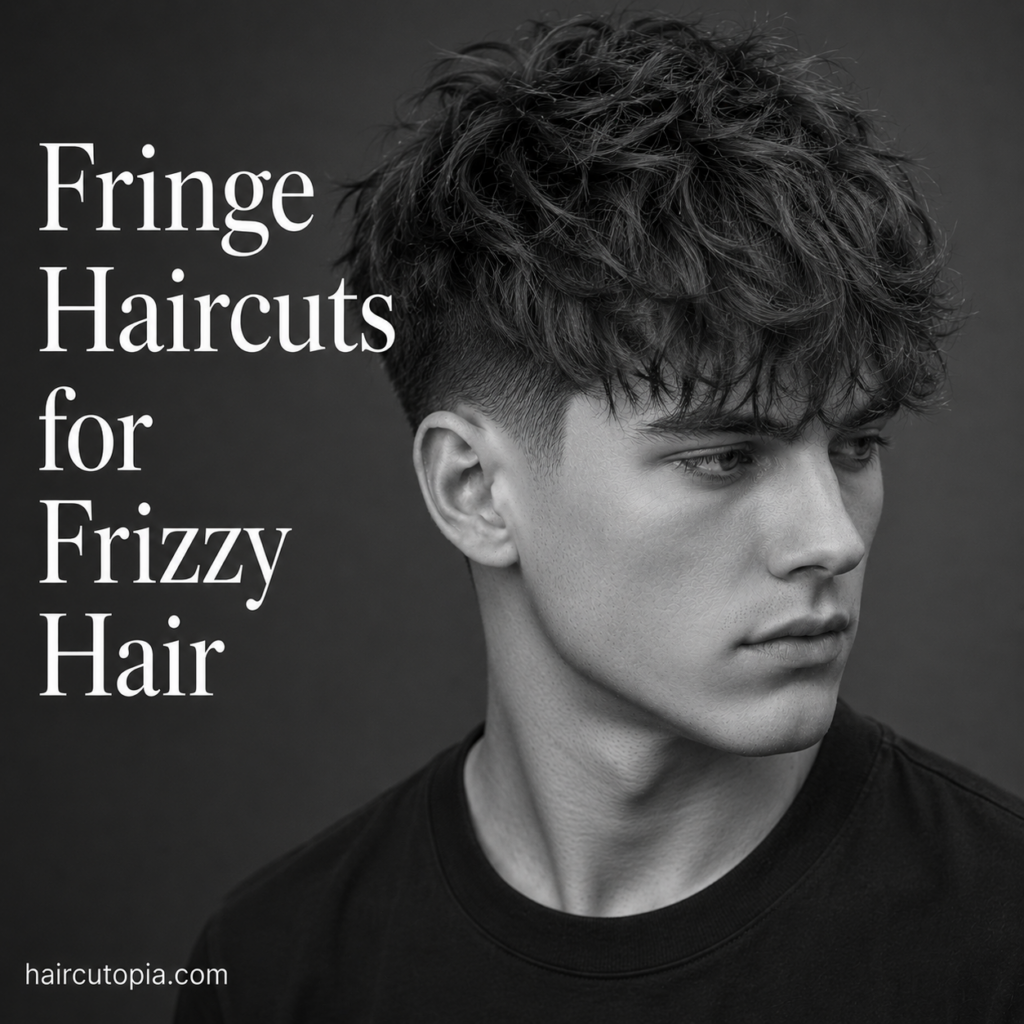
Frizzy hair can sometimes feel unpredictable, but it doesn’t have to limit your hairstyle options. In fact, many modern fringe haircuts are designed to embrace natural texture rather than fight it. With the right cut and a few simple styling techniques, frizzy hair can become one of your biggest assets, adding volume, movement, and personality to your look.
The secret is choosing a fringe that works with your hair’s natural texture instead of trying to force it into a perfectly smooth style. A skilled barber can remove excess bulk, add strategic layers, and create a shape that keeps your hair looking intentional rather than unruly.
This guide covers the best fringe haircuts for frizzy hair, styling advice, maintenance tips, and how to choose a style that suits your face shape.
Can You Pull Off a Fringe with Frizzy Hair?
Absolutely.
Frizz is often simply hair that lacks moisture or has a naturally textured pattern. Instead of seeing it as a problem, many modern hairstyles use that texture to create a fuller, more relaxed appearance.
Benefits of a fringe for frizzy hair include:
- Adds natural volume
- Creates effortless texture
- Softens facial features
- Makes styling easier
- Works with both short and medium-length hair
- Can help disguise uneven growth patterns
When cut correctly, a fringe can actually make frizzy hair easier to manage.
What Causes Frizzy Hair?
Frizz can develop for several reasons, including:
- Natural hair texture
- Dryness
- Humidity
- Heat damage
- Overwashing
- Curly or wavy hair patterns
Understanding the cause of your frizz can help you choose the right haircut and haircare routine.
Best Fringe Haircuts for Frizzy Hair
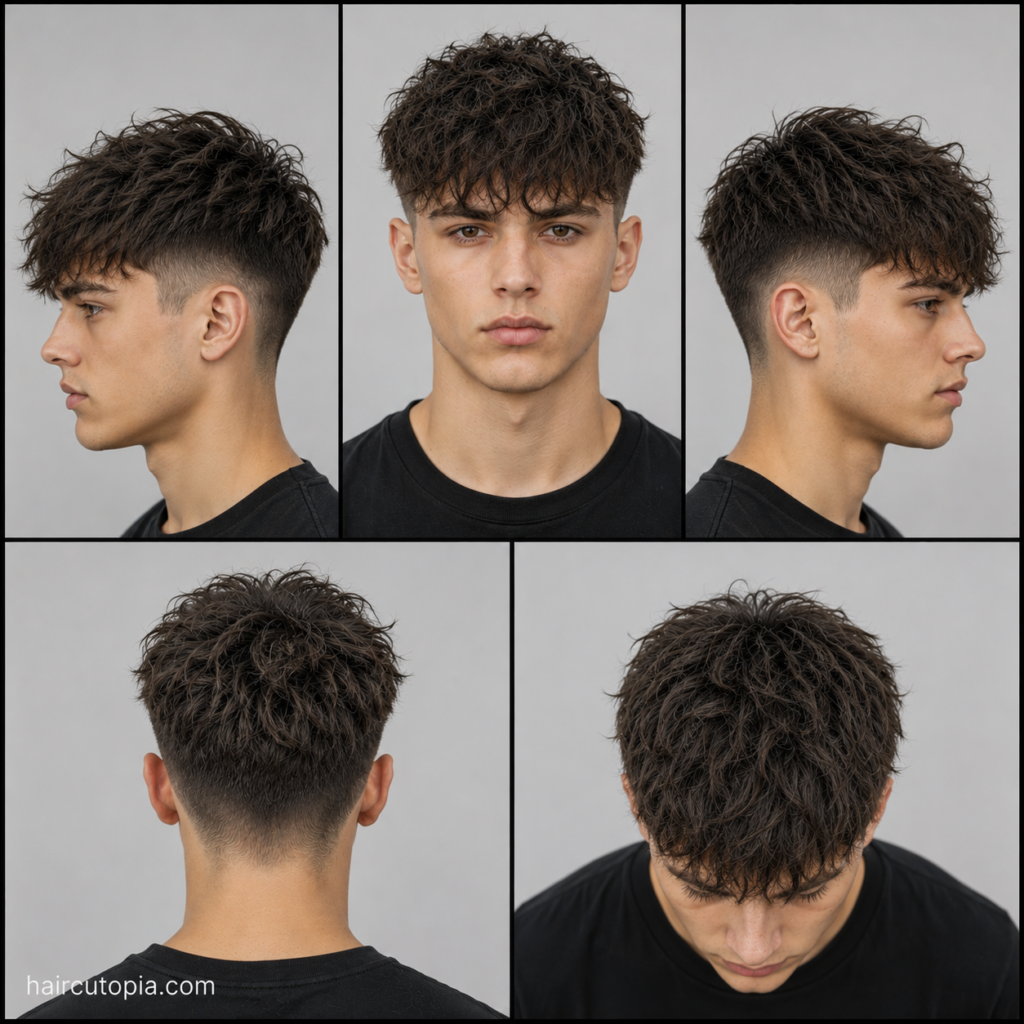
Textured Fringe
The textured fringe is one of the best hairstyles for frizzy hair because it embraces natural movement.
Rather than trying to smooth every strand, the haircut uses layers to create definition and shape.
Benefits include:
- Natural-looking texture
- Reduced bulk
- Easy styling
- Modern appearance
Pair it with a taper fade or low fade for a clean finish.
Messy Fringe
A messy fringe works especially well because slight frizz actually enhances the overall look.
This style intentionally looks relaxed, making it ideal for men who don’t want to spend a long time styling their hair.
Why it’s popular:
- Low maintenance
- Casual appearance
- Fuller-looking hair
- Natural movement
French Crop
The French crop offers structure while allowing the fringe to retain some texture.
The shorter length makes frizz easier to control without eliminating your hair’s natural character.
Advantages include:
- Easy upkeep
- Professional appearance
- Minimal styling
- Modern finish
Side-Swept Fringe
A side-swept fringe directs the hair diagonally across the forehead, helping distribute volume more evenly.
This style is great if your hair tends to puff up in one area.
Benefits include:
- Softer appearance
- Better control
- Classic styling
- Versatility
Curtain Fringe
A curtain fringe allows textured hair to fall naturally on both sides of the face.
Instead of trying to flatten the hair, the layers encourage movement while creating a balanced shape.
This hairstyle offers:
- Relaxed styling
- Modern look
- Natural volume
- Great face framing
Long Textured Fringe
Longer fringes can work beautifully with frizzy hair when they’re properly layered.
The added length creates movement while reducing the appearance of puffiness.
This style is best for men who enjoy medium-length hairstyles.
Short Fringe
A shorter fringe is often easier to maintain if your frizz is difficult to control.
Benefits include:
- Cleaner appearance
- Faster styling
- Reduced bulk
- Easy maintenance
Fringe with a Fade
Pairing a textured fringe with faded sides creates excellent balance.
Popular options include:
- Low fade
- Mid fade
- Taper fade
- Drop fade
- Skin fade
The clean sides help keep the overall hairstyle looking polished.
Best Fringe Haircuts by Hair Texture
Wavy Frizzy Hair
Natural waves already provide movement.
Recommended styles:
- Curtain fringe
- Messy fringe
- Long textured fringe
Curly Frizzy Hair
Curly hair naturally creates volume that complements a fringe.
Good choices include:
- Curly fringe
- French crop
- Short textured fringe
Straight Hair with Frizz
Straight hair that becomes frizzy often benefits from lightweight layering.
Recommended:
- Side-swept fringe
- Textured fringe
- Angular fringe
Choosing a Fringe for Your Face Shape
Oval Face
Almost every fringe style works well.
Popular options include:
- Textured fringe
- Curtain fringe
- French crop
- Messy fringe
Round Face
Choose hairstyles that add height and structure.
Recommended:
- Angular fringe
- Fringe with fade
- Short textured fringe
Square Face
Soft texture helps balance stronger facial features.
Great options include:
- Side-swept fringe
- Medium textured fringe
- Curtain fringe
Heart Face
A fringe naturally balances a broader forehead.
Recommended styles:
- Curtain fringe
- Long fringe
- Layered fringe
Diamond Face
Fringes soften prominent cheekbones.
Good choices include:
- Side fringe
- Curtain fringe
- Medium textured fringe
Best Fades for Frizzy Hair
Low Fade
A low fade creates a clean appearance while maintaining softer transitions.
Ideal for:
- Curtain fringe
- Side-swept fringe
- Professional styles
Mid Fade
The most versatile option.
Works well with:
- Textured fringe
- French crop
- Messy fringe
High Fade
A high fade places more attention on the textured fringe.
Perfect for:
- Bold hairstyles
- Short fringes
- Thick textured hair
Taper Fade
A taper fade provides a classic finish that works well with nearly every fringe style.
How to Style a Frizzy Fringe
The goal isn’t to remove every bit of texture—it’s to control it.
Follow these steps:
- Start with damp hair.
- Apply a leave-in conditioner or smoothing cream.
- Blow dry on low heat if needed.
- Finish with a matte styling cream or lightweight clay.
- Shape the fringe using your fingers.
Avoid brushing dry hair, which often increases frizz.
Best Styling Products
Moisture is essential for frizzy hair.
Look for products such as:
- Leave-in conditioner
- Curl cream
- Matte styling cream
- Lightweight clay
- Sea salt spray
Avoid alcohol-heavy products that can dry the hair and increase frizz.
Haircare Tips for Frizzy Hair
Healthy hair is easier to manage.
Simple habits include:
- Use moisturizing shampoo and conditioner.
- Avoid washing every day if your hair becomes dry.
- Dry gently with a microfiber towel.
- Minimize high-heat styling.
- Get trims every 4–6 weeks.
Keeping your hair hydrated often reduces frizz naturally.
Common Mistakes to Avoid
Trying to Eliminate All Frizz
A small amount of texture often makes the hairstyle look more natural.
Focus on control rather than perfection.
Using Too Much Product
Heavy products can leave the hair looking greasy or stiff.
Start with a small amount and build gradually.
Ignoring Moisture
Dry hair becomes frizzier over time.
Conditioning regularly helps improve softness and manageability.
Skipping Regular Haircuts
As the fringe grows longer, it may become harder to control.
Routine trims keep the haircut looking intentional.
How to Ask Your Barber
You don’t need complicated barber terminology.
Try saying:
“I’d like a textured fringe that works with my natural texture instead of fighting it. Please remove excess bulk, add layers, and keep it easy to style.”
Showing a few reference photos can also help communicate the amount of texture and length you’re after.
Is a Fringe Haircut Right for Frizzy Hair?
Definitely. Modern fringe haircuts are all about texture, movement, and individuality—qualities that frizzy hair naturally provides. Rather than trying to hide your hair’s personality, the right fringe highlights it while making it easier to manage.
Whether you choose a textured fringe, French crop, side-swept style, or relaxed curtain fringe, embracing your natural texture often leads to the best-looking results.
Frequently Asked Questions
Is frizzy hair good for a fringe?
Yes. Frizzy hair adds natural texture and volume that can make fringe hairstyles look fuller and more relaxed.
What is the best fringe for frizzy hair?
A textured fringe is usually the best choice because it works with natural texture instead of trying to smooth it completely.
How do I stop my fringe from getting frizzy?
Keep your hair moisturized, use leave-in conditioner, avoid excessive heat, and choose lightweight styling products that control frizz without weighing the hair down.
Can I have a curtain fringe with frizzy hair?
Absolutely. Curtain fringes often look great with natural texture, especially when they are layered to encourage movement.
How often should I trim a fringe?
Most fringe haircuts benefit from a trim every 4–6 weeks to maintain their shape and make styling easier.
Related Posts
 Bangs Haircuts for Frizzy Hair: 18 Stylish Fringe Ideas That Work With Your Natural Texture
 Haircuts for Frizzy Hair: The Complete Guide to Cuts for Every Length and Texture
 Haircuts for Women with Frizzy Hair: 15 Flattering Styles for Natural Texture
 Haircuts for Men with Frizzy Hair: 15 Styles That Work With Your Texture