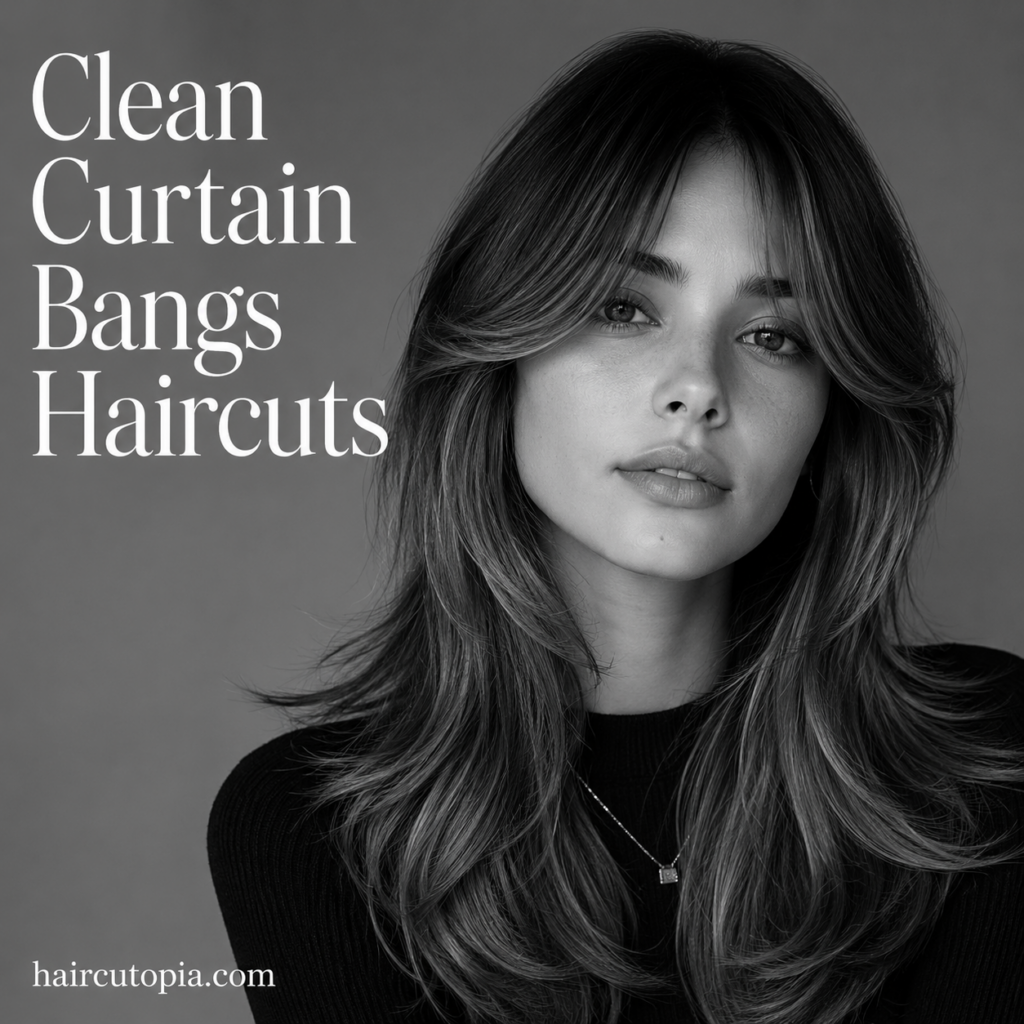
Curtain bangs have a way of making a haircut feel instantly more put together without looking overly styled. They frame the face, blend naturally into the rest of the hair, and can work with everything from short bobs to long, flowing layers.
What makes clean curtain bangs especially appealing is their polished shape. Instead of looking heavy or choppy, the bangs usually part softly near the center and sweep toward the cheekbones or jawline. The result feels fresh, flattering, and surprisingly easy to customize.
Whether you want a subtle change or you’re ready to reshape your entire haircut, these clean curtain bangs haircuts offer plenty of inspiration.
What Are Curtain Bangs?
Curtain bangs are face-framing bangs that typically part near the middle and sweep outward on both sides of the face. They get their name from the way they open around the face, similar to curtains.
Unlike traditional blunt bangs, curtain bangs are usually shorter around the center of the forehead and gradually become longer toward the sides. This creates a softer transition into the rest of the haircut.
A clean curtain bang style usually features:
- A defined but natural center or slightly off-center part
- Smooth blending around the temples
- Longer pieces that frame the cheekbones
- Soft movement rather than a blunt horizontal line
- Enough length to sweep or tuck away when desired
The exact shape can be adjusted depending on your hair texture, face shape, and preferred level of maintenance.
25 Clean Curtain Bangs Haircuts to Try
1. Classic Curtain Bangs with Long Hair
Long hair and curtain bangs are a natural combination. The bangs break up the length around the face while leaving the rest of the hair full and flowing.
For a clean finish, keep the center pieces around eyebrow length and gradually extend the sides toward the cheekbones. Long, subtle layers can help everything blend together.
This is a great starting point if you want bangs without dramatically changing your overall haircut.
2. Long Layers with Curtain Bangs
Adding curtain bangs to a layered haircut creates movement from the front all the way through the ends.
The key is making the transition between the bangs and layers feel seamless. Rather than having a separate section of fringe, the front pieces gradually become part of the longer layers.
A round brush or large rollers can emphasize the shape without making the style look overly done.
3. Shoulder-Length Hair with Curtain Bangs
Shoulder-length hair offers enough length for movement while still feeling light and manageable.
Curtain bangs can give this cut more structure around the face, especially when the rest of the hair has minimal layering. A gentle inward or outward bend at the ends keeps the look polished.
It’s an easy option for anyone who wants something between a bob and long hair.
4. Curtain Bangs with a Lob
A long bob, or lob, becomes softer with the addition of curtain bangs.
The shorter front pieces add movement around the forehead and cheekbones, while the lob keeps the overall silhouette clean. This combination works especially well when the ends are kept relatively blunt.
Wear it sleek for a sharper look or add loose texture for something more relaxed.
5. Sleek Bob with Curtain Bangs
Curtain bangs don’t have to be paired with lots of layers. They can also soften a sleek, structured bob.
Keeping the bob clean around the perimeter creates an interesting contrast with the lighter movement of the fringe.
For a modern finish, let the longer sides of the bangs blend just above or around the cheekbones.
6. Chin-Length Bob with Curtain Bangs
A chin-length bob naturally draws attention toward the face, making curtain bangs an ideal addition.
The fringe can soften the stronger outline of the bob and create movement through the front. Keeping the bangs airy rather than overly thick helps maintain a balanced shape.
This haircut can look especially polished with a smooth blowout and slightly curved ends.
7. Curtain Bangs with a Layered Bob
If a blunt bob feels too structured, adding layers and curtain bangs can completely change its personality.
Short layers create movement through the body of the haircut, while the bangs provide additional framing around the face.
Ask for the front layers to connect naturally with the longest parts of your curtain bangs so there isn’t a noticeable gap between them.
8. Soft Curtain Bangs with Medium Hair
Medium-length hair is one of the easiest lengths for curtain bangs.
There is enough hair to create flowing layers, but the overall cut remains manageable. Soft bangs that reach the cheekbones can create definition without dominating the haircut.
This style works particularly well if you like wearing your hair both down and pulled back.
9. Wispy Curtain Bangs
Wispy curtain bangs offer a lighter interpretation of the trend.
Instead of creating a thick fringe, only a smaller section of hair is cut around the forehead. The result is soft and airy, with some forehead still visible through the bangs.
Wispy bangs can be a good choice if you want to experiment with fringe but aren’t ready for a heavier cut.
10. Full Curtain Bangs
For more impact, full curtain bangs use a thicker section of hair.
The additional density creates a more noticeable frame around the face while still maintaining the signature center opening. The sides can extend toward the cheekbones to prevent the fringe from looking too heavy.
Regular trims help keep the shape intentional.
11. Long Curtain Bangs
Long curtain bangs are ideal if you prefer subtle face framing.
Rather than ending near the eyebrows, these bangs may fall around the cheekbones or even closer to the jawline. They still create the curtain effect but blend much more easily into the rest of the hair.
They’re also convenient because they can often be tucked behind the ears or incorporated into updos.
12. Short Curtain Bangs
Shorter curtain bangs create a more noticeable fringe while maintaining the soft center part.
The shortest pieces may sit around eyebrow level, with the sides gradually extending outward. Because the shape is more defined, this version usually requires a little more styling than longer curtain bangs.
A small round brush can help direct the fringe away from the face.
13. Curtain Bangs with Straight Hair
Straight hair can showcase the shape of curtain bangs beautifully.
A precise cut allows the fringe to fall naturally around the face without requiring lots of texture. Slight layering at the ends can prevent the bangs from looking too rigid.
If your hair tends to fall completely flat, a quick blow-dry at the roots can add enough lift to maintain the curtain shape.
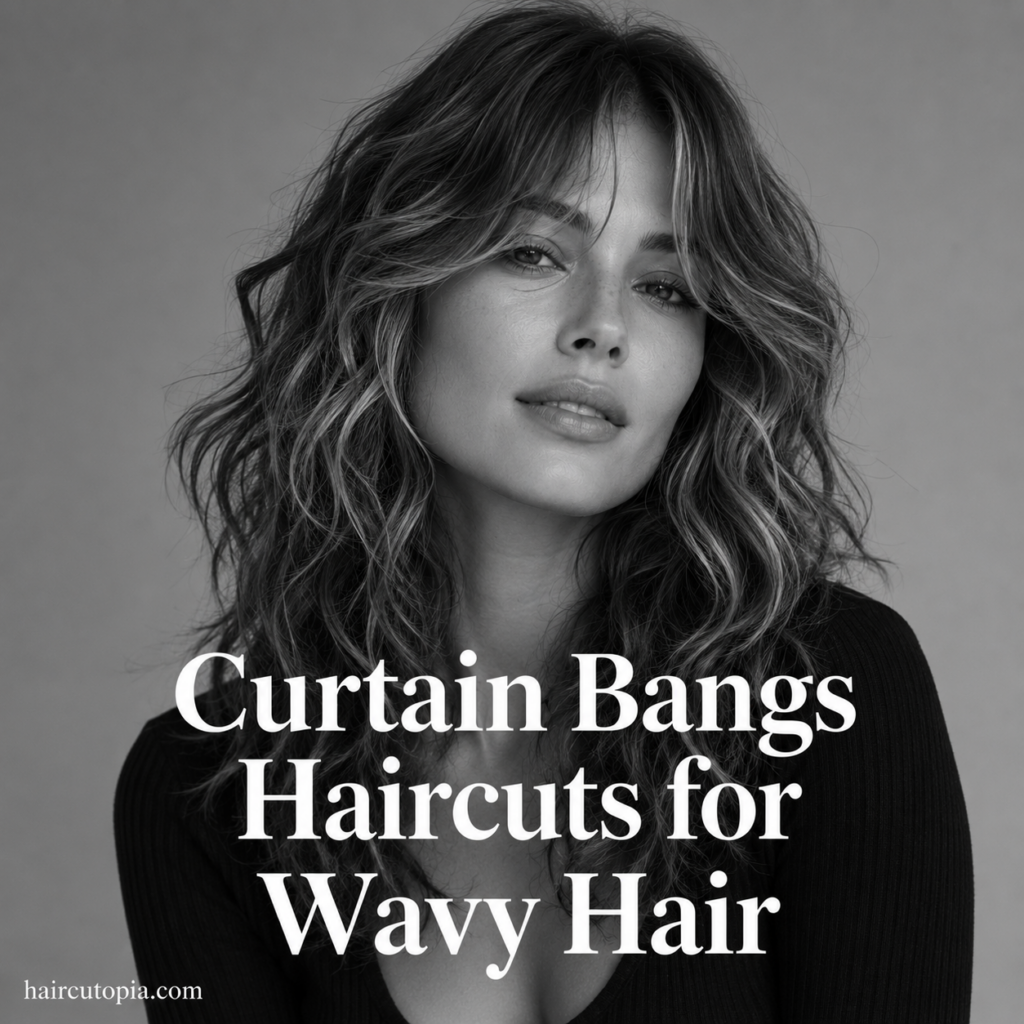
14. Curtain Bangs with Wavy Hair
Natural waves give curtain bangs a relaxed, effortless appearance.
Rather than trying to straighten every piece, work with the existing texture. Slightly longer bangs often work well because waves can make hair appear shorter once dry.
A lightweight styling cream can help define the shape while keeping the movement natural.
15. Curtain Bangs with Curly Hair
Curtain bangs can work beautifully with curls when they’re shaped with the curl pattern in mind.
The fringe can be cut slightly longer so the curls have room to spring upward naturally. Longer pieces around the sides create a smooth transition into the rest of the haircut.
Because curly hair can shrink considerably as it dries, discussing your usual styling routine with your stylist before cutting is especially helpful.
16. Curtain Bangs with Face-Framing Layers
If your main goal is highlighting your facial features, combine curtain bangs with dedicated face-framing layers.
The shortest pieces begin around the forehead, while progressively longer sections follow the cheekbones and jawline.
This creates continuous movement rather than making the bangs look like a separate part of the haircut.
17. Butterfly Cut with Curtain Bangs
The butterfly haircut and curtain bangs complement each other because both rely heavily on flowing layers.
Shorter layers around the face create volume and movement, while longer layers preserve the appearance of length.
Curtain bangs complete the shape by creating an additional layer around the forehead and cheekbones.
18. Shaggy Layers with Clean Curtain Bangs
A shag doesn’t always need messy or heavily textured fringe.
Pairing shag-inspired layers with cleaner curtain bangs creates an interesting balance. The body of the haircut can have plenty of movement while the front maintains a more polished shape.
This is a good way to make a layered haircut feel modern without going fully undone.
19. Curtain Bangs with a Soft U-Shaped Cut
A U-shaped haircut creates a rounded outline through the back while curtain bangs bring that softness toward the front.
Long layers can connect the two areas, creating a flowing silhouette from every angle.
This combination works particularly well on medium to long hair where the shape of the perimeter is easier to see.
20. Curtain Bangs with a Middle Part
A defined middle part creates the most recognizable version of curtain bangs.
The fringe separates evenly on both sides, producing a balanced frame around the face. Keeping a little volume near the roots prevents the bangs from falling flat against the forehead.
You don’t need a perfectly straight part, either. A slightly natural separation often makes the style feel more effortless.
21. Curtain Bangs with an Off-Center Part
If a middle part doesn’t feel natural, curtain bangs can still work with an off-center part.
Moving the separation slightly to one side creates a softer, less symmetrical effect. This can also work well if your natural growth pattern makes a precise middle part difficult to maintain.
The bangs should still sweep outward rather than falling straight across the forehead.
22. Curtain Bangs with a Blunt Cut
Combining curtain bangs with blunt ends creates a clean, contemporary haircut.
The solid perimeter makes the hair appear fuller, while the bangs provide just enough softness around the face.
Keeping most of the interior layering minimal allows the contrast between the structured ends and flowing fringe to stand out.
23. Voluminous Curtain Bangs
A little extra volume can make curtain bangs feel glamorous without turning them into traditional blowout bangs.
Lift the roots and direct the fringe away from the face using a round brush. The ends should remain soft rather than tightly curled.
This styling approach works especially well with layered medium and long hair.
24. Curtain Bangs with a Ponytail
One advantage of curtain bangs is that they continue framing the face when the rest of the hair is pulled back.
A ponytail paired with loose curtain bangs can look polished without requiring complicated styling. Leave the fringe and a few longer face-framing pieces out while gathering the remaining hair.
It’s a simple way to make an everyday ponytail feel more intentional.
25. Grown-Out Curtain Bangs
Curtain bangs are one of the easier bang styles to grow out because the longer pieces naturally begin to resemble face-framing layers.
As they grow, adjust the part and sweep them farther away from the face. Small trims can reshape the ends and help them blend into longer layers.
If you’re hesitant about getting bangs because of the grow-out process, this is one reason curtain bangs are worth considering.
How to Choose the Right Curtain Bang Length
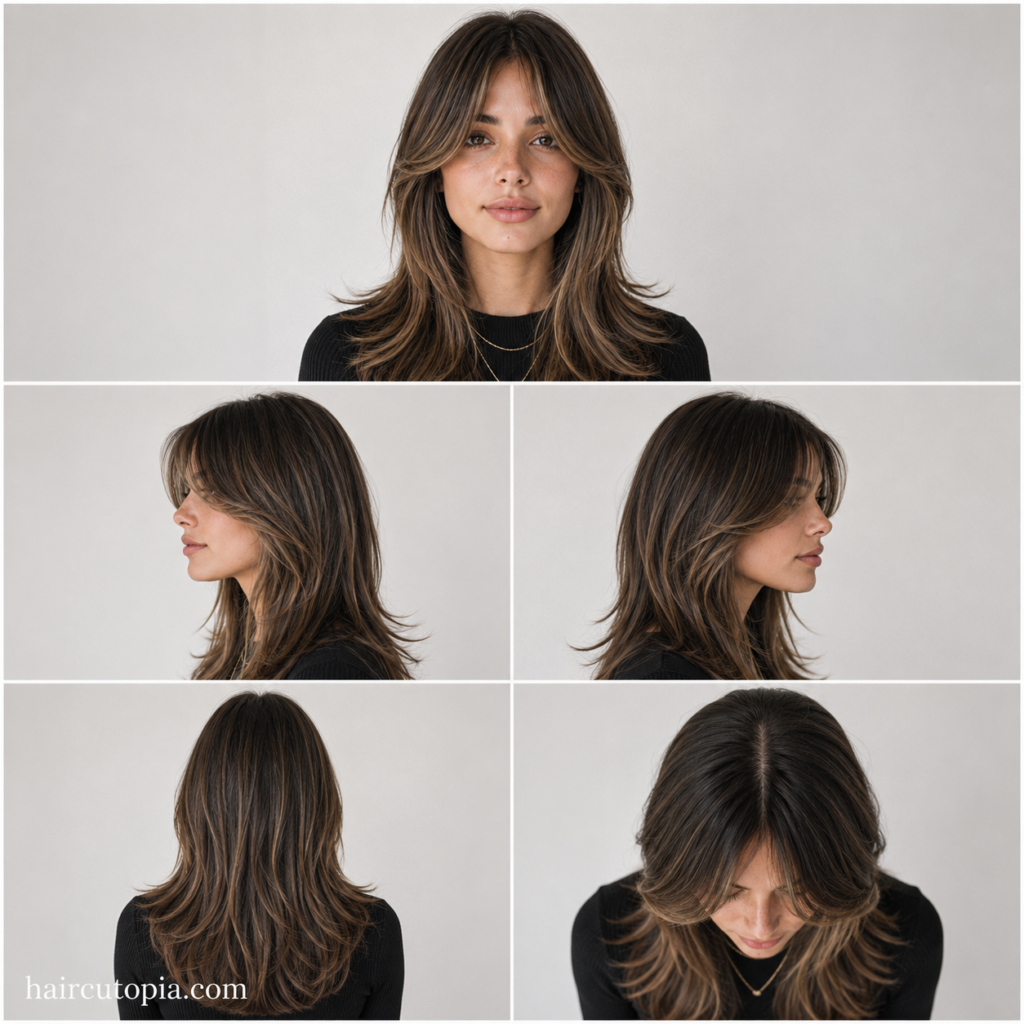
There isn’t one ideal curtain bang length for everyone.
The right choice depends on how noticeable you want the fringe to be and how much styling you’re comfortable doing.
Eyebrow-Length Curtain Bangs
Shorter curtain bangs create more definition around the forehead and eyes.
They usually require more frequent trimming and styling to maintain their shape.
Cheekbone-Length Curtain Bangs
This is one of the most versatile options.
The bangs remain noticeable but are long enough to sweep naturally toward the sides of the face.
Jaw-Length Curtain Bangs
Long curtain bangs behave almost like traditional face-framing layers.
They’re subtle, easy to tuck away, and generally require less maintenance.
Are Curtain Bangs Good for Different Face Shapes?
Curtain bangs can be adjusted rather than following one exact template.
For a rounder face, longer pieces that extend toward the cheekbones or jawline can create more vertical framing.
On longer or oval faces, slightly shorter and fuller curtain bangs can add width around the forehead and cheek area.
For square or angular features, soft edges and gradual layering can create contrast with a stronger jawline.
Heart-shaped faces may benefit from bangs that open around the forehead and become fuller near the cheekbones.
These aren’t strict rules. Hair texture, density, styling habits, and personal preference matter just as much as face shape.
How to Ask Your Stylist for Clean Curtain Bangs
Bringing reference photos is usually the easiest way to communicate the exact look you want.
You can also describe a few specific details:
- Where you want the shortest section to fall
- How long you want the side pieces
- Whether you prefer wispy or full bangs
- How much face framing you want
- Whether you usually wear a middle or side part
- How much time you’re willing to spend styling
Mention how you normally wear your hair as well. Curtain bangs that look great after a professional blowout should also work with your everyday routine.
How to Style Curtain Bangs
Curtain bangs don’t necessarily require complicated styling. Direction is usually more important than using lots of products.
1. Start While the Bangs Are Damp
Bangs can quickly dry into an unwanted position, especially if you have cowlicks around the hairline.
Styling them shortly after washing your hair makes them easier to control.
2. Blow-Dry the Roots
Direct the roots forward first to help reset the natural part.
Then separate the bangs and begin directing each side away from the face.
3. Use a Round Brush
Place a round brush underneath the fringe and gently lift the hair while blow-drying.
Avoid creating an overly tight curl. The goal is a smooth bend with movement.
4. Direct the Ends Outward
Once the roots are dry, guide the longer sections toward the sides of the face.
This creates the recognizable curtain effect.
5. Finish Lightly
A small amount of lightweight hairspray or texture spray can help hold the shape.
Heavy products can make bangs separate into thick pieces or lose their natural movement.
How to Style Curtain Bangs Without a Round Brush
You can still create the shape without mastering a round-brush blowout.
Try using:
- Large Velcro rollers
- A blow-dryer and flat brush
- A flat iron on low or moderate heat
- A heated styling brush
With a flat iron, use a gentle curved motion rather than clamping the bangs and pulling straight down. Direct each side slightly away from the face.
How Often Should Curtain Bangs Be Trimmed?
Short curtain bangs generally need more maintenance than longer versions.
Depending on your haircut and growth rate, you may want a bang trim approximately every four to eight weeks.
Long curtain bangs can usually go longer between appointments because additional length simply makes them blend further into the surrounding layers.
If you’re growing them out, your stylist can gradually reshape the fringe into face-framing layers rather than repeatedly shortening it.
How to Keep Curtain Bangs Looking Clean
Because bangs sit directly against the forehead, they can become oily faster than the rest of the hair.
A few simple habits can help:
- Avoid applying heavy conditioner directly to the bangs.
- Use dry shampoo sparingly near the roots when needed.
- Keep styling products lightweight.
- Restyle the fringe with a little water instead of rewashing all your hair.
- Trim the ends when they begin losing their shape.
- Clean styling brushes regularly to reduce product buildup.
Sometimes refreshing only your bangs is enough to make your entire hairstyle look freshly styled.
Are Curtain Bangs High Maintenance?
Curtain bangs fall somewhere between traditional bangs and regular face-framing layers.
Short, full curtain bangs usually require more maintenance because their shape is noticeable when they grow. Longer curtain bangs are much more forgiving.
Your hair texture also makes a difference. Some hair naturally falls into the curtain shape, while other textures may need a few minutes of blow-drying after each wash.
If low maintenance is your priority, consider starting with longer curtain bangs around the cheekbones. You can always go shorter later.
Who Should Consider Curtain Bangs?
Curtain bangs are worth considering if you want to change your hairstyle without dramatically reducing your overall length.
They can be especially appealing if you want:
- More definition around your face
- A softer transition into layers
- Bangs that can eventually blend into your haircut
- A fringe that works with ponytails and updos
- More movement around otherwise simple long or medium hair
- A softer alternative to blunt bangs
If you’re unsure, starting long gives you more flexibility. Your stylist can gradually shorten the fringe until you find the length that feels right.
Final Thoughts on Clean Curtain Bangs Haircuts
Clean curtain bangs offer a simple way to refresh almost any haircut. They can soften a blunt bob, add movement to long hair, complement layered cuts, or give a basic ponytail more personality.
The biggest decision is how short and full you want them to be. Shorter curtain bangs create a stronger statement, while cheekbone- and jaw-length versions offer softer framing and an easier grow-out.
A good curtain bang haircut should also work with your natural texture rather than fighting against it. Choose a length that fits your everyday styling routine, keep the transition into the rest of your haircut smooth, and let the fringe move naturally around your face.
Whether you prefer a sleek bob, flowing layers, natural waves, or a voluminous blowout, there’s a version of curtain bangs that can fit the look.