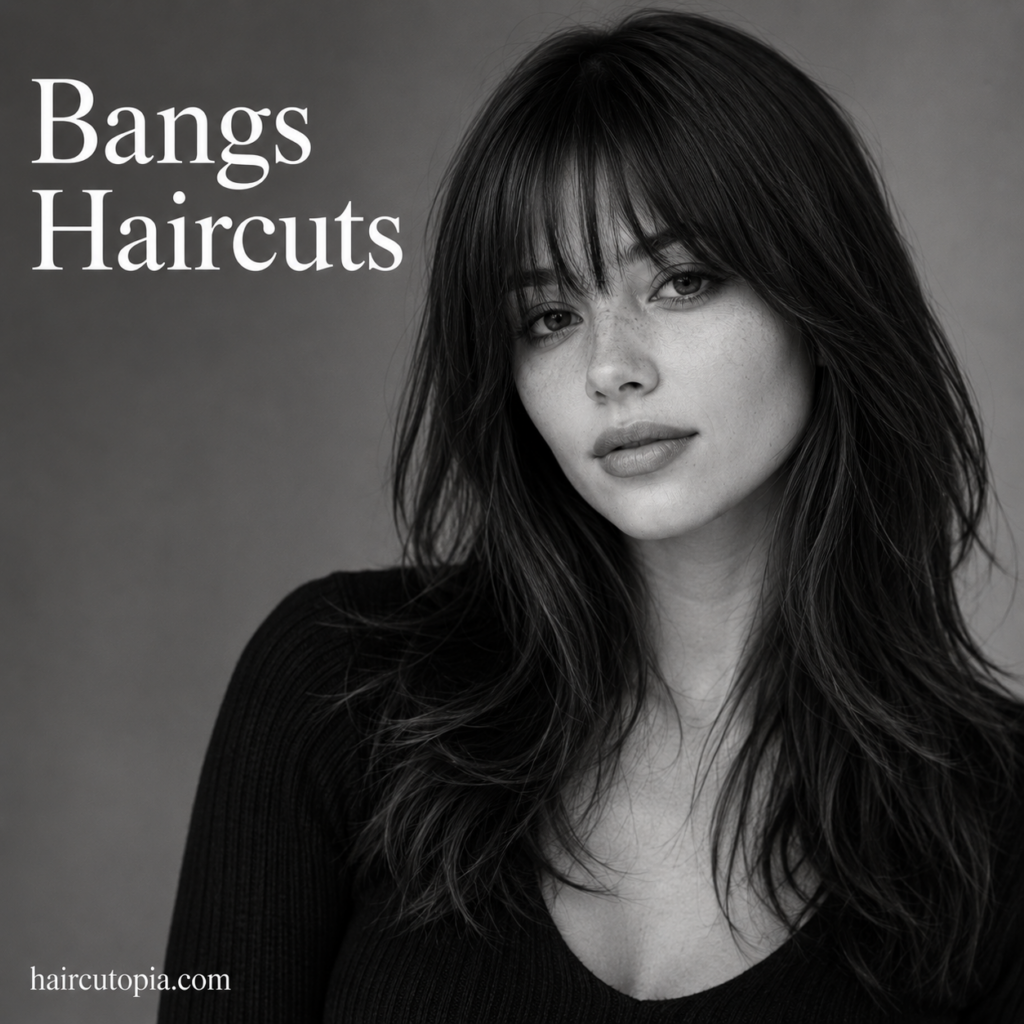
Bangs can make a surprisingly big difference to a haircut.
You can keep the same bob, shoulder-length cut, or long hair you’ve had for months and add fringe, and suddenly the entire style feels different. That’s because bangs sit right at the front of the haircut, where even small changes are immediately noticeable.
They can be soft and wispy. Straight and blunt. Long and swept to one side. Short and intentionally bold. They can blend into layers or create a strong contrast with the rest of the hair.
And bangs aren’t limited to straight hair.
Waves can give fringe a relaxed texture. Curls can create soft movement across the forehead. Coils can form their own distinctive shapes. Fine hair can support lighter bangs, while thick hair gives you enough density to experiment with fuller fringe.
The challenge is choosing the right version.
Length, density, natural texture, hairline growth patterns, styling habits, and how frequently you’re willing to trim your bangs all matter.
If you’re thinking about adding fringe to your haircut, here’s what to know before making the cut.
What Are Bangs?
Bangs are shorter sections of hair cut around the front of the head, usually falling somewhere around the forehead, eyebrows, eyes, cheekbones, or sides of the face.
They’re also commonly called fringe.
The exact shape can vary dramatically.
Bangs may be:
- Straight across
- Rounded
- Wispy
- Choppy
- Side-swept
- Center-parted
- Short
- Long
- Curly
- Textured
- Asymmetrical
Some create obvious forehead coverage.
Others are long enough that they almost become face-framing layers.
That’s why “getting bangs” doesn’t describe one specific haircut.
The important questions are what type of bangs you want, where you want them to fall, and how you want them to connect with the rest of your hair.
Why Do Bangs Change a Haircut So Much?
Bangs can dramatically change the appearance of many women’s haircuts because they bring part of the haircut forward around the forehead and face.
That immediately changes the visual balance.
A one-length haircut can feel softer with wispy fringe. Long hair can gain more shape with side-swept bangs. A bob can look sharper with blunt bangs or more relaxed with textured fringe.
Bangs can also create a focal point around the eyes, eyebrows, cheekbones, or forehead depending on their length.
And because they’re positioned at the front, you don’t need to cut a large amount of hair to create a noticeable change.
Popular Types of Bangs Haircuts
There are many variations of bangs, and the boundaries between them aren’t always strict.
One style can borrow elements from another.
Still, understanding the main types makes it easier to describe what you want.
Blunt Bangs
Blunt bangs create a strong, defined line across the forehead.
The ends are generally cut with less graduation than softer fringe styles.
They may sit:
- Above the eyebrows
- At eyebrow level
- Slightly below the brows
Blunt bangs create a deliberate, polished look.
They work especially well when you want the fringe to become a major feature of the haircut rather than blend quietly into the sides.
Because the line is noticeable, maintaining the intended length usually requires regular trims.
Wispy Bangs
Wispy bangs use less density.
Instead of completely covering the forehead, individual sections allow some skin to show through.
The effect is softer and lighter.
Wispy bangs can be a good option if you:
- Have fine hair
- Want subtle fringe
- Are trying bangs for the first time
- Prefer less forehead coverage
- Want bangs that blend easily
They can be worn straight, slightly separated, or softly textured.
Side-Swept Bangs
Side-swept bangs move diagonally across the forehead rather than falling straight downward.
They’re generally longer on one side and work naturally with a side part.
Longer versions can transition smoothly into face-framing layers.
Side-swept bangs are versatile because they can often be tucked away or blended into the rest of the hair as they grow.
Curtain Bangs
Curtain bangs usually separate near the middle and become longer toward the sides.
The center pieces are shorter, while the outer sections gradually blend into the surrounding haircut.
They can range from relatively short fringe to long cheekbone-level pieces.
Curtain bangs are especially useful when you want a softer, more open fringe rather than complete forehead coverage.
Bottleneck Bangs
Bottleneck bangs combine shorter fringe through the center with longer pieces that widen around the sides.
The shape resembles the narrow neck of a bottle gradually opening outward.
They share similarities with curtain bangs but often maintain more visible fringe through the center.
The outer pieces can blend into cheekbone or jaw-length face framing.
Micro Bangs
Micro bangs are intentionally short.
They usually sit well above the eyebrows.
Because they expose more of the forehead, they create a strong visual statement even when the fringe itself is lightweight.
Micro bangs can be:
- Blunt
- Wispy
- Choppy
- Curved
- Textured
They require commitment because there isn’t much length available to sweep away if you decide you don’t want visible fringe.
Choppy Bangs
Choppy bangs emphasize texture and variation.
The ends may have slightly different lengths rather than forming one perfectly uniform line.
This creates a more relaxed finish.
Choppy bangs work naturally with:
- Shags
- Wolf cuts
- Textured bobs
- Layered haircuts
- Tousled styling
They can be subtle or intentionally piecey.
Textured Bangs
Textured bangs are designed to have movement rather than a solid edge.
The texture may come from the cutting technique, natural hair pattern, or styling.
They’re particularly useful when you don’t want the fringe to appear too heavy.
Textured bangs can work across several lengths and densities.
Arched Bangs
Arched bangs create a slightly rounded shape.
The center may sit somewhat shorter while the outer sections become longer toward the temples.
Unlike curtain bangs, the fringe can remain relatively continuous across the forehead.
The rounded line can create a polished, structured finish.
Curly Bangs
Curly bangs allow natural curls to form across or around the forehead.
They don’t need to be straightened into a traditional fringe shape.
The curls may vary slightly in length and position, creating a softer, more organic edge.
Shrinkage is particularly important when cutting curly bangs.
The dry position matters much more than the stretched length.
Layered Bangs
Layered bangs use multiple lengths rather than one solid fringe line.
Shorter pieces can transition gradually into longer sections around the temples and sides.
This creates movement and makes the bangs easier to integrate with a layered haircut.
How Long Should Bangs Be?
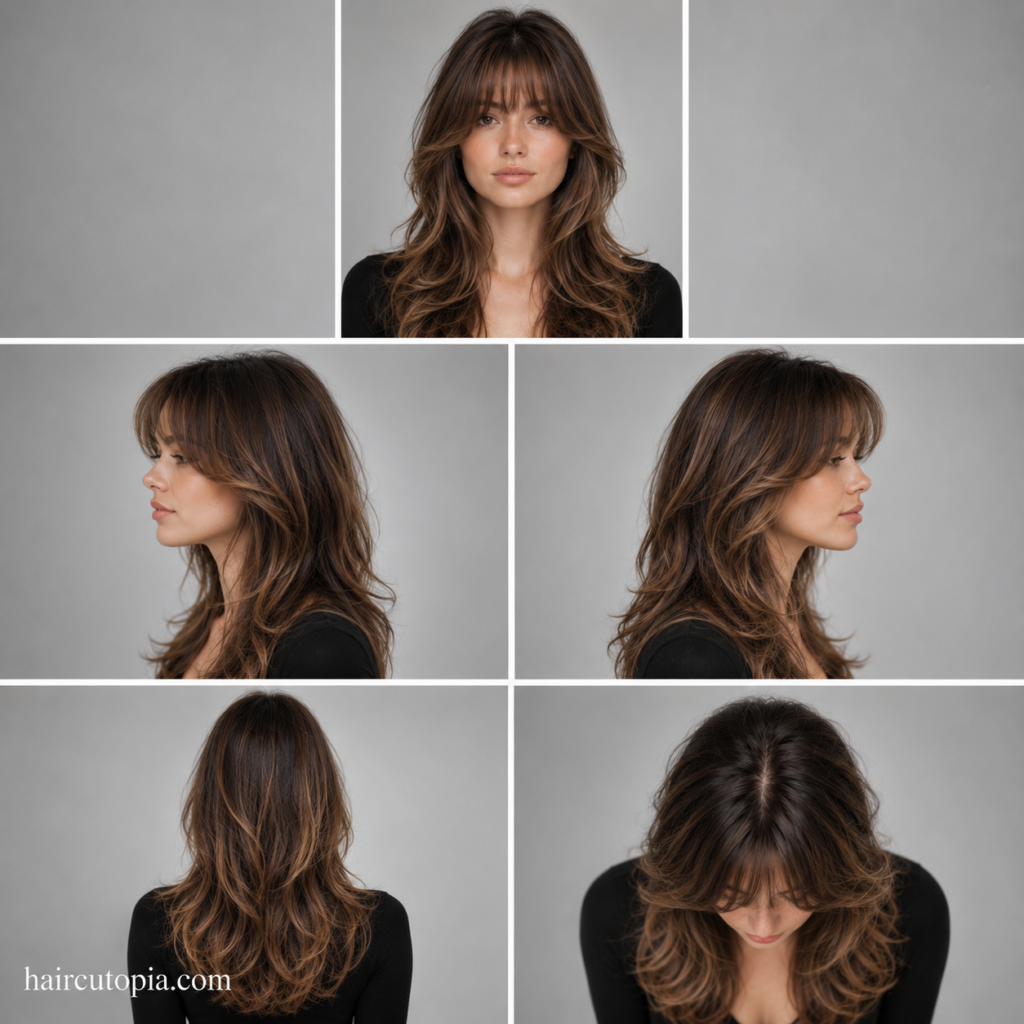
There isn’t one ideal bang length.
Where the fringe ends changes both its appearance and maintenance.
Above-the-Brow Bangs
Bangs ending above the eyebrows create a bold, open look.
Micro bangs fall into this category.
Because they’re intentionally short, even a small amount of growth can noticeably change their shape.
Eyebrow-Length Bangs
Eyebrow-length fringe creates substantial forehead coverage without becoming extremely long.
This length works particularly well with blunt, wispy, and textured bangs.
You’ll usually need regular trims to keep them from dropping into the eyes.
Eye-Length Bangs
Longer bangs around the eyes create a softer appearance.
They may be parted, swept sideways, or styled with movement.
The cut needs enough direction to prevent the fringe from constantly falling into your vision.
Cheekbone-Length Bangs
Once bangs reach the cheekbones, they become much easier to blend with the surrounding hair.
This length works particularly well for curtain and long side-swept bangs.
It’s also easier to tuck away when you don’t want visible fringe.
Jaw-Length Bangs
Jaw-length fringe sits close to the boundary between bangs and face-framing layers.
It creates movement around the front without covering much of the forehead.
This is one of the lowest-commitment options if you want to experiment with shorter pieces.
Short Bangs vs. Long Bangs
Short bangs create more impact.
They’re harder to hide, generally require more frequent trims, and make the fringe a major part of the haircut.
Long bangs provide more flexibility.
They can often be:
- Parted
- Swept sideways
- Tucked behind the ears
- Blended into layers
- Pulled back
- Grown into face framing
If you’ve never had bangs before, longer fringe gives you more room to experiment.
You can always shorten it later.
Full Bangs vs. Wispy Bangs
Density matters just as much as length.
Full bangs use a larger section of hair.
They provide more coverage and create a stronger visual line.
Wispy bangs use less hair and allow more of the forehead to remain visible.
Full bangs may work well if you want:
- Strong definition
- More coverage
- A dramatic change
- A polished fringe
Wispy bangs may be better if you want:
- Softness
- Movement
- Less commitment
- A lighter appearance
- Easier blending
Your overall hair density should also guide the decision.
Taking a very large fringe section from fine or low-density hair can leave the surrounding hair looking thinner.
Bangs for Short Hair
Bangs can become an important part of a short haircut.
Because there isn’t much length behind them, fringe can strongly influence the overall silhouette.
Short hair can pair with:
- Blunt bangs
- Micro bangs
- Wispy fringe
- Side-swept bangs
- Textured bangs
- Curtain fringe
- Curly bangs
Bobs are especially versatile.
A blunt bob with straight fringe creates a very different look from a textured bob with wispy bangs, even if the overall length is similar.
Pixies and bixies can also use longer fringe to create movement through the front.
Bangs for Medium Hair
Medium hair gives bangs enough length to transition naturally into the sides.
Shoulder and collarbone haircuts can support almost every fringe style.
Popular combinations include:
- Medium hair with wispy bangs
- Layered medium hair with curtain bangs
- Shoulder-length hair with blunt fringe
- Shaggy medium hair with textured bangs
- Collarbone hair with side-swept bangs
If you wear your hair tied back frequently, think about whether you want the bangs to remain loose.
Longer fringe provides more options.
Bangs for Long Hair
Adding bangs is one of the easiest ways to change long hair without sacrificing the overall length.
The contrast can be dramatic.
You can maintain hair well below the shoulders while introducing much shorter pieces around the forehead.
Long hair works particularly well with:
- Curtain bangs
- Wispy bangs
- Blunt fringe
- Bottleneck bangs
- Side-swept bangs
- Curly fringe
Face-framing layers can help connect shorter bangs with the long hair behind them.
Without that transition, the difference between fringe and length may appear much stronger.
That can still work if you prefer a more graphic look.
Bangs for Fine Hair
Fine hair can absolutely have bangs.
The key is deciding how much density you can comfortably bring forward.
Wispy fringe is a natural option because it doesn’t require a large section.
Fine hair may work well with:
- Wispy bangs
- Long bangs
- Lightweight curtain fringe
- Soft side-swept bangs
- Textured fringe
Avoid assuming that fine hair automatically needs extremely thin bangs.
The ideal density depends on how much hair you have overall, not simply the diameter of each strand.
Fine hair can also become oily or flat quickly around the forehead, so lightweight styling usually works best.
Bangs for Thick Hair
Thick hair offers plenty of density for fuller fringe.
Blunt bangs, heavy fringe, and textured bangs can all work.
The challenge is managing bulk.
A very dense fringe can become difficult to style if too much hair is brought forward.
Your stylist may adjust the section size or use techniques that encourage movement without making the ends look unnecessarily thin.
Thick bangs may also take longer to dry than wispy fringe.
Bangs for Straight Hair
Straight hair makes the structure of bangs particularly visible.
Blunt lines look crisp, while wispy and textured ends are easy to distinguish.
Straight hair works with nearly every bang style.
The main challenge can be direction.
If the hair naturally falls straight down, longer bangs may drop into the eyes unless they’re styled sideways or outward.
Your hairline also matters.
Cowlicks can create unexpected separation or lift.
Bangs for Wavy Hair
Wavy bangs can have a relaxed, natural finish.
The fringe doesn’t need to be perfectly smooth.
Shorter pieces may develop stronger waves because they carry less weight.
That means the bangs can appear shorter after cutting.
Wavy hair works particularly well with:
- Wispy fringe
- Curtain bangs
- Textured bangs
- Shag bangs
- Long side-swept fringe
You can air-dry the bangs with their natural texture or smooth them when you want a more polished finish.
Bangs for Curly Hair
Curly bangs can create beautiful shape around the front.
Instead of forming one rigid horizontal line, individual curls can sit at slightly different points.
This creates natural movement.
The most important consideration is shrinkage.
Never judge curly fringe solely by where it reaches when stretched.
A curl that appears eyebrow-length while wet or stretched may spring much higher once dry.
Curly bangs can be:
- Full
- Wispy
- Rounded
- Short
- Long
- Side-swept
- Center-parted
The finished shape should work with the curl pattern rather than fighting it.
Bangs for Coily Hair
Coily hair can support fringe in many different shapes.
Short coils can create bold forehead framing, while longer pieces can blend gradually into the sides.
Depending on the haircut, coily bangs may be:
- Rounded
- Tapered
- Full
- Wispy
- Asymmetrical
- Center-opened
Shrinkage can vary from one area to another.
For that reason, dry shape and overall balance matter more than trying to make every strand identical in length.
Bangs and Face Shape
Face shape can help you think about where fringe creates visual weight, but it shouldn’t become a strict set of rules.
There’s no bang style that a particular face shape is automatically forbidden from wearing.
Instead, think about the effect you want.
Bangs for Oval Faces
Oval faces can experiment with a wide range of fringe lengths.
Short, blunt, wispy, curtain, and side-swept bangs can all create different effects.
Maintenance and personal style may be more important considerations than face shape.
Bangs for Round Faces
Longer or parted fringe can create diagonal and vertical movement around the face.
Curtain and side-swept styles are popular options.
Short or blunt bangs can work too if you prefer a stronger, more graphic look.
Bangs for Square Faces
Soft, wispy, curved, or textured fringe can create movement around a defined forehead and jaw.
Blunt bangs can instead emphasize the haircut’s structure.
Both approaches can work.
It depends on whether you want softness or contrast.
Bangs for Heart-Shaped Faces
Wispy, curtain, side-swept, and bottleneck fringe can create movement around the forehead and cheekbones.
Longer outer pieces can gradually connect with the sides of the haircut.
Bangs for Long Faces
Fringe adds a horizontal element across the upper face.
Fuller eyebrow-length bangs create more coverage, while curtain or side-swept fringe keeps the forehead more open.
Choose based on the balance you personally prefer.
Bangs With a Bob Haircut
Bob haircuts and bangs can create some of the most distinctive short-hair combinations.
A blunt bob with straight bangs creates strong lines.
A textured bob with wispy fringe feels much softer.
A French-inspired bob may use shorter bangs to emphasize the compact shape.
Other combinations include:
- Short bob with micro bangs
- Chin-length bob with blunt fringe
- Layered bob with curtain bangs
- Textured bob with choppy bangs
- Long bob with side-swept bangs
- Wavy bob with wispy fringe
Because a bob already has a defined perimeter, changing the fringe can completely shift its character.
Bangs With Layered Hair
Layered haircuts give bangs several lengths to blend into, which can help the fringe feel integrated rather than separate from the rest of the hair.
The transition may move from:
- Bangs
- Temple pieces
- Cheekbone layers
- Jaw-length sections
- Longer layers
The exact progression depends on the haircut.
Shags and heavily layered styles may use obvious transitions.
Soft layered hair may blend the fringe much more gradually.
Bangs With Long Layers
Long layers create movement through the lower lengths while bangs provide shape around the front.
This combination lets you preserve most of your hair while still creating a noticeable change.
Long curtain, bottleneck, wispy, and side-swept bangs pair particularly naturally with long layers.
Face-framing sections can bridge the difference between the fringe and longer hair.
Bangs With a Shag Haircut
Bangs often feel like a natural extension of a shag haircut because shags already rely on texture and multiple lengths.
The fringe therefore doesn’t need to be perfectly polished.
Popular options include:
- Choppy bangs
- Wispy fringe
- Curtain bangs
- Curly bangs
- Textured full fringe
The bangs can blend directly into shorter layers around the sides and crown.
This creates a cohesive, deliberately undone shape.
Bangs With a Wolf Cut
Wolf cuts typically have strong layering through the crown and lengths, giving bangs several shorter sections to transition into.
Adding bangs can reinforce that texture around the front.
Curtain, wispy, choppy, and full fringe can all work.
Because the haircut already contains many different lengths, the bangs generally have plenty of layers to transition into.
A smoother fringe can create contrast, while choppy bangs can emphasize the wolf cut’s textured character.
Bangs With a Pixie or Bixie
Short hair doesn’t mean you have to choose short bangs.
Pixie haircuts can use longer fringe to create softness and movement through the front, while related cuts such as bixies can use the same approach with slightly more overall length.
Options include:
- Long side-swept bangs
- Short textured fringe
- Micro bangs
- Wispy bangs
- Asymmetrical fringe
The bangs can become one of the longest areas of a pixie.
That creates styling flexibility even when the sides and back are much shorter.
Bangs With a Middle Part
Some bangs are designed specifically for a middle or near-middle part.
Curtain and bottleneck fringe are obvious examples.
Longer bangs can also be separated through the center when you’re growing them out.
The result opens the forehead and directs movement toward both sides.
Your natural part doesn’t need to be perfectly centered.
Following the direction your hair already wants to move can make daily styling easier.
Bangs With a Side Part
Side parts work naturally with side-swept and longer fringe.
The bangs move predominantly in one direction, creating an asymmetrical shape.
Long curtain bangs can sometimes be converted into a side-swept style simply by changing the part.
Short blunt bangs provide less flexibility because they’re designed to fall forward.
Can You Have Bangs With a Cowlick?
Yes, but the cowlick needs to be considered before the cut.
Hairline growth patterns can:
- Push bangs upward
- Create separation
- Move hair sideways
- Make one side sit differently
- Prevent a precise center part
Some cowlicks can actually work beautifully with side-swept or curtain fringe.
Others require additional styling.
Longer bangs generally give you more weight and flexibility.
If you have a strong cowlick, avoid cutting fringe without first seeing how the hair behaves naturally.
Bangs vs. Face-Framing Layers
Bangs generally begin higher around the forehead or upper face, while face-framing layers usually begin lower around the cheekbones, jaw, or chin.
There can be overlap.
Cheekbone-length curtain bangs, for example, sit close to the boundary between fringe and face framing.
The main distinction is where the shorter sections begin and whether they function as forehead fringe.
The two techniques often work together.
Face-framing layers can provide the transition between bangs and longer hair.
Bangs vs. Curtain Bangs
“Bangs” is the broad category.
Curtain bangs are one specific type.
Blunt, micro, wispy, choppy, side-swept, and curly fringe all fall under the broader bangs category.
Curtain bangs are defined primarily by their opening and gradual increase in length toward the sides.
If you want a versatile fringe with less continuous forehead coverage, curtain bangs may be appealing.
If you want a stronger line, blunt or full fringe may be a better fit.
How to Style Bangs
Styling depends heavily on the type of fringe.
Blow-Dry Bangs Soon After Washing
Bangs can dry quickly.
If you want to control their direction, style them before they have a chance to completely air-dry into an unwanted position.
Use a Round Brush
A small or medium round brush can create lift, curvature, or outward movement.
Avoid creating too much volume unless that’s the intended look.
Dry Side to Side
For straight or blunt fringe, directing the hair from side to side while drying can help neutralize strong separation and encourage the bangs to fall forward.
Use a Roller
Larger rollers can create soft lift in long or curtain-style bangs.
Allow the hair to cool before removing the roller.
Work With Natural Texture
Wavy, curly, and coily bangs don’t need to be straightened.
Apply appropriate styling products while damp and position the fringe where you want it to dry.
What Products Work Well for Bangs?
Bangs generally don’t need a large amount of product.
Useful options include:
- Heat protectant
- Lightweight mousse
- Dry shampoo
- Texture spray
- Curl cream
- Anti-frizz product
- Flexible-hold hairspray
Keep heavier products away from fine fringe unless they’re specifically needed.
Bangs sit directly against the forehead and may become oily faster than the rest of your hair.
Dry shampoo can help refresh the roots between washes.
Are Bangs High Maintenance?
Bangs usually require more maintenance than the same haircut without fringe.
How much depends on the style.
Short blunt bangs need regular trimming because a small amount of growth changes the line.
Long side-swept or curtain-style bangs can go much longer between trims.
Daily maintenance varies too.
Your bangs may require only a quick adjustment in the morning, or they may need to be wet and restyled.
Consider:
- Your natural texture
- Cowlicks
- Climate
- Fringe length
- Desired finish
- How often you wash your hair
If low maintenance is your priority, longer fringe generally provides more flexibility.
How Often Should Bangs Be Trimmed?
Short or precise bangs may need trimming approximately every 3–6 weeks.
Longer fringe may go 6–10 weeks or longer.
Micro bangs can require especially frequent maintenance if you want them to stay at a specific short length.
You don’t necessarily need a complete haircut every time.
Many salons offer fringe trims between regular appointments.
If you’re growing your bangs out, you can simply allow them to gain length and reshape the surrounding hair as needed.
How to Ask Your Hairstylist for Bangs
“Bangs” is far too broad a description by itself.
Bring reference photos and discuss exactly what you like about them.
Talk about:
- Where you want the shortest pieces to fall.
- How much forehead coverage you want.
- Whether you want full or wispy fringe.
- How the sides should blend.
- Your natural part.
- Any cowlicks around the hairline.
- Your natural texture.
- How much daily styling you’re willing to do.
- How often you’re willing to get trims.
- Whether you frequently wear your hair pulled back.
If you’re uncertain about length, start longer.
You can always remove more hair.
Putting it back takes considerably longer.
Growing Out Bangs
Growing out bangs takes patience, but the process doesn’t have to feel awkward the entire time.
As the fringe gains length, you can gradually turn it into face-framing layers.
Try:
- Moving your part
- Sweeping bangs sideways
- Center-parting longer fringe
- Using clips or pins
- Tucking pieces behind your ears
- Blending them into waves
- Connecting them with face-framing layers
Short bangs eventually become eyebrow length.
Eyebrow bangs become eye length.
Then they reach the cheekbones, jaw, and eventually blend with the rest of the haircut.
Regularly reshaping the surrounding sections can make the transition feel intentional.
Who Should Consider Bangs?
Bangs may be worth considering if you:
- Want a noticeable haircut change
- Don’t want to lose your overall length
- Want more movement around the front
- Enjoy styling your hair
- Want to emphasize your natural texture
- Like forehead-framing hairstyles
- Want to change the feel of an existing bob or layered cut
- Are comfortable with occasional trims
There’s no single hair type or face shape required.
The better question is which type of bangs fits your hair and routine.
Common Bang Haircut Mistakes to Avoid
Bangs occupy a small section of hair, but mistakes are immediately visible.
Cutting Too Short Too Quickly
Hair can always be shortened further.
Start longer if you’re uncertain.
Ignoring Shrinkage
Wavy, curly, and coily hair may sit significantly higher once dry.
Bringing Too Much Hair Forward
A fringe section that’s too large can remove unnecessary density from the rest of the haircut.
Ignoring Cowlicks
Your natural hairline affects where bangs want to go.
Work with it rather than assuming styling will permanently override it.
Choosing Bangs Based Only on a Styled Photo
Reference images may involve blow-drying, rollers, straighteners, or curling tools.
Look for examples of the bangs in a more natural state too.
Forgetting About Maintenance
Short bangs don’t stay short.
Think about how frequently you’re willing to trim them.
Using Too Much Product
Heavy product can make bangs separate, collapse, or look greasy.
Trimming Them Yourself Without Accounting for Tension
Hair can spring upward when tension is released.
This is particularly important with textured hair.
If you’re unsure, professional trimming gives you more control over the finished shape.
Frequently Asked Questions About Bangs Haircuts
What are the main types of bangs?
Popular types include blunt, wispy, curtain, side-swept, bottleneck, micro, choppy, textured, arched, layered, and curly bangs.
What bangs are easiest to maintain?
Longer fringe, including long side-swept and curtain-style bangs, generally offers the most flexibility and requires less frequent trimming than short, precise fringe.
Are bangs good for fine hair?
Yes.
Fine hair can work particularly well with wispy, lightweight, or longer fringe that doesn’t remove too much density.
Are bangs good for thick hair?
Yes.
Thick hair can support full fringe, although density may need to be managed so the bangs remain easy to style.
Can straight hair have bangs?
Absolutely.
Straight hair works with nearly every fringe style, including blunt, wispy, micro, curtain, and side-swept bangs.
Can wavy hair have bangs?
Yes.
Wavy bangs can be worn with their natural texture or styled smoother depending on the desired finish.
Can curly hair have bangs?
Yes.
Curly fringe should be cut with shrinkage and the finished dry position in mind.
Can coily hair have bangs?
Yes.
Coily bangs can be full, rounded, short, long, tapered, or asymmetrical depending on the desired shape.
What bangs are best for beginners?
Longer, softer fringe usually provides the easiest introduction because it can be swept aside or blended into face-framing layers.
Do bangs make hair look shorter?
They change the appearance of the front but don’t require shortening the overall haircut.
Do bangs require daily styling?
Not necessarily.
It depends on your natural texture, hairline, bang style, and desired finish.
Can you have bangs with a cowlick?
Yes.
The fringe should be designed around the natural growth pattern, and some styles may require additional styling.
How often should bangs be trimmed?
Short or precise fringe may need trimming every 3–6 weeks, while longer bangs can often go 6–10 weeks or longer.
Are bangs difficult to grow out?
They take time, but longer bangs can gradually transition into face-framing layers.
Should I get bangs or face-framing layers?
Choose bangs if you want shorter pieces around the forehead or upper face. Choose face framing if you want movement around the front while keeping the shortest sections longer.
Final Thoughts on Bangs Haircuts
Bangs can be one of the smallest sections of a haircut and still create one of the biggest changes.
That’s what makes fringe so interesting.
You can add wispy bangs to long hair without touching the overall length. Give a bob a completely different personality with blunt fringe. Add choppy bangs to a shag, sweep longer pieces to one side, or let curls and coils create their own natural fringe shape.
The key is choosing bangs for your actual hair rather than simply copying a finished photo.
Think about your texture. Look at your natural part and hairline. Consider how much density you want to bring forward and how frequently you’re willing to trim the fringe.
Most importantly, decide how much commitment you want.
Short, blunt, and micro bangs create the strongest transformation, but they’re harder to hide and need more maintenance. Wispy, side-swept, and longer fringe give you more flexibility. They can gradually blend into the rest of the haircut if you decide to grow them.
If you’re unsure, start longer.
A stylist can always make your bangs shorter, fuller, or more defined once you see how the first version sits.
The best bangs aren’t determined by one face-shape rule or trend. They’re the ones that work with your texture, fit your routine, and give the front of your haircut the kind of shape you actually enjoy wearing.
Related Posts
 Haircuts for Frizzy Hair: The Complete Guide to Cuts for Every Length and Texture
 Haircuts for Straight Hair: The Complete Guide to Cuts for Every Length and Hair Type
 French Bob Haircuts for Busy Moms: 18 Chic, Low-Maintenance Ideas
 Long Pixie Haircuts for Curly Hair: 25 Beautiful Styles That Embrace Natural Texture