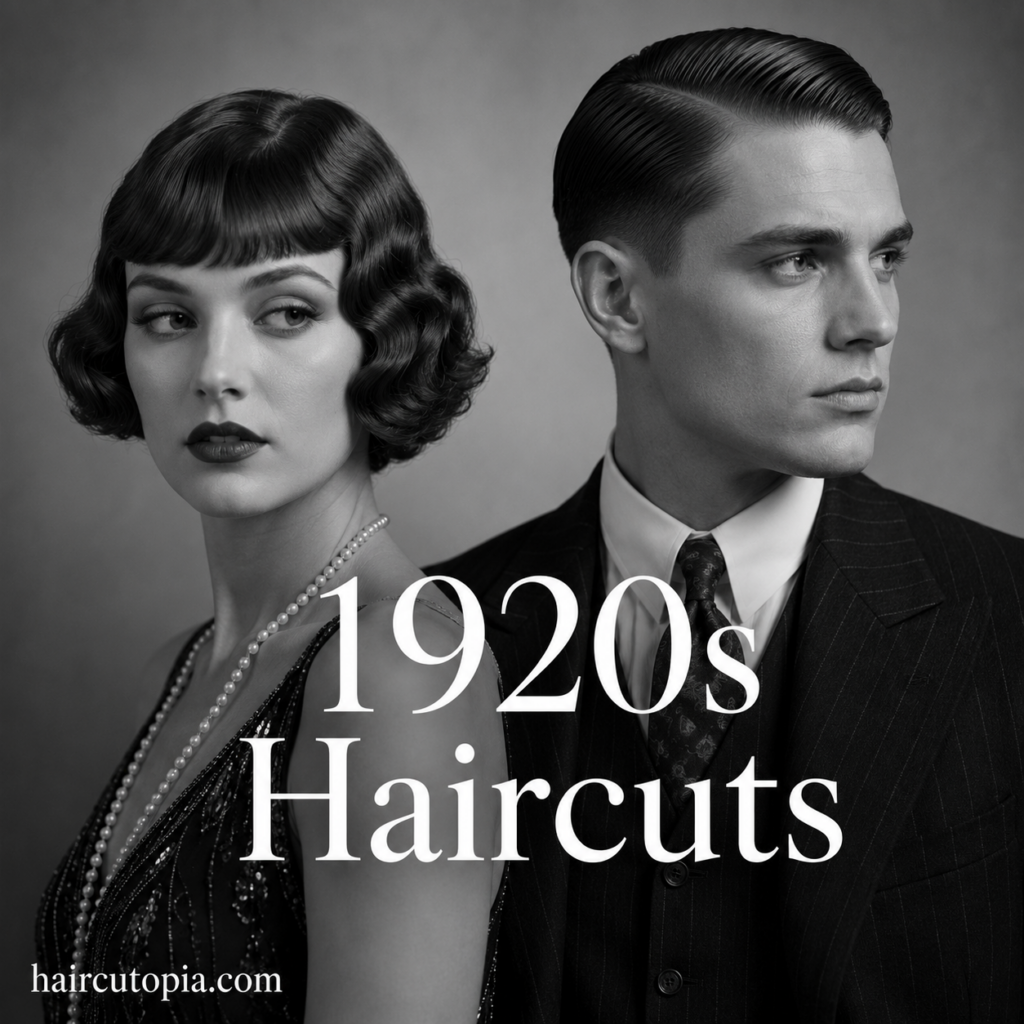
The 1920s changed far more than fashion. It changed the way people thought about hair.
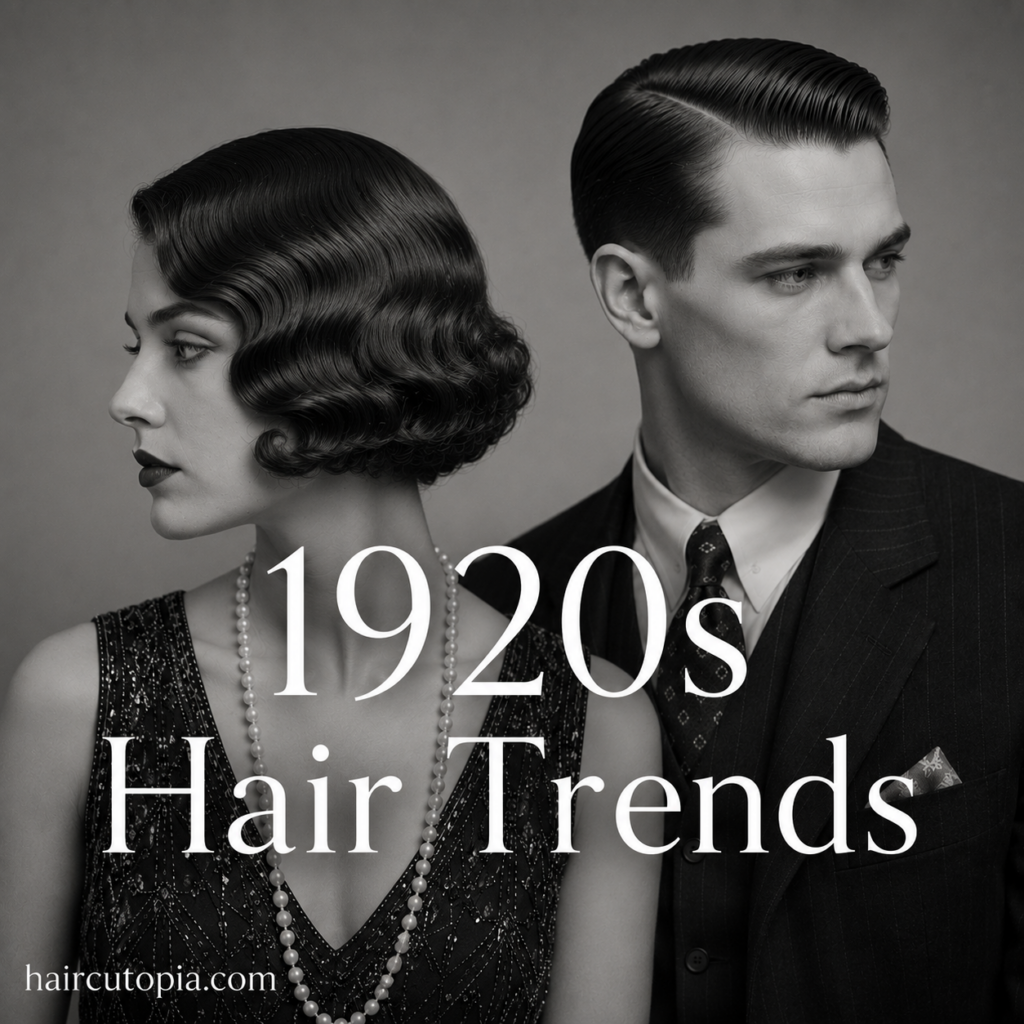
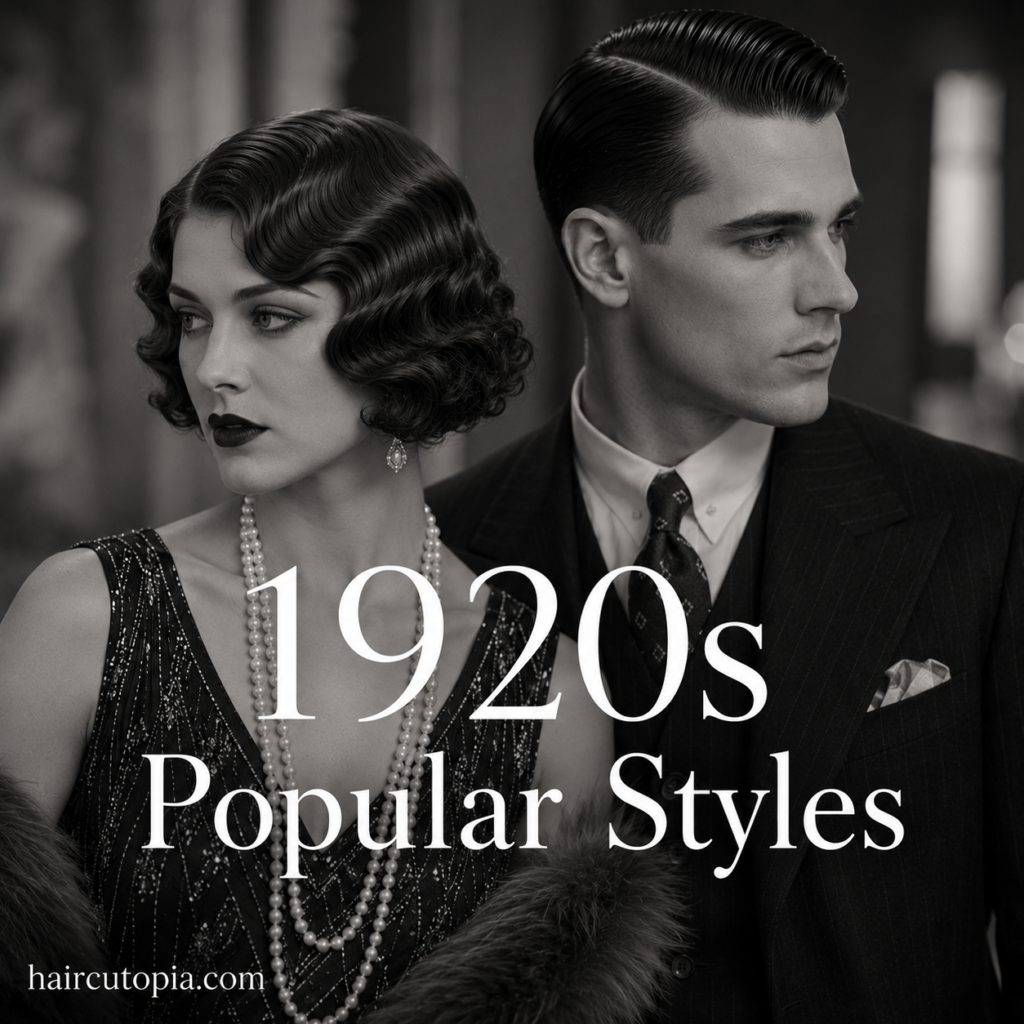
After decades when long, carefully arranged hairstyles were the norm for women, the 1920s introduced dramatically shorter cuts, sleek silhouettes, finger waves, and styles that openly challenged convention. For men, the decade favored polished cuts with neat sides, controlled volume, and plenty of shine.
Few hairstyles represented this transformation better than the bob.
Whether it was worn straight and sharply cut, softened with waves, or paired with the unmistakable Marcel wave, short hair became one of the defining visual symbols of the Roaring Twenties.
Today, many 1920s haircuts remain surprisingly wearable. Some can be recreated almost exactly, while others provide inspiration for modern bobs, crops, fades, and vintage-inspired styles.
Here is a closer look at the haircuts and hairstyles that shaped the 1920s, why they became popular, and how their influence can still be seen today.
What Did Hair Look Like in the 1920s?
Hair during the 1920s reflected a broader cultural shift toward modernity.
For women, shorter hair became increasingly visible throughout the decade. The bob was especially significant because cutting the hair short could represent independence and a rejection of older beauty expectations.
Not everyone immediately embraced the trend. Long hair remained common, particularly during the early part of the decade. Some women even styled long hair to create the illusion of having a bob without actually cutting it.
Men’s hairstyles were generally less rebellious but still highly distinctive. Hair was usually kept short around the sides and back while leaving enough length on top to comb neatly into place.
Popular characteristics of 1920s hair included:
- Short bobs and cropped cuts
- Jaw-length silhouettes
- Finger waves
- Marcel waves
- Deep side parts
- Sleek, glossy finishes
- Short sides and backs for men
- Combed-back or side-parted men’s hair
- Decorative headbands and hair accessories
The overall appearance could range from sharply geometric to soft and glamorous.
The Bob Haircut
No haircut is more closely associated with the 1920s than the bob.
Typically cut somewhere around the jawline, the bob dramatically shortened women’s hair compared with the long hairstyles that had dominated previous generations.
The basic shape was simple, but there were many variations.
Some bobs were straight and blunt. Others incorporated waves, bangs, curls, or shorter sections around the back of the neck.
What made the bob particularly important wasn’t simply its appearance. Short hair became connected with the image of the modern young woman.
That association helped turn a haircut into a cultural statement.
Why the Bob Became So Popular
Short hairstyles had appeared before the 1920s, but the decade helped transform the bob into a widespread fashion.
Several factors contributed to its popularity.
Changing attitudes toward women’s roles encouraged experimentation with clothing and appearance. Fashion itself also changed, with shorter dresses and simpler silhouettes becoming increasingly fashionable.
The bob complemented that new aesthetic.
Film stars and other fashionable public figures helped spread the look further. Once short hairstyles appeared regularly in photographs and on screen, they became increasingly familiar and desirable.
By the middle of the decade, bobbed hair had become one of the era’s most recognizable trends.
The Shingle Bob
The shingle bob was a more sculpted variation of the classic bob.
Instead of maintaining the same length around the entire head, the hair at the nape was cut very short and tapered while the sides remained longer.
From the front, it could still resemble a traditional bob. From behind, however, the haircut revealed a much closer and more precise shape.
The result was sleek, sophisticated, and unmistakably modern for the period.
Shingle bobs were often paired with:
- Finger waves
- Marcel waves
- Side parts
- Smooth styling
- Defined side sections
The tapered back also makes the shingle bob an interesting predecessor to many modern graduated and stacked bob techniques.
The Eton Crop
For women willing to go even shorter, there was the Eton crop.
This hairstyle reduced the length considerably, creating a close-fitting shape around the head. It took inspiration from short masculine hairstyles and was considered particularly daring.
The hair could be slicked close to the scalp, parted at the side, or shaped into small waves near the temples.
Compared with the softer bob, the Eton crop created a much more androgynous silhouette.
That was precisely part of its appeal.
The style represented the willingness of some fashionable women to move beyond traditional ideas about how feminine hair was supposed to look.
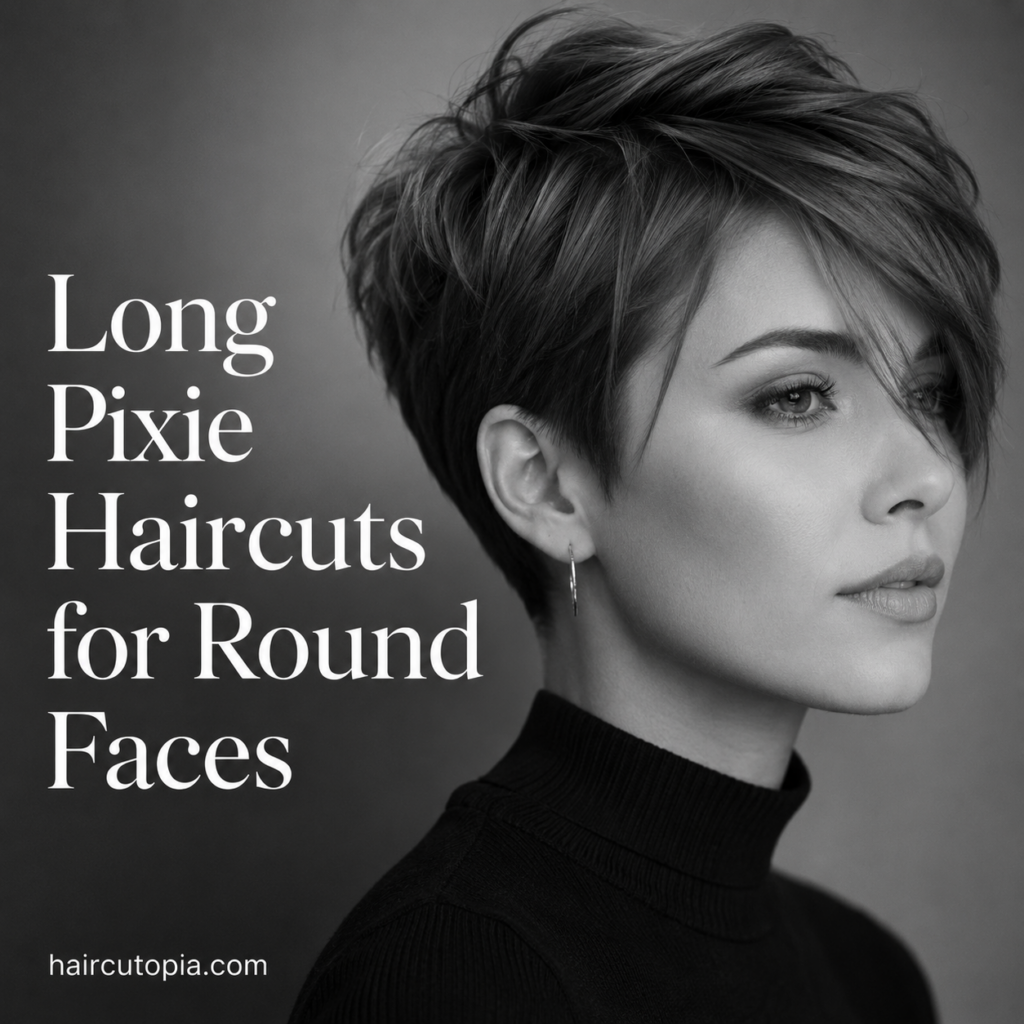
Modern pixie cuts and short crops share some of the same visual qualities.
The Dutch Boy Bob
The Dutch boy bob offered another distinctive interpretation of short hair.
This haircut generally featured a strong, rounded shape with straight bangs across the forehead. The sides framed the face, creating a graphic silhouette.
Compared with waved bobs, the Dutch boy style looked particularly structured.
Its recognizable features included:
- Straight or slightly curved bangs
- A rounded bob shape
- Strong lines around the face
- Minimal layering
- A smooth finish
Modern blunt bobs with full bangs can create a surprisingly similar appearance.
The Pageboy-Style Bob
Some 1920s bobs were styled with the ends curved inward toward the face.
This created a softer silhouette than the sharpest blunt bobs.
The smooth crown and turned-under ends emphasized the jaw and neck while maintaining the decade’s fashionable short length.
Although pageboy hairstyles became particularly recognizable in later decades, the sleek, curved-under bob shape has roots in the short-hair experimentation of the 1920s.
For someone looking for vintage influence without dramatic waves, this type of silhouette remains one of the easiest looks to adapt today.
The Charleston Bob
The Charleston became one of the dances most strongly associated with the Roaring Twenties, and short, movement-friendly hairstyles complemented the energetic fashions surrounding it.
The term Charleston bob is often used for short 1920s-inspired bobs that capture the flapper aesthetic.
Rather than describing one rigid cutting technique, the look generally emphasizes a short bob with a playful, youthful finish.
It may include:
- Jaw-length hair
- Soft waves
- Curled ends
- Short bangs
- A sleek crown
- Decorative headbands
It is particularly recognizable when combined with eveningwear inspired by the decade.
Finger Waves
Finger waves are technically a styling method rather than a haircut, but they are essential to understanding 1920s hair.
The technique shapes damp hair into smooth S-shaped waves that sit close to the head.
Instead of creating loose curls with lots of volume, finger waves emphasize controlled curves and definition.
They were especially effective on bobbed hair because the short length allowed the wave pattern to become a major part of the overall silhouette.
A traditional finger-wave look often includes:
- A deep side part.
- Hair combed close to the head.
- Defined S-shaped ridges.
- Smooth sides around the temples.
- Carefully shaped ends.
Finger waves continue to appear in formal hairstyling, editorial fashion, and vintage-inspired looks.
Marcel Waves
Another signature look of the era was the Marcel wave.
The technique was developed before the 1920s, but waved hair remained enormously influential during the decade.
Marcel waves were created using heated tools to form consistent waves throughout the hair. Compared with finger waves, the technique could produce a slightly fuller and more sculpted result.
The waves could be worn with a bob or incorporated into longer hair.
Their regular, polished pattern created the sophisticated appearance seen in many portraits from the period.
Modern waving irons make it much easier to reproduce a similar effect without relying on historical styling equipment.
The Faux Bob
Not everyone wanted to cut off their long hair when bobbed styles became fashionable.
The solution was the faux bob.
Long hair could be curled, rolled, tucked, and pinned underneath so that it appeared considerably shorter.
From the front, the finished hairstyle could look remarkably similar to a genuine bob.
The faux bob offered several advantages:
- Long hair could be preserved.
- The fashionable short silhouette could still be achieved.
- Hair could return to its normal length after the style was removed.
- Waves and curls helped disguise the pinned sections.
The same technique is still useful today for costumes, themed events, weddings, or anyone who wants to experiment with short hair temporarily.
Earphones and Side Curls
Not every 1920s hairstyle was completely sleek.
Some styles incorporated small curls or decorative sections around the ears and cheeks.
One recognizable variation involved arranging coils of hair over or near the ears, sometimes described as “earphones.”
These details softened short hairstyles and created visual interest around the face.
Small spit curls could also be shaped along the cheeks or temples.
Although these elements can look distinctly vintage today, subtle versions occasionally return in runway and editorial hairstyling.
Long Hairstyles in the 1920s
The popularity of the bob can make it seem as though every woman suddenly cut her hair short.
That wasn’t the case.
Long hair continued to be worn throughout the decade.
Women who kept their length often arranged it into low buns, rolls, coils, or pinned waves. Styling could concentrate the hair close to the head so that it worked with the streamlined fashions of the period.
Common approaches included:
- Low buns at the nape
- Rolled hairstyles
- Pinned curls
- Waved front sections
- Center or side parts
- Faux bobs
These styles are important when looking at 1920s hair historically because the decade was a period of transition rather than an overnight switch from long hair to short hair.
Flapper Hairstyles and 1920s Hair
The flapper became one of the enduring symbols of the decade.
Flappers were associated with youthful independence, nightlife, dancing, shorter dresses, cosmetics, and changing social expectations.
Bobbed hair fit naturally into that image.
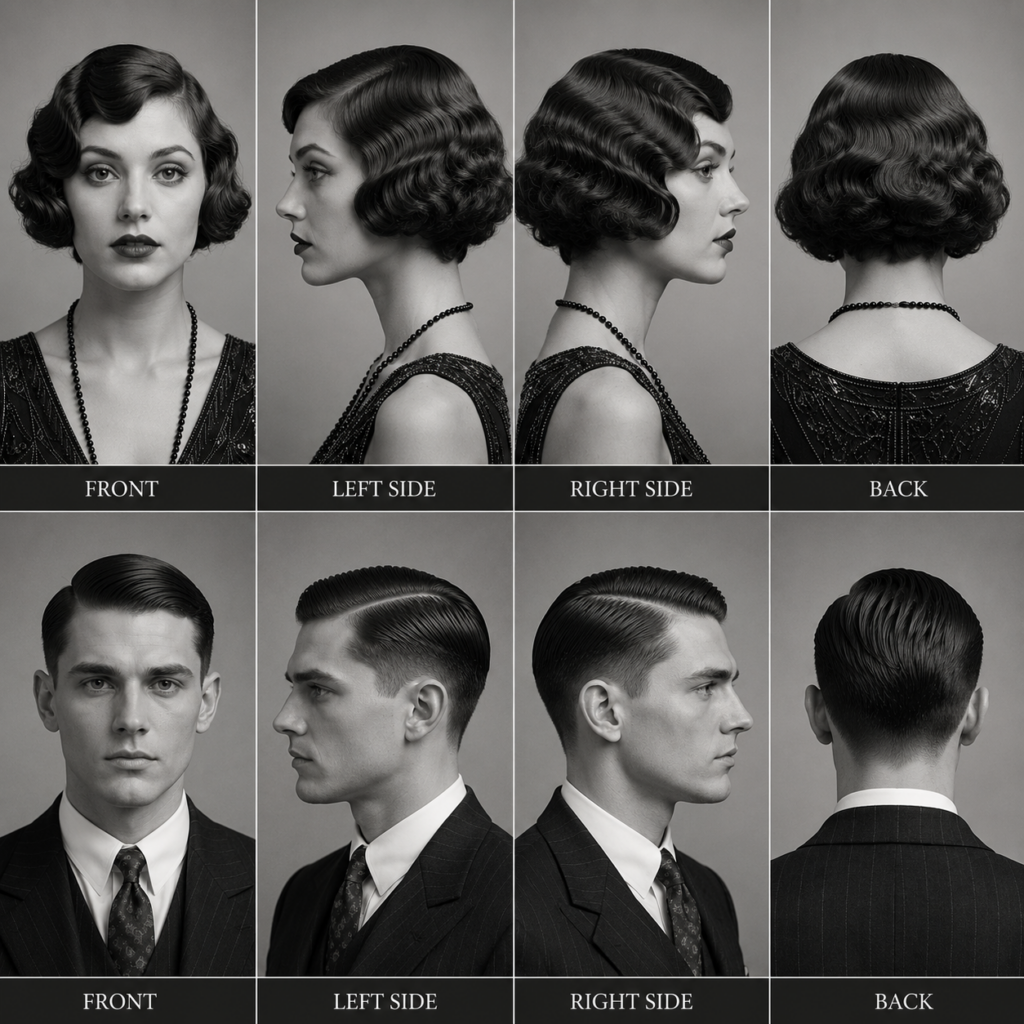
A stereotypical flapper hairstyle might combine a jaw-length bob with finger waves, a deep side part, and a decorative headband.
However, “flapper hair” wasn’t one specific haircut.
The term can describe several fashionable short hairstyles worn during the era, including blunt bobs, shingle cuts, crops, and waved bobs.
1920s Bangs and Fringes
Bangs added another way to personalize short hair.
Some were cut straight across the forehead, while others were shorter, softer, or incorporated into waved styles.
A full fringe could make a bob appear more geometric, particularly when combined with a strong jaw-length perimeter.
Side-parted styles usually treated the front differently, allowing it to sweep across the forehead or become part of the wave pattern.
Many modern bob-and-bang combinations owe part of their visual heritage to these early short hairstyles.
Men’s Haircuts in the 1920s
Men’s hair during the 1920s was generally neat, controlled, and polished.
The sides and back were typically cut shorter while more length remained on top for styling.
Rather than the intentionally messy texture common in many contemporary cuts, the goal was usually a tidy silhouette.
Pomades and hair tonics helped hold everything in place.
The 1920s Side Part
The side part was one of the defining men’s hairstyles of the decade.
Hair was divided cleanly and combed away from the part, often with the front swept slightly backward.
The look worked particularly well with short sides and a longer top.
It remains popular because very little about the basic haircut feels outdated.
A modern side-part taper can easily capture the spirit of the 1920s without looking like a costume.
Slicked-Back Hair
Slicked-back styles were another polished option.
The top was combed backward and controlled with styling product, producing a smooth and glossy finish.
Depending on the length, the hair might sit relatively flat or maintain a little height through the front.
Modern versions often use lighter products for a more natural finish, but the underlying styling principle remains almost unchanged.
Short Back and Sides
The classic short-back-and-sides haircut was practical and easy to maintain.
Hair around the ears and neckline was kept neat while the top retained enough length for combing.
The transition between lengths was often less dramatic than today’s skin fades, although very short sides certainly existed.
This basic structure remains fundamental to men’s barbering.
Center-Parted Men’s Hair
Although the side part dominated many fashionable looks, center-parted hairstyles were also worn.
Longer hair on top could be divided through the middle and combed smoothly toward either side.
The style created a softer appearance than a severe side part and worked especially well on straight or slightly wavy hair.
Interestingly, modern curtain hairstyles have brought similar center-parted silhouettes back into fashion.
Hair Products Used in the 1920s
The sleek appearance of 1920s hairstyles required control.
For men, pomades, brilliantine, hair oils, and tonics helped create the smooth, glossy finish fashionable at the time.
Women’s styling could involve setting lotions, water, combs, pins, heated waving techniques, and other tools used to shape curls and waves.
The finish was often noticeably more polished than many modern hairstyles.
Today, the same general appearance can be achieved with products such as:
- Styling cream
- Pomade
- Hair gel
- Lightweight wax
- Mousse
- Setting lotion
- Shine spray
Modern formulas make it possible to recreate the aesthetic while keeping the hair softer and more flexible.
Popular 1920s Hair Accessories
Accessories were an important part of many women’s hairstyles.
Short hair left the neck and face more visible, making decorative accessories particularly noticeable.
Popular choices included decorative headbands, combs, pins, ribbons, feathers, and jeweled pieces.
The cloche hat also became closely associated with 1920s fashion.
Its close-fitting shape worked particularly well with bobbed hair because there was less volume underneath the hat.
Accessories could transform a relatively simple bob into an elaborate evening style without requiring a completely different haircut.
How 1920s Haircuts Changed Beauty Standards
The significance of 1920s hair goes beyond individual hairstyles.
Hair had long carried social expectations, particularly for women. Cutting it dramatically shorter could therefore attract attention and criticism.
The bob challenged those expectations.
Short hair exposed more of the neck, changed the proportions of fashionable clothing, and reduced the amount of elaborate styling required to manage very long hair.
It also helped establish an idea that seems completely ordinary today: women could choose dramatically different hair lengths according to fashion and personal preference.
That freedom made the decade an important turning point in modern hairstyling.
How to Wear a 1920s-Inspired Haircut Today
A vintage-inspired haircut doesn’t need to look like a historical costume.
Many elements of 1920s hair translate easily into contemporary styles.
For a subtle influence, consider:
- A jaw-length blunt bob
- A short graduated bob
- A cropped pixie
- A bob with full bangs
- A deep side part
- Soft finger waves
- A sleek side-parted men’s cut
- A classic taper with a polished top
The key is deciding how historically accurate you want the finished look to be.
A blunt bob with natural texture can feel completely modern. Add sculpted finger waves and a glossy finish, and the connection to the 1920s becomes much stronger.
Are 1920s Hairstyles Still Popular?
Absolutely, although they rarely return exactly as they were originally worn.
The bob remains one of the most enduring haircuts in modern fashion. Pixie cuts echo the dramatic short crops of the era, while finger waves continue to appear in formal and editorial hairstyling.
Men’s side parts, tapers, and slicked-back styles have proven equally durable.
What changes is the finish.
Contemporary versions tend to use more natural texture, softer products, less rigid shaping, and modern cutting techniques.
The foundations, however, are remarkably familiar.
Frequently Asked Questions About 1920s Haircuts
What was the most popular haircut in the 1920s?
The bob was the defining women’s haircut of the 1920s. Variations included blunt bobs, shingle bobs, cropped styles, and waved bobs.
Did everyone have short hair in the 1920s?
No. Although short hair became extremely fashionable, many women continued wearing long hair. Some pinned or rolled their hair to imitate the appearance of a bob.
What is a shingle haircut?
A shingle is a short bob variation featuring closely tapered hair at the nape with longer hair toward the sides and front. It creates a fitted, sculpted shape around the head.
What was the shortest women’s haircut of the 1920s?
The Eton crop was among the most dramatic short hairstyles associated with the decade. It was cut close to the head and often styled with a side part or small waves.
Were finger waves popular in the 1920s?
Yes. Finger waves became strongly associated with short hairstyles of the era and helped create the smooth, sculpted appearance now identified with 1920s glamour.
What hairstyles did men wear in the 1920s?
Men commonly wore short sides and backs with longer hair on top. Side parts, slicked-back styles, and neatly combed hairstyles were especially popular.
What is the difference between finger waves and Marcel waves?
Finger waves are shaped primarily with the fingers and a comb, traditionally on damp hair. Marcel waves were formed using heated waving irons. Both techniques produce the controlled wave patterns associated with early 20th-century hairstyling.
The Lasting Influence of 1920s Hair
The 1920s left an unusually strong mark on modern hair.
The decade helped establish the bob as a permanent part of haircutting, introduced generations of people to dramatically shorter women’s styles, and popularized silhouettes that continue to reappear in salons today.
Men’s hair from the era proved equally durable. Short sides, longer tops, side parts, tapers, and slicked-back styling remain staples of barbering more than a century later.
Some details unmistakably belong to the Roaring Twenties. Others barely look historical at all.
That may be the greatest legacy of 1920s haircuts. They didn’t simply define one fashionable decade—they helped create many of the hairstyles we now consider classics.